



Canaanite Terracotta Dipper Juglet | Ancient Levant | Circa 1900–1400 BCE
Couldn't load pickup availability






Canaanite Terracotta Dipper Juglet | Ancient Levant | Circa 1900–1400 BCE
Description
More
Less
Historical Context & Origin
Region: Ancient Canaan, Levant (Eastern Mediterranean)
Material: Terracotta clay with mineral inclusions
Period: Middle Bronze Age to Early Late Bronze Age, circa 1900–1400 BCE
Description
This ancient Canaanite terracotta dipper juglet dates to approximately 1900–1400 BCE, a period of significant cultural development, expanding trade networks, and established ceramic traditions throughout the ancient Levant. Produced during the Middle Bronze Age to early Late Bronze Age, the vessel reflects the practical craftsmanship of Canaanite communities that inhabited the eastern Mediterranean region thousands of years before the Roman period.
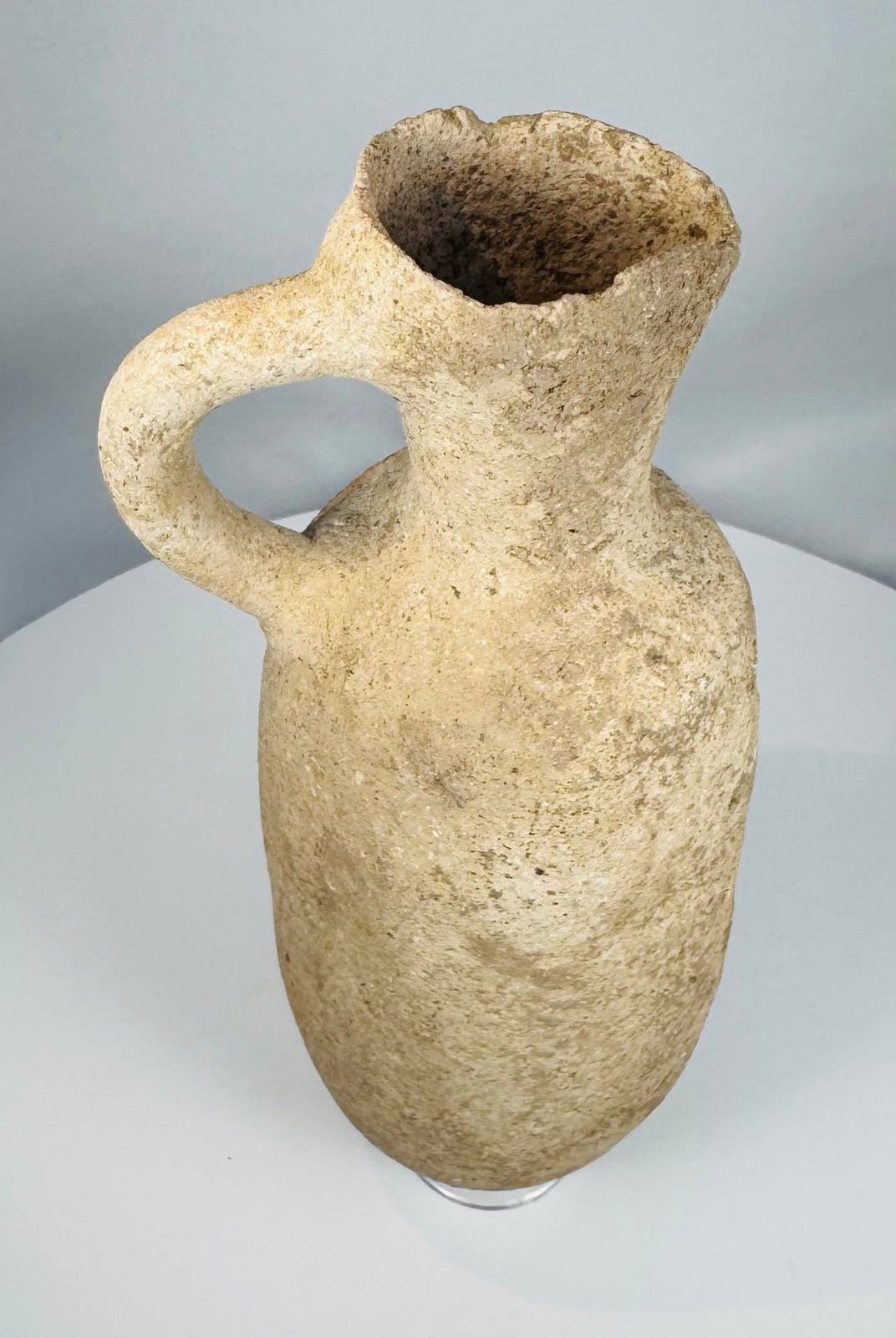
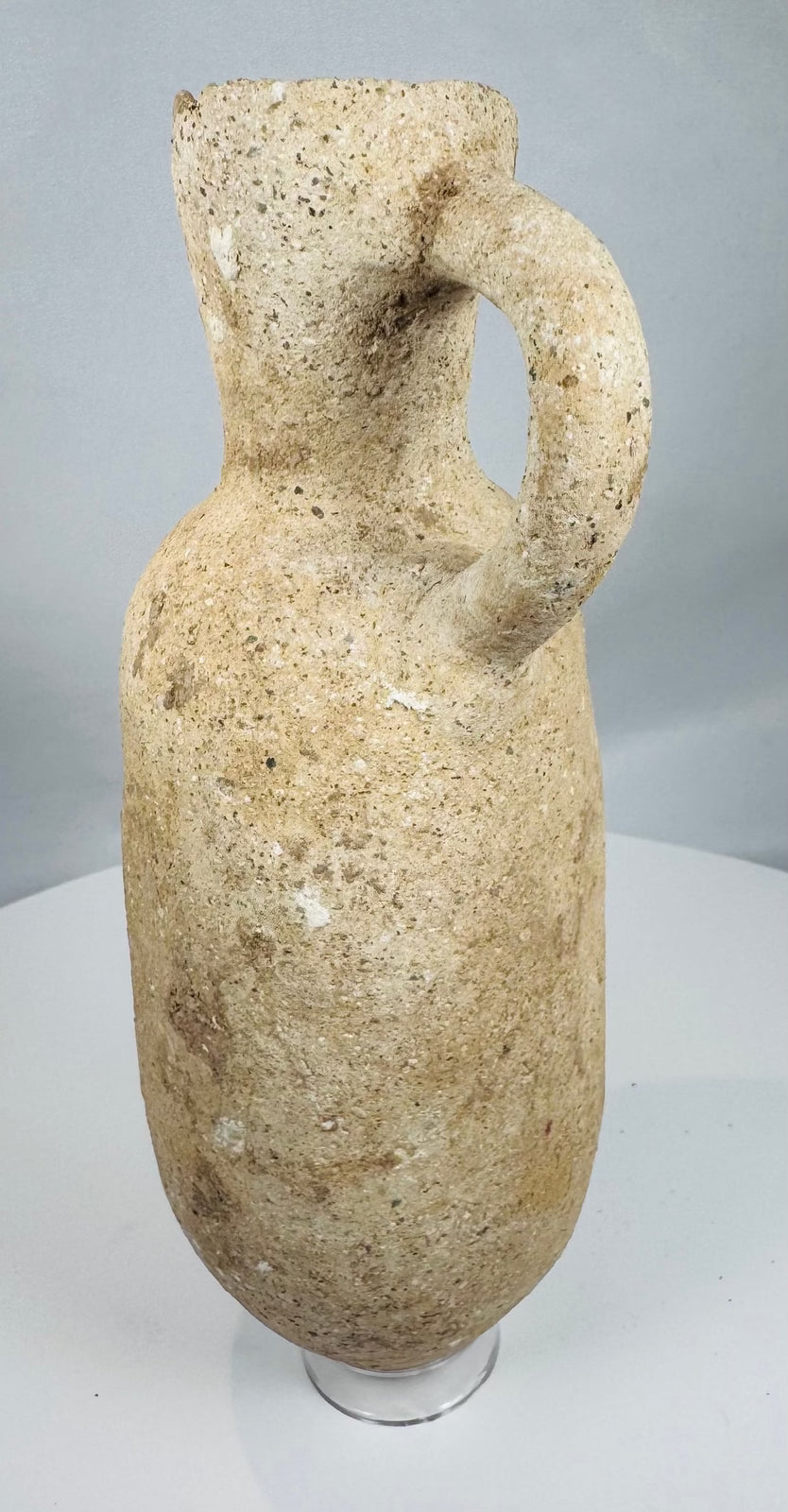
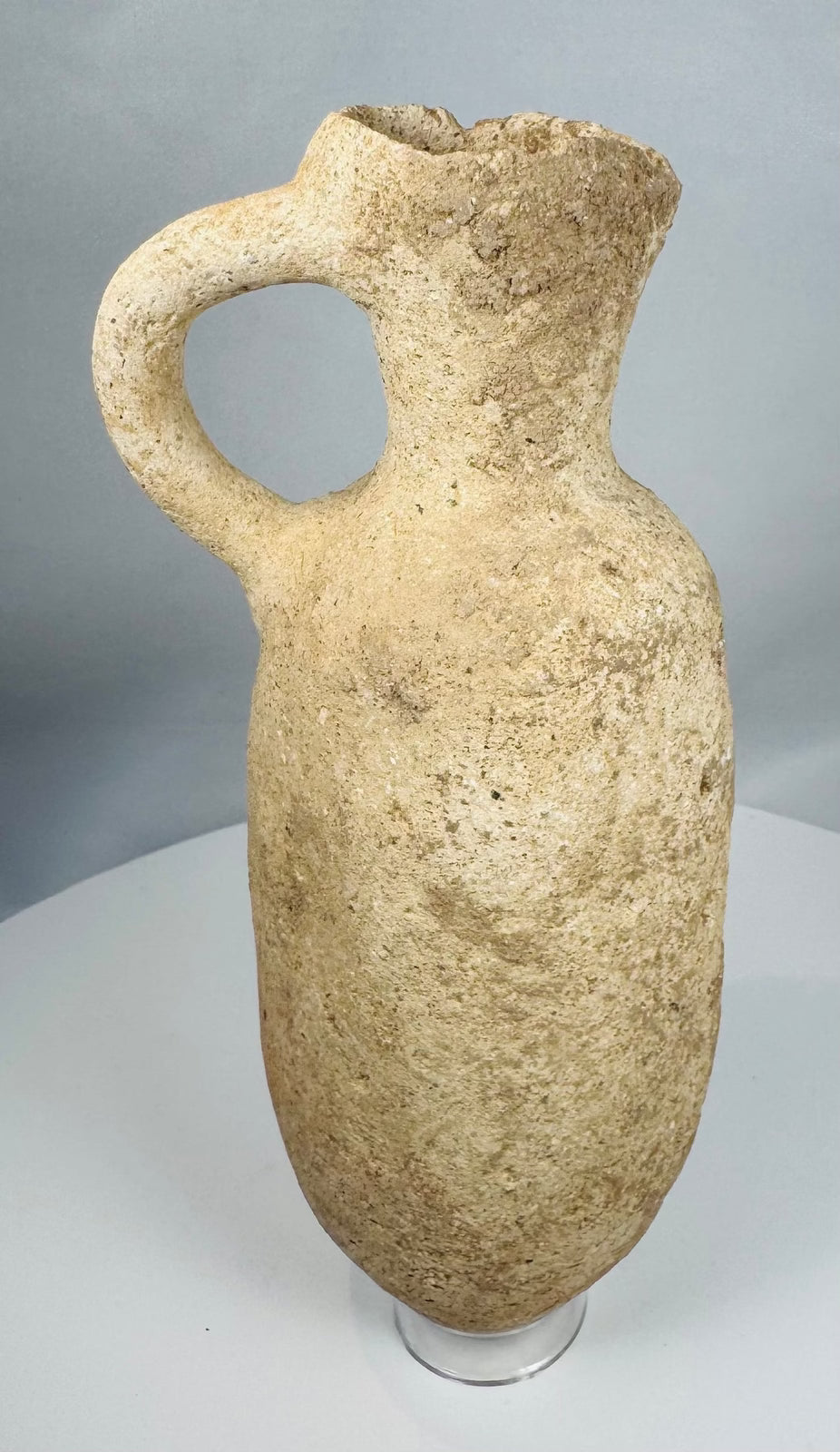
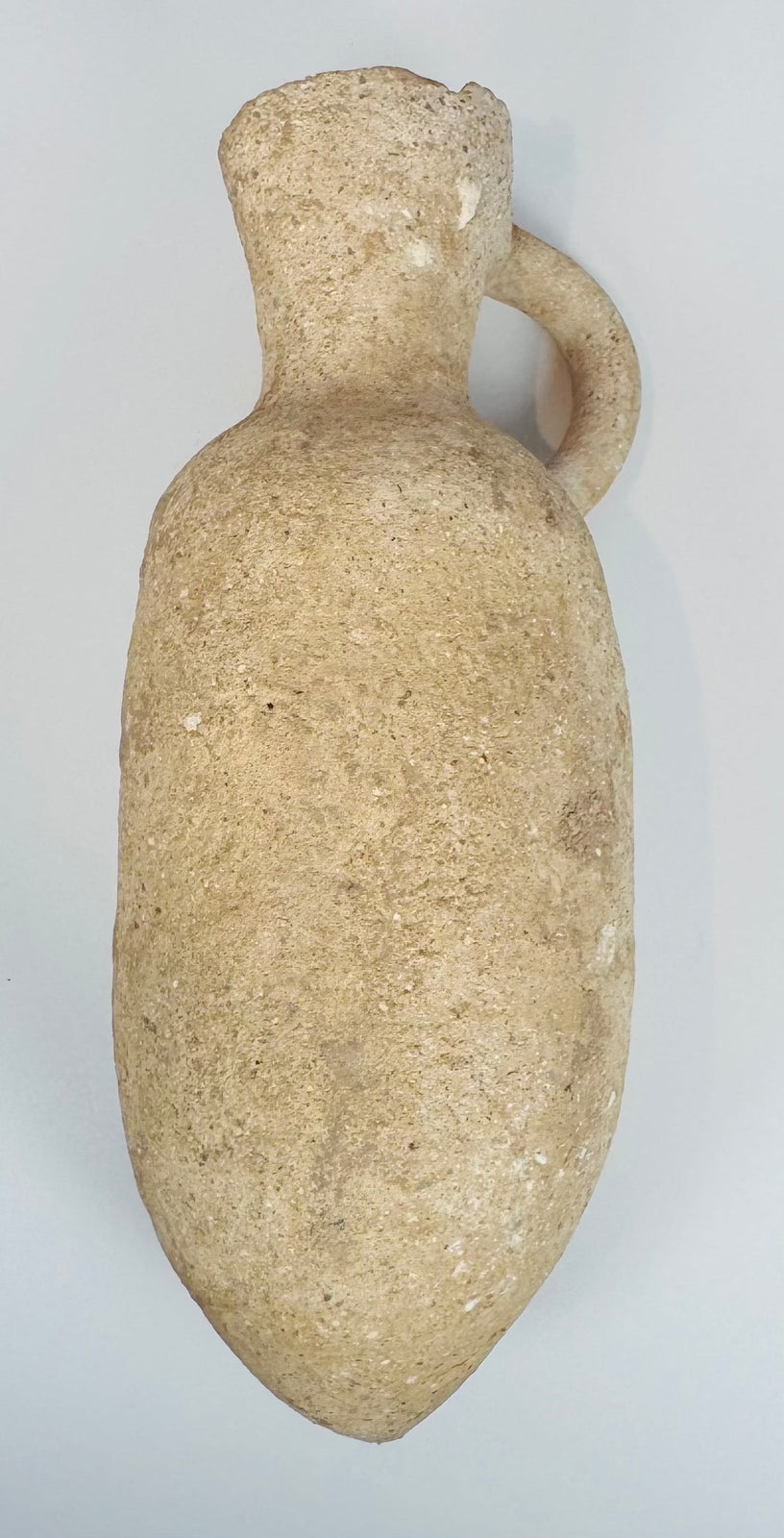
The vessel features an elongated ovoid body that gradually tapers toward a rounded base, a broad cylindrical neck with a slightly flared rim, and a vertical loop handle designed for handling and pouring. Its slender proportions and distinctive profile are characteristic of ancient Levantine dipper juglets, a ceramic form associated with the handling and dispensing of liquids.
The vessel was fashioned from beige-coloured terracotta clay containing visible mineral inclusions. Its undecorated surface emphasizes the functional simplicity of the design, while heavy calcareous concretions, mineral deposits, and extensive burial encrustations contribute to its archaeological appearance.
Dipper juglets were part of the wider ceramic traditions of the ancient Near East and are generally understood to have been used for drawing, transferring, or pouring relatively small quantities of liquids from larger containers. Their precise contents and individual functions could vary, and examples have been recovered from both domestic and funerary archaeological contexts.
Features
-
Elongated ovoid body tapering gradually toward a rounded base
-
Broad cylindrical neck with a slightly flared rim and narrow opening
-
Vertical loop handle designed for handling and controlled pouring
-
Undecorated beige-coloured terracotta with visible mineral inclusions
-
Heavy calcareous concretions, burial encrustations, and natural surface weathering
-
Distinctive ceramic form associated with ancient Levantine pottery traditions
Cultural Significance
During the Middle Bronze Age, the ancient Levant was home to thriving Canaanite communities connected through regional trade, agriculture, and cultural exchange. Pottery production played a fundamental role in daily life, supplying vessels for food preparation, storage, transportation, and the handling of valuable liquids.
Dipper juglets represent a recognizable category of ancient Near Eastern ceramics, distinguished by their elongated bodies, narrow openings, and practical handles. These vessels are commonly interpreted as implements for accessing and dispensing liquids, although their precise uses depended on their individual archaeological contexts.
The presence of similar ceramic forms in domestic settlements and burial assemblages demonstrates their place within both everyday activities and broader cultural practices. Their relatively simple construction also reflects the importance of practical, locally produced pottery in ancient Canaanite society.
This example illustrates the ceramic traditions of the Levant during the second millennium BCE, offering insight into the craftsmanship, technological knowledge, and material culture of communities that flourished more than 3,400 years ago.
Condition
The vessel is substantially intact and structurally stable, displaying extensive surface weathering, mineral deposits, heavy calcareous concretions, and burial encrustations. The beige terracotta exhibits discolouration, abrasions, minor chips, and localized surface loss consistent with its aged appearance.
The rim displays minor losses and abrasions, while the body retains its distinctive elongated form, cylindrical neck, and vertical loop handle. The extensive mineral accretions and earthen deposits contribute to the vessel's archaeological character.
Dimensions (Approximate)
Height: 8 in
Diameter: 3 in
Age (Approximate)
3,400–3,900 years old
Provenance
From the McMillan Collection. The McMillan Collection was assembled over several decades and focused on ancient Greek, Roman, Egyptian, and Near Eastern artifacts, with an emphasis on objects retaining documented collecting histories and educational value. Subsequently held in a private collection in Saint Paul, Minnesota, USA.
Expert Assessment: Examined by Luca Salvaggio, an Italian archaeologist specializing in Greek, Roman, Near Eastern, and Cypriot material, with a Postgraduate Diploma from the Italian Archaeological School at Athens (IASA) and accreditation from the Italian Ministry of Culture (MiC). He attributed the terracotta dipper juglet to the Canaanite culture of the ancient Levant, circa 1900–1400 BCE, based on its elongated ovoid body, rounded base, broad cylindrical neck, slightly flared rim, and distinctive vertical loop handle. He further documented its beige-coloured terracotta fabric, mineral inclusions, and extensive calcareous burial encrustations.
Learn More
Explore the development of Classical Greek and Mediterranean pottery traditions
Description
Historical Context & Origin
Region: Ancient Canaan, Levant (Eastern Mediterranean)
Material: Terracotta clay with mineral inclusions
Period: Middle Bronze Age to Early Late Bronze Age, circa 1900–1400 BCE
Description
This ancient Canaanite terracotta dipper juglet dates to approximately 1900–1400 BCE, a period of significant cultural development, expanding trade networks, and established ceramic traditions throughout the ancient Levant. Produced during the Middle Bronze Age to early Late Bronze Age, the vessel reflects the practical craftsmanship of Canaanite communities that inhabited the eastern Mediterranean region thousands of years before the Roman period.
The vessel features an elongated ovoid body that gradually tapers toward a rounded base, a broad cylindrical neck with a slightly flared rim, and a vertical loop handle designed for handling and pouring. Its slender proportions and distinctive profile are characteristic of ancient Levantine dipper juglets, a ceramic form associated with the handling and dispensing of liquids.
The vessel was fashioned from beige-coloured terracotta clay containing visible mineral inclusions. Its undecorated surface emphasizes the functional simplicity of the design, while heavy calcareous concretions, mineral deposits, and extensive burial encrustations contribute to its archaeological appearance.
Dipper juglets were part of the wider ceramic traditions of the ancient Near East and are generally understood to have been used for drawing, transferring, or pouring relatively small quantities of liquids from larger containers. Their precise contents and individual functions could vary, and examples have been recovered from both domestic and funerary archaeological contexts.
Features
-
Elongated ovoid body tapering gradually toward a rounded base
-
Broad cylindrical neck with a slightly flared rim and narrow opening
-
Vertical loop handle designed for handling and controlled pouring
-
Undecorated beige-coloured terracotta with visible mineral inclusions
-
Heavy calcareous concretions, burial encrustations, and natural surface weathering
-
Distinctive ceramic form associated with ancient Levantine pottery traditions
Cultural Significance
During the Middle Bronze Age, the ancient Levant was home to thriving Canaanite communities connected through regional trade, agriculture, and cultural exchange. Pottery production played a fundamental role in daily life, supplying vessels for food preparation, storage, transportation, and the handling of valuable liquids.
Dipper juglets represent a recognizable category of ancient Near Eastern ceramics, distinguished by their elongated bodies, narrow openings, and practical handles. These vessels are commonly interpreted as implements for accessing and dispensing liquids, although their precise uses depended on their individual archaeological contexts.
The presence of similar ceramic forms in domestic settlements and burial assemblages demonstrates their place within both everyday activities and broader cultural practices. Their relatively simple construction also reflects the importance of practical, locally produced pottery in ancient Canaanite society.
This example illustrates the ceramic traditions of the Levant during the second millennium BCE, offering insight into the craftsmanship, technological knowledge, and material culture of communities that flourished more than 3,400 years ago.
Condition
The vessel is substantially intact and structurally stable, displaying extensive surface weathering, mineral deposits, heavy calcareous concretions, and burial encrustations. The beige terracotta exhibits discolouration, abrasions, minor chips, and localized surface loss consistent with its aged appearance.
The rim displays minor losses and abrasions, while the body retains its distinctive elongated form, cylindrical neck, and vertical loop handle. The extensive mineral accretions and earthen deposits contribute to the vessel's archaeological character.
Dimensions (Approximate)
Height: 8 in
Diameter: 3 in
Age (Approximate)
3,400–3,900 years old
Provenance
From the McMillan Collection. The McMillan Collection was assembled over several decades and focused on ancient Greek, Roman, Egyptian, and Near Eastern artifacts, with an emphasis on objects retaining documented collecting histories and educational value. Subsequently held in a private collection in Saint Paul, Minnesota, USA.
Expert Assessment: Examined by Luca Salvaggio, an Italian archaeologist specializing in Greek, Roman, Near Eastern, and Cypriot material, with a Postgraduate Diploma from the Italian Archaeological School at Athens (IASA) and accreditation from the Italian Ministry of Culture (MiC). He attributed the terracotta dipper juglet to the Canaanite culture of the ancient Levant, circa 1900–1400 BCE, based on its elongated ovoid body, rounded base, broad cylindrical neck, slightly flared rim, and distinctive vertical loop handle. He further documented its beige-coloured terracotta fabric, mineral inclusions, and extensive calcareous burial encrustations.
Learn More
Explore the development of Classical Greek and Mediterranean pottery traditions
You May Also Like
