


Chinese Daoist Spiritual Official or Temple Figure | Gilt Bronze Figure | Qing Dynasty | Circa 19th Century
Couldn't load pickup availability


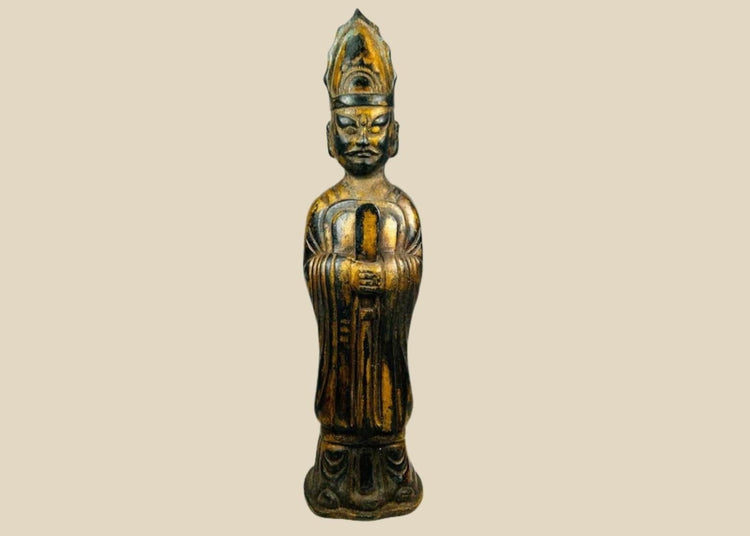
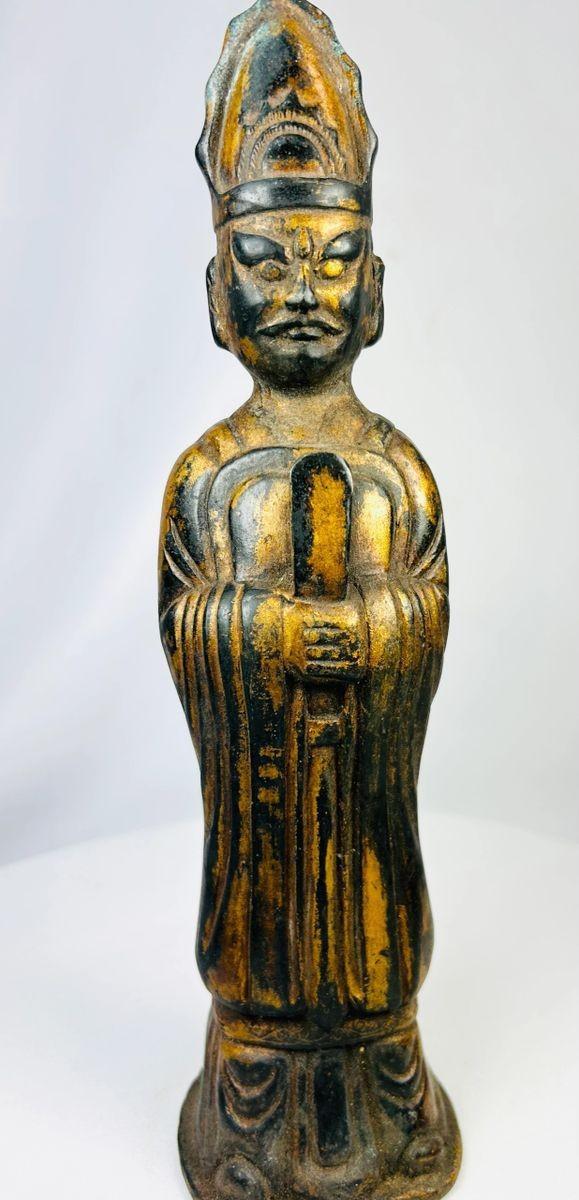
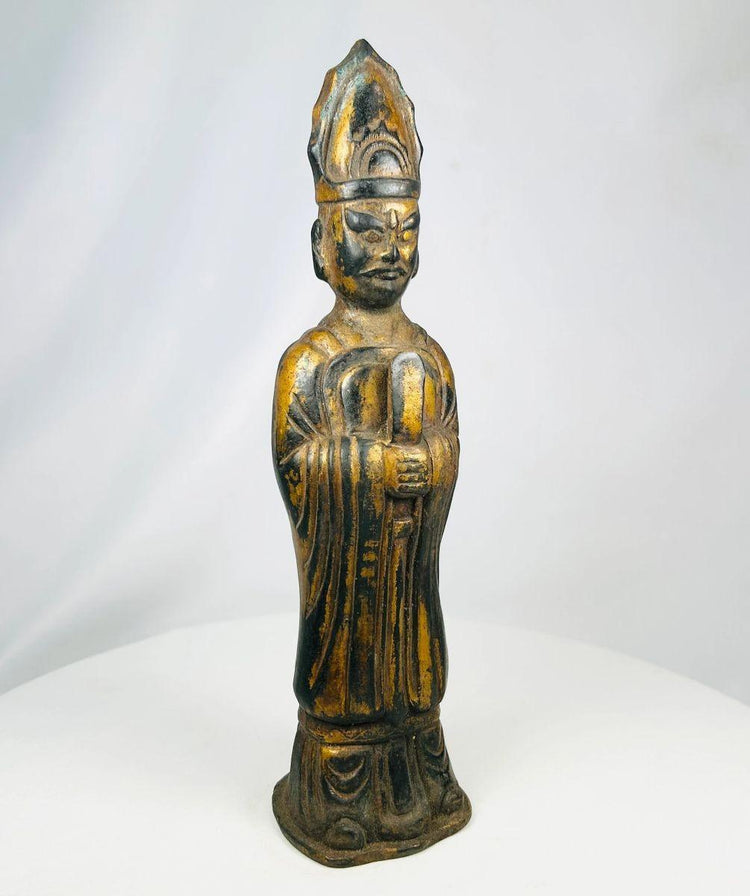
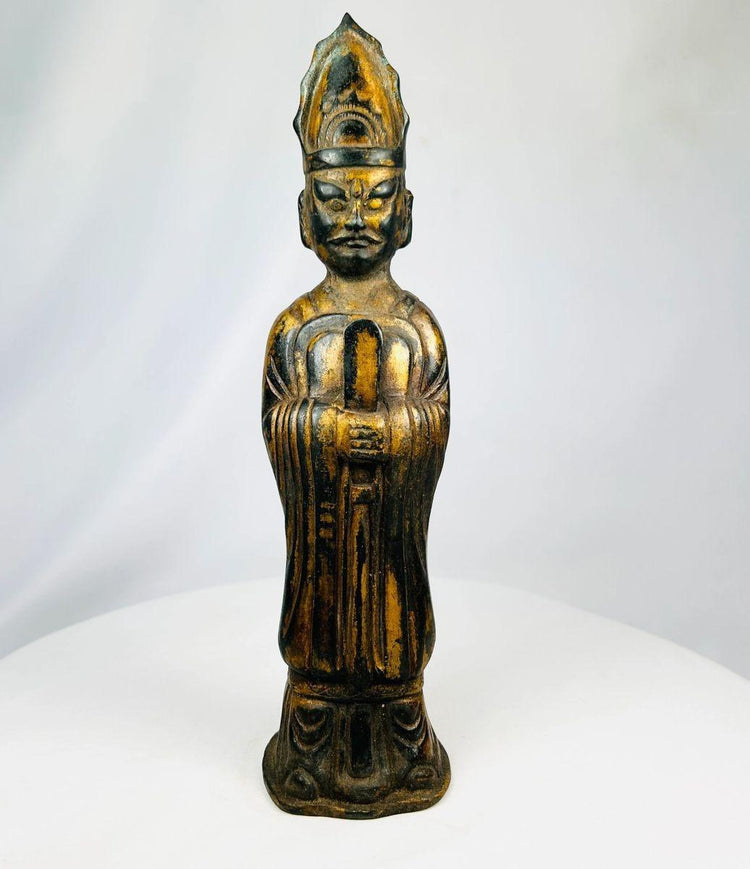
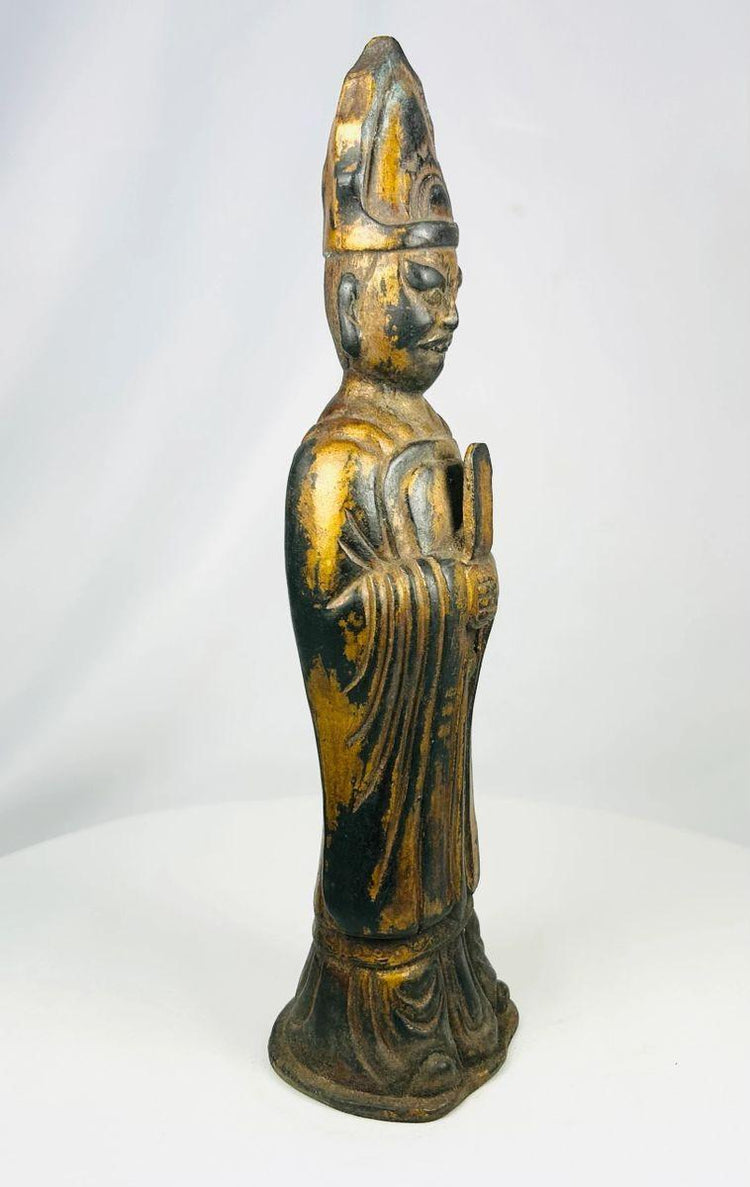
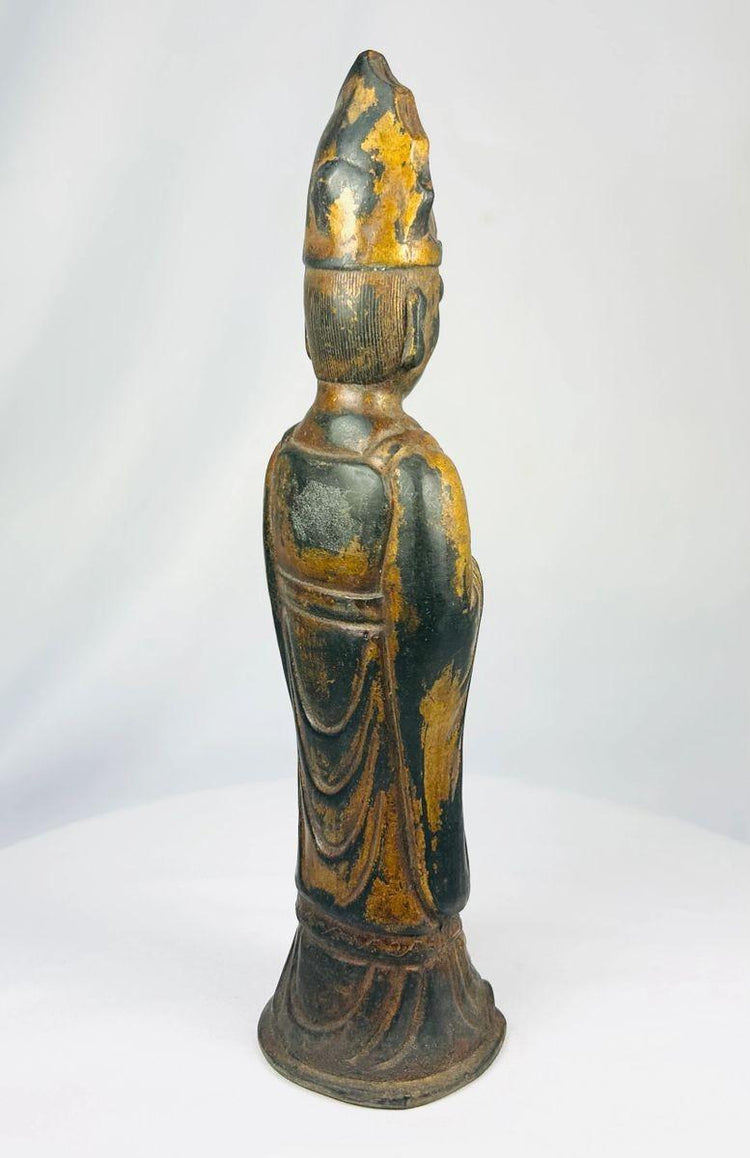
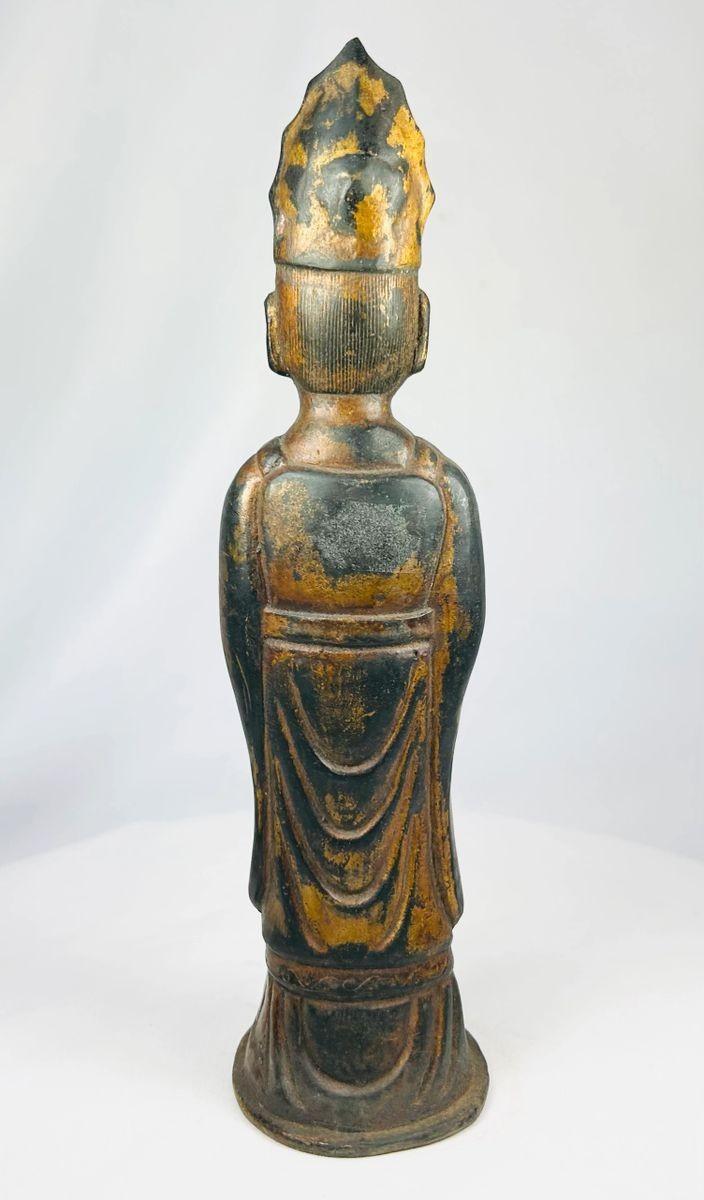
Chinese Daoist Spiritual Official or Temple Figure | Gilt Bronze Figure | Qing Dynasty | Circa 19th Century
Description
More
Less
Historical Context & Origin
Region: China
Material: Cast bronze with remnants of gilt and lacquer
Period: Late Qing Dynasty (19th Century, circa 1800s)
Description
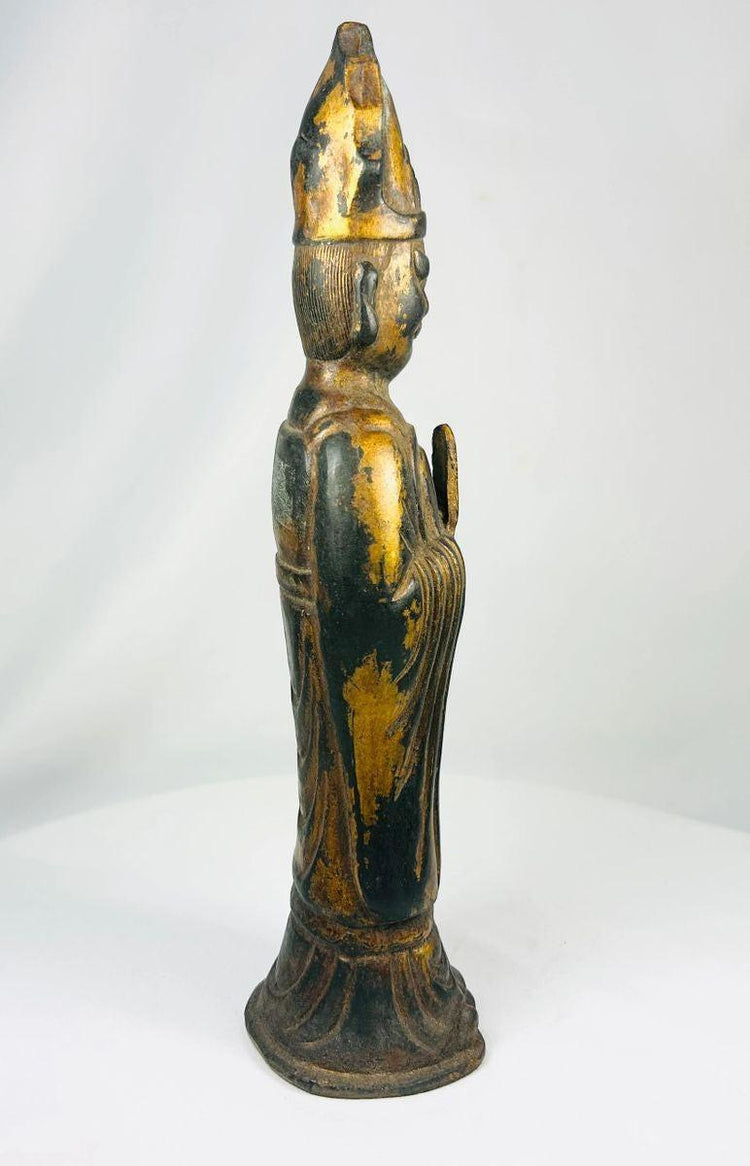
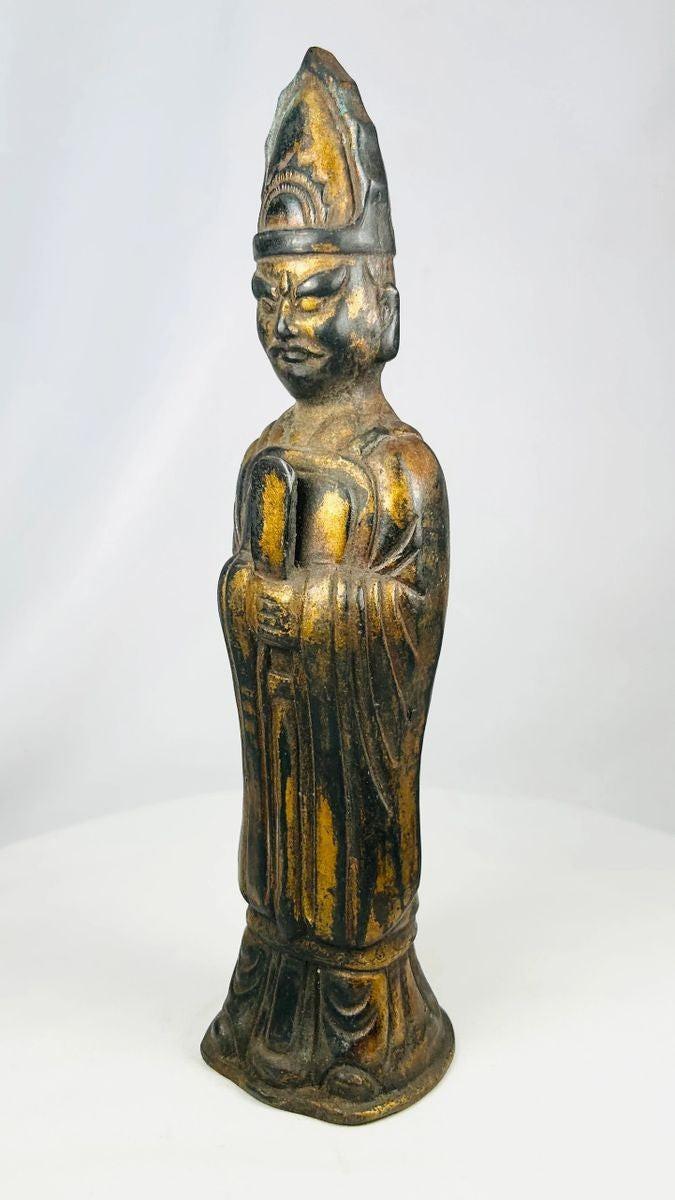
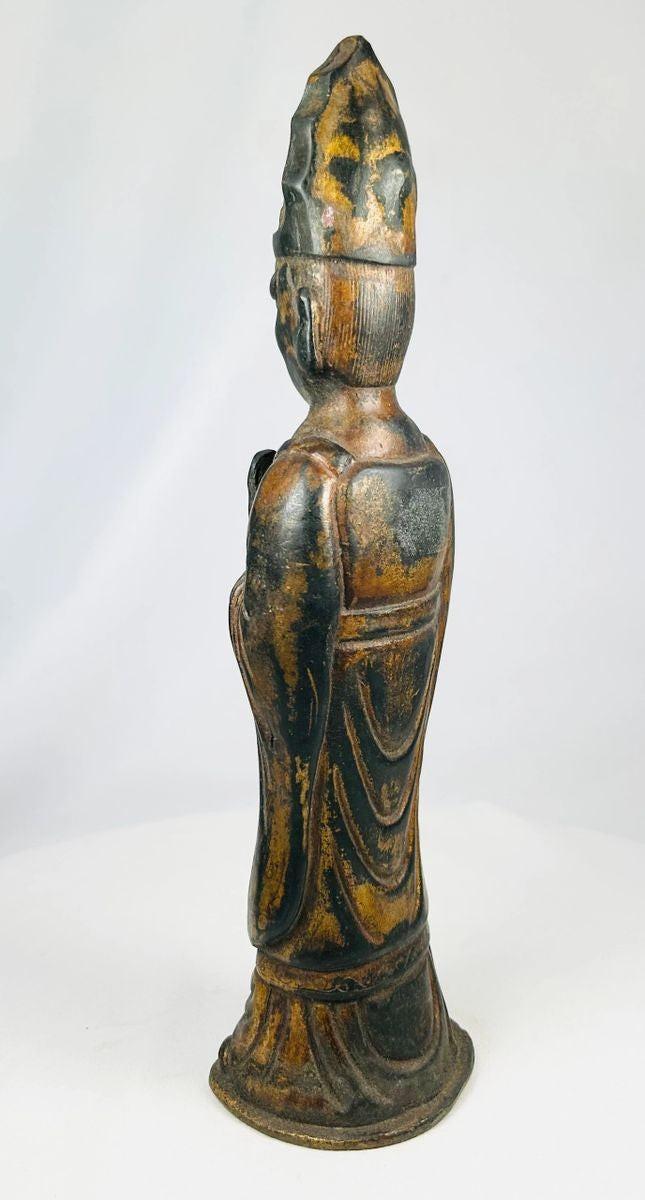
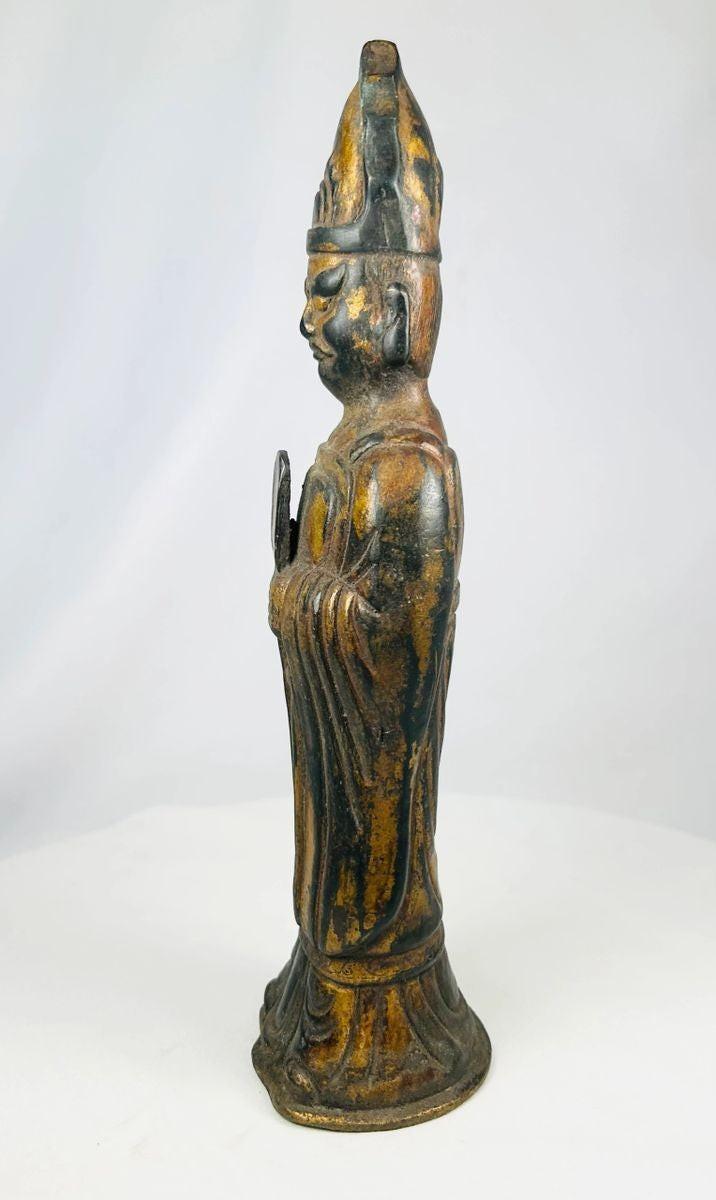
This finely cast bronze figure likely represents a Daoist spiritual master or temple official, depicted with a dignified and authoritative expression. The figure stands in formal robes and wears a distinctive ceremonial hat associated with religious or spiritual authority within traditional Chinese temple contexts. In one hand, the figure holds a tablet or manuscript, symbolizing wisdom, rank, or spiritual instruction. The stylized flared base and carefully rendered drapery folds are characteristic of late Qing–period Chinese metalwork, reflecting devotional and temple sculpture traditions of the period.
Features
- Cast bronze with traces of original gilt and lacquer
- Boldly incised robes with flowing drapery
- Stern, expressive facial features
- Rounded flared base typical of late Qing craftsmanship
Cultural Significance
Figures of Daoist spiritual masters and temple officials played an important role in Chinese religious shrines and devotional spaces, serving as focal points of reverence and spiritual guidance. Such figures symbolized the transmission of sacred teachings, moral authority, and the mediation between the human and spiritual realms central to Daoist practice. Images of this type were commonly used in both temple settings and household shrines, reinforcing the protective and instructive presence of revered spiritual figures within daily devotional life.
Condition
Good antique condition with expected age-related wear. Surface shows patina, oxidation, and loss of gilding consistent with ritual handling. Structurally stable with no cracks or modern repairs.
Dimensions (Approximate)
Height: 10 in
Age (Approximate)
150–200 years old
Learn More
Explore our Collection of Ancient Statues and Hand-carved Historical Masterpieces
Description
Historical Context & Origin
Region: China
Material: Cast bronze with remnants of gilt and lacquer
Period: Late Qing Dynasty (19th Century, circa 1800s)
Description
This finely cast bronze figure likely represents a Daoist spiritual master or temple official, depicted with a dignified and authoritative expression. The figure stands in formal robes and wears a distinctive ceremonial hat associated with religious or spiritual authority within traditional Chinese temple contexts. In one hand, the figure holds a tablet or manuscript, symbolizing wisdom, rank, or spiritual instruction. The stylized flared base and carefully rendered drapery folds are characteristic of late Qing–period Chinese metalwork, reflecting devotional and temple sculpture traditions of the period.
Features
- Cast bronze with traces of original gilt and lacquer
- Boldly incised robes with flowing drapery
- Stern, expressive facial features
- Rounded flared base typical of late Qing craftsmanship
Cultural Significance
Figures of Daoist spiritual masters and temple officials played an important role in Chinese religious shrines and devotional spaces, serving as focal points of reverence and spiritual guidance. Such figures symbolized the transmission of sacred teachings, moral authority, and the mediation between the human and spiritual realms central to Daoist practice. Images of this type were commonly used in both temple settings and household shrines, reinforcing the protective and instructive presence of revered spiritual figures within daily devotional life.
Condition
Good antique condition with expected age-related wear. Surface shows patina, oxidation, and loss of gilding consistent with ritual handling. Structurally stable with no cracks or modern repairs.
Dimensions (Approximate)
Height: 10 in
Age (Approximate)
150–200 years old
Learn More
Explore our Collection of Ancient Statues and Hand-carved Historical Masterpieces
You May Also Like
