

Colima Terracotta Female Figure with Headdress and Body Paint | Ancient Mexico | Detailed Provenance | Circa 300 BCE–300 CE
Couldn't load pickup availability


Colima Terracotta Female Figure with Headdress and Body Paint | Ancient Mexico | Detailed Provenance | Circa 300 BCE–300 CE
Description
More
Less
Historical Context & Origin
Region: Colima Culture, West Mexico
Material: Hand-modeled terracotta with black pigment decoration
Period: Late Pre-Classic to Early Classic Period, circa 300 BCE–300 CE
Description
This ancient Colima terracotta female figure belongs to a distinctive group of West Mexican ceramic sculptures commonly referred to by collectors and scholars as "gingerbread figures" due to their broad, flattened bodies and stylized proportions. Created during the flourishing shaft-tomb tradition of Colima, these figures served as funerary offerings and likely represented ancestors, elite individuals, fertility figures, or participants in ceremonial life.
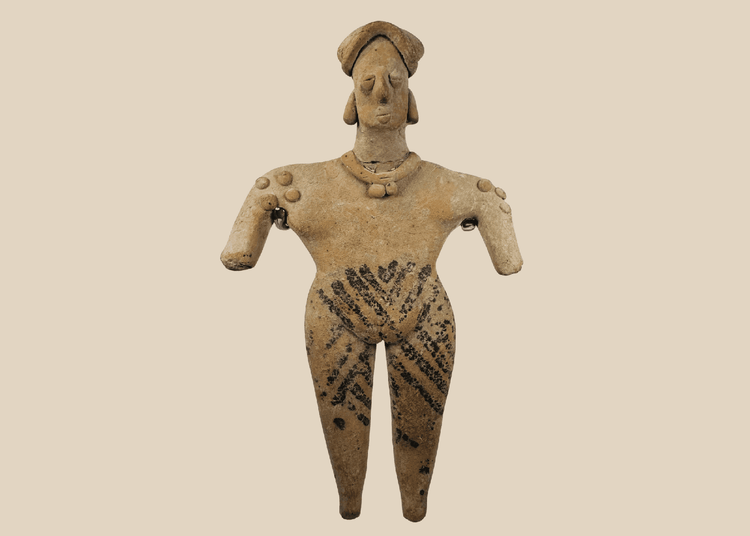
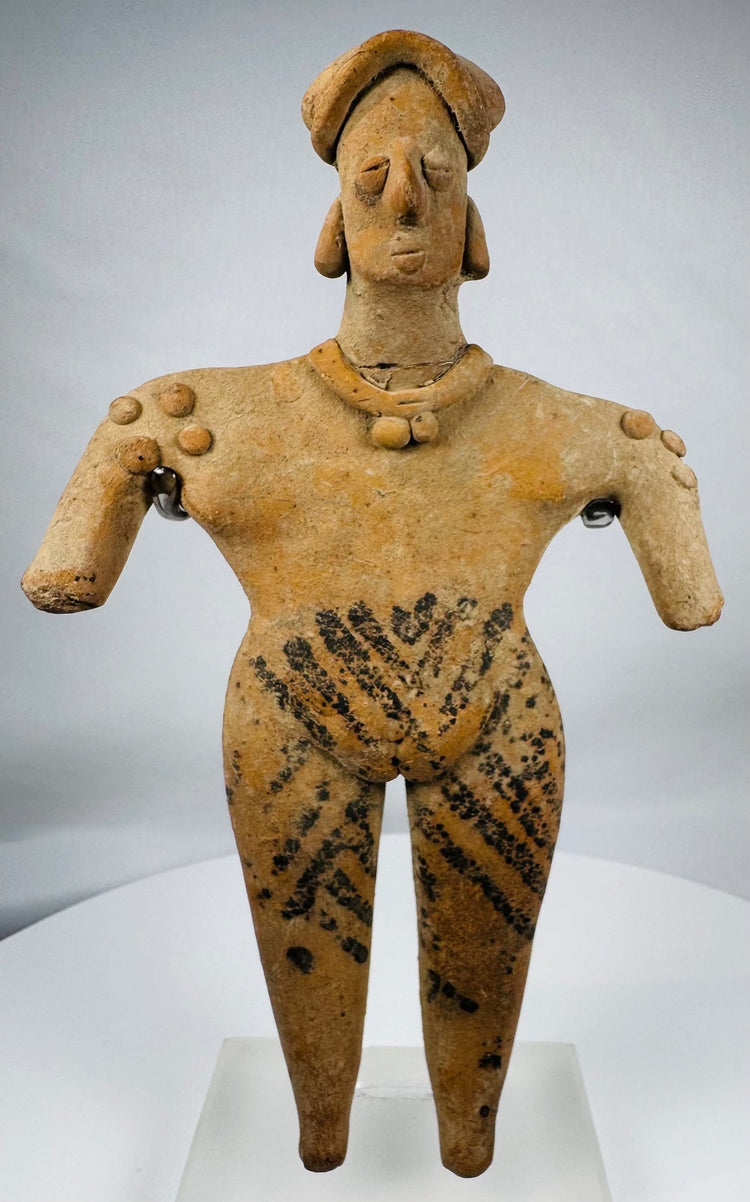
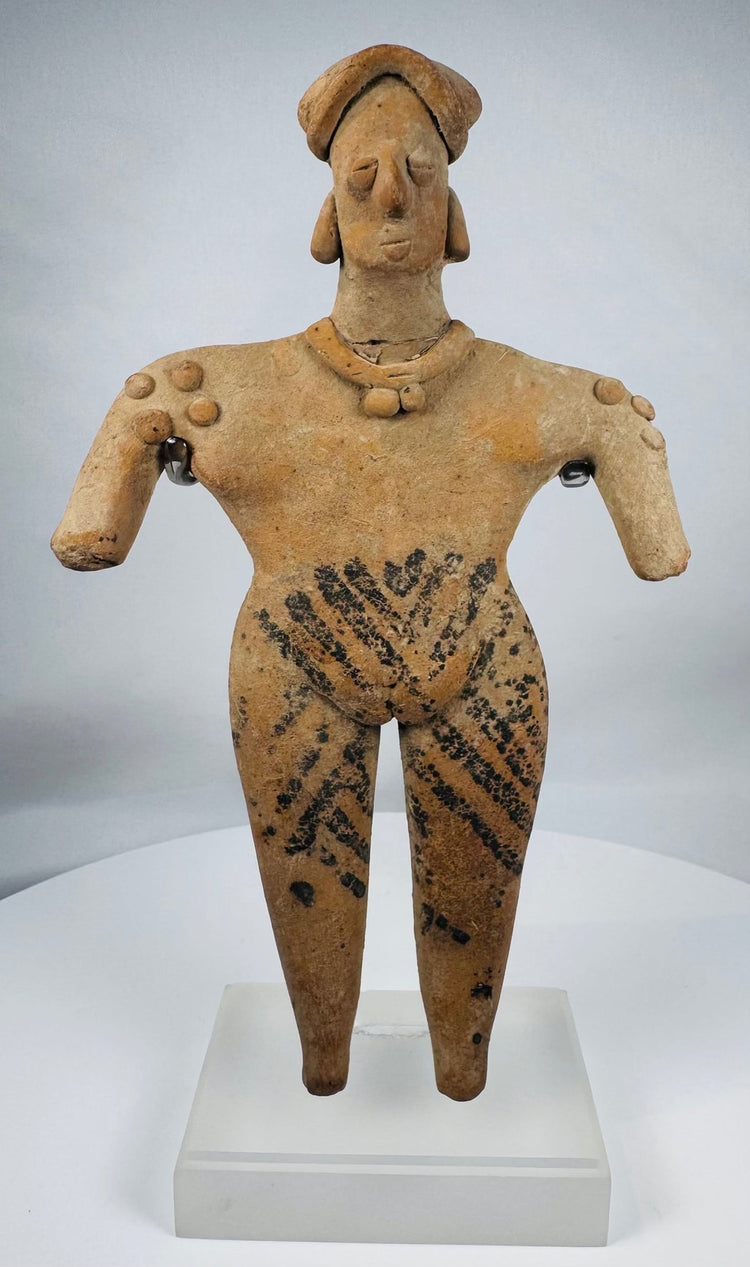
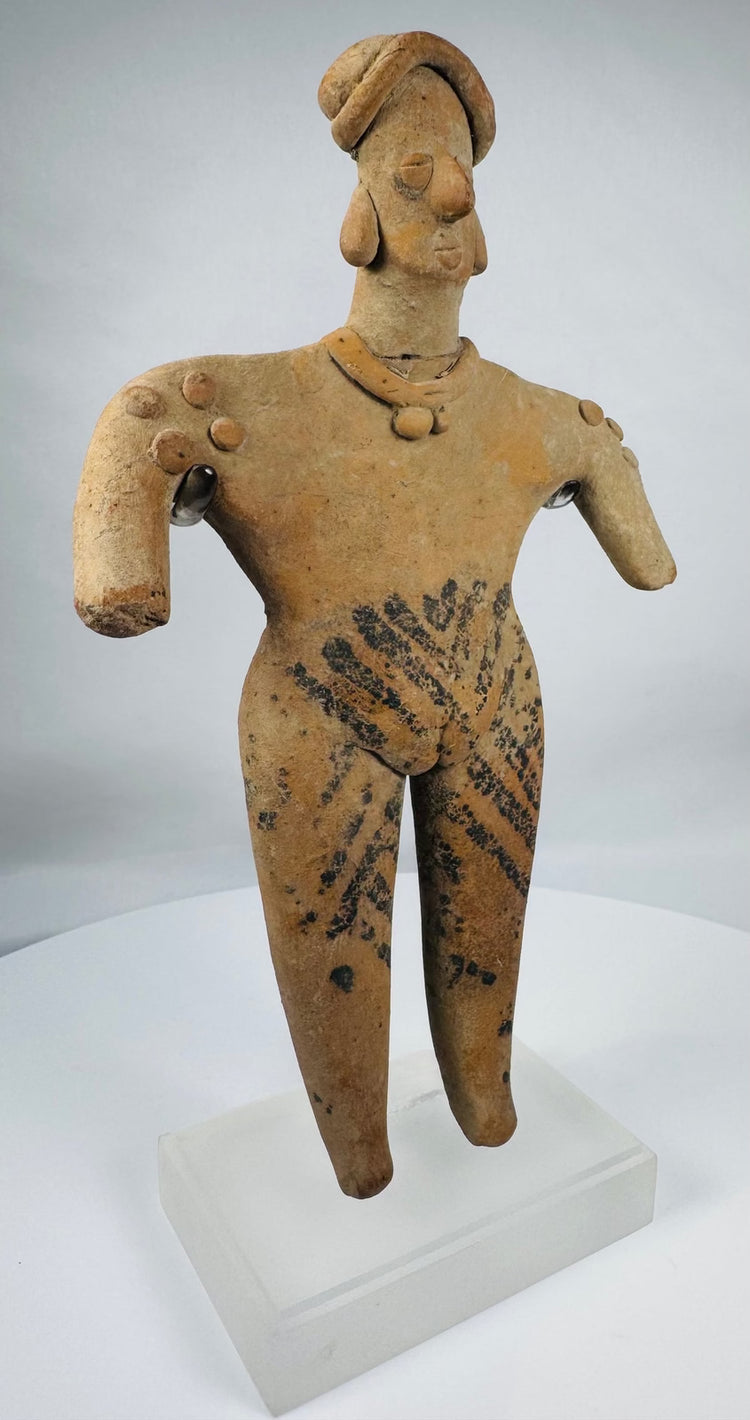
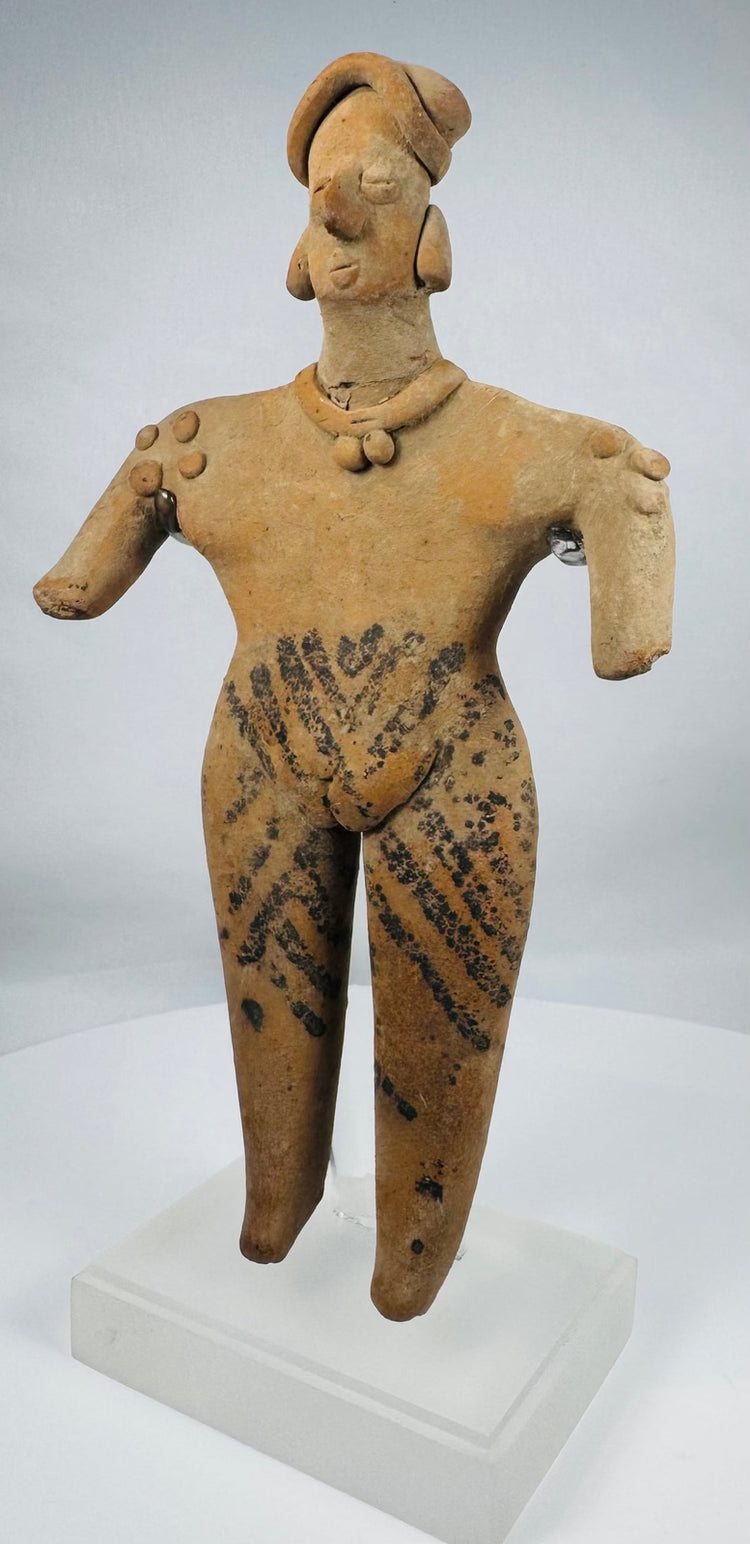
The figure stands upright with broad shoulders, a slender neck, and elongated legs. Her face is rendered in the characteristic Colima manner with almond-shaped eyes, a prominent nose, and pursed lips. She wears an elaborate headdress, pendant ear ornaments, and a necklace adorned with applied spherical beads. Additional raised appliqué elements decorate the shoulders, suggesting jewelry, scarification, or ceremonial body ornamentation.
Particularly notable are the surviving black-painted geometric motifs covering the lower torso and legs. Such painted decoration is frequently associated with ritual body painting, textile patterns, or status markers represented in Colima figural art. The figure displays attractive earthen surfaces with visible mineral deposits and age-related wear consistent with its antiquity.
Examples of Colima gingerbread figures are represented in major museum collections and are considered among the most recognizable sculptural forms produced by the ancient peoples of West Mexico.
Condition
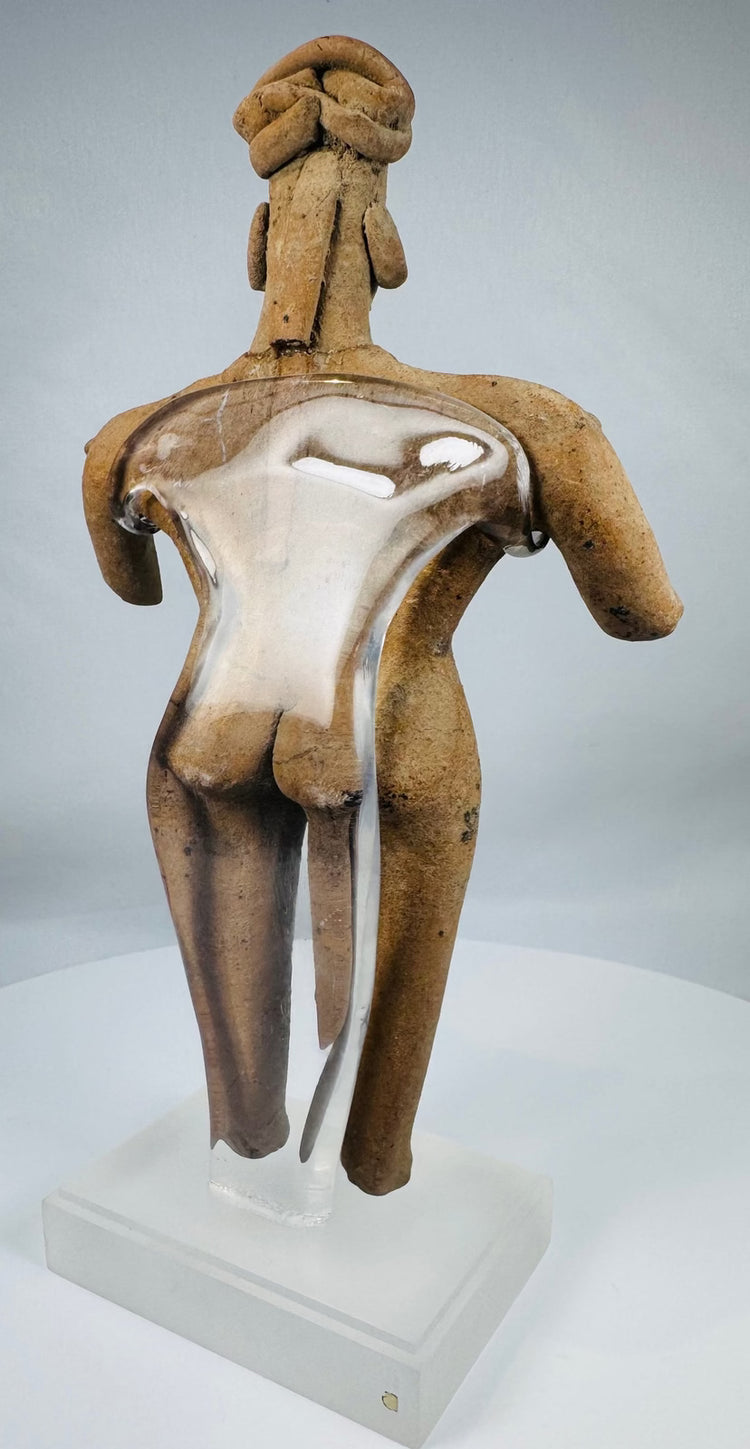
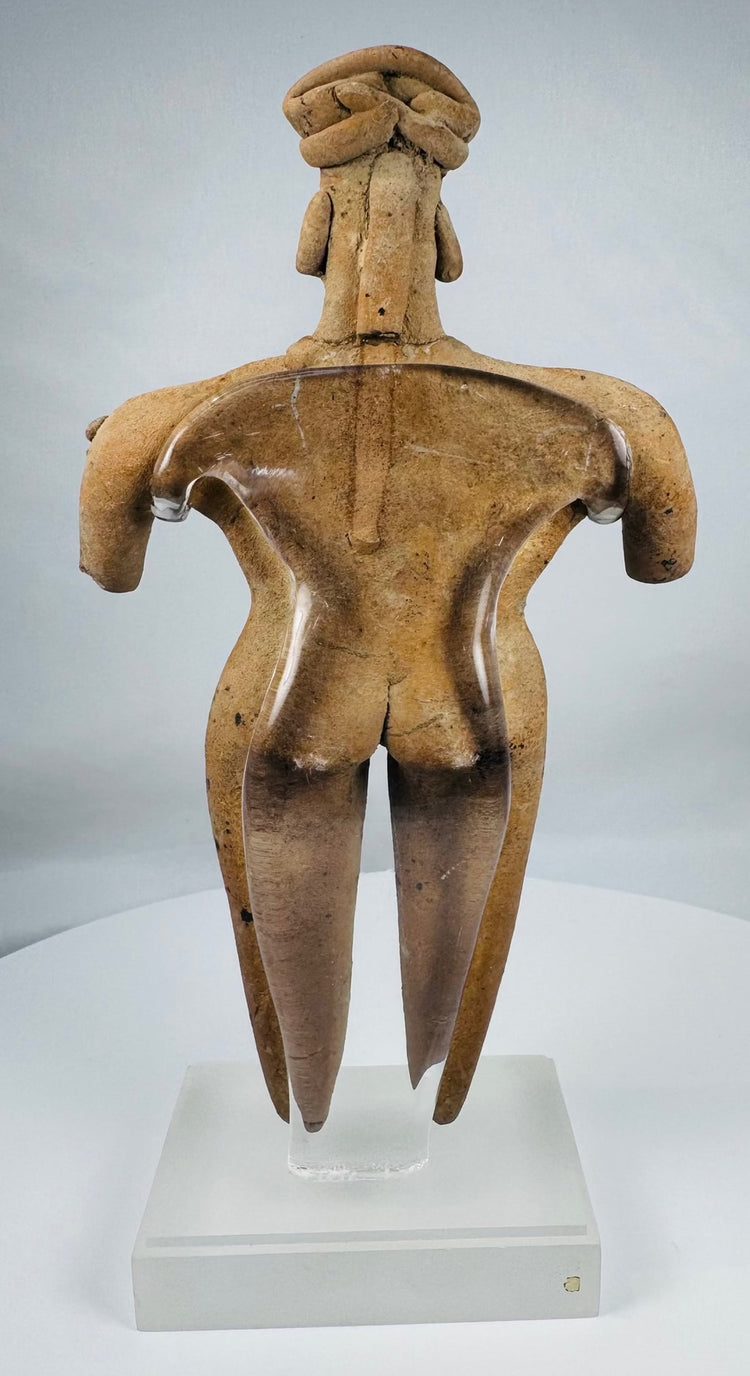
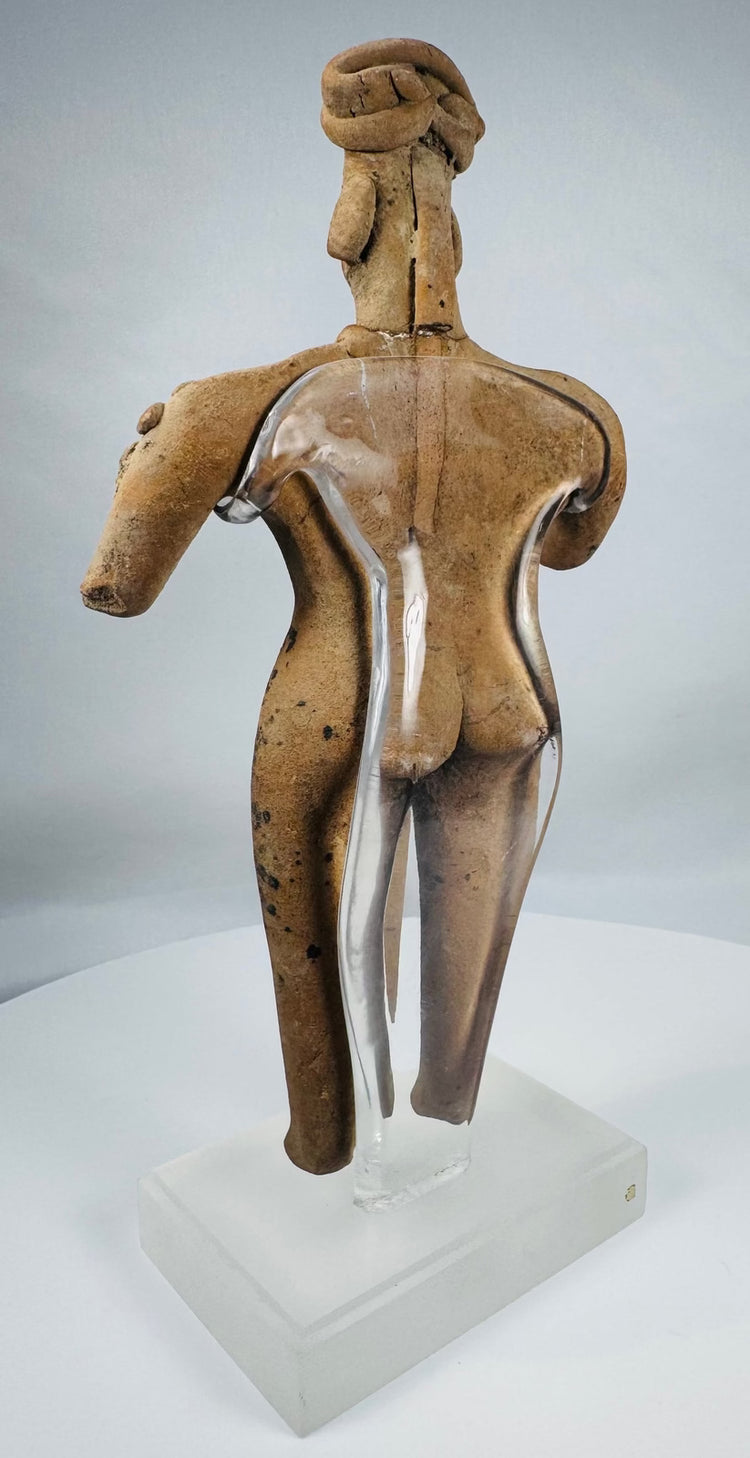
Good ancient condition overall. Surface wear, mineral encrustation, firing imperfections, pigment loss, and age-related weathering throughout. Old restoration and stabilization visible around the neck area. Arms remain partially preserved with expected losses and wear consistent with burial and age. Mounted on a custom display stand.
Dimensions (Approximate)
Height: 9 in
Age (Approximate)
1,700–2,300 years old
Provenance
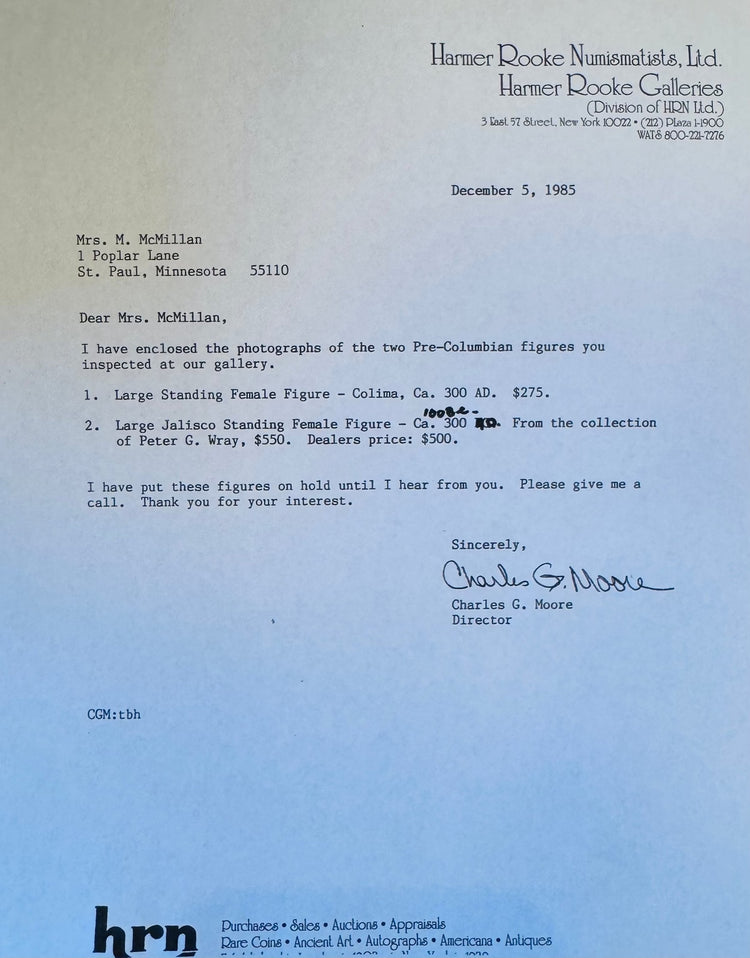
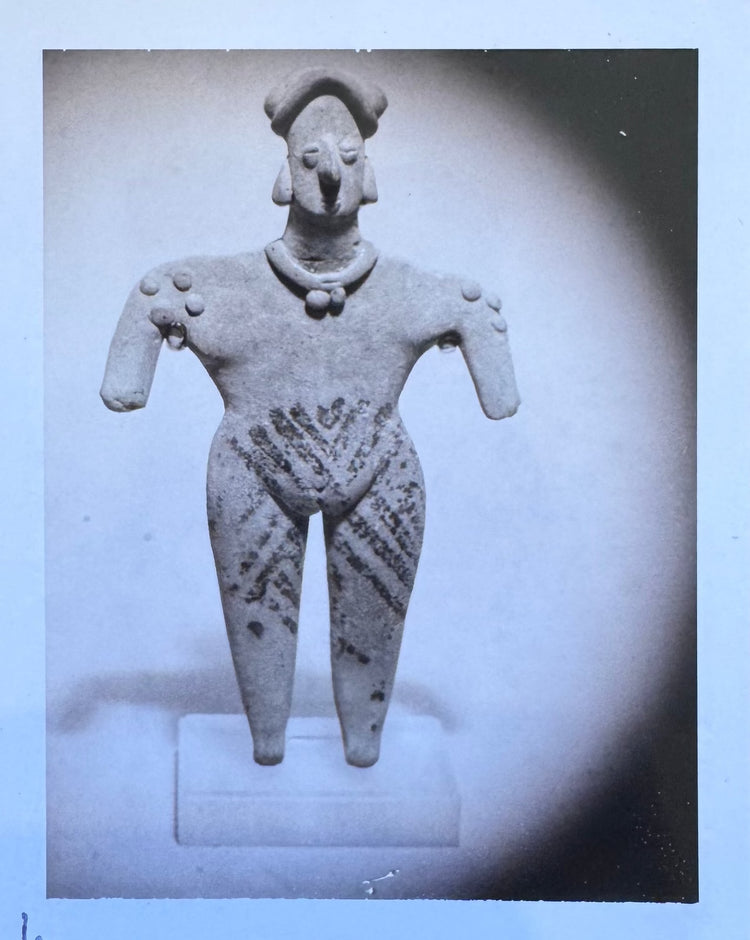
Harmer Rooke Galleries, New York, December 5, 1985. Accompanied by the original signed gallery correspondence from Charles G. Moore, Director of Harmer Rooke Galleries, identifying the figure as a "Large Standing Female Figure – Colima, ca. 300 AD," together with the original gallery photograph of the piece. The letter was addressed to Mrs. M. McMillan of St. Paul, Minnesota, documenting the figure's offering through the gallery in 1985.
Thereafter held in the private collection of Mrs. M. McMillan, St. Paul, Minnesota, USA, for several decades before acquisition by the current owner. The figure remains accompanied by its original gallery documentation and period collection photograph.
Learn More
Learn about the history and cultural legacy of the Colima civilization through Colima
Explore Our Collection of Ancient Pre-Columbian Artifacts
Description
Historical Context & Origin
Region: Colima Culture, West Mexico
Material: Hand-modeled terracotta with black pigment decoration
Period: Late Pre-Classic to Early Classic Period, circa 300 BCE–300 CE
Description
This ancient Colima terracotta female figure belongs to a distinctive group of West Mexican ceramic sculptures commonly referred to by collectors and scholars as "gingerbread figures" due to their broad, flattened bodies and stylized proportions. Created during the flourishing shaft-tomb tradition of Colima, these figures served as funerary offerings and likely represented ancestors, elite individuals, fertility figures, or participants in ceremonial life.
The figure stands upright with broad shoulders, a slender neck, and elongated legs. Her face is rendered in the characteristic Colima manner with almond-shaped eyes, a prominent nose, and pursed lips. She wears an elaborate headdress, pendant ear ornaments, and a necklace adorned with applied spherical beads. Additional raised appliqué elements decorate the shoulders, suggesting jewelry, scarification, or ceremonial body ornamentation.
Particularly notable are the surviving black-painted geometric motifs covering the lower torso and legs. Such painted decoration is frequently associated with ritual body painting, textile patterns, or status markers represented in Colima figural art. The figure displays attractive earthen surfaces with visible mineral deposits and age-related wear consistent with its antiquity.
Examples of Colima gingerbread figures are represented in major museum collections and are considered among the most recognizable sculptural forms produced by the ancient peoples of West Mexico.
Condition
Good ancient condition overall. Surface wear, mineral encrustation, firing imperfections, pigment loss, and age-related weathering throughout. Old restoration and stabilization visible around the neck area. Arms remain partially preserved with expected losses and wear consistent with burial and age. Mounted on a custom display stand.
Dimensions (Approximate)
Height: 9 in
Age (Approximate)
1,700–2,300 years old
Provenance
Harmer Rooke Galleries, New York, December 5, 1985. Accompanied by the original signed gallery correspondence from Charles G. Moore, Director of Harmer Rooke Galleries, identifying the figure as a "Large Standing Female Figure – Colima, ca. 300 AD," together with the original gallery photograph of the piece. The letter was addressed to Mrs. M. McMillan of St. Paul, Minnesota, documenting the figure's offering through the gallery in 1985.
Thereafter held in the private collection of Mrs. M. McMillan, St. Paul, Minnesota, USA, for several decades before acquisition by the current owner. The figure remains accompanied by its original gallery documentation and period collection photograph.
Learn More
Learn about the history and cultural legacy of the Colima civilization through Colima
Explore Our Collection of Ancient Pre-Columbian Artifacts
You May Also Like
