

Collection of Three Fossil Trilobites | 400–359 million years ago
Couldn't load pickup availability


Collection of Three Fossil Trilobites | 400–359 million years ago
Description
More
Less
Historical Context & Origin
Region: Newcastle, Wyoming, USA
Material: Fossilized trilobite exoskeletons preserved in sedimentary stone
Period: Paleozoic Era
Description
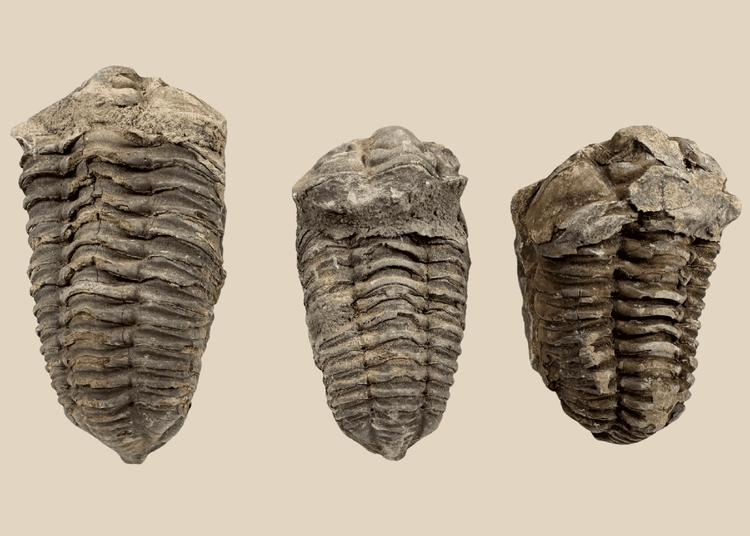
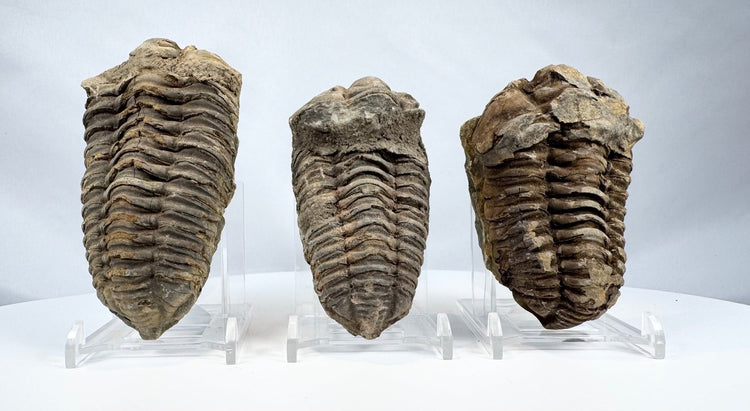
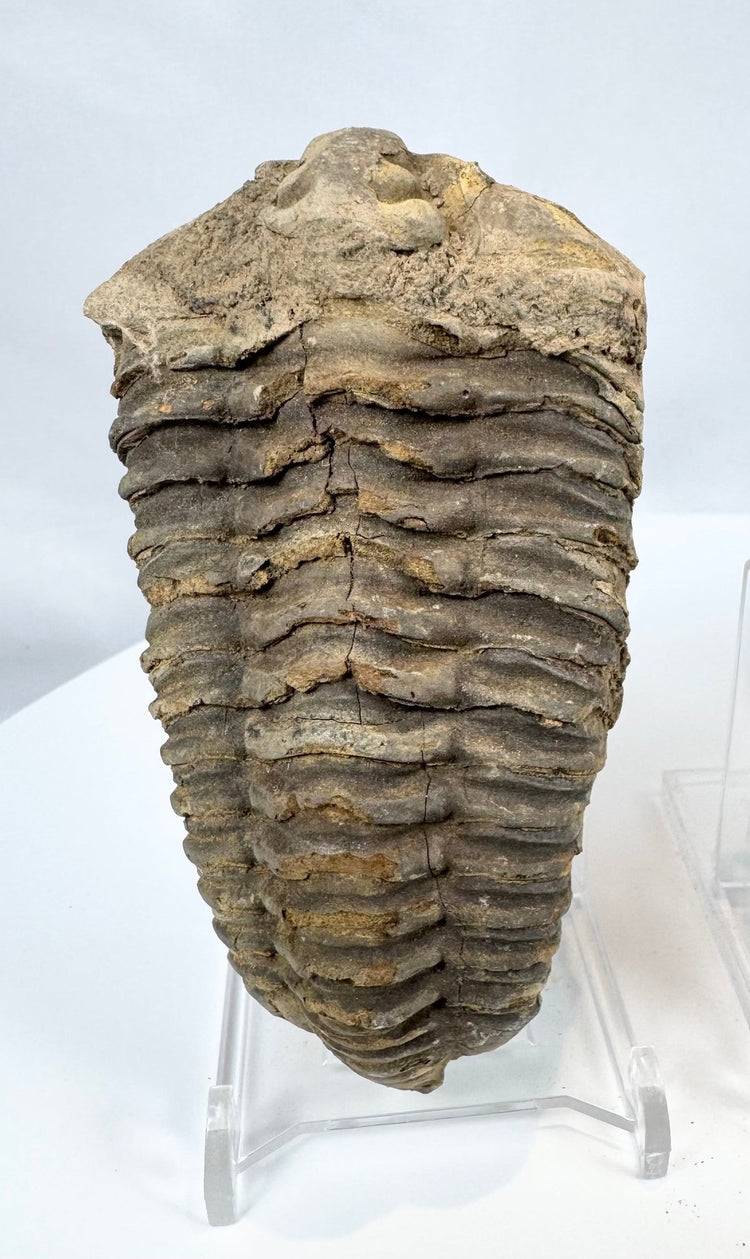
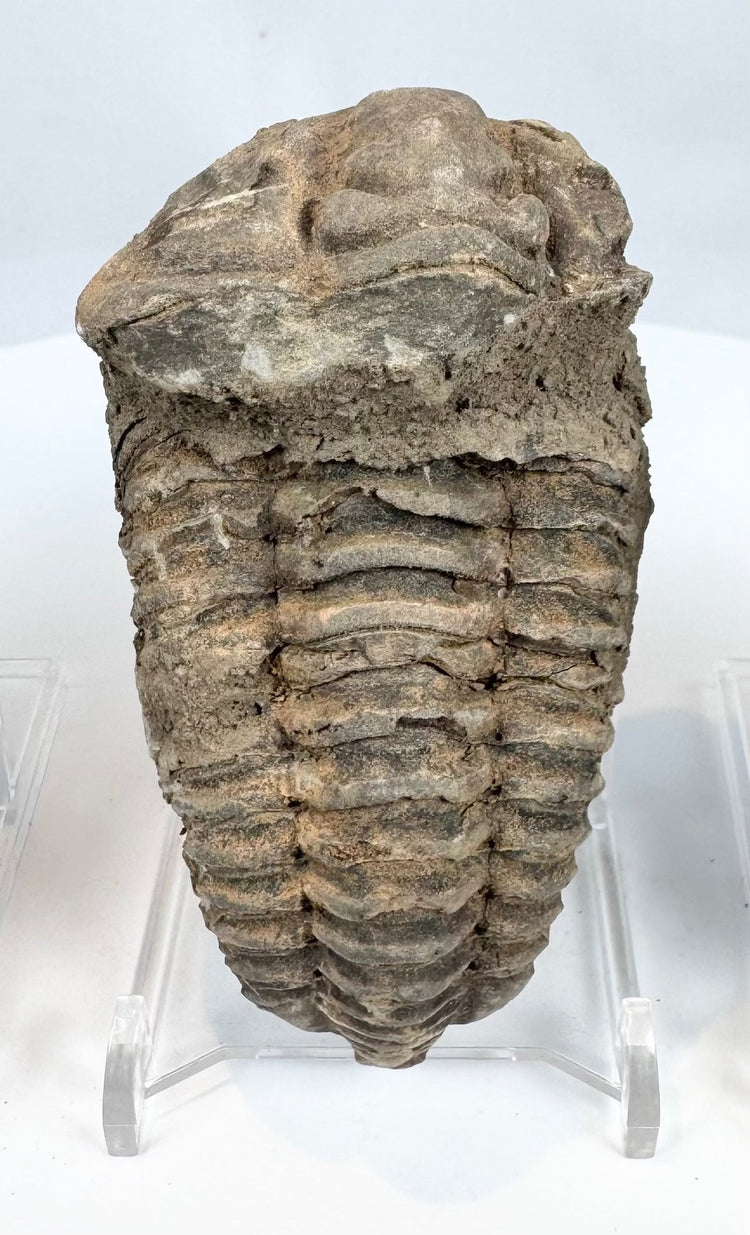
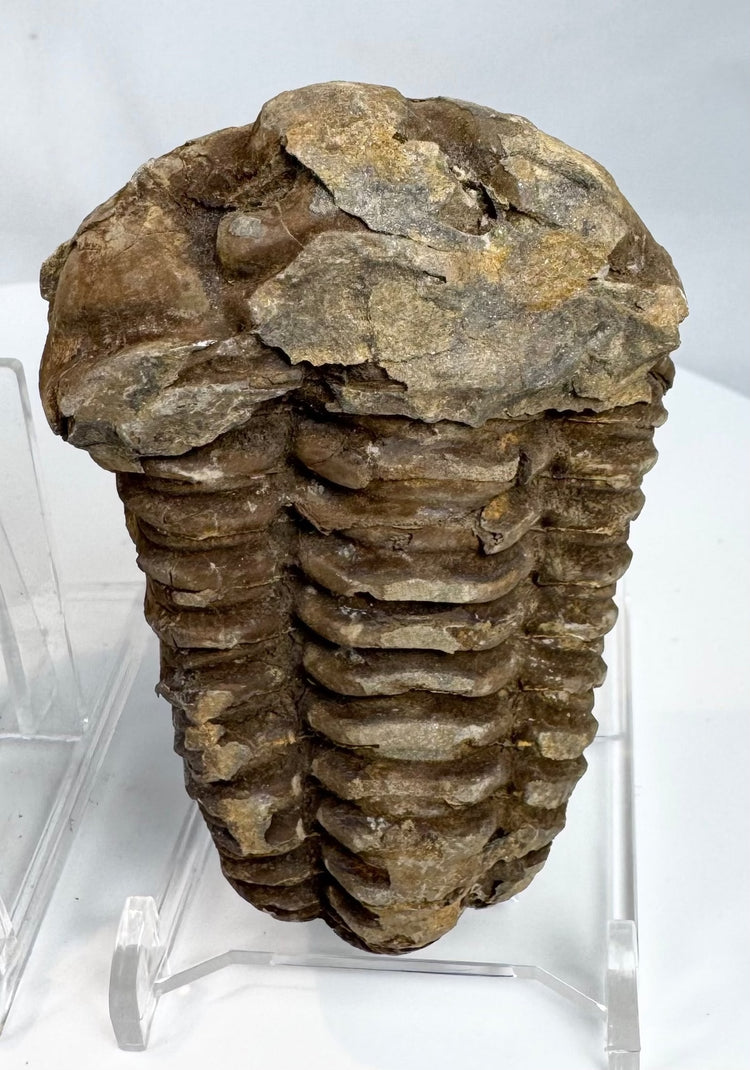
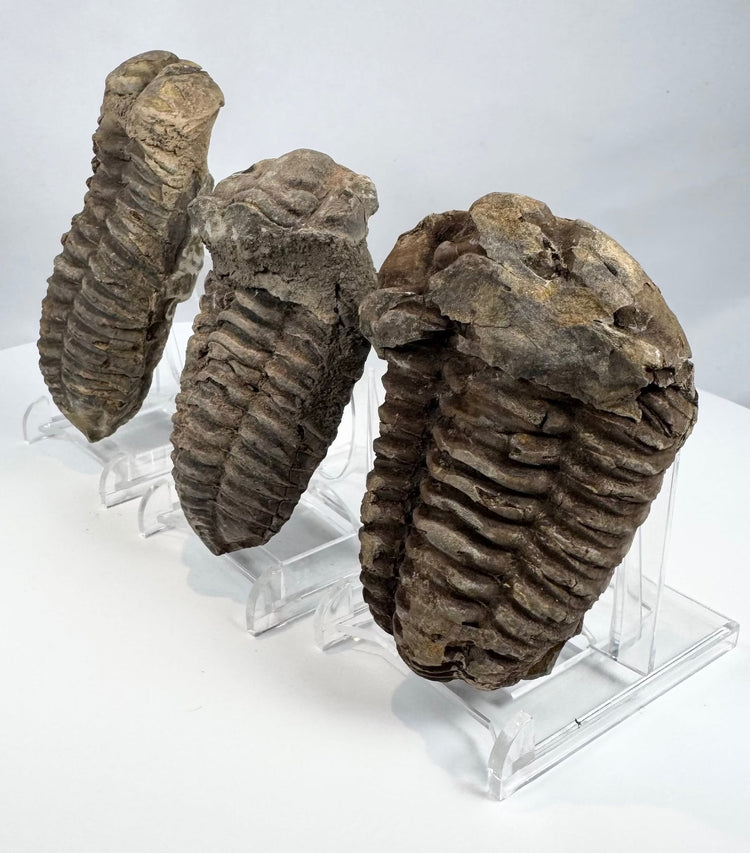
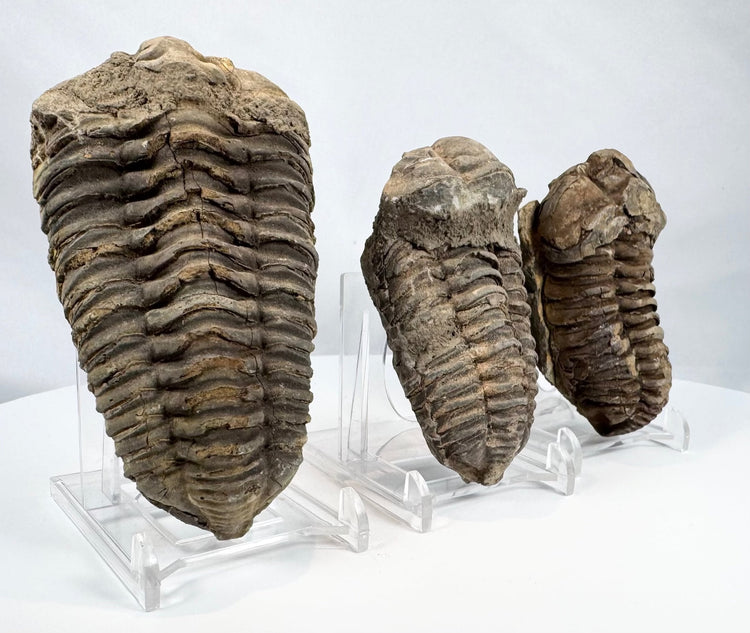
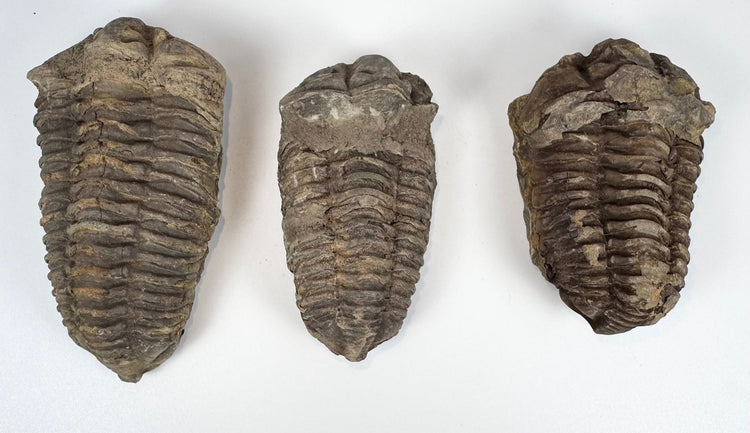
This collection comprises three substantial trilobite fossils, preserving the distinctive segmented anatomy of one of the most recognizable groups of prehistoric marine arthropods. Each specimen displays the characteristic trilobite body plan, with a central axial region flanked by lateral lobes and a prominently articulated series of thoracic segments.
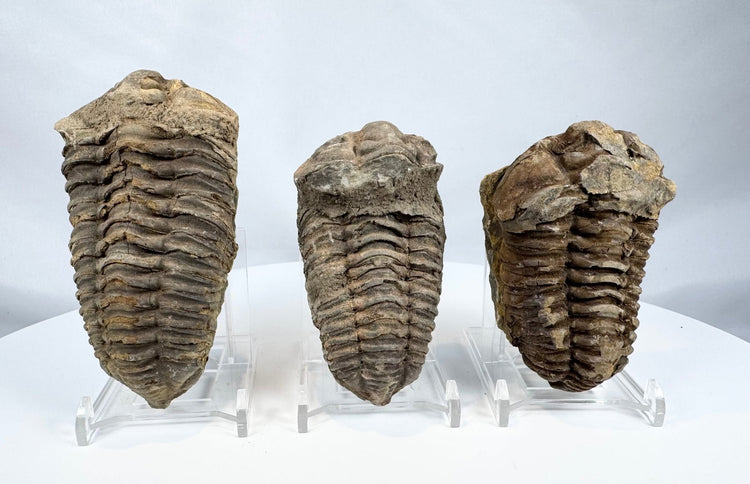
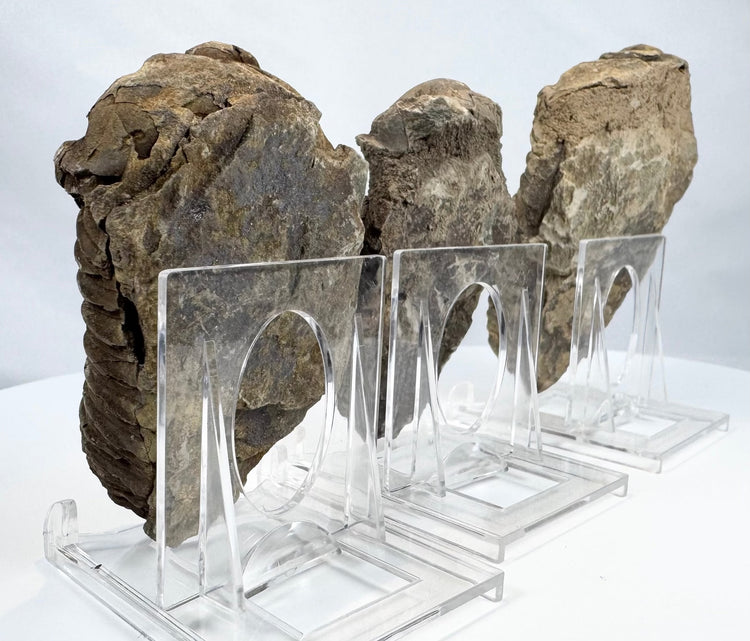
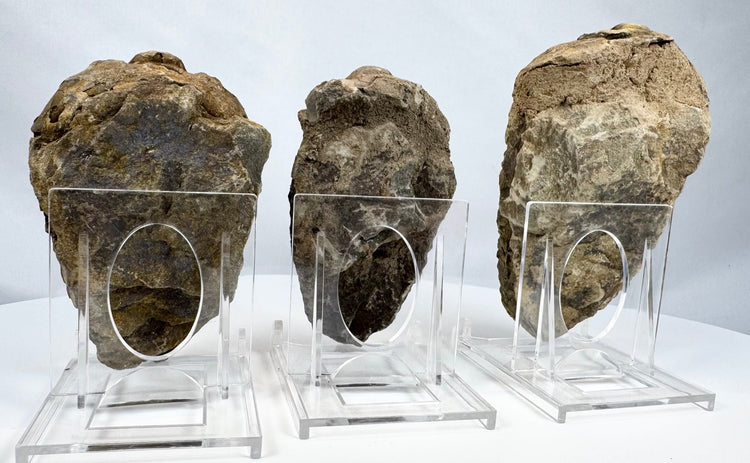
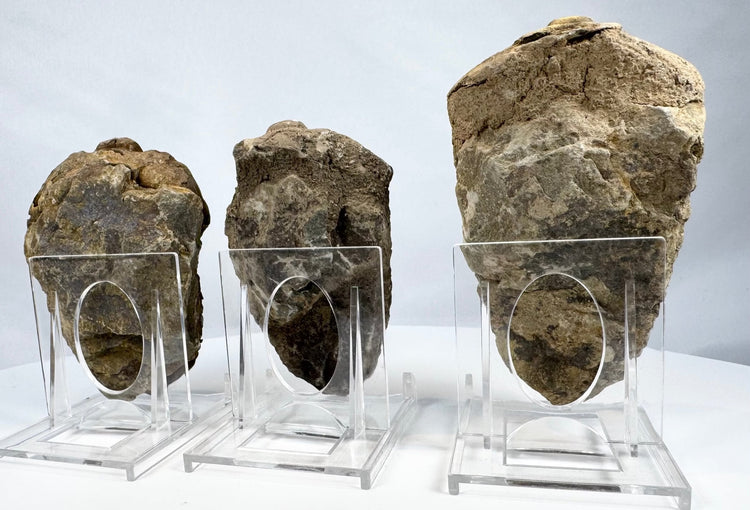
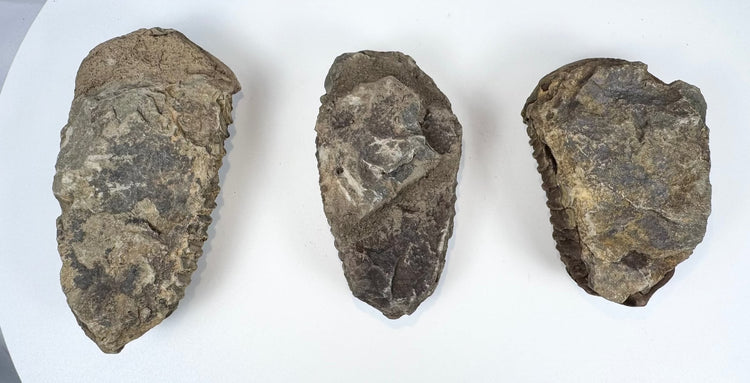
The three fossils vary naturally in form, coloration, and preservation, ranging from lighter grey-brown to deeper earthy tones. Areas of adhering matrix remain visible, particularly around the cephalic regions and on the reverse, providing an evocative record of the sediment in which the specimens were preserved.
Presented together, the group offers an impressive glimpse into marine ecosystems that existed hundreds of millions of years before the appearance of dinosaurs.
Features
- Collection of three genuine fossil trilobite specimens
- Clearly defined segmented exoskeletons and characteristic trilobite anatomy
- Natural grey, brown, and earthen mineral coloration
- Areas of original sedimentary matrix retained
- Each specimen displays individual variations in preservation and form
- Acquired from an established Canadian fossil and mineral dealer
Cultural & Scientific Significance
Trilobites were among the most successful early marine arthropods, inhabiting the world's oceans for approximately 270 million years before disappearing during the end-Permian mass extinction around 252 million years ago. Their extensive fossil record has made them particularly important to paleontology, helping researchers reconstruct ancient marine environments and correlate geological formations across different regions.
Their articulated exoskeletons also preserve an extraordinary visual record of early arthropod evolution. With their repeated body segments, protective cephala, and highly recognizable three-lobed anatomy, trilobites have consequently become some of the most widely collected fossils from the Paleozoic Era.
Condition
Well-preserved overall with substantial anatomical detail remaining visible. The specimens exhibit natural fractures, surface wear, mineral deposits, areas of adhering sedimentary matrix, and losses consistent with fossilization, excavation, and geological age. The reverse surfaces remain largely within their original stone matrix. Please refer to the photographs for the individual condition and preservation of each specimen.
Dimensions (Approximate)
Largest specimen:
Length: 4.25 in
Width: 2.5 in
Age (Approximate)
Paleozoic Era — hundreds of millions of years old
More precise geological dating would require confirmation of the trilobite identification and fossil-bearing formation.
Provenance
Acquired from Broken Rock Fossil Shop, Belfast, Prince Edward Island, Canada, an independent fossil and mineral shop operated by Linda Nobles and specializing in fossils, minerals, crystals, and other natural-history specimens.
The specimens were reportedly personally unearthed by Nobles during one of her field expeditions near Newcastle, Wyoming, USA, where she has participated in the discovery and excavation of prehistoric remains.
Subsequently acquired by a private collector in Toronto, Ontario, Canada.
Learn More
Explore the Trilobite Collection at the American Museum of Natural History to learn more about trilobite anatomy, evolution, and fossil preservation.
Browse our Collection of Science, Exploration & Curiosities.
Description
Historical Context & Origin
Region: Newcastle, Wyoming, USA
Material: Fossilized trilobite exoskeletons preserved in sedimentary stone
Period: Paleozoic Era
Description
This collection comprises three substantial trilobite fossils, preserving the distinctive segmented anatomy of one of the most recognizable groups of prehistoric marine arthropods. Each specimen displays the characteristic trilobite body plan, with a central axial region flanked by lateral lobes and a prominently articulated series of thoracic segments.
The three fossils vary naturally in form, coloration, and preservation, ranging from lighter grey-brown to deeper earthy tones. Areas of adhering matrix remain visible, particularly around the cephalic regions and on the reverse, providing an evocative record of the sediment in which the specimens were preserved.
Presented together, the group offers an impressive glimpse into marine ecosystems that existed hundreds of millions of years before the appearance of dinosaurs.
Features
- Collection of three genuine fossil trilobite specimens
- Clearly defined segmented exoskeletons and characteristic trilobite anatomy
- Natural grey, brown, and earthen mineral coloration
- Areas of original sedimentary matrix retained
- Each specimen displays individual variations in preservation and form
- Acquired from an established Canadian fossil and mineral dealer
Cultural & Scientific Significance
Trilobites were among the most successful early marine arthropods, inhabiting the world's oceans for approximately 270 million years before disappearing during the end-Permian mass extinction around 252 million years ago. Their extensive fossil record has made them particularly important to paleontology, helping researchers reconstruct ancient marine environments and correlate geological formations across different regions.
Their articulated exoskeletons also preserve an extraordinary visual record of early arthropod evolution. With their repeated body segments, protective cephala, and highly recognizable three-lobed anatomy, trilobites have consequently become some of the most widely collected fossils from the Paleozoic Era.
Condition
Well-preserved overall with substantial anatomical detail remaining visible. The specimens exhibit natural fractures, surface wear, mineral deposits, areas of adhering sedimentary matrix, and losses consistent with fossilization, excavation, and geological age. The reverse surfaces remain largely within their original stone matrix. Please refer to the photographs for the individual condition and preservation of each specimen.
Dimensions (Approximate)
Largest specimen:
Length: 4.25 in
Width: 2.5 in
Age (Approximate)
Paleozoic Era — hundreds of millions of years old
More precise geological dating would require confirmation of the trilobite identification and fossil-bearing formation.
Provenance
Acquired from Broken Rock Fossil Shop, Belfast, Prince Edward Island, Canada, an independent fossil and mineral shop operated by Linda Nobles and specializing in fossils, minerals, crystals, and other natural-history specimens.
The specimens were reportedly personally unearthed by Nobles during one of her field expeditions near Newcastle, Wyoming, USA, where she has participated in the discovery and excavation of prehistoric remains.
Subsequently acquired by a private collector in Toronto, Ontario, Canada.
Learn More
Explore the Trilobite Collection at the American Museum of Natural History to learn more about trilobite anatomy, evolution, and fossil preservation.
Browse our Collection of Science, Exploration & Curiosities.
You May Also Like
