

Double Quarter-Plate Ambrotype Portrait Set in Thermoplastic Union Case | Circa 1855–1865
Couldn't load pickup availability




Double Quarter-Plate Ambrotype Portrait Set in Thermoplastic Union Case | Circa 1855–1865
Description
More
Less
Historical Context & Origin
Region: United States or Western Europe
Material: Glass ambrotypes housed in a molded thermoplastic union case with gilt brass mats and velvet lining
Period: Mid-19th Century CE, circa 1855–1865
Description
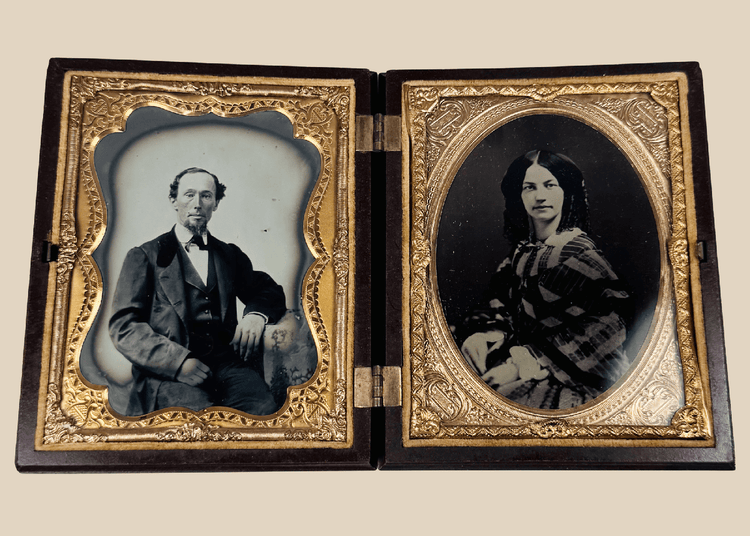
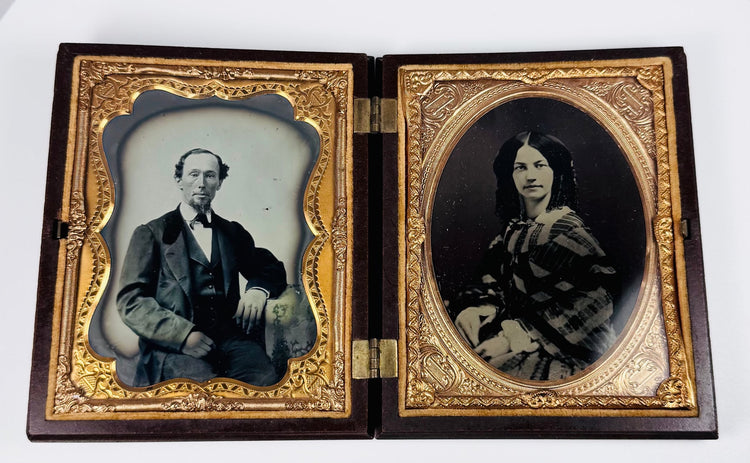
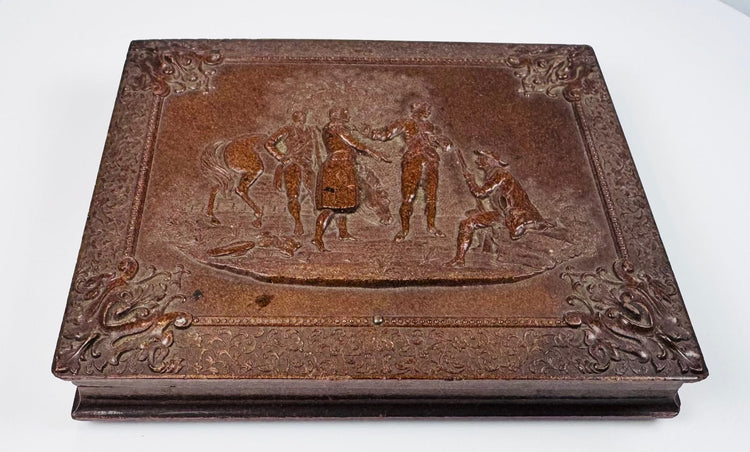
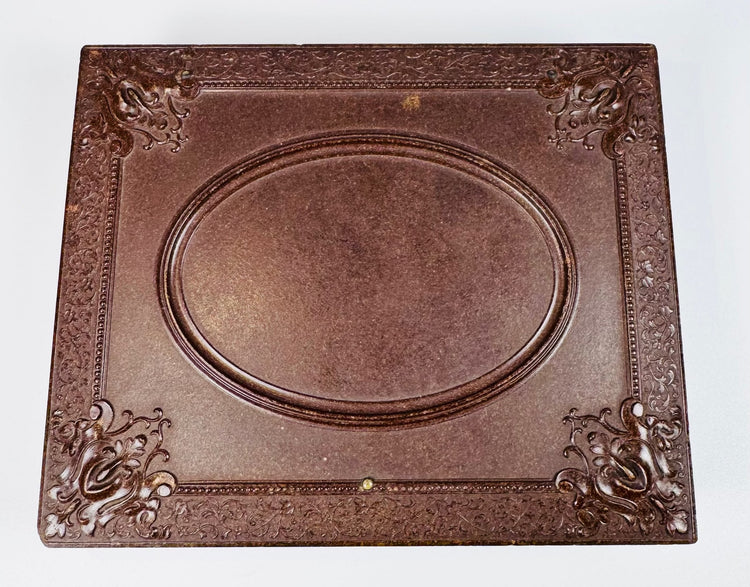
This remarkable fully cased photographic set comprises two original quarter-plate ambrotypes housed within an elaborately molded thermoplastic union case. The case exterior features finely detailed floral and scrollwork borders surrounding a central vignette depicting a nineteenth-century genre scene with elegantly dressed figures and a horse, executed in raised relief. The reverse retains a complementary oval reserve framed by matching ornamentation.
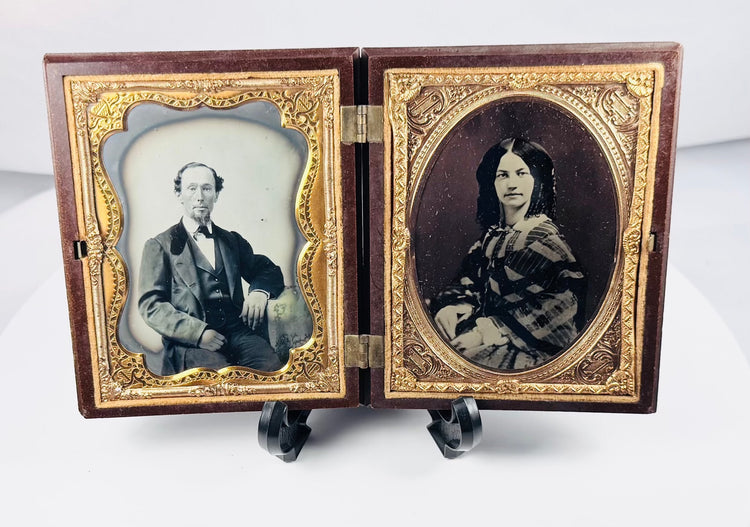
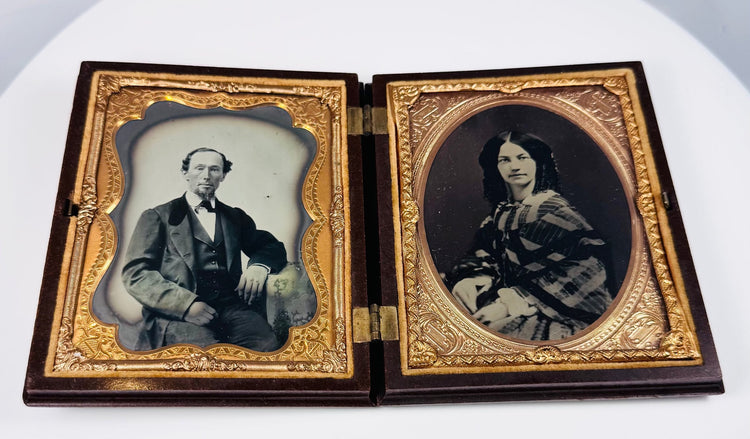
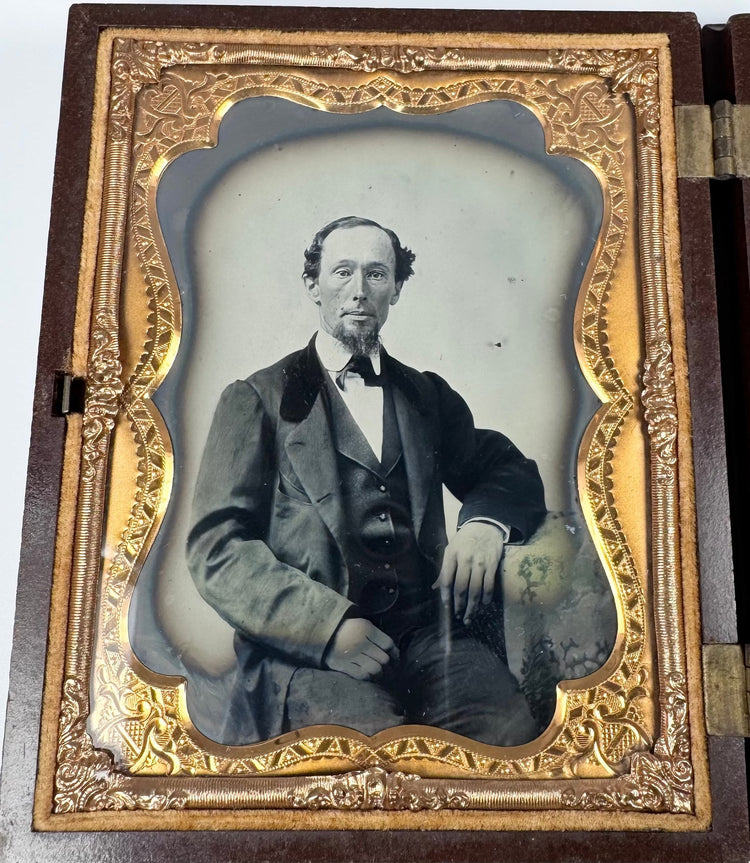
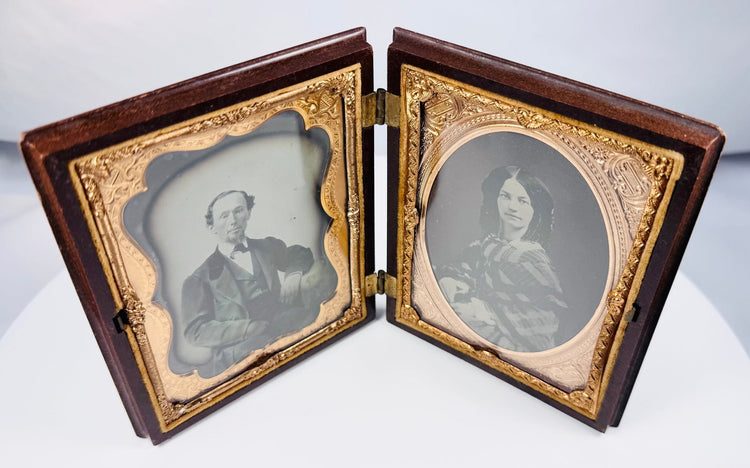
The interior contains a paired portrait of a gentleman and a young woman, each presented in three-quarter-length view beneath their original gilt brass mats and protective glass covers. The gentleman appears formally attired in a dark three-piece suit with bow tie and neatly trimmed goatee, seated with one arm resting casually beside him. Opposite, the young woman is depicted wearing a striking plaid dress with voluminous sleeves and carefully styled ringlet curls characteristic of mid-Victorian fashion.
Ambrotypes, created by exposing photographic images directly onto glass plates backed with dark material, became one of the most popular photographic formats of the mid-nineteenth century. Their clarity, relative affordability, and intimate presentation made them highly prized keepsakes among Victorian families.
Based on the dimensions and format, this example appears to be a double quarter-plate ambrotype set, retaining its original thermoplastic case, brass mats, velvet liners, and period hinges.
Features
- Original molded thermoplastic union case
- Elaborate exterior decoration featuring floral scrollwork and a figural scene
- Two original ambrotype portraits under glass
- Portrait of a gentleman in formal attire with bow tie and goatee
- Portrait of a young woman wearing a plaid Victorian dress
- Original gilt brass mats and surrounds
- Velvet-lined interior
- Retains original hinges and clasp fittings
- Housed in its complete period presentation case
Cultural Significance
The ambrotype process, patented in the 1850s, revolutionized portrait photography by allowing individuals and families to obtain highly detailed likenesses at a fraction of the cost of painted portraits. During the Victorian era, paired portrait cases such as this frequently commemorated husbands and wives, siblings, courtship couples, or close family members.
Thermoplastic union cases represent an important chapter in photographic history. Manufactured from a hardened material composed of shellac and wood flour, these cases were durable yet richly decorative, often featuring romantic, allegorical, or pastoral motifs. Today, intact double ambrotype cases are increasingly sought after by collectors for both their photographic and decorative significance.
Condition
The set remains in good antique condition and retains its original thermoplastic case, gilt brass mats, and interior fittings. The photographs exhibit expected age-related wear, including minor surface marks and light imperfections consistent with nineteenth-century photographic processes. The case displays scattered rubbing and wear commensurate with age and handling, while the hinges remain functional.
Dimensions (Approximate)
Height: 5 in
Width: 4 in
Depth: 1 in
Age (Approximate)
160–170 years old
Provenance
From a substantial private collection of nineteenth and early twentieth-century photography assembled in Columbus, Ohio, USA. The collection was formed over many decades and comprised a wide range of photographic processes, including daguerreotypes, ambrotypes, tintypes, cabinet cards, cartes de visite, and related photographic ephemera.
Learn More
Discover how ambrotypes were made and why they became a popular form of nineteenth-century portrait photography through the Cincinnati Museum Center
Browse our curated Collection of Victorian Artifacts & Historic Relics
Description
Historical Context & Origin
Region: United States or Western Europe
Material: Glass ambrotypes housed in a molded thermoplastic union case with gilt brass mats and velvet lining
Period: Mid-19th Century CE, circa 1855–1865
Description
This remarkable fully cased photographic set comprises two original quarter-plate ambrotypes housed within an elaborately molded thermoplastic union case. The case exterior features finely detailed floral and scrollwork borders surrounding a central vignette depicting a nineteenth-century genre scene with elegantly dressed figures and a horse, executed in raised relief. The reverse retains a complementary oval reserve framed by matching ornamentation.
The interior contains a paired portrait of a gentleman and a young woman, each presented in three-quarter-length view beneath their original gilt brass mats and protective glass covers. The gentleman appears formally attired in a dark three-piece suit with bow tie and neatly trimmed goatee, seated with one arm resting casually beside him. Opposite, the young woman is depicted wearing a striking plaid dress with voluminous sleeves and carefully styled ringlet curls characteristic of mid-Victorian fashion.
Ambrotypes, created by exposing photographic images directly onto glass plates backed with dark material, became one of the most popular photographic formats of the mid-nineteenth century. Their clarity, relative affordability, and intimate presentation made them highly prized keepsakes among Victorian families.
Based on the dimensions and format, this example appears to be a double quarter-plate ambrotype set, retaining its original thermoplastic case, brass mats, velvet liners, and period hinges.
Features
- Original molded thermoplastic union case
- Elaborate exterior decoration featuring floral scrollwork and a figural scene
- Two original ambrotype portraits under glass
- Portrait of a gentleman in formal attire with bow tie and goatee
- Portrait of a young woman wearing a plaid Victorian dress
- Original gilt brass mats and surrounds
- Velvet-lined interior
- Retains original hinges and clasp fittings
- Housed in its complete period presentation case
Cultural Significance
The ambrotype process, patented in the 1850s, revolutionized portrait photography by allowing individuals and families to obtain highly detailed likenesses at a fraction of the cost of painted portraits. During the Victorian era, paired portrait cases such as this frequently commemorated husbands and wives, siblings, courtship couples, or close family members.
Thermoplastic union cases represent an important chapter in photographic history. Manufactured from a hardened material composed of shellac and wood flour, these cases were durable yet richly decorative, often featuring romantic, allegorical, or pastoral motifs. Today, intact double ambrotype cases are increasingly sought after by collectors for both their photographic and decorative significance.
Condition
The set remains in good antique condition and retains its original thermoplastic case, gilt brass mats, and interior fittings. The photographs exhibit expected age-related wear, including minor surface marks and light imperfections consistent with nineteenth-century photographic processes. The case displays scattered rubbing and wear commensurate with age and handling, while the hinges remain functional.
Dimensions (Approximate)
Height: 5 in
Width: 4 in
Depth: 1 in
Age (Approximate)
160–170 years old
Provenance
From a substantial private collection of nineteenth and early twentieth-century photography assembled in Columbus, Ohio, USA. The collection was formed over many decades and comprised a wide range of photographic processes, including daguerreotypes, ambrotypes, tintypes, cabinet cards, cartes de visite, and related photographic ephemera.
Learn More
Discover how ambrotypes were made and why they became a popular form of nineteenth-century portrait photography through the Cincinnati Museum Center
Browse our curated Collection of Victorian Artifacts & Historic Relics
You May Also Like
