

Early Etruscan Impasto Spiral Amphora | Circa 700–650 BCE
Couldn't load pickup availability



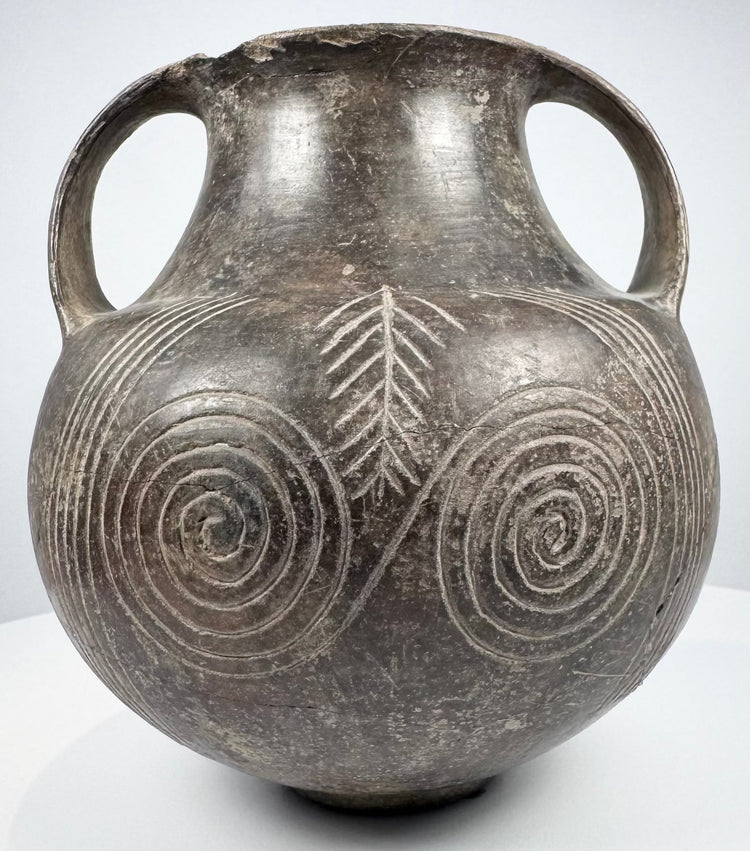
Early Etruscan Impasto Spiral Amphora | Circa 700–650 BCE
Description
More
Less
Historical Context & Origin
Region: Etruria, Central Italy
Material: Impasto terracotta
Period: Early Etruscan, 7th Century BCE, circa 700–650 BCE
Description
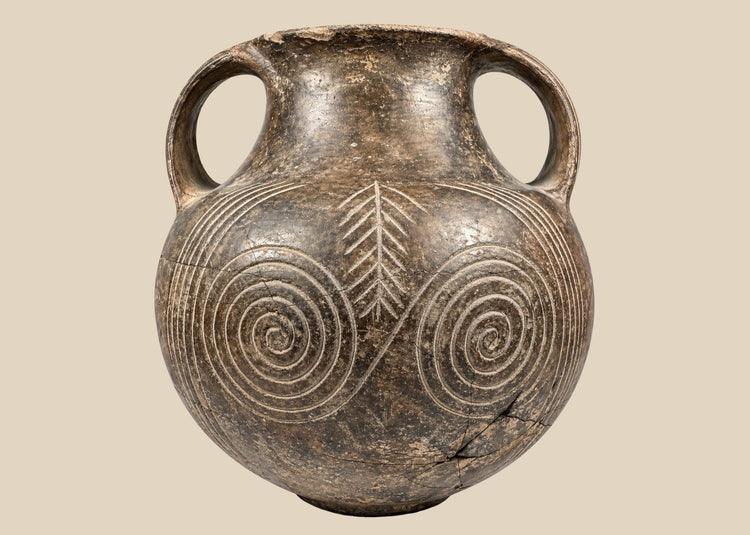
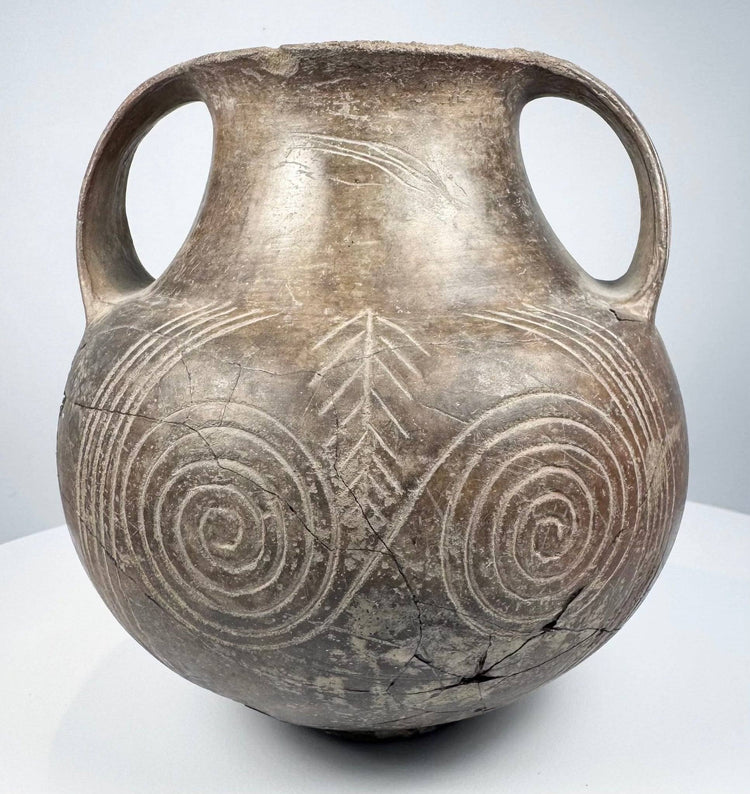
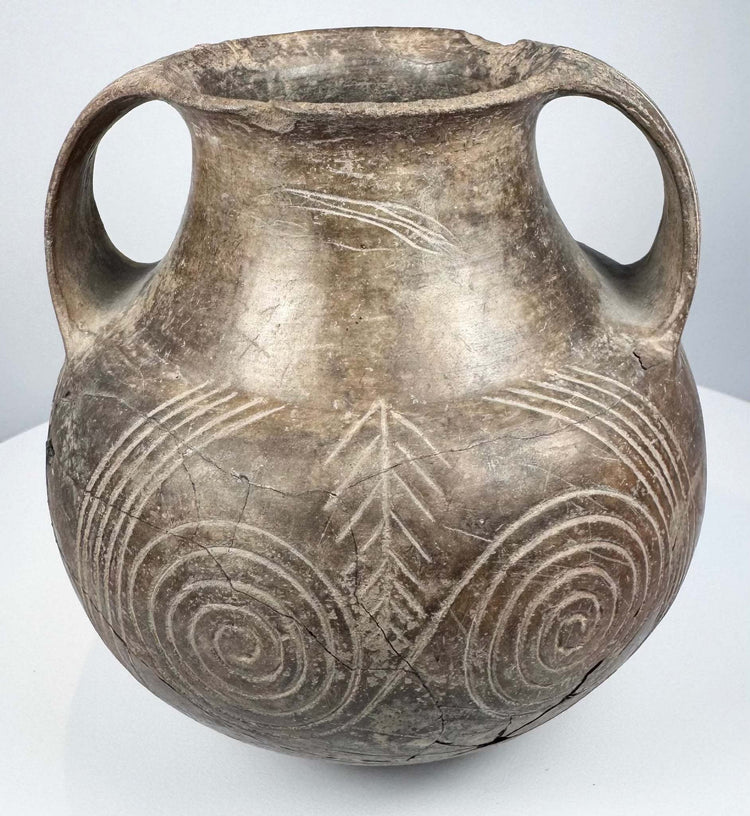
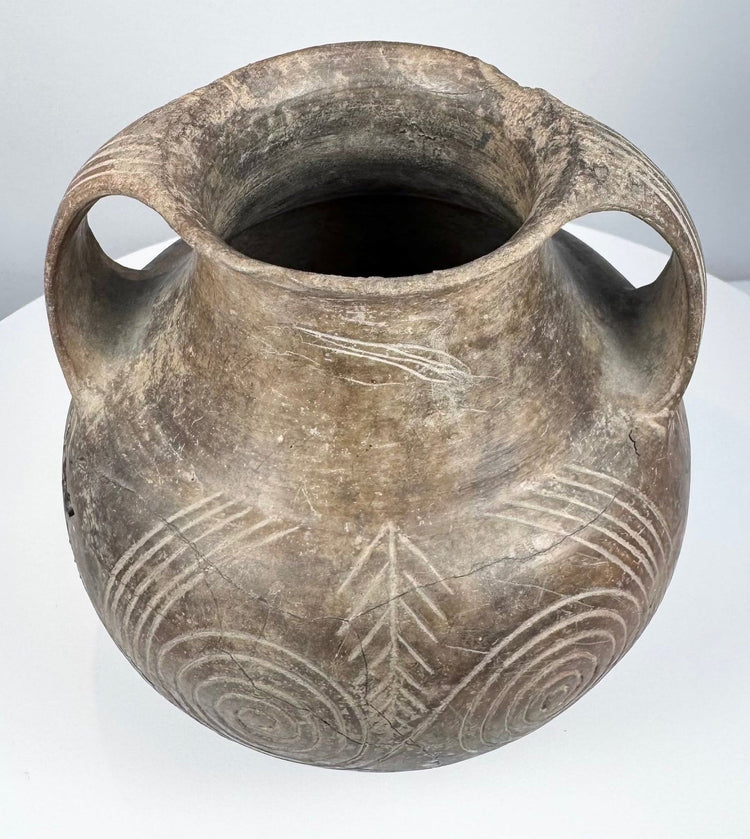
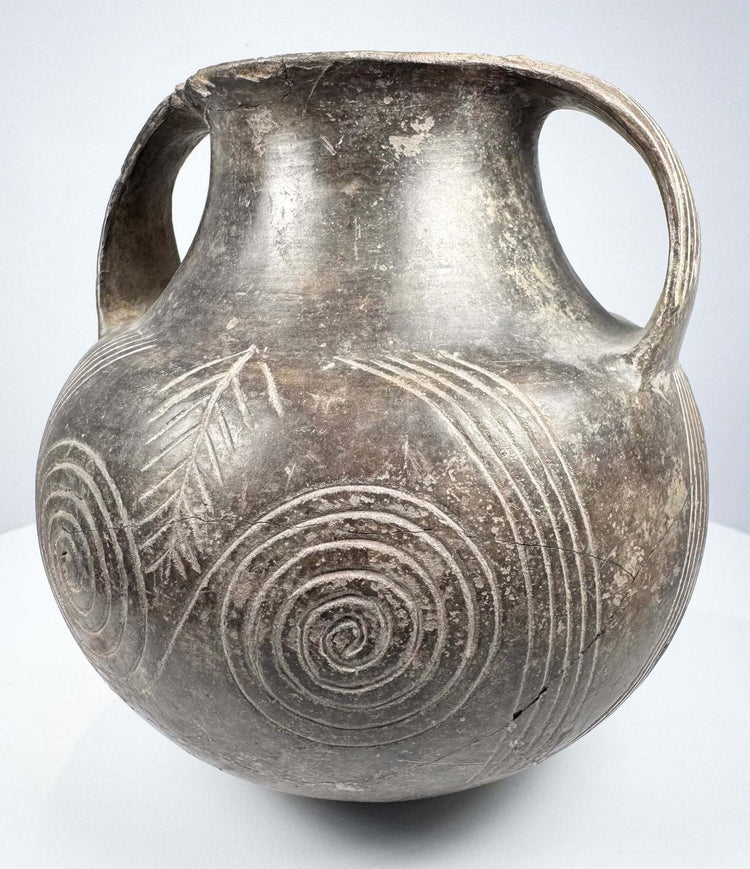
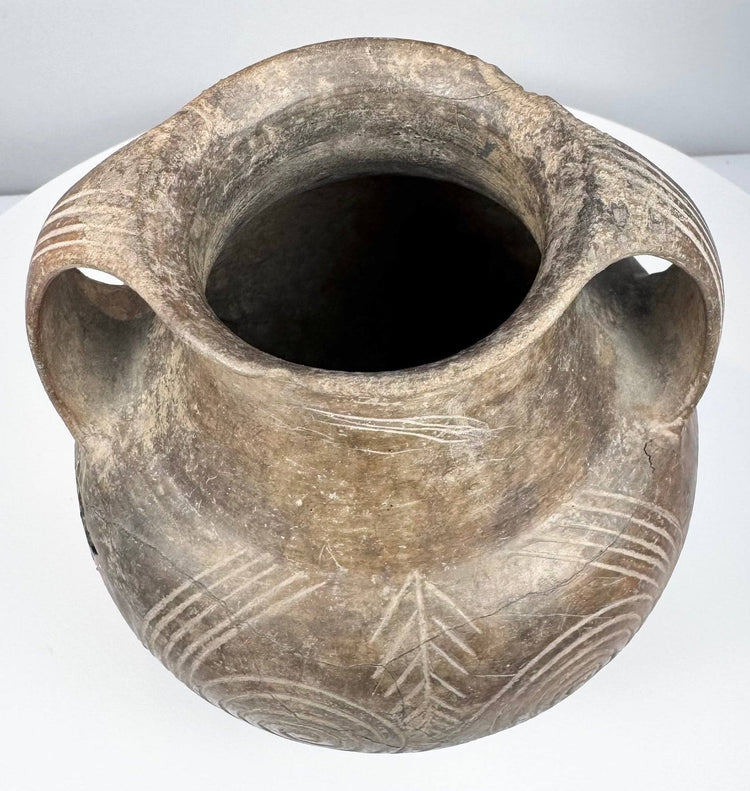
This ancient two-handled amphora is a finely preserved example of early Etruscan impasto pottery, likely produced in Central Italy during the 7th century BCE. Its compact globular body, short neck, projecting rim, and high loop handles correspond closely with a distinctive class of Etruscan vessels decorated with deeply incised spiral and geometric ornament.
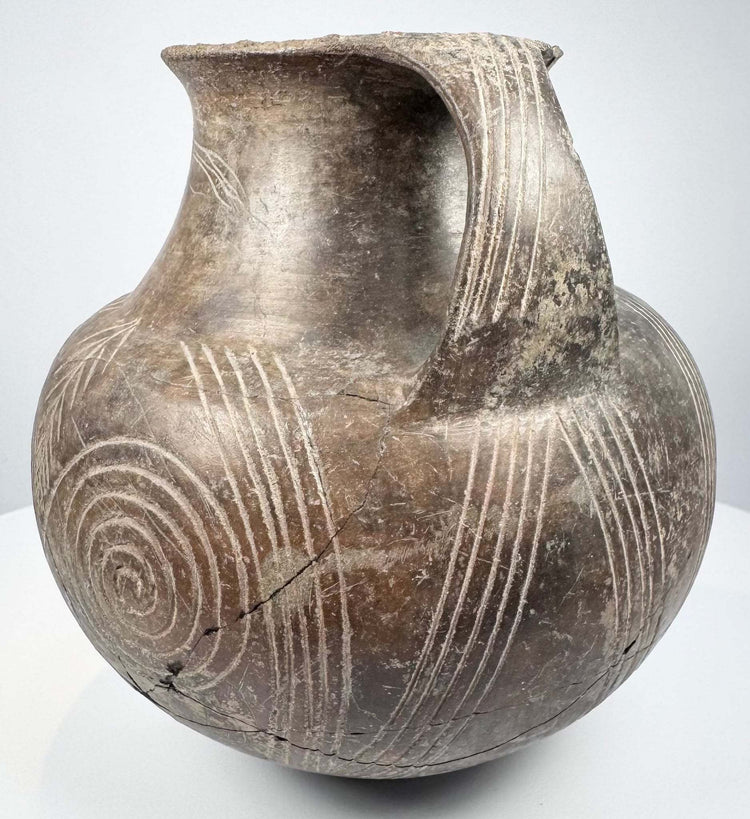
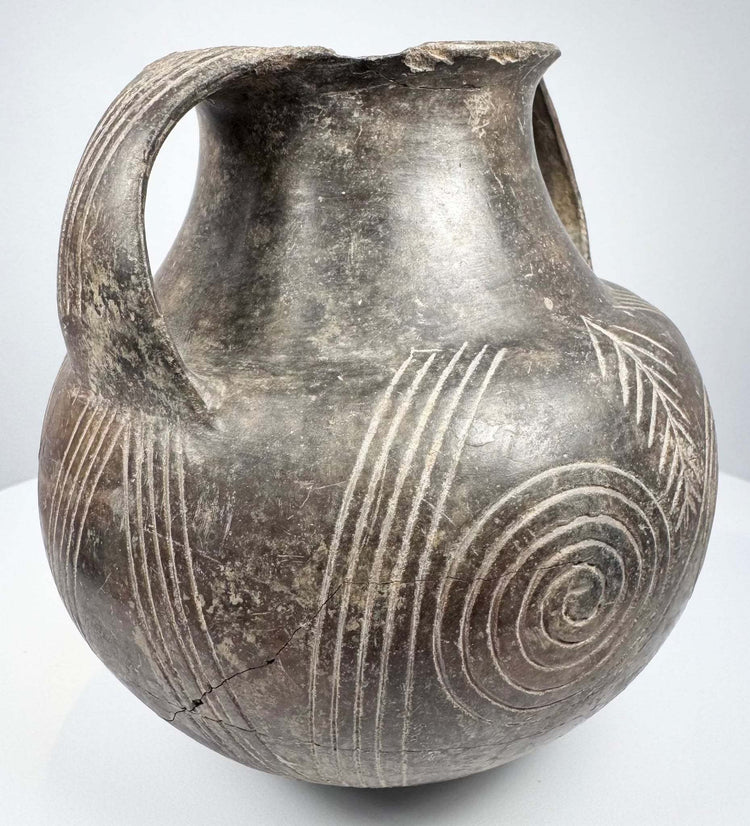
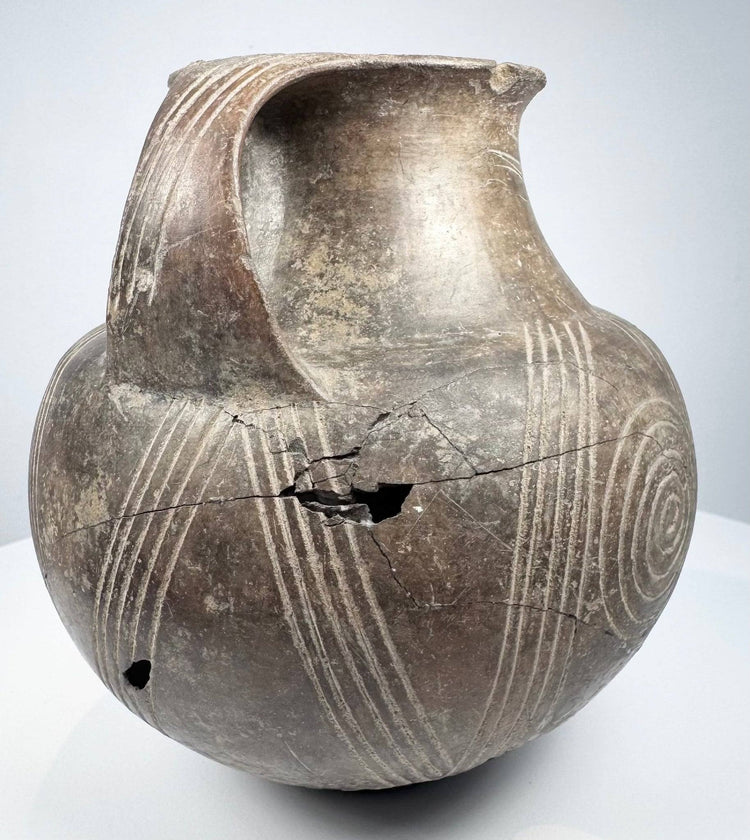
The surface is dominated by large concentric and double-spiral motifs arranged across the rounded body, accompanied by radiating, diagonal, and linear incisions. Comparable Etruscan amphorae from this period employ closely related spiral compositions, sometimes combined with rosettes, palmettes, diagonal bands, and other geometric elements.
The vessel is fashioned in impasto, an early Etruscan ceramic tradition characterized by hand-worked, relatively coarse clay containing natural mineral inclusions. The dark brown to grey-black surface reflects both the composition of the clay and ancient firing techniques associated with early Italic pottery production.
Its distinctive two-handled form also reflects an important relationship between ceramic and metal vessel traditions. Comparable Etruscan spiral amphorae feature thin handles and sharply articulated profiles believed to have been inspired by contemporary metal prototypes.
Features
- Early Etruscan two-handled amphora form
- Hand-worked impasto terracotta construction
- Large incised concentric and double-spiral motifs across the body
- Additional diagonal, linear, and radiating geometric decoration
- Rounded globular body with short narrowing neck
- Pair of high loop or strap handles extending from the shoulder to the rim
- Slightly projecting rim characteristic of comparable Etruscan forms
- Dark brown and grey-black ancient surface with natural mineral variation
- Surface wear and patina developed over approximately 2,700 years
Cultural Significance
Impasto pottery represents an important stage in the development of Etruscan ceramic production. Made from comparatively coarse, mineral-rich clay, impasto vessels continued traditions of hand-worked Italic pottery while increasingly displaying the sophisticated forms and decorative programs associated with emerging Etruscan culture.
Spiral amphorae of the 7th century BCE are particularly characteristic. Museum and market comparanda demonstrate the repeated use of large incised double spirals, diagonal ornament, and related geometric motifs on compact two-handled vessels of this type.
The Metropolitan Museum of Art identifies the distinctive spiral-amphora form as indigenous to Italy and notes that its thin handles and sharply defined profile appear to derive from metal vessels. This relationship illustrates the close exchange between ceramic and metalworking traditions in early Etruscan craftsmanship.
Vessels of this type could serve practical, social, and funerary functions, and surviving examples provide important evidence for the artistic vocabulary and technical development of early Etruscan Italy.
Condition
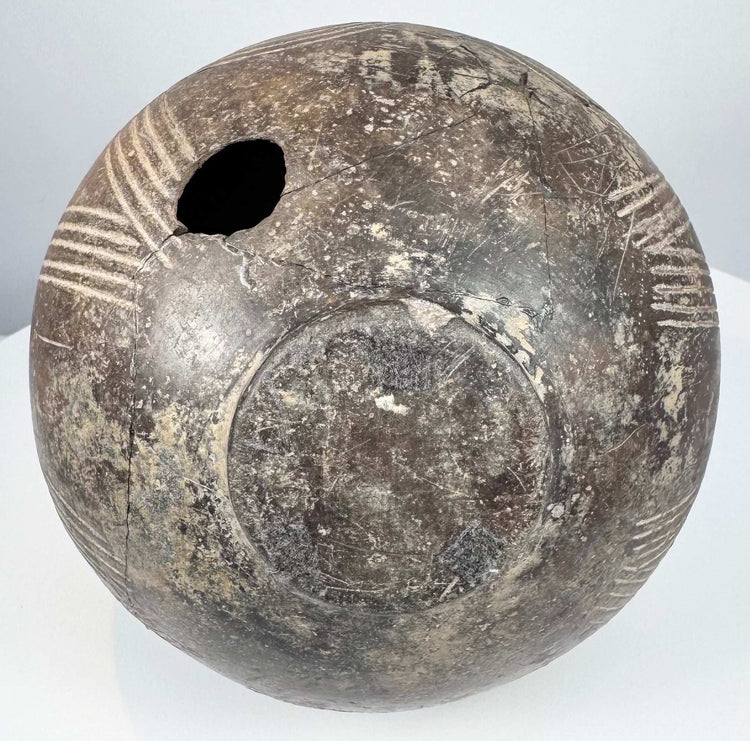
Good ancient condition consistent with age. The vessel displays surface wear, mineral deposits, abrasions, fine cracks, and minor losses associated with prolonged burial and preservation. The incised spiral and geometric decoration remains clearly visible across much of the body, while the handles, neck, and overall vessel form remain substantially preserved.
Dimensions (Approximate)
Height: 5.5 in
Width: 5.5 in
Age (Approximate)
2,675–2,725 years old
Provenance
Formerly held in a private collection in Princeton, New Jersey, United States, comprising an extensive collection of ancient pottery and related artifacts.
Learn More
View a closely related Etruscan Terracotta Spiral Amphora at The Metropolitan Museum of Art
Examine a comparable Early Etruscan Impasto Amphora with Incised Spiral Decoration
Browse our Collection of Ancient Amphorae and Pottery
Description
Historical Context & Origin
Region: Etruria, Central Italy
Material: Impasto terracotta
Period: Early Etruscan, 7th Century BCE, circa 700–650 BCE
Description
This ancient two-handled amphora is a finely preserved example of early Etruscan impasto pottery, likely produced in Central Italy during the 7th century BCE. Its compact globular body, short neck, projecting rim, and high loop handles correspond closely with a distinctive class of Etruscan vessels decorated with deeply incised spiral and geometric ornament.
The surface is dominated by large concentric and double-spiral motifs arranged across the rounded body, accompanied by radiating, diagonal, and linear incisions. Comparable Etruscan amphorae from this period employ closely related spiral compositions, sometimes combined with rosettes, palmettes, diagonal bands, and other geometric elements.
The vessel is fashioned in impasto, an early Etruscan ceramic tradition characterized by hand-worked, relatively coarse clay containing natural mineral inclusions. The dark brown to grey-black surface reflects both the composition of the clay and ancient firing techniques associated with early Italic pottery production.
Its distinctive two-handled form also reflects an important relationship between ceramic and metal vessel traditions. Comparable Etruscan spiral amphorae feature thin handles and sharply articulated profiles believed to have been inspired by contemporary metal prototypes.
Features
- Early Etruscan two-handled amphora form
- Hand-worked impasto terracotta construction
- Large incised concentric and double-spiral motifs across the body
- Additional diagonal, linear, and radiating geometric decoration
- Rounded globular body with short narrowing neck
- Pair of high loop or strap handles extending from the shoulder to the rim
- Slightly projecting rim characteristic of comparable Etruscan forms
- Dark brown and grey-black ancient surface with natural mineral variation
- Surface wear and patina developed over approximately 2,700 years
Cultural Significance
Impasto pottery represents an important stage in the development of Etruscan ceramic production. Made from comparatively coarse, mineral-rich clay, impasto vessels continued traditions of hand-worked Italic pottery while increasingly displaying the sophisticated forms and decorative programs associated with emerging Etruscan culture.
Spiral amphorae of the 7th century BCE are particularly characteristic. Museum and market comparanda demonstrate the repeated use of large incised double spirals, diagonal ornament, and related geometric motifs on compact two-handled vessels of this type.
The Metropolitan Museum of Art identifies the distinctive spiral-amphora form as indigenous to Italy and notes that its thin handles and sharply defined profile appear to derive from metal vessels. This relationship illustrates the close exchange between ceramic and metalworking traditions in early Etruscan craftsmanship.
Vessels of this type could serve practical, social, and funerary functions, and surviving examples provide important evidence for the artistic vocabulary and technical development of early Etruscan Italy.
Condition
Good ancient condition consistent with age. The vessel displays surface wear, mineral deposits, abrasions, fine cracks, and minor losses associated with prolonged burial and preservation. The incised spiral and geometric decoration remains clearly visible across much of the body, while the handles, neck, and overall vessel form remain substantially preserved.
Dimensions (Approximate)
Height: 5.5 in
Width: 5.5 in
Age (Approximate)
2,675–2,725 years old
Provenance
Formerly held in a private collection in Princeton, New Jersey, United States, comprising an extensive collection of ancient pottery and related artifacts.
Learn More
View a closely related Etruscan Terracotta Spiral Amphora at The Metropolitan Museum of Art
Examine a comparable Early Etruscan Impasto Amphora with Incised Spiral Decoration
Browse our Collection of Ancient Amphorae and Pottery
You May Also Like
