

Eastern Roman Empire Slipware Pottery Bowl | Sgraffito Ware with Marine Deposits | Circa 1000–1400 CE
Couldn't load pickup availability





Eastern Roman Empire Slipware Pottery Bowl | Sgraffito Ware with Marine Deposits | Circa 1000–1400 CE
Description
More
Less
Historical Context & Origin
Region: Eastern Mediterranean / Byzantine Empire
Material: Earthenware with cream slip glaze over red clay
Period: Byzantine Period, circa 1000–1400 CE
Description
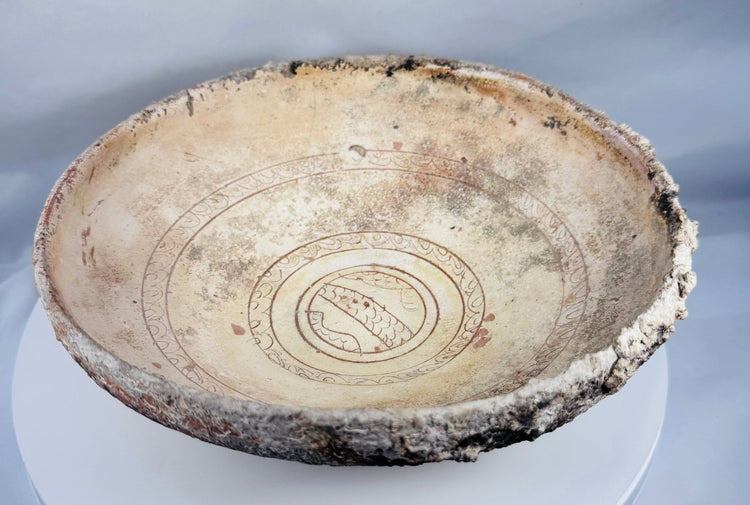
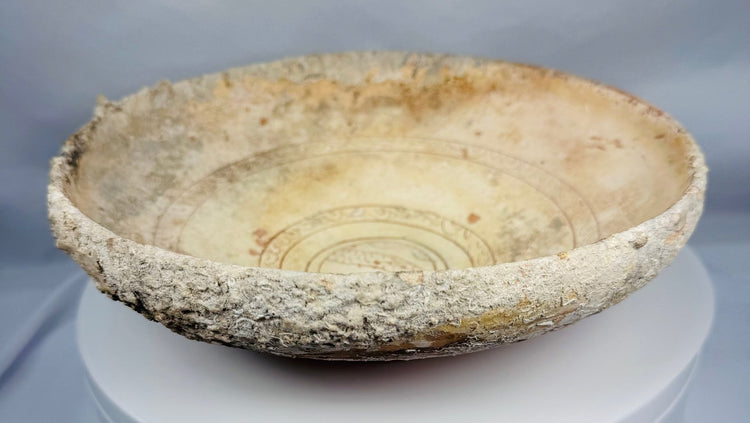
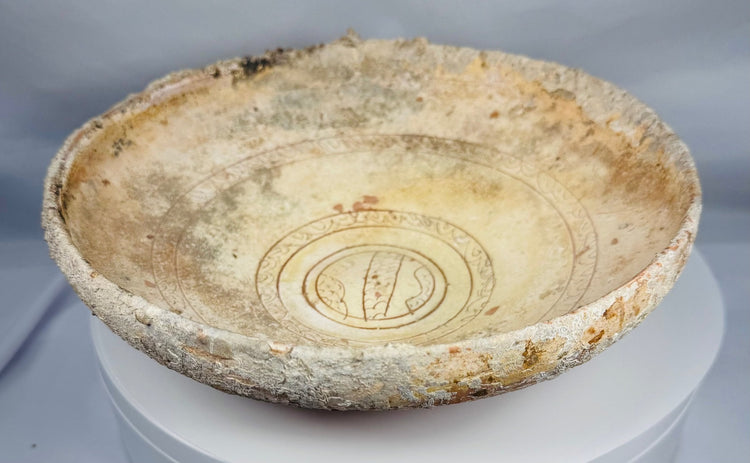
This ancient Byzantine slipware bowl represents a fine example of medieval Eastern Mediterranean ceramic production. Formed from red earthenware and coated with a pale cream slip, the vessel is decorated with concentric bands of finely incised sgraffito ornament surrounding a central medallion motif. The decorative scheme consists of repeating scalloped and sinuous patterns executed beneath a transparent lead glaze, reflecting the artistic traditions of Byzantine tableware during the Middle Ages.
Sgraffito pottery emerged as one of the most popular ceramic forms throughout the Byzantine world, where artisans carved decorative motifs through a light slip coating before glazing and firing. Such vessels were widely used for serving food and were traded extensively throughout the Mediterranean basin.
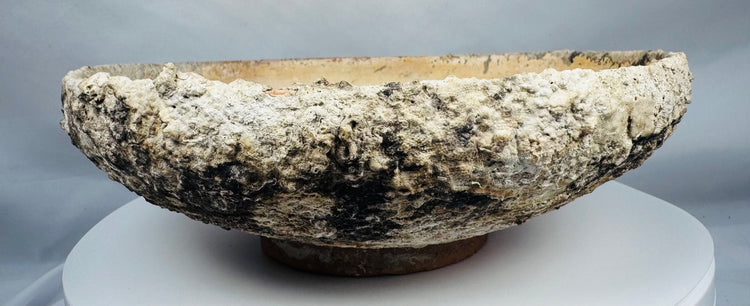
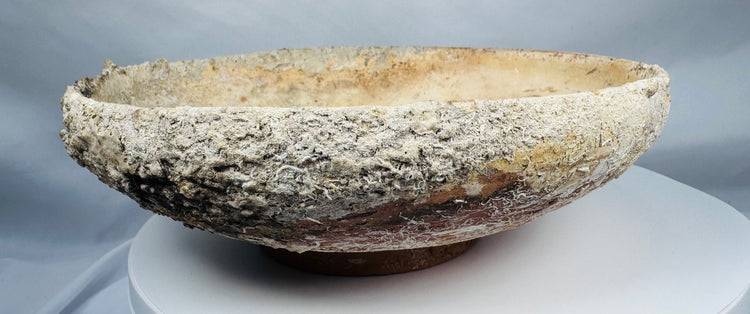
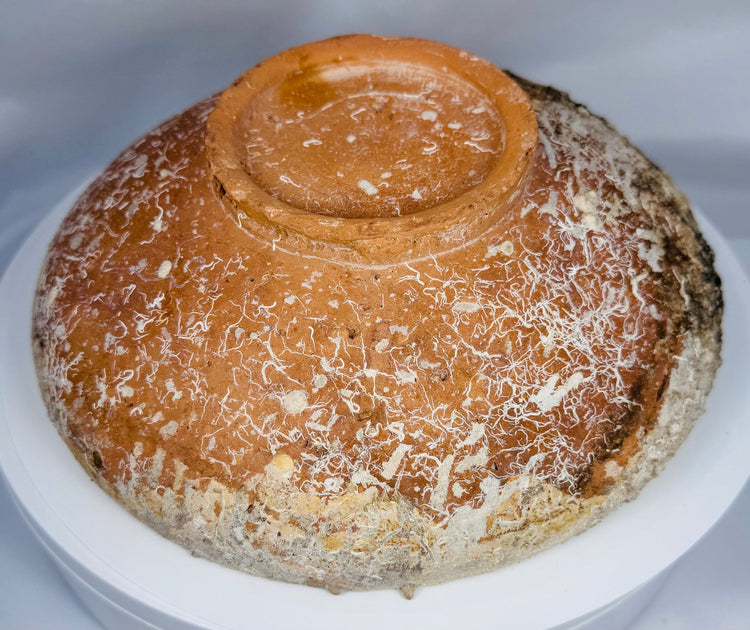
The bowl displays extensive marine and mineral encrustations covering much of the exterior surface. These deposits likely accumulated during prolonged burial or exposure within a coastal or marine environment, creating a visually striking archaeological appearance while preserving evidence of the vessel's long history.
Features
- Authentic Byzantine sgraffito slipware bowl
- Cream slip decoration over red earthenware body
- Concentric incised decorative bands
- Central medallion motif
- Transparent lead-glazed interior
- Extensive marine and mineral encrustations
- Attractive archaeological surface throughout
Cultural Significance
Byzantine sgraffito ceramics were among the most widely distributed forms of medieval pottery in the Eastern Mediterranean. Produced for both domestic and commercial use, these vessels demonstrate the technical sophistication of Byzantine potters and the widespread trade networks connecting regions of the empire. The incised decorative motifs reflect artistic traditions that blended Classical, Christian, and regional influences.
Examples retaining substantial marine accretions are particularly evocative of the vessel's archaeological journey, preserving evidence of centuries spent beneath the earth or within a maritime environment before recovery.
Condition
Ancient condition with expected wear from age and archaeological recovery. Surface losses, glaze wear, mineral deposits, marine encrustations, and scattered imperfections throughout. Stable and suitable for display.
Dimensions (Approximate)
Height: 3.5 in
Diameter: 10 in
Age (Approximate)
600–1,000 years old
Provenance
From a private Saint Paul, Minnesota, USA collection assembled over several decades with a focus on ancient Mediterranean, Classical, and archaeological artifacts. The collection included Roman, Byzantine, Near Eastern, and Pre-Columbian material acquired through established galleries, dealers, and private collections throughout the late 20th and early 21st centuries. The bowl remained in the collection for many years.
Learn More
View a comparable sgraffito-ware bowl in the collection of The Metropolitan Museum of Art
Description
Historical Context & Origin
Region: Eastern Mediterranean / Byzantine Empire
Material: Earthenware with cream slip glaze over red clay
Period: Byzantine Period, circa 1000–1400 CE
Description
This ancient Byzantine slipware bowl represents a fine example of medieval Eastern Mediterranean ceramic production. Formed from red earthenware and coated with a pale cream slip, the vessel is decorated with concentric bands of finely incised sgraffito ornament surrounding a central medallion motif. The decorative scheme consists of repeating scalloped and sinuous patterns executed beneath a transparent lead glaze, reflecting the artistic traditions of Byzantine tableware during the Middle Ages.
Sgraffito pottery emerged as one of the most popular ceramic forms throughout the Byzantine world, where artisans carved decorative motifs through a light slip coating before glazing and firing. Such vessels were widely used for serving food and were traded extensively throughout the Mediterranean basin.
The bowl displays extensive marine and mineral encrustations covering much of the exterior surface. These deposits likely accumulated during prolonged burial or exposure within a coastal or marine environment, creating a visually striking archaeological appearance while preserving evidence of the vessel's long history.
Features
- Authentic Byzantine sgraffito slipware bowl
- Cream slip decoration over red earthenware body
- Concentric incised decorative bands
- Central medallion motif
- Transparent lead-glazed interior
- Extensive marine and mineral encrustations
- Attractive archaeological surface throughout
Cultural Significance
Byzantine sgraffito ceramics were among the most widely distributed forms of medieval pottery in the Eastern Mediterranean. Produced for both domestic and commercial use, these vessels demonstrate the technical sophistication of Byzantine potters and the widespread trade networks connecting regions of the empire. The incised decorative motifs reflect artistic traditions that blended Classical, Christian, and regional influences.
Examples retaining substantial marine accretions are particularly evocative of the vessel's archaeological journey, preserving evidence of centuries spent beneath the earth or within a maritime environment before recovery.
Condition
Ancient condition with expected wear from age and archaeological recovery. Surface losses, glaze wear, mineral deposits, marine encrustations, and scattered imperfections throughout. Stable and suitable for display.
Dimensions (Approximate)
Height: 3.5 in
Diameter: 10 in
Age (Approximate)
600–1,000 years old
Provenance
From a private Saint Paul, Minnesota, USA collection assembled over several decades with a focus on ancient Mediterranean, Classical, and archaeological artifacts. The collection included Roman, Byzantine, Near Eastern, and Pre-Columbian material acquired through established galleries, dealers, and private collections throughout the late 20th and early 21st centuries. The bowl remained in the collection for many years.
Learn More
View a comparable sgraffito-ware bowl in the collection of The Metropolitan Museum of Art
You May Also Like
