
Ancient Egyptian Blue-Green Faience Ushabti Funerary Figure | Late Period Style | Circa 664–332 BCE
Couldn't load pickup availability






Ancient Egyptian Blue-Green Faience Ushabti Funerary Figure | Late Period Style | Circa 664–332 BCE
Description
More
Less
Historical Context & Origin
Region: Egyptian funerary tradition
Material: Blue-green glazed faience (attributed)
Period: Late Period style, circa 664–332 BCE (26th–31st Dynasties; stylistic attribution)
Description
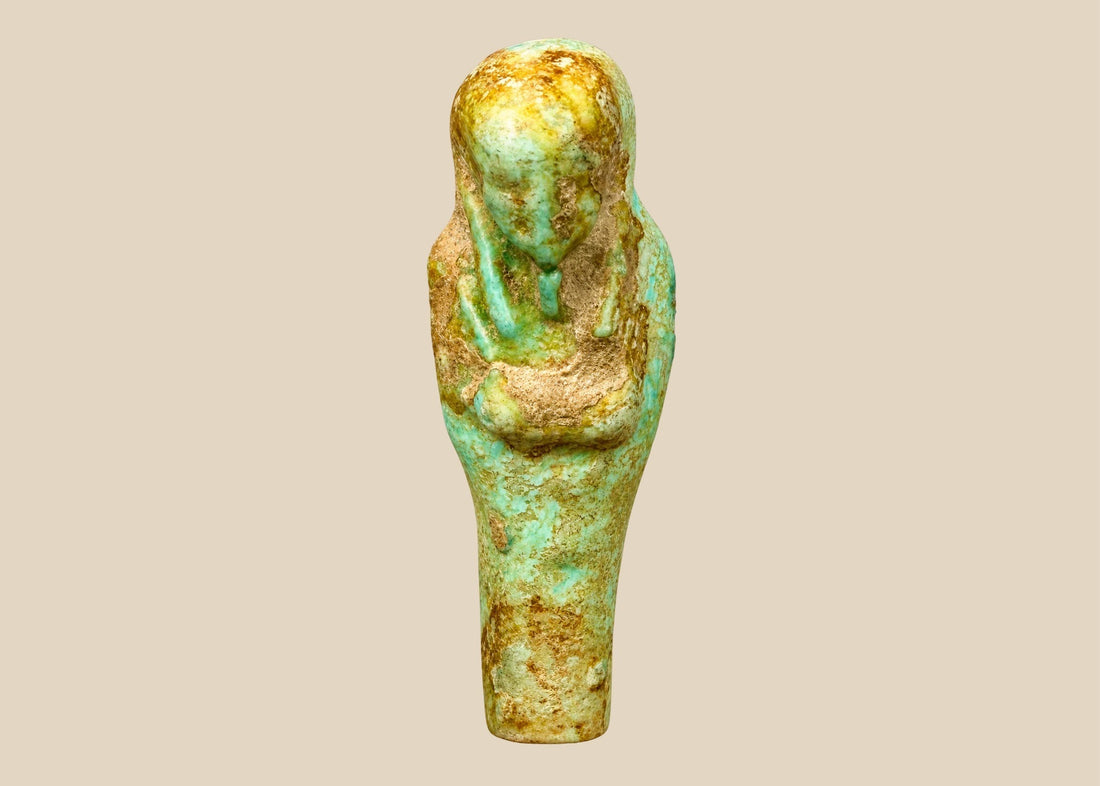
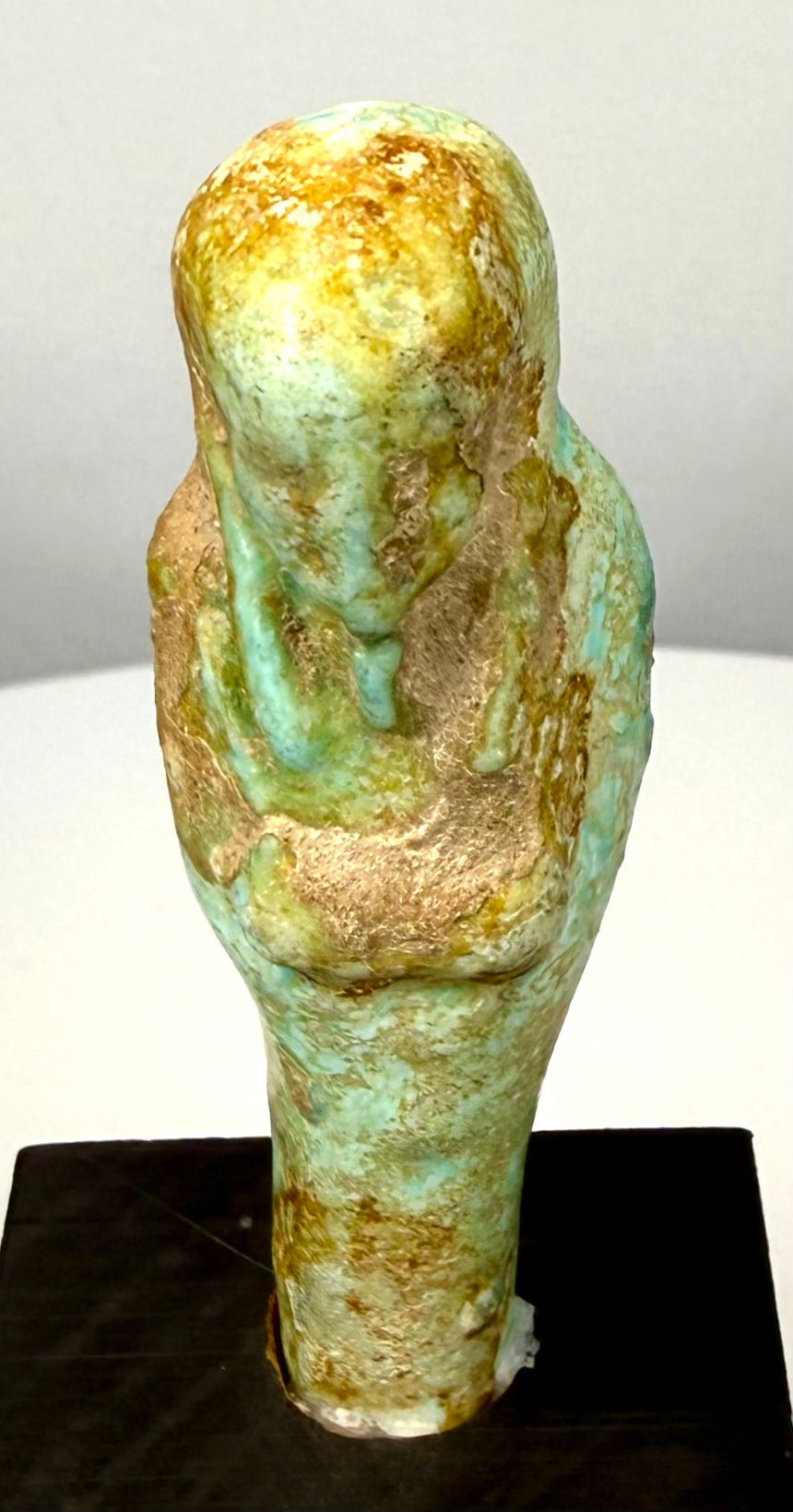
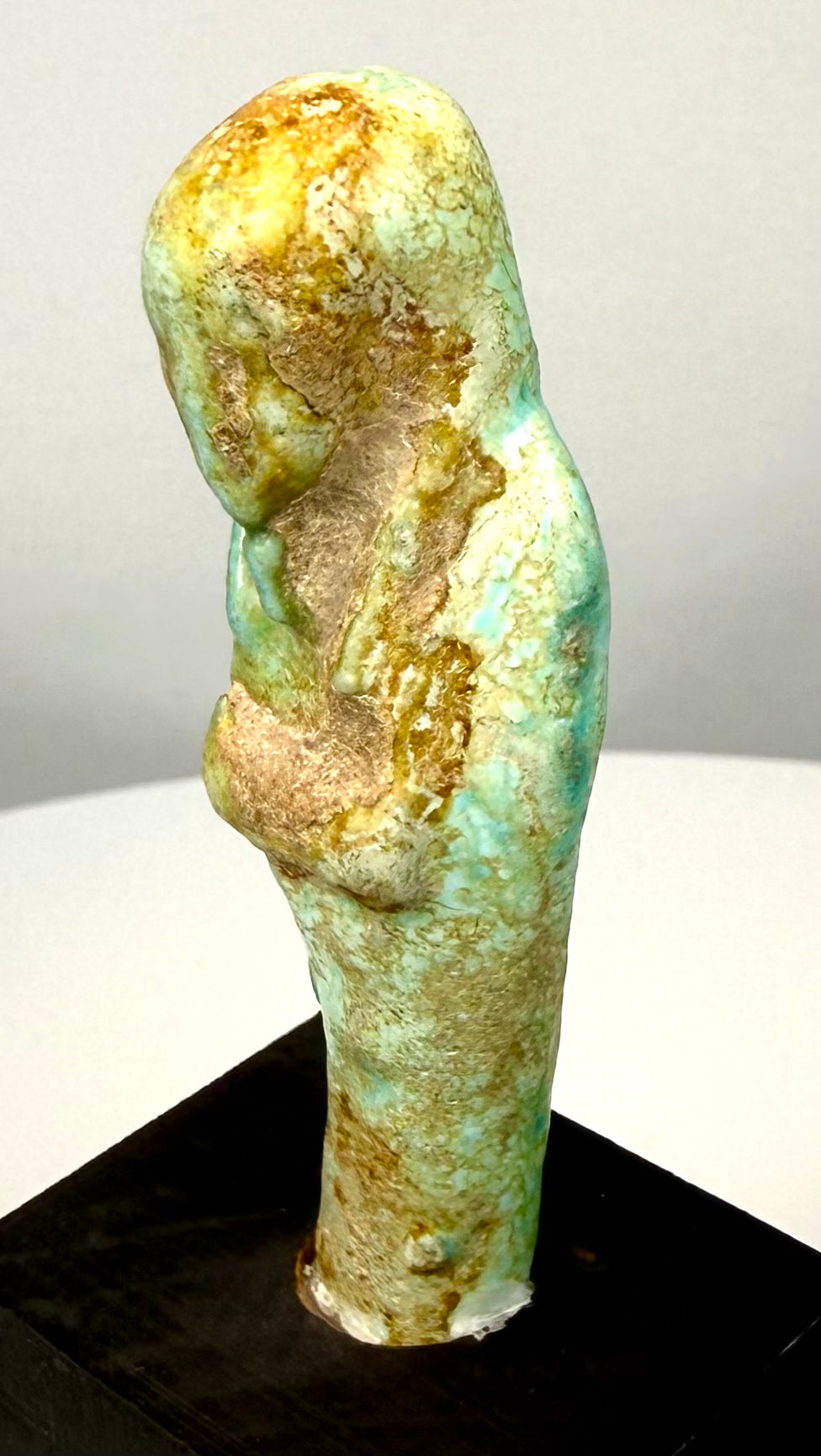
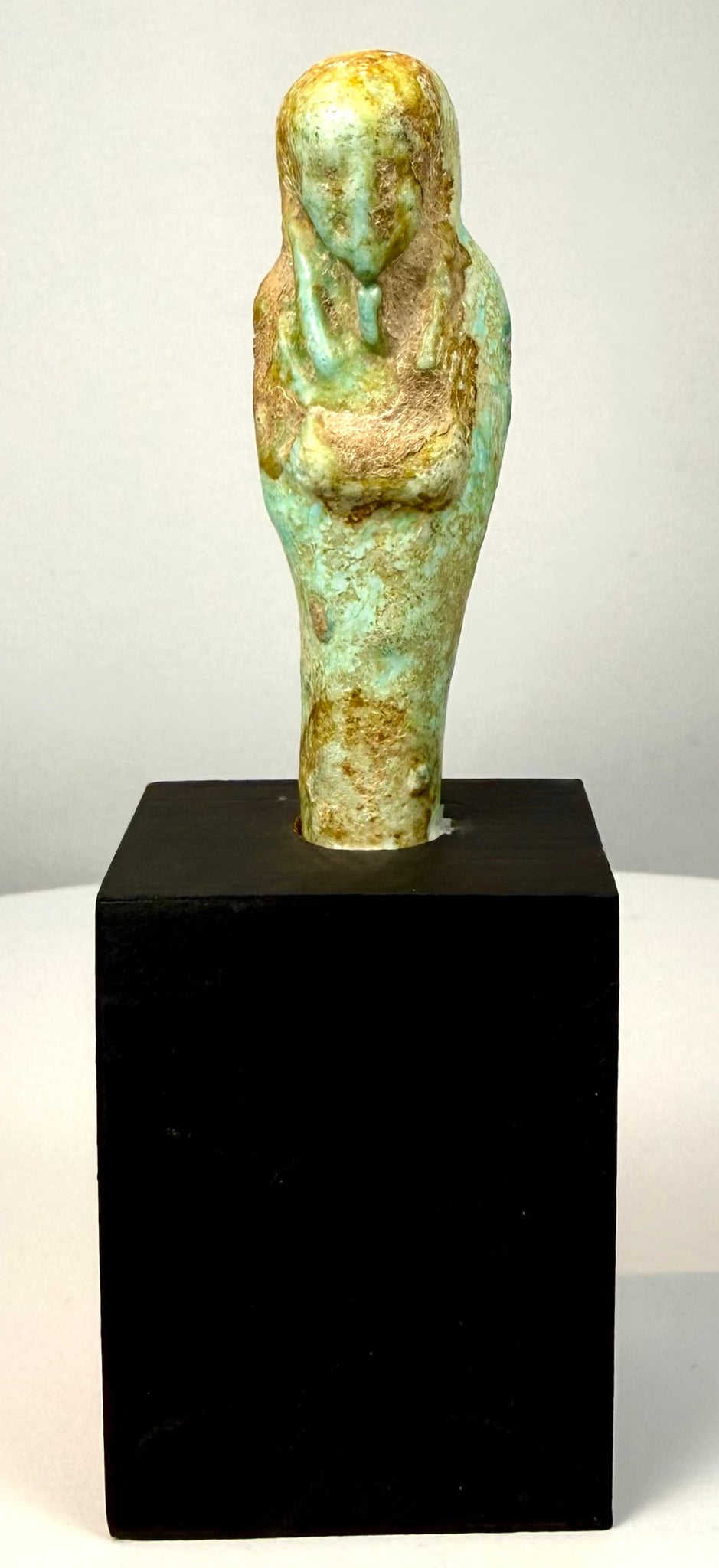
This distinctive statuette exhibits the characteristic form of an Egyptian ushabti, also known as a shabti, a small mummiform figure traditionally placed within ancient Egyptian burials to serve the deceased in the afterlife. Measuring approximately 2.5 inches in height, the figure displays stylistic characteristics broadly comparable to funerary statuettes associated with the Late Period.
The figure is modelled with a rounded head framed by a stylized wig, simplified facial features, and arms arranged across the upper torso. A narrow projection beneath the chin resembles a traditional ceremonial beard, while the elongated body tapers toward a narrow, rounded base, emphasizing its characteristic mummiform appearance.
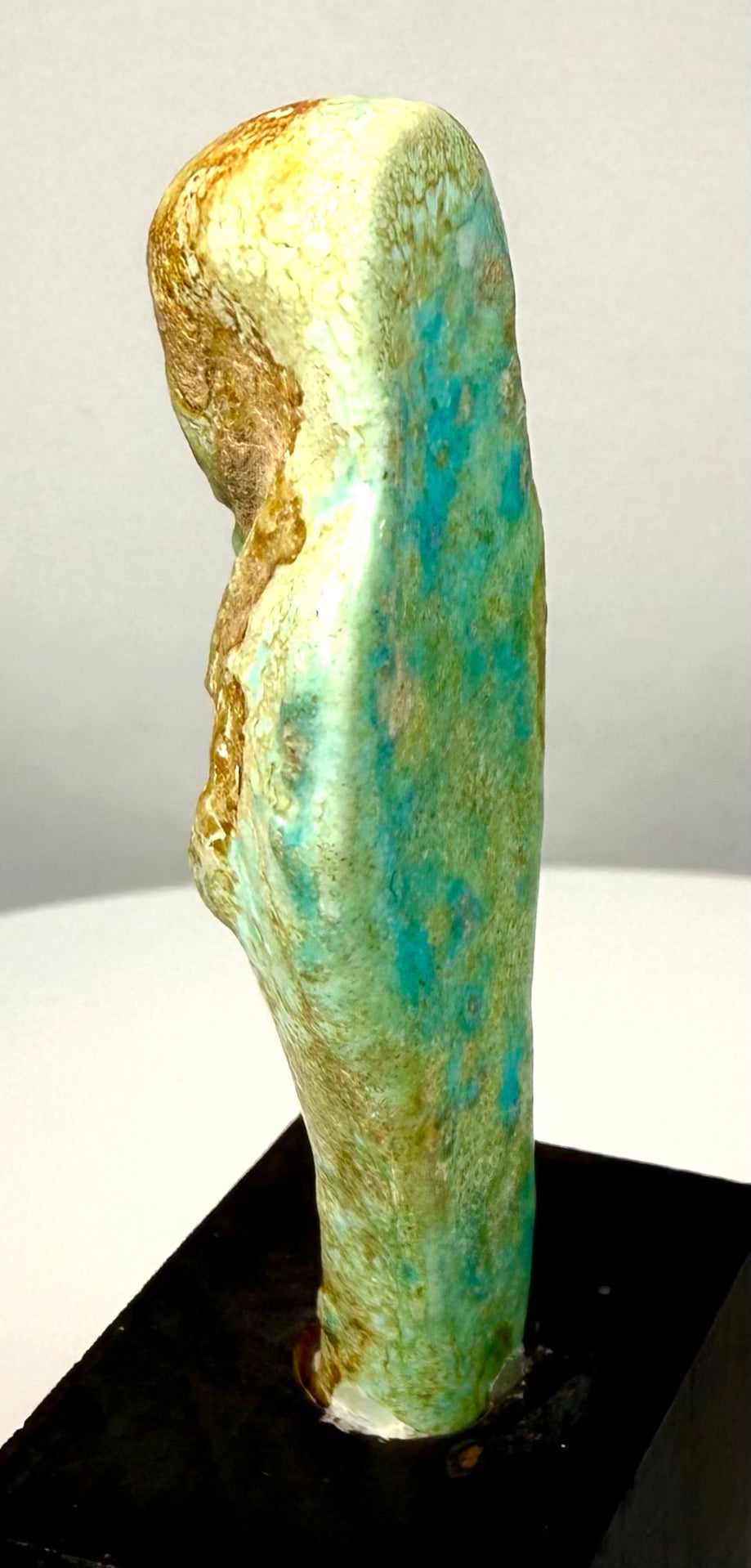
The surviving turquoise, pale aqua, and mint-green coloration contrasts with extensive golden-brown, ochre, and beige surface deposits, creating a distinctive variation in colour and texture. The reverse retains a relatively simple profile with areas of blue-green coloration. No clearly legible hieroglyphic inscription or identifying name is visible. The figure's compact proportions, simplified modelling, and glazed appearance are broadly consistent with Egyptian faience ushabtis. Its antiquity and precise dating remain unconfirmed.
Features
- Rounded head framed by a stylized wig and simplified facial features
- Narrow chin projection resembling a ceremonial beard
- Distinctive turquoise, aqua, and pale green glazed coloration
- Contrasting golden-brown, ochre, and beige surface deposits
- Elongated, tapering body with arms arranged across the upper torso
- No clearly legible hieroglyphic inscription
Cultural Significance
Ushabtis were among the most recognizable objects associated with ancient Egyptian funerary traditions, reflecting deeply established beliefs in resurrection and the continuation of life after death. Commonly interpreted as meaning "answerer," the term ushabti refers to the figure's symbolic responsibility to undertake agricultural labour and other obligations on behalf of the deceased. This religious function was closely associated with Chapter 6 of the Book of the Dead.
Developing during the Middle Kingdom, the tradition continued throughout successive periods of Egyptian history. By the Late Period, ushabtis had become an established component of funerary equipment, frequently displaying mummiform bodies, crossed arms, stylized wigs, and agricultural implements. Their characteristic appearance was closely associated with Osiris, the Egyptian deity of resurrection and the afterlife.
Many Egyptian ushabtis were produced from faience, a quartz-rich material distinguished by its glazed surface. Blue and green held particular religious significance, symbolizing water, vegetation, fertility, regeneration, and rebirth. These associations made blue-green faience especially appropriate for funerary objects, embodying the ancient Egyptian belief in renewed existence beyond death.
Condition
The figure exhibits considerable surface wear, scattered abrasions, localized glaze losses, discoloration, and irregular surface deposits. Much of the distinctive blue-green coloration remains visible, contrasting with golden-brown and beige deposits. The facial features and upper-body modelling are partially softened by wear, although the overall mummiform profile remains recognizable. Areas of exposed underlying material and irregular surface textures are present throughout. The figure is mounted on a later rectangular black display base, with mounting material visible near the lower extremity. The nature and reversibility of the attachment, as well as any previous conservation or restoration treatments, remain undetermined.
Dimensions (Approximate)
Height: 2.5 in
Width: 0.75 in
Measurements exclude the display base.
Age (Approximate)
Potentially 2,350–2,700 years old, based on stylistic attribution; precise age undetermined.
Provenance
Previously held in the Estate of Carmine Vito "Tod" Todisco (1930–2025), Syracuse area, New York, USA. Todisco was an American businessman, entrepreneur, and collector of cultural artifacts, antiques, and art. He founded and served as Chief Executive Officer of Northern Plastics Corporation, a Syracuse-area manufacturer specializing in fiberglass furniture and commercial products.
Subsequently offered by Terri Peters & Associates, East Syracuse, New York, USA. Terri Peters & Associates is an established auction and estate marketing firm specializing in fine art, antiques, historical artifacts, and private collections.
Learn More
Examine stylistically comparable Egyptian faience shabtis and discover their significance within ancient Egyptian funerary traditions through the collections of the Bowdoin College Museum of Art
Discover the religious symbolism, funerary purpose, and artistic traditions of Egyptian shabtis through the collections of The Metropolitan Museum of Art
Description
Historical Context & Origin
Region: Egyptian funerary tradition
Material: Blue-green glazed faience (attributed)
Period: Late Period style, circa 664–332 BCE (26th–31st Dynasties; stylistic attribution)
Description
This distinctive statuette exhibits the characteristic form of an Egyptian ushabti, also known as a shabti, a small mummiform figure traditionally placed within ancient Egyptian burials to serve the deceased in the afterlife. Measuring approximately 2.5 inches in height, the figure displays stylistic characteristics broadly comparable to funerary statuettes associated with the Late Period.
The figure is modelled with a rounded head framed by a stylized wig, simplified facial features, and arms arranged across the upper torso. A narrow projection beneath the chin resembles a traditional ceremonial beard, while the elongated body tapers toward a narrow, rounded base, emphasizing its characteristic mummiform appearance.
The surviving turquoise, pale aqua, and mint-green coloration contrasts with extensive golden-brown, ochre, and beige surface deposits, creating a distinctive variation in colour and texture. The reverse retains a relatively simple profile with areas of blue-green coloration. No clearly legible hieroglyphic inscription or identifying name is visible. The figure's compact proportions, simplified modelling, and glazed appearance are broadly consistent with Egyptian faience ushabtis. Its antiquity and precise dating remain unconfirmed.
Features
- Rounded head framed by a stylized wig and simplified facial features
- Narrow chin projection resembling a ceremonial beard
- Distinctive turquoise, aqua, and pale green glazed coloration
- Contrasting golden-brown, ochre, and beige surface deposits
- Elongated, tapering body with arms arranged across the upper torso
- No clearly legible hieroglyphic inscription
Cultural Significance
Ushabtis were among the most recognizable objects associated with ancient Egyptian funerary traditions, reflecting deeply established beliefs in resurrection and the continuation of life after death. Commonly interpreted as meaning "answerer," the term ushabti refers to the figure's symbolic responsibility to undertake agricultural labour and other obligations on behalf of the deceased. This religious function was closely associated with Chapter 6 of the Book of the Dead.
Developing during the Middle Kingdom, the tradition continued throughout successive periods of Egyptian history. By the Late Period, ushabtis had become an established component of funerary equipment, frequently displaying mummiform bodies, crossed arms, stylized wigs, and agricultural implements. Their characteristic appearance was closely associated with Osiris, the Egyptian deity of resurrection and the afterlife.
Many Egyptian ushabtis were produced from faience, a quartz-rich material distinguished by its glazed surface. Blue and green held particular religious significance, symbolizing water, vegetation, fertility, regeneration, and rebirth. These associations made blue-green faience especially appropriate for funerary objects, embodying the ancient Egyptian belief in renewed existence beyond death.
Condition
The figure exhibits considerable surface wear, scattered abrasions, localized glaze losses, discoloration, and irregular surface deposits. Much of the distinctive blue-green coloration remains visible, contrasting with golden-brown and beige deposits. The facial features and upper-body modelling are partially softened by wear, although the overall mummiform profile remains recognizable. Areas of exposed underlying material and irregular surface textures are present throughout. The figure is mounted on a later rectangular black display base, with mounting material visible near the lower extremity. The nature and reversibility of the attachment, as well as any previous conservation or restoration treatments, remain undetermined.
Dimensions (Approximate)
Height: 2.5 in
Width: 0.75 in
Measurements exclude the display base.
Age (Approximate)
Potentially 2,350–2,700 years old, based on stylistic attribution; precise age undetermined.
Provenance
Previously held in the Estate of Carmine Vito "Tod" Todisco (1930–2025), Syracuse area, New York, USA. Todisco was an American businessman, entrepreneur, and collector of cultural artifacts, antiques, and art. He founded and served as Chief Executive Officer of Northern Plastics Corporation, a Syracuse-area manufacturer specializing in fiberglass furniture and commercial products.
Subsequently offered by Terri Peters & Associates, East Syracuse, New York, USA. Terri Peters & Associates is an established auction and estate marketing firm specializing in fine art, antiques, historical artifacts, and private collections.
Learn More
Examine stylistically comparable Egyptian faience shabtis and discover their significance within ancient Egyptian funerary traditions through the collections of the Bowdoin College Museum of Art
Discover the religious symbolism, funerary purpose, and artistic traditions of Egyptian shabtis through the collections of The Metropolitan Museum of Art
You May Also Like
