



Ancient Egyptian Mummy Wrapping Fragments Attributed to Manchester Mummy with Signed Rosalie David Book | Ptolemaic Period | Circa 332 – 30 BCE
Couldn't load pickup availability


Ancient Egyptian Mummy Wrapping Fragments Attributed to Manchester Mummy with Signed Rosalie David Book | Ptolemaic Period | Circa 332 – 30 BCE
Description
More
Less
Historical Context & Origin
Region: Egypt
Material: Woven linen fragments, photographic print, paper inscription, fabric-covered mount, wood frame, and glazing
Period: Ptolemaic Period, Circa 332–30 BCE
Description
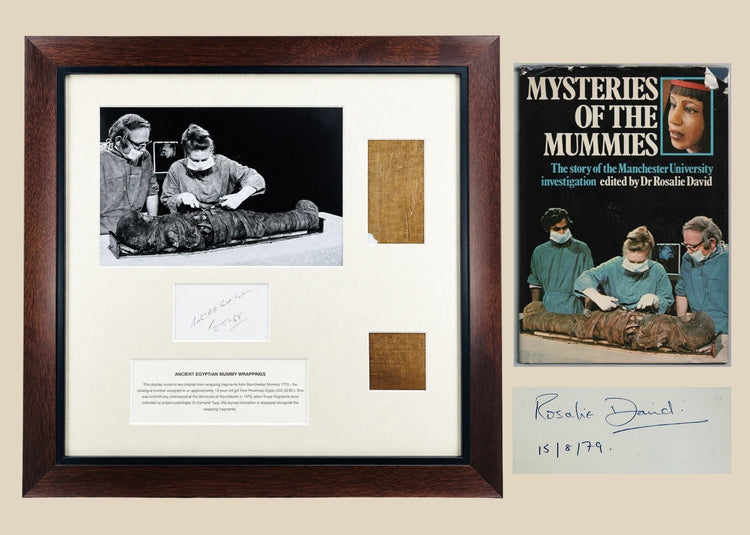
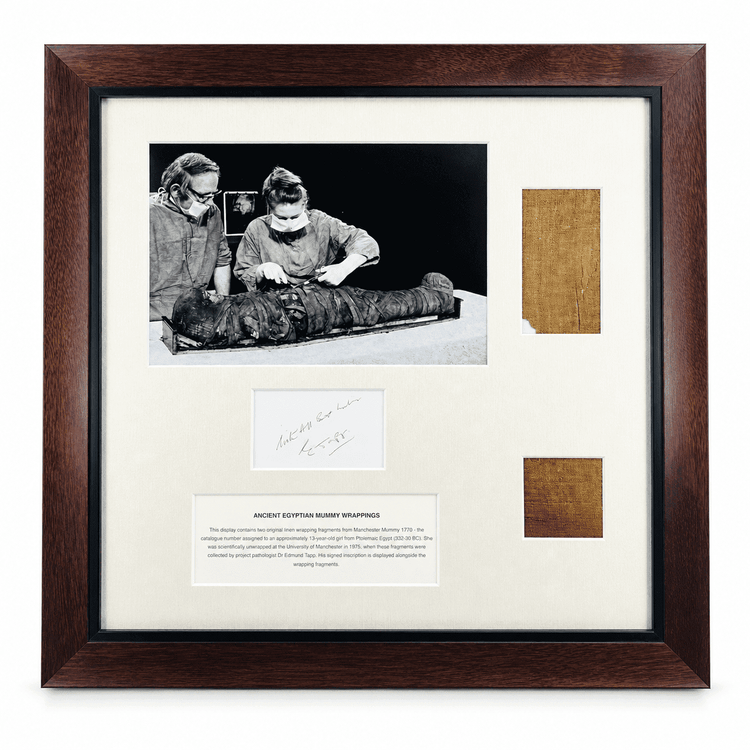
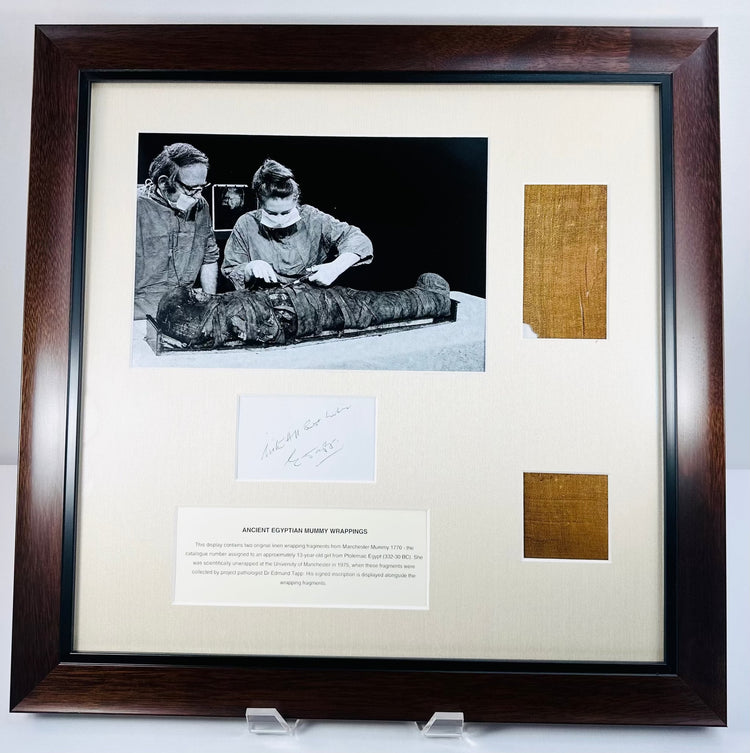
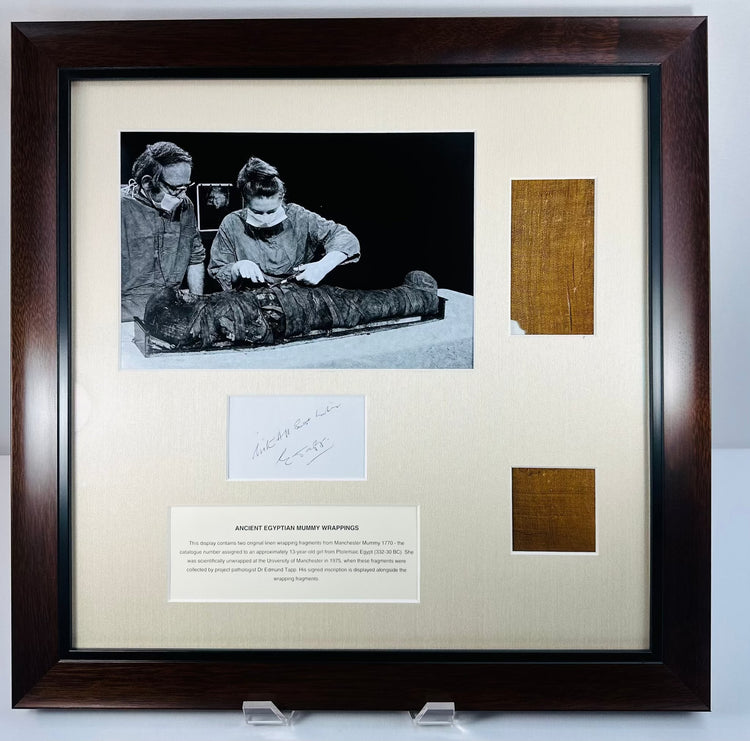
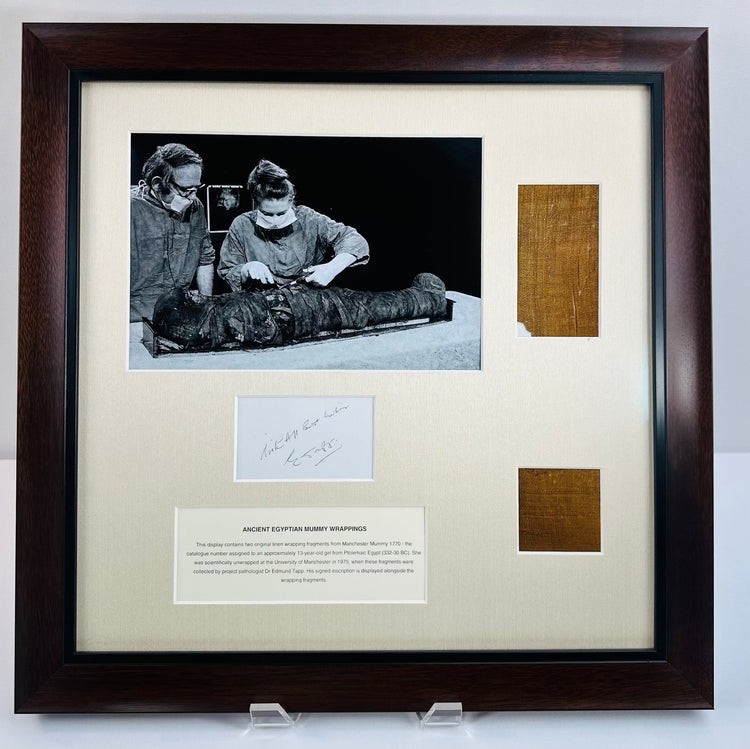
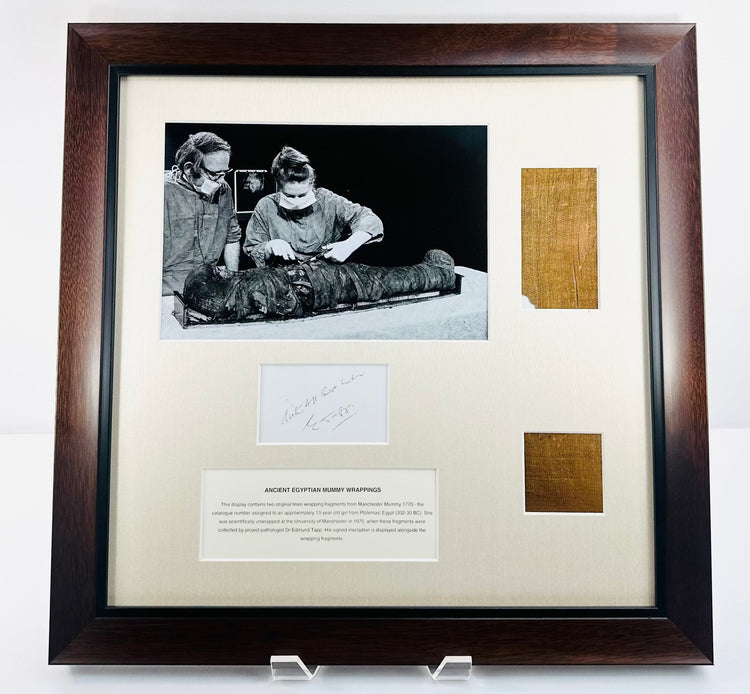
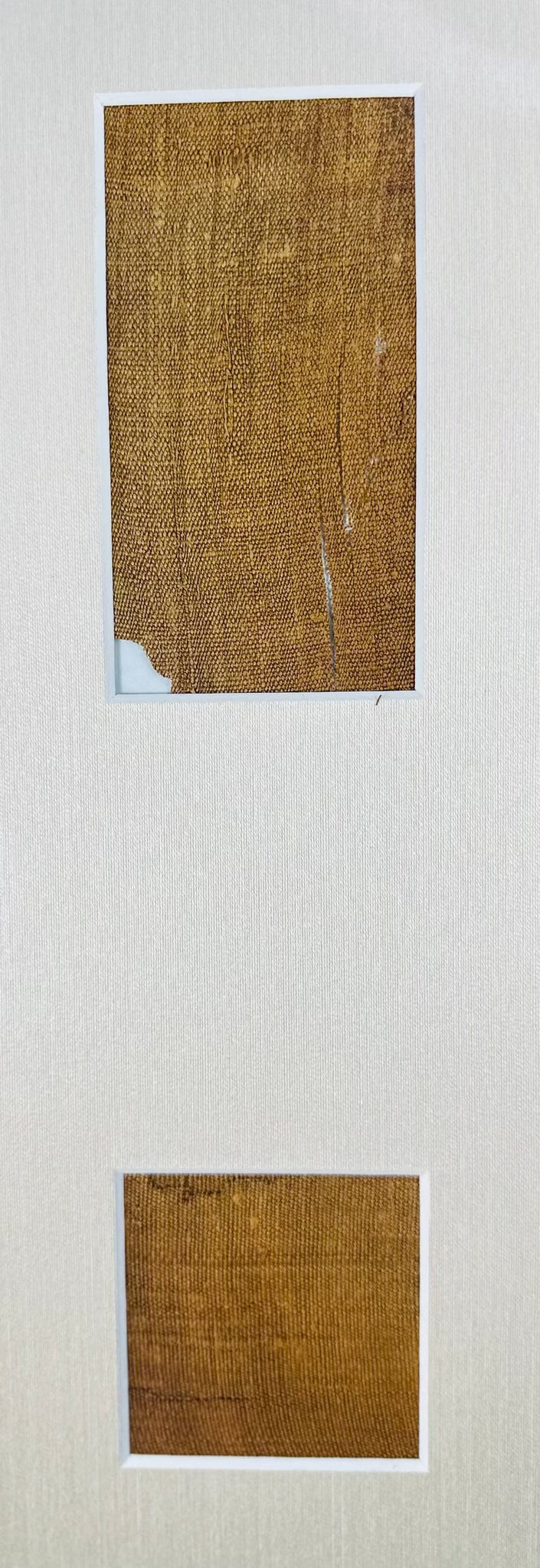
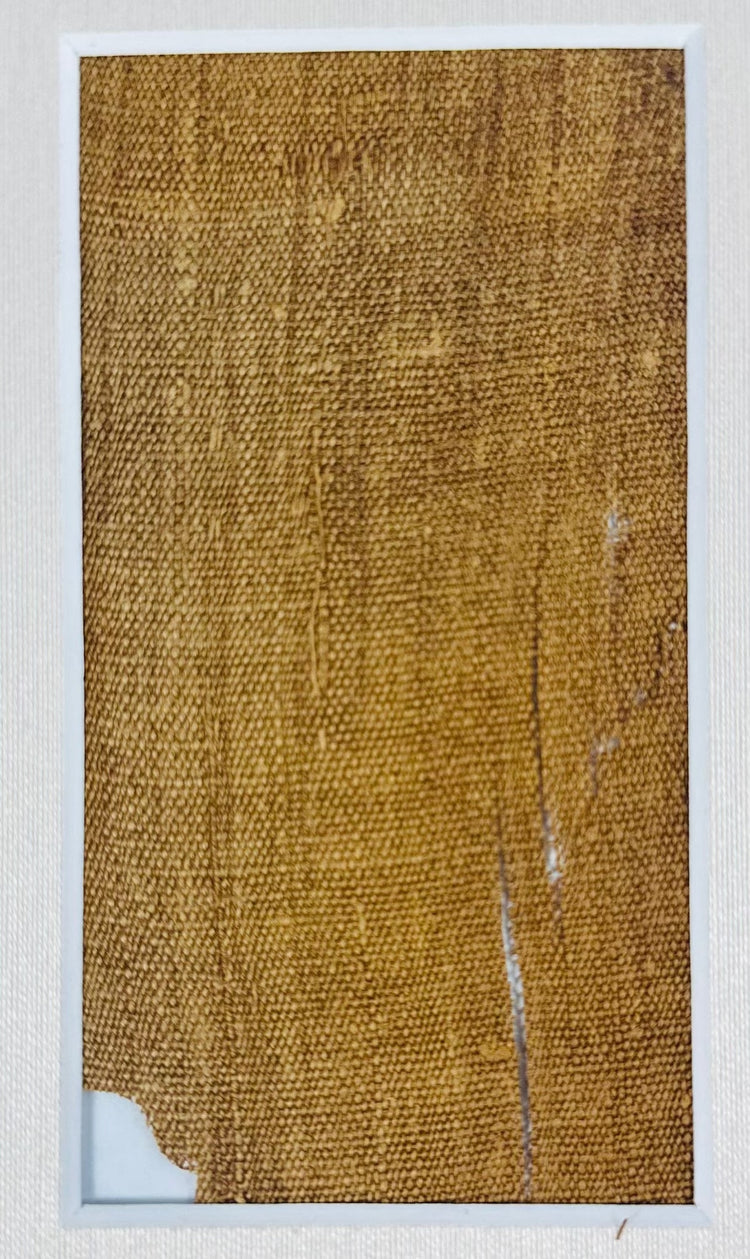
An extraordinary framed display containing two ancient woven linen fragments attributed to the funerary wrappings of Manchester Museum Mummy 1770. The number 1770 represents the mummy’s Manchester Museum catalogue number rather than a historical date.
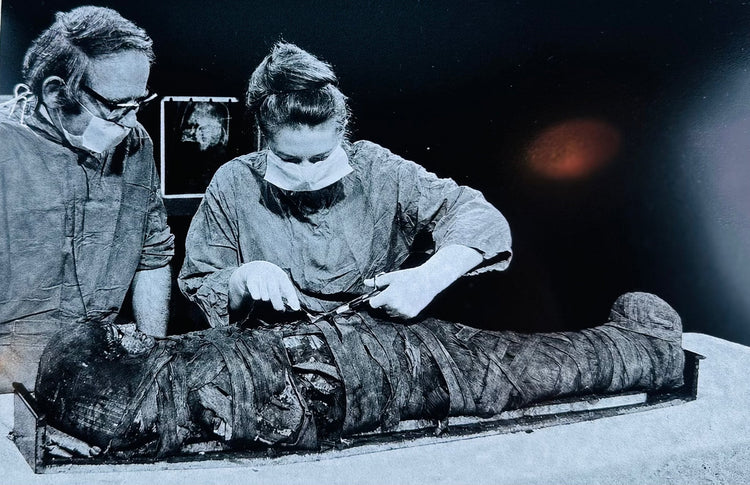
Mummy 1770 was an adolescent Egyptian girl believed to have been approximately 13 years old when she died during the Ptolemaic Period. In June 1975, she was scientifically unwrapped and studied at the University of Manchester by an interdisciplinary team led by Egyptologist Dr. Rosalie David.
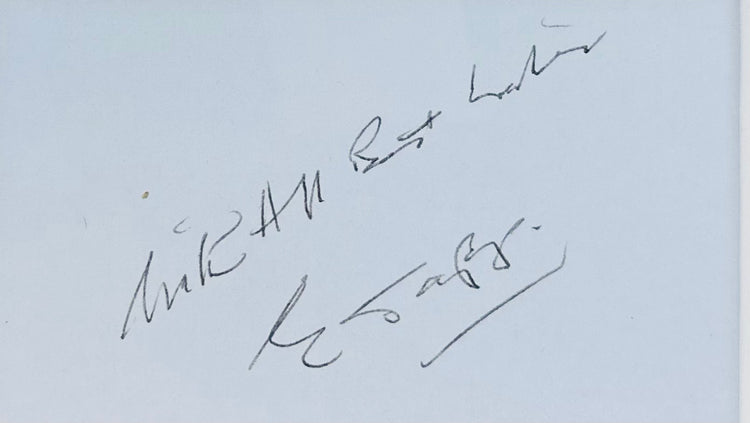
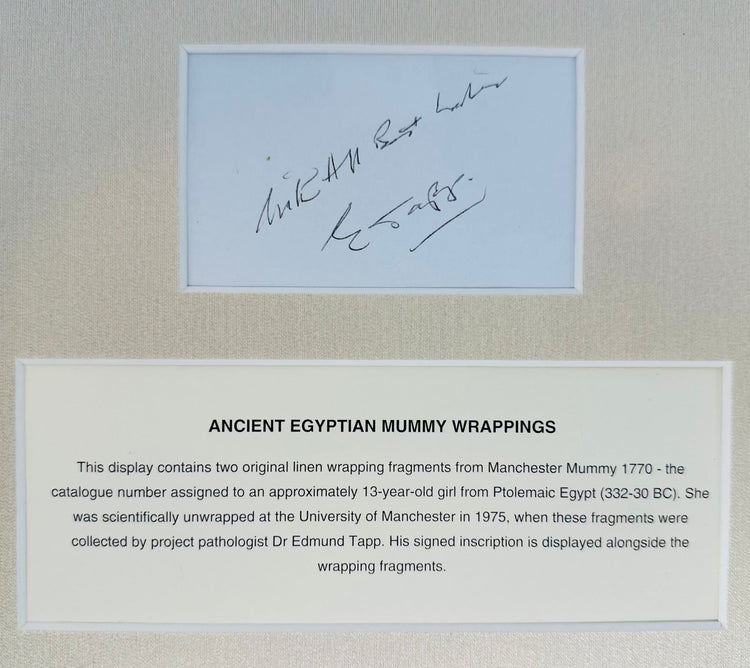
According to the accompanying documentation, these linen fragments were collected during the investigation by project pathologist Dr. Edmund Tapp. The display incorporates the two mounted textile fragments, a black-and-white photograph documenting the 1975 investigation, a handwritten inscription attributed to Dr. Tapp, and an explanatory identification panel.
Accompanying Signed Book
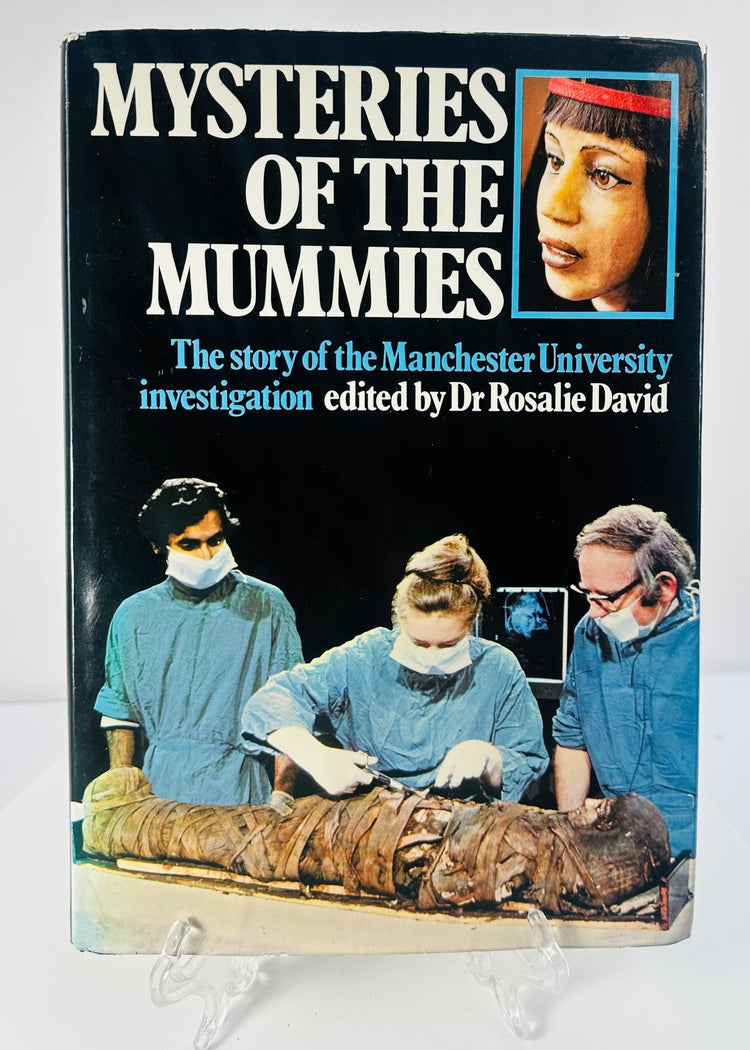
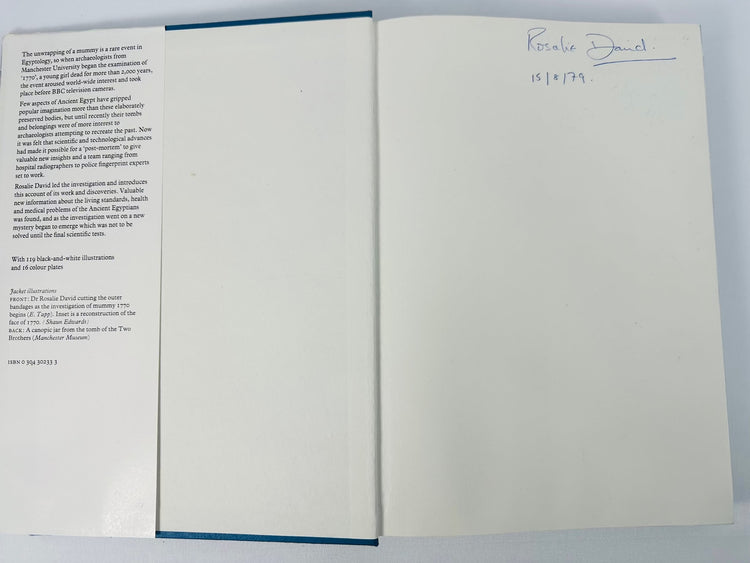
The display is accompanied by a hardcover copy of Mysteries of the Mummies: The Story of the Manchester University Investigation, edited by Dr. Rosalie David and published by Cassell in 1978.
The extensively illustrated volume presents the Manchester University investigation and its scientific study of ancient Egyptian mummies. It contains 119 black-and-white illustrations and 16 colour plates. The dust jacket features Dr. Rosalie David working on Mummy 1770 during the 1975 investigation, with project pathologist Dr. Edmund Tapp beside her.
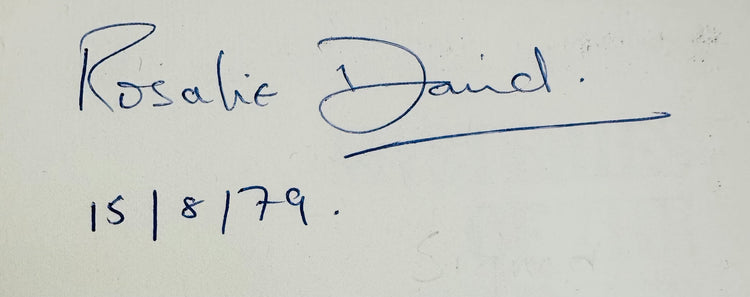
Of particular significance, the front free endpaper is personally signed in blue ink by Rosalie David and dated August 15, 1979. The signed volume provides closely related historical and academic context for the accompanying mummy-wrapping fragments and their association with the Manchester research team.
The book remains in good vintage condition. Its original dust jacket displays edge wear, scuffing, creasing, and small tears and losses, particularly around the corners and upper edges. The hardcover binding and interior pages present well with light age-related wear, while the signature remains clear and legible.
Features
- Two ancient woven linen fragments attributed to Manchester Mummy 1770
- Associated with the University of Manchester’s 1975 scientific investigation
- Documentary photograph showing the mummy during the investigation
- Handwritten inscription attributed to project pathologist Dr. Edmund Tapp
- Explanatory identification panel detailing the fragments’ history
- Dark wood frame with fabric-covered mount and contrasting inner border
- A hardcover copy of Mysteries of the Mummies: The Story of the Manchester University Investigation, signed by Dr. Rosalie David
Cultural Significance
These textile fragments represent a remarkable connection between ancient Egyptian funerary practices and the development of modern biomedical Egyptology.
The 1975 investigation of Mummy 1770 brought together specialists in Egyptology, pathology, radiology, dentistry, entomology, and microscopy. Their research contributed to a greater understanding of ancient mummification, disease, funerary treatment, and the lives of individuals in Ptolemaic Egypt.
The accompanying photograph and inscription provide additional historical context, connecting the ancient material directly with an important twentieth-century scientific investigation.
Condition
Good overall display condition. The ancient linen fragments exhibit discoloration, staining, creasing, fraying, small separations, and edge losses consistent with their considerable age and archaeological nature. The larger fragment displays a noticeable loss to one lower corner and several narrow vertical separations.
The photograph, inscription, and identification panel remain clearly visible. The modern frame, mount, and glazing present well, with minor surface wear possible.
Dimensions (Approximate)
Frame
Width: 18.5 in
Height: 18.5 in
Depth: 1 in
Age (Approximate)
2,050–2,350 years old
Provenance
According to the accompanying documentation, the linen was collected by Dr. Edmund Tapp, a pathologist who participated in the 1975 scientific investigation of Manchester Mummy 1770. The material was subsequently given to his son and remained in private ownership in the United Kingdom.
Accompanying the fragments is a 1978 hardcover copy of Mysteries of the Mummies: The Story of the Manchester University Investigation, edited by Dr. Rosalie David. The book is personally signed in blue ink by Rosalie David and dated August 15, 1979.
The mummified fragments and associated materials were subsequently offered together through Bamfords Auctioneers & Valuers, Derbyshire, United Kingdom. Established in 2002, Bamfords is a family-run auction house with Derbyshire salerooms and specialist departments devoted to antiques, fine art, and collectors’ material.
Learn More
Learn more about Manchester Mummy 1770 and its ancient textiles through The University of Manchester
Explore our Collection of Ancient Egyptian Mummies & Artifacts
Description
Historical Context & Origin
Region: Egypt
Material: Woven linen fragments, photographic print, paper inscription, fabric-covered mount, wood frame, and glazing
Period: Ptolemaic Period, Circa 332–30 BCE
Description
An extraordinary framed display containing two ancient woven linen fragments attributed to the funerary wrappings of Manchester Museum Mummy 1770. The number 1770 represents the mummy’s Manchester Museum catalogue number rather than a historical date.
Mummy 1770 was an adolescent Egyptian girl believed to have been approximately 13 years old when she died during the Ptolemaic Period. In June 1975, she was scientifically unwrapped and studied at the University of Manchester by an interdisciplinary team led by Egyptologist Dr. Rosalie David.
According to the accompanying documentation, these linen fragments were collected during the investigation by project pathologist Dr. Edmund Tapp. The display incorporates the two mounted textile fragments, a black-and-white photograph documenting the 1975 investigation, a handwritten inscription attributed to Dr. Tapp, and an explanatory identification panel.
Accompanying Signed Book
The display is accompanied by a hardcover copy of Mysteries of the Mummies: The Story of the Manchester University Investigation, edited by Dr. Rosalie David and published by Cassell in 1978.
The extensively illustrated volume presents the Manchester University investigation and its scientific study of ancient Egyptian mummies. It contains 119 black-and-white illustrations and 16 colour plates. The dust jacket features Dr. Rosalie David working on Mummy 1770 during the 1975 investigation, with project pathologist Dr. Edmund Tapp beside her.
Of particular significance, the front free endpaper is personally signed in blue ink by Rosalie David and dated August 15, 1979. The signed volume provides closely related historical and academic context for the accompanying mummy-wrapping fragments and their association with the Manchester research team.
The book remains in good vintage condition. Its original dust jacket displays edge wear, scuffing, creasing, and small tears and losses, particularly around the corners and upper edges. The hardcover binding and interior pages present well with light age-related wear, while the signature remains clear and legible.
Features
- Two ancient woven linen fragments attributed to Manchester Mummy 1770
- Associated with the University of Manchester’s 1975 scientific investigation
- Documentary photograph showing the mummy during the investigation
- Handwritten inscription attributed to project pathologist Dr. Edmund Tapp
- Explanatory identification panel detailing the fragments’ history
- Dark wood frame with fabric-covered mount and contrasting inner border
- A hardcover copy of Mysteries of the Mummies: The Story of the Manchester University Investigation, signed by Dr. Rosalie David
Cultural Significance
These textile fragments represent a remarkable connection between ancient Egyptian funerary practices and the development of modern biomedical Egyptology.
The 1975 investigation of Mummy 1770 brought together specialists in Egyptology, pathology, radiology, dentistry, entomology, and microscopy. Their research contributed to a greater understanding of ancient mummification, disease, funerary treatment, and the lives of individuals in Ptolemaic Egypt.
The accompanying photograph and inscription provide additional historical context, connecting the ancient material directly with an important twentieth-century scientific investigation.
Condition
Good overall display condition. The ancient linen fragments exhibit discoloration, staining, creasing, fraying, small separations, and edge losses consistent with their considerable age and archaeological nature. The larger fragment displays a noticeable loss to one lower corner and several narrow vertical separations.
The photograph, inscription, and identification panel remain clearly visible. The modern frame, mount, and glazing present well, with minor surface wear possible.
Dimensions (Approximate)
Frame
Width: 18.5 in
Height: 18.5 in
Depth: 1 in
Age (Approximate)
2,050–2,350 years old
Provenance
According to the accompanying documentation, the linen was collected by Dr. Edmund Tapp, a pathologist who participated in the 1975 scientific investigation of Manchester Mummy 1770. The material was subsequently given to his son and remained in private ownership in the United Kingdom.
Accompanying the fragments is a 1978 hardcover copy of Mysteries of the Mummies: The Story of the Manchester University Investigation, edited by Dr. Rosalie David. The book is personally signed in blue ink by Rosalie David and dated August 15, 1979.
The mummified fragments and associated materials were subsequently offered together through Bamfords Auctioneers & Valuers, Derbyshire, United Kingdom. Established in 2002, Bamfords is a family-run auction house with Derbyshire salerooms and specialist departments devoted to antiques, fine art, and collectors’ material.
Learn More
Learn more about Manchester Mummy 1770 and its ancient textiles through The University of Manchester
Explore our Collection of Ancient Egyptian Mummies & Artifacts
You May Also Like
