
Ancient Egyptian Seated Lioness-Headed Goddess Figure | Green Glazed Faience | Late Period Style | Circa 664–332 BCE
Couldn't load pickup availability








Ancient Egyptian Seated Lioness-Headed Goddess Figure | Green Glazed Faience | Late Period Style | Circa 664–332 BCE
Description
More
Less
Historical Context & Origin
Region: Ancient Egypt
Material: Green-glazed composition, possibly Egyptian faience
Period: Late Period style, circa 664–332 BCE
Description
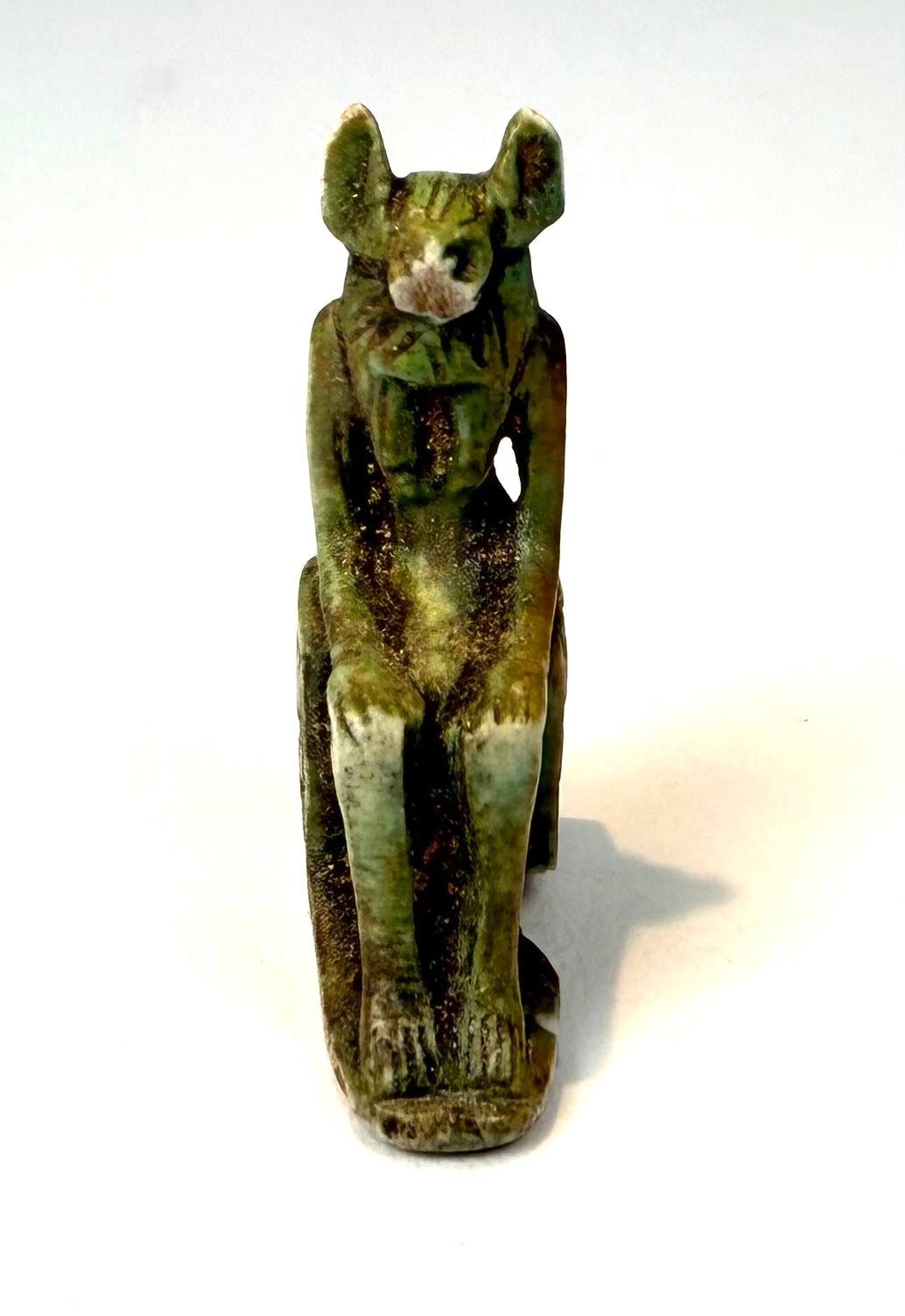
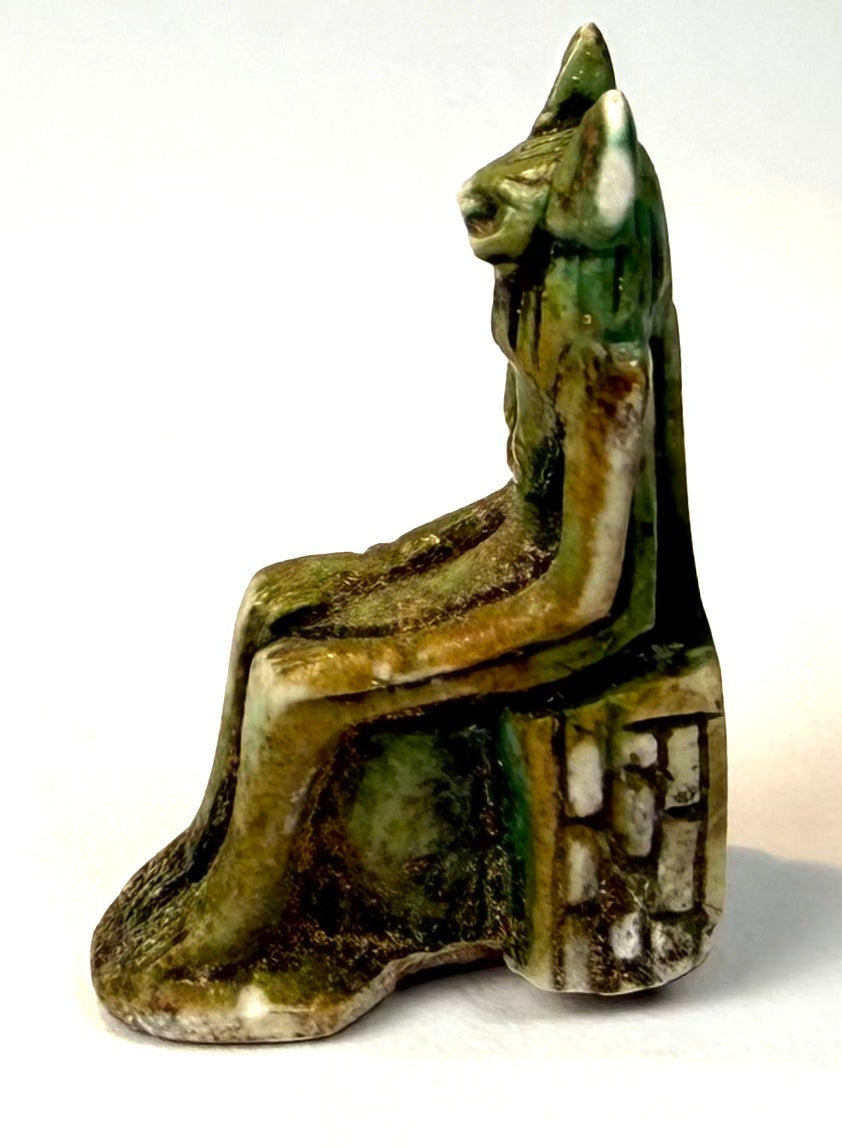
This finely detailed miniature Egyptian faience-style amulet depicts a seated lioness-headed goddess, possibly representing Sekhmet, one of ancient Egypt's most powerful protective deities. Traditionally associated with the Late Period, circa 664–332 BCE, the figure reflects the religious symbolism and artistic craftsmanship characteristic of small Egyptian devotional and protective objects. Its distinctive animal-headed form, enthroned posture, and decorative detailing closely resemble ancient Egyptian representations of lioness-headed goddesses preserved in major museum collections.
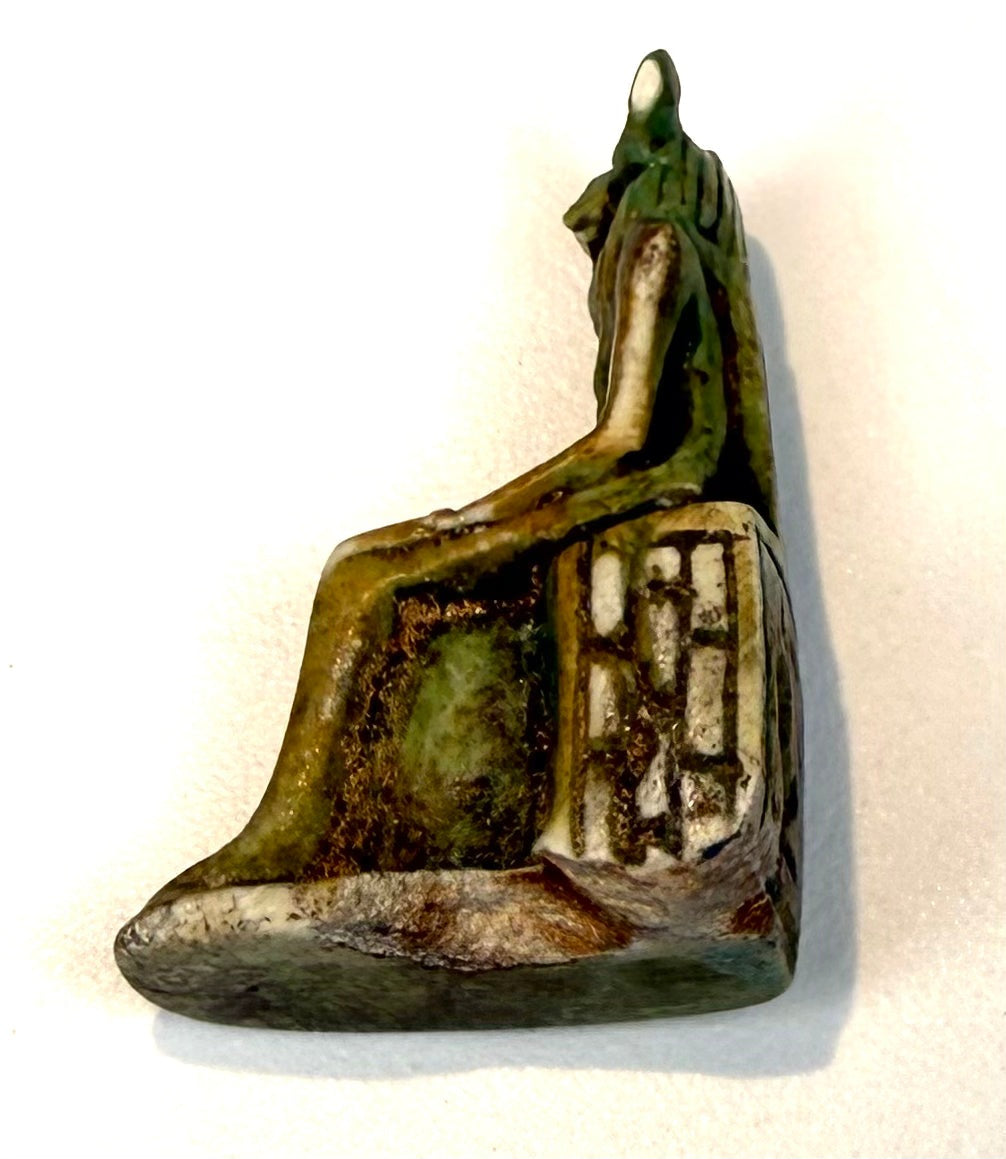
The goddess is depicted seated upon an integral rectangular throne, with elongated legs extending forward and hands resting upon the knees. The animal head features prominent upright ears, a projecting muzzle, and carefully modelled facial contours, while incised details and a vertically striated element extend along the back of the figure. The throne incorporates raised and recessed geometric ornamentation along its side panels, resembling the architectural and decorative motifs encountered on traditional Egyptian divine figures. The compact construction and integrated base create a distinctive miniature representation of an enthroned deity.
The surface exhibits a rich combination of olive-green and darker green glaze, with extensive earthy brown and blackish deposits concentrated within the recessed areas. Scattered glossy surfaces remain visible, contrasting with areas of abrasion, discoloration, and mineral-like accretion. Despite considerable surface wear, the figure retains its recognizable seated posture, elongated animal head, extended legs, and decorated throne. Comparable faience figures of seated lioness-headed goddesses dating to the Late and Ptolemaic periods are preserved in museum collections, including examples associated with Sekhmet, Bastet, and Wadjet.
Features
- Traditional enthroned posture with an elongated animal-headed profile
- Prominent upright ears, projecting muzzle, and sculpted facial contours
- Incised detailing across the head and vertically striated element extending along the back
- Seated composition with hands resting upon the knees
- Long legs extending forward onto an integral rectangular base
- Rectangular throne featuring raised and recessed geometric decoration
- Surviving olive-green glaze with dark brown deposits, mineral-like accretions, and surface wear
Cultural Significance
Lioness-headed goddesses occupied an important position in ancient Egyptian religion, representing divine protection, royal authority, strength, and the powerful forces of nature. Among the most significant was Sekhmet, a formidable goddess associated with warfare, healing, and protection. Frequently depicted as a lioness-headed woman, Sekhmet embodied both the destructive power of the sun and the protective qualities of divine intervention. Her worship was closely connected with the maintenance of cosmic order, royal protection, and religious healing traditions.
Other Egyptian goddesses, including Bastet and Wadjet, were also represented with feline or lioness characteristics in certain artistic traditions. Bastet was associated with protection, domestic well-being, and divine guardianship, while Wadjet was closely connected with royal authority and the protection of the Egyptian monarchy. Small representations of these deities were produced in various materials and forms, including miniature enthroned figures, protective amulets, and devotional objects. Their iconographic similarities can make precise identification difficult when distinctive attributes are absent or obscured by wear.
During the Late Period (664–332 BCE), Egyptian artisans continued producing a wide variety of glazed faience amulets representing protective deities, sacred animals, and religious symbols. These miniature objects were worn as personal talismans, incorporated into jewellery, or placed among funerary possessions. Faience was particularly valued for its brilliant blue-green glazed surface, which carried symbolic associations with fertility, regeneration, and eternal life. Seated figures of lioness-headed goddesses illustrate the enduring importance of divine protection and religious devotion in ancient Egyptian material culture.
Condition
The figure retains its complete overall seated form, including the animal-headed features, extended legs, rectangular throne, and integral base. The surface displays extensive age-related wear, including scattered abrasions, minor chips, localized pitting, mineral-like deposits, and areas of discoloration. The olive-green glazed surface survives in varying degrees, with darker brown and blackish deposits concentrated around the sculpted recesses, throne panels, and lower portions of the figure. The prominent ears, projecting muzzle, and facial contours remain recognizable, although some finer details have been softened by surface deterioration. The throne retains its raised and recessed geometric ornamentation, while the edges and base exhibit minor irregularities and localized surface losses. Scattered glossy areas contrast with rougher sections displaying apparent glaze wear and accumulated deposits.
Dimensions (Approximate)
Height: 1.25 in
Length: 0.75 in
Depth: 0.35 in
Age (Approximate)
2,350–2,700 years old
Provenance
Previously held in a private collection in Indianapolis, Indiana, United States.
Learn More
Explore comparable ancient Egyptian faience figures of seated lioness-headed goddesses dating to the Late Period–Ptolemaic Period, including an Amulet of Sekhmet at LACMA and a seated lion-headed goddess identified as possibly Bastet through The Metropolitan Museum of Art
Discover additional ancient Egyptian amulets, protective deities, and historical artifacts in our Ancient Egyptian Mummies & Artifacts Collection
Description
Historical Context & Origin
Region: Ancient Egypt
Material: Green-glazed composition, possibly Egyptian faience
Period: Late Period style, circa 664–332 BCE
Description
This finely detailed miniature Egyptian faience-style amulet depicts a seated lioness-headed goddess, possibly representing Sekhmet, one of ancient Egypt's most powerful protective deities. Traditionally associated with the Late Period, circa 664–332 BCE, the figure reflects the religious symbolism and artistic craftsmanship characteristic of small Egyptian devotional and protective objects. Its distinctive animal-headed form, enthroned posture, and decorative detailing closely resemble ancient Egyptian representations of lioness-headed goddesses preserved in major museum collections.
The goddess is depicted seated upon an integral rectangular throne, with elongated legs extending forward and hands resting upon the knees. The animal head features prominent upright ears, a projecting muzzle, and carefully modelled facial contours, while incised details and a vertically striated element extend along the back of the figure. The throne incorporates raised and recessed geometric ornamentation along its side panels, resembling the architectural and decorative motifs encountered on traditional Egyptian divine figures. The compact construction and integrated base create a distinctive miniature representation of an enthroned deity.
The surface exhibits a rich combination of olive-green and darker green glaze, with extensive earthy brown and blackish deposits concentrated within the recessed areas. Scattered glossy surfaces remain visible, contrasting with areas of abrasion, discoloration, and mineral-like accretion. Despite considerable surface wear, the figure retains its recognizable seated posture, elongated animal head, extended legs, and decorated throne. Comparable faience figures of seated lioness-headed goddesses dating to the Late and Ptolemaic periods are preserved in museum collections, including examples associated with Sekhmet, Bastet, and Wadjet.
Features
- Traditional enthroned posture with an elongated animal-headed profile
- Prominent upright ears, projecting muzzle, and sculpted facial contours
- Incised detailing across the head and vertically striated element extending along the back
- Seated composition with hands resting upon the knees
- Long legs extending forward onto an integral rectangular base
- Rectangular throne featuring raised and recessed geometric decoration
- Surviving olive-green glaze with dark brown deposits, mineral-like accretions, and surface wear
Cultural Significance
Lioness-headed goddesses occupied an important position in ancient Egyptian religion, representing divine protection, royal authority, strength, and the powerful forces of nature. Among the most significant was Sekhmet, a formidable goddess associated with warfare, healing, and protection. Frequently depicted as a lioness-headed woman, Sekhmet embodied both the destructive power of the sun and the protective qualities of divine intervention. Her worship was closely connected with the maintenance of cosmic order, royal protection, and religious healing traditions.
Other Egyptian goddesses, including Bastet and Wadjet, were also represented with feline or lioness characteristics in certain artistic traditions. Bastet was associated with protection, domestic well-being, and divine guardianship, while Wadjet was closely connected with royal authority and the protection of the Egyptian monarchy. Small representations of these deities were produced in various materials and forms, including miniature enthroned figures, protective amulets, and devotional objects. Their iconographic similarities can make precise identification difficult when distinctive attributes are absent or obscured by wear.
During the Late Period (664–332 BCE), Egyptian artisans continued producing a wide variety of glazed faience amulets representing protective deities, sacred animals, and religious symbols. These miniature objects were worn as personal talismans, incorporated into jewellery, or placed among funerary possessions. Faience was particularly valued for its brilliant blue-green glazed surface, which carried symbolic associations with fertility, regeneration, and eternal life. Seated figures of lioness-headed goddesses illustrate the enduring importance of divine protection and religious devotion in ancient Egyptian material culture.
Condition
The figure retains its complete overall seated form, including the animal-headed features, extended legs, rectangular throne, and integral base. The surface displays extensive age-related wear, including scattered abrasions, minor chips, localized pitting, mineral-like deposits, and areas of discoloration. The olive-green glazed surface survives in varying degrees, with darker brown and blackish deposits concentrated around the sculpted recesses, throne panels, and lower portions of the figure. The prominent ears, projecting muzzle, and facial contours remain recognizable, although some finer details have been softened by surface deterioration. The throne retains its raised and recessed geometric ornamentation, while the edges and base exhibit minor irregularities and localized surface losses. Scattered glossy areas contrast with rougher sections displaying apparent glaze wear and accumulated deposits.
Dimensions (Approximate)
Height: 1.25 in
Length: 0.75 in
Depth: 0.35 in
Age (Approximate)
2,350–2,700 years old
Provenance
Previously held in a private collection in Indianapolis, Indiana, United States.
Learn More
Explore comparable ancient Egyptian faience figures of seated lioness-headed goddesses dating to the Late Period–Ptolemaic Period, including an Amulet of Sekhmet at LACMA and a seated lion-headed goddess identified as possibly Bastet through The Metropolitan Museum of Art
Discover additional ancient Egyptian amulets, protective deities, and historical artifacts in our Ancient Egyptian Mummies & Artifacts Collection
You May Also Like
