



Egyptian Terracotta Head of Harpocrates – Horus the Child | Ptolemaic–Roman Style | Circa 200 BCE–200 CE
Couldn't load pickup availability






Egyptian Terracotta Head of Harpocrates – Horus the Child | Ptolemaic–Roman Style | Circa 200 BCE–200 CE
Description
More
Less
Historical Context & Origin
Region: Egyptian, Greco-Roman artistic tradition
Material: Terracotta (fired earthenware)
Period: Ptolemaic–Roman Egyptian style, circa 200 BCE–200 CE
Description
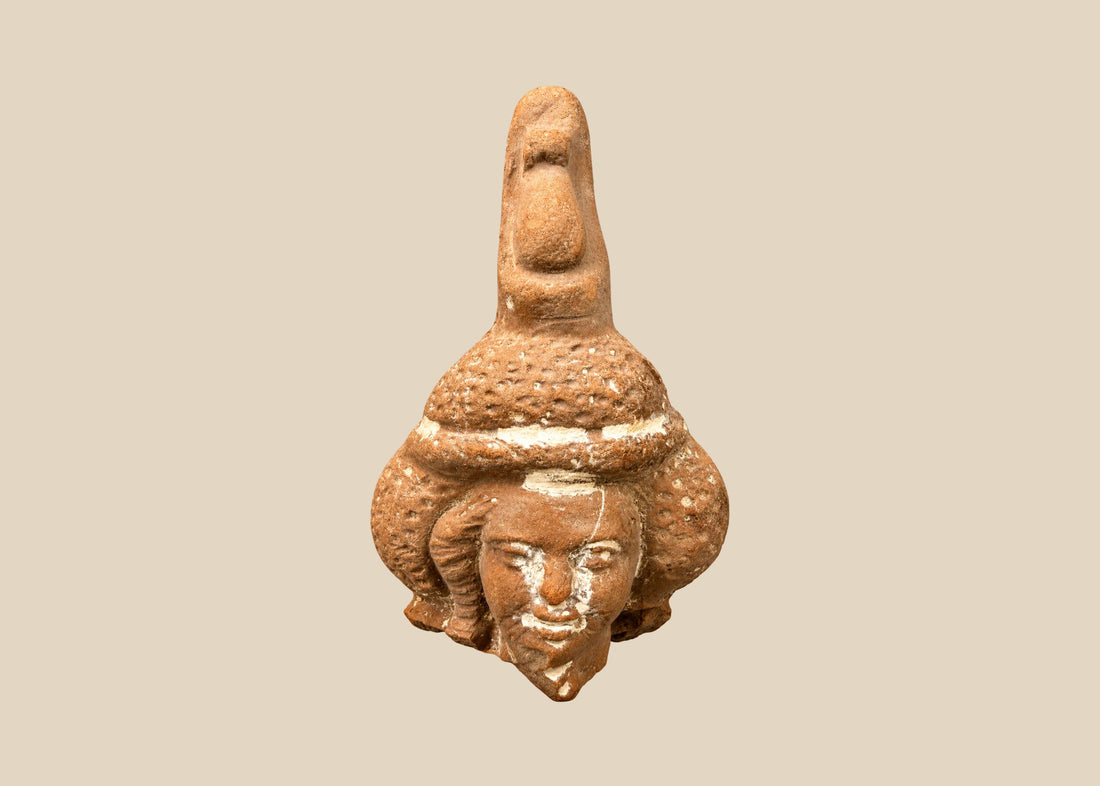
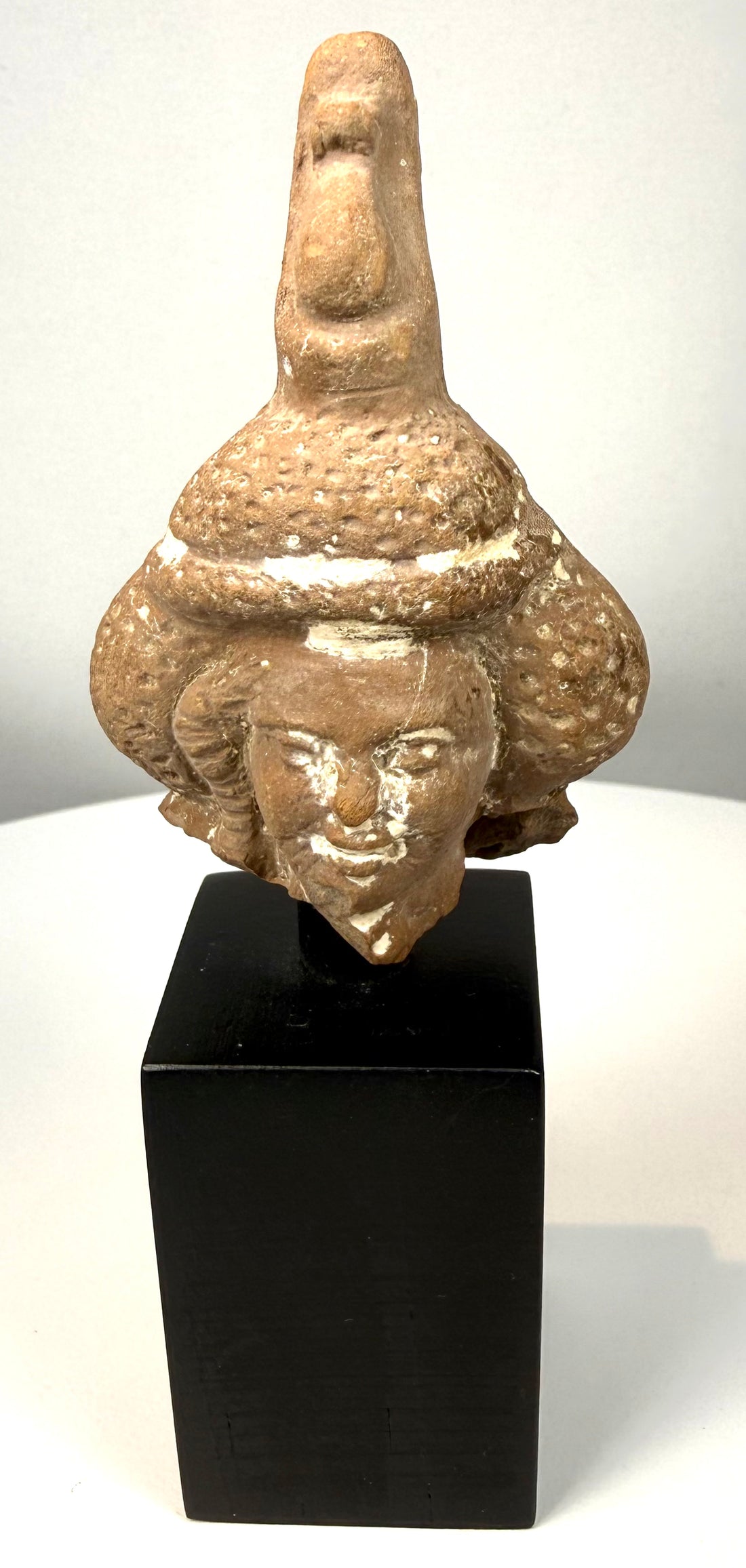
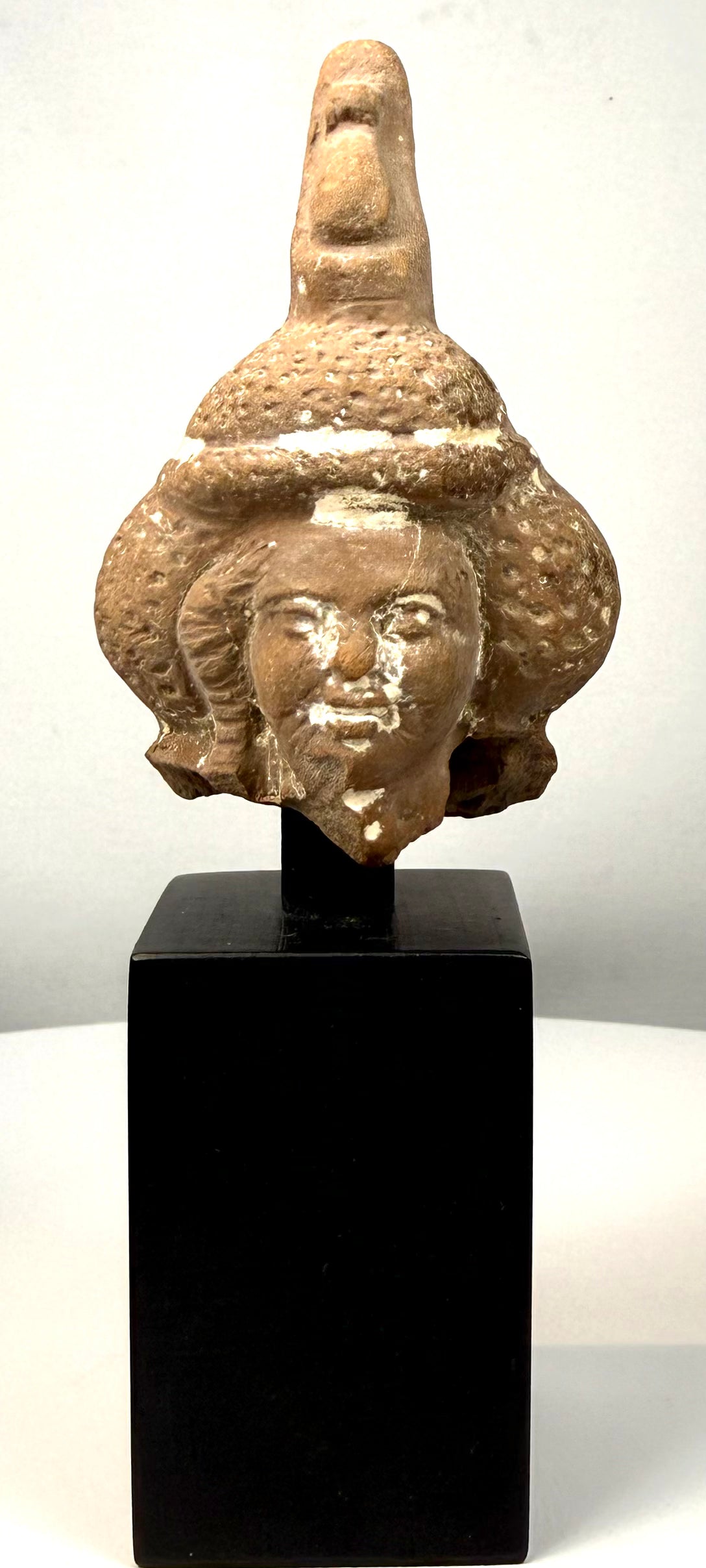
This distinctive terracotta sculptural fragment depicts Harpocrates, also known as Horus the Child, an Egyptian deity associated with divine kingship, protection, fertility, and regeneration. The sculpture reflects the artistic traditions of Greco-Roman Egypt, combining traditional Egyptian religious iconography with the softer facial modelling characteristic of Hellenistic sculpture.
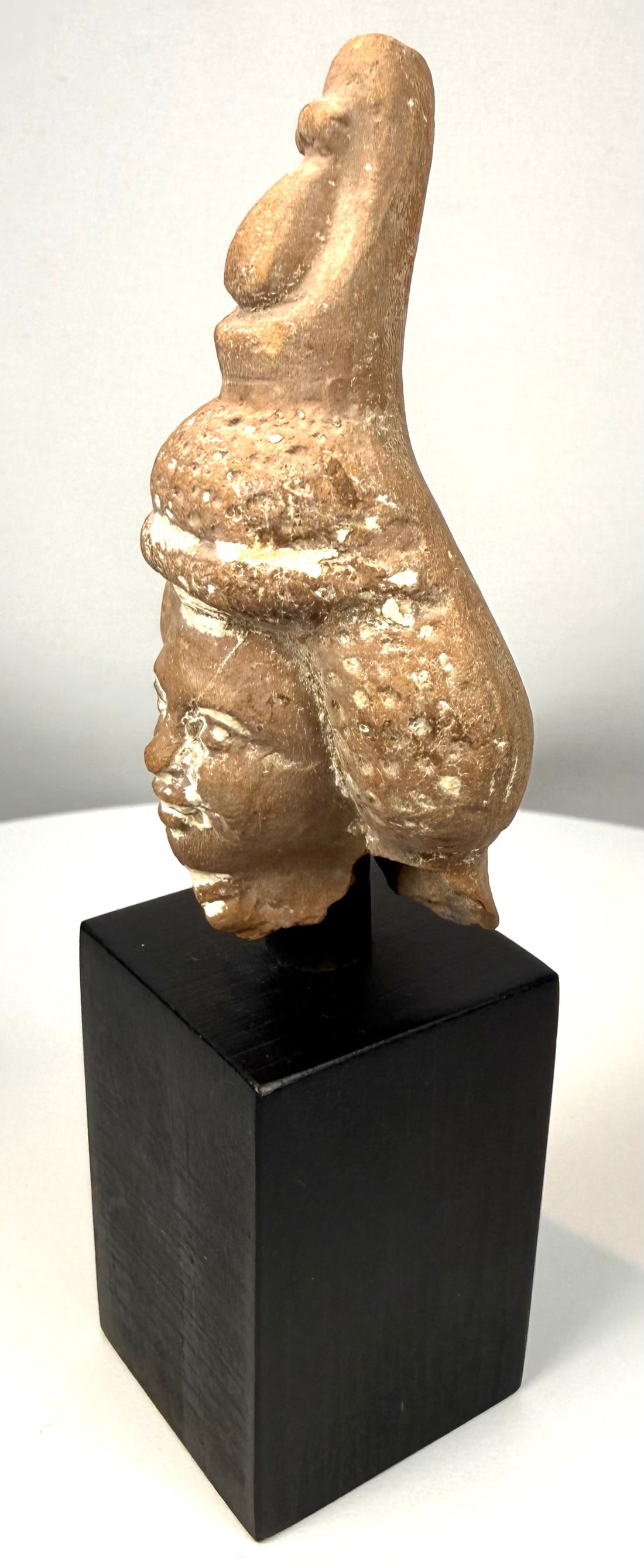
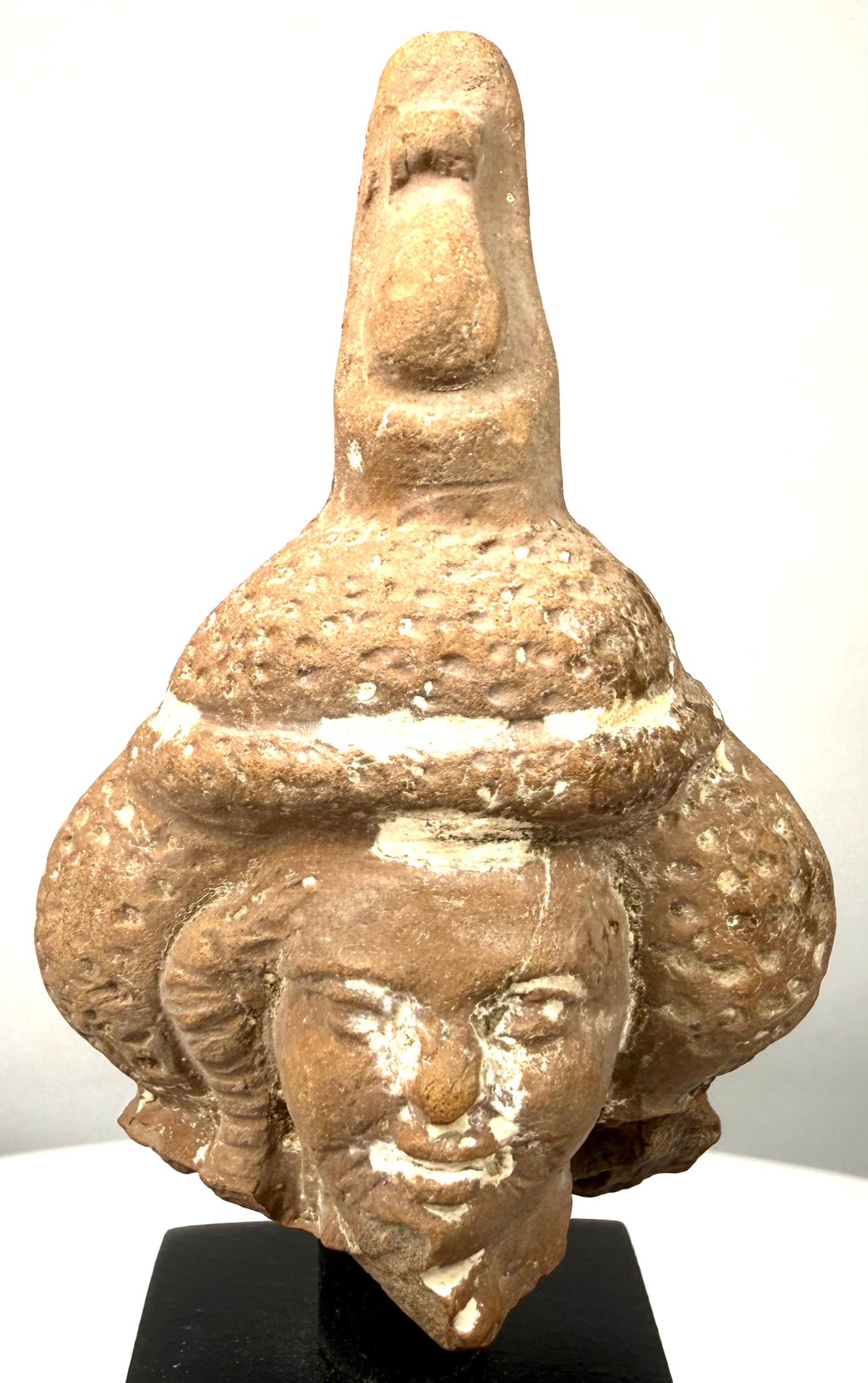
The youthful face features gently defined eyebrows, almond-shaped eyes, a prominent nose, softly modelled cheeks, and full lips. Surrounding the head is an elaborate festival wreath with rounded, textured detailing, surmounted by a prominent vertical crown resembling the Egyptian double crown, known as the Pschent. This combination of decorative elements is documented in terracotta representations of Harpocrates from both Ptolemaic and Roman Egypt.
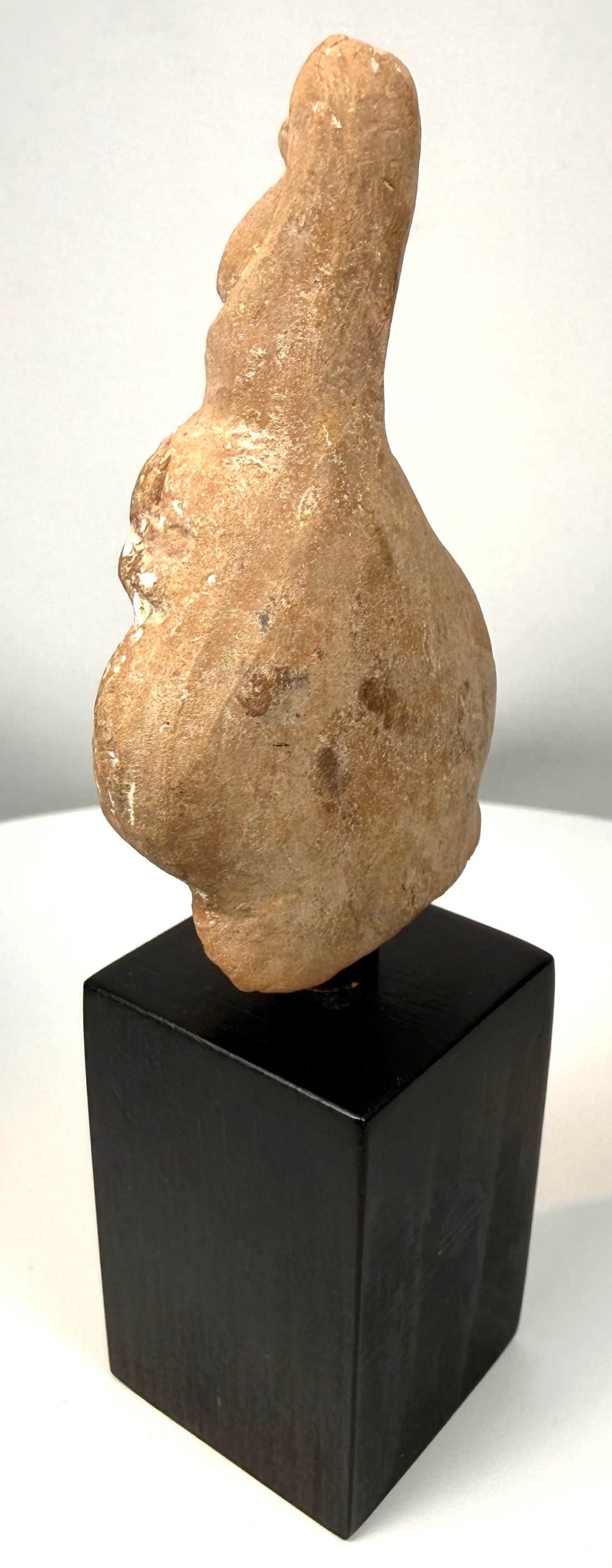
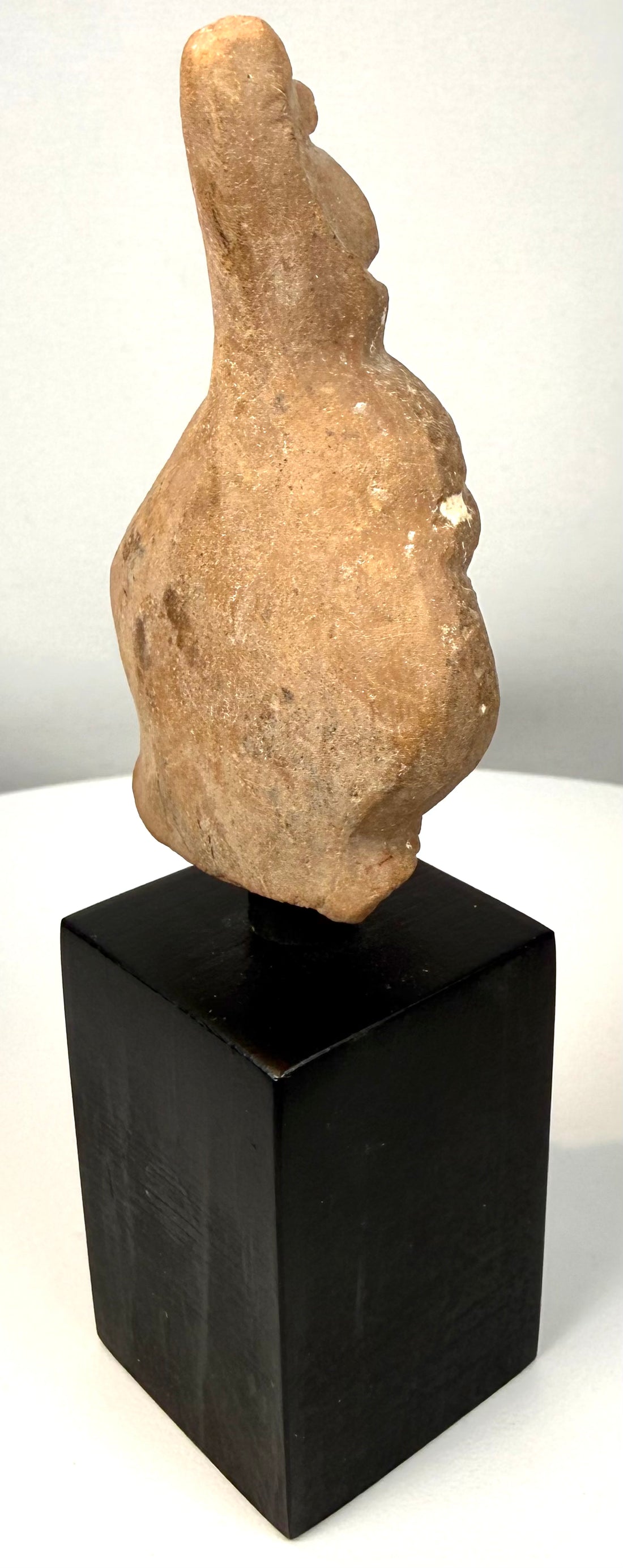
The warm terracotta surface displays attractive variations of reddish-brown, sandy ochre, and muted earthen tones, contrasting with scattered pale surface deposits. The comparatively plain reverse contrasts with the detailed frontal modelling, while the irregular lower edge indicates that the head once formed part of a larger sculptural composition.
Features
- Terracotta sculptural head depicting Harpocrates (Horus the Child)
- Elaborate festival wreath with rounded, textured sculptural detailing
- Prominent crown resembling the double crown of Upper and Lower Egypt
- Youthful facial features reflecting Hellenistic artistic conventions
- Warm reddish-brown and sandy ochre terracotta coloration
- Contrasting pale surface deposits and weathered textures
- Detailed frontal modelling with a comparatively plain reverse
Cultural Significance
Harpocrates, the Greek rendering of Horus the Child, was traditionally identified as the son of Isis and Osiris. Associated with divine kingship, childhood, protection, and renewal, his imagery became particularly popular throughout Ptolemaic and Roman Egypt, reflecting the interaction between Egyptian religious beliefs and Hellenistic artistic traditions.
The double crown, known as the Pschent, symbolized the unification of Upper and Lower Egypt and emphasized Horus's association with royal authority. Elaborate floral wreaths frequently accompanied the crown in Greco-Roman terracotta representations, evoking religious festivals and ceremonial celebrations.
Terracotta figures of Harpocrates were particularly prevalent in domestic settings, where they were associated with personal devotion, fertility, and the protection of children. These sculptures illustrate the enduring influence of Egyptian religious iconography and its integration into the wider artistic traditions of the ancient Mediterranean world.
Condition
The terracotta fragment exhibits scattered surface wear, abrasions, localized chipping, small pits, and areas of discoloration. The principal facial features remain well defined, while the elaborate wreath and prominent crown retain much of their sculptural detail. Irregular broken edges along the lower portion reflect the fragmentary nature of the piece. Scattered whitish deposits are visible around the face, headdress, and decorative borders, contrasting with the warm terracotta surface.
Dimensions (Approximate)
Height: 2.75 in
Width: 1.75 in
Depth: 1.25 in
Age (Approximate)
1,825–2,225 years old
Provenance
Previously held in the Estate of Carmine Vito "Tod" Todisco (1930–2025), Syracuse area, New York, USA. Todisco was an American businessman, entrepreneur, and collector of cultural artifacts, antiques, and art. He founded and served as Chief Executive Officer of Northern Plastics Corporation, a Syracuse-area manufacturer specializing in fiberglass furniture and commercial products.
Subsequently offered by Terri Peters & Associates, East Syracuse, New York, USA. Terri Peters & Associates is an established auction and estate marketing firm specializing in fine art, antiques, historical artifacts, and private collections.
Learn More
Discover a closely comparable terracotta head of Harpocrates from Roman Egypt, featuring an elaborate festival wreath and the traditional double crown of Upper and Lower Egypt, through the collections of the Musée du Louvre
Explore additional Egyptian religious figures, terracotta sculptures, funerary objects, and archaeological artifacts in our Ancient Egyptian Mummies & Artifacts Collection
Description
Historical Context & Origin
Region: Egyptian, Greco-Roman artistic tradition
Material: Terracotta (fired earthenware)
Period: Ptolemaic–Roman Egyptian style, circa 200 BCE–200 CE
Description
This distinctive terracotta sculptural fragment depicts Harpocrates, also known as Horus the Child, an Egyptian deity associated with divine kingship, protection, fertility, and regeneration. The sculpture reflects the artistic traditions of Greco-Roman Egypt, combining traditional Egyptian religious iconography with the softer facial modelling characteristic of Hellenistic sculpture.
The youthful face features gently defined eyebrows, almond-shaped eyes, a prominent nose, softly modelled cheeks, and full lips. Surrounding the head is an elaborate festival wreath with rounded, textured detailing, surmounted by a prominent vertical crown resembling the Egyptian double crown, known as the Pschent. This combination of decorative elements is documented in terracotta representations of Harpocrates from both Ptolemaic and Roman Egypt.
The warm terracotta surface displays attractive variations of reddish-brown, sandy ochre, and muted earthen tones, contrasting with scattered pale surface deposits. The comparatively plain reverse contrasts with the detailed frontal modelling, while the irregular lower edge indicates that the head once formed part of a larger sculptural composition.
Features
- Terracotta sculptural head depicting Harpocrates (Horus the Child)
- Elaborate festival wreath with rounded, textured sculptural detailing
- Prominent crown resembling the double crown of Upper and Lower Egypt
- Youthful facial features reflecting Hellenistic artistic conventions
- Warm reddish-brown and sandy ochre terracotta coloration
- Contrasting pale surface deposits and weathered textures
- Detailed frontal modelling with a comparatively plain reverse
Cultural Significance
Harpocrates, the Greek rendering of Horus the Child, was traditionally identified as the son of Isis and Osiris. Associated with divine kingship, childhood, protection, and renewal, his imagery became particularly popular throughout Ptolemaic and Roman Egypt, reflecting the interaction between Egyptian religious beliefs and Hellenistic artistic traditions.
The double crown, known as the Pschent, symbolized the unification of Upper and Lower Egypt and emphasized Horus's association with royal authority. Elaborate floral wreaths frequently accompanied the crown in Greco-Roman terracotta representations, evoking religious festivals and ceremonial celebrations.
Terracotta figures of Harpocrates were particularly prevalent in domestic settings, where they were associated with personal devotion, fertility, and the protection of children. These sculptures illustrate the enduring influence of Egyptian religious iconography and its integration into the wider artistic traditions of the ancient Mediterranean world.
Condition
The terracotta fragment exhibits scattered surface wear, abrasions, localized chipping, small pits, and areas of discoloration. The principal facial features remain well defined, while the elaborate wreath and prominent crown retain much of their sculptural detail. Irregular broken edges along the lower portion reflect the fragmentary nature of the piece. Scattered whitish deposits are visible around the face, headdress, and decorative borders, contrasting with the warm terracotta surface.
Dimensions (Approximate)
Height: 2.75 in
Width: 1.75 in
Depth: 1.25 in
Age (Approximate)
1,825–2,225 years old
Provenance
Previously held in the Estate of Carmine Vito "Tod" Todisco (1930–2025), Syracuse area, New York, USA. Todisco was an American businessman, entrepreneur, and collector of cultural artifacts, antiques, and art. He founded and served as Chief Executive Officer of Northern Plastics Corporation, a Syracuse-area manufacturer specializing in fiberglass furniture and commercial products.
Subsequently offered by Terri Peters & Associates, East Syracuse, New York, USA. Terri Peters & Associates is an established auction and estate marketing firm specializing in fine art, antiques, historical artifacts, and private collections.
Learn More
Discover a closely comparable terracotta head of Harpocrates from Roman Egypt, featuring an elaborate festival wreath and the traditional double crown of Upper and Lower Egypt, through the collections of the Musée du Louvre
Explore additional Egyptian religious figures, terracotta sculptures, funerary objects, and archaeological artifacts in our Ancient Egyptian Mummies & Artifacts Collection
You May Also Like
