



Ancient Elamite Terracotta Votive Plaque of Ishtar | Circa 1800–1600 BCE
Couldn't load pickup availability


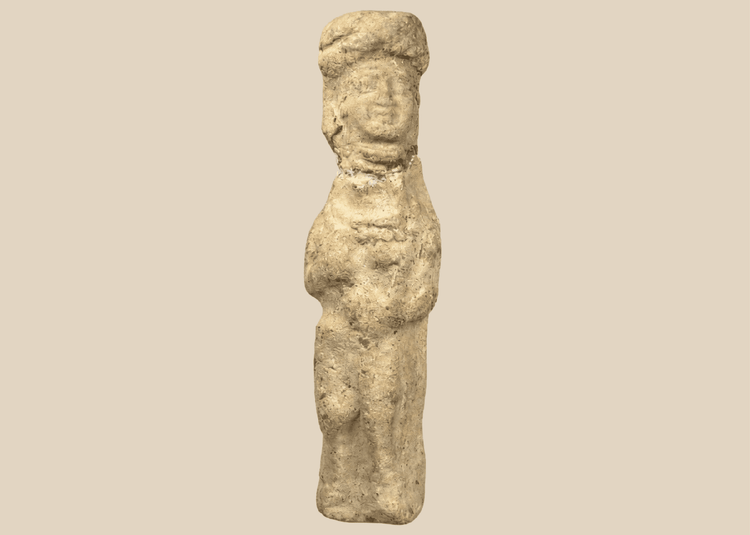
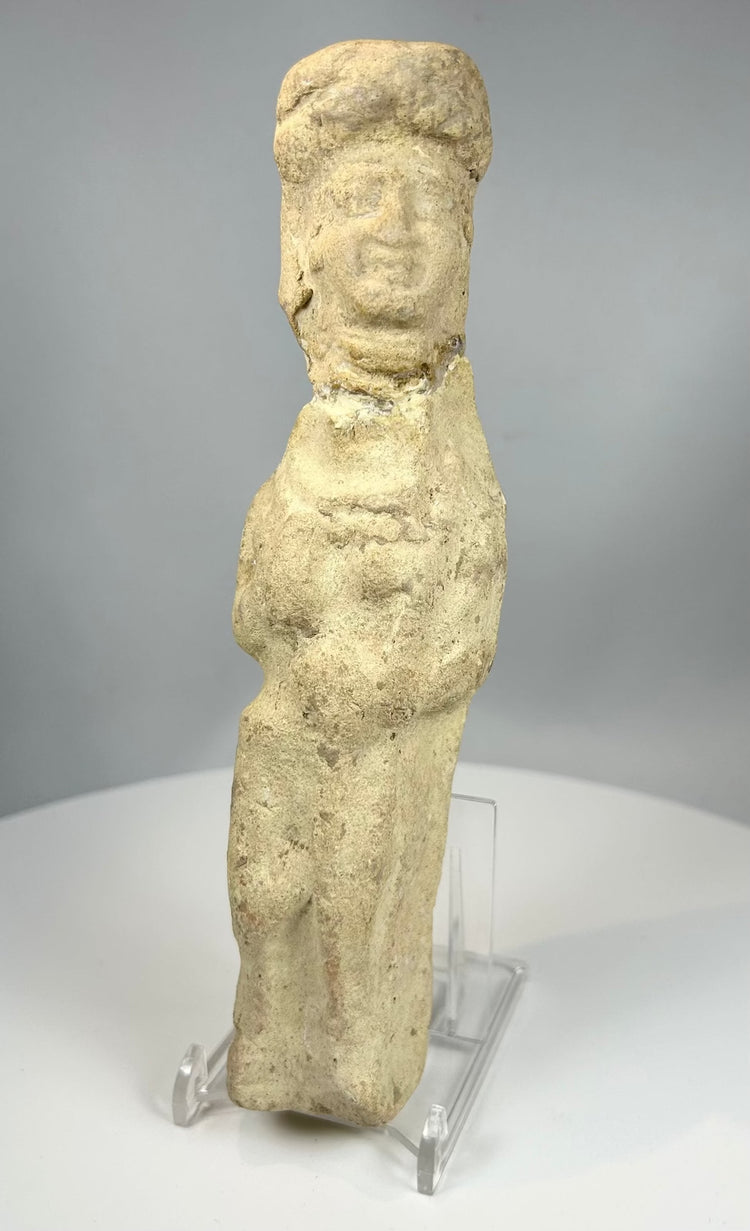
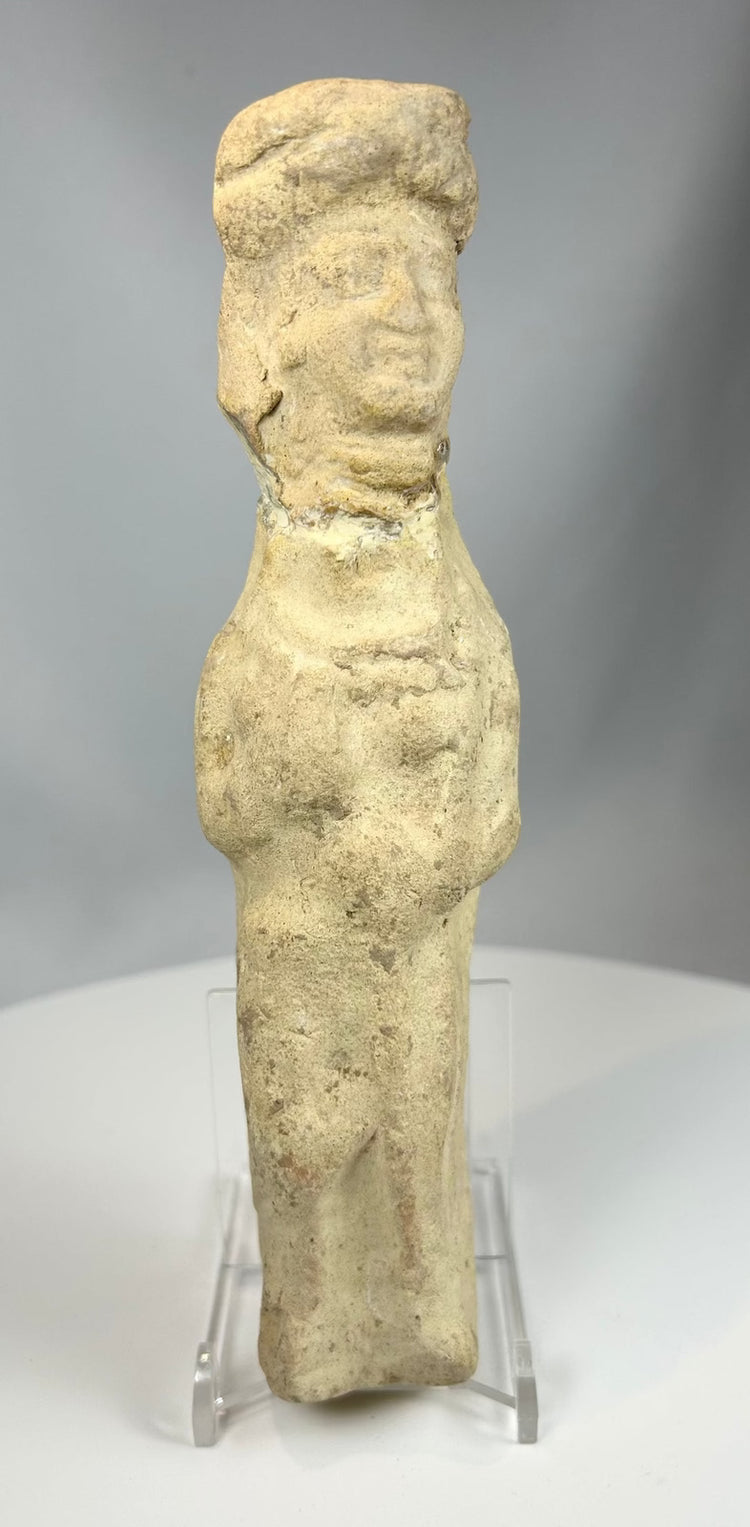
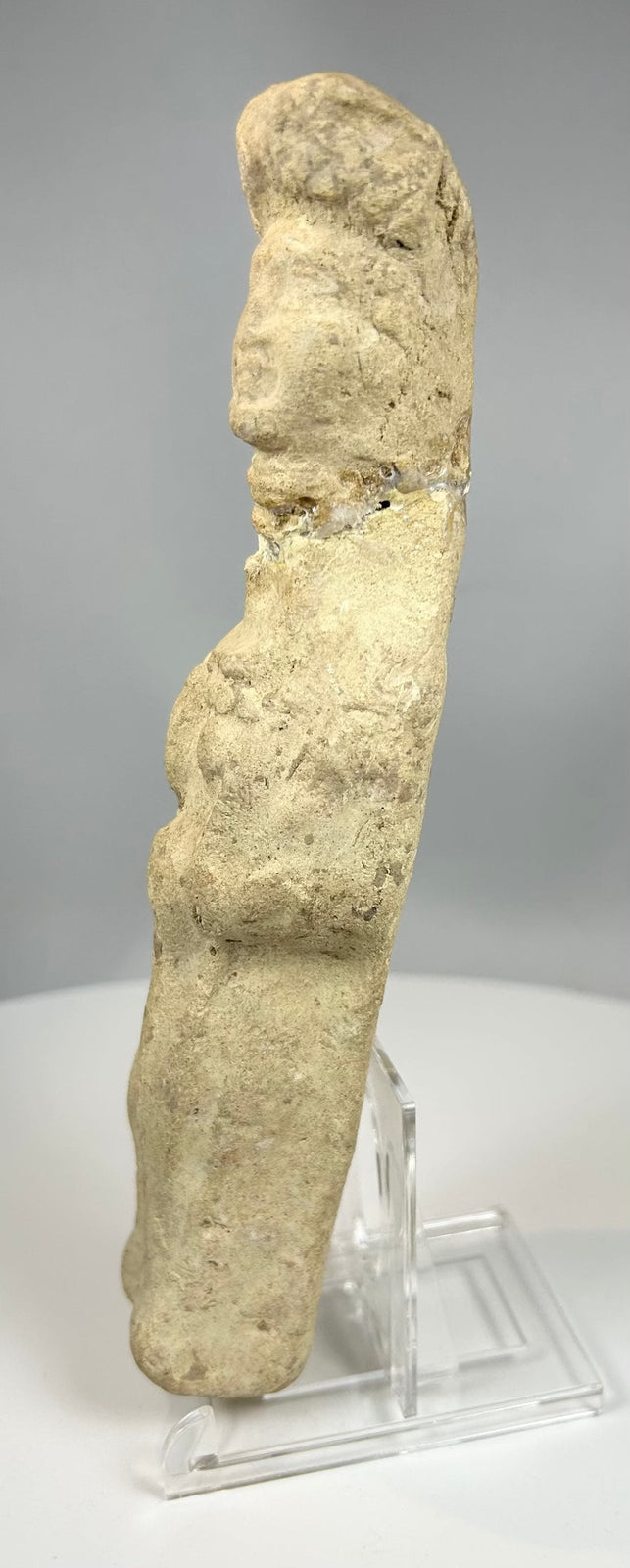
Ancient Elamite Terracotta Votive Plaque of Ishtar | Circa 1800–1600 BCE
Description
More
Less
Historical Context & Origin
Region: Elam, Ancient Southwestern Iran
Culture: Elamite
Material: Terracotta
Period: Circa 1800–1600 BCE
Description
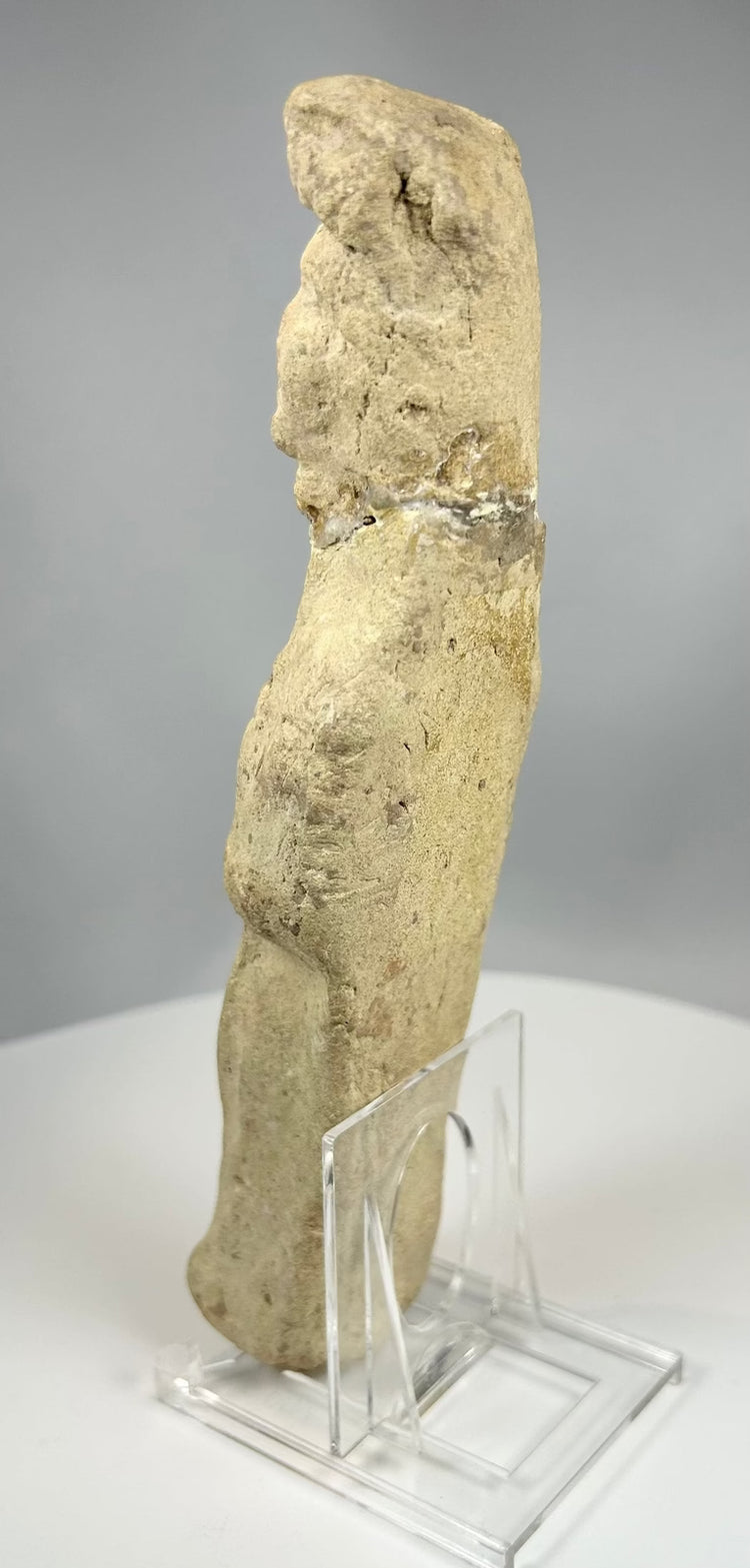
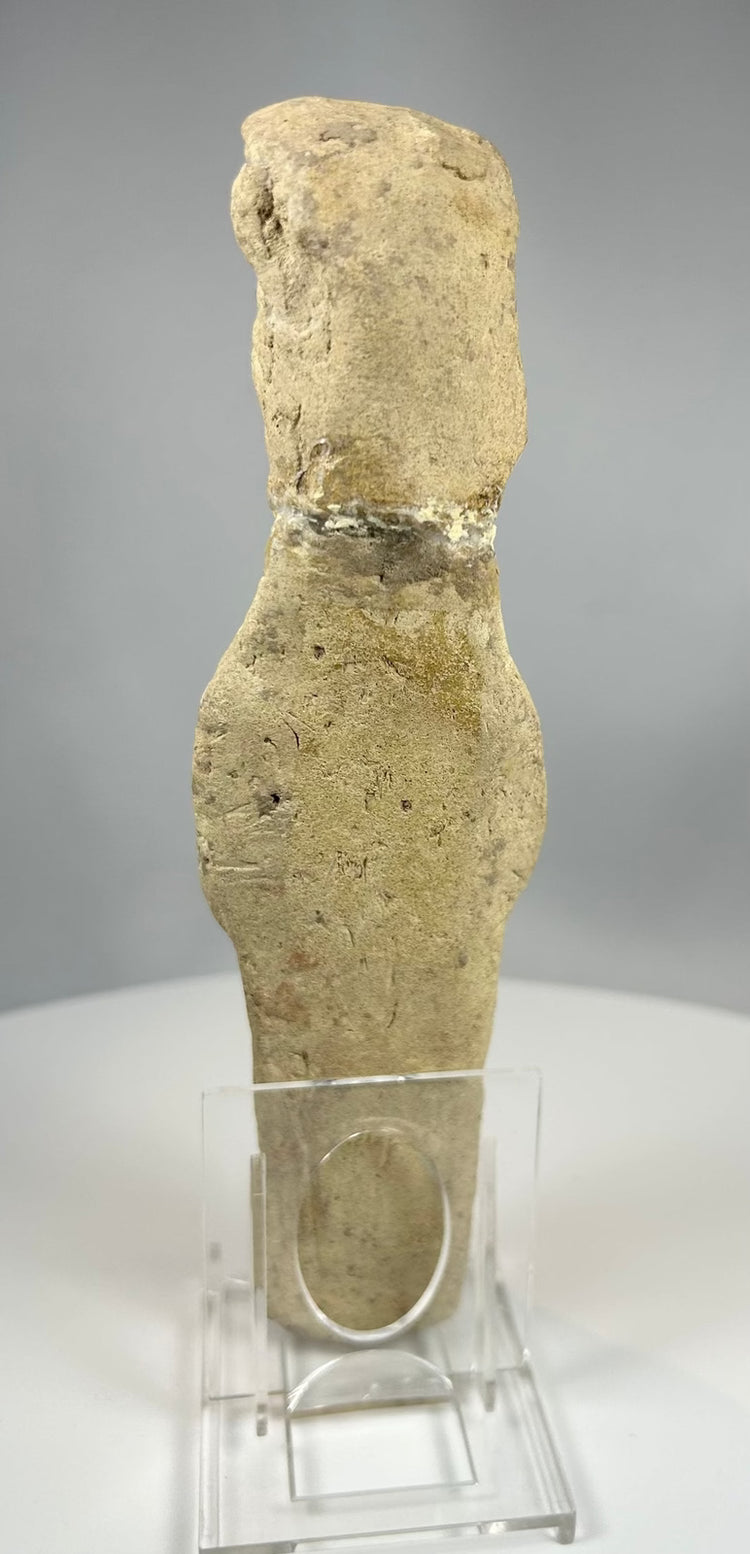
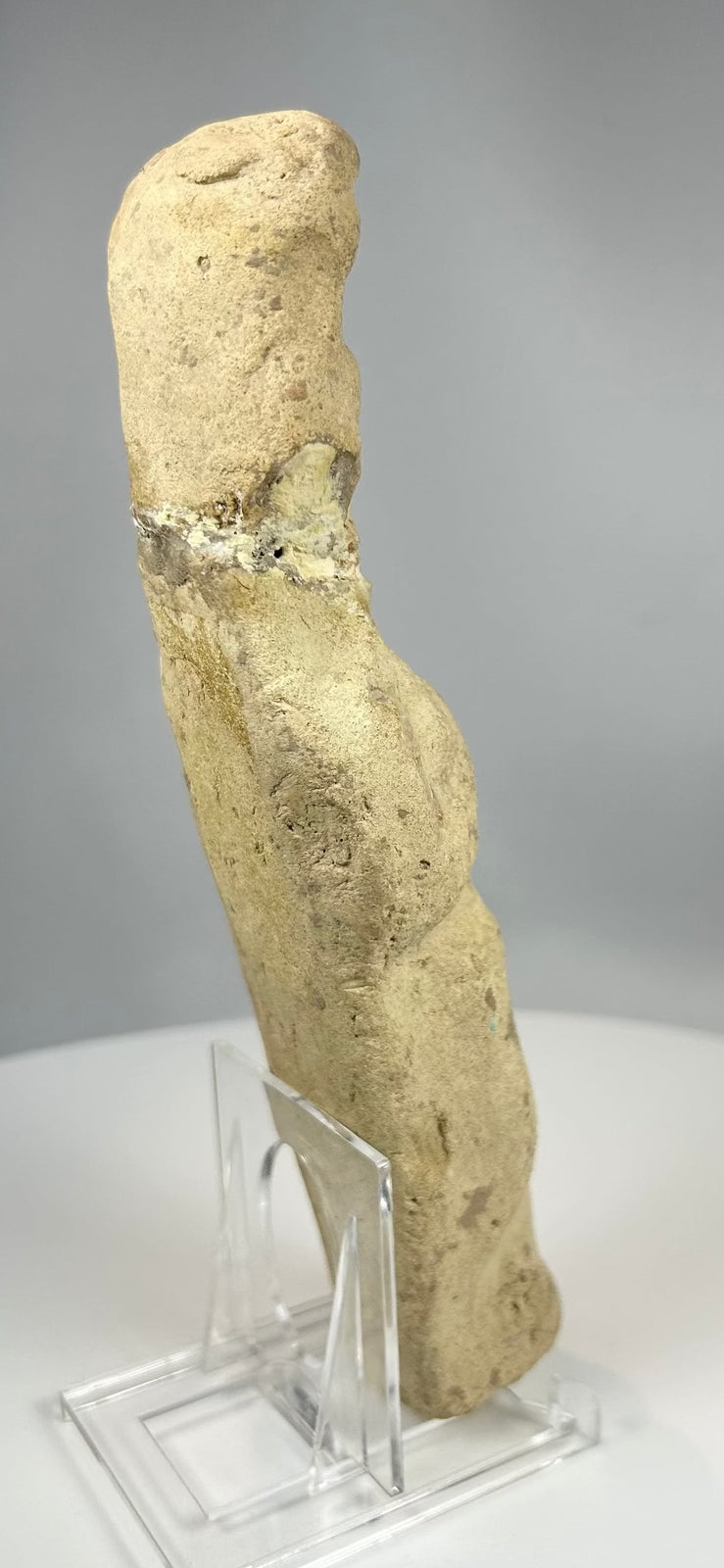
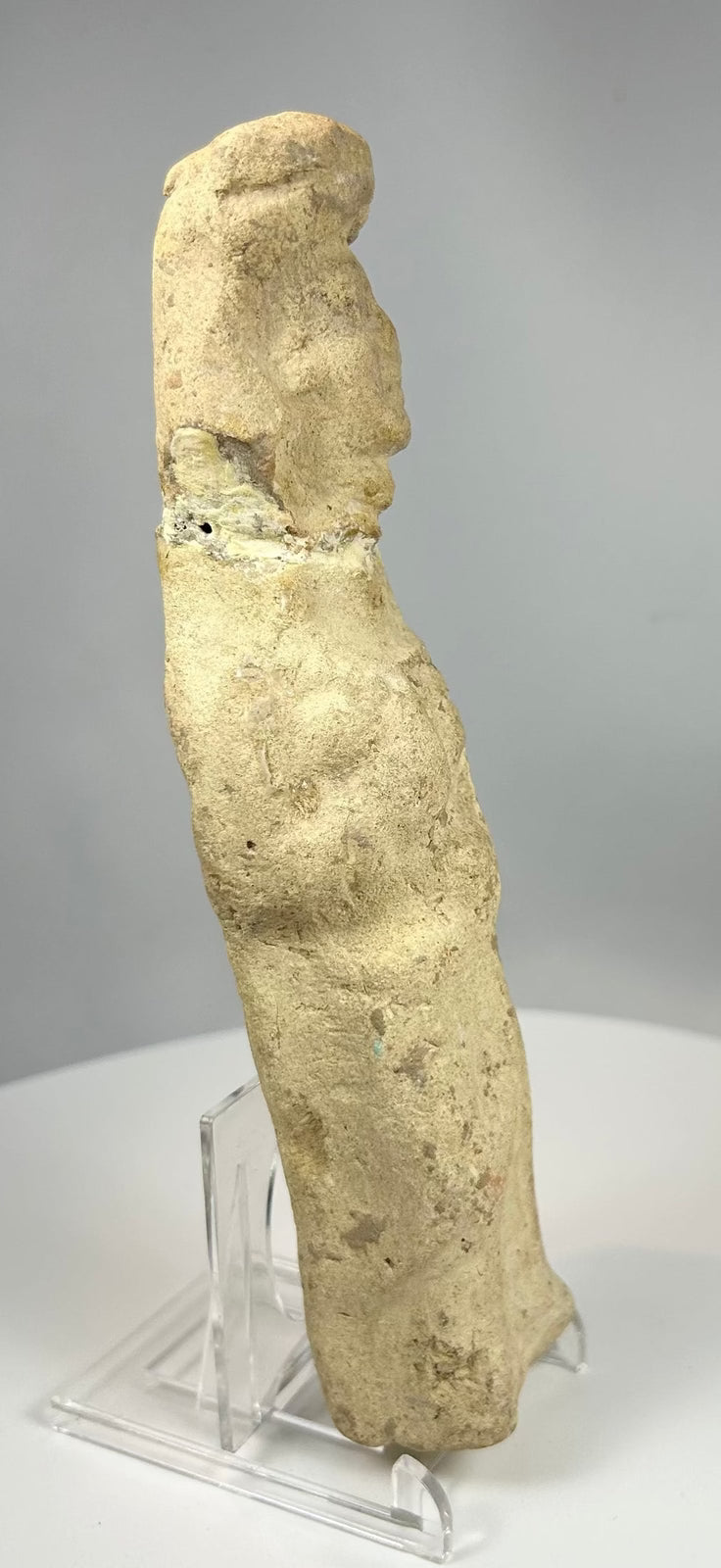
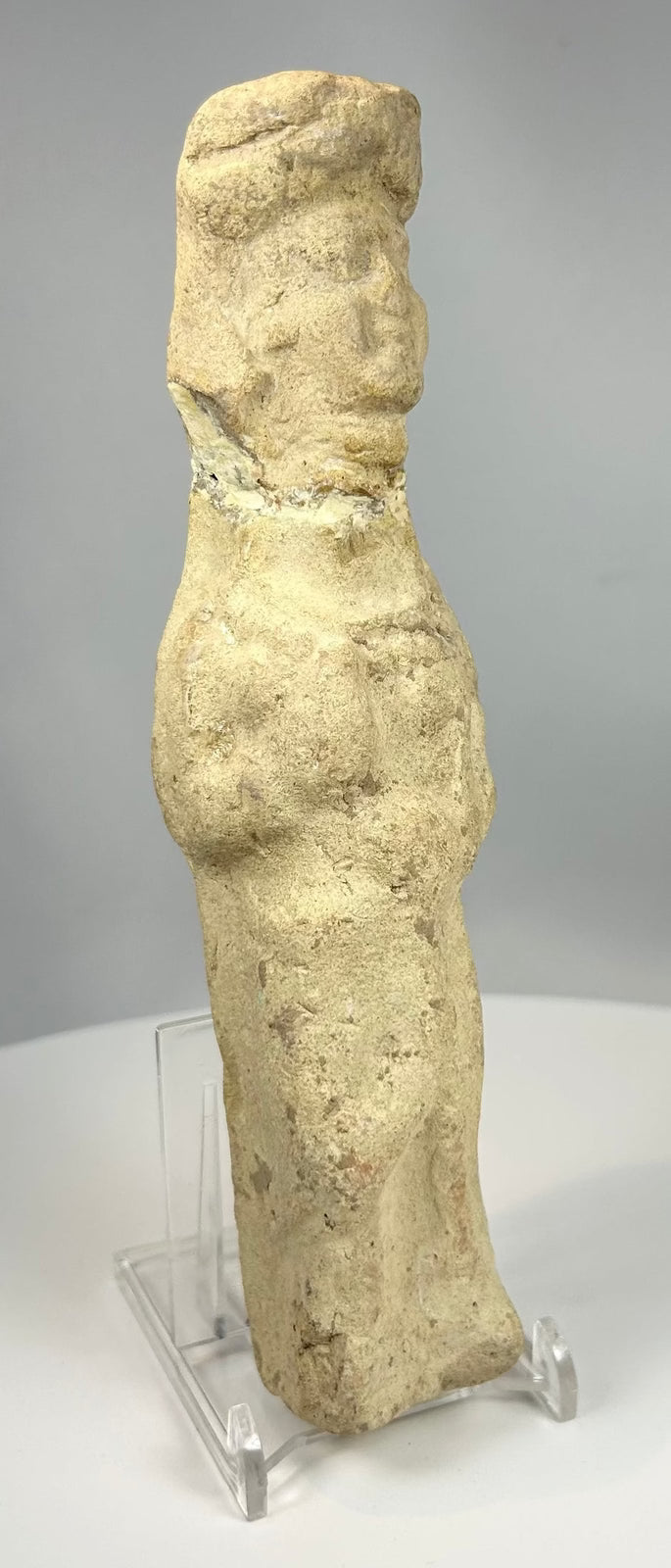
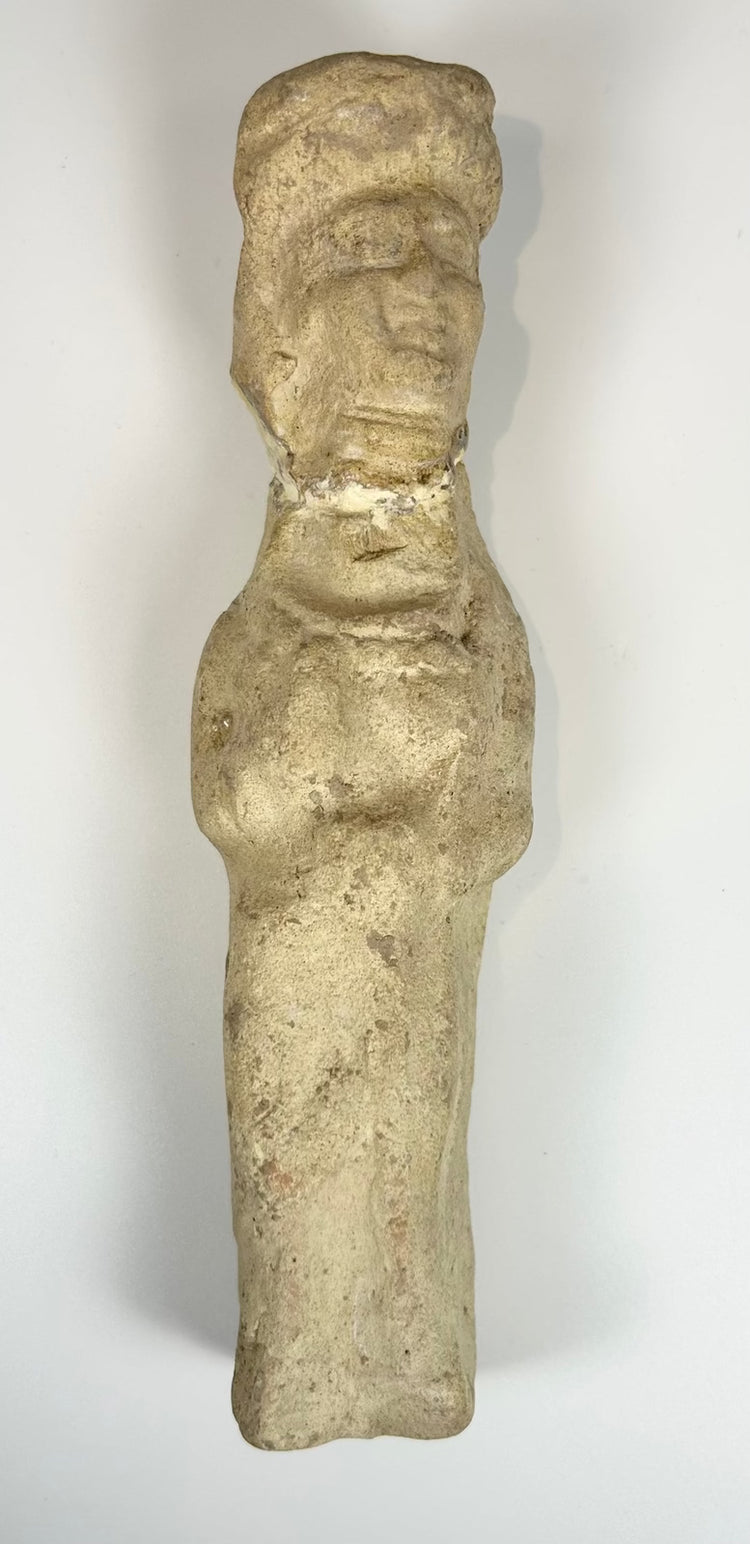
This ancient Elamite terracotta votive plaque depicts a standing female figure identified as the goddess Ishtar, dating to approximately 1800–1600 BCE.
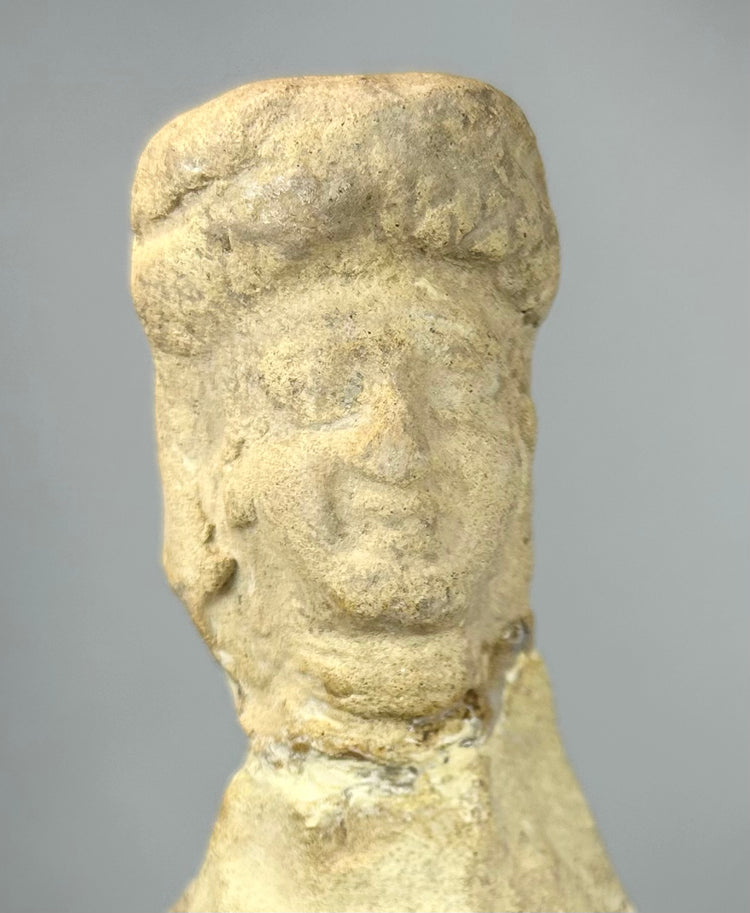
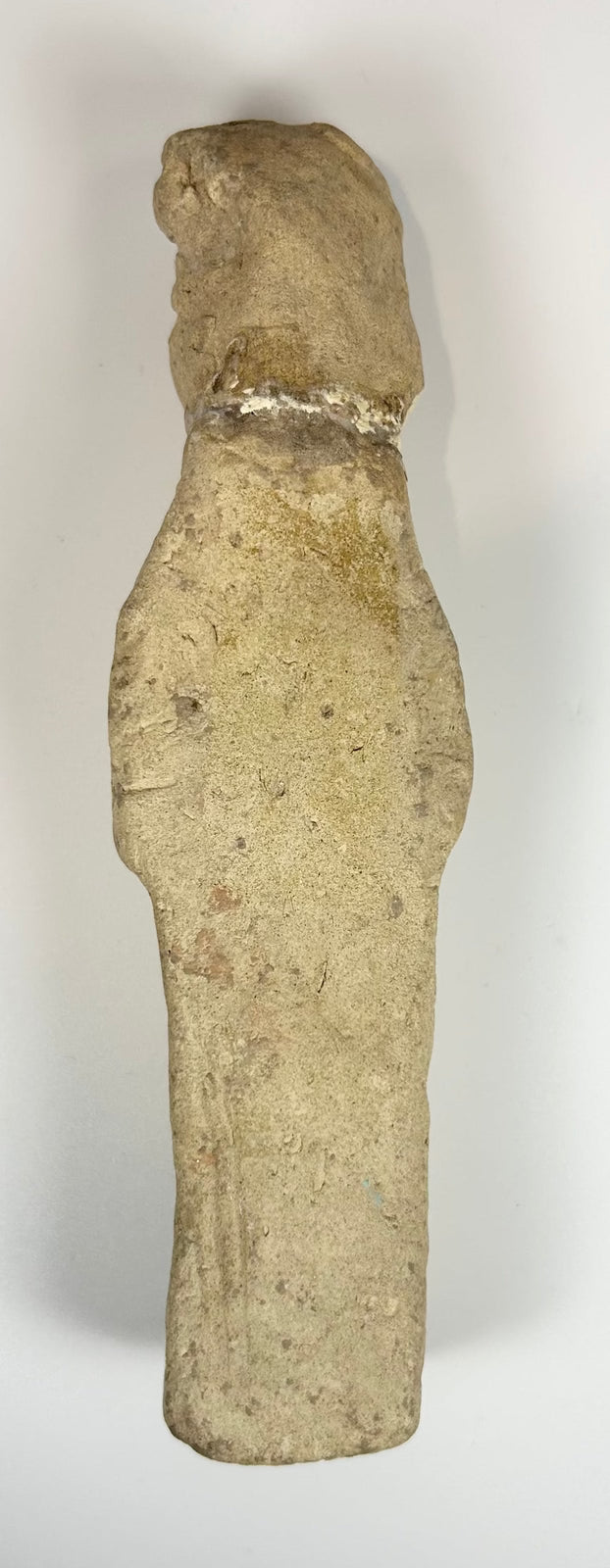
The figure is rendered in relief against a flat-backed plaque. Her lower body is distinctly columnar, while the torso is more softly modelled. Both arms are folded across the chest, creating a formal devotional pose. The face displays gently defined features beneath a prominent large headdress, an important element of the figure’s divine presentation.
The simplified yet carefully composed form reflects the symbolic character of ancient Elamite religious imagery. Mineral deposits and surface weathering remain visible across the terracotta, preserving the archaeological character of the piece.
Features
- Represents the goddess Ishtar
- Standing female figure rendered in relief
- Flat-backed plaque construction
- Columnar lower body
- Arms folded across the chest
- Softly modelled facial features
- Large headdress
- Mineral deposits and archaeological surface wear
- Old restoration visible at the neck
Cultural Significance
Terracotta votive plaques formed an important part of religious and devotional practice in the ancient Near East. Images of female deities could serve as objects of personal devotion, household worship, or ritual dedication.
This example is attributed by the specialist to the Elamite tradition and identified as representing Ishtar, one of the most important female deities of the ancient Near East. Her associations included love, fertility, warfare, and divine power, although the precise original context of this plaque cannot be established without archaeological provenance.
Condition
Ancient condition with mineral deposits, surface abrasion, and minor losses consistent with considerable age. An old restoration is present at the neck. The principal features of the figure—including the folded arms, facial modelling, headdress, and columnar body—remain clearly discernible.
Dimensions (Approximate)
Height: 7 in
Width: 2 in
Depth: 1.5 in
Age (Approximate)
3,600–3,800 years old
Provenance
Formerly part of the collection of a lifelong antiques collector in South Paris, Maine, United States. The collector assembled a broad and varied group of historical and decorative objects over many decades. Following the collector’s passing, the estate collection was dispersed in its entirety, and this piece subsequently entered the art market.
The piece was later examined by Luca Salvaggio, an Italian archaeologist and specialist in ancient Mediterranean and Near Eastern material. He holds a Postgraduate Diploma from the Italian Archaeological School at Athens (IASA) and is accredited for preventive archaeology by the Italian Ministry of Culture (MiC). Salvaggio identified the object as an Elamite terracotta votive plaque representing the goddess Ishtar, dating to circa 1800–1600 BCE, based on its flat-backed relief construction, columnar lower body, folded arms, facial modelling, and prominent headdress.
Learn More
Examine a comparable ancient terracotta figure in the Walters Art Museum collection
Discover Our Collection of Lost Civilizations: Artifacts of Forgotten Cultures
Description
Historical Context & Origin
Region: Elam, Ancient Southwestern Iran
Culture: Elamite
Material: Terracotta
Period: Circa 1800–1600 BCE
Description
This ancient Elamite terracotta votive plaque depicts a standing female figure identified as the goddess Ishtar, dating to approximately 1800–1600 BCE.
The figure is rendered in relief against a flat-backed plaque. Her lower body is distinctly columnar, while the torso is more softly modelled. Both arms are folded across the chest, creating a formal devotional pose. The face displays gently defined features beneath a prominent large headdress, an important element of the figure’s divine presentation.
The simplified yet carefully composed form reflects the symbolic character of ancient Elamite religious imagery. Mineral deposits and surface weathering remain visible across the terracotta, preserving the archaeological character of the piece.
Features
- Represents the goddess Ishtar
- Standing female figure rendered in relief
- Flat-backed plaque construction
- Columnar lower body
- Arms folded across the chest
- Softly modelled facial features
- Large headdress
- Mineral deposits and archaeological surface wear
- Old restoration visible at the neck
Cultural Significance
Terracotta votive plaques formed an important part of religious and devotional practice in the ancient Near East. Images of female deities could serve as objects of personal devotion, household worship, or ritual dedication.
This example is attributed by the specialist to the Elamite tradition and identified as representing Ishtar, one of the most important female deities of the ancient Near East. Her associations included love, fertility, warfare, and divine power, although the precise original context of this plaque cannot be established without archaeological provenance.
Condition
Ancient condition with mineral deposits, surface abrasion, and minor losses consistent with considerable age. An old restoration is present at the neck. The principal features of the figure—including the folded arms, facial modelling, headdress, and columnar body—remain clearly discernible.
Dimensions (Approximate)
Height: 7 in
Width: 2 in
Depth: 1.5 in
Age (Approximate)
3,600–3,800 years old
Provenance
Formerly part of the collection of a lifelong antiques collector in South Paris, Maine, United States. The collector assembled a broad and varied group of historical and decorative objects over many decades. Following the collector’s passing, the estate collection was dispersed in its entirety, and this piece subsequently entered the art market.
The piece was later examined by Luca Salvaggio, an Italian archaeologist and specialist in ancient Mediterranean and Near Eastern material. He holds a Postgraduate Diploma from the Italian Archaeological School at Athens (IASA) and is accredited for preventive archaeology by the Italian Ministry of Culture (MiC). Salvaggio identified the object as an Elamite terracotta votive plaque representing the goddess Ishtar, dating to circa 1800–1600 BCE, based on its flat-backed relief construction, columnar lower body, folded arms, facial modelling, and prominent headdress.
Learn More
Examine a comparable ancient terracotta figure in the Walters Art Museum collection
Discover Our Collection of Lost Civilizations: Artifacts of Forgotten Cultures
You May Also Like
