



Eurasian Neolithic Limestone Idol Figure | Circa 6000–3000 BCE
Couldn't load pickup availability


Eurasian Neolithic Limestone Idol Figure | Circa 6000–3000 BCE
Description
More
Less
Historical Context & Origin
Region: Eurasia
Material: Limestone
Period: Neolithic, circa 6000–3000 BCE
Description
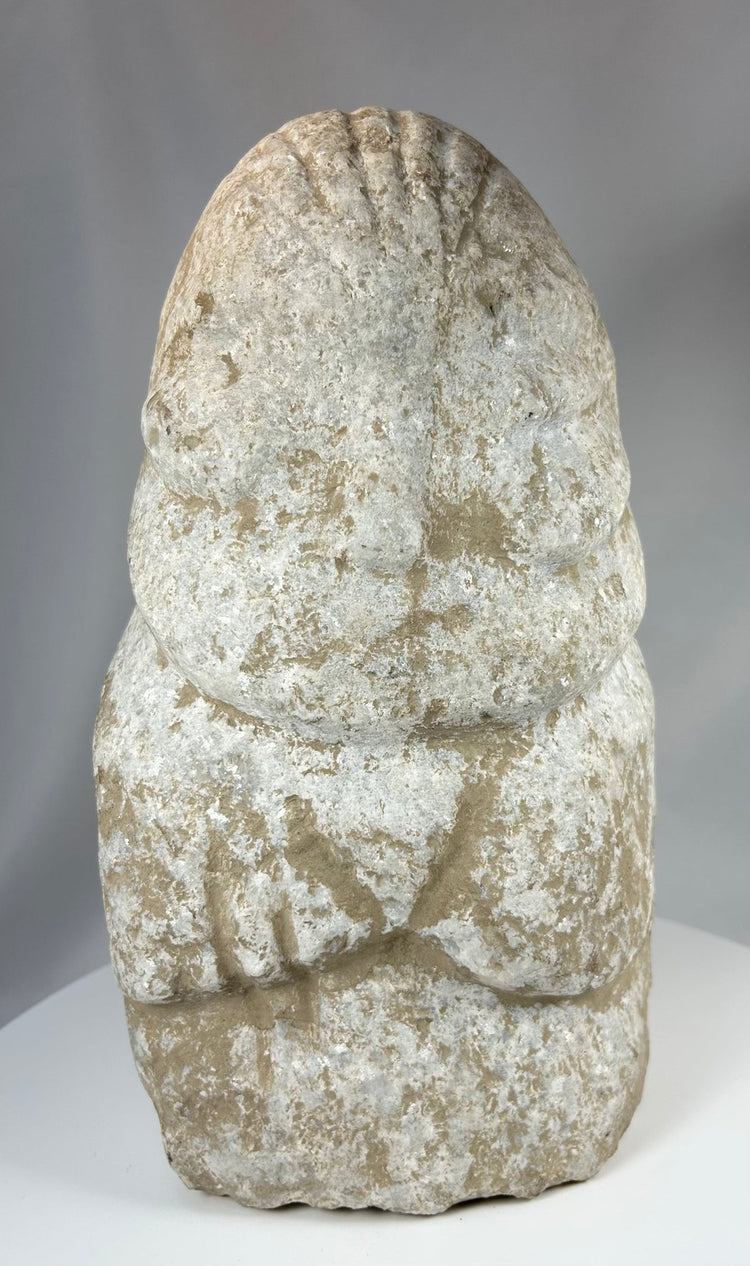
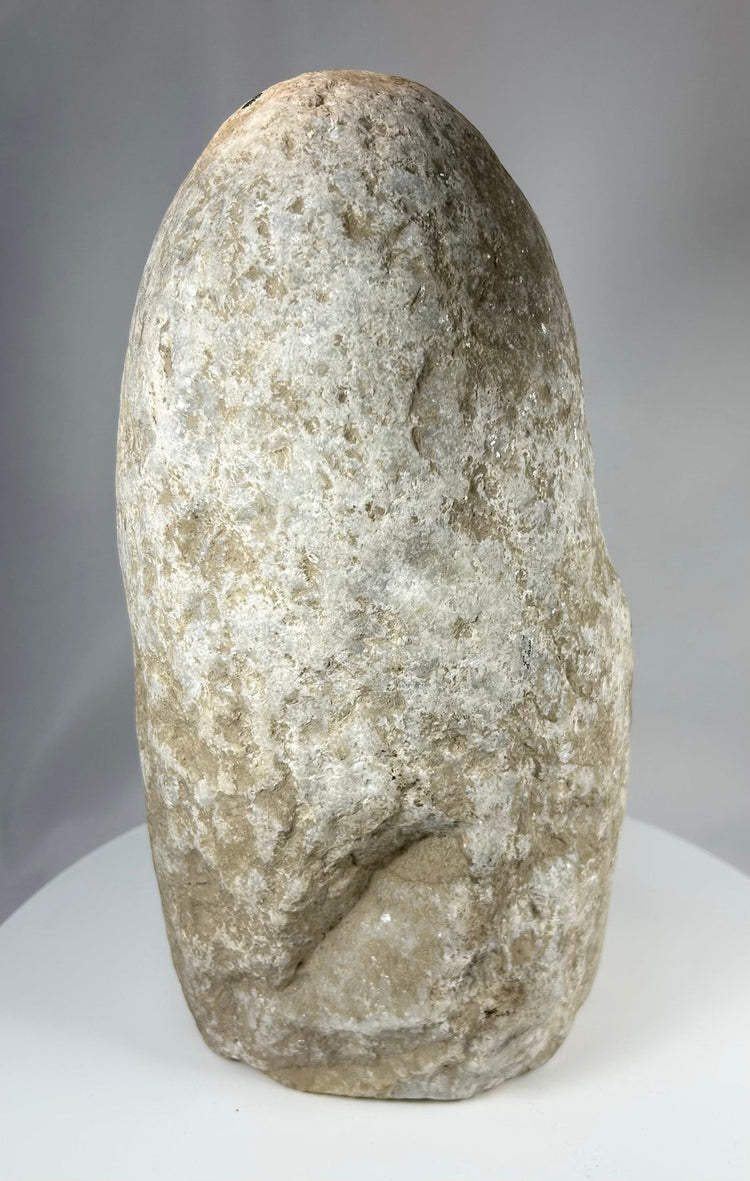
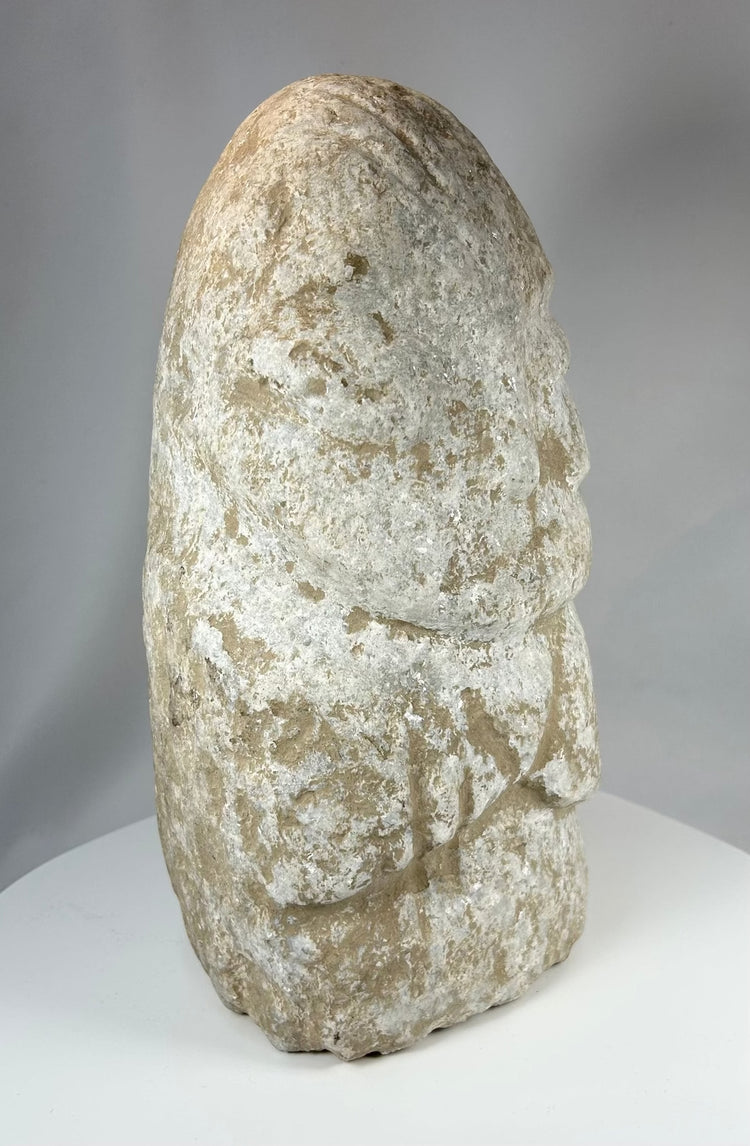
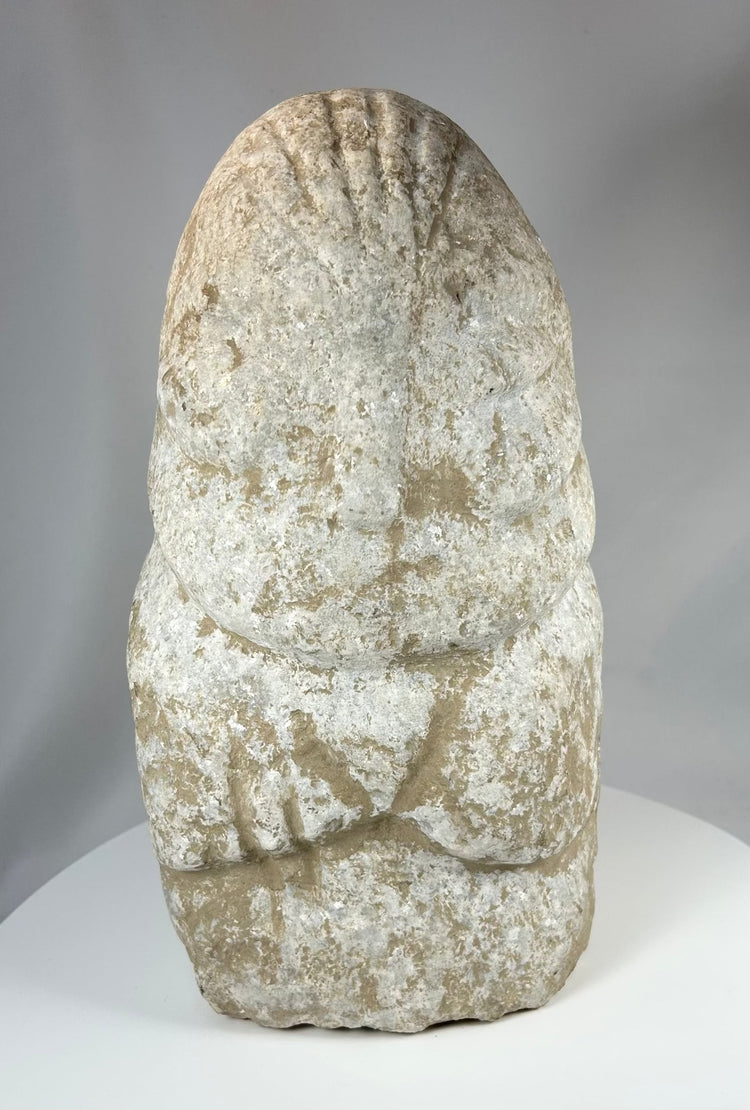
This ancient Neolithic limestone idol figure is carved in a highly stylized and columnar anthropomorphic form.
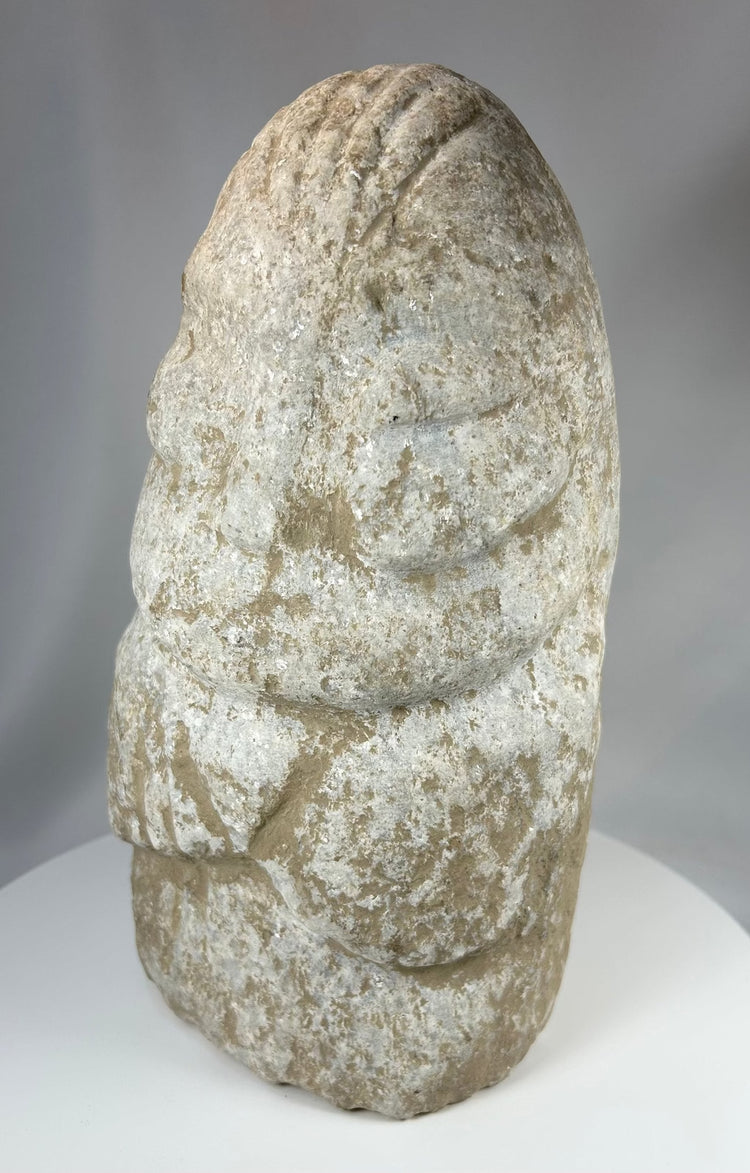
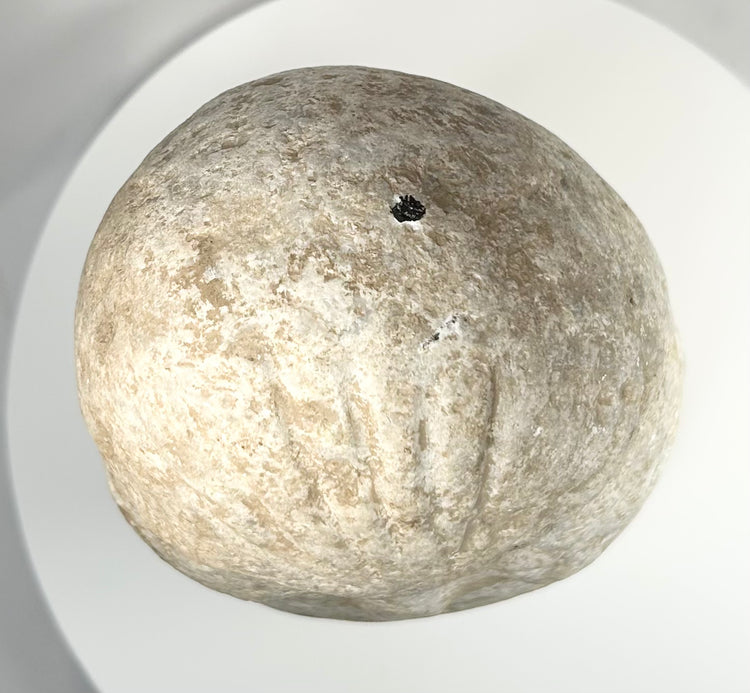
The figure has a rounded head with a prominent nose and brow ridge formed in a continuous line. A series of radial grooves across the top of the head may represent hair or a form of head covering. The arms are rendered in low relief and folded across the body beneath the chest, with incised fingers still visible on one hand.
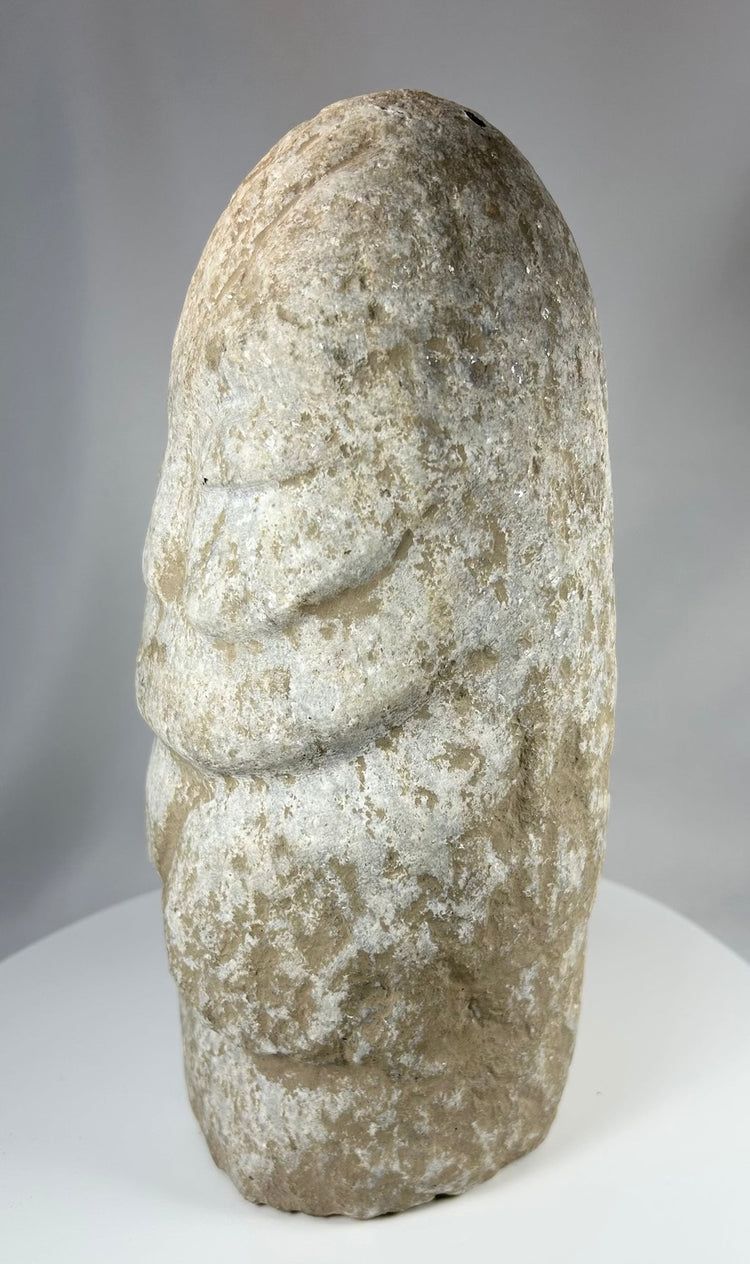
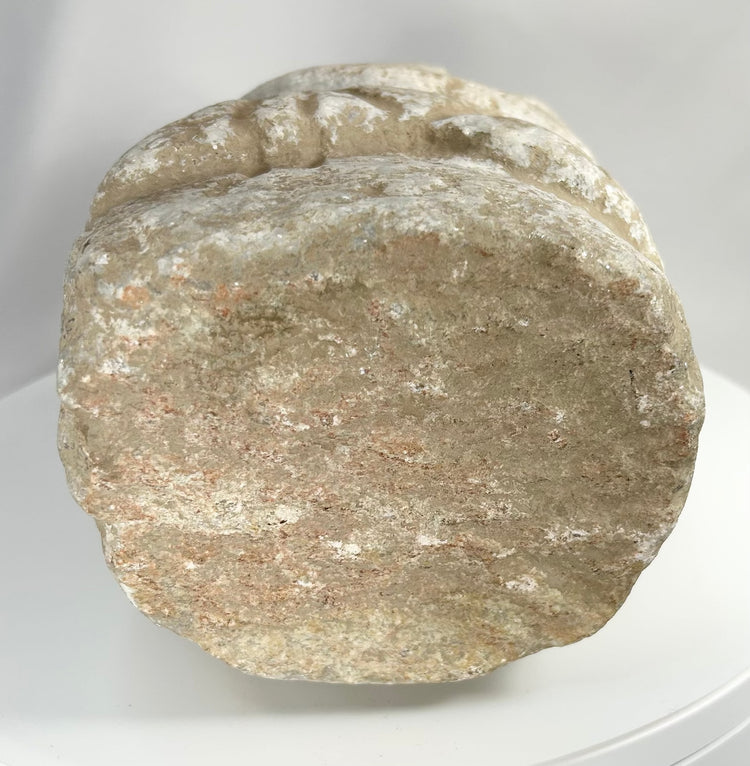
The lower body transitions into a plain, solid columnar shaft terminating in a flat base. Its simplified proportions and restrained carving reflect the abstract treatment of the human form characteristic of many prehistoric sculptural traditions.
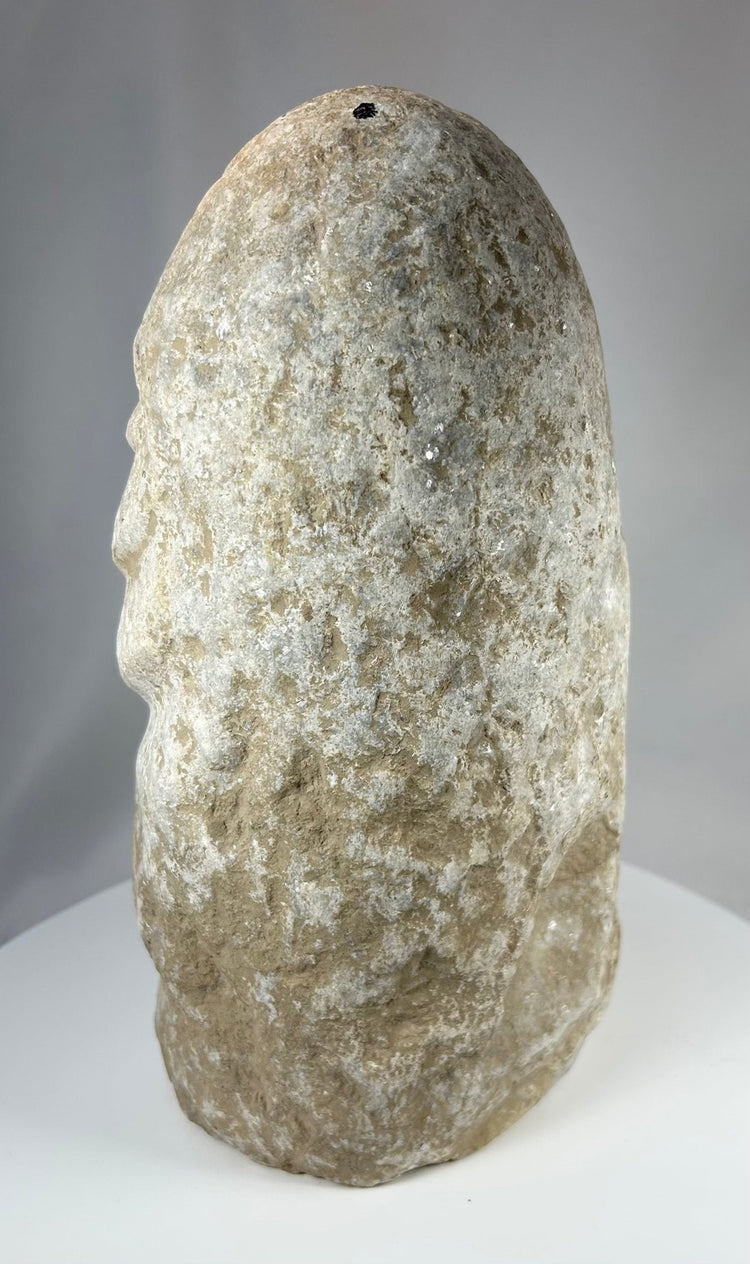
The limestone surface is heavily weathered and displays substantial mineral encrustation, softened carving, and minor losses consistent with considerable antiquity.
Features
- Stylized columnar human form
- Rounded head with prominent nose and brow ridge
- Radial grooves possibly representing hair or a cap
- Arms carved in low relief and folded across the body
- Incised finger details surviving on one hand
- Plain solid lower body with flat base
- Heavy mineral encrustation and archaeological weathering
Cultural Significance
Anthropomorphic stone figures are an important category of prehistoric material culture, demonstrating some of the earliest traditions of representing the human form in durable materials.
The deliberately simplified anatomy, folded arms, facial treatment, and columnar construction of this figure reflect the highly abstract visual language found in Neolithic sculptural traditions. While the figure's precise original purpose cannot be established with certainty, objects of this general type provide important evidence for prehistoric artistic and symbolic expression.
Condition
Ancient condition with heavy weathering and mineral encrustation throughout. The carved details have softened with age, with minor losses and surface abrasions present. The principal anthropomorphic features—including the facial profile, folded arms, incised fingers, and radial head decoration—remain identifiable. The figure retains its solid columnar form and flat base.
Dimensions (Approximate)
Height: 12 in
Width: 5.5 in
Depth: 4.5 in
Age (Approximate)
3,500–5,000 years old
Provenance
Formerly held in a private collection in Beverly Hills, California, USA. Subsequently acquired by a private collector in Sun Valley, California, USA.
The piece was later examined by Luca Salvaggio, an Italian archaeologist and specialist in ancient Mediterranean and Near Eastern material. He holds a Postgraduate Diploma from the Italian Archaeological School at Athens (IASA) and is accredited for preventive archaeology by the Italian Ministry of Culture (MiC). Salvaggio identified the figure as a Eurasian Neolithic limestone idol, circa 6000–3000 BCE, based on its columnar anthropomorphic form, folded arms, facial treatment, radial head grooves, and overall carving style.
Learn More
Explore early anthropomorphic figures from the ancient world through Google Arts & Culture
Browse our Collection of Ancient Statues, Figures & Carvings
Description
Historical Context & Origin
Region: Eurasia
Material: Limestone
Period: Neolithic, circa 6000–3000 BCE
Description
This ancient Neolithic limestone idol figure is carved in a highly stylized and columnar anthropomorphic form.
The figure has a rounded head with a prominent nose and brow ridge formed in a continuous line. A series of radial grooves across the top of the head may represent hair or a form of head covering. The arms are rendered in low relief and folded across the body beneath the chest, with incised fingers still visible on one hand.
The lower body transitions into a plain, solid columnar shaft terminating in a flat base. Its simplified proportions and restrained carving reflect the abstract treatment of the human form characteristic of many prehistoric sculptural traditions.
The limestone surface is heavily weathered and displays substantial mineral encrustation, softened carving, and minor losses consistent with considerable antiquity.
Features
- Stylized columnar human form
- Rounded head with prominent nose and brow ridge
- Radial grooves possibly representing hair or a cap
- Arms carved in low relief and folded across the body
- Incised finger details surviving on one hand
- Plain solid lower body with flat base
- Heavy mineral encrustation and archaeological weathering
Cultural Significance
Anthropomorphic stone figures are an important category of prehistoric material culture, demonstrating some of the earliest traditions of representing the human form in durable materials.
The deliberately simplified anatomy, folded arms, facial treatment, and columnar construction of this figure reflect the highly abstract visual language found in Neolithic sculptural traditions. While the figure's precise original purpose cannot be established with certainty, objects of this general type provide important evidence for prehistoric artistic and symbolic expression.
Condition
Ancient condition with heavy weathering and mineral encrustation throughout. The carved details have softened with age, with minor losses and surface abrasions present. The principal anthropomorphic features—including the facial profile, folded arms, incised fingers, and radial head decoration—remain identifiable. The figure retains its solid columnar form and flat base.
Dimensions (Approximate)
Height: 12 in
Width: 5.5 in
Depth: 4.5 in
Age (Approximate)
3,500–5,000 years old
Provenance
Formerly held in a private collection in Beverly Hills, California, USA. Subsequently acquired by a private collector in Sun Valley, California, USA.
The piece was later examined by Luca Salvaggio, an Italian archaeologist and specialist in ancient Mediterranean and Near Eastern material. He holds a Postgraduate Diploma from the Italian Archaeological School at Athens (IASA) and is accredited for preventive archaeology by the Italian Ministry of Culture (MiC). Salvaggio identified the figure as a Eurasian Neolithic limestone idol, circa 6000–3000 BCE, based on its columnar anthropomorphic form, folded arms, facial treatment, radial head grooves, and overall carving style.
Learn More
Explore early anthropomorphic figures from the ancient world through Google Arts & Culture
Browse our Collection of Ancient Statues, Figures & Carvings
You May Also Like
