



Pair of Spanish / Continental Armored Cavalry Stirrups (Estribos de Tapadera) | Circa Late 16th – Early 17th Century
Couldn't load pickup availability


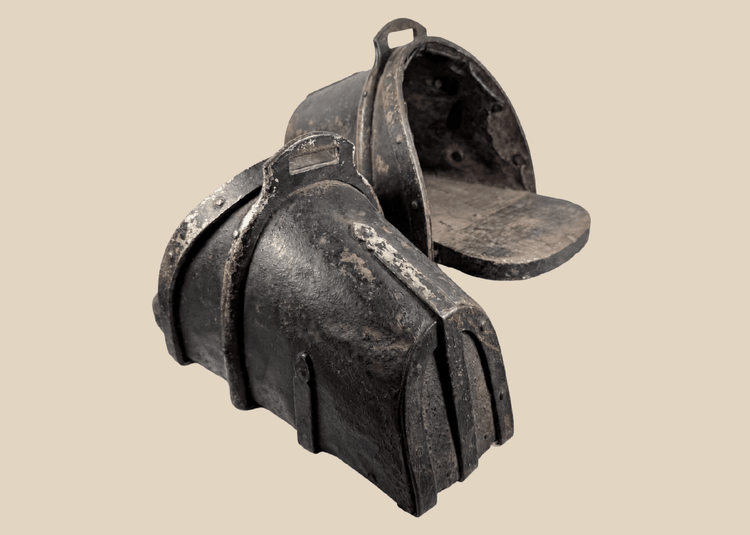
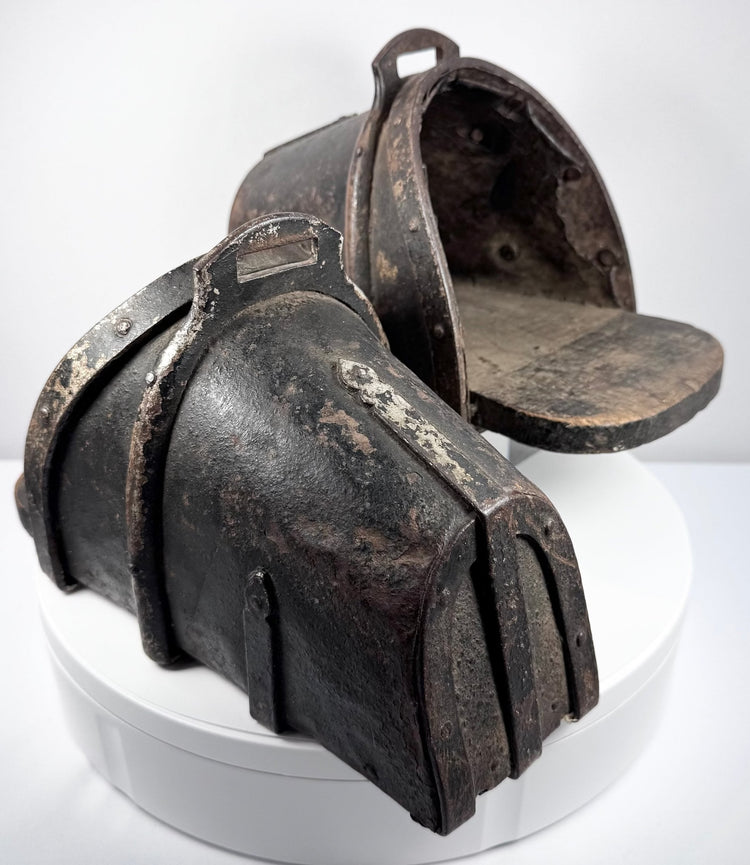
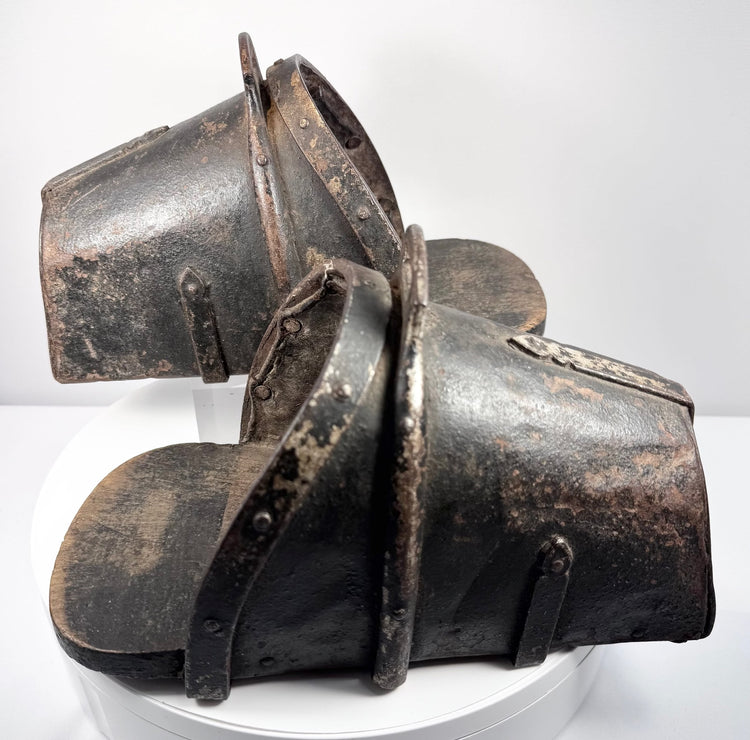
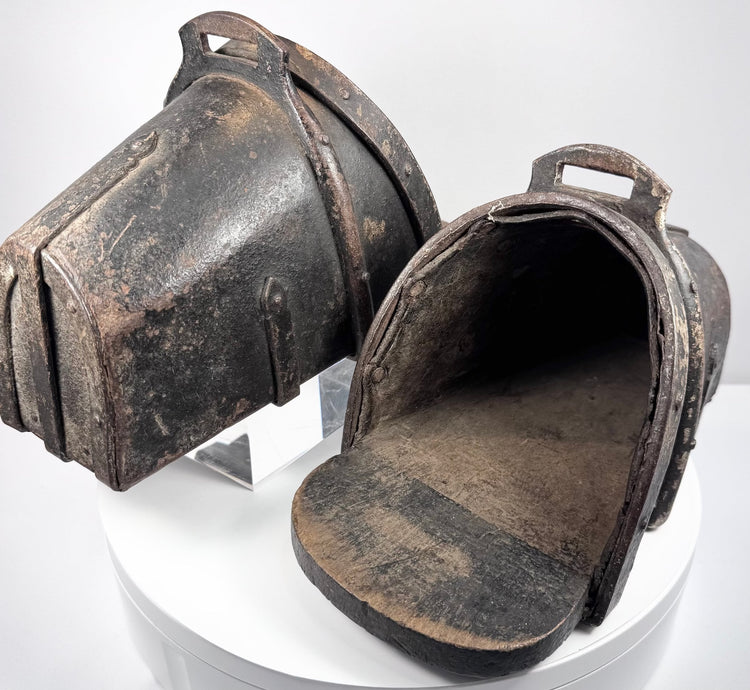
Pair of Spanish / Continental Armored Cavalry Stirrups (Estribos de Tapadera) | Circa Late 16th – Early 17th Century
Description
More
Less
Historical Context & Origin
Region: Continental Europe, likely Spain / Iberian Peninsula or broader Habsburg territories; Iberian / Continental cavalry tradition (estribos de tapadera)
Material: Hand-forged iron, carved wood, and original leather lining remnants
Period: Circa late 16th–early 17th century (Late Renaissance / Early Baroque)
Description
This rare matched pair of 16th–17th century enclosed iron cavalry stirrups represents a formidable form of protective equestrian equipment rooted in the Iberian tradition of the estribo de tapadera (hooded or box stirrup). Designed for mounted warfare and rugged travel during the late Renaissance and early 17th century, these stirrups combine heavy metalworking with functional wood and leather construction.
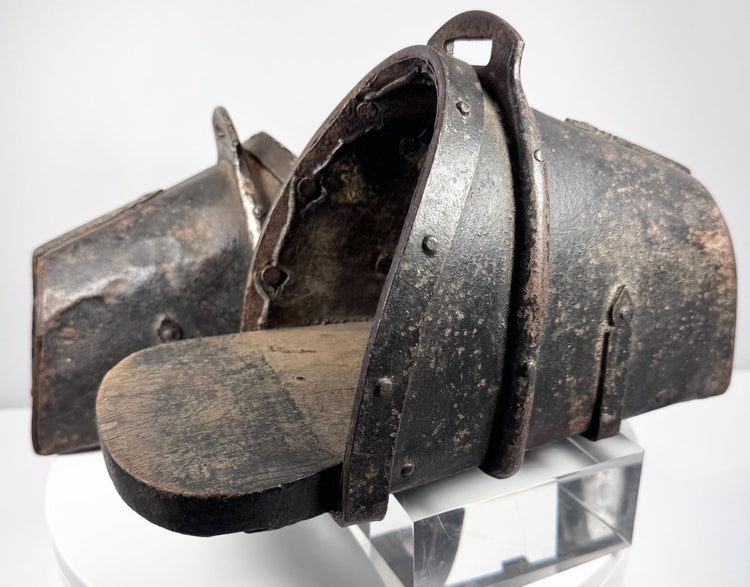
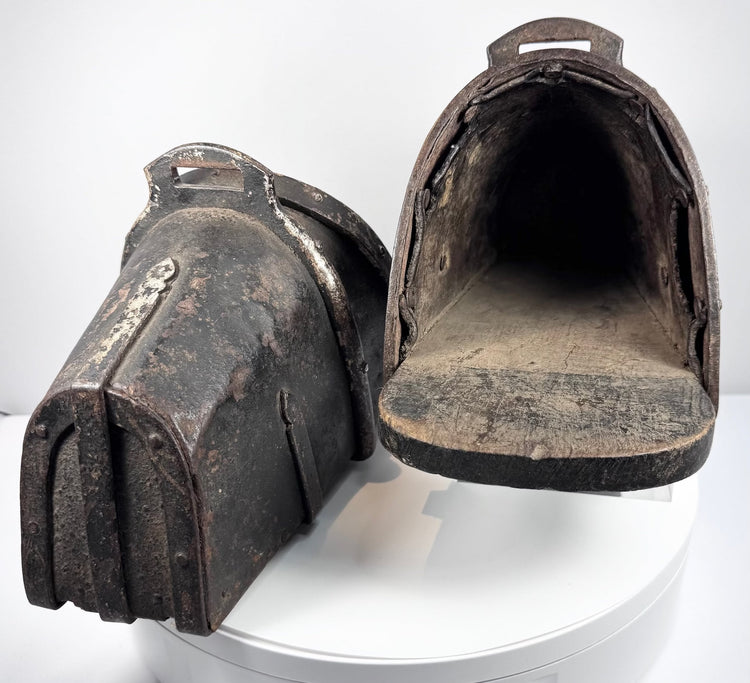
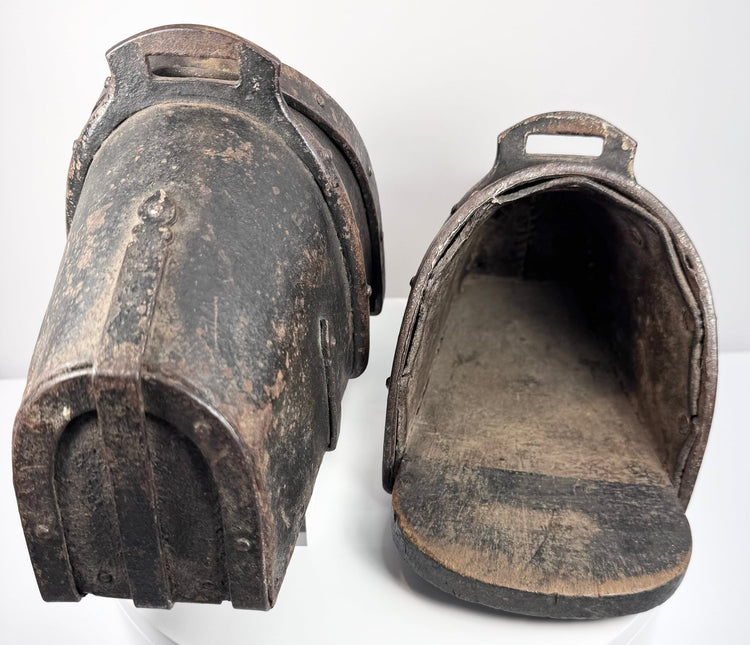
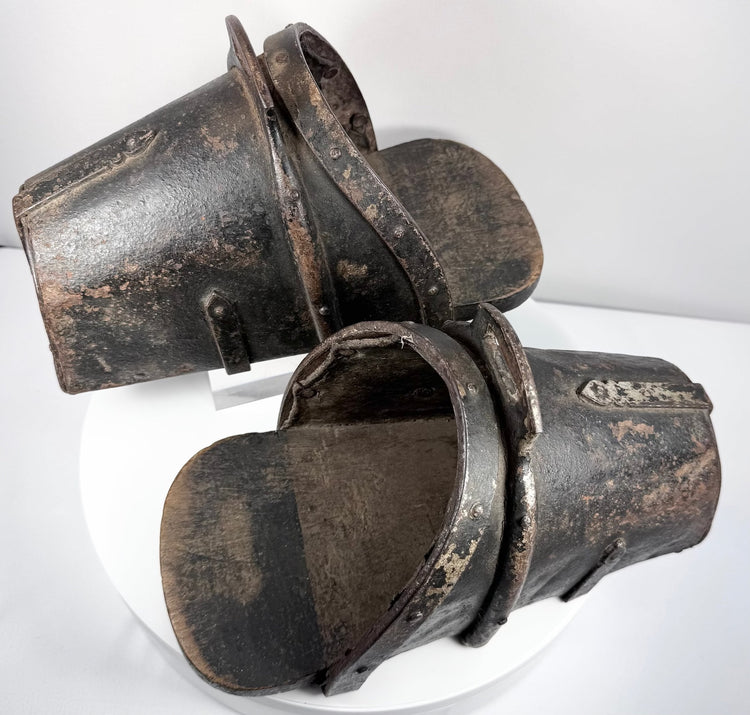
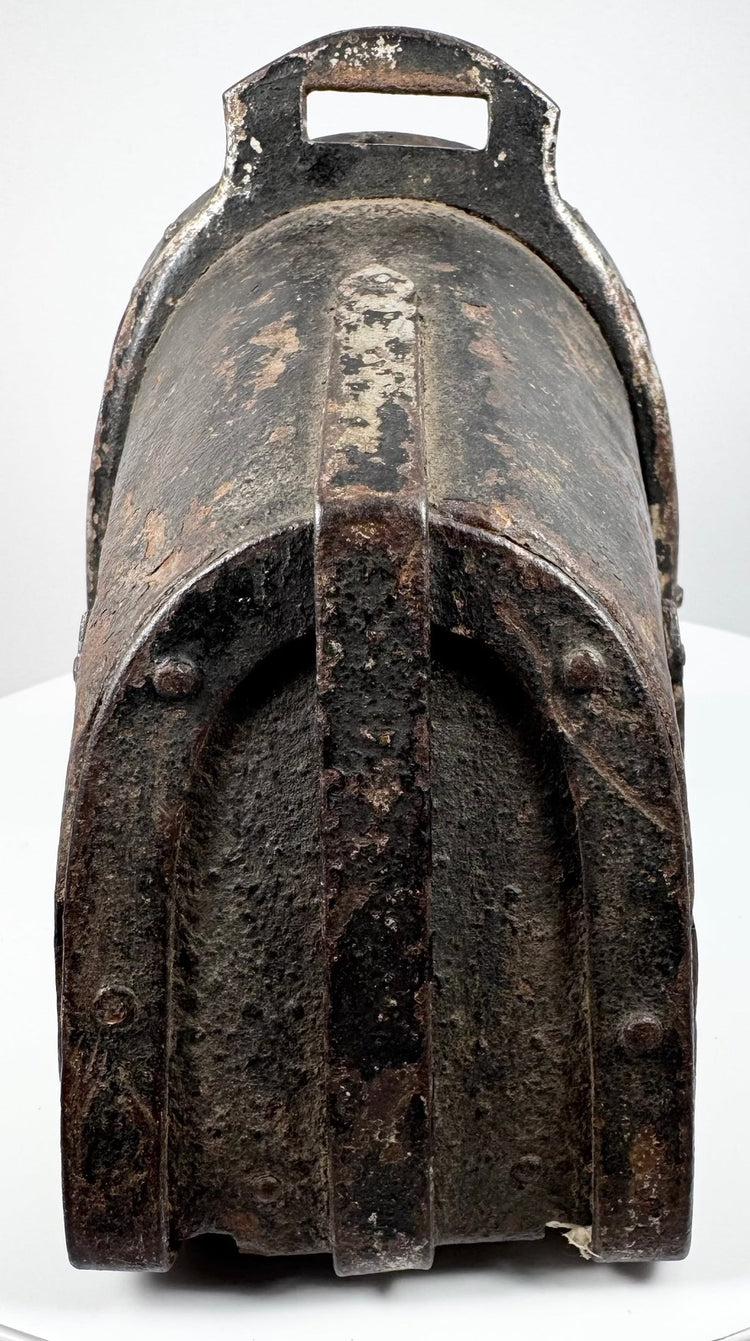
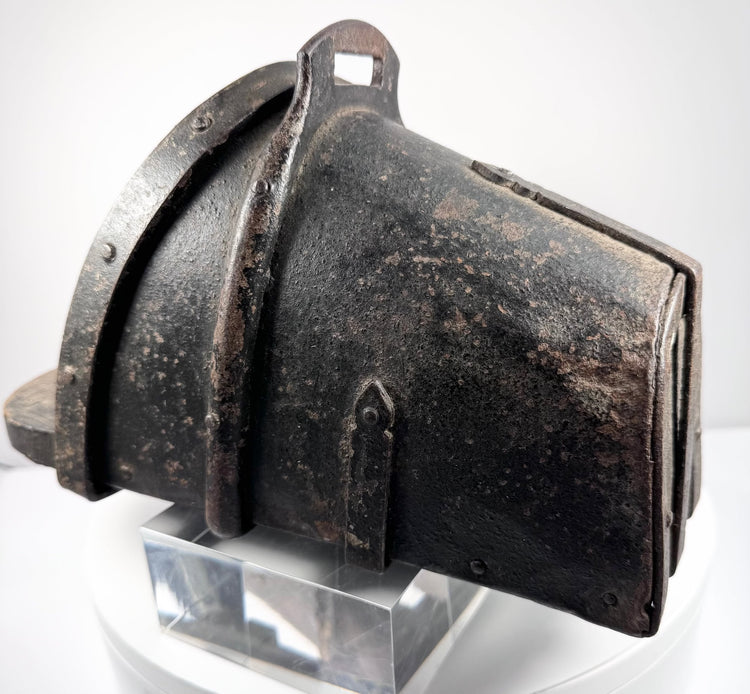
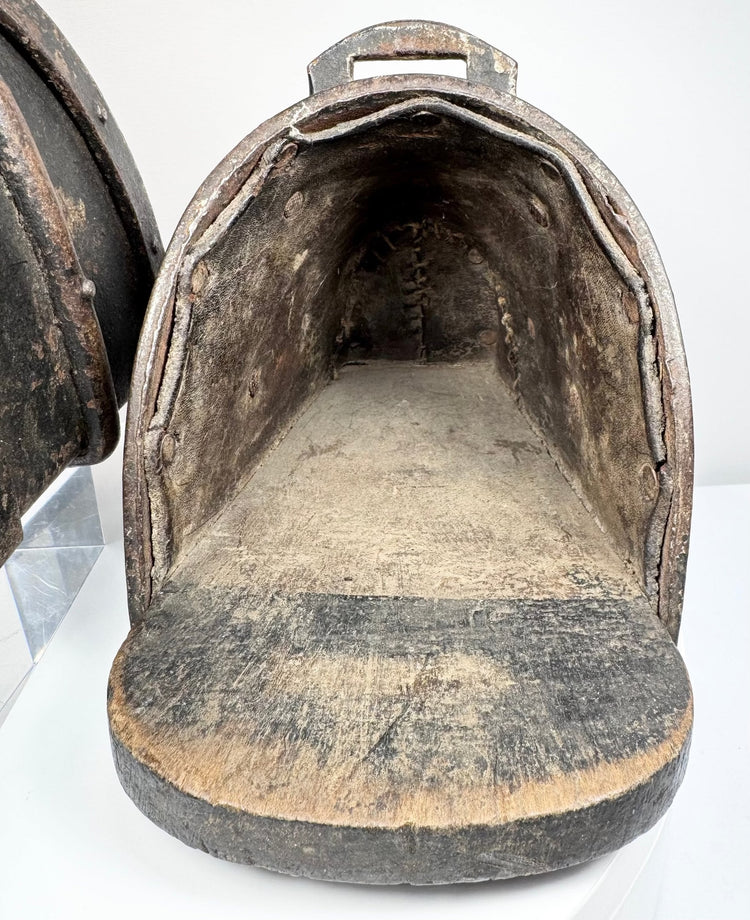
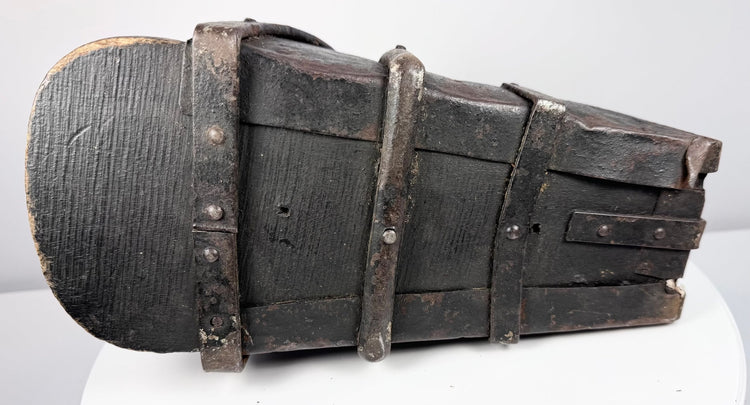
Each stirrup is built around a substantial, thick wooden tread plate enclosed by a deeply arched, hand-forged iron hood. The exterior shell is reinforced with multiple heavy iron straps extending along the spine, flanks, underside, and perimeter. These bracing straps feature distinct pointed or arrowhead-style terminals and are secured with flush iron rivets, creating a rigid protective structure designed to withstand heavy impacts. At the apex of each stirrup is a broad rectangular suspension eye formed within an integral iron plate, engineered to receive wide leather saddle straps.
The interior of the iron shell retains clear remnants of its original molded leather lining, held in place by perimeter rivets along the front arch. This internal lining provided cushioning and insulation for the rider's boots against the cold iron frame. The heavy wooden sole projects beyond the armored metal hood, offering a stable, shock-absorbing platform.
While the wood-and-iron hybrid construction (estribo de baúl) is a hallmark of Spanish and Portuguese equestrian tradition, the broad geopolitical reach of the Habsburg Empire during the 16th and 17th centuries facilitated the widespread adoption of related stirrup forms across Continental Europe. Similar heavily armored stirrups were used within European cavalry traditions during the early modern period.
Features
- Hand-forged iron construction with wood-and-iron hybrid engineering
- Traditional Iberian estribo de tapadera (hooded/box stirrup) protective form
- Carved wooden tread platforms extending beyond the iron frame
- Remnants of original interior leather lining with flush rim rivets
- Spine and flank iron reinforcement straps terminating in pointed/arrowhead details
- Broad rectangular saddle-strap suspension eyes
- Deep arched form providing substantial protection around the rider's foot
- Period iron rivets and fasteners securing the structural components
- Heavy, naturally aged dark oxidation and working patina
Cultural Significance
Enclosed stirrups developed as a protective form of equestrian equipment, shielding the rider's feet during mounted travel and combat while also helping prevent the boot from passing too far through the stirrup.
On the Iberian Peninsula, covered and enclosed stirrup forms became an important element of Spanish and Portuguese equestrian tradition. Known in various forms as estribos de tapadera or estribos de baúl, such stirrups combined substantial protective construction with broad foot supports suited to prolonged riding.
Spanish stirrup forms of the late 16th and early 17th centuries also reflect wider artistic and technological exchange across Europe. The Metropolitan Museum of Art notes connections between Spanish examples and earlier German forms, while characteristically broad footplates and flaring sides became particularly associated with Spanish equestrian equipment. These traditions subsequently influenced riding equipment in the Americas.
Condition
Very good overall condition considering the considerable age and utilitarian nature of the pair. Both stirrups retain their principal iron shells, reinforcing straps, suspension loops, and substantial wooden footplates.
The iron surfaces display extensive natural oxidation, dark patination, pitting, abrasion, exposed brown oxidation, scattered losses to the older blackened surface, and numerous scratches and marks consistent with age and prolonged use. Minor dents, distortions, and irregularities are visible throughout the hand-forged iron components.
Several rivets and fasteners exhibit corrosion and wear. Minor separations and irregularities are visible around sections of the iron edging and lining. The wooden footplates show considerable surface wear, dark staining, abrasion, scratches, small losses, and areas where the underlying natural wood is visible. Nevertheless, both survive substantially intact. The interior lining is heavily aged and worn, with areas of loss, separation, hardening, and deterioration. Portions of the underlying construction are exposed. Please refer to the photographs for the complete condition.
Dimensions (Approximate)
Overall Length: 10.5 in
Width: 5.5 in
Height: 6.3 in
Dimensions apply approximately to each stirrup.
Age (Approximate)
400–440 years old
Provenance
From a private collection in Manchester, New Hampshire, USA.
Subsequently handled by New Hampshire Auctions & Appraisals LLC of Goffstown, New Hampshire, an established regional auction house specializing in fine art, antiques, historic arms, militaria, and collectibles.
The pair later entered a well-known private collection in Toronto, Ontario, Canada.
Learn More
Learn about arms, armor, and mounted warfare in Renaissance Europe through the Metropolitan Museum of Art
Explore our Collection of Arms & Armour
Description
Historical Context & Origin
Region: Continental Europe, likely Spain / Iberian Peninsula or broader Habsburg territories; Iberian / Continental cavalry tradition (estribos de tapadera)
Material: Hand-forged iron, carved wood, and original leather lining remnants
Period: Circa late 16th–early 17th century (Late Renaissance / Early Baroque)
Description
This rare matched pair of 16th–17th century enclosed iron cavalry stirrups represents a formidable form of protective equestrian equipment rooted in the Iberian tradition of the estribo de tapadera (hooded or box stirrup). Designed for mounted warfare and rugged travel during the late Renaissance and early 17th century, these stirrups combine heavy metalworking with functional wood and leather construction.
Each stirrup is built around a substantial, thick wooden tread plate enclosed by a deeply arched, hand-forged iron hood. The exterior shell is reinforced with multiple heavy iron straps extending along the spine, flanks, underside, and perimeter. These bracing straps feature distinct pointed or arrowhead-style terminals and are secured with flush iron rivets, creating a rigid protective structure designed to withstand heavy impacts. At the apex of each stirrup is a broad rectangular suspension eye formed within an integral iron plate, engineered to receive wide leather saddle straps.
The interior of the iron shell retains clear remnants of its original molded leather lining, held in place by perimeter rivets along the front arch. This internal lining provided cushioning and insulation for the rider's boots against the cold iron frame. The heavy wooden sole projects beyond the armored metal hood, offering a stable, shock-absorbing platform.
While the wood-and-iron hybrid construction (estribo de baúl) is a hallmark of Spanish and Portuguese equestrian tradition, the broad geopolitical reach of the Habsburg Empire during the 16th and 17th centuries facilitated the widespread adoption of related stirrup forms across Continental Europe. Similar heavily armored stirrups were used within European cavalry traditions during the early modern period.
Features
- Hand-forged iron construction with wood-and-iron hybrid engineering
- Traditional Iberian estribo de tapadera (hooded/box stirrup) protective form
- Carved wooden tread platforms extending beyond the iron frame
- Remnants of original interior leather lining with flush rim rivets
- Spine and flank iron reinforcement straps terminating in pointed/arrowhead details
- Broad rectangular saddle-strap suspension eyes
- Deep arched form providing substantial protection around the rider's foot
- Period iron rivets and fasteners securing the structural components
- Heavy, naturally aged dark oxidation and working patina
Cultural Significance
Enclosed stirrups developed as a protective form of equestrian equipment, shielding the rider's feet during mounted travel and combat while also helping prevent the boot from passing too far through the stirrup.
On the Iberian Peninsula, covered and enclosed stirrup forms became an important element of Spanish and Portuguese equestrian tradition. Known in various forms as estribos de tapadera or estribos de baúl, such stirrups combined substantial protective construction with broad foot supports suited to prolonged riding.
Spanish stirrup forms of the late 16th and early 17th centuries also reflect wider artistic and technological exchange across Europe. The Metropolitan Museum of Art notes connections between Spanish examples and earlier German forms, while characteristically broad footplates and flaring sides became particularly associated with Spanish equestrian equipment. These traditions subsequently influenced riding equipment in the Americas.
Condition
Very good overall condition considering the considerable age and utilitarian nature of the pair. Both stirrups retain their principal iron shells, reinforcing straps, suspension loops, and substantial wooden footplates.
The iron surfaces display extensive natural oxidation, dark patination, pitting, abrasion, exposed brown oxidation, scattered losses to the older blackened surface, and numerous scratches and marks consistent with age and prolonged use. Minor dents, distortions, and irregularities are visible throughout the hand-forged iron components.
Several rivets and fasteners exhibit corrosion and wear. Minor separations and irregularities are visible around sections of the iron edging and lining. The wooden footplates show considerable surface wear, dark staining, abrasion, scratches, small losses, and areas where the underlying natural wood is visible. Nevertheless, both survive substantially intact. The interior lining is heavily aged and worn, with areas of loss, separation, hardening, and deterioration. Portions of the underlying construction are exposed. Please refer to the photographs for the complete condition.
Dimensions (Approximate)
Overall Length: 10.5 in
Width: 5.5 in
Height: 6.3 in
Dimensions apply approximately to each stirrup.
Age (Approximate)
400–440 years old
Provenance
From a private collection in Manchester, New Hampshire, USA.
Subsequently handled by New Hampshire Auctions & Appraisals LLC of Goffstown, New Hampshire, an established regional auction house specializing in fine art, antiques, historic arms, militaria, and collectibles.
The pair later entered a well-known private collection in Toronto, Ontario, Canada.
Learn More
Learn about arms, armor, and mounted warfare in Renaissance Europe through the Metropolitan Museum of Art
Explore our Collection of Arms & Armour
You May Also Like
