



Far Eastern Carved Stone Flask | Incised Animal & Geometric Motifs | Circa 1st Millennium BCE – Early 1st Millennium CE
Couldn't load pickup availability


Far Eastern Carved Stone Flask | Incised Animal & Geometric Motifs | Circa 1st Millennium BCE – Early 1st Millennium CE
Description
More
Less
Historical Context & Origin
Region: Far East (Specific Cultural Origin Undetermined)
Material: Carved light grey-beige stone with mineral deposits and calcareous encrustations
Period: 1st Millennium BCE – Early 1st Millennium CE
Description
This ancient carved stone flask is attributed to the Far East and dates to approximately the 1st millennium BCE through the early 1st millennium CE. The object reflects traditions of stone craftsmanship and decorative engraving, combining a compact vessel form with stylized animal imagery and abstract linear motifs.
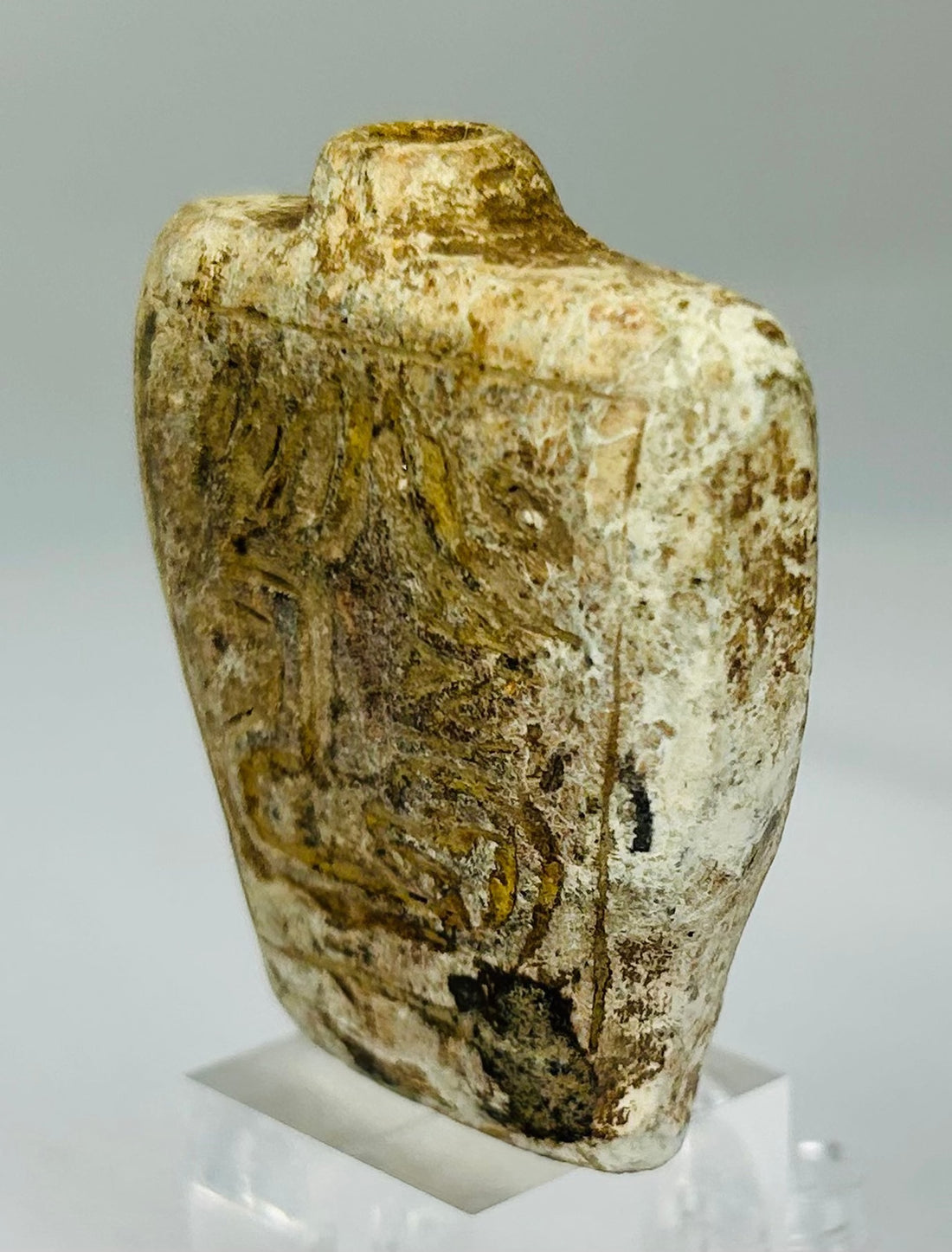
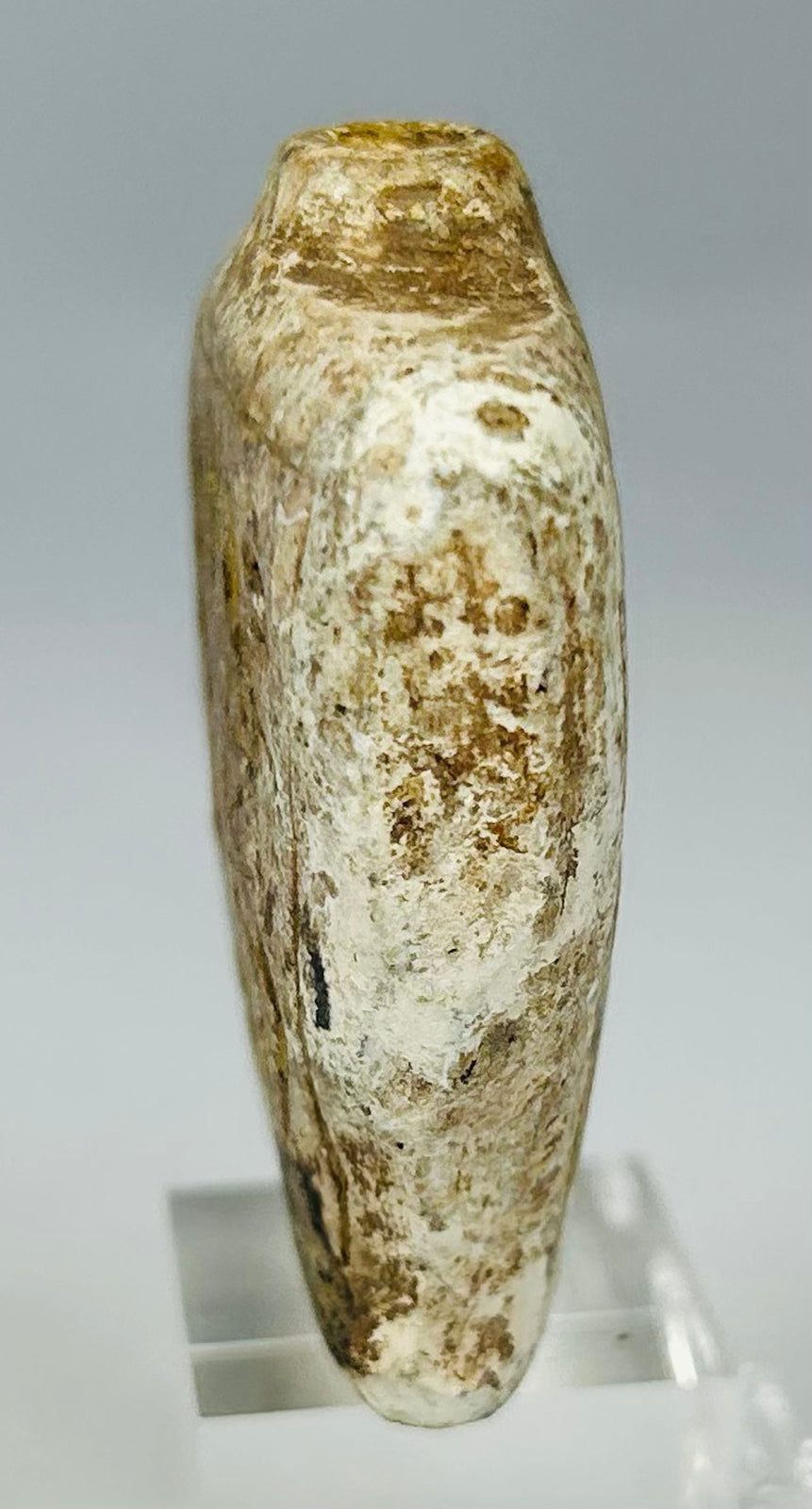
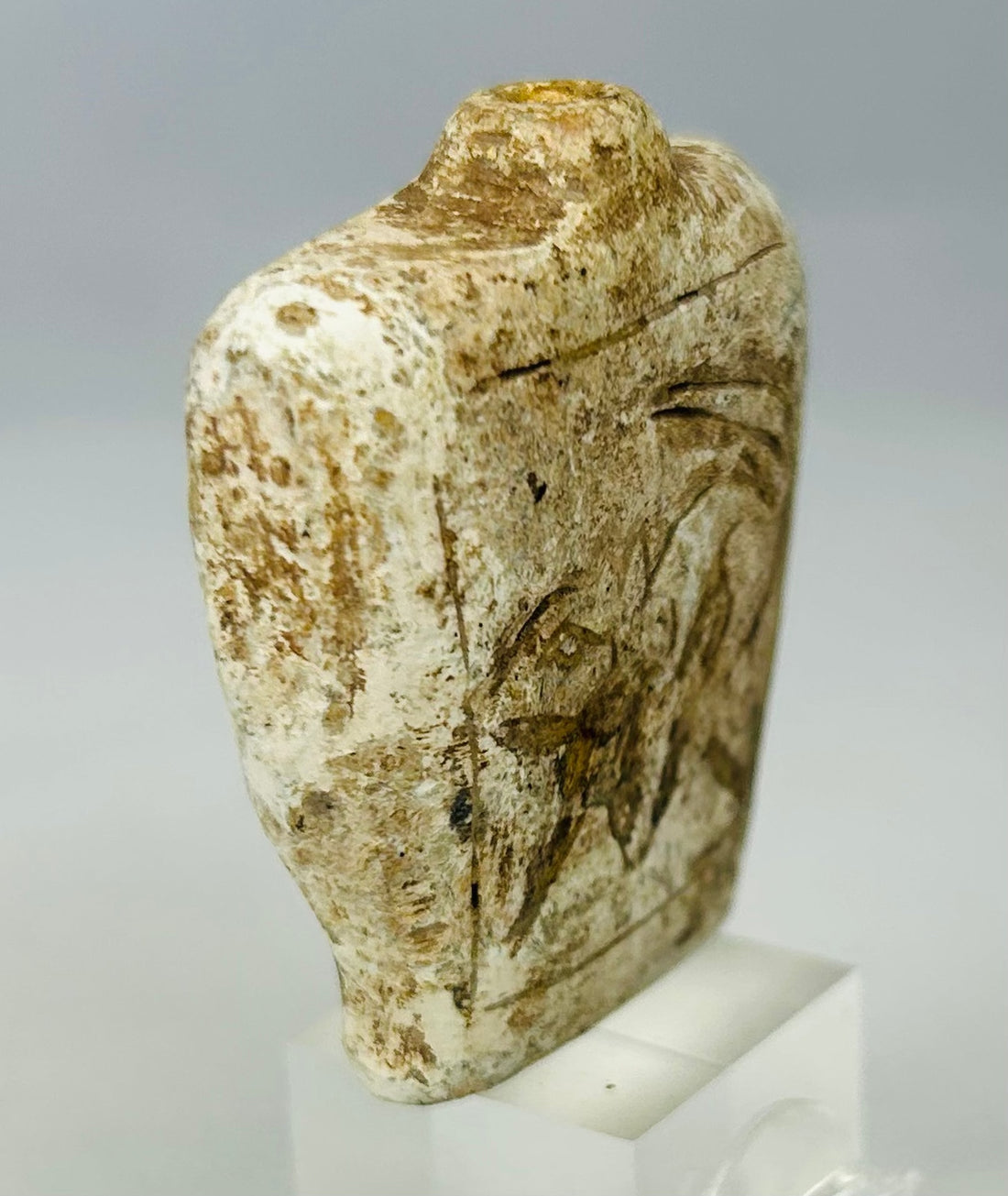
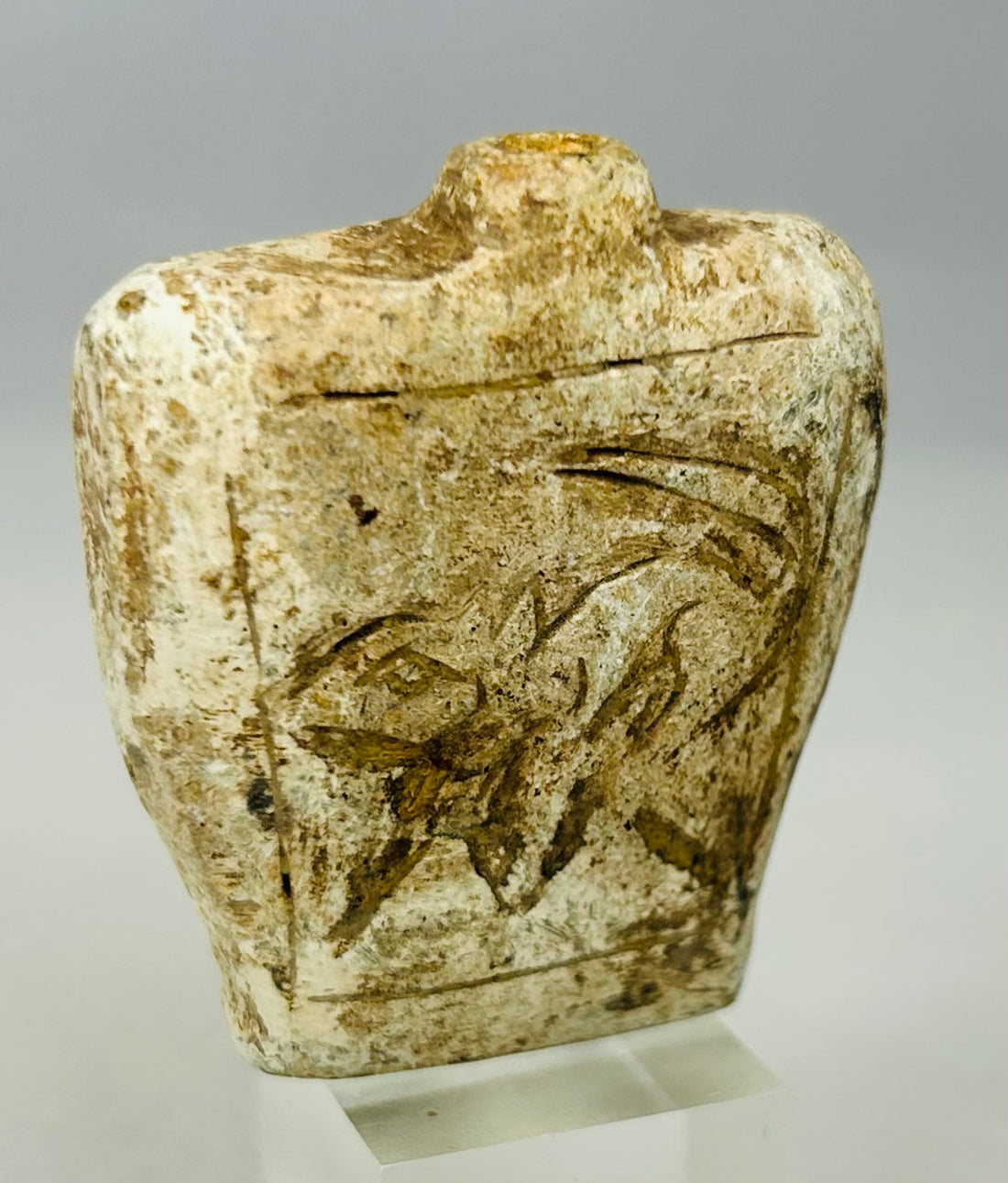
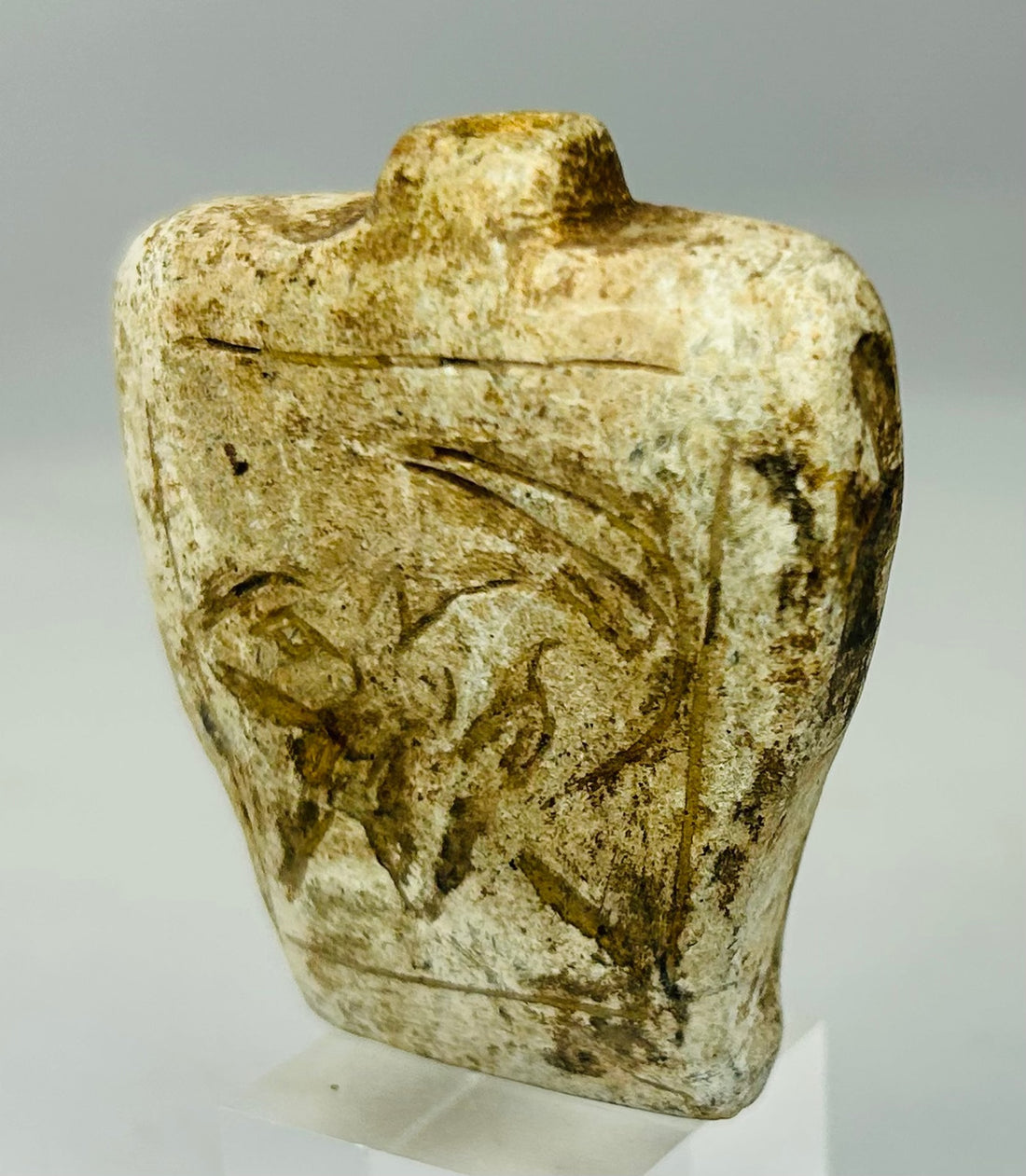
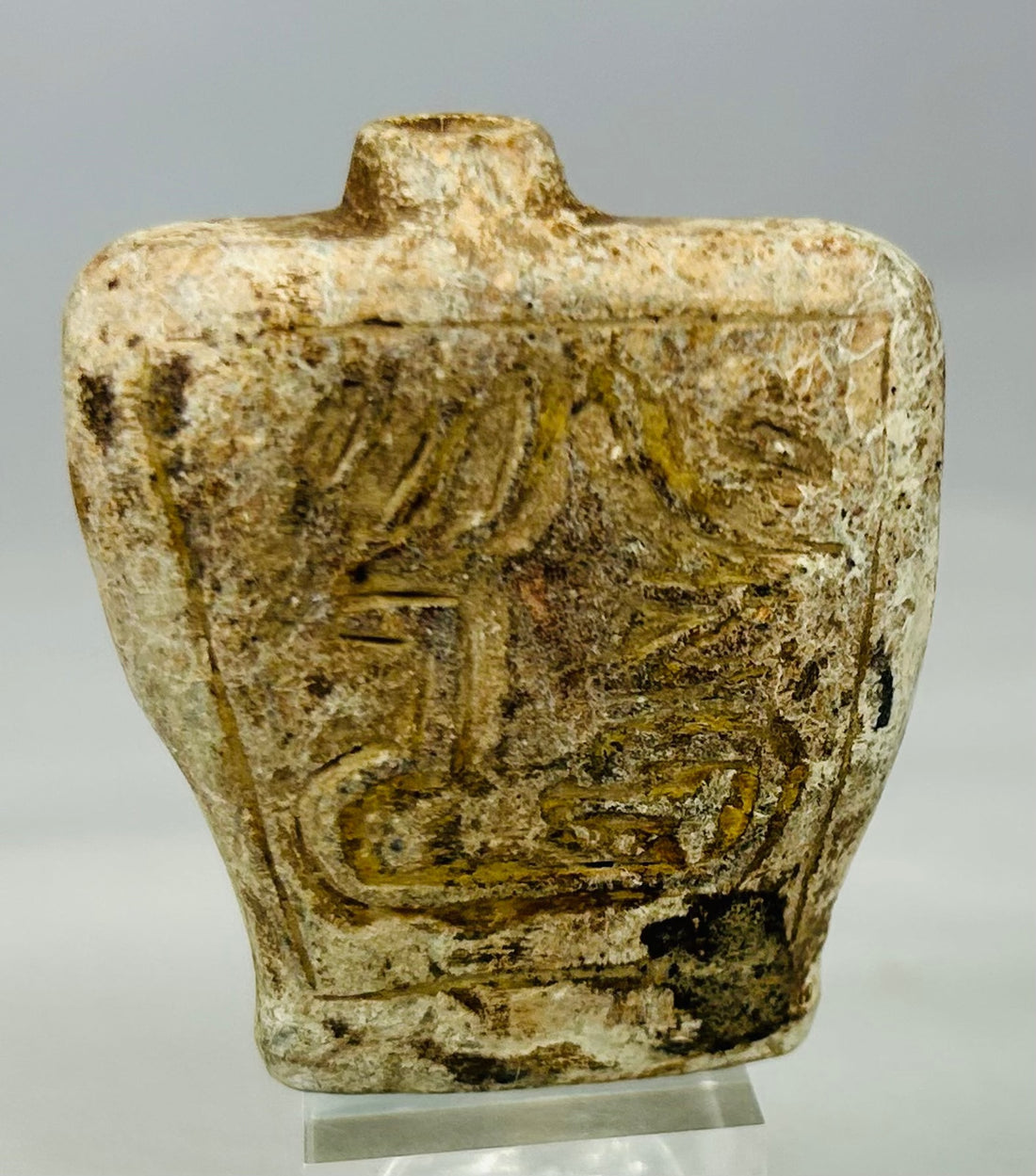
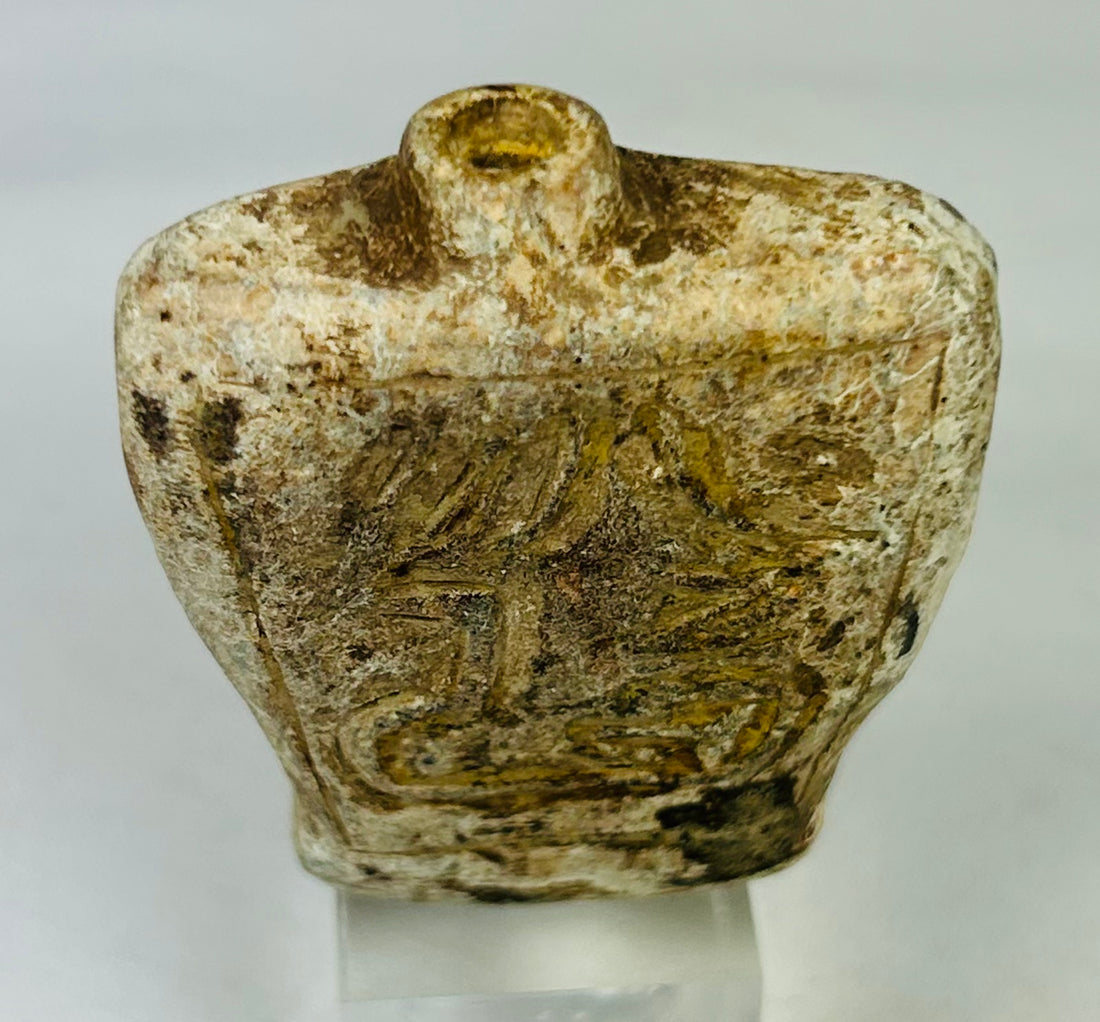
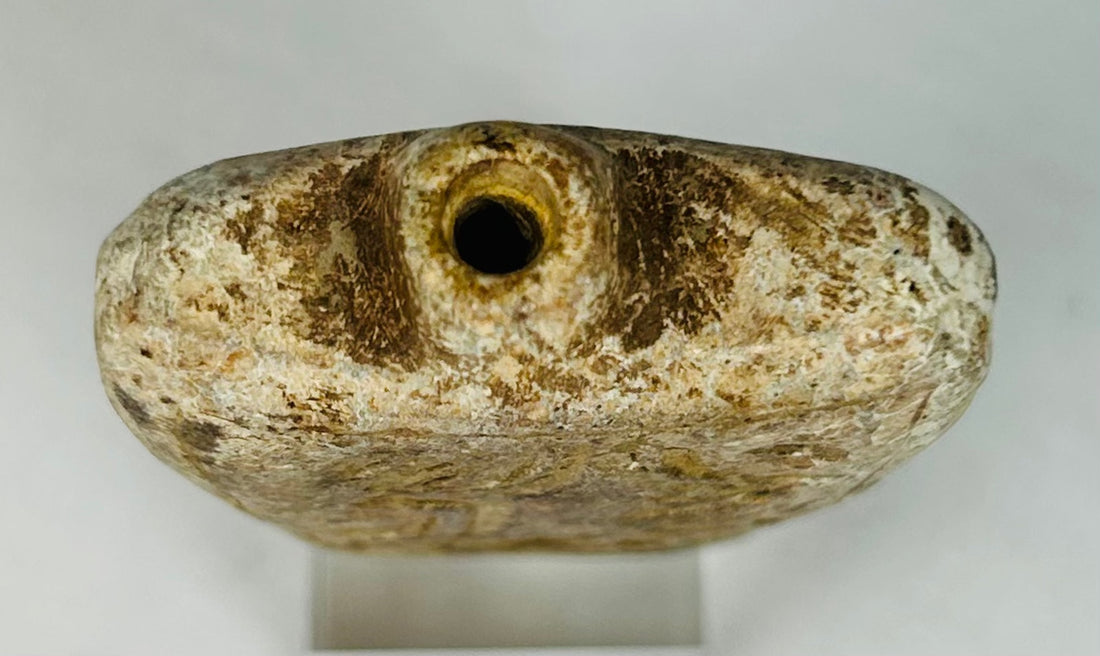
The flask features a flattened, squared body that tapers slightly toward the base, surmounted by a short, raised neck with a carefully bored opening. Both broad faces are framed by incised rectangular borders, creating defined decorative panels that emphasize the object's distinctive geometric form.
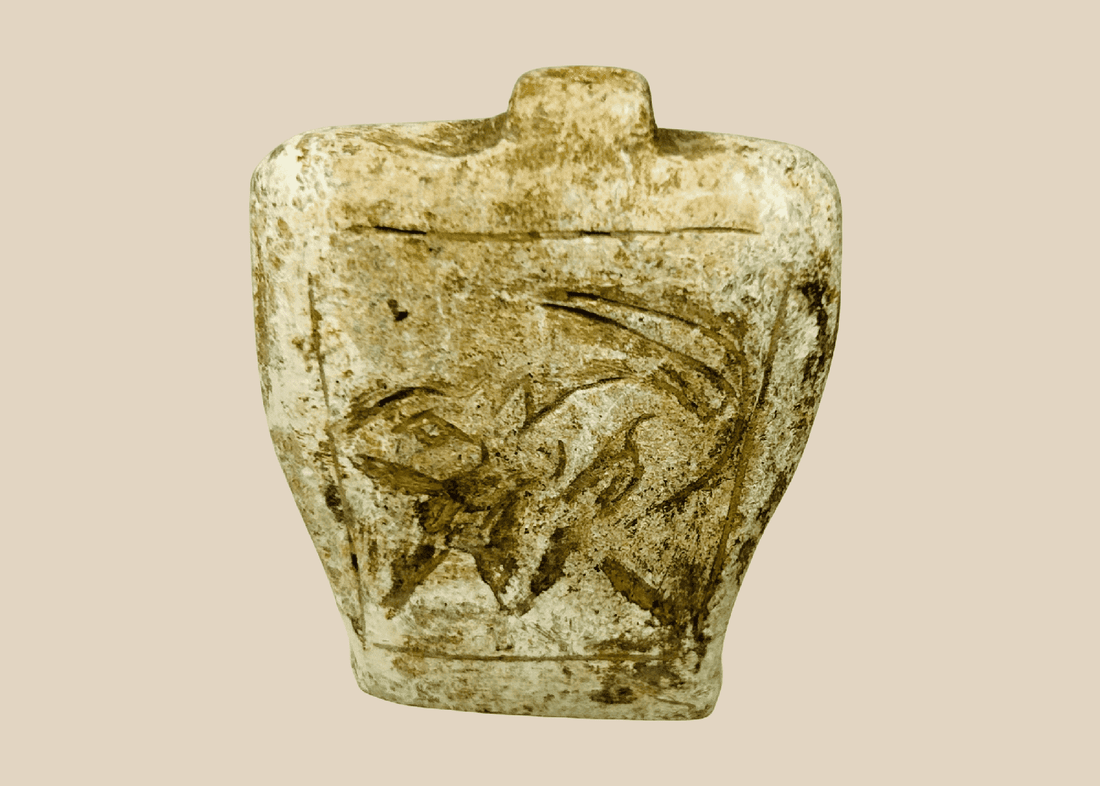
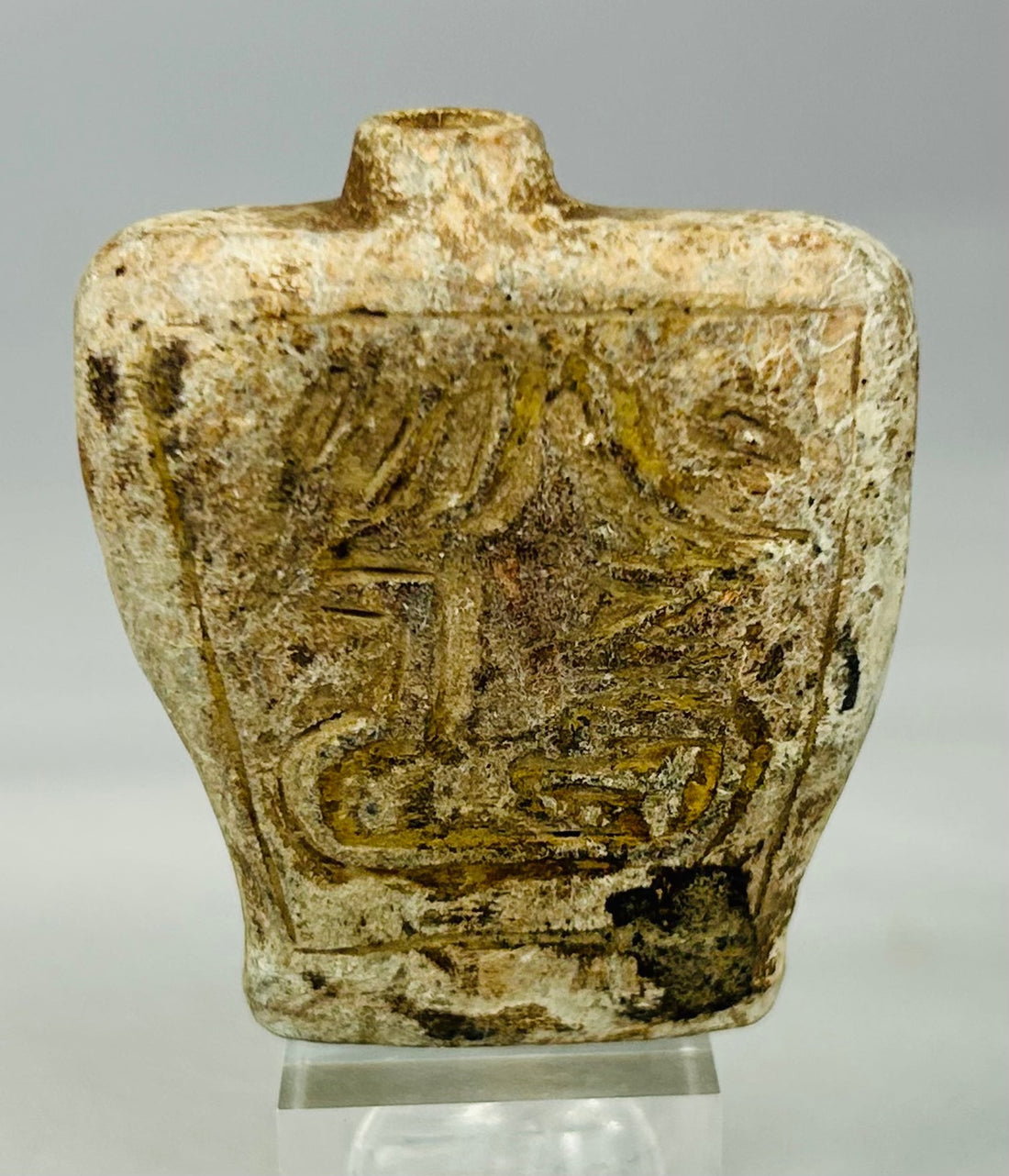
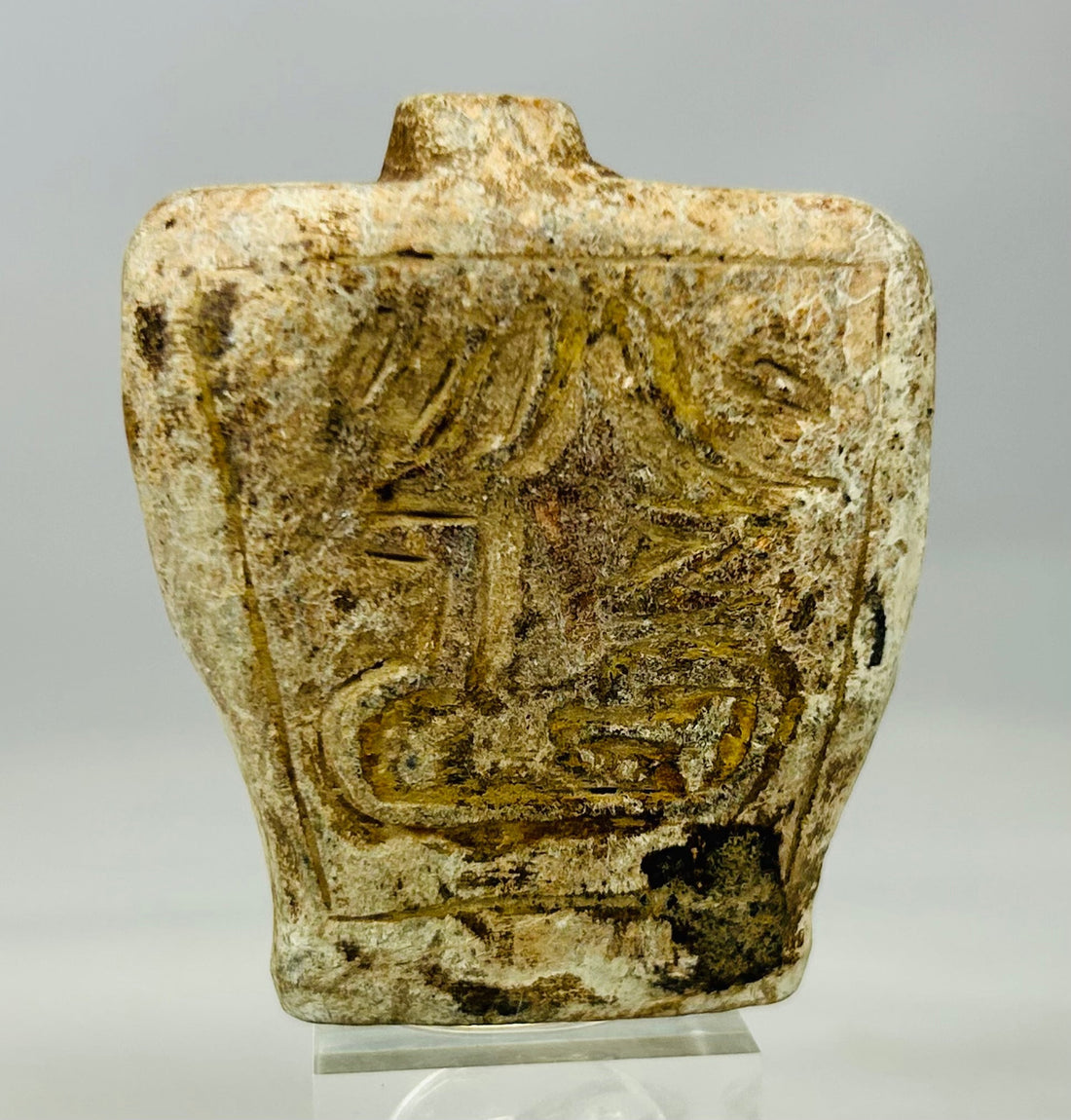
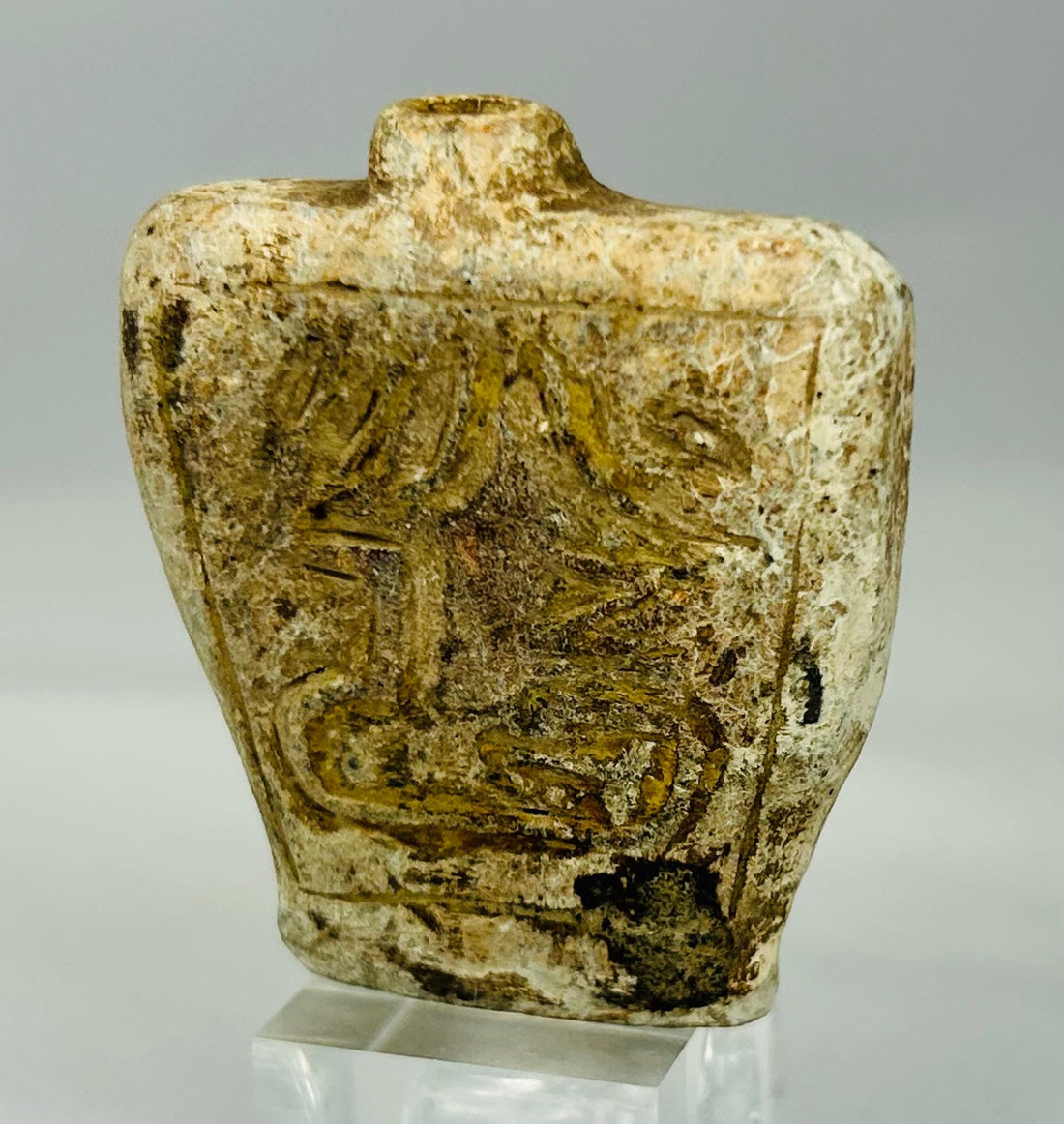
One face displays an incised quadruped depicted in motion, rendered with simplified lines that capture the animal's movement. The opposite face features abstract linear motifs, possibly representing decorative or symbolic imagery. The contrast between the figurative and geometric designs gives the small vessel a distinctive visual character.
Fashioned from light grey-beige stone, the flask exhibits a mottled surface with calcareous encrustations, dark mineral deposits, and softened incised details. Its compact dimensions and carefully worked decoration suggest that it was intended to be a portable personal object, although its precise original function remains uncertain.
The combination of animal imagery, geometric ornamentation, and functional vessel construction makes this an intriguing example of ancient Far Eastern stone craftsmanship.
Features
-
Flattened, squared body with gently tapering sides and a compact profile
-
Short raised neck with an intact, bored opening
-
Incised rectangular borders framing the decorative panels on both faces
-
Stylized quadruped depicted in motion on one face
-
Abstract linear and geometric motifs engraved on the opposite face
-
Light grey-beige stone with mottled colouring, mineral deposits, and calcareous encrustations
Cultural Significance
Across the ancient Far East, artisans developed diverse traditions of stone carving, engraving, and the production of small personal objects. Decorative imagery, including animals and geometric patterns, appeared in various forms of material culture and could carry aesthetic, cultural, or symbolic significance.
Small carved stone containers demonstrate the technical skill required to shape durable materials into compact, functional objects. The addition of incised decoration suggests attention to both craftsmanship and visual presentation.
The quadruped depicted on this flask may have held symbolic meaning, although the species and significance of the animal cannot be established with certainty. Similarly, the abstract motifs on the reverse may represent decorative conventions or imagery associated with a particular cultural tradition.
While the flask's bored opening indicates that it was constructed as a small vessel, its precise contents and intended use remain unknown. Without a securely documented archaeological context, an association with particular rituals, medicinal substances, cosmetics, or protective practices cannot be confirmed.
Condition
The flask displays surface wear, weathering, softened carving details, calcareous encrustations, and dark mineral deposits. The light grey-beige stone exhibits natural mottling, with minor nicks and abrasions along the edges.
The short raised neck remains intact, with the bored mouth open and visible. Both decorated faces retain their incised rectangular borders, with the animal figure and abstract linear motifs remaining discernible despite areas of surface wear.
The object retains its distinctive overall form and decorative features.
Dimensions (Approximate)
Height: 1.75 in
Width: 1.5 in
Age (Approximate)
1,500–3,000 years old
Provenance
Formerly with Arte Primitivo, New York, a gallery and auction house specializing in Pre-Columbian, ancient, and ethnographic art. Subsequently held in a private collection in New York, New York, USA.
Expert Assessment: Examined by Luca Salvaggio, an Italian archaeologist specializing in Greek, Roman, Near Eastern, and Cypriot material, with a Postgraduate Diploma from the Italian Archaeological School at Athens (IASA) and accreditation from the Italian Ministry of Culture (MiC). He attributed the carved stone flask to the Far East, dating from the 1st millennium BCE to the early 1st millennium CE, based on its flattened, squared body, short raised neck, incised rectangular borders, stylized quadruped in motion, and abstract linear motifs. He further documented its light grey-beige stone composition, calcareous encrustations, mineral deposits, and surface weathering.
Learn More
Explore ancient votive objects and personal amulets through The Votives Project
Description
Historical Context & Origin
Region: Far East (Specific Cultural Origin Undetermined)
Material: Carved light grey-beige stone with mineral deposits and calcareous encrustations
Period: 1st Millennium BCE – Early 1st Millennium CE
Description
This ancient carved stone flask is attributed to the Far East and dates to approximately the 1st millennium BCE through the early 1st millennium CE. The object reflects traditions of stone craftsmanship and decorative engraving, combining a compact vessel form with stylized animal imagery and abstract linear motifs.
The flask features a flattened, squared body that tapers slightly toward the base, surmounted by a short, raised neck with a carefully bored opening. Both broad faces are framed by incised rectangular borders, creating defined decorative panels that emphasize the object's distinctive geometric form.
One face displays an incised quadruped depicted in motion, rendered with simplified lines that capture the animal's movement. The opposite face features abstract linear motifs, possibly representing decorative or symbolic imagery. The contrast between the figurative and geometric designs gives the small vessel a distinctive visual character.
Fashioned from light grey-beige stone, the flask exhibits a mottled surface with calcareous encrustations, dark mineral deposits, and softened incised details. Its compact dimensions and carefully worked decoration suggest that it was intended to be a portable personal object, although its precise original function remains uncertain.
The combination of animal imagery, geometric ornamentation, and functional vessel construction makes this an intriguing example of ancient Far Eastern stone craftsmanship.
Features
-
Flattened, squared body with gently tapering sides and a compact profile
-
Short raised neck with an intact, bored opening
-
Incised rectangular borders framing the decorative panels on both faces
-
Stylized quadruped depicted in motion on one face
-
Abstract linear and geometric motifs engraved on the opposite face
-
Light grey-beige stone with mottled colouring, mineral deposits, and calcareous encrustations
Cultural Significance
Across the ancient Far East, artisans developed diverse traditions of stone carving, engraving, and the production of small personal objects. Decorative imagery, including animals and geometric patterns, appeared in various forms of material culture and could carry aesthetic, cultural, or symbolic significance.
Small carved stone containers demonstrate the technical skill required to shape durable materials into compact, functional objects. The addition of incised decoration suggests attention to both craftsmanship and visual presentation.
The quadruped depicted on this flask may have held symbolic meaning, although the species and significance of the animal cannot be established with certainty. Similarly, the abstract motifs on the reverse may represent decorative conventions or imagery associated with a particular cultural tradition.
While the flask's bored opening indicates that it was constructed as a small vessel, its precise contents and intended use remain unknown. Without a securely documented archaeological context, an association with particular rituals, medicinal substances, cosmetics, or protective practices cannot be confirmed.
Condition
The flask displays surface wear, weathering, softened carving details, calcareous encrustations, and dark mineral deposits. The light grey-beige stone exhibits natural mottling, with minor nicks and abrasions along the edges.
The short raised neck remains intact, with the bored mouth open and visible. Both decorated faces retain their incised rectangular borders, with the animal figure and abstract linear motifs remaining discernible despite areas of surface wear.
The object retains its distinctive overall form and decorative features.
Dimensions (Approximate)
Height: 1.75 in
Width: 1.5 in
Age (Approximate)
1,500–3,000 years old
Provenance
Formerly with Arte Primitivo, New York, a gallery and auction house specializing in Pre-Columbian, ancient, and ethnographic art. Subsequently held in a private collection in New York, New York, USA.
Expert Assessment: Examined by Luca Salvaggio, an Italian archaeologist specializing in Greek, Roman, Near Eastern, and Cypriot material, with a Postgraduate Diploma from the Italian Archaeological School at Athens (IASA) and accreditation from the Italian Ministry of Culture (MiC). He attributed the carved stone flask to the Far East, dating from the 1st millennium BCE to the early 1st millennium CE, based on its flattened, squared body, short raised neck, incised rectangular borders, stylized quadruped in motion, and abstract linear motifs. He further documented its light grey-beige stone composition, calcareous encrustations, mineral deposits, and surface weathering.
Learn More
Explore ancient votive objects and personal amulets through The Votives Project
You May Also Like
