



German JUF Brass Pedestal Alarm Clock | Ornate Bell-Top Design | Circa 1900–1920
Couldn't load pickup availability


German JUF Brass Pedestal Alarm Clock | Ornate Bell-Top Design | Circa 1900–1920
Description
More
Less
Historical Context & Origin
Region: Triberg, Black Forest, Germany
Material: Brass and brass-alloy case, metal bell, cream-coloured clock dial, glass and mechanical clock components
Period: Early 20th century, circa 1900–1920 CE
Description
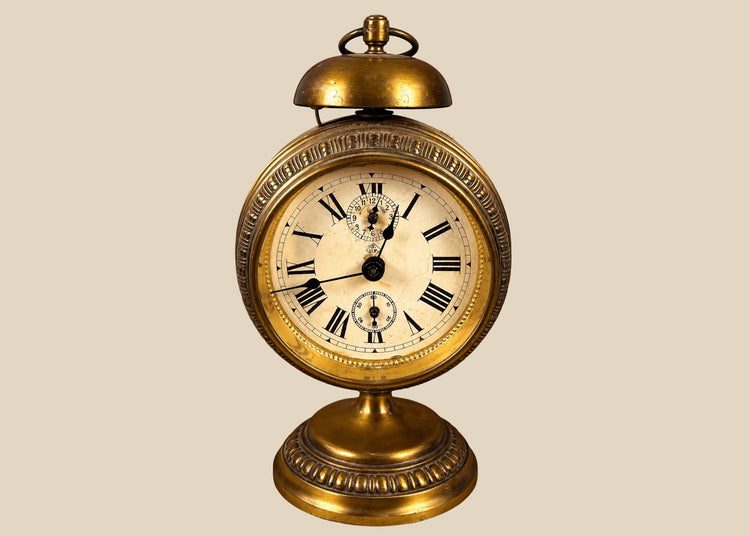
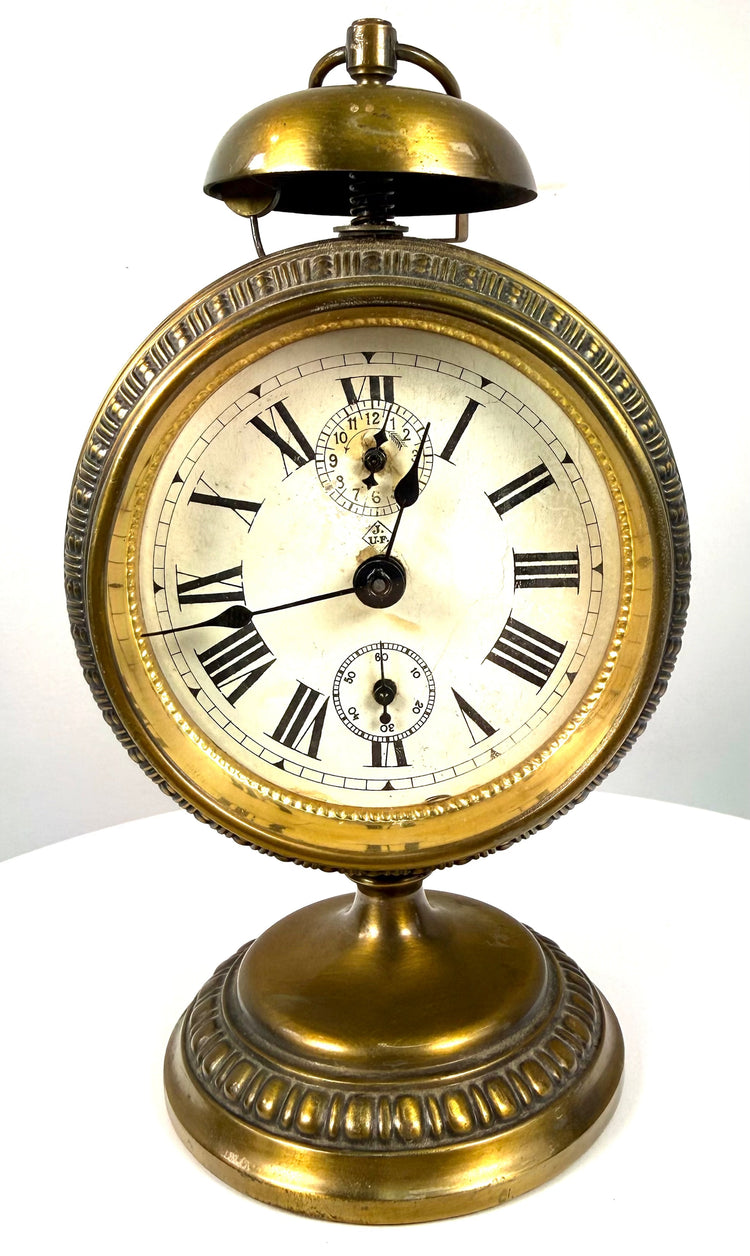
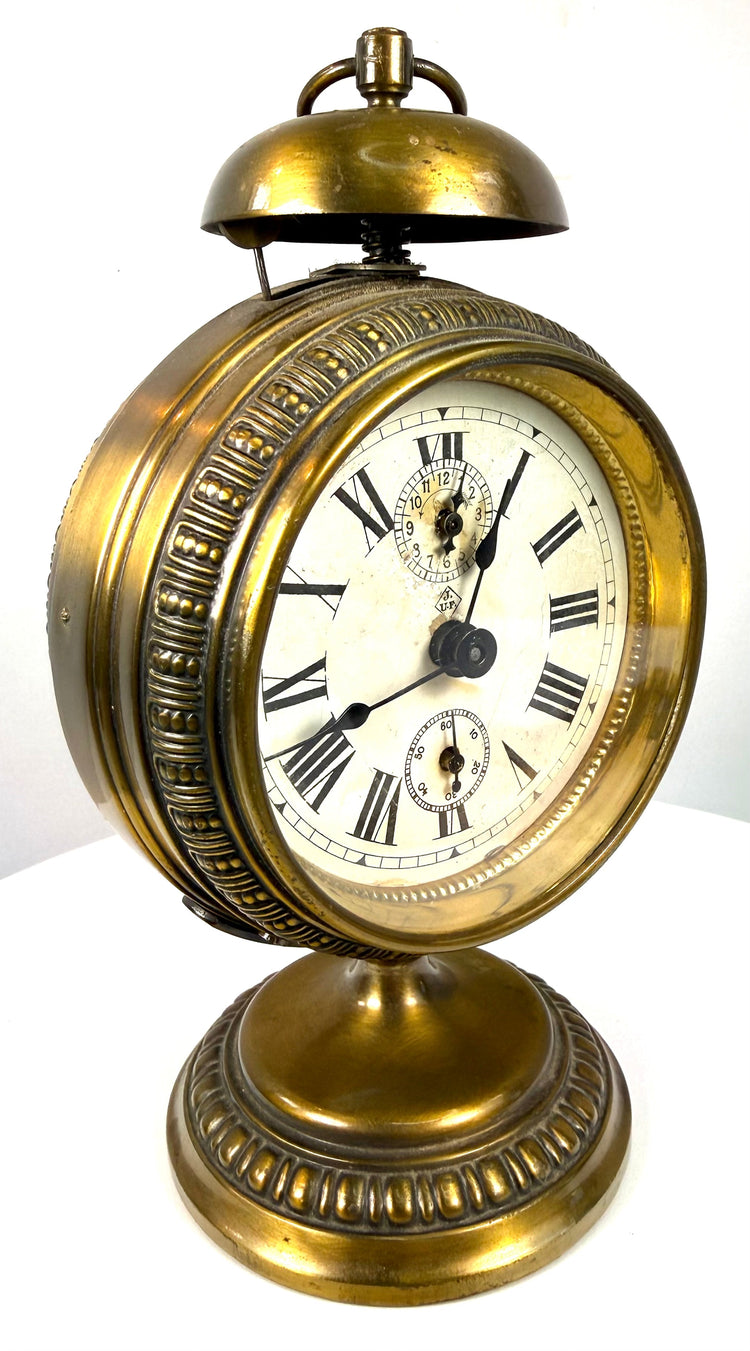
An exceptional antique German brass pedestal alarm clock manufactured by Jahresuhrenfabrik (JUF) of Triberg in Germany's celebrated Black Forest clockmaking region. Dating to the early 20th century, this distinctive timepiece combines elaborate period decoration with traditional mechanical horology, featuring an ornate circular clock case, elevated pedestal base, and prominent brass alarm bell mounted above the dial.
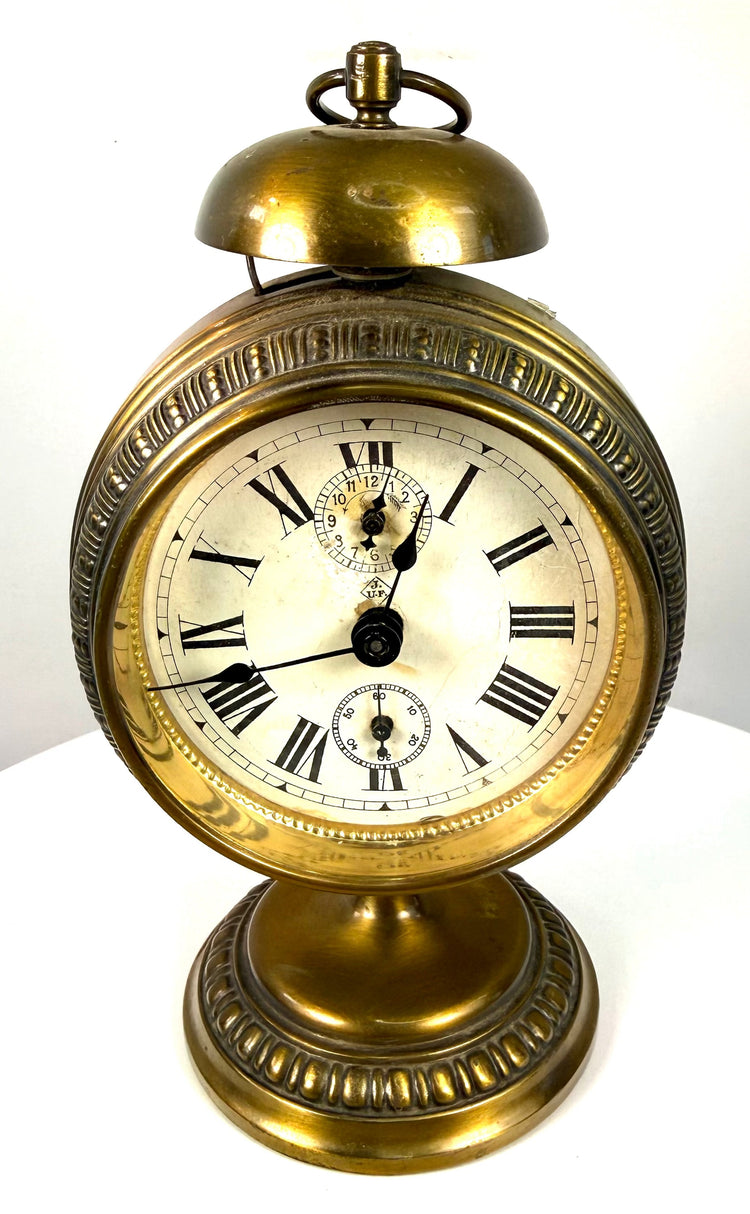
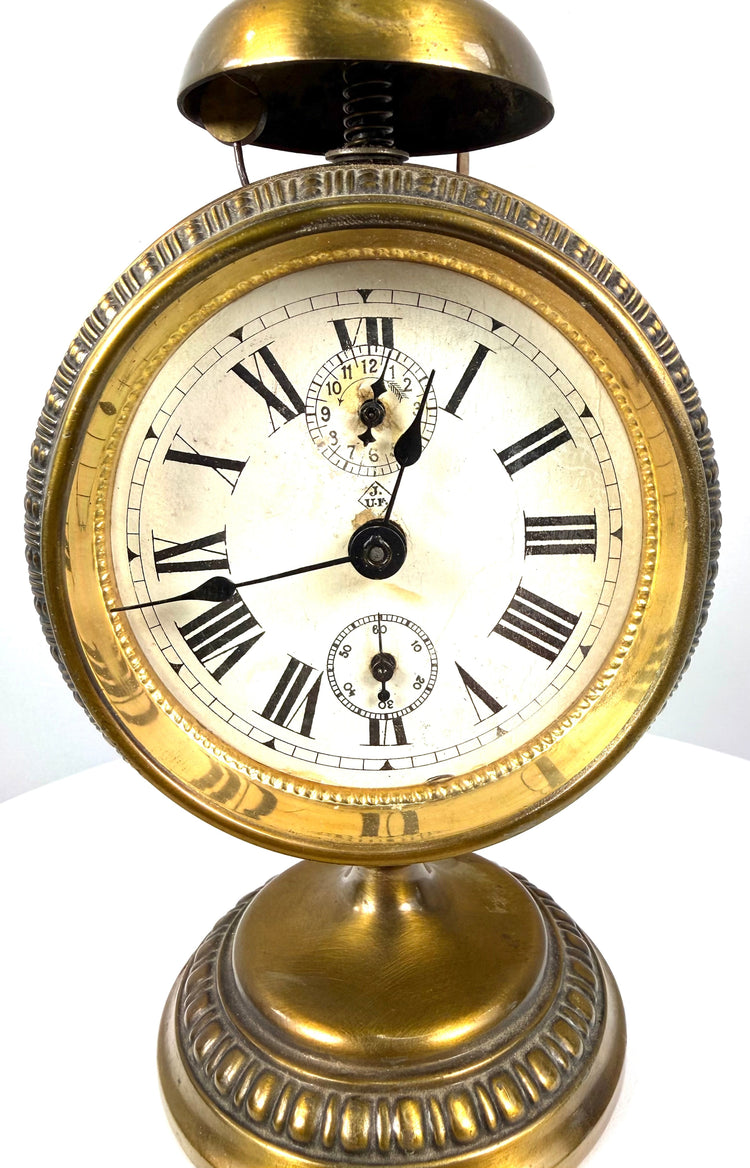
The clock bears the identifiable J–UF trademark enclosed within a diamond-shaped border on its dial, associating it with Jahresuhrenfabrik, the historic German clockmaking enterprise connected with August Schatz and later known as August Schatz & Söhne. Established during the 1880s, the company became internationally recognized for its innovative clockmaking and production of precision mechanical timepieces.
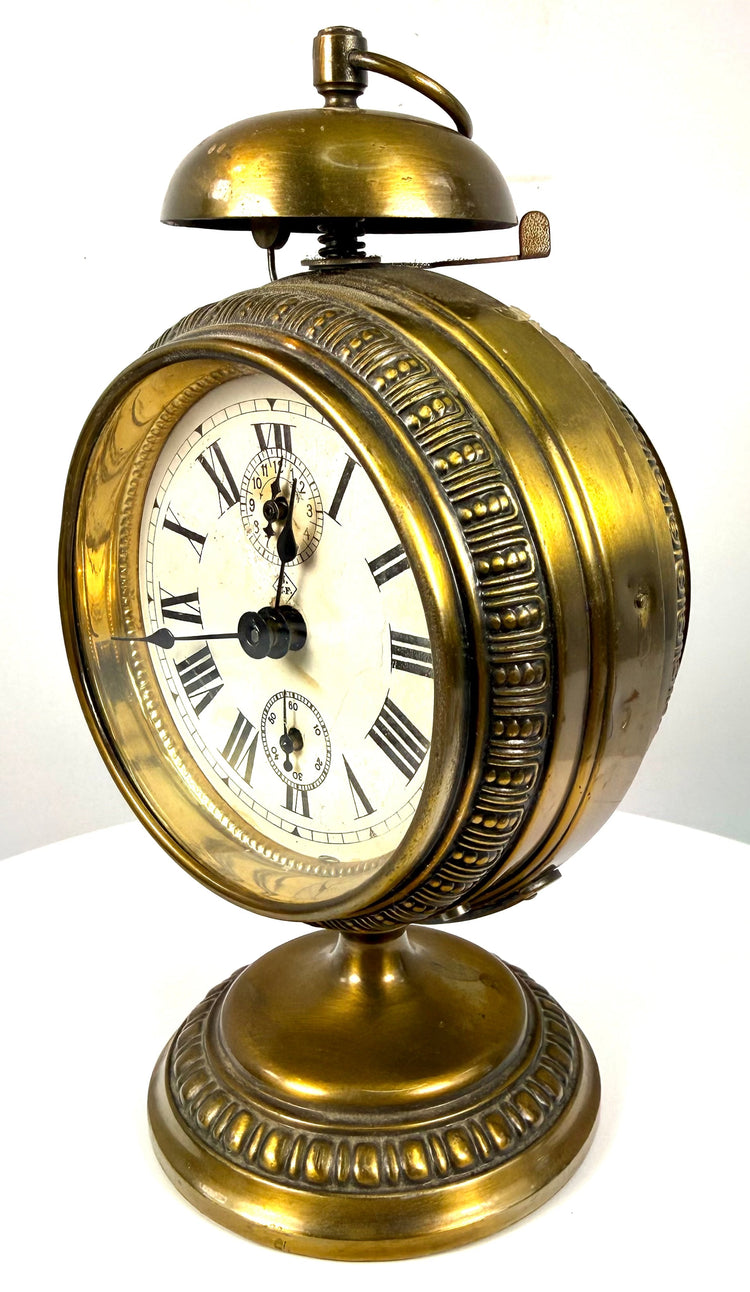
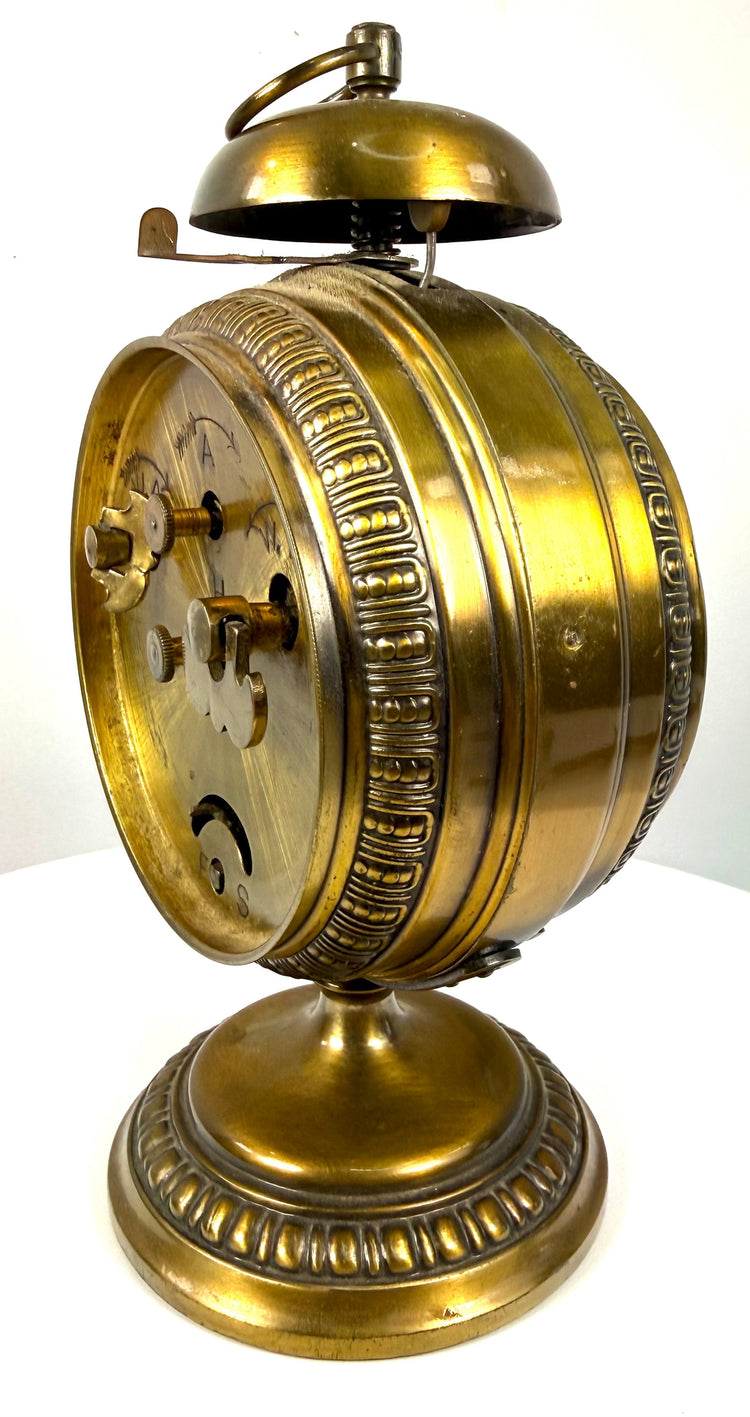
The substantial circular brass case features two decorative bands of repeating raised geometric motifs, creating an elegant architectural appearance. These finely detailed borders complement the broad, polished brass surfaces and reflect the ornamental metalworking traditions popular during the late Victorian and Edwardian periods.
The large cream-coloured dial displays bold black Roman numerals surrounded by a detailed minute track. Two smaller subsidiary dials add to its complexity: an upper twelve-hour dial associated with the alarm-setting mechanism and a lower sixty-second register. The original-style black metal hands provide a striking visual contrast against the aged dial.
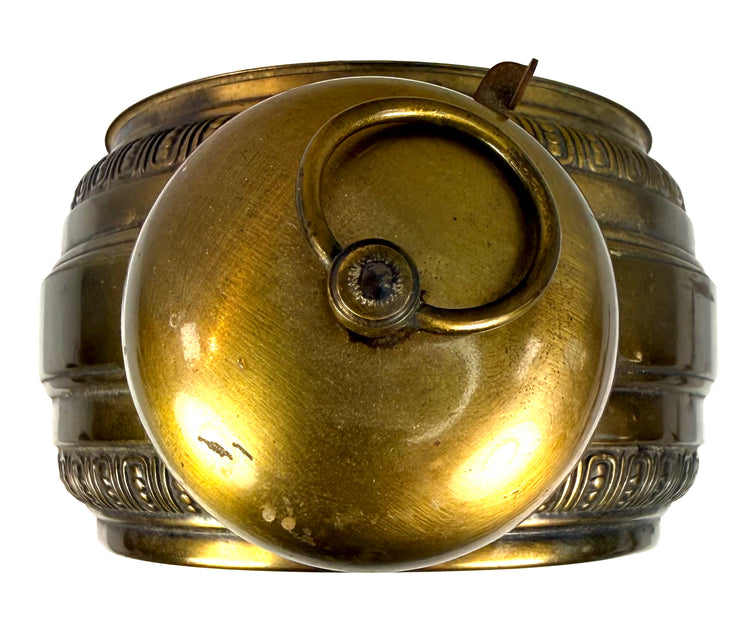
Positioned above the clock is a substantial domed brass bell, supported by an exposed spring and striking assembly. A circular brass ring crowns the bell, contributing to the clock's distinctive silhouette. The alarm mechanism was designed to sound against the bell at a selected time, an important practical feature before electronic alarm clocks became widespread.
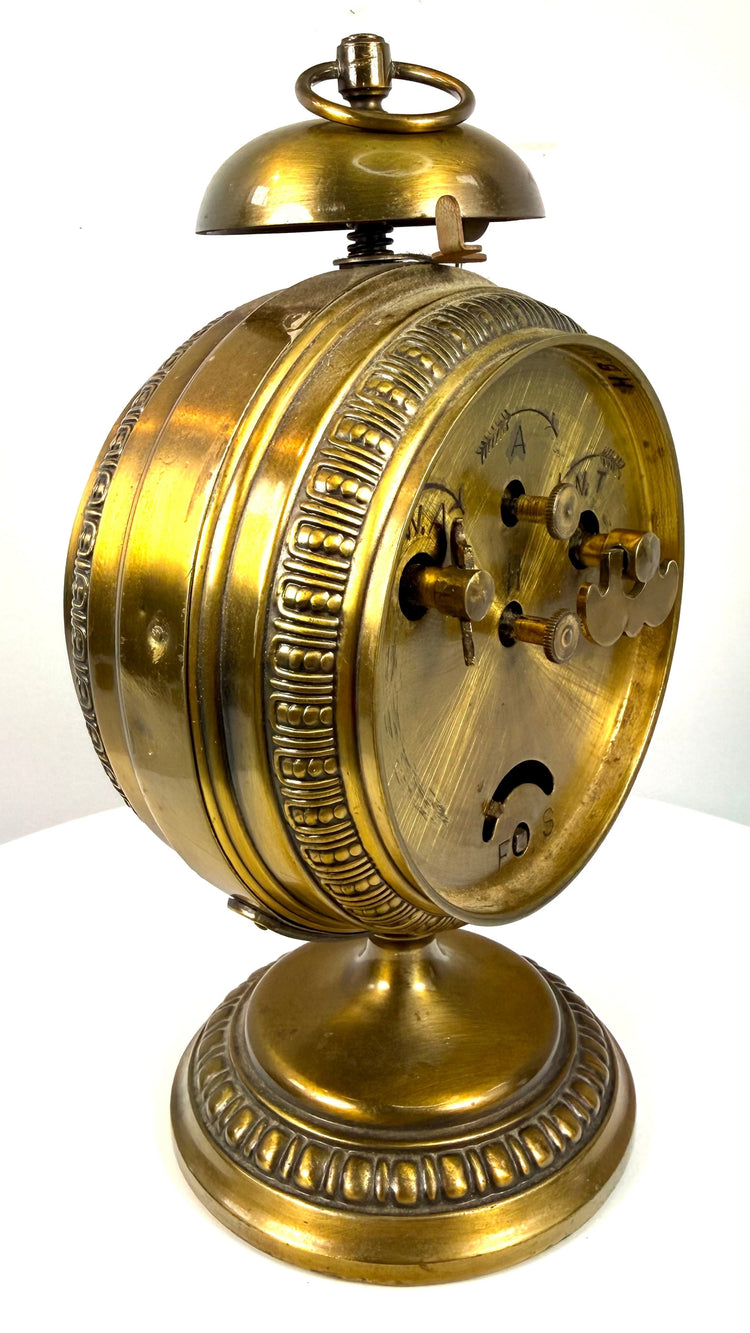
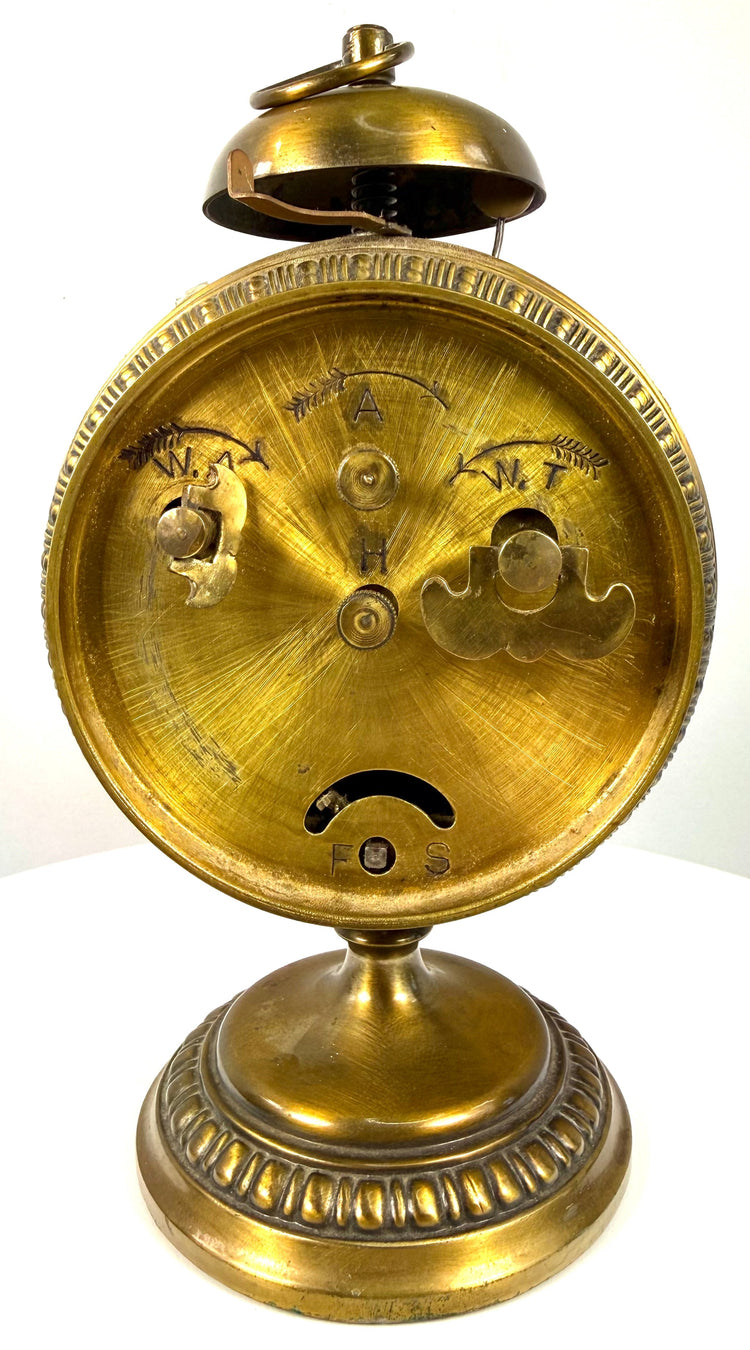
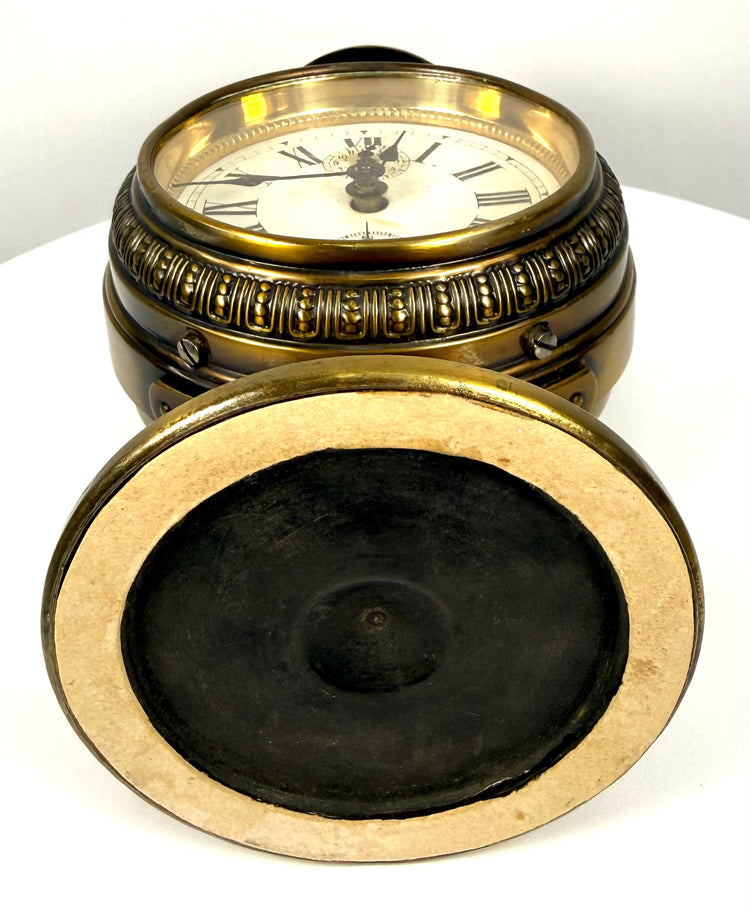
The reverse retains a series of mechanical winding and adjustment controls, together with engraved directional indicators. The substantial brass pedestal rises from a circular foot decorated with matching raised ornamental detailing, giving the clock an imposing and balanced presentation.
Features
- Diamond-shaped J–UF manufacturer's trademark visible on the dial
- Elaborate raised geometric decoration surrounding the clock housing
- Upper subsidiary dial with twelve-hour alarm-setting register
- Lower subsidiary seconds dial with numbered sixty-second scale
- Prominent domed brass alarm bell mounted above the clock
- Exposed spring-operated bell-striking assembly
- Circular brass ring positioned above the bell
- Rear mechanical winding and adjustment controls
- Traditional spring-driven mechanical construction
Cultural Significance
During the late 19th and early 20th centuries, the Black Forest region of southwestern Germany emerged as one of Europe's most important centres of mechanical clock manufacturing. German clockmakers combined generations of traditional craftsmanship with increasingly sophisticated manufacturing techniques, producing reliable timepieces that were exported to households and businesses throughout the world.
Among these manufacturers, Jahresuhrenfabrik of Triberg occupied an important position in the development of German horology. Associated with pioneering clockmaker August Schatz, the company became particularly celebrated for its long-running anniversary clocks, which employed innovative torsion-pendulum mechanisms capable of operating for extended periods between windings. The company also manufactured other varieties of mechanical clocks, including alarm and travel timepieces.
This particular example represents the firm's decorative alarm-clock production rather than its better-known anniversary-clock designs. Its distinctive bell-top construction illustrates an important period in the evolution of domestic timekeeping, when mechanical alarms became increasingly useful in coordinating daily life, business appointments, industrial employment, and travel.
Unlike ordinary utilitarian alarm clocks, this example was designed with considerable attention to presentation. Its substantial pedestal base, decorative brass borders, and carefully arranged dial demonstrate how practical timekeeping instruments could also serve as attractive furnishings within middle- and upper-class domestic interiors.
The survival of the identifiable JUF trademark is particularly significant, providing a connection to an established German clockmaking manufacturer and helping distinguish the piece from otherwise similar unmarked period clocks.
Today, antique mechanical clocks of this type are appreciated by collectors of European decorative arts, historical scientific instruments, and traditional horology. Their combination of mechanical ingenuity, ornamental metalwork, and period character makes them compelling examples of early 20th-century craftsmanship.
Condition
Good antique condition, displaying visible signs of age and historical use consistent with a timepiece approximately 100–125 years old. The brass case retains an attractive golden finish with areas of natural oxidation, patination, surface scratches, small marks, and localized discolouration. These variations contribute to the clock's authentic antique character.
The dial exhibits age-related toning, scattered surface marks, and fine lines or crazing in areas. The Roman numerals, subsidiary registers, and manufacturer's trademark remain clearly recognizable.
The decorative brass pedestal, circular base, and raised ornamental borders appear structurally intact, with normal surface wear and darkening within the recessed detailing.
The upper bell, striking assembly, and visible rear adjustment components remain present. Mechanical timekeeping accuracy and alarm functionality have not been independently verified, and servicing or adjustment may be required for reliable operation.
Dimensions (Approximate)
Height: 7.5 in
Width: 4.75 in
Depth: 4 in
Age (Approximate)
106–126 years old
Provenance
Formerly part of a private collection in Toronto, Ontario, Canada, where the clock was preserved as part of a collection of historical and decorative objects.
The timepiece retains its recognizable manufacturer's marking, providing an identifiable connection to the German clockmaking firm Jahresuhrenfabrik of Triberg.
Learn More
Explore a comparable German pedestal alarm clock dating to circa 1900 at the Anglesea and District Historical Society
Explore our Collection of 20th Century Artifacts
Description
Historical Context & Origin
Region: Triberg, Black Forest, Germany
Material: Brass and brass-alloy case, metal bell, cream-coloured clock dial, glass and mechanical clock components
Period: Early 20th century, circa 1900–1920 CE
Description
An exceptional antique German brass pedestal alarm clock manufactured by Jahresuhrenfabrik (JUF) of Triberg in Germany's celebrated Black Forest clockmaking region. Dating to the early 20th century, this distinctive timepiece combines elaborate period decoration with traditional mechanical horology, featuring an ornate circular clock case, elevated pedestal base, and prominent brass alarm bell mounted above the dial.
The clock bears the identifiable J–UF trademark enclosed within a diamond-shaped border on its dial, associating it with Jahresuhrenfabrik, the historic German clockmaking enterprise connected with August Schatz and later known as August Schatz & Söhne. Established during the 1880s, the company became internationally recognized for its innovative clockmaking and production of precision mechanical timepieces.
The substantial circular brass case features two decorative bands of repeating raised geometric motifs, creating an elegant architectural appearance. These finely detailed borders complement the broad, polished brass surfaces and reflect the ornamental metalworking traditions popular during the late Victorian and Edwardian periods.
The large cream-coloured dial displays bold black Roman numerals surrounded by a detailed minute track. Two smaller subsidiary dials add to its complexity: an upper twelve-hour dial associated with the alarm-setting mechanism and a lower sixty-second register. The original-style black metal hands provide a striking visual contrast against the aged dial.
Positioned above the clock is a substantial domed brass bell, supported by an exposed spring and striking assembly. A circular brass ring crowns the bell, contributing to the clock's distinctive silhouette. The alarm mechanism was designed to sound against the bell at a selected time, an important practical feature before electronic alarm clocks became widespread.
The reverse retains a series of mechanical winding and adjustment controls, together with engraved directional indicators. The substantial brass pedestal rises from a circular foot decorated with matching raised ornamental detailing, giving the clock an imposing and balanced presentation.
Features
- Diamond-shaped J–UF manufacturer's trademark visible on the dial
- Elaborate raised geometric decoration surrounding the clock housing
- Upper subsidiary dial with twelve-hour alarm-setting register
- Lower subsidiary seconds dial with numbered sixty-second scale
- Prominent domed brass alarm bell mounted above the clock
- Exposed spring-operated bell-striking assembly
- Circular brass ring positioned above the bell
- Rear mechanical winding and adjustment controls
- Traditional spring-driven mechanical construction
Cultural Significance
During the late 19th and early 20th centuries, the Black Forest region of southwestern Germany emerged as one of Europe's most important centres of mechanical clock manufacturing. German clockmakers combined generations of traditional craftsmanship with increasingly sophisticated manufacturing techniques, producing reliable timepieces that were exported to households and businesses throughout the world.
Among these manufacturers, Jahresuhrenfabrik of Triberg occupied an important position in the development of German horology. Associated with pioneering clockmaker August Schatz, the company became particularly celebrated for its long-running anniversary clocks, which employed innovative torsion-pendulum mechanisms capable of operating for extended periods between windings. The company also manufactured other varieties of mechanical clocks, including alarm and travel timepieces.
This particular example represents the firm's decorative alarm-clock production rather than its better-known anniversary-clock designs. Its distinctive bell-top construction illustrates an important period in the evolution of domestic timekeeping, when mechanical alarms became increasingly useful in coordinating daily life, business appointments, industrial employment, and travel.
Unlike ordinary utilitarian alarm clocks, this example was designed with considerable attention to presentation. Its substantial pedestal base, decorative brass borders, and carefully arranged dial demonstrate how practical timekeeping instruments could also serve as attractive furnishings within middle- and upper-class domestic interiors.
The survival of the identifiable JUF trademark is particularly significant, providing a connection to an established German clockmaking manufacturer and helping distinguish the piece from otherwise similar unmarked period clocks.
Today, antique mechanical clocks of this type are appreciated by collectors of European decorative arts, historical scientific instruments, and traditional horology. Their combination of mechanical ingenuity, ornamental metalwork, and period character makes them compelling examples of early 20th-century craftsmanship.
Condition
Good antique condition, displaying visible signs of age and historical use consistent with a timepiece approximately 100–125 years old. The brass case retains an attractive golden finish with areas of natural oxidation, patination, surface scratches, small marks, and localized discolouration. These variations contribute to the clock's authentic antique character.
The dial exhibits age-related toning, scattered surface marks, and fine lines or crazing in areas. The Roman numerals, subsidiary registers, and manufacturer's trademark remain clearly recognizable.
The decorative brass pedestal, circular base, and raised ornamental borders appear structurally intact, with normal surface wear and darkening within the recessed detailing.
The upper bell, striking assembly, and visible rear adjustment components remain present. Mechanical timekeeping accuracy and alarm functionality have not been independently verified, and servicing or adjustment may be required for reliable operation.
Dimensions (Approximate)
Height: 7.5 in
Width: 4.75 in
Depth: 4 in
Age (Approximate)
106–126 years old
Provenance
Formerly part of a private collection in Toronto, Ontario, Canada, where the clock was preserved as part of a collection of historical and decorative objects.
The timepiece retains its recognizable manufacturer's marking, providing an identifiable connection to the German clockmaking firm Jahresuhrenfabrik of Triberg.
Learn More
Explore a comparable German pedestal alarm clock dating to circa 1900 at the Anglesea and District Historical Society
Explore our Collection of 20th Century Artifacts
You May Also Like
