
Great Pyramid of Giza Limestone Fragment with Original Cairo Postcard | Circa 1906 – 1914
Couldn't load pickup availability


Great Pyramid of Giza Limestone Fragment with Original Cairo Postcard | Circa 1906 – 1914
Description
More
Less
Historical Context & Origin
Region: Giza / Cairo, Egypt
Material: Limestone fragment, reportedly collected from the Great Pyramid of Giza; printed photographic postcard with handwritten correspondence and Egyptian postage
Period: Great Pyramid architectural context: Old Kingdom, 4th Dynasty, circa 2580–2560 BCE; Postcard: circa 1906–1914
Description
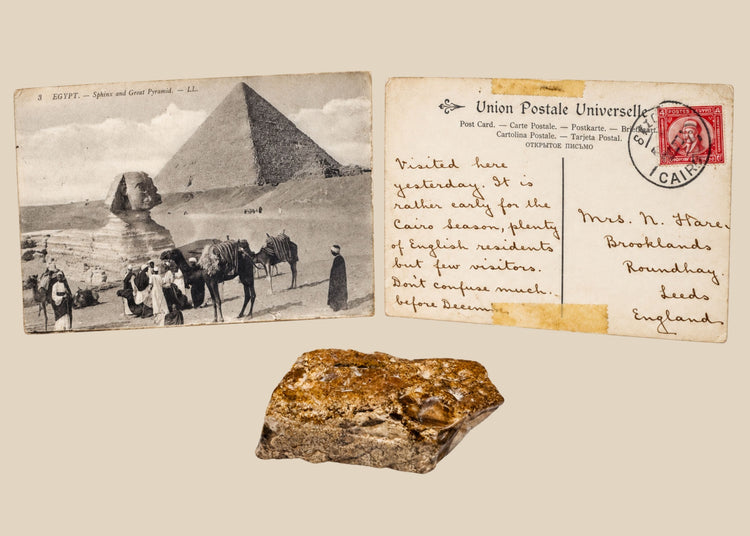
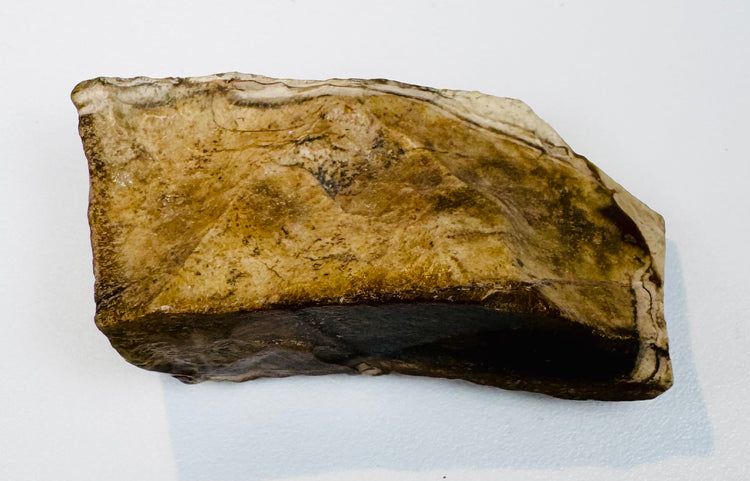
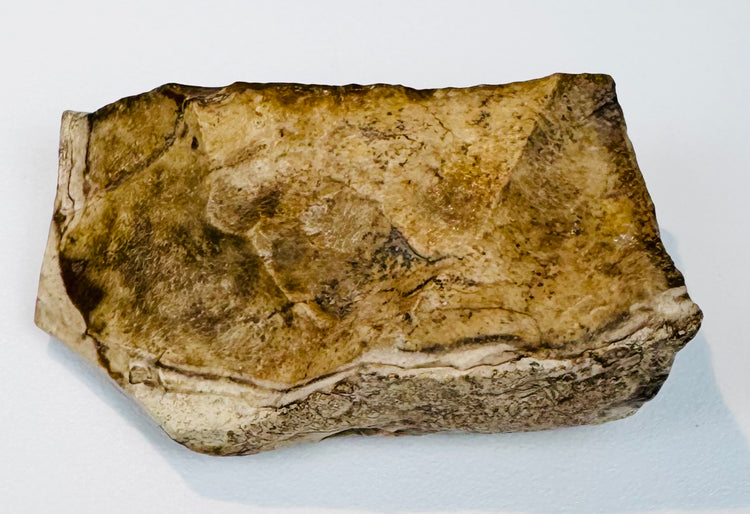
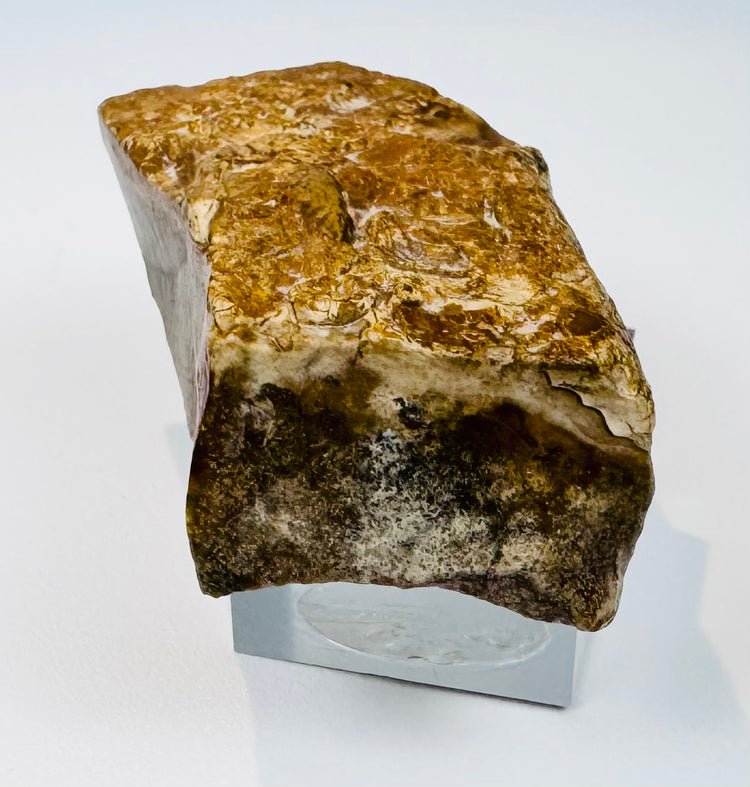
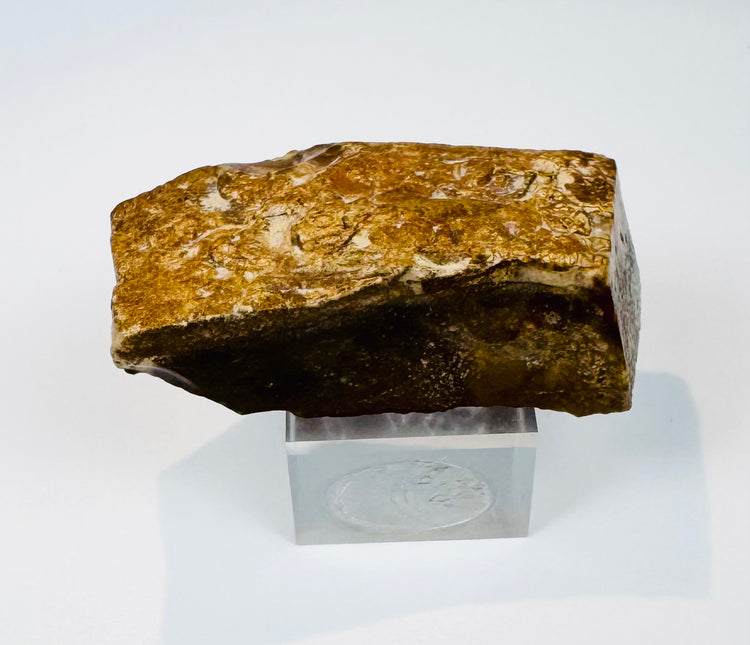
An exceptional historic Egyptian travel grouping comprising a limestone fragment reportedly collected from the Great Pyramid of Giza together with an original early 20th-century photographic postcard associated with the same journey.
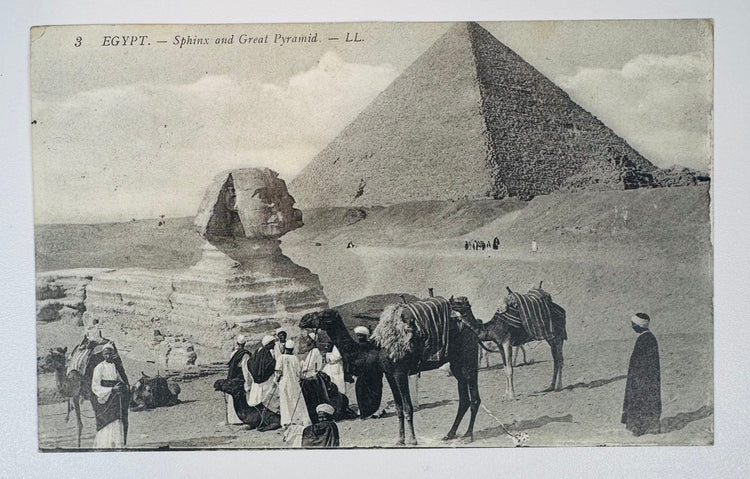
The postcard depicts the Great Sphinx with the Great Pyramid rising prominently behind it and bears the printed title “3 EGYPT. – Sphinx and Great Pyramid. – LL.” Published by the French photographic firm Lévy Fils et Cie., it represents the type of photographic souvenir postcard produced for travellers visiting Egypt during the early development of international tourism.
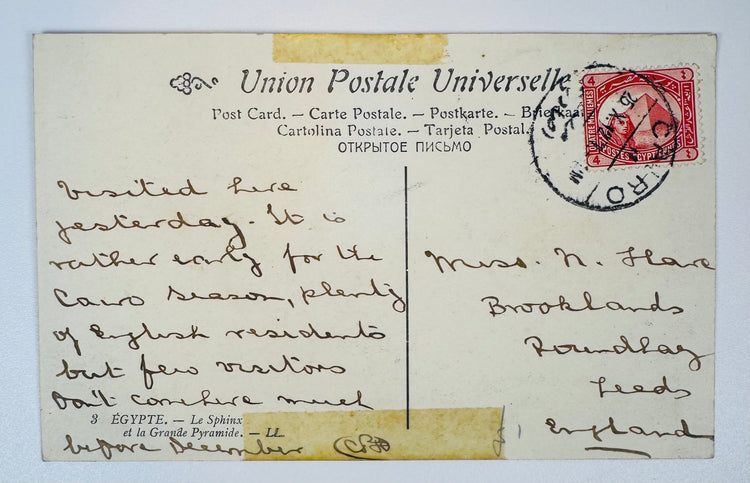
The reverse retains the sender’s original handwritten correspondence, an Egyptian 4-millième Sphinx-and-Pyramid postage stamp, and a Cairo postal cancellation. The postcard was mailed from Egypt to a recipient in Roundhay, Leeds, England. The postage issue supports a mailing date of approximately 1906–1914.
According to accompanying family provenance, the limestone fragment was collected from the Great Pyramid during the sender’s visit to Giza, brought back to England, and subsequently given to the recipient of the postcard. The two pieces were preserved together within the family, retaining the direct personal association between the traveller, the postcard sent from Cairo, and the physical souvenir brought home from Egypt.
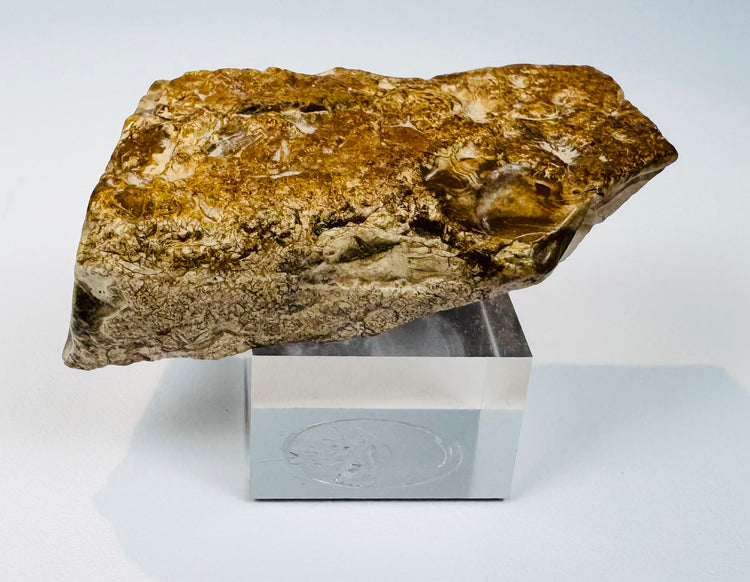
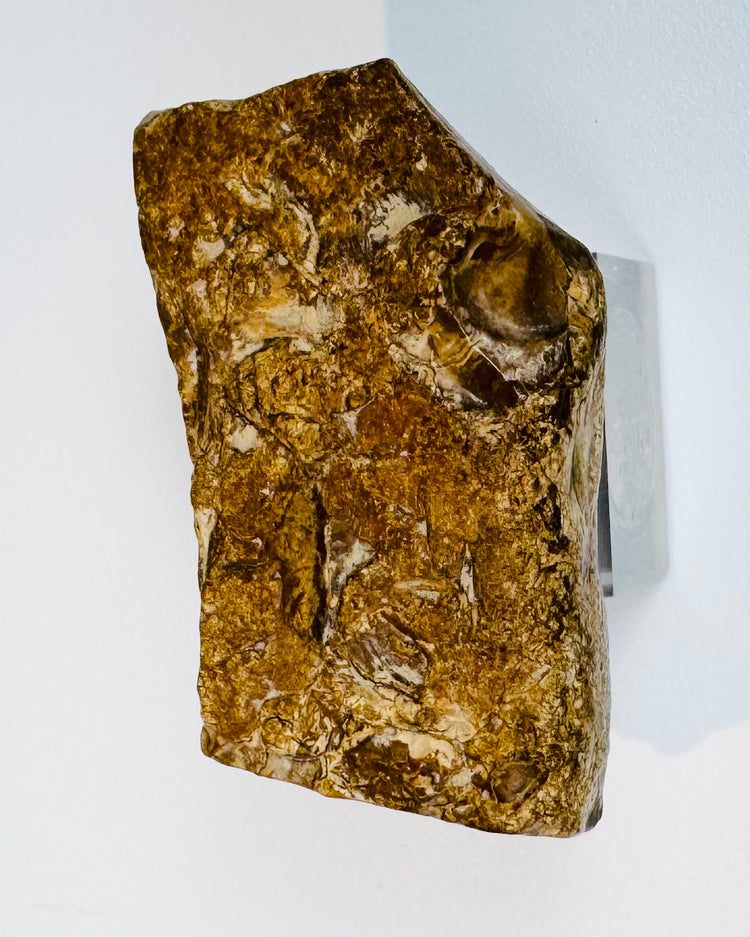
The limestone fragment displays numerous visible fossil and shell inclusions, providing an especially interesting view of the natural composition of the stone.
Features
- Limestone fragment reportedly collected from the Great Pyramid of Giza
- Preserved with an original postcard associated with the same Egyptian journey
- Early 20th-century photographic postcard depicting the Great Sphinx and Great Pyramid
- Printed title: “3 EGYPT. – Sphinx and Great Pyramid. – LL.”
- Published by Lévy Fils et Cie.
- Original handwritten correspondence on the reverse
- Egyptian 4-millième Sphinx-and-Pyramid postage stamp
- Cairo postal cancellation
- Addressed and mailed to Roundhay, Leeds, England
- Limestone displaying numerous visible fossil and shell inclusions
Cultural Significance
The Great Pyramid of Giza was constructed for Pharaoh Khufu during Egypt’s 4th Dynasty and remains the largest pyramid on the Giza Plateau. It is also the only surviving monument traditionally associated with the Seven Wonders of the Ancient World.
By the late 19th and early 20th centuries, Giza had become one of the defining destinations for international travellers visiting Egypt. Photographic postcards allowed visitors to document their journeys and communicate their experiences to family and friends abroad.
This grouping is particularly evocative because it combines a postcard mailed from Cairo with a limestone fragment said to have been collected during the same journey. The handwritten correspondence, Egyptian postage, Cairo cancellation, period image of Giza, and accompanying stone together preserve a personal record of an early 20th-century traveller’s encounter with one of the world’s most celebrated ancient monuments.
Condition
The postcard remains in good antique condition with expected age-related toning, minor edge and corner wear, localized staining and discoloration, and evidence of earlier mounting or adhesive. The photographic image, printed caption, handwritten correspondence, Egyptian postage stamp, and Cairo cancellation remain clearly visible.
The limestone fragment remains stable and retains naturally irregular surfaces, layered coloration, and numerous visible fossil and shell inclusions. Surface wear and irregularities are consistent with the nature and history of the material.
Dimensions (Approximate)
Stone Fragment:
Length: 1.75 in
Width: 1 in
Depth: 0.7 in
Postcard:
Length: 5.5 in
Width: 3.5 in
Age (Approximate)
Great Pyramid Architectural Context: 4,585–4,605 years old
Postcard: 112–120 years old
Provenance
Formerly preserved within a private family collection in Derbyshire, United Kingdom.
According to accompanying family provenance, by repute, the woman who sent the postcard travelled to Egypt during the early 20th century and visited the Giza Plateau. During this journey, the limestone fragment was reportedly collected from the Great Pyramid of Giza and brought back to England as a personal souvenir.
The accompanying postcard depicting the Great Sphinx and Great Pyramid was mailed from Cairo during the same trip to a recipient in Roundhay, Leeds, England. The limestone fragment was subsequently given to the postcard recipient, and the two pieces remained together within the family for many years before forming part of the private collection in Derbyshire.
Learn More
Study the history of the Great Pyramid of Giza
Browse our Collection of Ancient Egyptian Artifacts
Description
Historical Context & Origin
Region: Giza / Cairo, Egypt
Material: Limestone fragment, reportedly collected from the Great Pyramid of Giza; printed photographic postcard with handwritten correspondence and Egyptian postage
Period: Great Pyramid architectural context: Old Kingdom, 4th Dynasty, circa 2580–2560 BCE; Postcard: circa 1906–1914
Description
An exceptional historic Egyptian travel grouping comprising a limestone fragment reportedly collected from the Great Pyramid of Giza together with an original early 20th-century photographic postcard associated with the same journey.
The postcard depicts the Great Sphinx with the Great Pyramid rising prominently behind it and bears the printed title “3 EGYPT. – Sphinx and Great Pyramid. – LL.” Published by the French photographic firm Lévy Fils et Cie., it represents the type of photographic souvenir postcard produced for travellers visiting Egypt during the early development of international tourism.
The reverse retains the sender’s original handwritten correspondence, an Egyptian 4-millième Sphinx-and-Pyramid postage stamp, and a Cairo postal cancellation. The postcard was mailed from Egypt to a recipient in Roundhay, Leeds, England. The postage issue supports a mailing date of approximately 1906–1914.
According to accompanying family provenance, the limestone fragment was collected from the Great Pyramid during the sender’s visit to Giza, brought back to England, and subsequently given to the recipient of the postcard. The two pieces were preserved together within the family, retaining the direct personal association between the traveller, the postcard sent from Cairo, and the physical souvenir brought home from Egypt.
The limestone fragment displays numerous visible fossil and shell inclusions, providing an especially interesting view of the natural composition of the stone.
Features
- Limestone fragment reportedly collected from the Great Pyramid of Giza
- Preserved with an original postcard associated with the same Egyptian journey
- Early 20th-century photographic postcard depicting the Great Sphinx and Great Pyramid
- Printed title: “3 EGYPT. – Sphinx and Great Pyramid. – LL.”
- Published by Lévy Fils et Cie.
- Original handwritten correspondence on the reverse
- Egyptian 4-millième Sphinx-and-Pyramid postage stamp
- Cairo postal cancellation
- Addressed and mailed to Roundhay, Leeds, England
- Limestone displaying numerous visible fossil and shell inclusions
Cultural Significance
The Great Pyramid of Giza was constructed for Pharaoh Khufu during Egypt’s 4th Dynasty and remains the largest pyramid on the Giza Plateau. It is also the only surviving monument traditionally associated with the Seven Wonders of the Ancient World.
By the late 19th and early 20th centuries, Giza had become one of the defining destinations for international travellers visiting Egypt. Photographic postcards allowed visitors to document their journeys and communicate their experiences to family and friends abroad.
This grouping is particularly evocative because it combines a postcard mailed from Cairo with a limestone fragment said to have been collected during the same journey. The handwritten correspondence, Egyptian postage, Cairo cancellation, period image of Giza, and accompanying stone together preserve a personal record of an early 20th-century traveller’s encounter with one of the world’s most celebrated ancient monuments.
Condition
The postcard remains in good antique condition with expected age-related toning, minor edge and corner wear, localized staining and discoloration, and evidence of earlier mounting or adhesive. The photographic image, printed caption, handwritten correspondence, Egyptian postage stamp, and Cairo cancellation remain clearly visible.
The limestone fragment remains stable and retains naturally irregular surfaces, layered coloration, and numerous visible fossil and shell inclusions. Surface wear and irregularities are consistent with the nature and history of the material.
Dimensions (Approximate)
Stone Fragment:
Length: 1.75 in
Width: 1 in
Depth: 0.7 in
Postcard:
Length: 5.5 in
Width: 3.5 in
Age (Approximate)
Great Pyramid Architectural Context: 4,585–4,605 years old
Postcard: 112–120 years old
Provenance
Formerly preserved within a private family collection in Derbyshire, United Kingdom.
According to accompanying family provenance, by repute, the woman who sent the postcard travelled to Egypt during the early 20th century and visited the Giza Plateau. During this journey, the limestone fragment was reportedly collected from the Great Pyramid of Giza and brought back to England as a personal souvenir.
The accompanying postcard depicting the Great Sphinx and Great Pyramid was mailed from Cairo during the same trip to a recipient in Roundhay, Leeds, England. The limestone fragment was subsequently given to the postcard recipient, and the two pieces remained together within the family for many years before forming part of the private collection in Derbyshire.
Learn More
Study the history of the Great Pyramid of Giza
Browse our Collection of Ancient Egyptian Artifacts
You May Also Like
