



Greek Architectural Roof Tile Ornament | Palmette and Hermes Motif | Circa Late 19th to Early 20th Century
Couldn't load pickup availability


Greek Architectural Roof Tile Ornament | Palmette and Hermes Motif | Circa Late 19th to Early 20th Century
Description
More
Less
Historical Context & Origin
Region: Greece
Material: Terracotta (Architectural Ceramic)
Period: Late 19th to Early 20th Century
Description
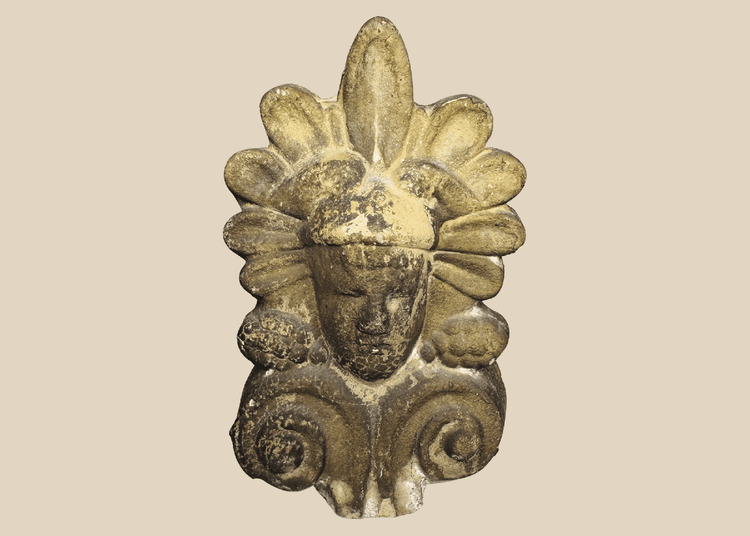
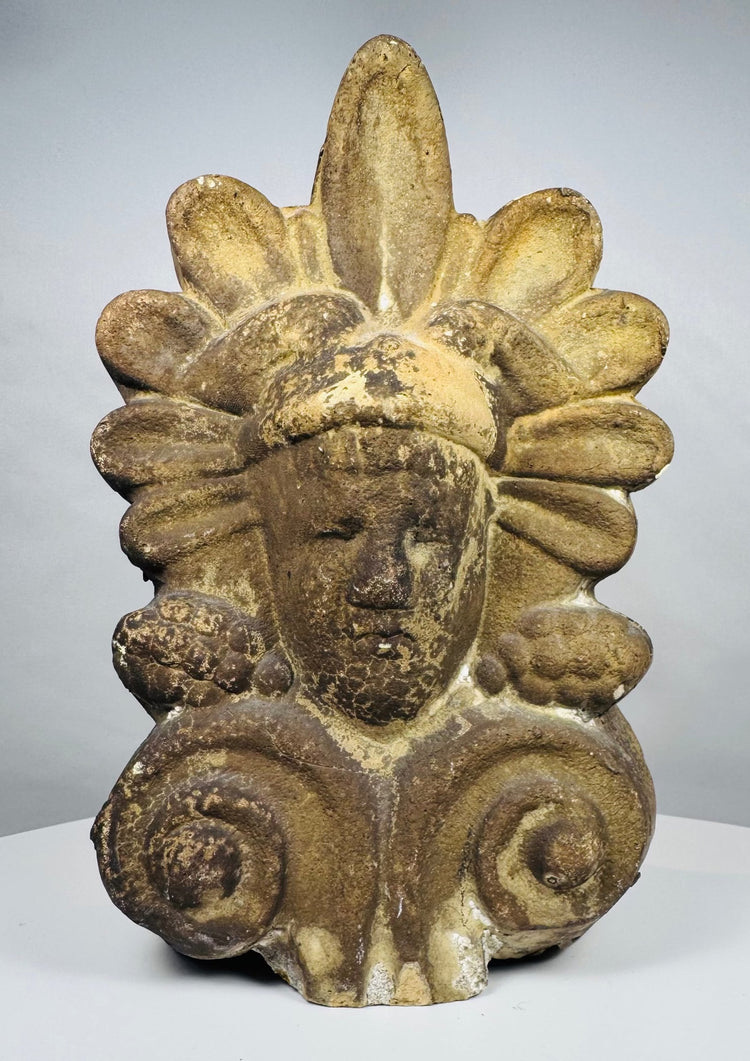
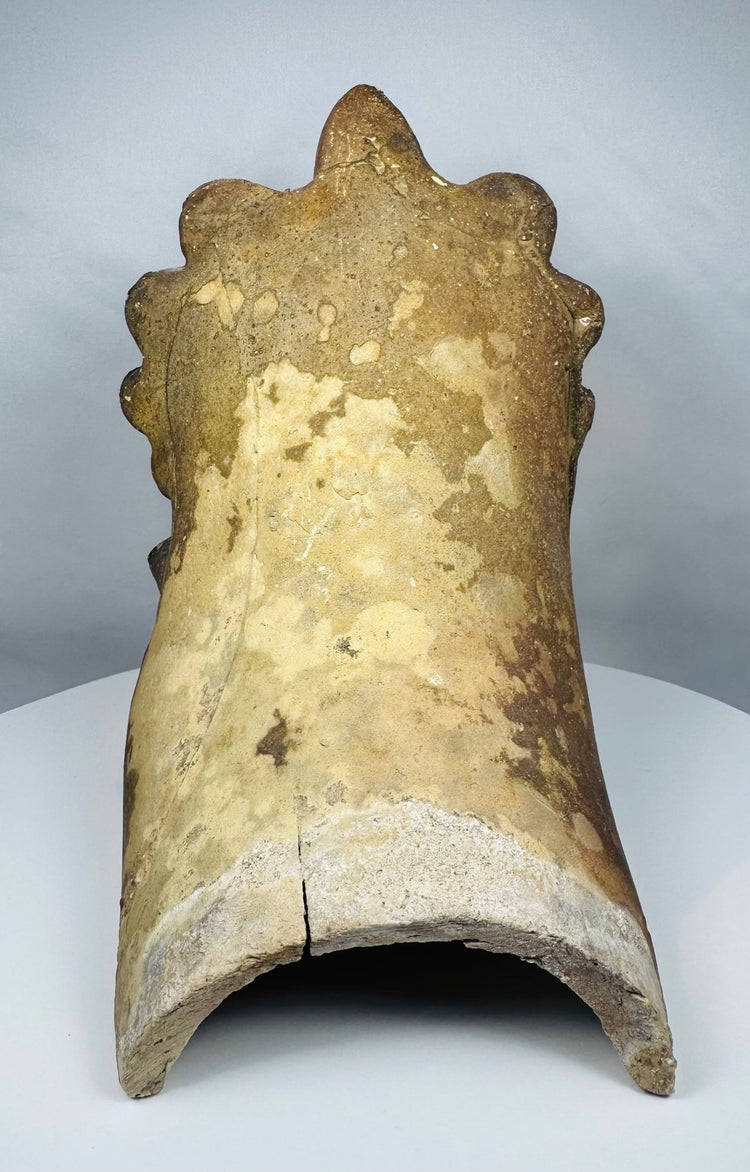
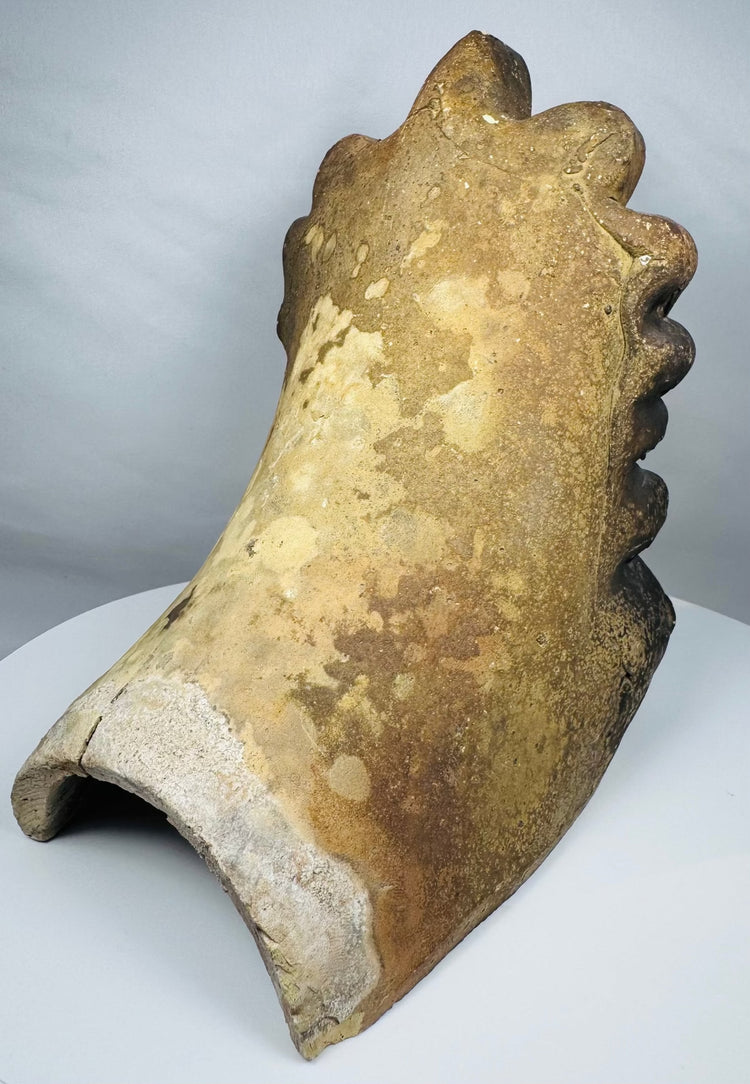
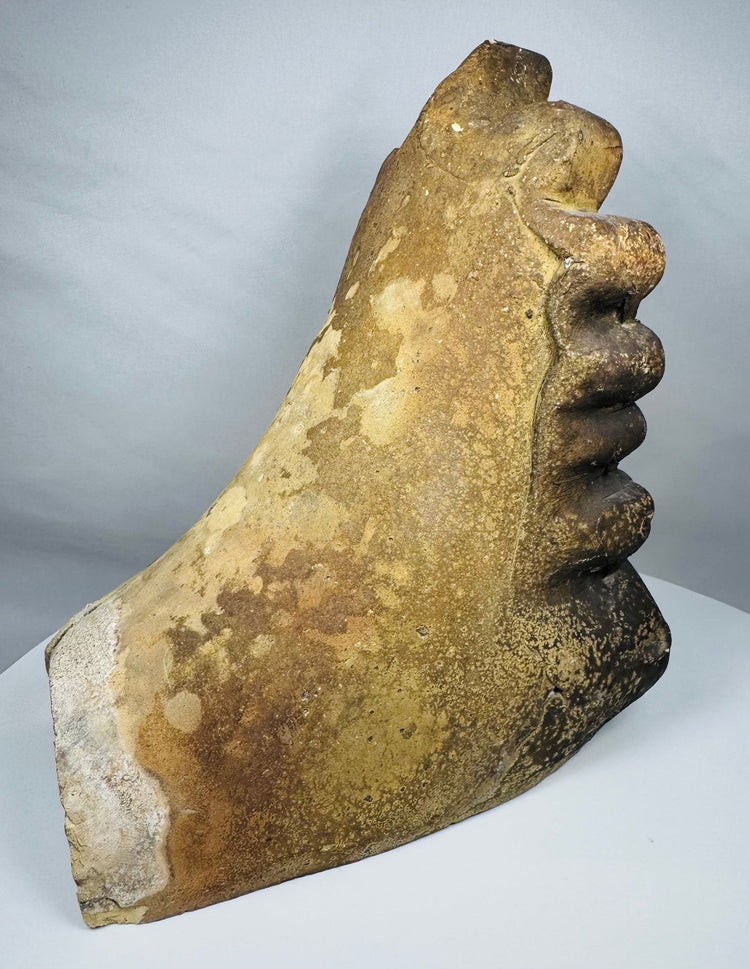
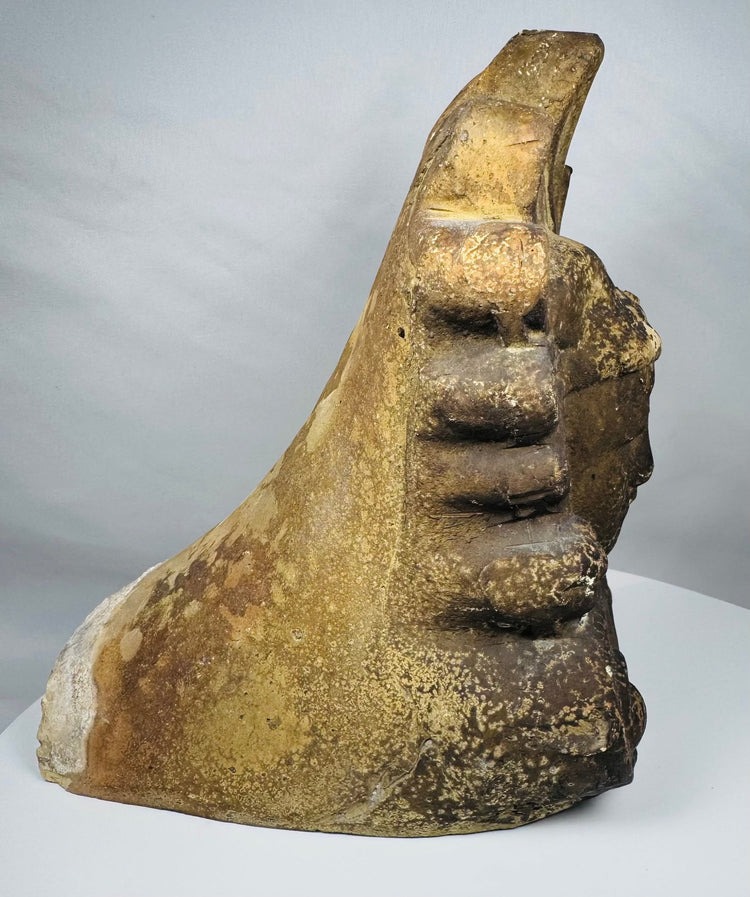
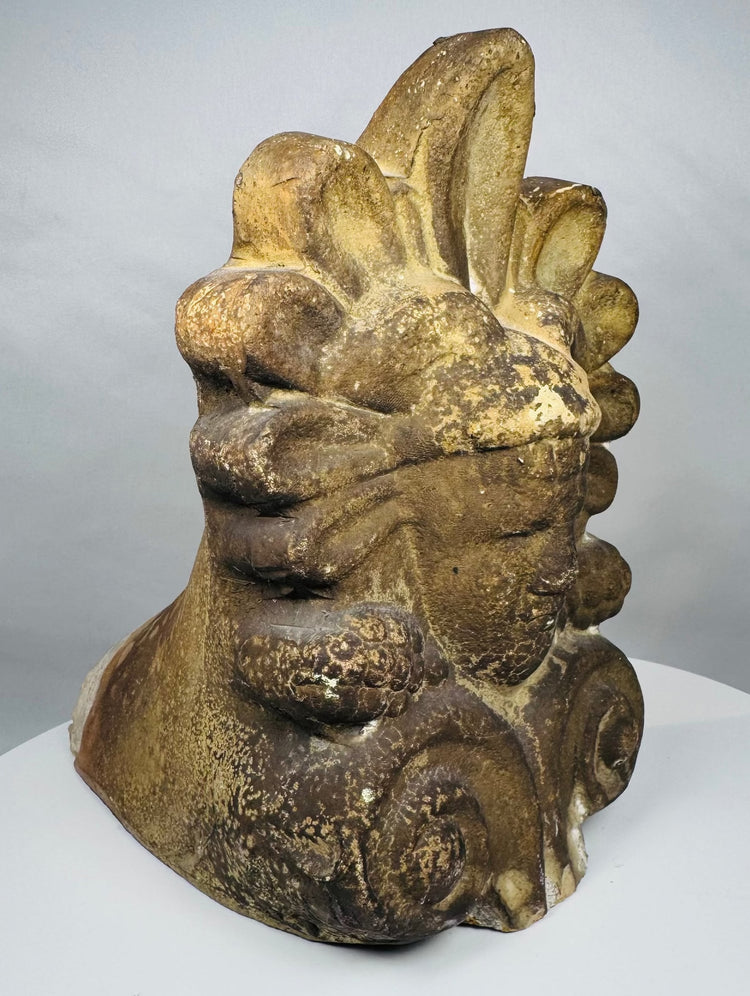
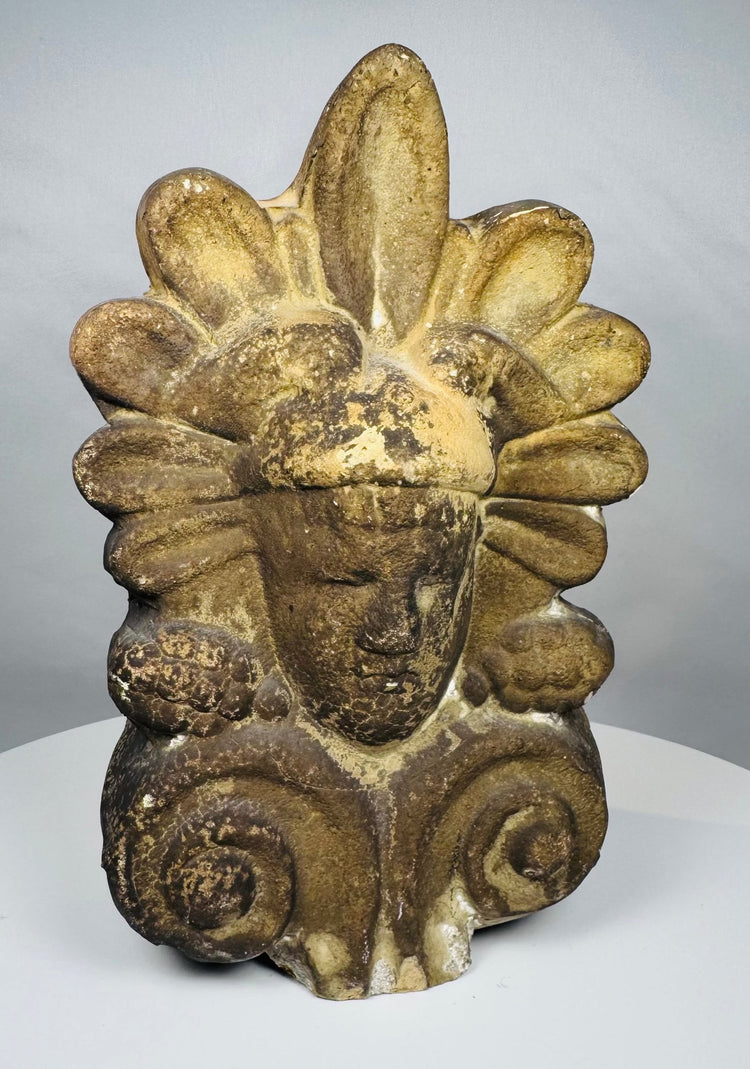
This impressive Greek terracotta antefix (akrokeramo) represents a striking example of neoclassical architectural ornament inspired by the artistic traditions of the ancient Mediterranean world. Hand-formed in fired clay, the piece depicts a serene human face, likely representing Hermes, the messenger god of Greek mythology, or his Roman counterpart Mercury, framed beneath a radiating palmette crown and flanked by scrolling volutes.
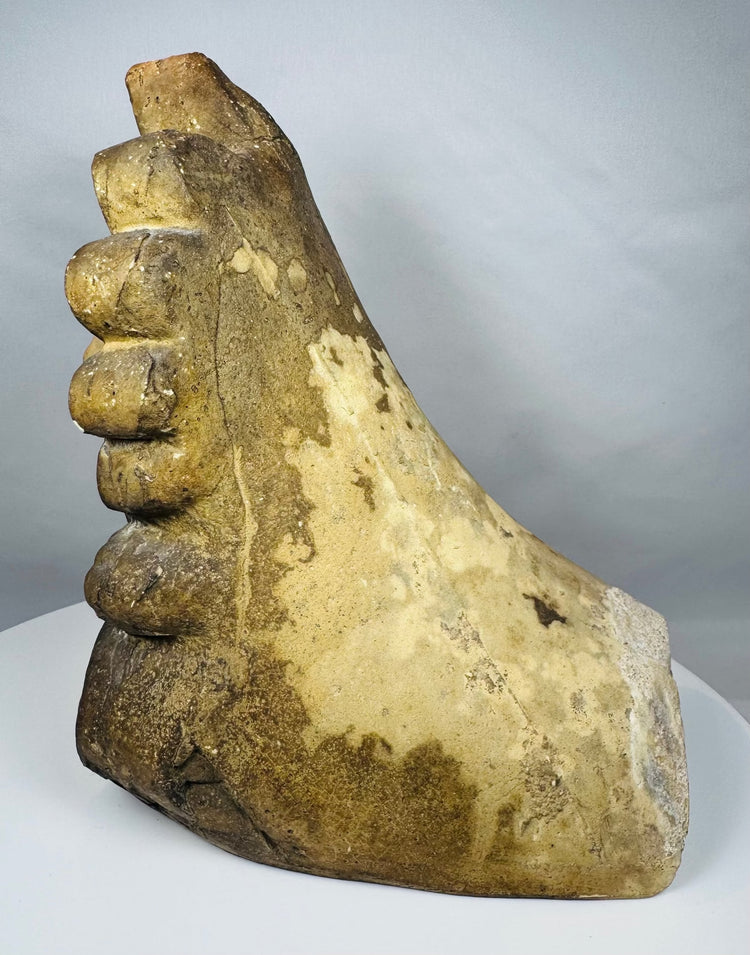
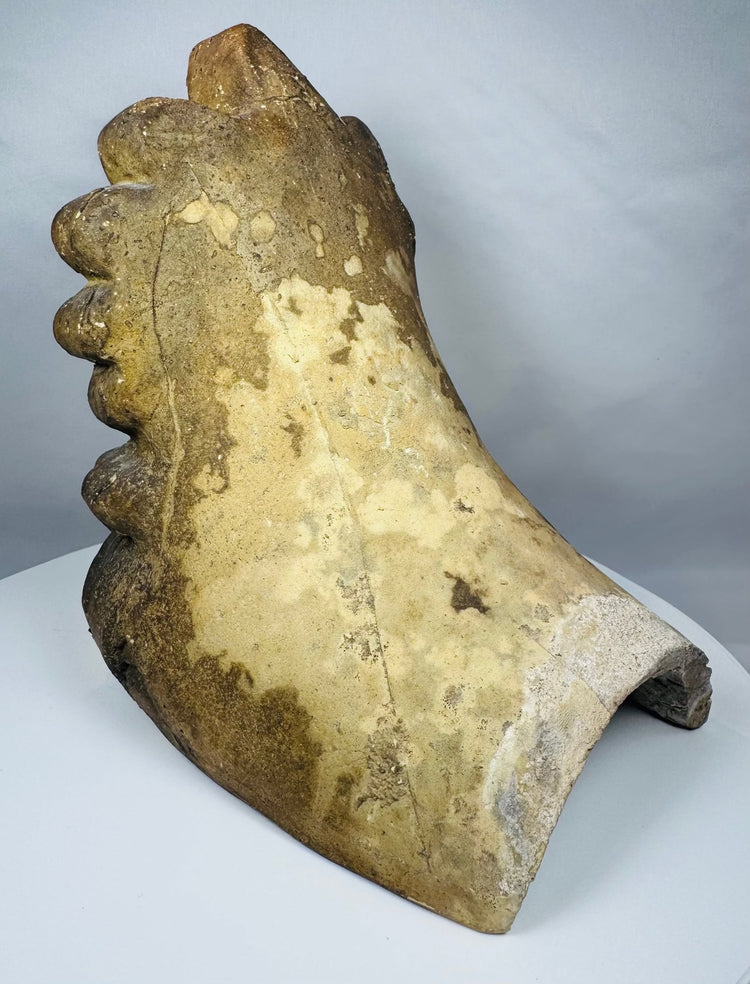
Originally mounted along the edges of tiled roofs, antefixes served both practical and decorative purposes, concealing roof tile joints while enhancing the visual impact of temples, villas, civic buildings, and affluent residences. During the late nineteenth and early twentieth centuries, Greece experienced a renewed interest in classical architectural forms, leading to the production of decorative terracotta roof ornaments inspired by ancient Greek prototypes.
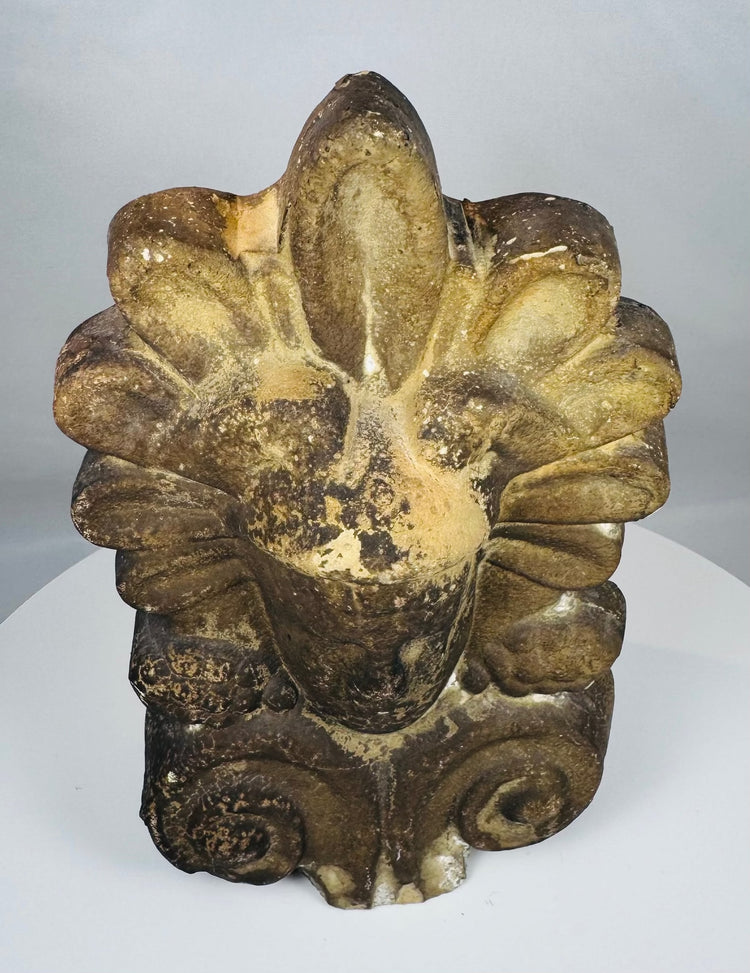
The sculptural design features a finely modeled face with calm, idealized features beneath a dramatic fan-shaped palmette motif. Large spiral volutes at the base evoke the decorative vocabulary of Classical and Hellenistic architecture, while the substantial hollow-backed construction reflects traditional architectural ceramic manufacturing techniques.
Rich weathering, mineral deposits, and surface patination accumulated through years of outdoor exposure contribute to the piece's authentic architectural character.
Features
- Authentic Greek terracotta architectural antefix (akrokeramo)
- Depicts Hermes/Mercury beneath a stylized palmette crown
- Decorative volute motifs at the base
- Hand-molded and kiln-fired ceramic construction
- Original architectural roof ornament
- Attractive weathered surface and natural patina
- Excellent display piece for architectural and classical collections
Cultural Significance
Antefixes were among the most recognizable decorative elements of classical architecture, adorning rooflines throughout the Greek and Roman worlds. Their revival during the nineteenth-century neoclassical movement reflected a widespread fascination with antiquity and classical aesthetics.
Architectural ornaments such as this served not only functional purposes but also communicated cultural identity, artistic taste, and an appreciation for the enduring legacy of ancient Mediterranean civilization. The continued production of antefixes during the neoclassical era demonstrates the lasting influence of Greek architectural traditions on modern design.
Condition
Normal wear consistent with age and outdoor architectural use. Interior exhibits a shallow crack. Small crack present to the rear edge. Surface weathering, mineral accretions, and patination throughout.
Dimensions (Approximate)
Height: 8.25 in
Width: 7 in
Length: 5.25 in
Age (Approximate)
105–145 years old
Provenance
From a private collection in Sarasota, Florida, USA.
Learn More
Discover the history and architectural purpose of antefixes through Antefix – Architectural Roof Ornament
Explore Our Collection of Statues, Figures, Carvings & Ancient Art
Description
Historical Context & Origin
Region: Greece
Material: Terracotta (Architectural Ceramic)
Period: Late 19th to Early 20th Century
Description
This impressive Greek terracotta antefix (akrokeramo) represents a striking example of neoclassical architectural ornament inspired by the artistic traditions of the ancient Mediterranean world. Hand-formed in fired clay, the piece depicts a serene human face, likely representing Hermes, the messenger god of Greek mythology, or his Roman counterpart Mercury, framed beneath a radiating palmette crown and flanked by scrolling volutes.
Originally mounted along the edges of tiled roofs, antefixes served both practical and decorative purposes, concealing roof tile joints while enhancing the visual impact of temples, villas, civic buildings, and affluent residences. During the late nineteenth and early twentieth centuries, Greece experienced a renewed interest in classical architectural forms, leading to the production of decorative terracotta roof ornaments inspired by ancient Greek prototypes.
The sculptural design features a finely modeled face with calm, idealized features beneath a dramatic fan-shaped palmette motif. Large spiral volutes at the base evoke the decorative vocabulary of Classical and Hellenistic architecture, while the substantial hollow-backed construction reflects traditional architectural ceramic manufacturing techniques.
Rich weathering, mineral deposits, and surface patination accumulated through years of outdoor exposure contribute to the piece's authentic architectural character.
Features
- Authentic Greek terracotta architectural antefix (akrokeramo)
- Depicts Hermes/Mercury beneath a stylized palmette crown
- Decorative volute motifs at the base
- Hand-molded and kiln-fired ceramic construction
- Original architectural roof ornament
- Attractive weathered surface and natural patina
- Excellent display piece for architectural and classical collections
Cultural Significance
Antefixes were among the most recognizable decorative elements of classical architecture, adorning rooflines throughout the Greek and Roman worlds. Their revival during the nineteenth-century neoclassical movement reflected a widespread fascination with antiquity and classical aesthetics.
Architectural ornaments such as this served not only functional purposes but also communicated cultural identity, artistic taste, and an appreciation for the enduring legacy of ancient Mediterranean civilization. The continued production of antefixes during the neoclassical era demonstrates the lasting influence of Greek architectural traditions on modern design.
Condition
Normal wear consistent with age and outdoor architectural use. Interior exhibits a shallow crack. Small crack present to the rear edge. Surface weathering, mineral accretions, and patination throughout.
Dimensions (Approximate)
Height: 8.25 in
Width: 7 in
Length: 5.25 in
Age (Approximate)
105–145 years old
Provenance
From a private collection in Sarasota, Florida, USA.
Learn More
Discover the history and architectural purpose of antefixes through Antefix – Architectural Roof Ornament
Explore Our Collection of Statues, Figures, Carvings & Ancient Art
You May Also Like
