



Han Dynasty Boshanlu Incense Burner | Ancient China | 206 BCE–220 CE
Couldn't load pickup availability


Han Dynasty Boshanlu Incense Burner | Ancient China | 206 BCE–220 CE
Description
More
Less
Historical Context & Origin
Region: China
Culture: Han Dynasty
Material: Grey earthenware with traces of red pigment
Period: Han Dynasty, 206 BCE–220 CE
Description
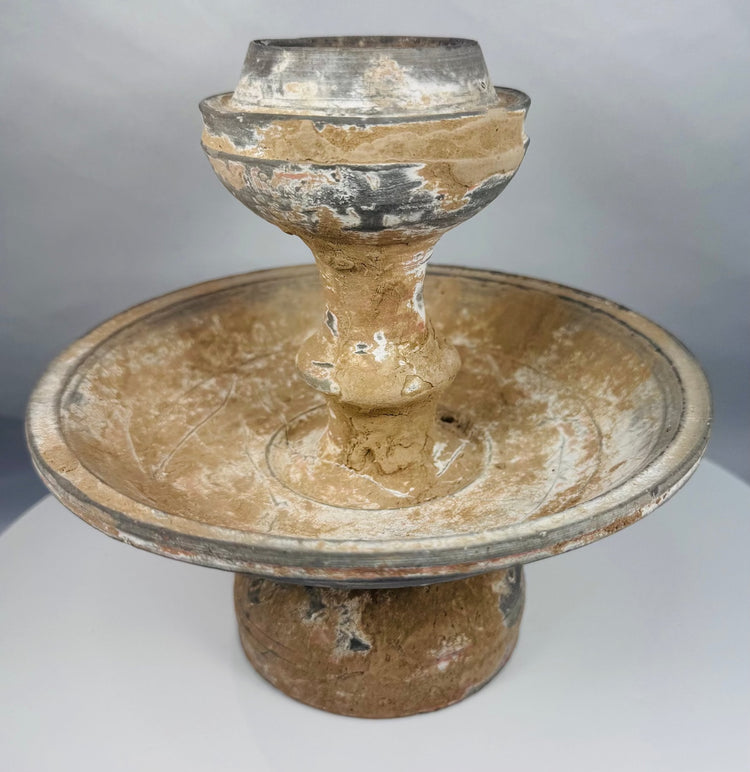
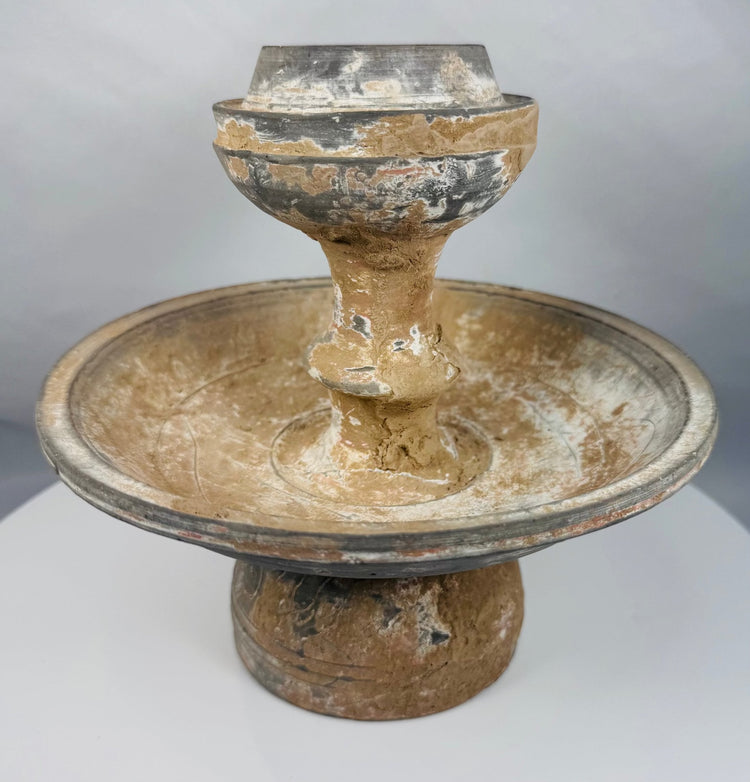
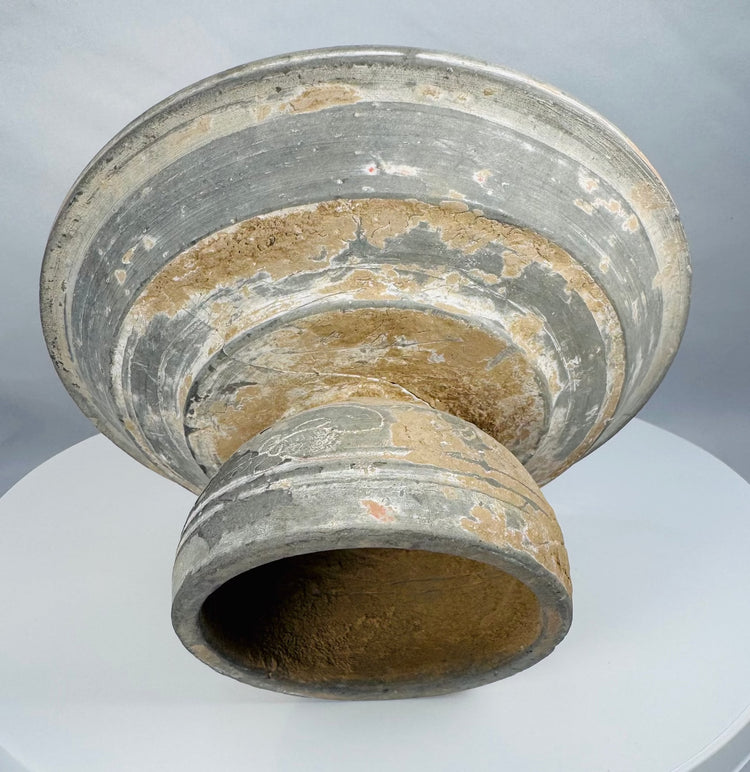
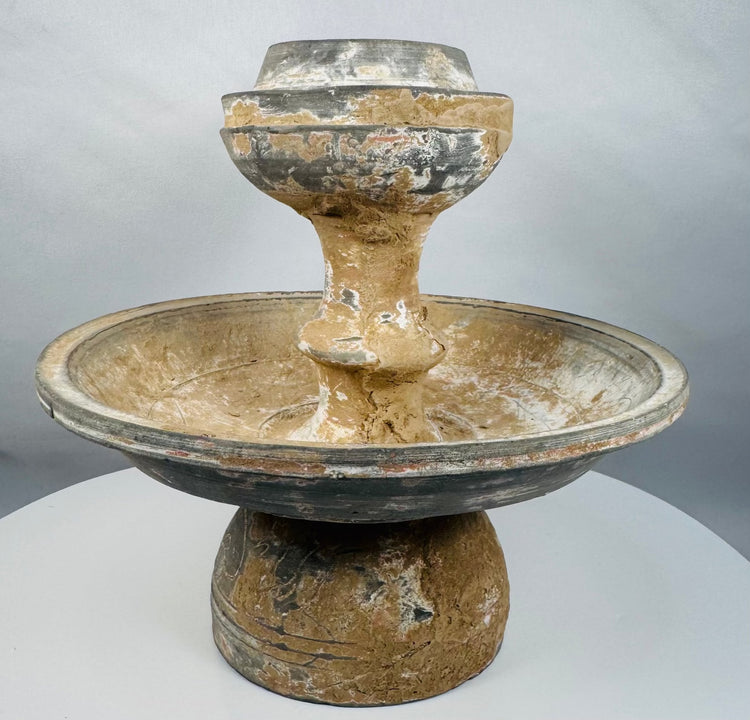
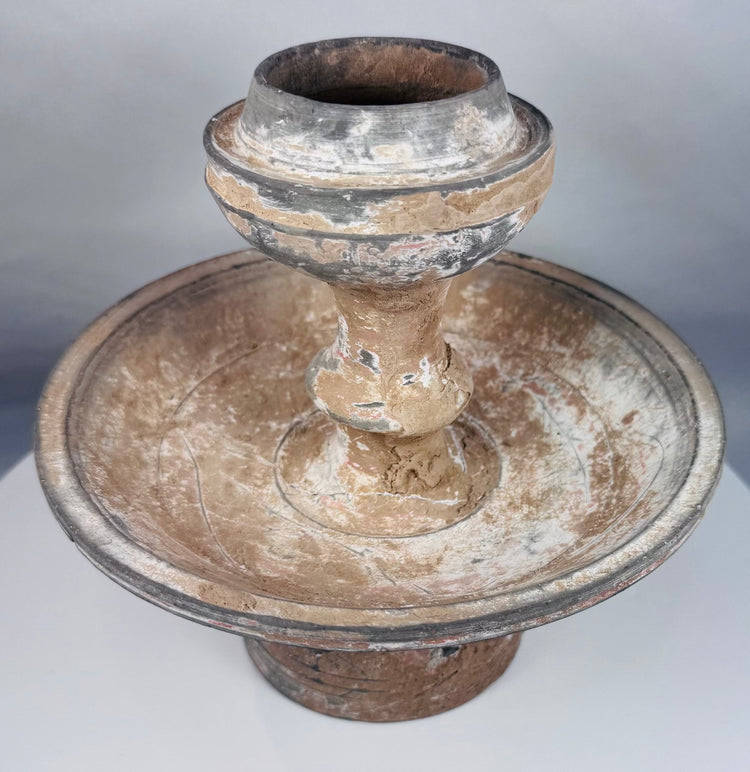
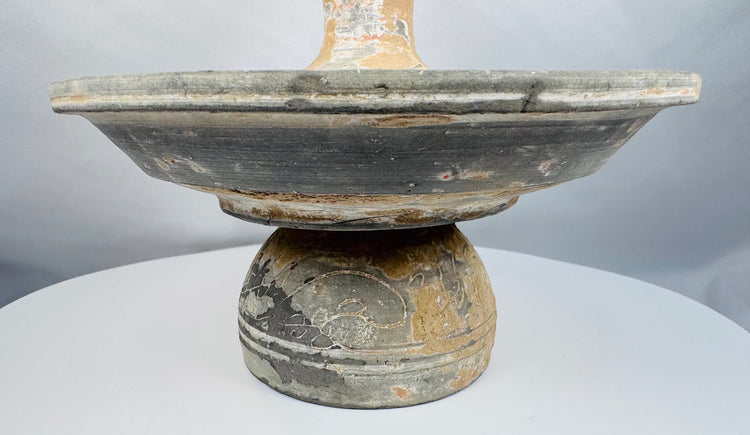
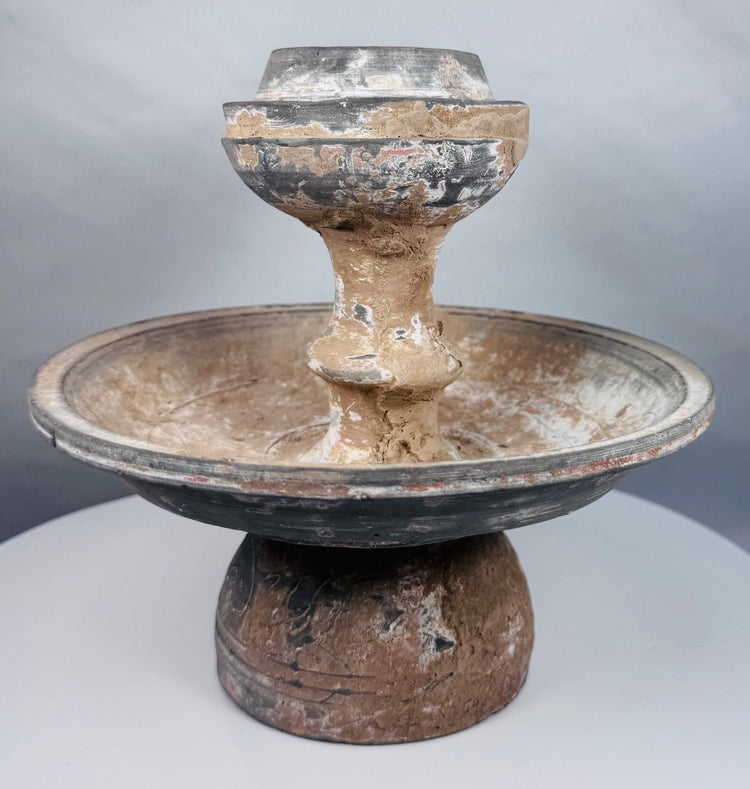
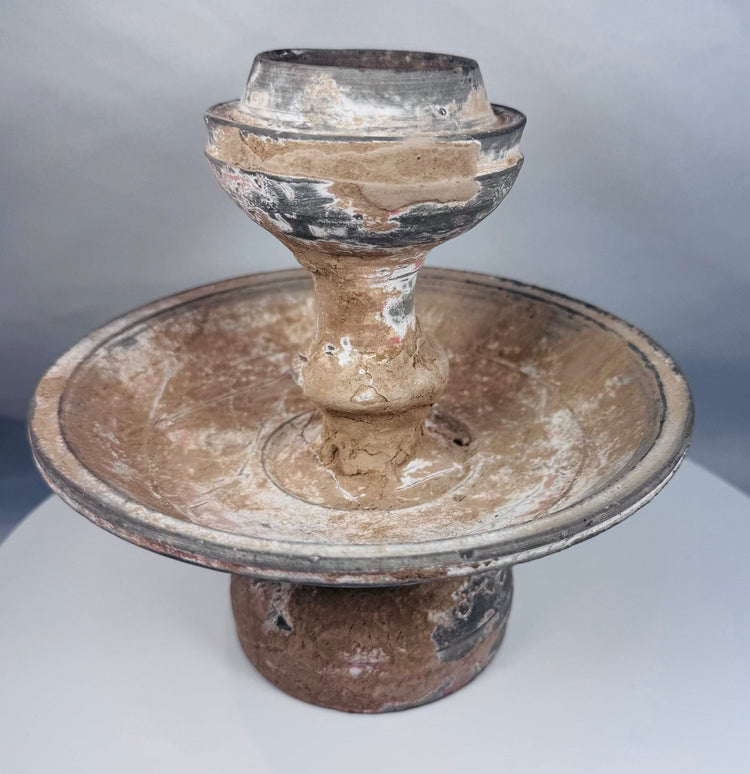
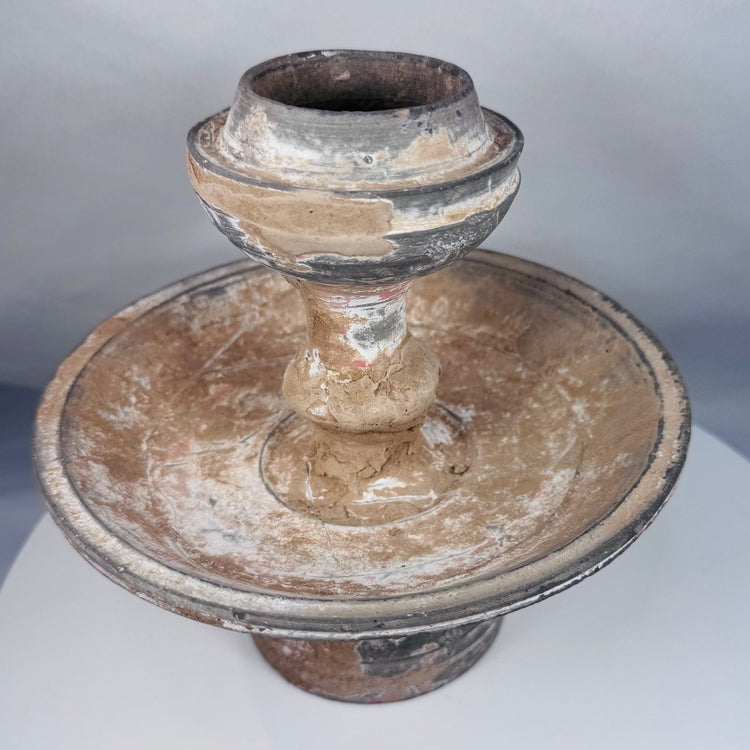
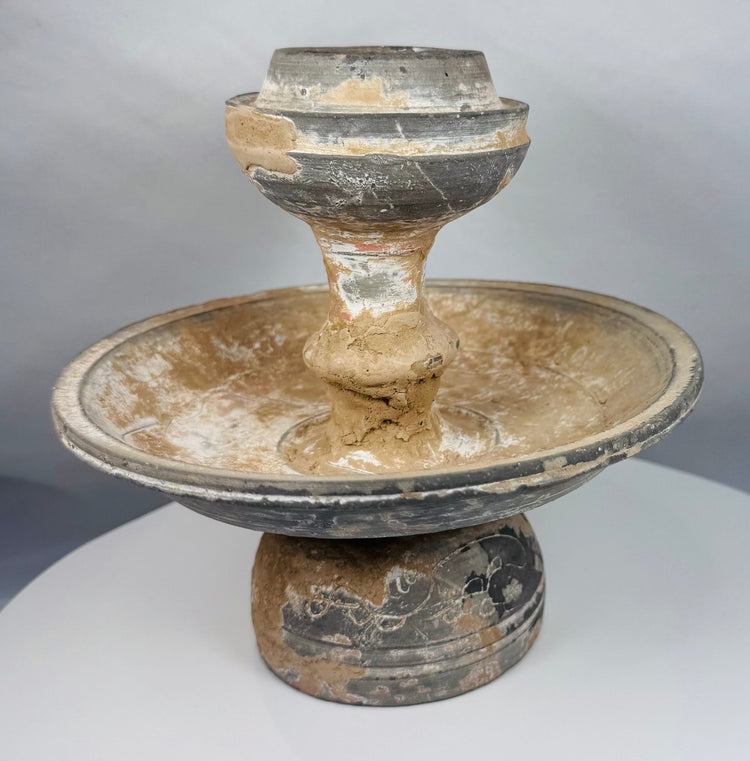
This ancient Chinese boshanlu-type incense burner dates to the Han dynasty, 206 BCE–220 CE. Wheel-made in grey earthenware, the vessel was constructed from several separately formed components joined together to create its distinctive tiered profile.
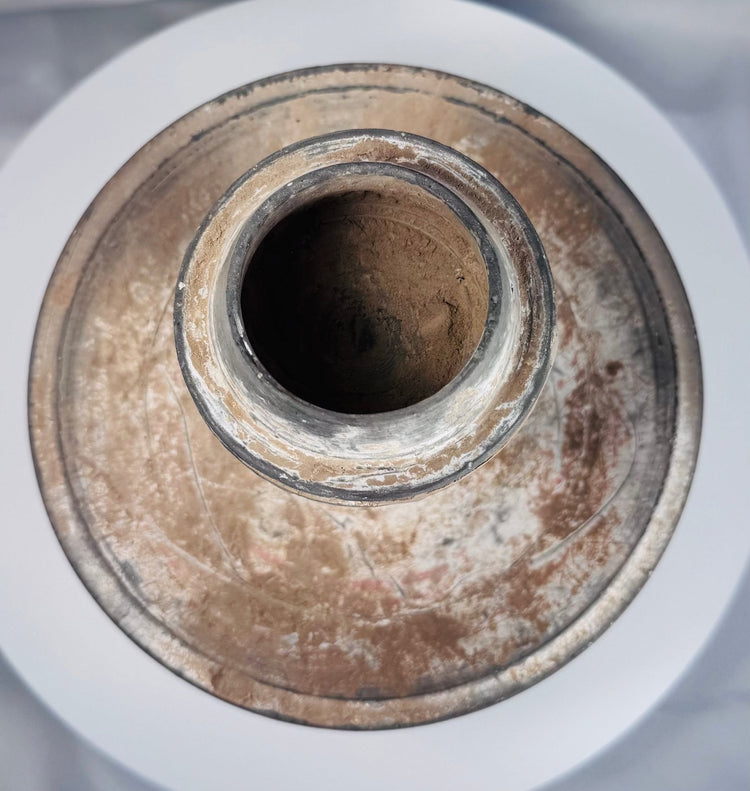
The base consists of a bell-shaped foot with incised decoration, supporting a broad shallow dish with a moulded rim. Above this rises a stem with a pronounced knop, terminating in a cup with a collar and narrow opening.
Traces of the original red pigment remain visible on portions of the surface. The burner’s original cover is no longer present.
The form belongs to the broader tradition of boshanlu incense burners, an important category of Han-period ritual and domestic objects associated with the burning of incense.
Features
- Wheel-made grey earthenware
- Constructed from several joined components
- Bell-shaped foot with incised decoration
- Broad shallow dish with moulded rim
- Central stem with decorative knop
- Upper cup with collar and narrow mouth
- Traces of original red pigment
- Original cover no longer present
Cultural Significance
Incense burners were important objects in Han dynasty China and were used in domestic, funerary, and ceremonial settings. The boshanlu form became particularly associated with Han-period incense culture and the development of increasingly elaborate vessels designed for burning aromatic substances.
This example preserves the characteristic multi-part construction and elevated profile associated with the type, while its surviving pigment provides evidence of its original decorative treatment.
Condition
Ancient condition with heavy surface wear, mineral accretions, areas of surface loss, and evidence of past repair. Traces of red pigment survive in places. The original cover is missing. Additional age-related abrasions and encrustation are present throughout.
Dimensions (Approximate)
Height: 7.25 in
Diameter: 7.25 in
Age (Approximate)
2,600–3,200 years old
Provenance
Acquired from a Palm Beach, Florida estate collection. The collection contained a substantial assemblage of ancient and historical oil lamps assembled over several decades.
The piece was later examined by Luca Salvaggio, an Italian archaeologist and specialist in ancient Mediterranean and Near Eastern material. He holds a Postgraduate Diploma from the Italian Archaeological School at Athens (IASA) and is accredited for preventive archaeology by the Italian Ministry of Culture (MiC). Salvaggio identified the vessel as a Chinese Han dynasty boshanlu-type incense burner, dating to 206 BCE–220 CE, based on its wheel-made grey earthenware construction, bell-shaped foot, broad shallow dish, central stem with knop, upper cup, and surviving traces of red pigment.
Learn More
Explore research into ancient Near Eastern ceremonial vessels and residue analysis through Scientific Reports
Browse our curated Middle Eastern Antiquities & Ancient Art Collection
Description
Historical Context & Origin
Region: China
Culture: Han Dynasty
Material: Grey earthenware with traces of red pigment
Period: Han Dynasty, 206 BCE–220 CE
Description
This ancient Chinese boshanlu-type incense burner dates to the Han dynasty, 206 BCE–220 CE. Wheel-made in grey earthenware, the vessel was constructed from several separately formed components joined together to create its distinctive tiered profile.
The base consists of a bell-shaped foot with incised decoration, supporting a broad shallow dish with a moulded rim. Above this rises a stem with a pronounced knop, terminating in a cup with a collar and narrow opening.
Traces of the original red pigment remain visible on portions of the surface. The burner’s original cover is no longer present.
The form belongs to the broader tradition of boshanlu incense burners, an important category of Han-period ritual and domestic objects associated with the burning of incense.
Features
- Wheel-made grey earthenware
- Constructed from several joined components
- Bell-shaped foot with incised decoration
- Broad shallow dish with moulded rim
- Central stem with decorative knop
- Upper cup with collar and narrow mouth
- Traces of original red pigment
- Original cover no longer present
Cultural Significance
Incense burners were important objects in Han dynasty China and were used in domestic, funerary, and ceremonial settings. The boshanlu form became particularly associated with Han-period incense culture and the development of increasingly elaborate vessels designed for burning aromatic substances.
This example preserves the characteristic multi-part construction and elevated profile associated with the type, while its surviving pigment provides evidence of its original decorative treatment.
Condition
Ancient condition with heavy surface wear, mineral accretions, areas of surface loss, and evidence of past repair. Traces of red pigment survive in places. The original cover is missing. Additional age-related abrasions and encrustation are present throughout.
Dimensions (Approximate)
Height: 7.25 in
Diameter: 7.25 in
Age (Approximate)
2,600–3,200 years old
Provenance
Acquired from a Palm Beach, Florida estate collection. The collection contained a substantial assemblage of ancient and historical oil lamps assembled over several decades.
The piece was later examined by Luca Salvaggio, an Italian archaeologist and specialist in ancient Mediterranean and Near Eastern material. He holds a Postgraduate Diploma from the Italian Archaeological School at Athens (IASA) and is accredited for preventive archaeology by the Italian Ministry of Culture (MiC). Salvaggio identified the vessel as a Chinese Han dynasty boshanlu-type incense burner, dating to 206 BCE–220 CE, based on its wheel-made grey earthenware construction, bell-shaped foot, broad shallow dish, central stem with knop, upper cup, and surviving traces of red pigment.
Learn More
Explore research into ancient Near Eastern ceremonial vessels and residue analysis through Scientific Reports
Browse our curated Middle Eastern Antiquities & Ancient Art Collection
You May Also Like
