

Hand-Carved West African | Spirit Mask with Open Mouth | Late 19th–Mid 20th Century
Couldn't load pickup availability


Hand-Carved West African | Spirit Mask with Open Mouth | Late 19th–Mid 20th Century
Description
More
Less
Historical Context & Origin
Region: West Africa
Material: Hand-carved hardwood with traces of pigment
Period: Late 19th–Mid 20th Century
Description
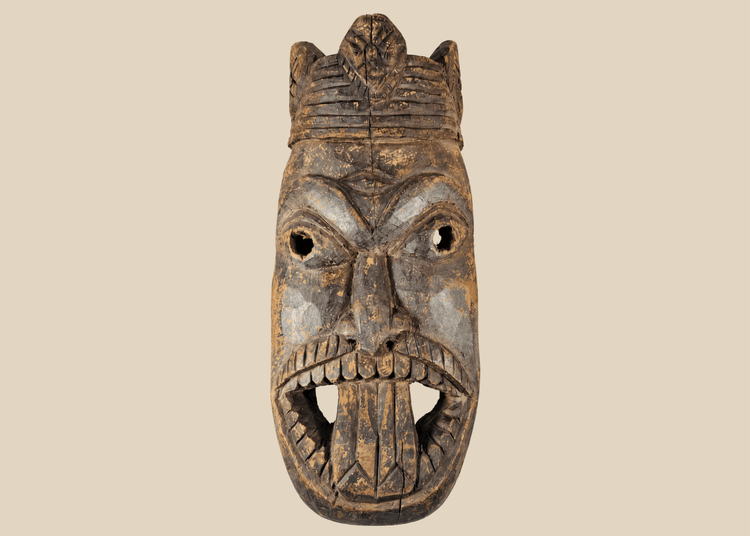
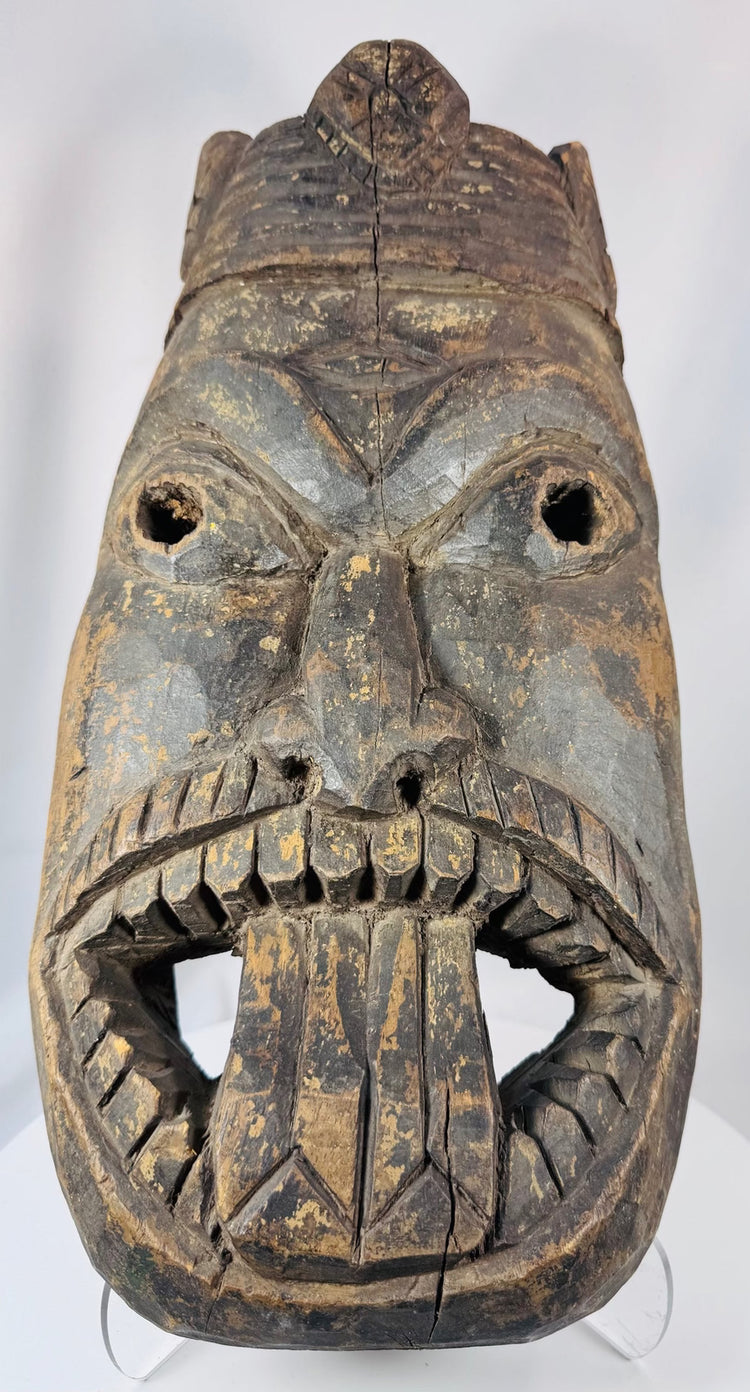
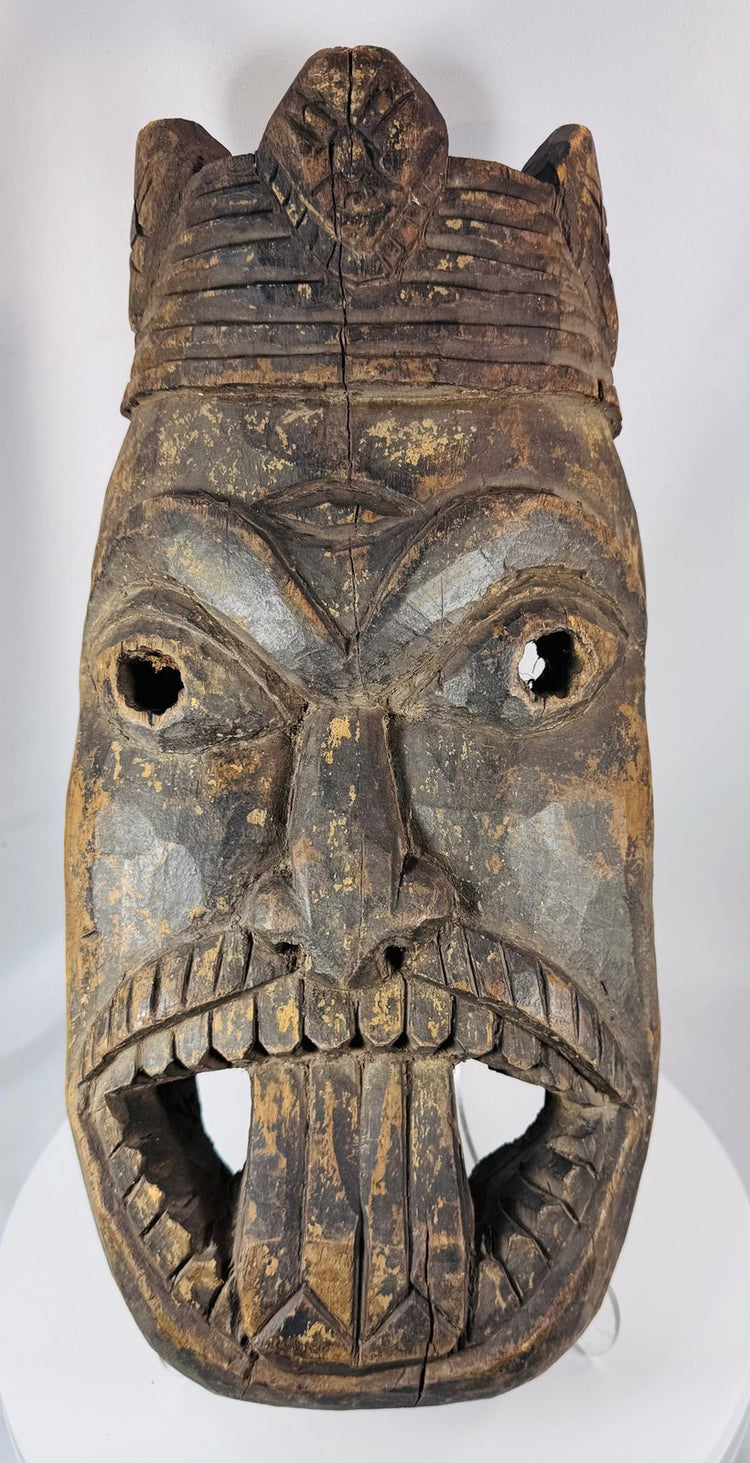
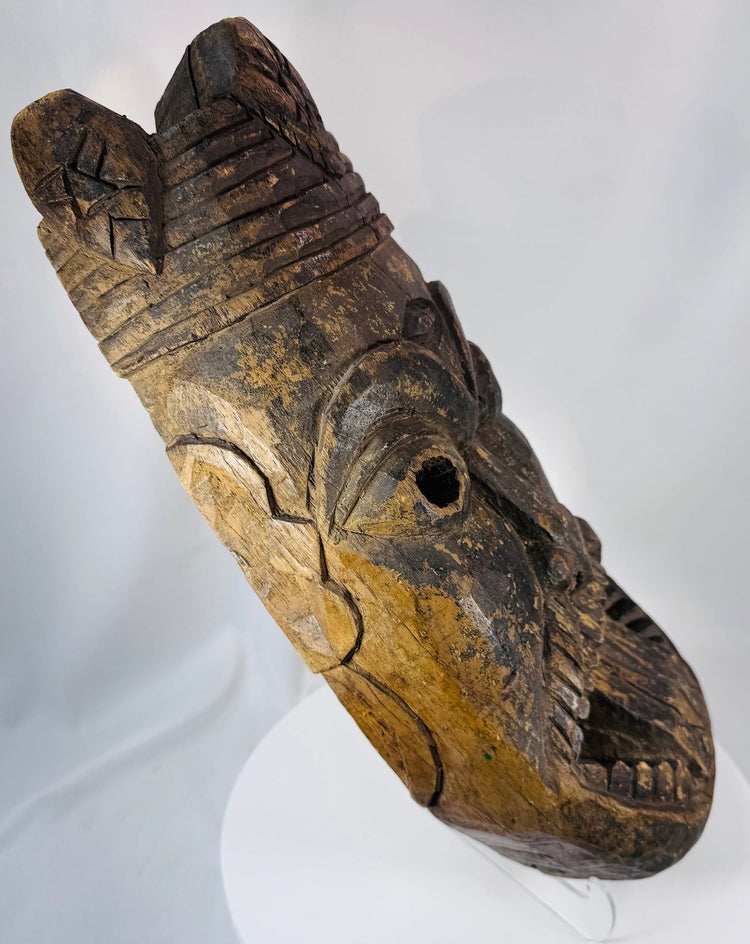
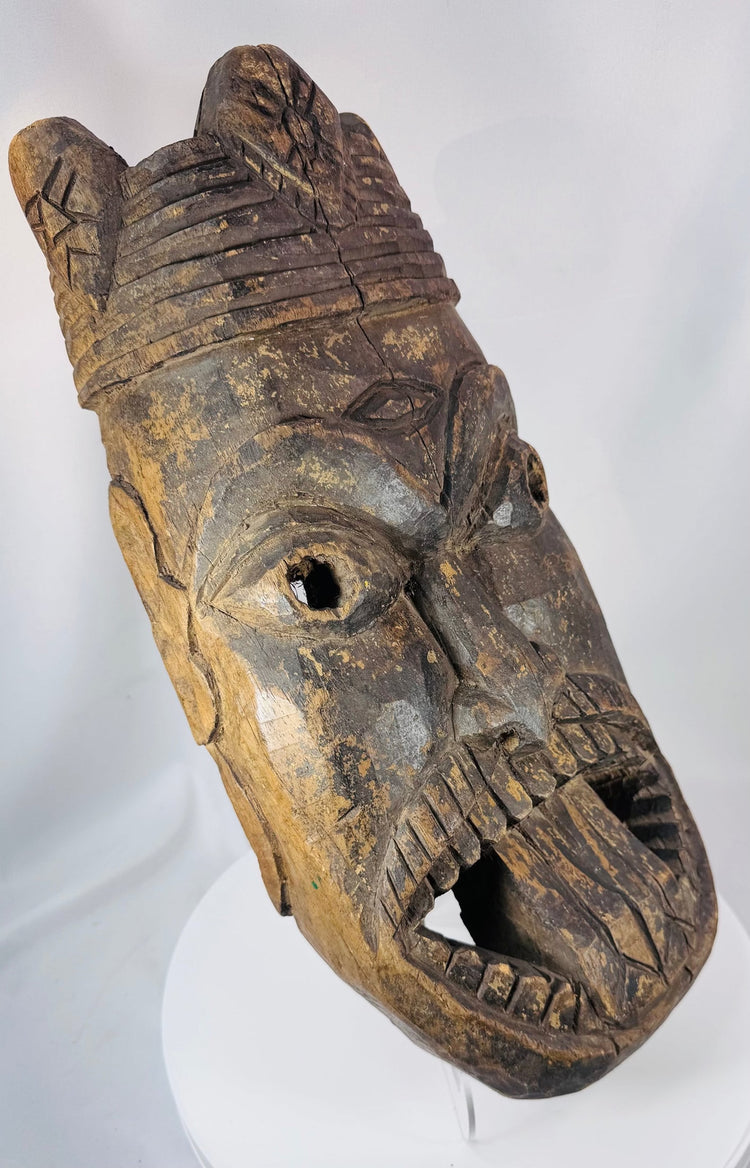
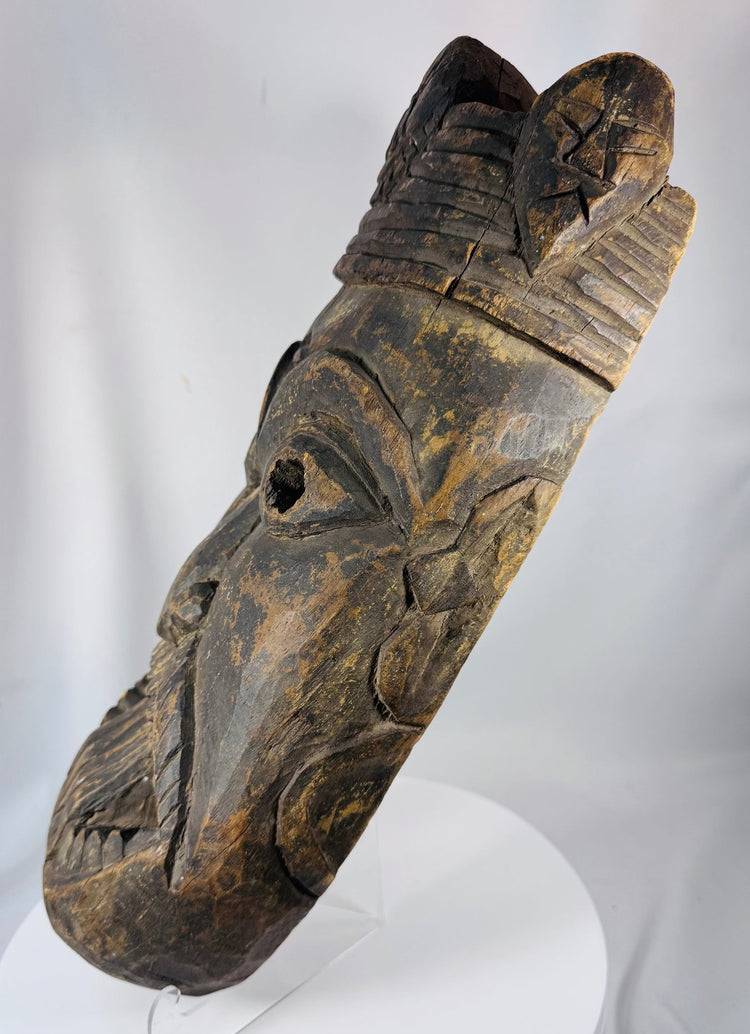
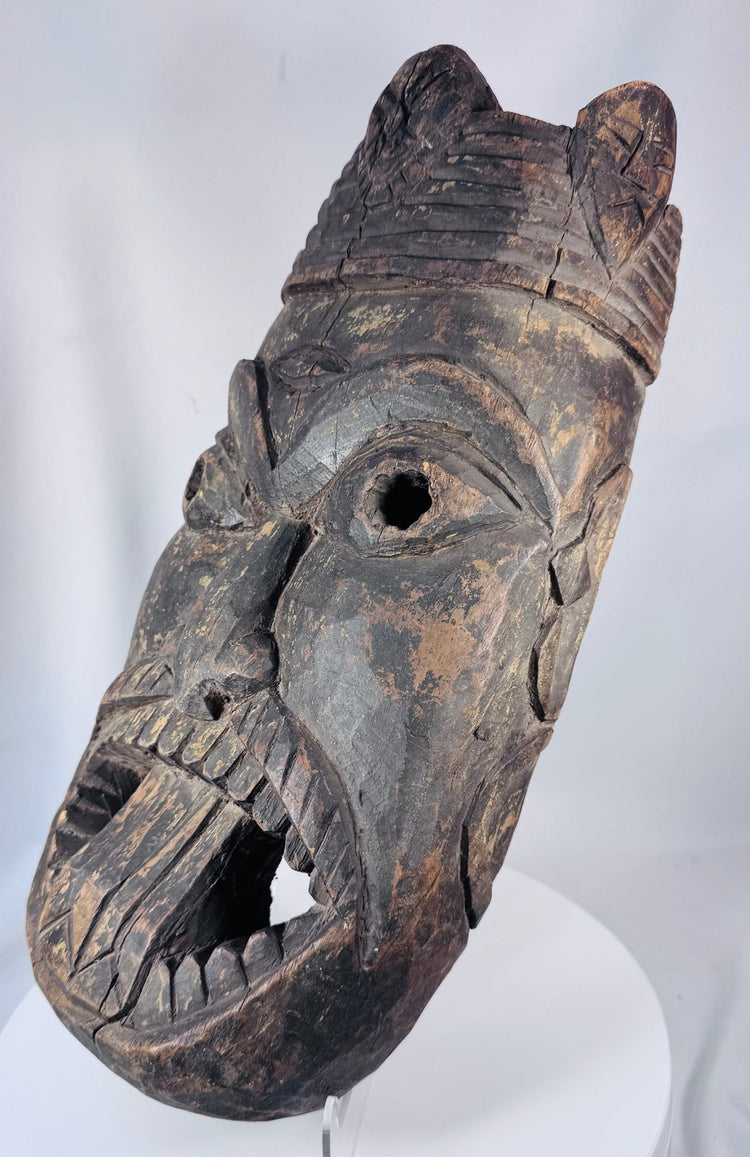
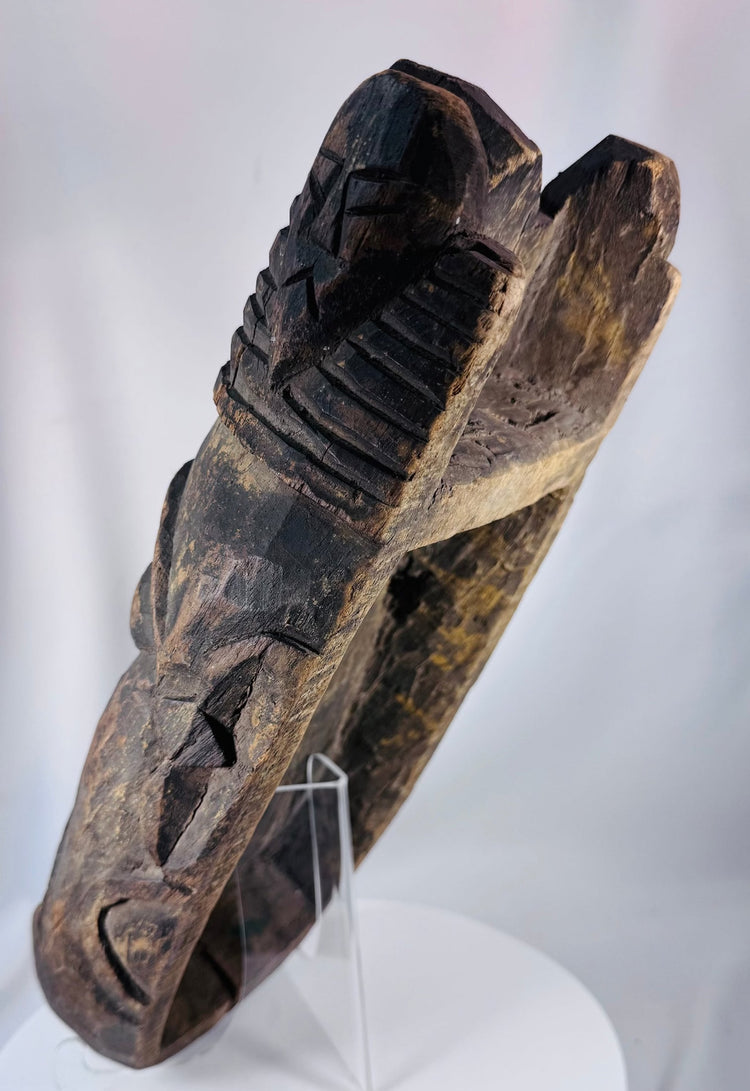
This powerful hand-carved wooden mask likely originates from West Africa and reflects the bold expressive forms associated with traditional ceremonial and ritual masking traditions. The mask features exaggerated facial characteristics including deeply recessed circular eyes, an elongated triangular nose, a wide open mouth with individually carved teeth, and a projecting tongue-like central element, all designed to create an imposing and spiritually charged appearance during ceremonial use.
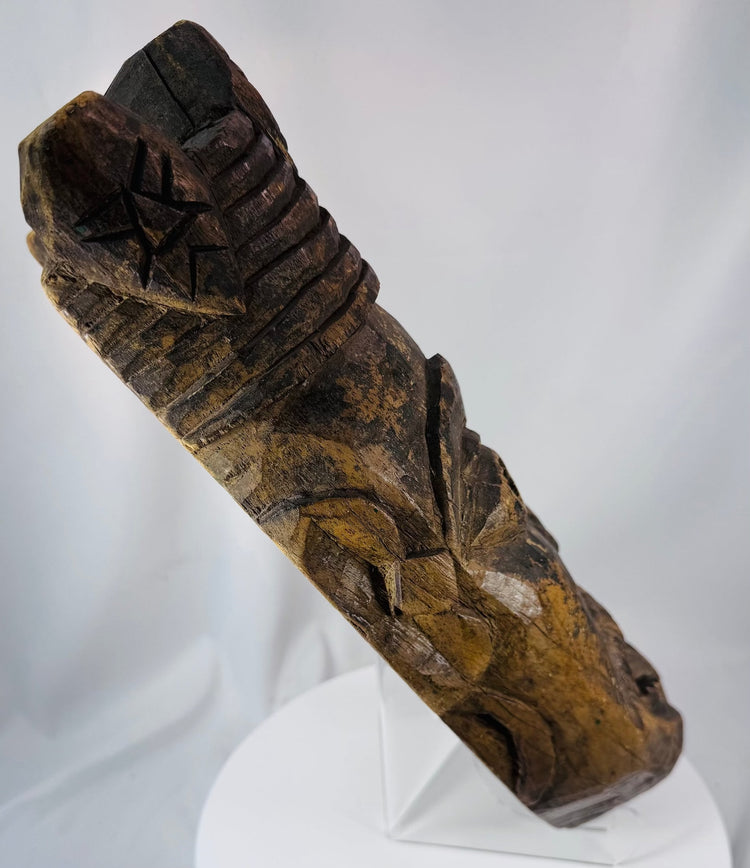
The forehead displays a carved third-eye motif beneath a tiered headdress-like crest, possibly symbolizing heightened spiritual awareness, ancestral power, or protective force. The dramatic facial composition and forceful expression strongly suggest the mask may have functioned in ritual dances, initiation ceremonies, spiritual performances, or communal ceremonial traditions where masks embodied ancestral spirits, protective beings, or supernatural entities.
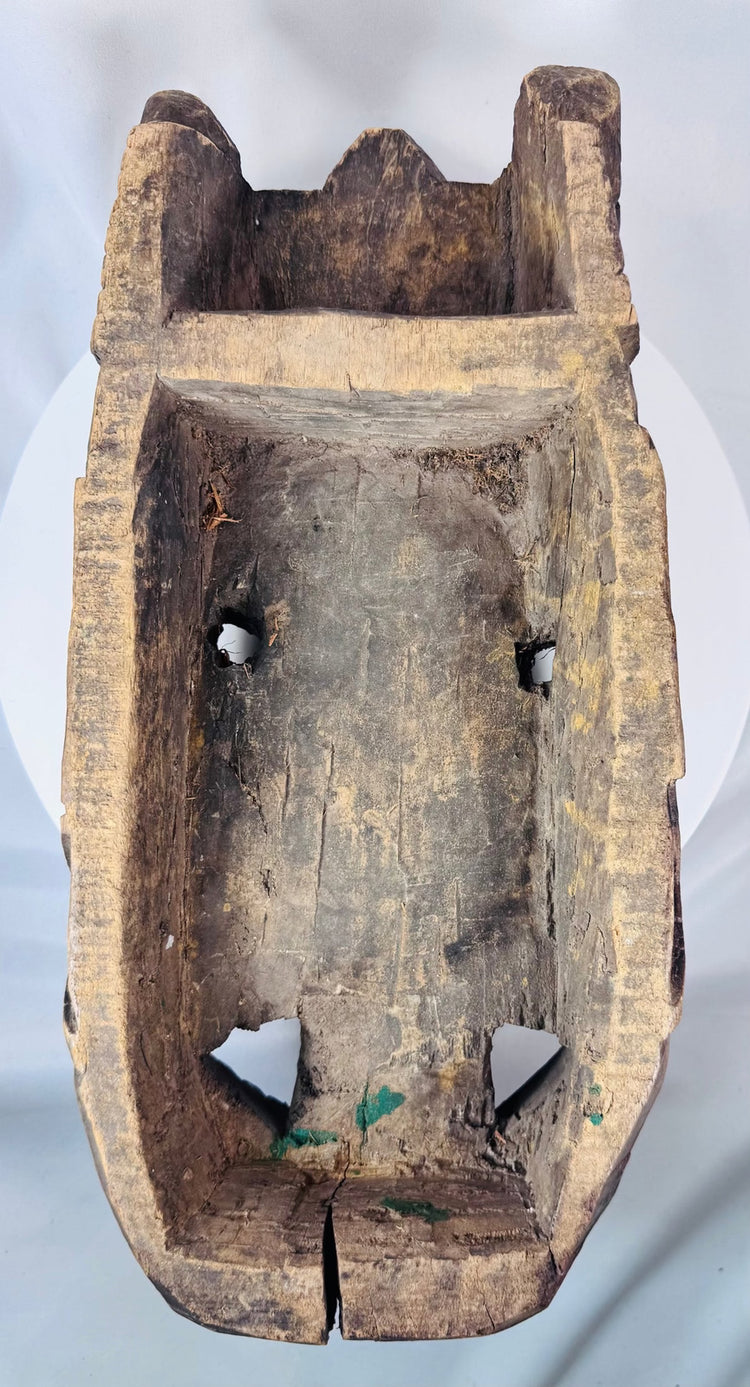
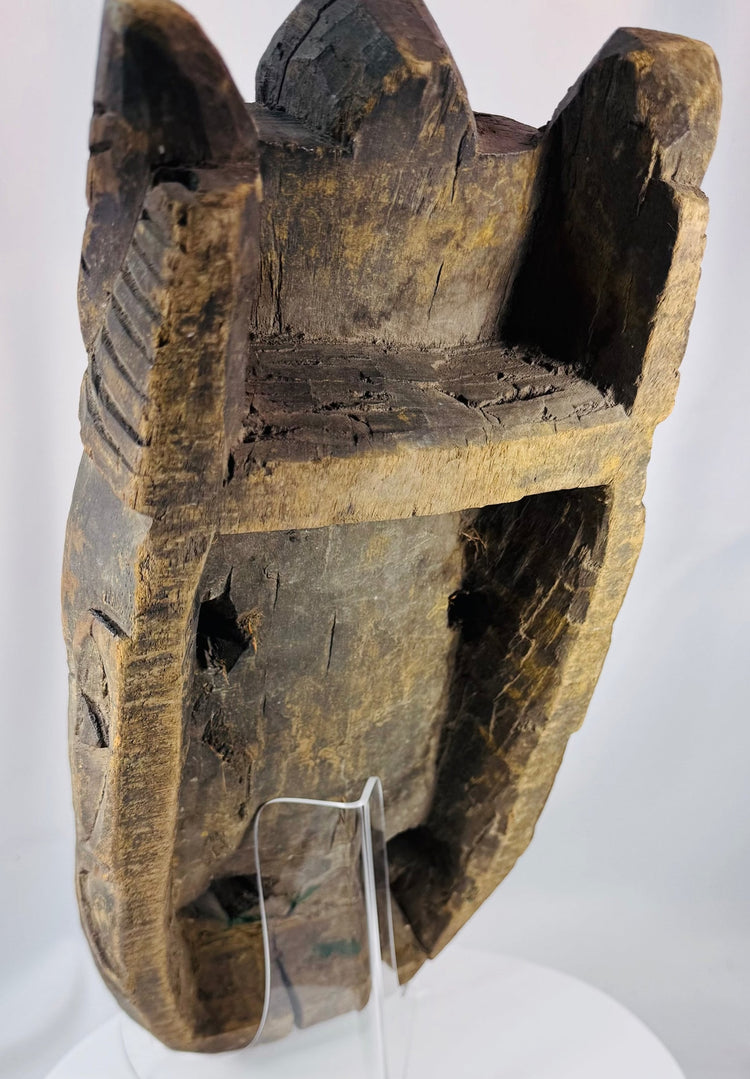
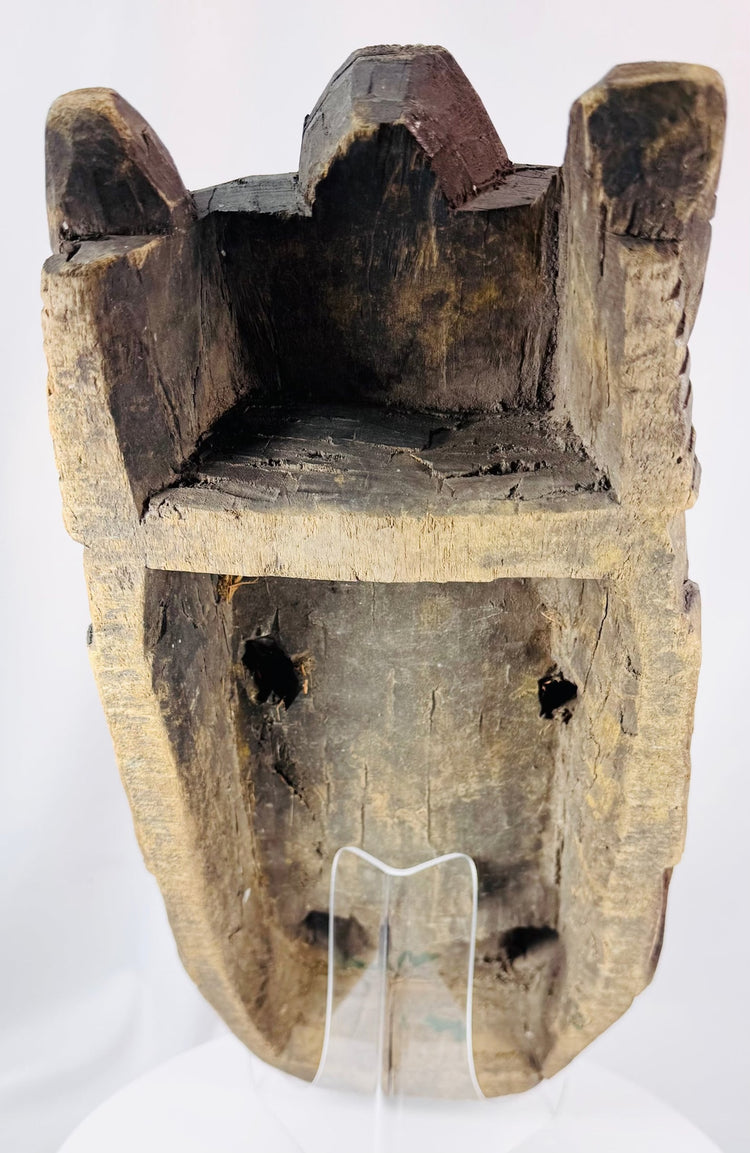
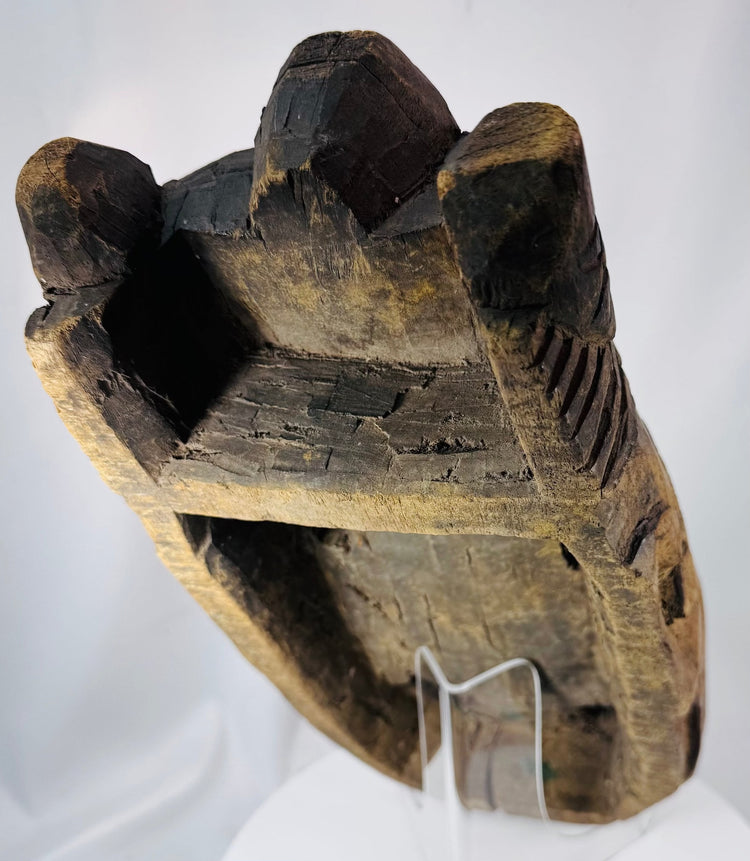
The interior is deeply hollowed by hand, showing extensive tool marks and age-related wear consistent with traditional carving methods. Remnants of worn surface pigmentation and darkened patina remain visible throughout the exterior, enhancing the mask’s strong sculptural presence and ethnographic character.
Features
- Hand-carved solid hardwood ceremonial mask
- Expressive stylized facial features with open mouth and carved teeth
- Carved third-eye motif and tiered headdress detail
- Deeply hollowed interior with visible hand-tool marks
- Worn original surface with aged patina and pigment remnants
- Strong tribal and ethnographic display presence
- Substantial sculptural appearance and visual impact
Cultural Significance
Masks throughout West Africa traditionally served important ceremonial, spiritual, and social functions. They were often used during initiations, funerary rites, seasonal ceremonies, ancestral commemorations, and ritual performances intended to connect communities with spiritual forces or ancestral beings.
The exaggerated facial features and commanding expression of this example likely reflect symbolic concepts of power, protection, transformation, or spiritual authority common within many African masking traditions.
Condition
Displays extensive age-related wear, surface abrasion, cracking, shrinkage, pigment loss, and structural irregularities consistent with age and traditional use. Losses around the eye openings and natural splitting throughout the wood are present. The interior shows heavy wear and hand-carved tool marks. Overall retains strong visual integrity and exceptional ethnographic character.
Dimensions (Approximate)
Height: 16.5 in
Width: 7.5 in
Depth: 4.25 in
Age (Approximate)
75–130 years old
Provenance
From a private collection in Philadelphia, Pennsylvania, USA.
Learn More
Examine the role of masks and masquerades in African ceremonial traditions through Minneapolis Institute of Art
View our curated Tribal & Indigenous Artifacts Collection
Description
Historical Context & Origin
Region: West Africa
Material: Hand-carved hardwood with traces of pigment
Period: Late 19th–Mid 20th Century
Description
This powerful hand-carved wooden mask likely originates from West Africa and reflects the bold expressive forms associated with traditional ceremonial and ritual masking traditions. The mask features exaggerated facial characteristics including deeply recessed circular eyes, an elongated triangular nose, a wide open mouth with individually carved teeth, and a projecting tongue-like central element, all designed to create an imposing and spiritually charged appearance during ceremonial use.
The forehead displays a carved third-eye motif beneath a tiered headdress-like crest, possibly symbolizing heightened spiritual awareness, ancestral power, or protective force. The dramatic facial composition and forceful expression strongly suggest the mask may have functioned in ritual dances, initiation ceremonies, spiritual performances, or communal ceremonial traditions where masks embodied ancestral spirits, protective beings, or supernatural entities.
The interior is deeply hollowed by hand, showing extensive tool marks and age-related wear consistent with traditional carving methods. Remnants of worn surface pigmentation and darkened patina remain visible throughout the exterior, enhancing the mask’s strong sculptural presence and ethnographic character.
Features
- Hand-carved solid hardwood ceremonial mask
- Expressive stylized facial features with open mouth and carved teeth
- Carved third-eye motif and tiered headdress detail
- Deeply hollowed interior with visible hand-tool marks
- Worn original surface with aged patina and pigment remnants
- Strong tribal and ethnographic display presence
- Substantial sculptural appearance and visual impact
Cultural Significance
Masks throughout West Africa traditionally served important ceremonial, spiritual, and social functions. They were often used during initiations, funerary rites, seasonal ceremonies, ancestral commemorations, and ritual performances intended to connect communities with spiritual forces or ancestral beings.
The exaggerated facial features and commanding expression of this example likely reflect symbolic concepts of power, protection, transformation, or spiritual authority common within many African masking traditions.
Condition
Displays extensive age-related wear, surface abrasion, cracking, shrinkage, pigment loss, and structural irregularities consistent with age and traditional use. Losses around the eye openings and natural splitting throughout the wood are present. The interior shows heavy wear and hand-carved tool marks. Overall retains strong visual integrity and exceptional ethnographic character.
Dimensions (Approximate)
Height: 16.5 in
Width: 7.5 in
Depth: 4.25 in
Age (Approximate)
75–130 years old
Provenance
From a private collection in Philadelphia, Pennsylvania, USA.
Learn More
Examine the role of masks and masquerades in African ceremonial traditions through Minneapolis Institute of Art
View our curated Tribal & Indigenous Artifacts Collection
You May Also Like
