



Antique European Renaissance Carved Wooden Chest | Italy or Spain | Circa 1550 – 1650
Couldn't load pickup availability


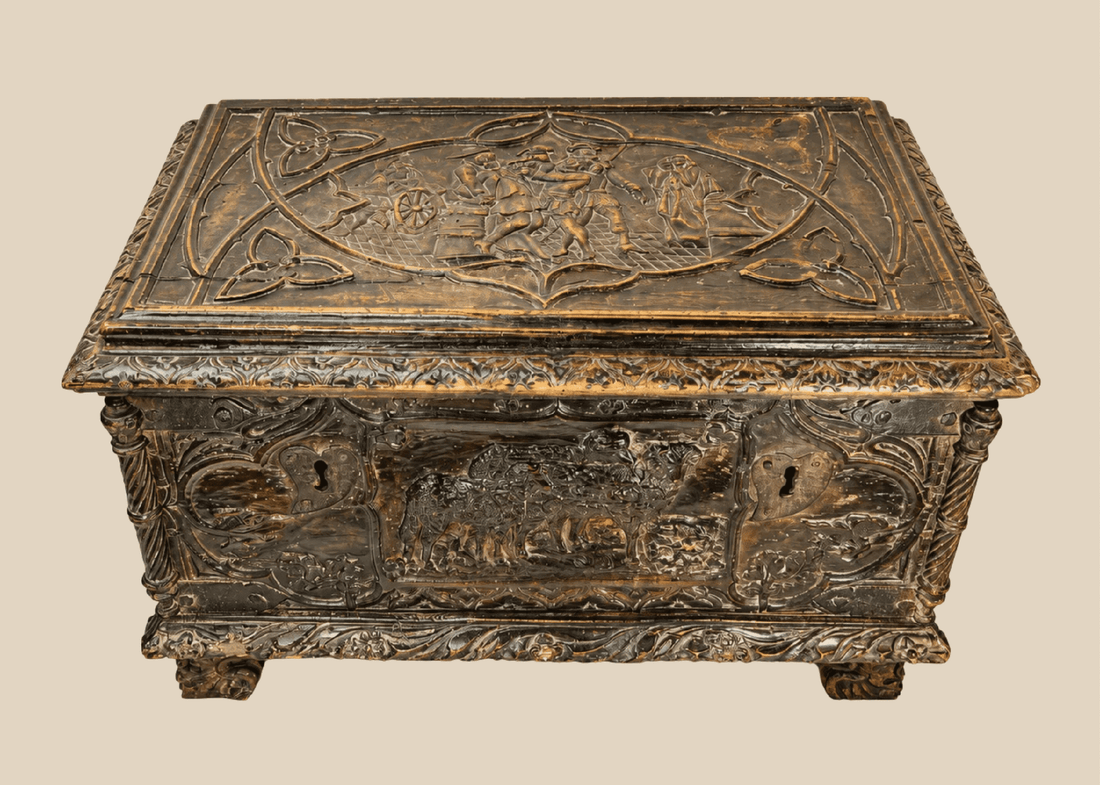


Antique European Renaissance Carved Wooden Chest | Italy or Spain | Circa 1550 – 1650
Description
More
Less
Historical Context & Origin
Region: Europe; attributed to Northern Italy or Spain
Material: Hand-carved wood with iron fittings and locking hardware
Period: Late Renaissance to Early Baroque, circa 1550–1650 CE
Description
An impressive and richly decorated antique European carved wooden chest, attributed to Northern Italy or Spain and dating to circa 1550–1650 CE. Combining elaborate sculptural decoration with practical storage functionality, this substantial chest reflects the artistic traditions and skilled woodworking techniques associated with Renaissance and early Baroque European furniture.
Constructed from solid wood, the chest features extensively carved surfaces incorporating figural compositions, scrolling foliage, architectural elements, and classical decorative motifs. The rectangular hinged lid is particularly striking, displaying an elaborate narrative relief enclosed within a shaped ornamental border, surrounded by flowing foliate scrollwork and geometric detailing.
The front panel features additional sculptural decoration, including human figures, animals, and stylized vegetation, arranged within a deeply carved architectural composition. Decorative spiral columns frame the corners, while iron keyhole plates and traditional hardware emphasize the chest's original function as a secure household storage object.
The side panels continue the decorative treatment with carved reliefs and iron carrying handles. The chest rests upon ornamental carved feet, adding architectural character and elevating the body above the supporting surface.
The interior reveals traditional wooden construction, substantial iron strap hinges, and a covered side compartment historically used for separating smaller valuables or personal possessions. The darkened wooden surfaces retain a rich, naturally aged appearance, with variations in colour, surface wear, and patination highlighting the depth and detail of the original carving.
Chests of this general form were used throughout Renaissance Europe for storing textiles, documents, valuables, and personal belongings. Their elaborate ornamentation often reflected the owner's social standing, personal taste, and appreciation for decorative craftsmanship.
Features
- Traditional late Renaissance to early Baroque decorative characteristics
- Elaborately carved hinged lid with figural and foliate relief decoration
- Front panel featuring human figures, animals, and ornamental scrollwork
- Decorative spiral corner columns and architectural border detailing
- Carved side panels with traditional iron carrying handles
- Iron keyhole plates and substantial interior strap hinges
- Covered wooden side compartment for smaller personal possessions
- Ornamental carved feet supporting the rectangular chest
- Naturally aged wooden surfaces with dark patination and historic wear
Cultural Significance
During the Renaissance and early Baroque periods, elaborately decorated wooden chests were important furnishings within European households, serving both practical and symbolic purposes.
In Italy, richly ornamented chests known as cassoni were frequently associated with marriage traditions, household wealth, and family identity. Related forms of storage chests were used throughout Spain and other parts of Europe for safeguarding textiles, documents, jewellery, and personal belongings.
The decorative programs of these objects often incorporated mythological scenes, biblical subjects, animals, classical figures, and intricate foliate motifs. Such ornamentation reflected the influence of Renaissance humanism, architectural design, and the revival of classical artistic traditions.
Craftsmen employed sophisticated carving techniques to transform functional furniture into visually impressive household objects, with the quality and complexity of the decoration often corresponding to the intended owner's wealth and social position.
This chest's sculptural panels, ornamental columns, and traditional construction provide a compelling example of the decorative vocabulary associated with historic European furniture. Its surviving craftsmanship offers insight into the relationship between practical domestic furnishings and artistic expression during this period.
Condition
Antique condition, exhibiting considerable age-related wear, surface deterioration, and evidence of historical repairs consistent with a chest of substantial attributed age.
The wooden surfaces display extensive patination, abrasions, scratches, and localized losses to the original finish. The carved decorative panels retain considerable sculptural detail, although raised edges and projecting elements exhibit areas of wear, small chips, and minor losses.
Visible cracks, age-related separations, and irregularities in the wooden construction are present, together with numerous small holes and areas of channelled damage consistent with historical wood-boring insect activity. Current insect activity has not been assessed.
The underside of the lid exhibits evidence of previous repairs, including inserted wooden sections and irregular joins. The iron hinges, handles, and locking fittings display oxidation, surface corrosion, and age-related discolouration.
The carved feet show wear and evidence of historical intervention or repair. The interior retains an aged, unfinished appearance, with visible construction details and a covered side compartment.
Dimensions (Approximate)
Width: 28.25 in
Height: 16.5 in
Age (Approximate)
375–475 years old
Provenance
Previously part of a private collection in New York, New York, USA, having been acquired from the Manhattan Art & Antiques Center (MAAC), located in Manhattan, New York.
The Manhattan Art & Antiques Center is an established destination for collectors, bringing together independent galleries and specialized dealers offering fine art, antiques, historical artifacts, and decorative objects from various periods and cultures.
Learn More
Explore comparable Renaissance carved wooden chests and caskets preserved in international museum collections. These examples provide valuable insight into traditional European woodworking techniques, decorative craftsmanship, and the artistic styles associated with the 16th century.
The Metropolitan Museum of Art — Italian Renaissance Carved Wooden Casket
Tuscany, Italy (Attributed) | First Half of the 16th Century
View Italian Renaissance Carved Wooden Casket — The Metropolitan Museum of Art
Learn about Renaissance woodcarving through The Frame Blog
Explore our curated 17th Century Artifacts Collection
Description
Historical Context & Origin
Region: Europe; attributed to Northern Italy or Spain
Material: Hand-carved wood with iron fittings and locking hardware
Period: Late Renaissance to Early Baroque, circa 1550–1650 CE
Description
An impressive and richly decorated antique European carved wooden chest, attributed to Northern Italy or Spain and dating to circa 1550–1650 CE. Combining elaborate sculptural decoration with practical storage functionality, this substantial chest reflects the artistic traditions and skilled woodworking techniques associated with Renaissance and early Baroque European furniture.
Constructed from solid wood, the chest features extensively carved surfaces incorporating figural compositions, scrolling foliage, architectural elements, and classical decorative motifs. The rectangular hinged lid is particularly striking, displaying an elaborate narrative relief enclosed within a shaped ornamental border, surrounded by flowing foliate scrollwork and geometric detailing.
The front panel features additional sculptural decoration, including human figures, animals, and stylized vegetation, arranged within a deeply carved architectural composition. Decorative spiral columns frame the corners, while iron keyhole plates and traditional hardware emphasize the chest's original function as a secure household storage object.
The side panels continue the decorative treatment with carved reliefs and iron carrying handles. The chest rests upon ornamental carved feet, adding architectural character and elevating the body above the supporting surface.
The interior reveals traditional wooden construction, substantial iron strap hinges, and a covered side compartment historically used for separating smaller valuables or personal possessions. The darkened wooden surfaces retain a rich, naturally aged appearance, with variations in colour, surface wear, and patination highlighting the depth and detail of the original carving.
Chests of this general form were used throughout Renaissance Europe for storing textiles, documents, valuables, and personal belongings. Their elaborate ornamentation often reflected the owner's social standing, personal taste, and appreciation for decorative craftsmanship.
Features
- Traditional late Renaissance to early Baroque decorative characteristics
- Elaborately carved hinged lid with figural and foliate relief decoration
- Front panel featuring human figures, animals, and ornamental scrollwork
- Decorative spiral corner columns and architectural border detailing
- Carved side panels with traditional iron carrying handles
- Iron keyhole plates and substantial interior strap hinges
- Covered wooden side compartment for smaller personal possessions
- Ornamental carved feet supporting the rectangular chest
- Naturally aged wooden surfaces with dark patination and historic wear
Cultural Significance
During the Renaissance and early Baroque periods, elaborately decorated wooden chests were important furnishings within European households, serving both practical and symbolic purposes.
In Italy, richly ornamented chests known as cassoni were frequently associated with marriage traditions, household wealth, and family identity. Related forms of storage chests were used throughout Spain and other parts of Europe for safeguarding textiles, documents, jewellery, and personal belongings.
The decorative programs of these objects often incorporated mythological scenes, biblical subjects, animals, classical figures, and intricate foliate motifs. Such ornamentation reflected the influence of Renaissance humanism, architectural design, and the revival of classical artistic traditions.
Craftsmen employed sophisticated carving techniques to transform functional furniture into visually impressive household objects, with the quality and complexity of the decoration often corresponding to the intended owner's wealth and social position.
This chest's sculptural panels, ornamental columns, and traditional construction provide a compelling example of the decorative vocabulary associated with historic European furniture. Its surviving craftsmanship offers insight into the relationship between practical domestic furnishings and artistic expression during this period.
Condition
Antique condition, exhibiting considerable age-related wear, surface deterioration, and evidence of historical repairs consistent with a chest of substantial attributed age.
The wooden surfaces display extensive patination, abrasions, scratches, and localized losses to the original finish. The carved decorative panels retain considerable sculptural detail, although raised edges and projecting elements exhibit areas of wear, small chips, and minor losses.
Visible cracks, age-related separations, and irregularities in the wooden construction are present, together with numerous small holes and areas of channelled damage consistent with historical wood-boring insect activity. Current insect activity has not been assessed.
The underside of the lid exhibits evidence of previous repairs, including inserted wooden sections and irregular joins. The iron hinges, handles, and locking fittings display oxidation, surface corrosion, and age-related discolouration.
The carved feet show wear and evidence of historical intervention or repair. The interior retains an aged, unfinished appearance, with visible construction details and a covered side compartment.
Dimensions (Approximate)
Width: 28.25 in
Height: 16.5 in
Age (Approximate)
375–475 years old
Provenance
Previously part of a private collection in New York, New York, USA, having been acquired from the Manhattan Art & Antiques Center (MAAC), located in Manhattan, New York.
The Manhattan Art & Antiques Center is an established destination for collectors, bringing together independent galleries and specialized dealers offering fine art, antiques, historical artifacts, and decorative objects from various periods and cultures.
Learn More
Explore comparable Renaissance carved wooden chests and caskets preserved in international museum collections. These examples provide valuable insight into traditional European woodworking techniques, decorative craftsmanship, and the artistic styles associated with the 16th century.
The Metropolitan Museum of Art — Italian Renaissance Carved Wooden Casket
Tuscany, Italy (Attributed) | First Half of the 16th Century
View Italian Renaissance Carved Wooden Casket — The Metropolitan Museum of Art
Learn about Renaissance woodcarving through The Frame Blog
Explore our curated 17th Century Artifacts Collection
You May Also Like
