


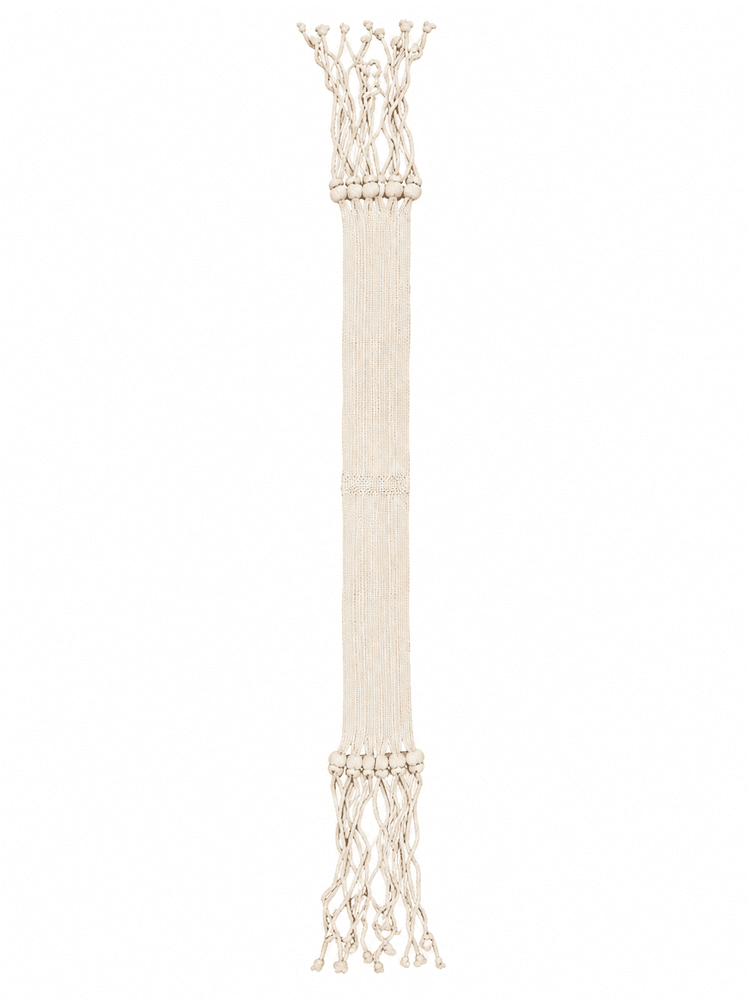
Hopi | Handwoven Child’s Rain Sash with Corn Husk Tassel Forms | Circa Early – Mid 20th Century
Couldn't load pickup availability


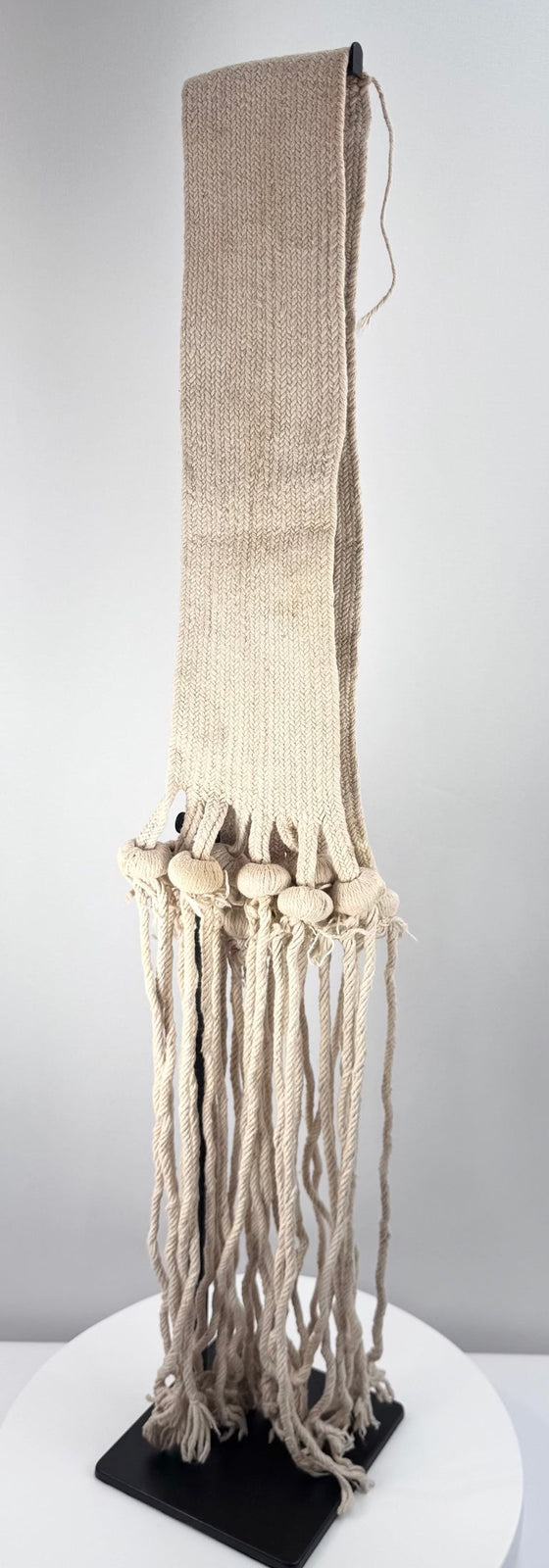
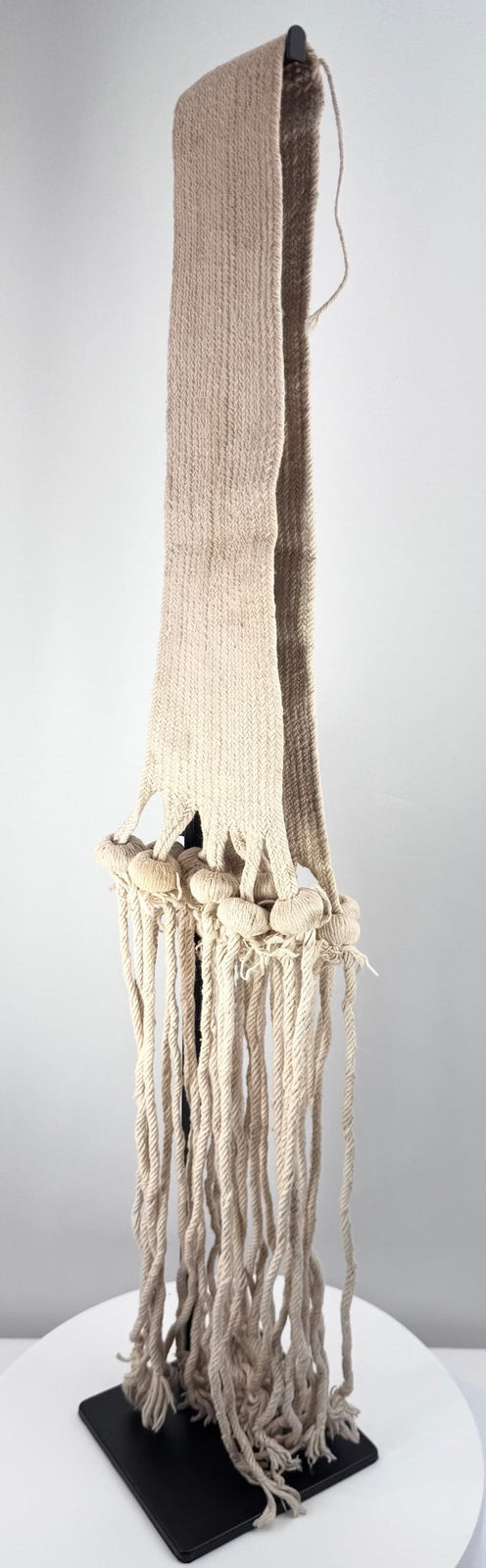
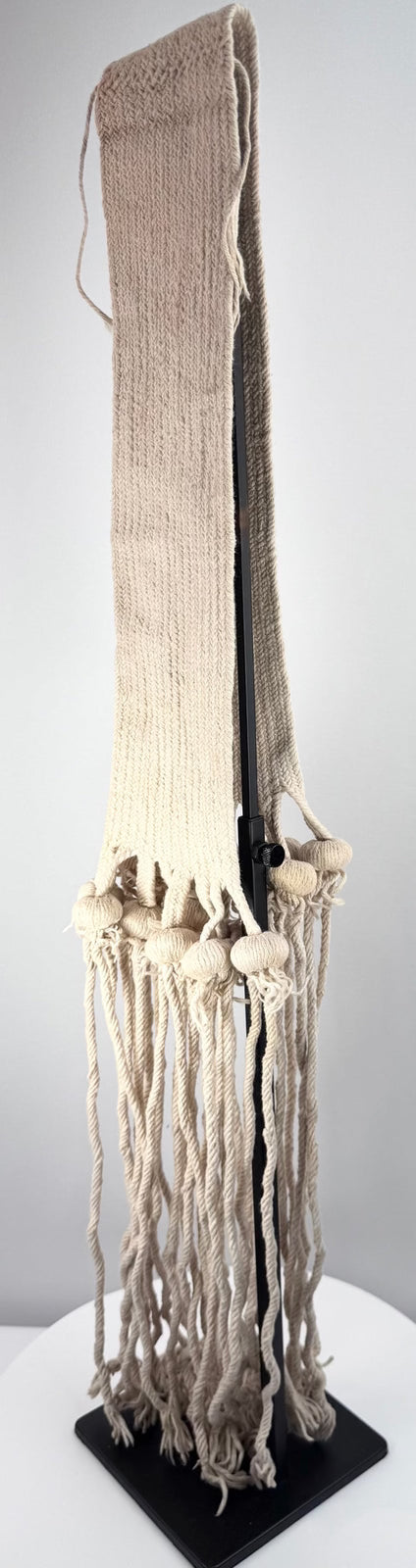
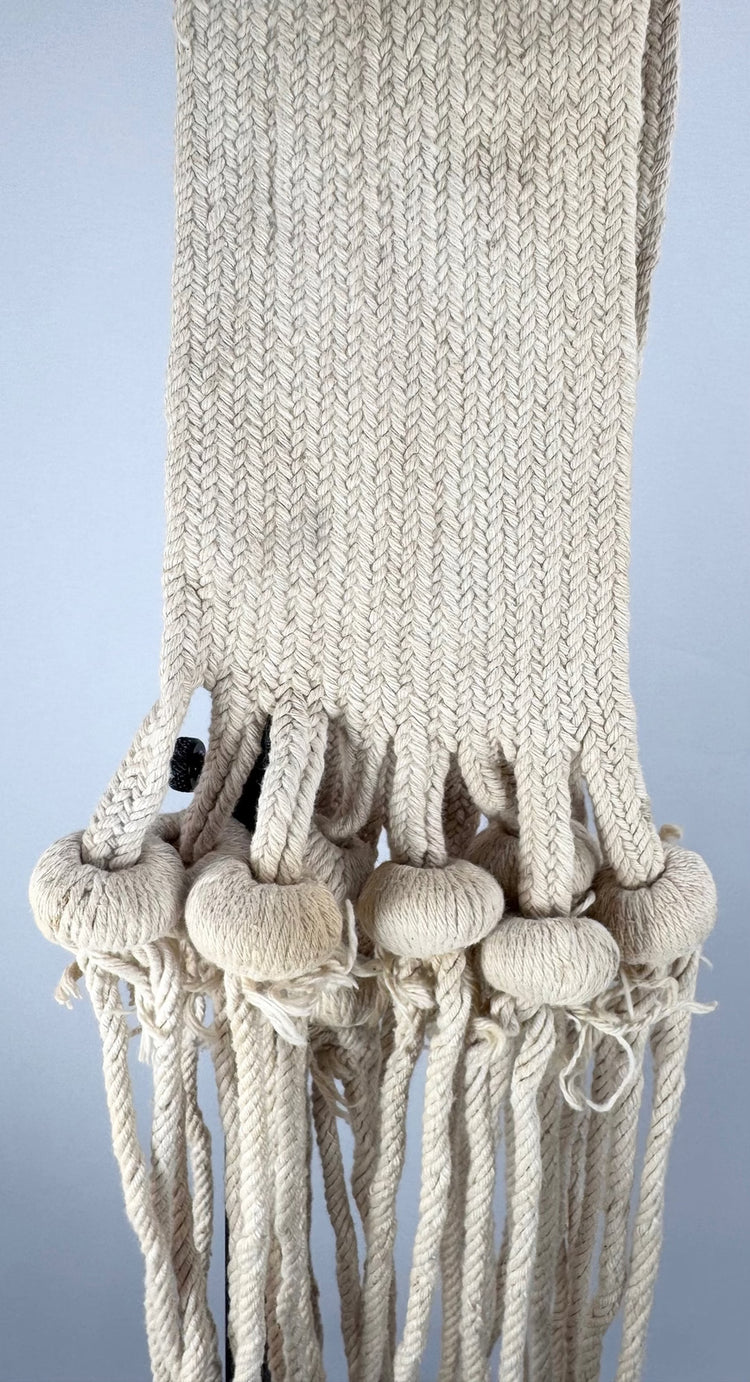
Hopi | Handwoven Child’s Rain Sash with Corn Husk Tassel Forms | Circa Early – Mid 20th Century
Description
More
Less
Historical Context & Origin
Region: American Southwest, likely Hopi Pueblo Culture
Material: Hand-spun cotton textile
Period: Early–Mid 20th Century
Description
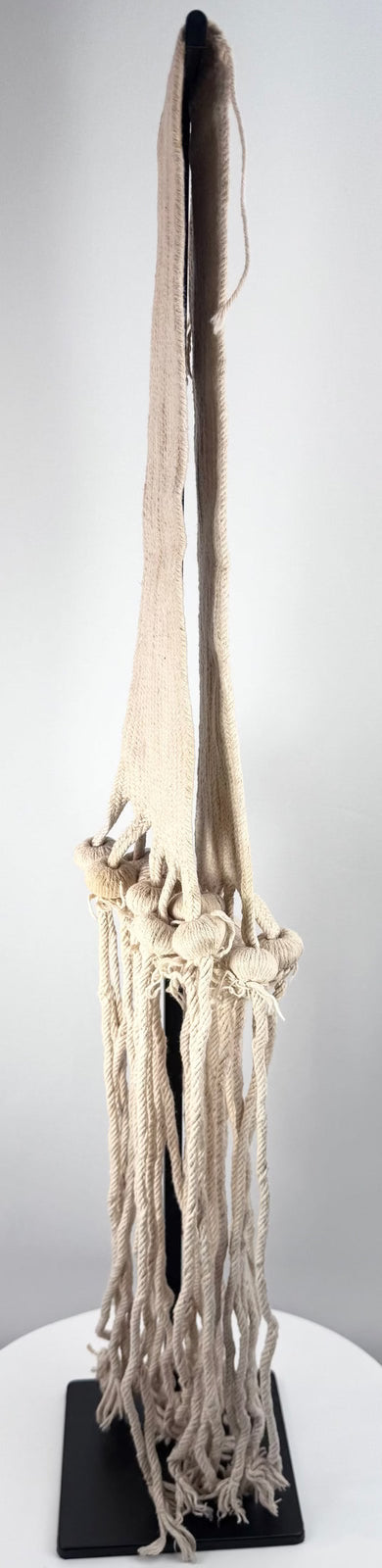
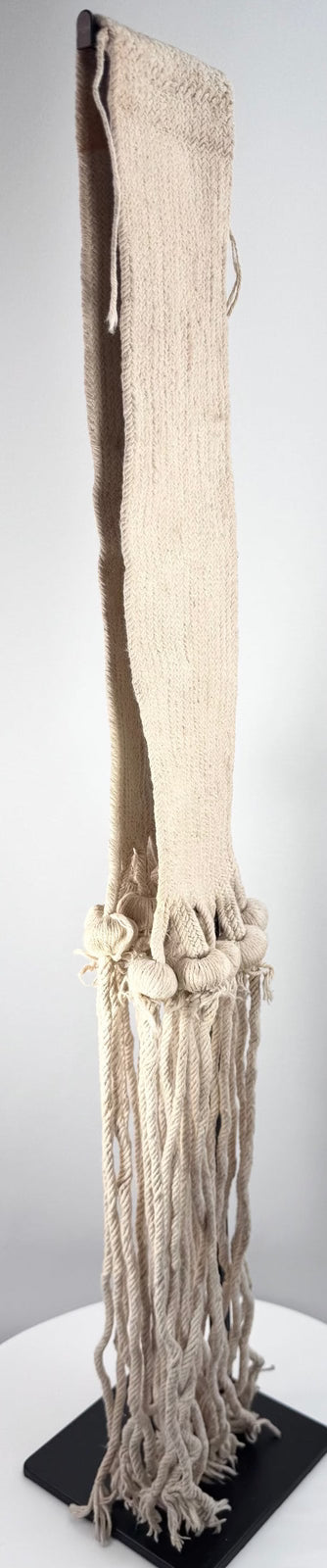
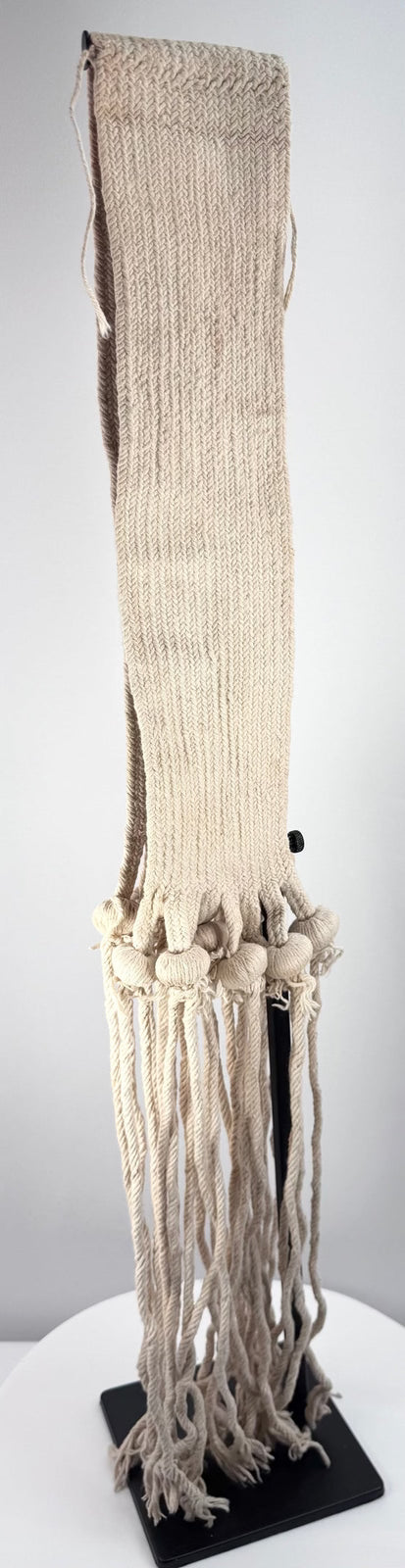
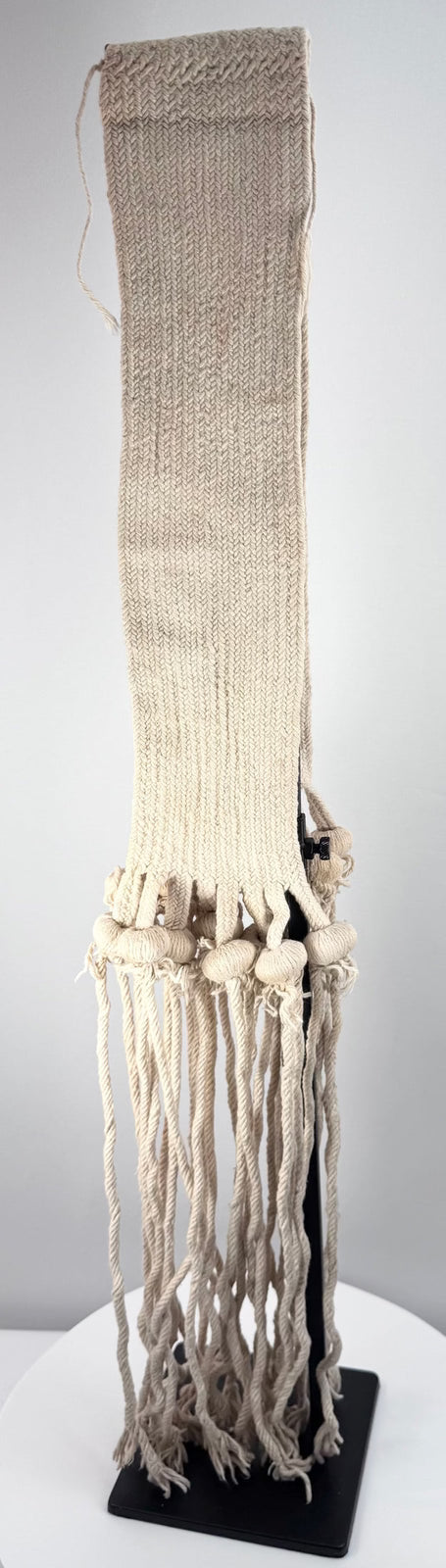
This handwoven cotton sash is believed to represent a traditional Hopi child’s rain sash, a ceremonial textile form associated with Pueblo ritual dress and cultural traditions of the American Southwest. The piece features a tightly woven central band terminating in multiple suspended twisted cotton cords with rounded tassel-like forms resembling wrapped corn husk or cotton ceremonial knots.
Rain sashes of this type were traditionally worn during ceremonial dances and rites connected to fertility, agricultural renewal, and seasonal observances. The elongated woven format and cascading tassels created movement during dance performances while also carrying symbolic associations tied to rain, life, and spiritual continuity within Pueblo ceremonial traditions.
The textile displays visible age and hand-crafted irregularities consistent with traditional weaving methods. Its minimalist cream-toned palette and sculptural hanging elements give the piece a strong visual presence suitable for both ethnographic display and textile-focused collections.
Features
- Handwoven cotton construction
- Long suspended ceremonial tassel elements
- Traditional Pueblo weaving style
- Sculptural ethnographic display presence
- Mounted for presentation and preservation
Cultural Significance
Rain sashes occupy an important place within Pueblo ceremonial traditions, particularly among Hopi communities where woven garments and ritual textiles play central roles in dance regalia and spiritual observances. These objects often symbolized rainfall, agricultural prosperity, and connections between the natural and spiritual worlds.
Condition
Displays age-related wear, discoloration, visible staining, minor fraying, and irregularities consistent with use, handling, and age.
Dimensions (Approximate)
Length: 28 in
Width: 3 in
Age (Approximate)
75–100 years old
Provenance
Private collection Albuquerque, New Mexico, USA.
Learn More
Discover a documented Hopi Ceremonial Rain Sash made from cotton and cornhusk in the collection of the Peabody Museum of Archaeology and Ethnology at Harvard University.
Explore our Collection of Tribal and Indigenous Artifacts.
Description
Historical Context & Origin
Region: American Southwest, likely Hopi Pueblo Culture
Material: Hand-spun cotton textile
Period: Early–Mid 20th Century
Description
This handwoven cotton sash is believed to represent a traditional Hopi child’s rain sash, a ceremonial textile form associated with Pueblo ritual dress and cultural traditions of the American Southwest. The piece features a tightly woven central band terminating in multiple suspended twisted cotton cords with rounded tassel-like forms resembling wrapped corn husk or cotton ceremonial knots.
Rain sashes of this type were traditionally worn during ceremonial dances and rites connected to fertility, agricultural renewal, and seasonal observances. The elongated woven format and cascading tassels created movement during dance performances while also carrying symbolic associations tied to rain, life, and spiritual continuity within Pueblo ceremonial traditions.
The textile displays visible age and hand-crafted irregularities consistent with traditional weaving methods. Its minimalist cream-toned palette and sculptural hanging elements give the piece a strong visual presence suitable for both ethnographic display and textile-focused collections.
Features
- Handwoven cotton construction
- Long suspended ceremonial tassel elements
- Traditional Pueblo weaving style
- Sculptural ethnographic display presence
- Mounted for presentation and preservation
Cultural Significance
Rain sashes occupy an important place within Pueblo ceremonial traditions, particularly among Hopi communities where woven garments and ritual textiles play central roles in dance regalia and spiritual observances. These objects often symbolized rainfall, agricultural prosperity, and connections between the natural and spiritual worlds.
Condition
Displays age-related wear, discoloration, visible staining, minor fraying, and irregularities consistent with use, handling, and age.
Dimensions (Approximate)
Length: 28 in
Width: 3 in
Age (Approximate)
75–100 years old
Provenance
Private collection Albuquerque, New Mexico, USA.
Learn More
Discover a documented Hopi Ceremonial Rain Sash made from cotton and cornhusk in the collection of the Peabody Museum of Archaeology and Ethnology at Harvard University.
Explore our Collection of Tribal and Indigenous Artifacts.
You May Also Like
