



Large Ancient Chinese Ding-Form Terracotta Censer | Eastern Zhou–Han Dynasty | Circa 475 BCE–220 CE
Couldn't load pickup availability


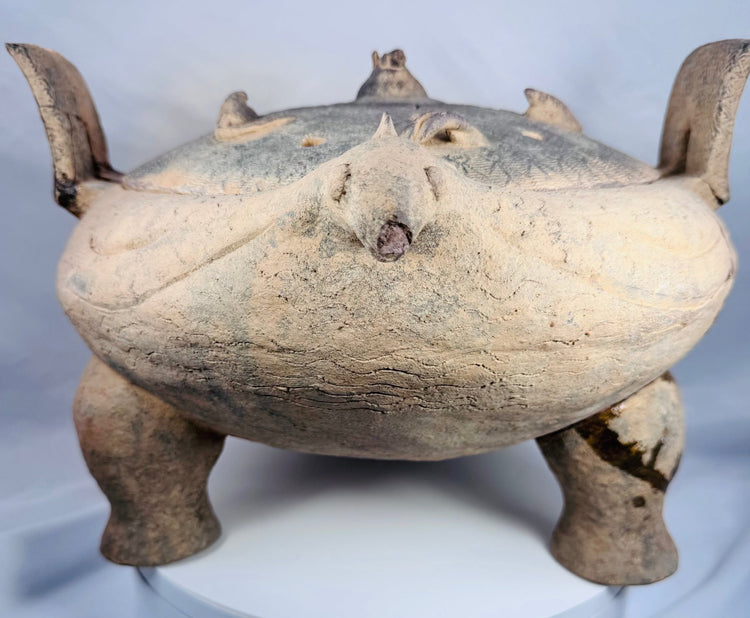
Large Ancient Chinese Ding-Form Terracotta Censer | Eastern Zhou–Han Dynasty | Circa 475 BCE–220 CE
Description
More
Less
Historical Context & Origin
Region: China
Material: Terracotta
Period: Eastern Zhou to Han Dynasty, circa 475 BCE–220 CE
Description
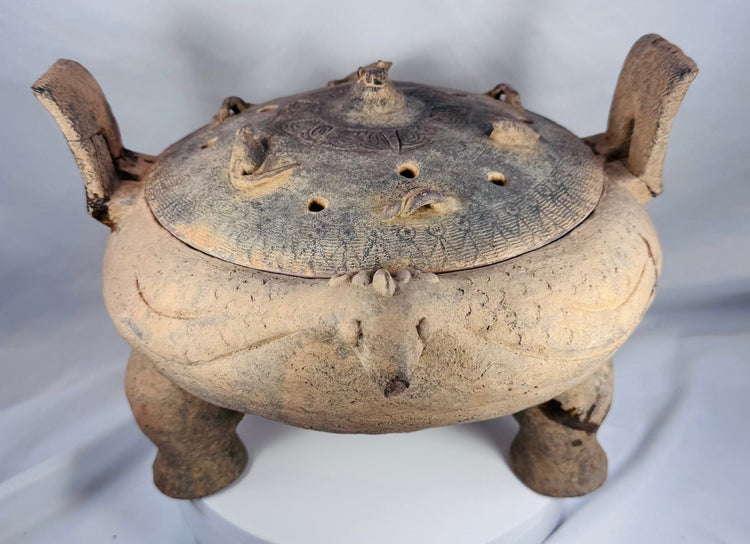
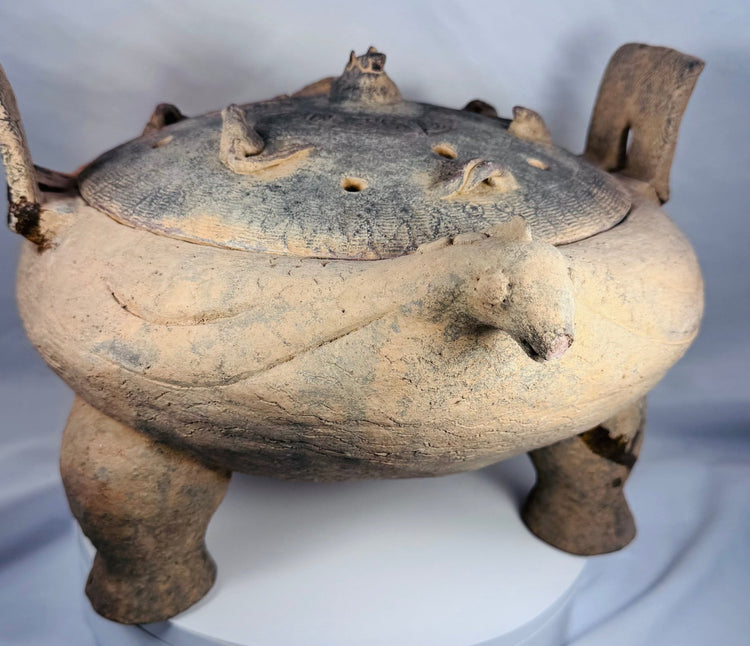
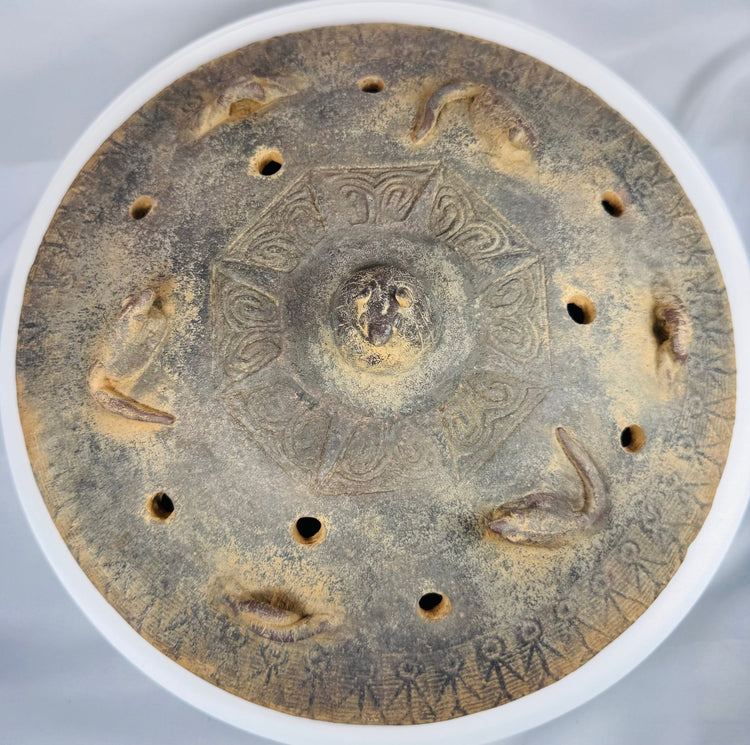
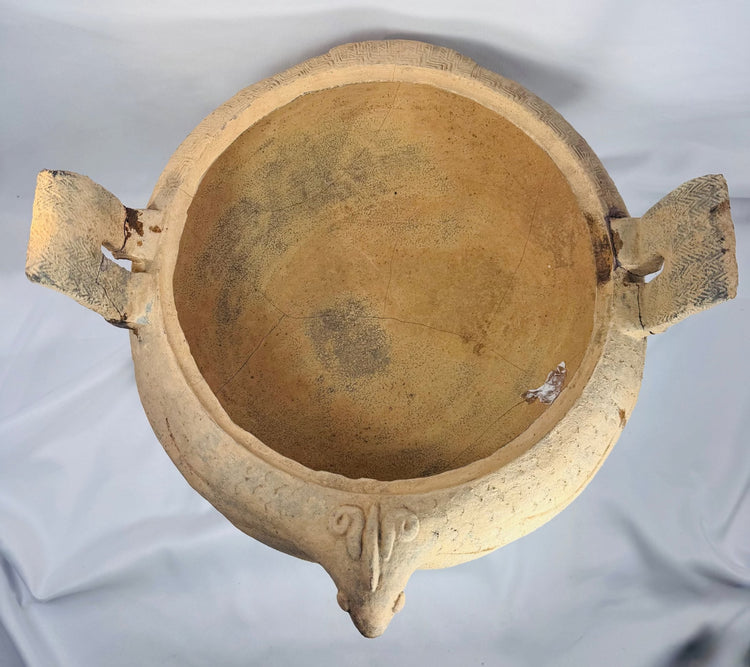
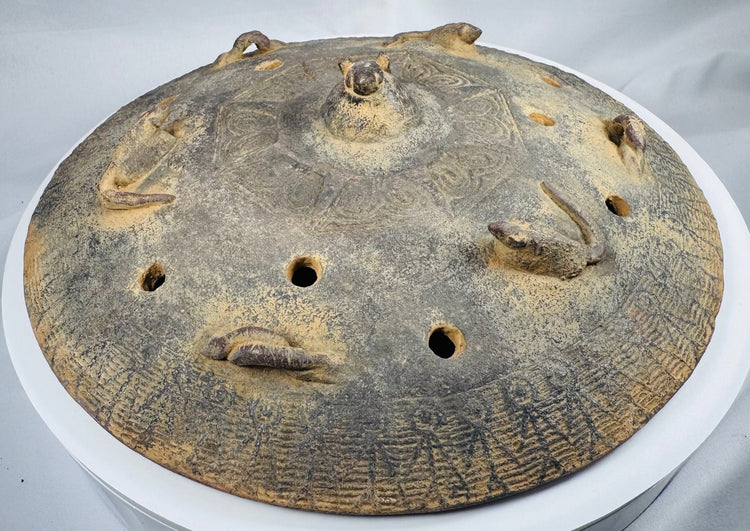
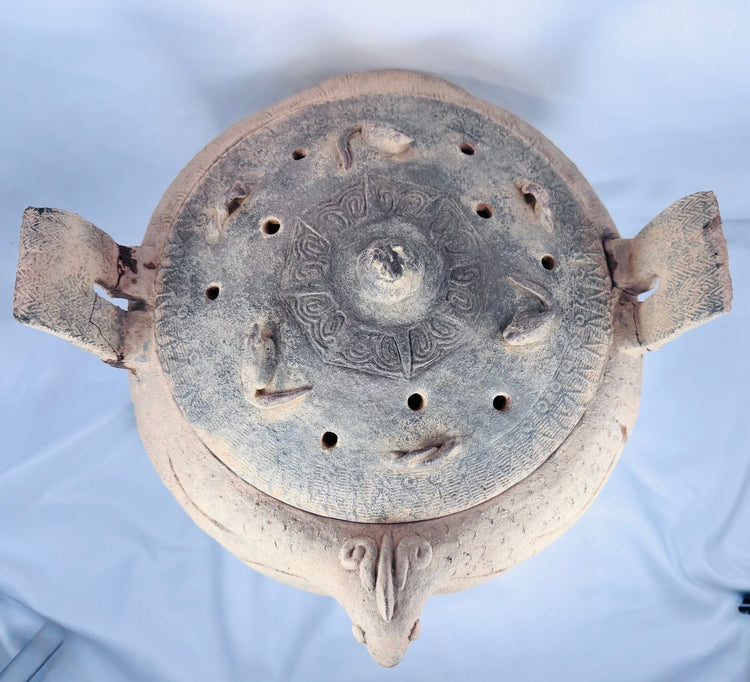
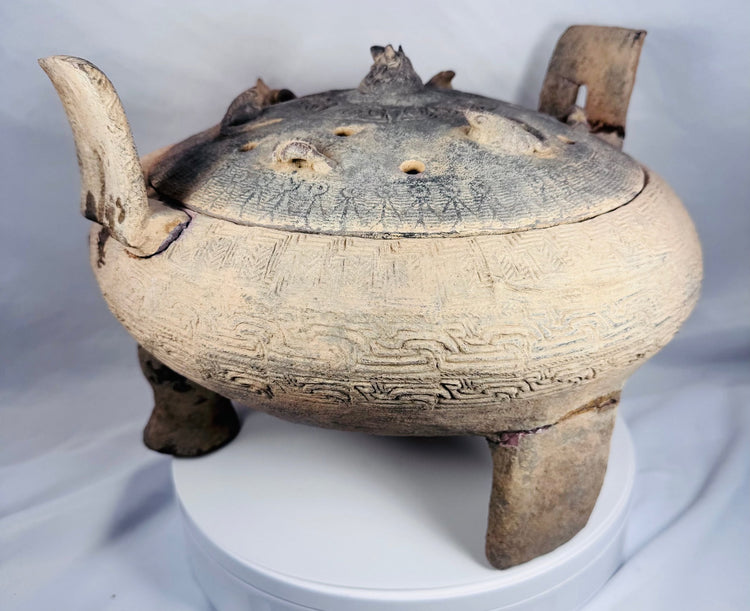
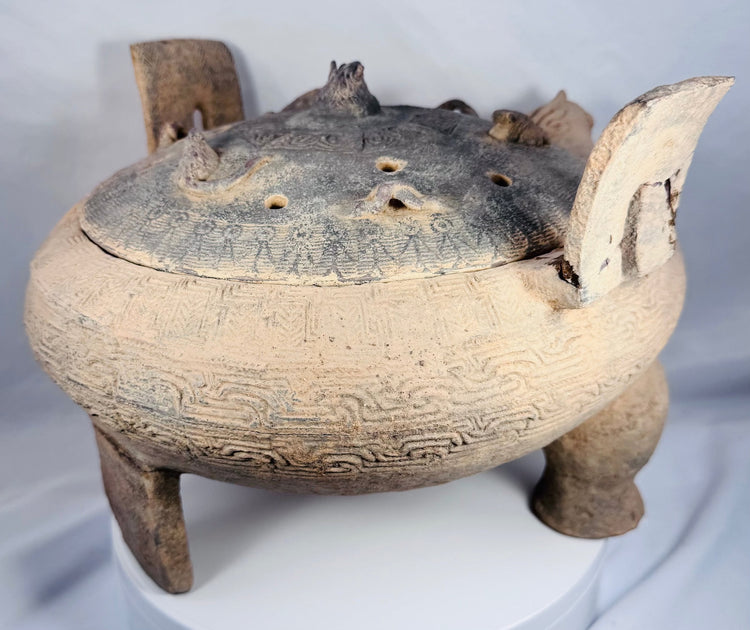
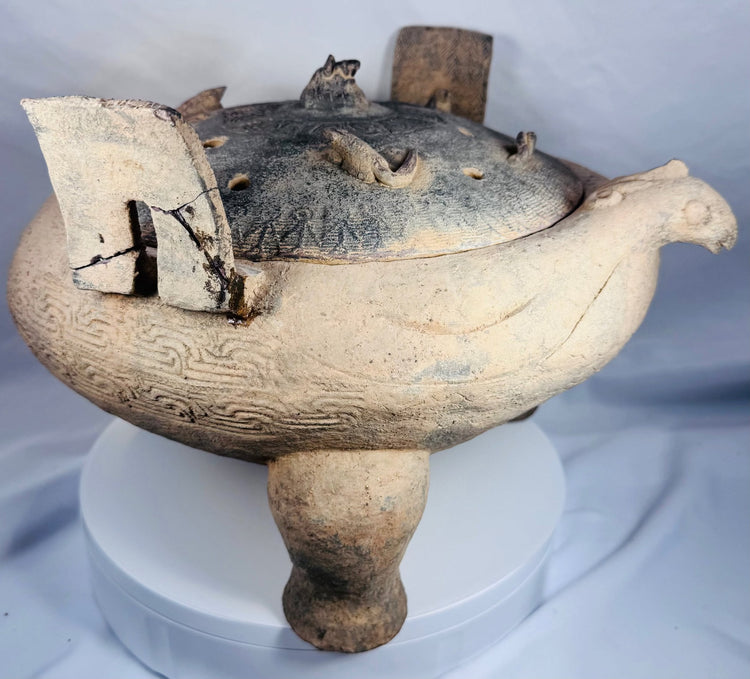
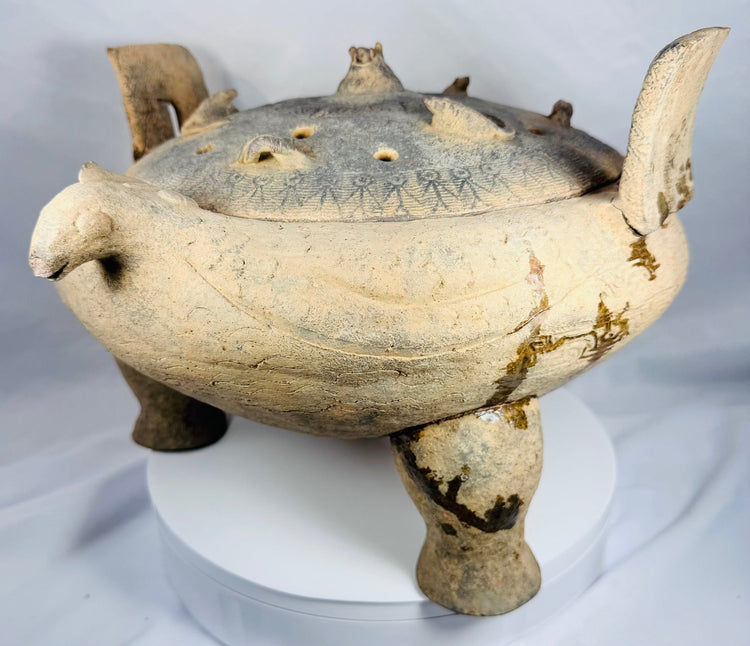
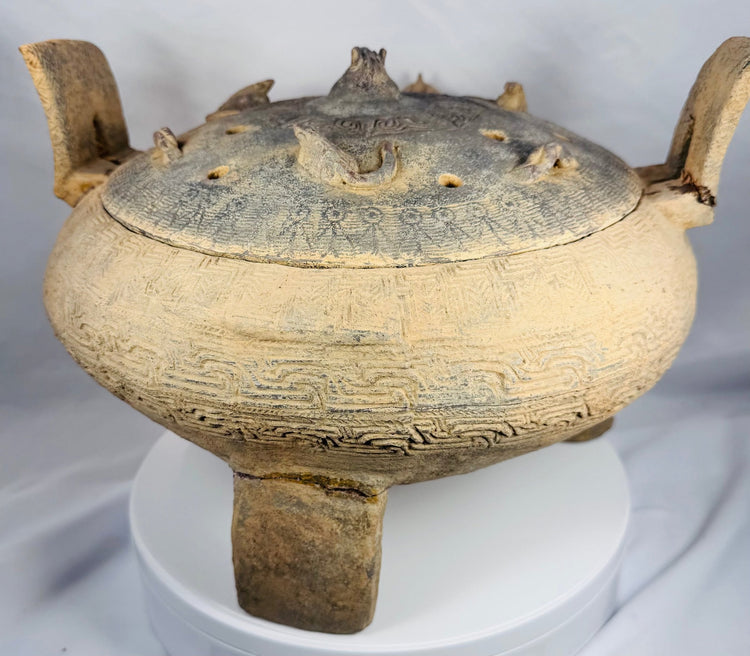
This large ancient Chinese terracotta ding-form ritual censer is masterfully modeled in the form of a stylized mythical animal or bird-like creature resting upon three substantial tripod feet. The rounded body is surmounted by a removable domed lid pierced with ventilation apertures and decorated with applied miniature animal figures arranged around a central finial. Opposing upright handles rise dramatically from either side of the vessel, creating a striking and highly sculptural silhouette.
The pierced cover suggests the vessel may have functioned as an incense burner or ceremonial container. The vessel's exterior is richly ornamented with incised geometric and linear motifs, including repeating abstract patterns and decorative bands that encircle both the body and lid. The zoomorphic form, elevated tripod construction, and pierced cover closely relate to ancient Chinese ritual and funerary ceramic traditions, where vessels often served ceremonial, symbolic, or mortuary functions.
Throughout ancient China, animal imagery played an important role in ritual art and ceremonial objects. Stylized creatures frequently appeared on ritual vessels as symbols associated with protection, authority, spiritual transformation, and communication with the ancestral realm.
The vessel displays considerable age-related wear, mineral deposits, and evidence of ancient burial, contributing to its impressive archaeological character and visual presence.
Features
- Large ancient Chinese terracotta ding-form ritual censer
- Zoomorphic form depicting a stylized mythical animal or bird
- Removable domed lid with ventilation perforations
- Applied miniature animal figures decorating the lid
- Raised on three substantial tripod feet
- Opposing upright handles
- Incised geometric and linear decorative motifs
- Earthen surface patina and age-related deposits
- Inspired by ancient Chinese bronze ritual vessel traditions
Cultural Significance
Tripod vessels occupied an important place within ancient Chinese ceremonial life and were often associated with ritual offerings, incense burning, ancestor veneration, and funerary practices. Ceramic examples such as this reflect the enduring influence of earlier bronze ritual vessels while demonstrating the artistic sophistication of ancient Chinese pottery production. Zoomorphic forms and animal imagery reinforced concepts of protection, authority, and communication between the earthly and ancestral realms.
Condition
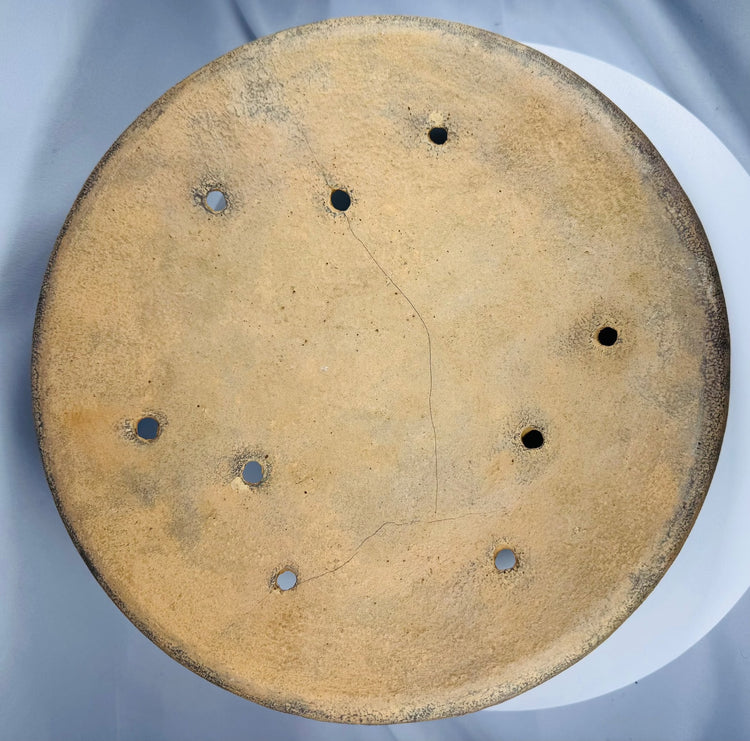
Ancient repaired condition. Several restored breaks and repairs are visible throughout, particularly to the handles, legs, and portions of the vessel body. Stable cracks are present throughout the basin and lid. Surface wear, losses, burial accretions, mineral deposits, and scattered debris within recessed areas are consistent with age. The vessel remains structurally stable and displays well despite its restoration history.
Dimensions (Approximate)
Height: 10 in
Width: 15 in
Depth: 14 in
Age (Approximate)
1,800–2,500 years old
Provenance
Private St. Paul, Minnesota, USA collection. Formerly part of a long-established Midwestern collection of Asian art, antiquities, and archaeological artifacts assembled over several decades.
Learn More
Discover the history of the Eastern Zhou period, an era that witnessed major advances in Chinese ritual traditions, philosophy, and artistic craftsmanship.
Browse Our Collection of Ancient Chinese Artifacts & Imperial Relics
Description
Historical Context & Origin
Region: China
Material: Terracotta
Period: Eastern Zhou to Han Dynasty, circa 475 BCE–220 CE
Description
This large ancient Chinese terracotta ding-form ritual censer is masterfully modeled in the form of a stylized mythical animal or bird-like creature resting upon three substantial tripod feet. The rounded body is surmounted by a removable domed lid pierced with ventilation apertures and decorated with applied miniature animal figures arranged around a central finial. Opposing upright handles rise dramatically from either side of the vessel, creating a striking and highly sculptural silhouette.
The pierced cover suggests the vessel may have functioned as an incense burner or ceremonial container. The vessel's exterior is richly ornamented with incised geometric and linear motifs, including repeating abstract patterns and decorative bands that encircle both the body and lid. The zoomorphic form, elevated tripod construction, and pierced cover closely relate to ancient Chinese ritual and funerary ceramic traditions, where vessels often served ceremonial, symbolic, or mortuary functions.
Throughout ancient China, animal imagery played an important role in ritual art and ceremonial objects. Stylized creatures frequently appeared on ritual vessels as symbols associated with protection, authority, spiritual transformation, and communication with the ancestral realm.
The vessel displays considerable age-related wear, mineral deposits, and evidence of ancient burial, contributing to its impressive archaeological character and visual presence.
Features
- Large ancient Chinese terracotta ding-form ritual censer
- Zoomorphic form depicting a stylized mythical animal or bird
- Removable domed lid with ventilation perforations
- Applied miniature animal figures decorating the lid
- Raised on three substantial tripod feet
- Opposing upright handles
- Incised geometric and linear decorative motifs
- Earthen surface patina and age-related deposits
- Inspired by ancient Chinese bronze ritual vessel traditions
Cultural Significance
Tripod vessels occupied an important place within ancient Chinese ceremonial life and were often associated with ritual offerings, incense burning, ancestor veneration, and funerary practices. Ceramic examples such as this reflect the enduring influence of earlier bronze ritual vessels while demonstrating the artistic sophistication of ancient Chinese pottery production. Zoomorphic forms and animal imagery reinforced concepts of protection, authority, and communication between the earthly and ancestral realms.
Condition
Ancient repaired condition. Several restored breaks and repairs are visible throughout, particularly to the handles, legs, and portions of the vessel body. Stable cracks are present throughout the basin and lid. Surface wear, losses, burial accretions, mineral deposits, and scattered debris within recessed areas are consistent with age. The vessel remains structurally stable and displays well despite its restoration history.
Dimensions (Approximate)
Height: 10 in
Width: 15 in
Depth: 14 in
Age (Approximate)
1,800–2,500 years old
Provenance
Private St. Paul, Minnesota, USA collection. Formerly part of a long-established Midwestern collection of Asian art, antiquities, and archaeological artifacts assembled over several decades.
Learn More
Discover the history of the Eastern Zhou period, an era that witnessed major advances in Chinese ritual traditions, philosophy, and artistic craftsmanship.
Browse Our Collection of Ancient Chinese Artifacts & Imperial Relics
You May Also Like
