

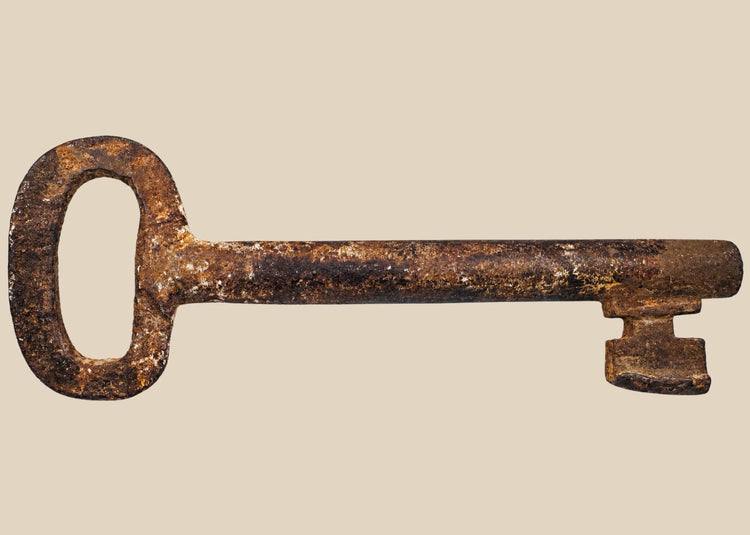
European Skeleton Key | Forged Iron Warded Lock Key | Circa 18th Century
Couldn't load pickup availability


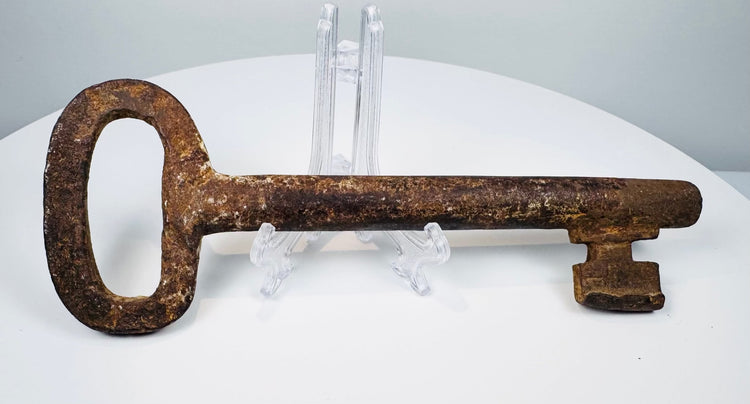
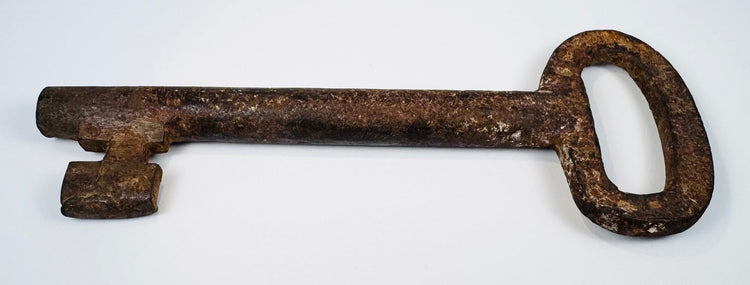
European Skeleton Key | Forged Iron Warded Lock Key | Circa 18th Century
Description
More
Less
Historical Context & Origin
Region: Europe
Material: Forged iron
Period: 18th Century
Description
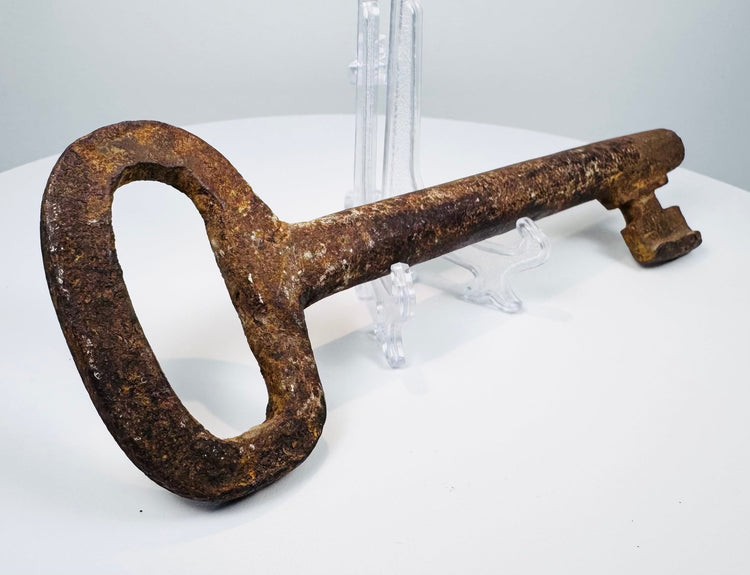
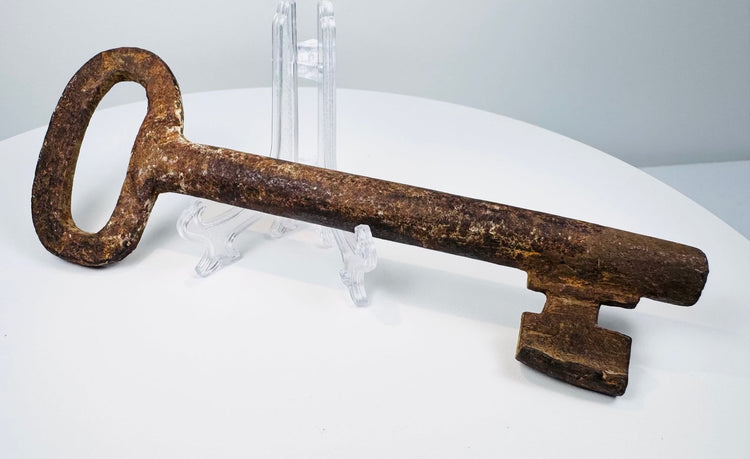
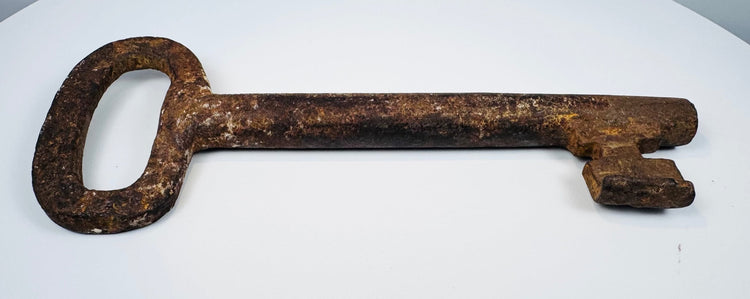
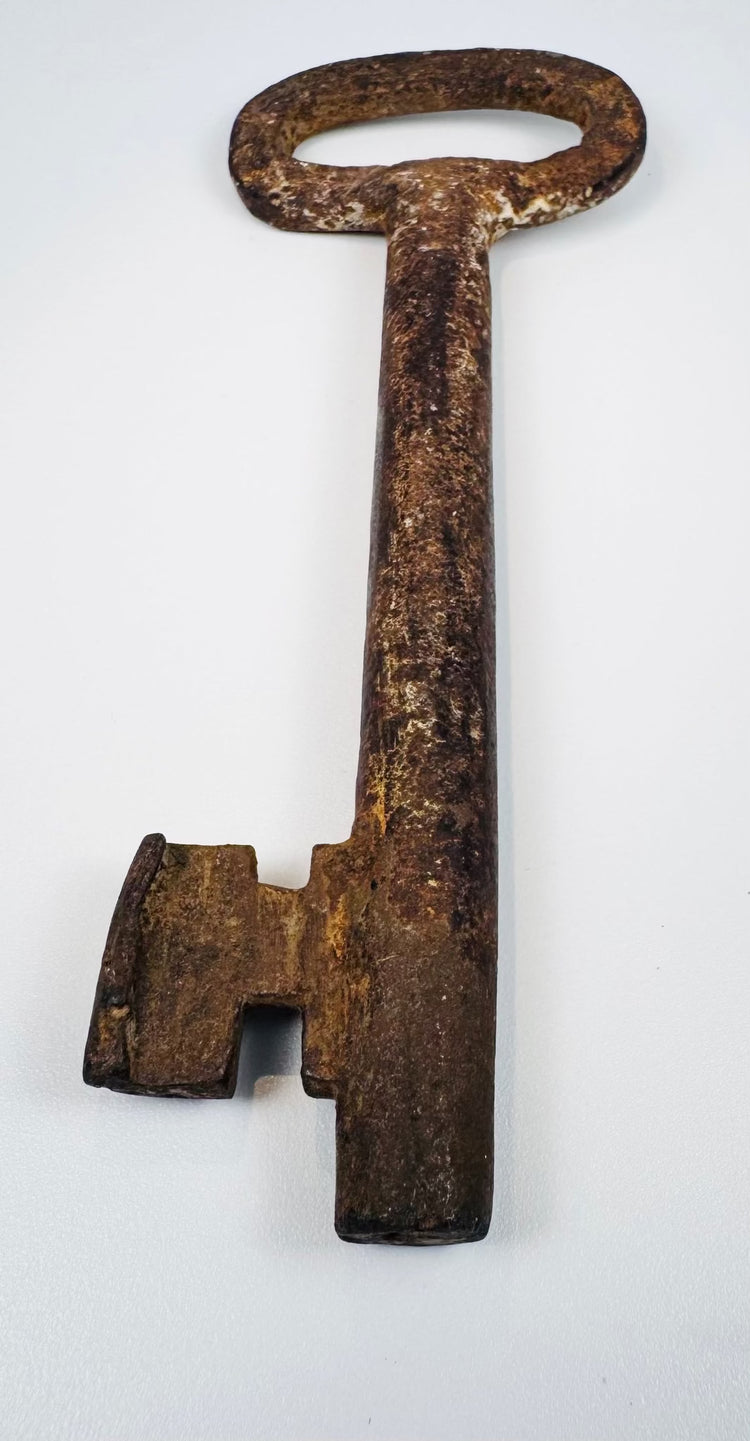
This antique iron skeleton key represents classic European craftsmanship from the 18th century. Its sturdy construction and distinctive oval bow reflect the durability required of locking mechanisms during the period. The slightly rounded, wedge-shaped ward demonstrates the precision necessary for warded lock systems, illustrating the balance between practical engineering and refined metalwork typical of the era.
Features
- Oval bow designed for a secure and comfortable grip
- Wedge-shaped ward suited for 18th-century warded locks
- Thick iron shaft constructed for regular use
- Developed iron patina consistent with age
- Substantial size reflecting functional design
Cultural Significance
Skeleton keys were essential security tools across Europe during the 18th century, used to operate warded lock systems found in homes, estates, gates, and storage chests. Such keys were often entrusted to estate stewards, guards, or caretakers responsible for protecting property and valuables. Their design reflects the technological sophistication of early locksmithing and the importance placed on durable, dependable security mechanisms.
Condition
Well preserved with a rich iron patina. The bow and ward remain clearly defined, and the shaft retains strong structural integrity. Surface wear consistent with age enhances its authenticity.
Dimensions (Approximate)
Length: 7.25 in
Age (Approximate)
225–325 years old
Provenance
From the estate of the Rev. Boyce M. Bennett, Th.D., an archaeologist, Old Testament professor, and former academic dean of the General Theological Seminary. According to estate records, some pieces were recovered in 1967 from Dr. Bennett’s archaeological site at Gilgal, approximately eight miles from ancient Jericho, while others were acquired in 1967–1968 from Mr. Ohan’s shop in the Old City of Jerusalem, shortly after the Six-Day War. Subsequently handled by Palmyra Heritage Gallery in 2024.
Learn More
Study the history of skeleton keys and early locksmithing
Browse our Collection of Rare Historic Keys
Description
Historical Context & Origin
Region: Europe
Material: Forged iron
Period: 18th Century
Description
This antique iron skeleton key represents classic European craftsmanship from the 18th century. Its sturdy construction and distinctive oval bow reflect the durability required of locking mechanisms during the period. The slightly rounded, wedge-shaped ward demonstrates the precision necessary for warded lock systems, illustrating the balance between practical engineering and refined metalwork typical of the era.
Features
- Oval bow designed for a secure and comfortable grip
- Wedge-shaped ward suited for 18th-century warded locks
- Thick iron shaft constructed for regular use
- Developed iron patina consistent with age
- Substantial size reflecting functional design
Cultural Significance
Skeleton keys were essential security tools across Europe during the 18th century, used to operate warded lock systems found in homes, estates, gates, and storage chests. Such keys were often entrusted to estate stewards, guards, or caretakers responsible for protecting property and valuables. Their design reflects the technological sophistication of early locksmithing and the importance placed on durable, dependable security mechanisms.
Condition
Well preserved with a rich iron patina. The bow and ward remain clearly defined, and the shaft retains strong structural integrity. Surface wear consistent with age enhances its authenticity.
Dimensions (Approximate)
Length: 7.25 in
Age (Approximate)
225–325 years old
Provenance
From the estate of the Rev. Boyce M. Bennett, Th.D., an archaeologist, Old Testament professor, and former academic dean of the General Theological Seminary. According to estate records, some pieces were recovered in 1967 from Dr. Bennett’s archaeological site at Gilgal, approximately eight miles from ancient Jericho, while others were acquired in 1967–1968 from Mr. Ohan’s shop in the Old City of Jerusalem, shortly after the Six-Day War. Subsequently handled by Palmyra Heritage Gallery in 2024.
Learn More
Study the history of skeleton keys and early locksmithing
Browse our Collection of Rare Historic Keys
You May Also Like
