



Late Roman Bronze Finger Ring with Punched Ring-and-Dot Bezel | Circa 3rd–5th Century CE
Couldn't load pickup availability





Late Roman Bronze Finger Ring with Punched Ring-and-Dot Bezel | Circa 3rd–5th Century CE
Description
More
Less
Historical Context & Origin
Region: Roman Empire
Material: Bronze (copper alloy)
Period: Late Roman Period, circa 3rd–5th Century CE (attributed)
Description
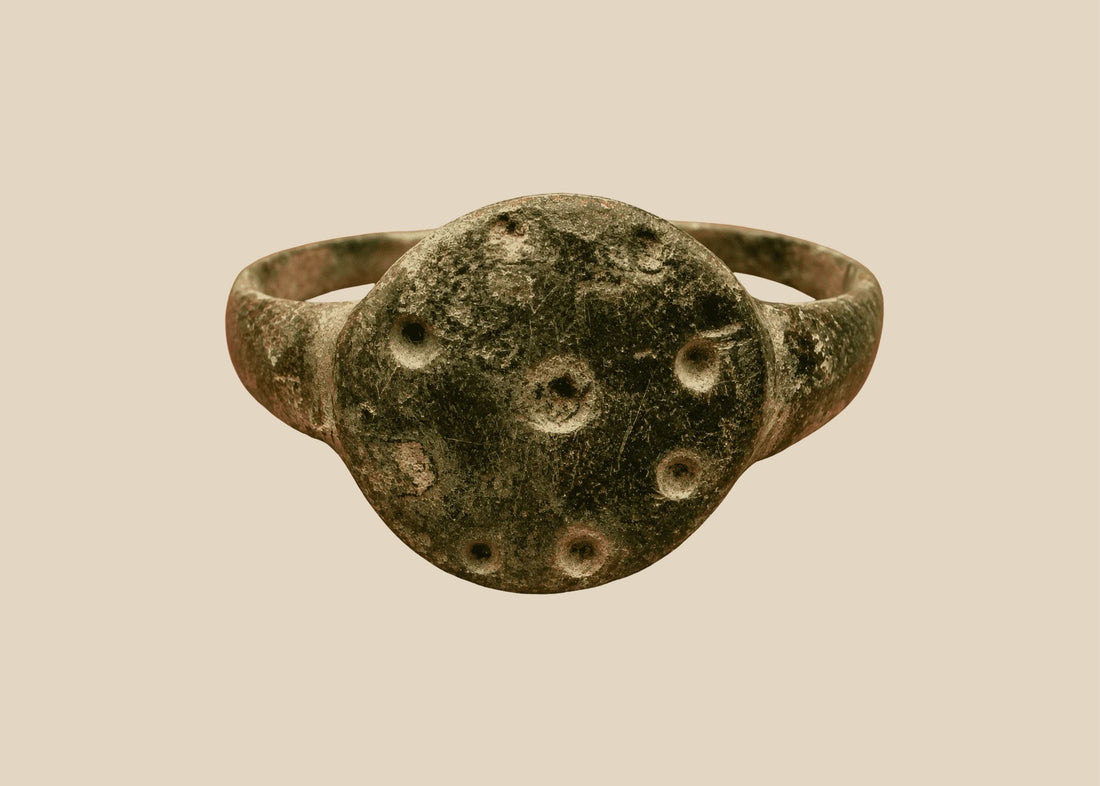
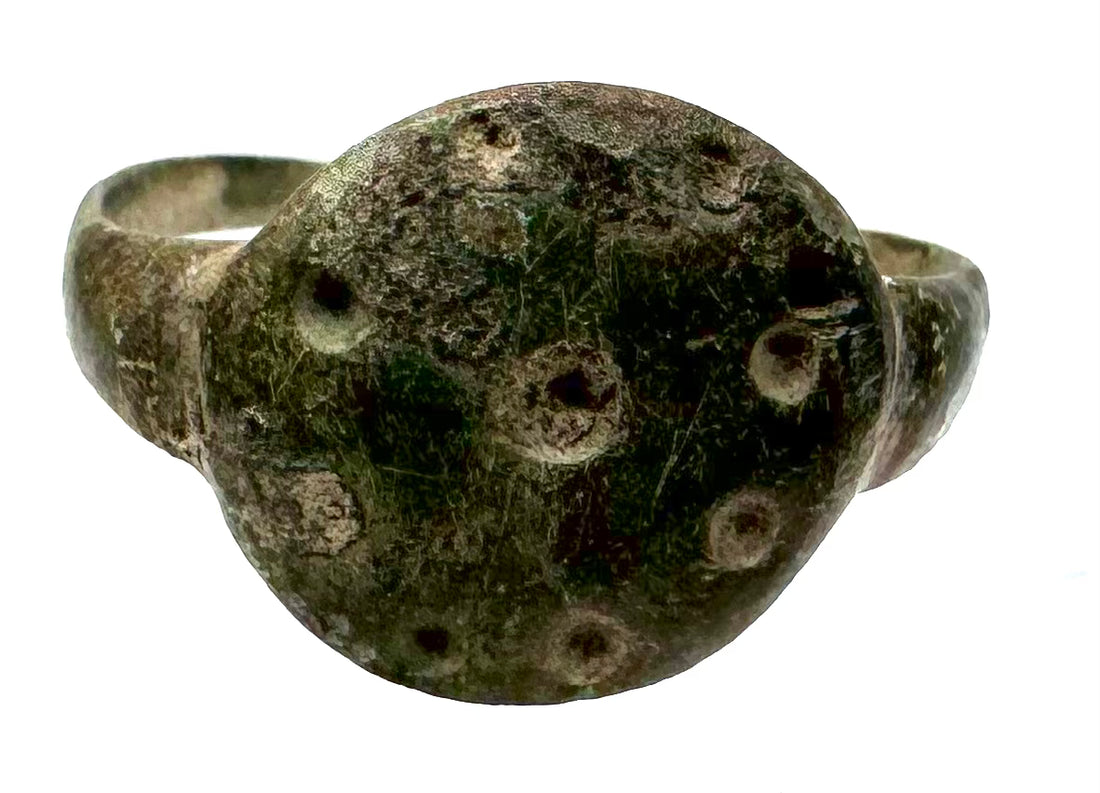
This distinctive Late Roman-style bronze finger ring features a prominent raised oval bezel decorated with an arrangement of deeply punched circular motifs, commonly known as ring-and-dot ornamentation. Attributed to the 3rd–5th century CE, the ring reflects the geometric decorative traditions encountered in Roman provincial metalwork and personal jewellery throughout the later Imperial period.
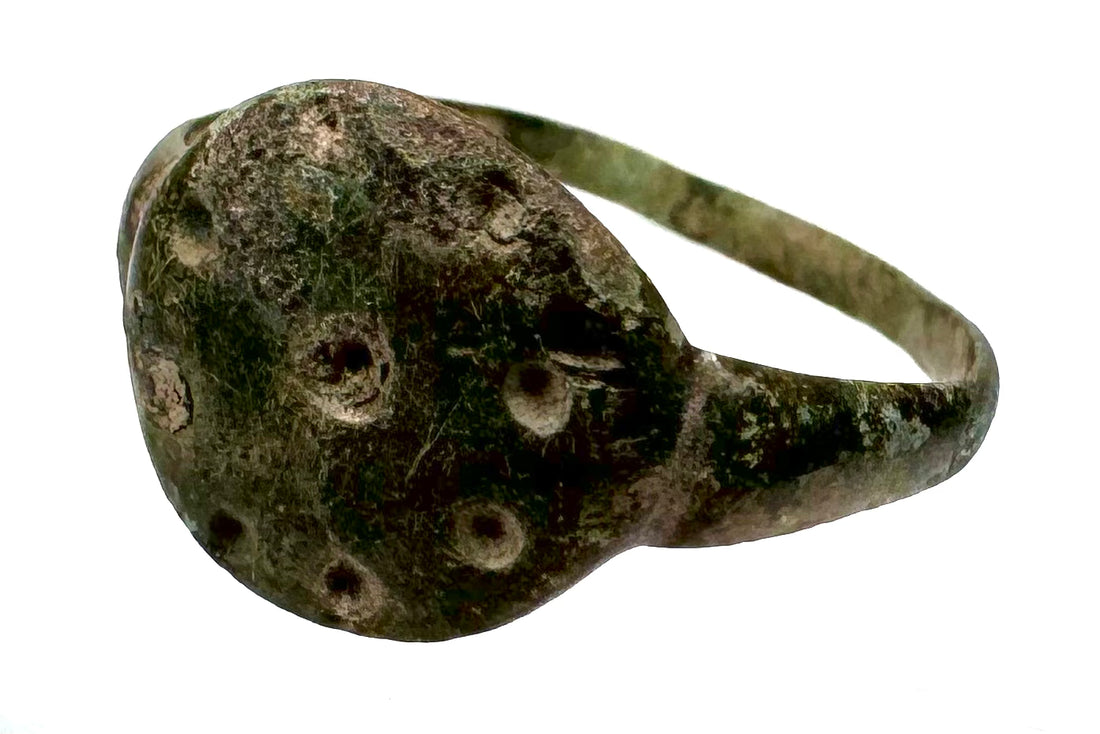
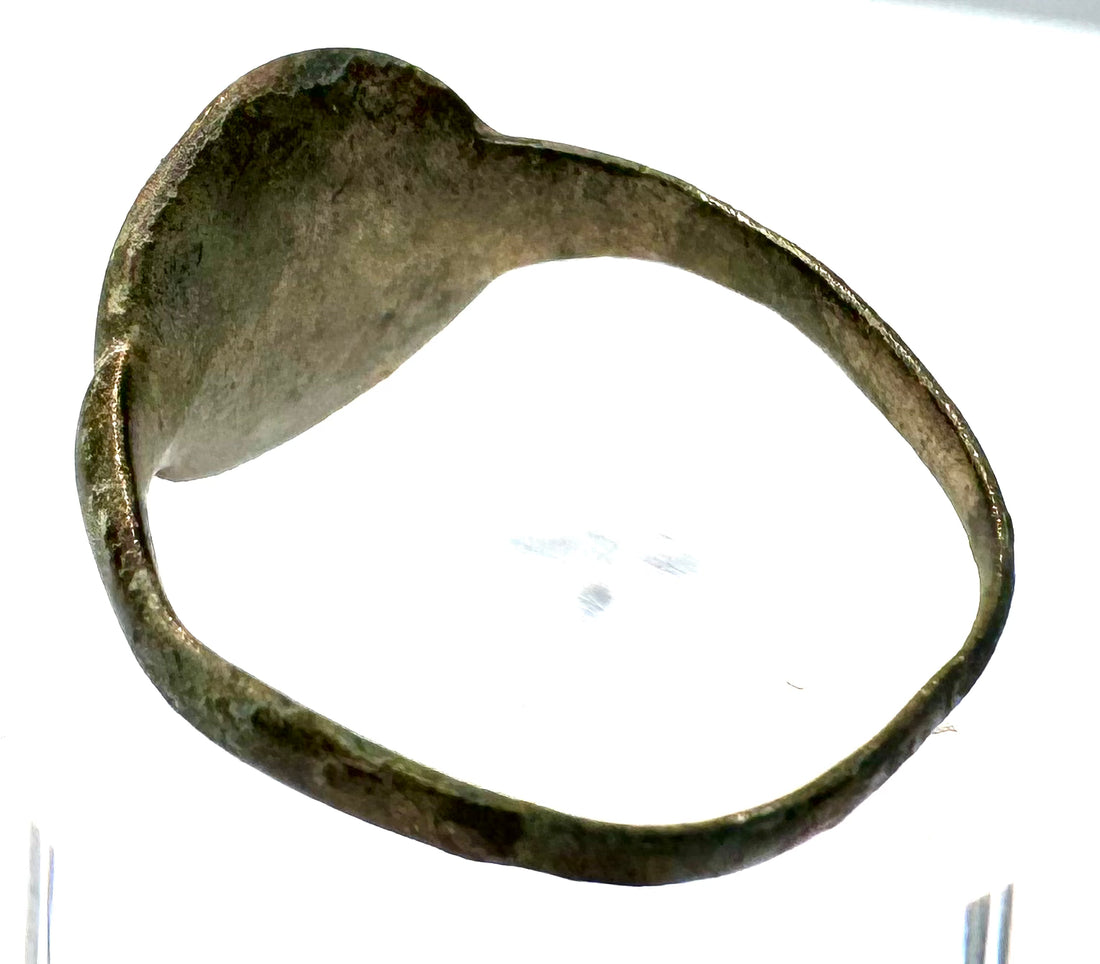
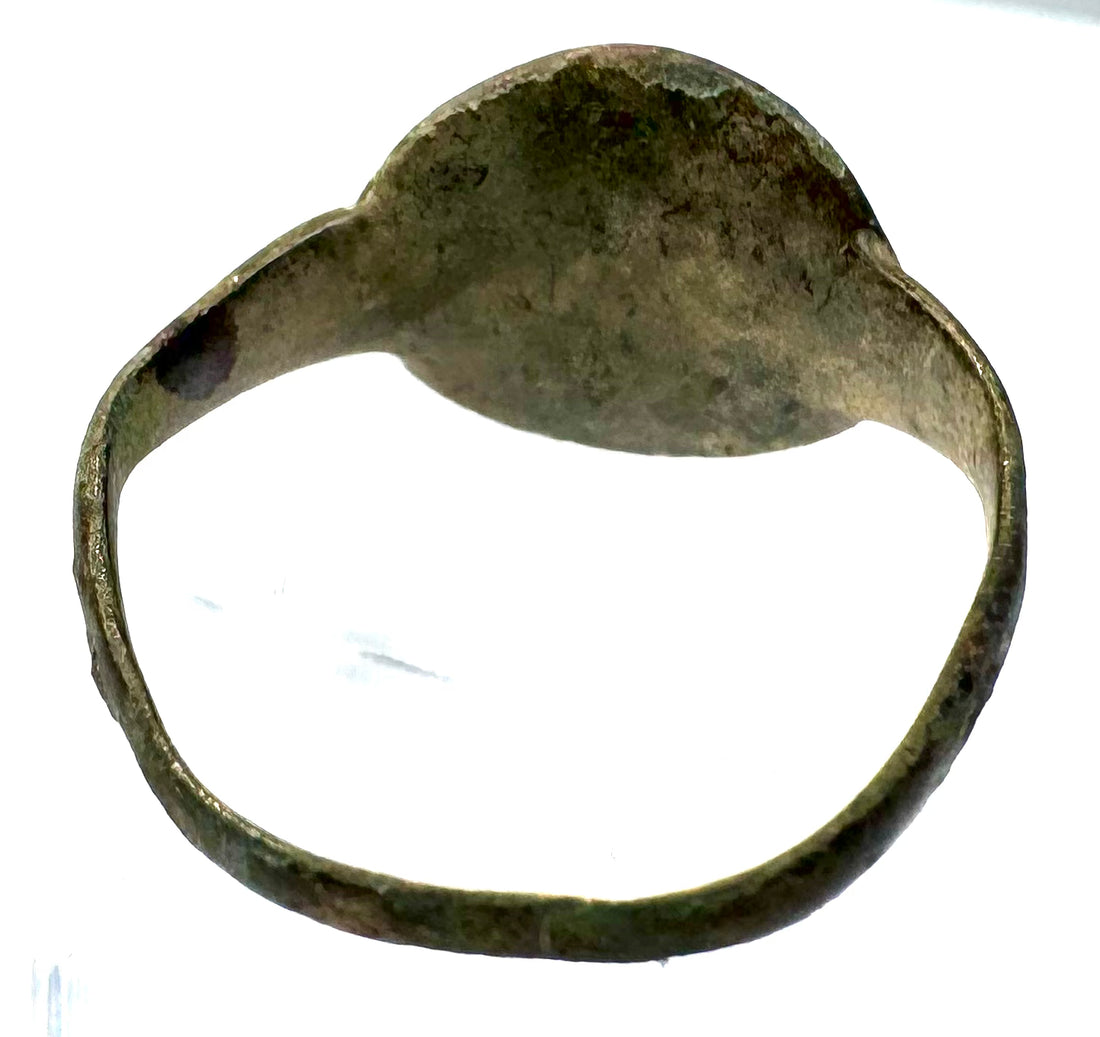
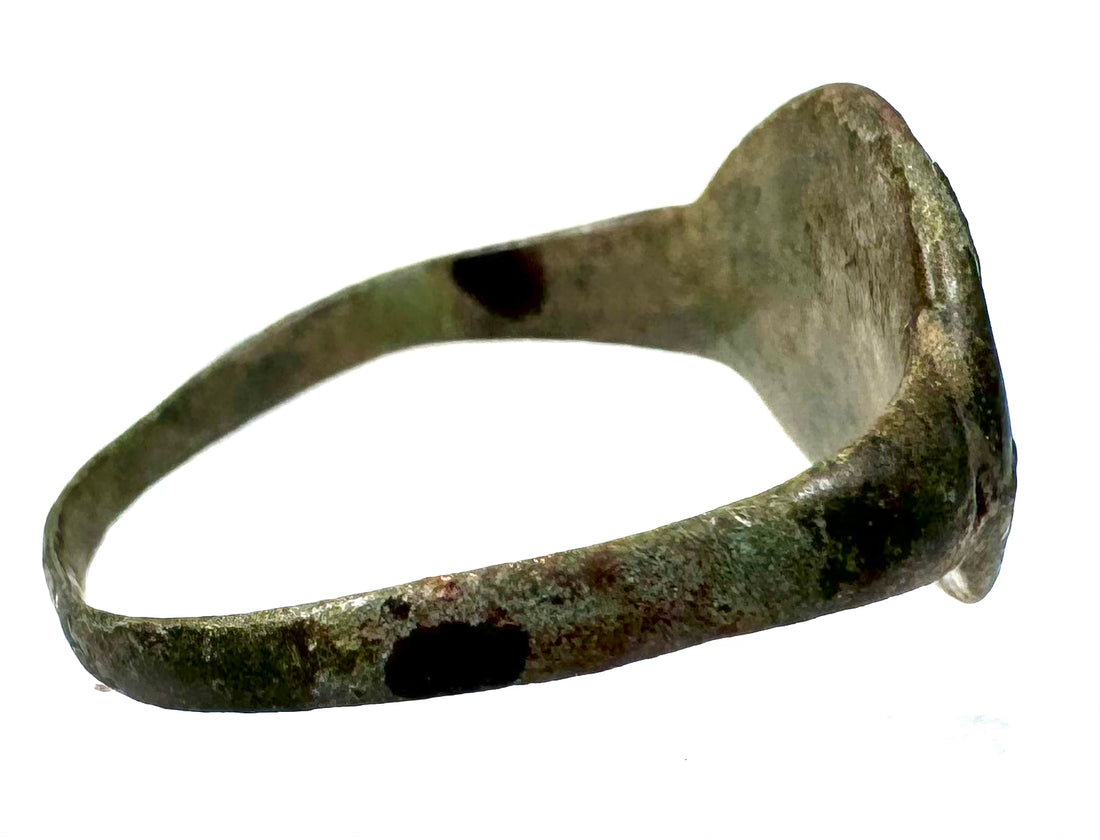
The ring features an enlarged, gently convex oval bezel rising above a relatively slender bronze hoop. Its surface is decorated with multiple circular impressions of varying sizes, each displaying a recessed central point surrounded by a broader circular depression. These punched motifs are distributed across the bezel in an irregular geometric arrangement, creating a distinctive ornamental composition. The shoulders gradually broaden toward the bezel before tapering into a narrower, undecorated band with a comparatively smooth interior.
The bronze surface exhibits a rich combination of dark green, olive, earthy brown, and greyish patination, with scattered pale mineral-like deposits concentrated around several of the circular impressions. Fine scratches, localized pitting, and natural surface irregularities contribute to its weathered appearance. The ring's prominent oval bezel, expanding shoulders, and characteristic ring-and-dot decoration are comparable to documented Roman copper-alloy rings, illustrating a decorative tradition that also continued into the early medieval period.
Features
- Prominent raised oval bezel with gently convex surface
- Multiple deeply punched ring-and-dot decorative motifs
- Irregular geometric arrangement of circular impressions with recessed central points
- Broad shoulders gradually tapering into a comparatively slender hoop
- Continuous circular band with a relatively smooth interior
- Rich dark green, olive, brown, and greyish surface patination with mineral-like deposits
Cultural Significance
Finger rings were widely worn throughout the Roman Empire, serving as objects of personal adornment, individual identity, and social distinction. Roman jewellery was produced using various materials, including gold, silver, iron, bronze, and other copper alloys. While precious-metal rings were often associated with wealth and higher social standing, bronze examples provided a more accessible form of personal ornamentation and were manufactured in numerous decorative styles.
One recognizable form of decoration encountered in Roman metalwork was the ring-and-dot motif, consisting of a central depression surrounded by one or more circular impressions. This ornamental technique appeared on finger rings, brooches, belt fittings, military accessories, and other objects throughout the Roman provinces. The repeated circular patterns created distinctive geometric compositions and could be applied through relatively straightforward punching or engraving techniques. Similar decorative traditions continued into the early medieval period, demonstrating the enduring appeal of these designs.
Circular and eye-like motifs have occasionally been interpreted as having protective or apotropaic associations, although their specific meaning depended upon cultural context and intended use. On many objects, such patterns may have served primarily decorative purposes. During the later Roman period, regional workshops continued adapting established metalworking techniques and ornamental traditions, producing personal accessories that reflected the artistic diversity of the Roman world. The present ring's punched circular bezel provides an interesting example of this broader decorative tradition.
Condition
The ring retains its complete overall form, including the raised oval bezel, broad shoulders, and continuous circular hoop. Extensive surface wear and oxidation are visible throughout, producing a mottled combination of dark green, olive, brown, and greyish coloration. The bezel retains its distinctive punched ring-and-dot decoration, although the surrounding surfaces exhibit considerable wear, scattered scratches, localized pitting, and areas of mineral-like encrustation. Several circular impressions display lighter deposits within their recessed centres, contrasting with the darker surrounding patina. The shoulders and band exhibit additional surface discolouration, minor abrasions, and irregularities, while the hoop displays slight unevenness consistent with its present condition. No obvious major structural breaks are visible in the supplied photographs, and the principal decorative features remain recognizable.
Dimensions (Approximate)
Ring Size: US 8.25
Age (Approximate)
1,525–1,825 years old
Provenance
Formerly part of the Moneta Collection, a Tucson-based numismatic dealership specializing in collectible coins. Moneta is listed among professional dealers on the VCoins marketplace and participated in the 2017 U.S. Mexican Numismatic Association convention.
Subsequently handled by Palmyra Heritage Gallery, a third-generation family business specializing in ancient coins, antiquities, and historical artifacts, with a New York gallery operating since 1995. The gallery deals in Egyptian, Greek, Roman, Byzantine, Islamic, and Pre-Columbian material and is affiliated with the American Numismatic Society and Florida Numismatic Association.
Learn More
Explore a comparable archaeological copper-alloy finger ring featuring a prominent oval bezel with nine punched ring-and-dot motifs, illustrating the use of similar geometric decoration across different historical periods, through the Portable Antiquities Scheme
Discover additional ancient bronze rings, historic jewellery, and decorative metalwork in our Ancient Rings & Jewelry Collection
Description
Historical Context & Origin
Region: Roman Empire
Material: Bronze (copper alloy)
Period: Late Roman Period, circa 3rd–5th Century CE (attributed)
Description
This distinctive Late Roman-style bronze finger ring features a prominent raised oval bezel decorated with an arrangement of deeply punched circular motifs, commonly known as ring-and-dot ornamentation. Attributed to the 3rd–5th century CE, the ring reflects the geometric decorative traditions encountered in Roman provincial metalwork and personal jewellery throughout the later Imperial period.
The ring features an enlarged, gently convex oval bezel rising above a relatively slender bronze hoop. Its surface is decorated with multiple circular impressions of varying sizes, each displaying a recessed central point surrounded by a broader circular depression. These punched motifs are distributed across the bezel in an irregular geometric arrangement, creating a distinctive ornamental composition. The shoulders gradually broaden toward the bezel before tapering into a narrower, undecorated band with a comparatively smooth interior.
The bronze surface exhibits a rich combination of dark green, olive, earthy brown, and greyish patination, with scattered pale mineral-like deposits concentrated around several of the circular impressions. Fine scratches, localized pitting, and natural surface irregularities contribute to its weathered appearance. The ring's prominent oval bezel, expanding shoulders, and characteristic ring-and-dot decoration are comparable to documented Roman copper-alloy rings, illustrating a decorative tradition that also continued into the early medieval period.
Features
- Prominent raised oval bezel with gently convex surface
- Multiple deeply punched ring-and-dot decorative motifs
- Irregular geometric arrangement of circular impressions with recessed central points
- Broad shoulders gradually tapering into a comparatively slender hoop
- Continuous circular band with a relatively smooth interior
- Rich dark green, olive, brown, and greyish surface patination with mineral-like deposits
Cultural Significance
Finger rings were widely worn throughout the Roman Empire, serving as objects of personal adornment, individual identity, and social distinction. Roman jewellery was produced using various materials, including gold, silver, iron, bronze, and other copper alloys. While precious-metal rings were often associated with wealth and higher social standing, bronze examples provided a more accessible form of personal ornamentation and were manufactured in numerous decorative styles.
One recognizable form of decoration encountered in Roman metalwork was the ring-and-dot motif, consisting of a central depression surrounded by one or more circular impressions. This ornamental technique appeared on finger rings, brooches, belt fittings, military accessories, and other objects throughout the Roman provinces. The repeated circular patterns created distinctive geometric compositions and could be applied through relatively straightforward punching or engraving techniques. Similar decorative traditions continued into the early medieval period, demonstrating the enduring appeal of these designs.
Circular and eye-like motifs have occasionally been interpreted as having protective or apotropaic associations, although their specific meaning depended upon cultural context and intended use. On many objects, such patterns may have served primarily decorative purposes. During the later Roman period, regional workshops continued adapting established metalworking techniques and ornamental traditions, producing personal accessories that reflected the artistic diversity of the Roman world. The present ring's punched circular bezel provides an interesting example of this broader decorative tradition.
Condition
The ring retains its complete overall form, including the raised oval bezel, broad shoulders, and continuous circular hoop. Extensive surface wear and oxidation are visible throughout, producing a mottled combination of dark green, olive, brown, and greyish coloration. The bezel retains its distinctive punched ring-and-dot decoration, although the surrounding surfaces exhibit considerable wear, scattered scratches, localized pitting, and areas of mineral-like encrustation. Several circular impressions display lighter deposits within their recessed centres, contrasting with the darker surrounding patina. The shoulders and band exhibit additional surface discolouration, minor abrasions, and irregularities, while the hoop displays slight unevenness consistent with its present condition. No obvious major structural breaks are visible in the supplied photographs, and the principal decorative features remain recognizable.
Dimensions (Approximate)
Ring Size: US 8.25
Age (Approximate)
1,525–1,825 years old
Provenance
Formerly part of the Moneta Collection, a Tucson-based numismatic dealership specializing in collectible coins. Moneta is listed among professional dealers on the VCoins marketplace and participated in the 2017 U.S. Mexican Numismatic Association convention.
Subsequently handled by Palmyra Heritage Gallery, a third-generation family business specializing in ancient coins, antiquities, and historical artifacts, with a New York gallery operating since 1995. The gallery deals in Egyptian, Greek, Roman, Byzantine, Islamic, and Pre-Columbian material and is affiliated with the American Numismatic Society and Florida Numismatic Association.
Learn More
Explore a comparable archaeological copper-alloy finger ring featuring a prominent oval bezel with nine punched ring-and-dot motifs, illustrating the use of similar geometric decoration across different historical periods, through the Portable Antiquities Scheme
Discover additional ancient bronze rings, historic jewellery, and decorative metalwork in our Ancient Rings & Jewelry Collection
You May Also Like
