

Lý–Trần Dynasty Vietnamese Celadon Bowl with Historic Collection Labels | Circa 12th – 14th Century
Couldn't load pickup availability


Lý–Trần Dynasty Vietnamese Celadon Bowl with Historic Collection Labels | Circa 12th – 14th Century
Description
More
Less
Historical Context & Origin
Region: Northern Vietnam, likely Red River Delta kilns
Material: Wheel-thrown stoneware with gray-green celadon glaze
Period: Lý–Trần Dynasty, circa 12th–14th century
Description
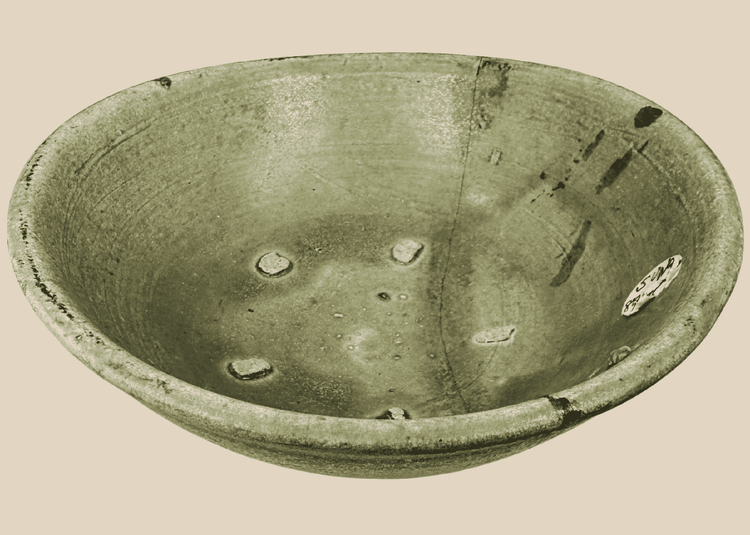
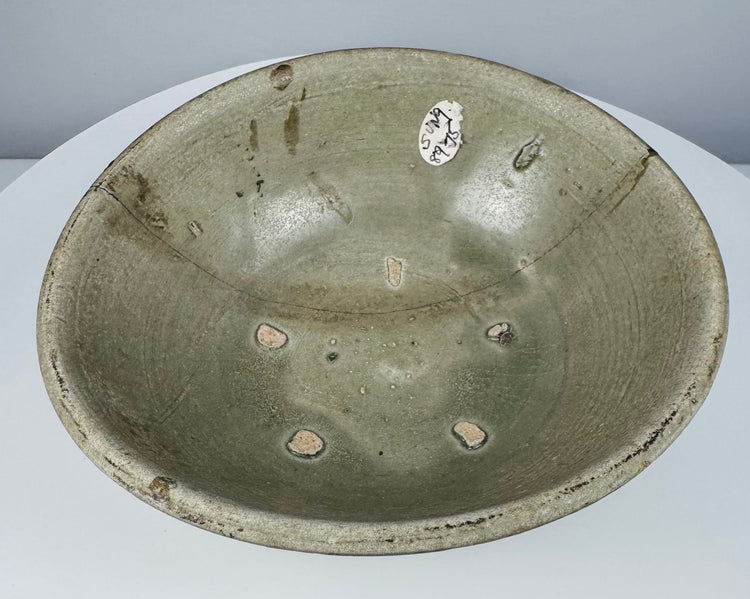
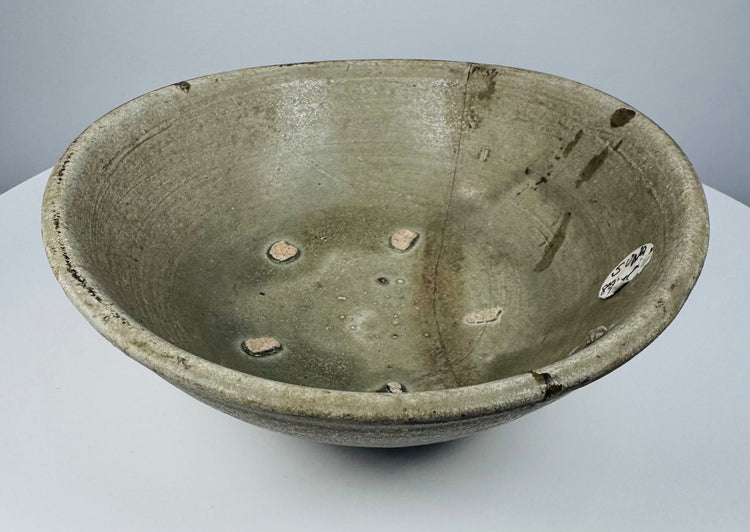
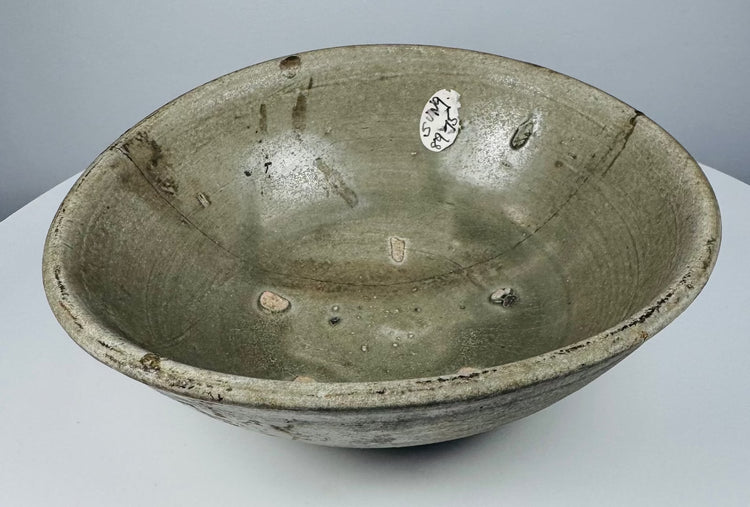
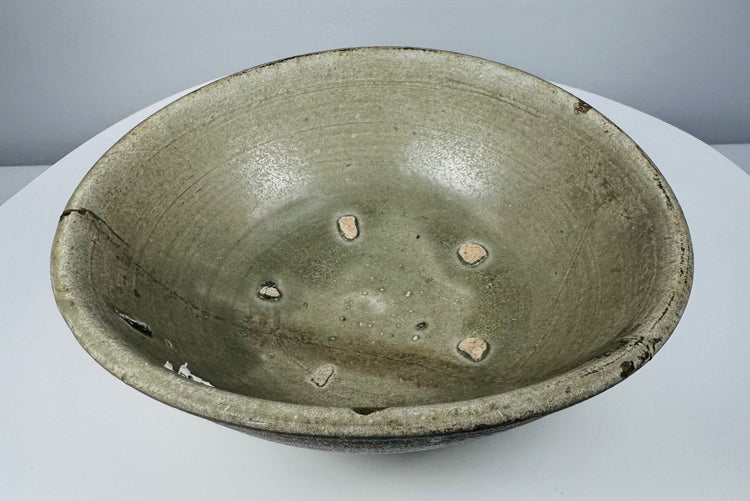
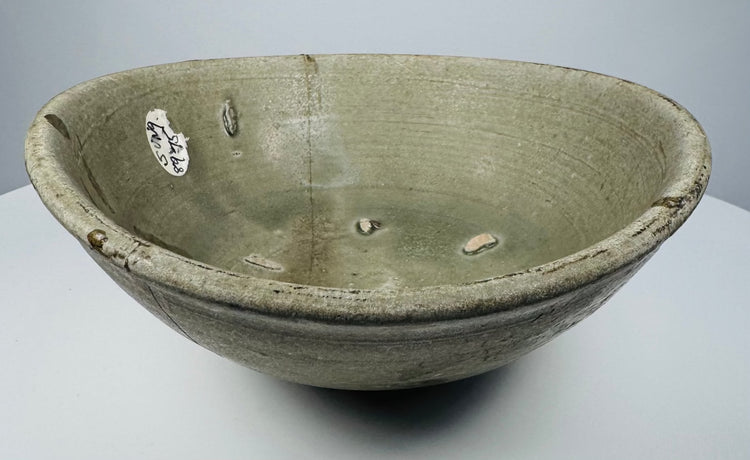
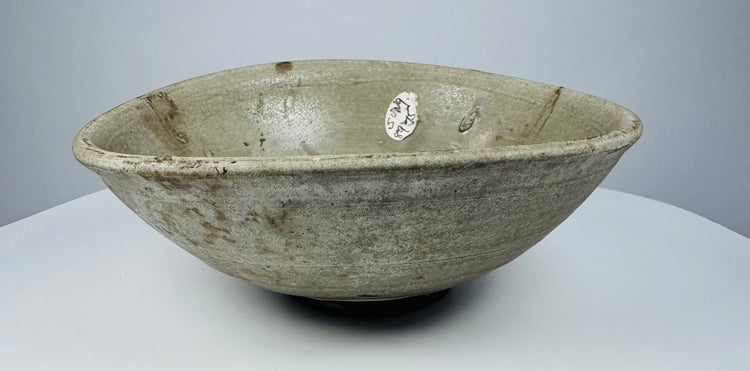
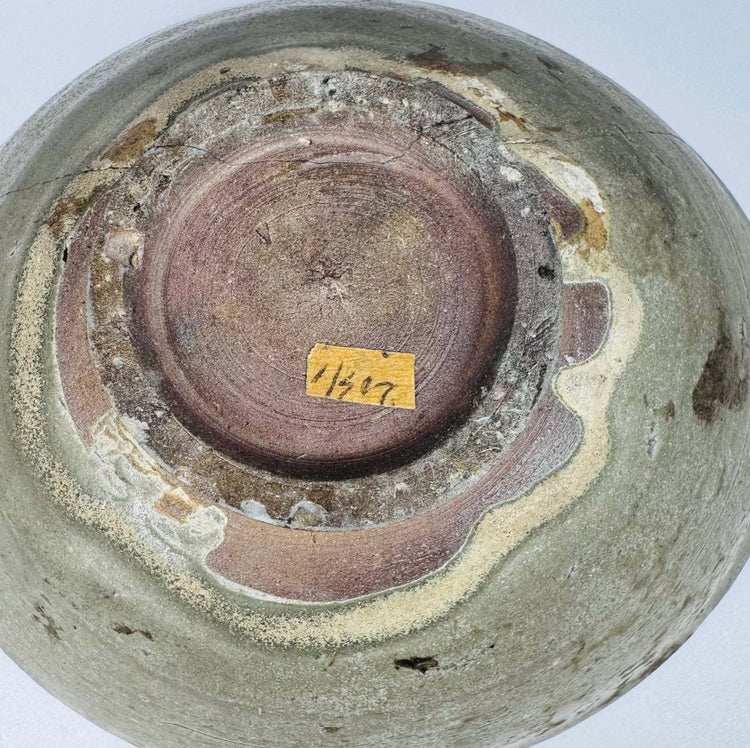
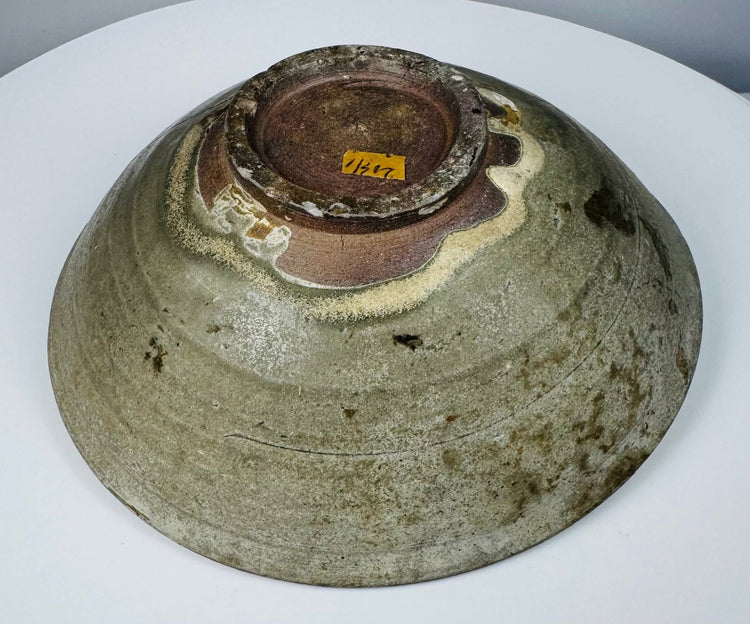
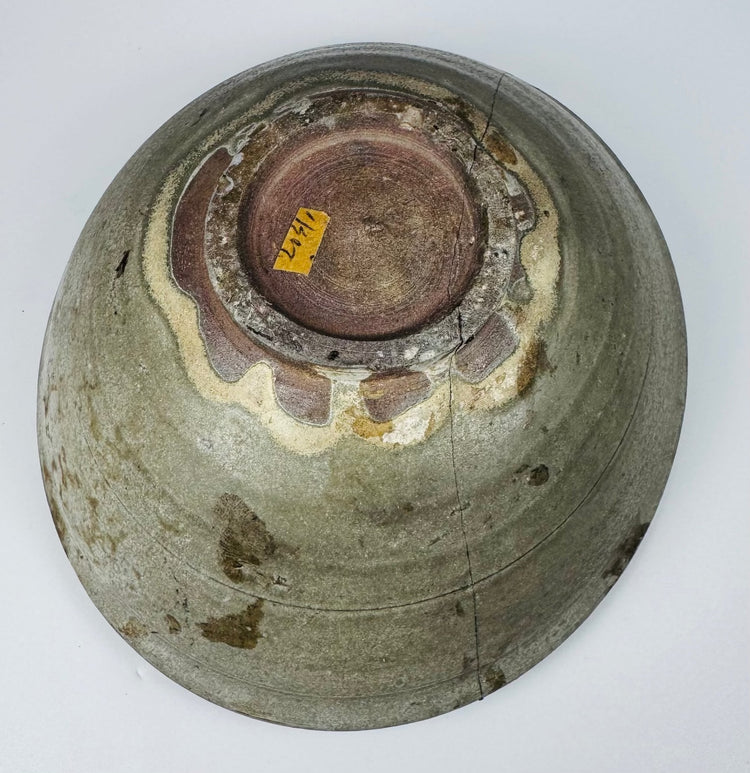
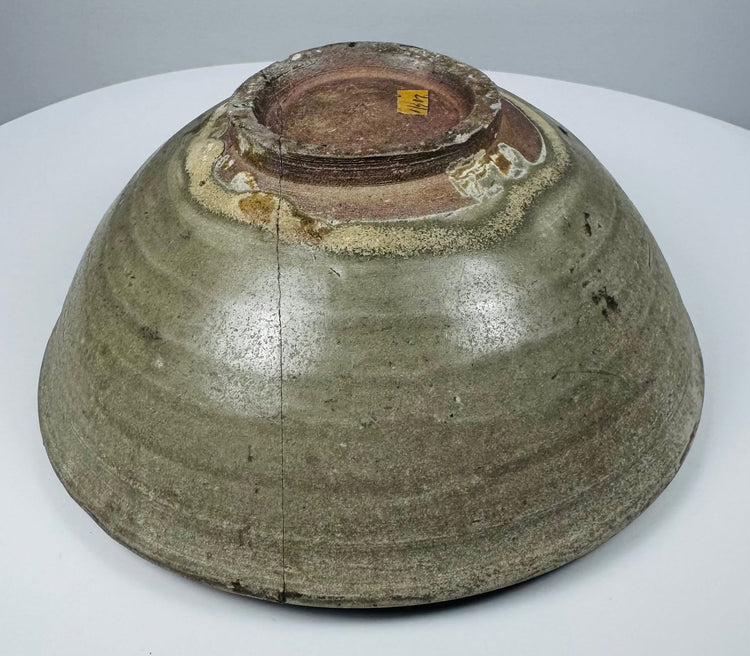
A compelling early Southeast Asian celadon bowl attributed to the historic ceramic-producing kilns of northern Vietnam. The vessel has broad rounded sides, a slightly everted rim, and a compact circular foot. Its interior and exterior are covered with a subdued gray-green celadon glaze, with concentric throwing lines and natural kiln irregularities remaining visible throughout.
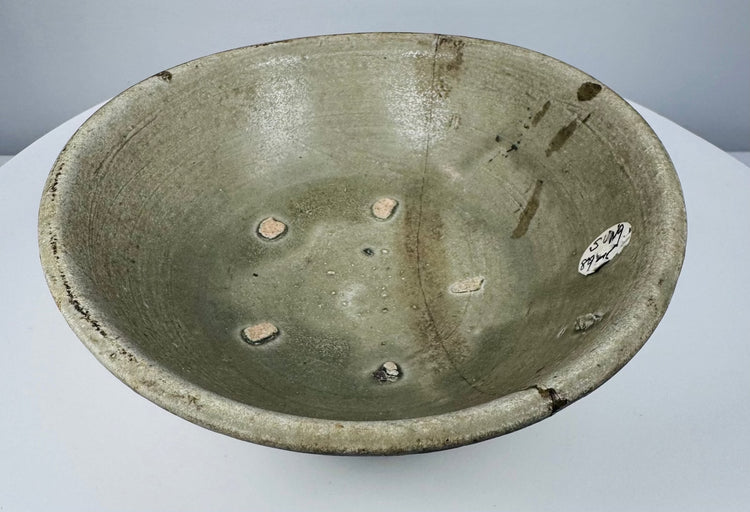
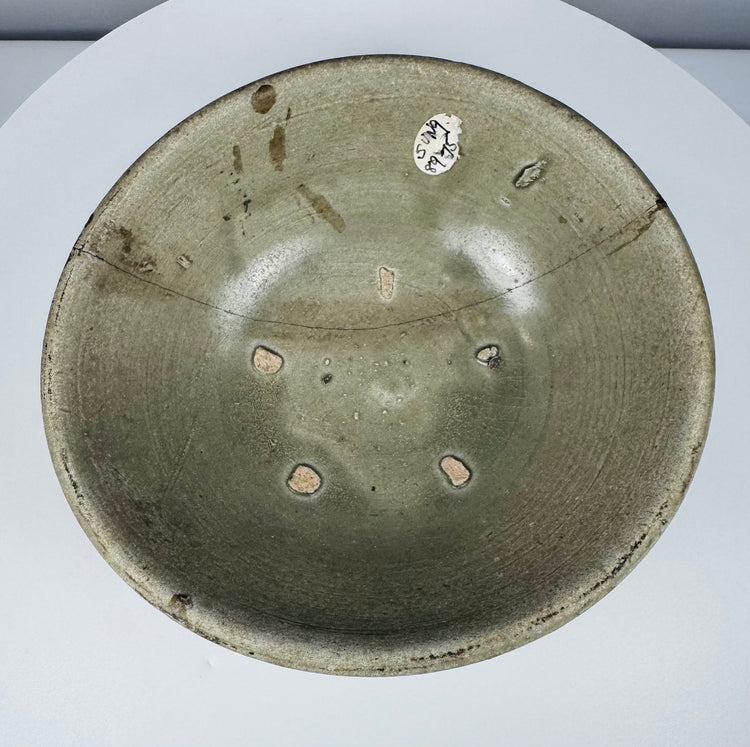
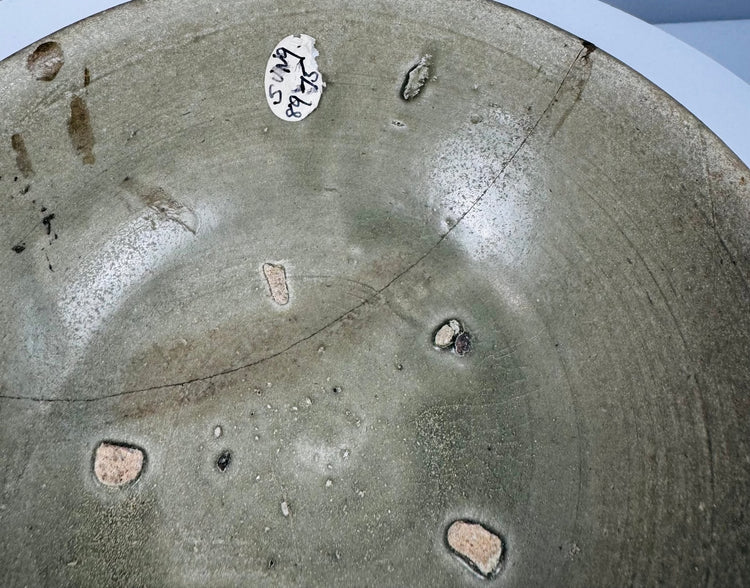
Five exposed clay firing-spur marks appear within the bowl. These marks were created when vessels were stacked and separated inside the kiln and are an important characteristic associated with early Vietnamese ceramic production.
Of special interest are the older collection and inventory labels that remain attached to the bowl. A partially legible handwritten white oval label survives inside, while a small yellow inventory label numbered 1417 remains beneath the foot. Additional fragments of earlier paper labels and adhesive remain around the foot ring. These should be preserved as part of the bowl’s collection history.
Features
- Early gray-green celadon glaze
- Wheel-thrown stoneware construction
- Five prominent interior firing-spur marks
- Unglazed reddish-brown foot and recessed base
- Visible throwing lines and original kiln irregularities
- Older handwritten white collection label retained inside
- Yellow inventory label numbered 1417 beneath the foot
- Additional historic paper-label remnants surrounding the foot
Cultural Significance
Celadon was highly prized throughout East and Southeast Asia for its restrained, jade-like colouring. Vietnamese potters adopted ceramic technologies originating in China while developing their own distinctive clay bodies, glazes, vessel forms, and kiln-stacking methods.
During the Lý and Trần dynasties, northern Vietnamese kilns became important producers of celadon vessels for domestic use and regional trade. The clearly visible firing marks on this example provide direct evidence of the methods used to stack and separate bowls during firing, making the vessel both an attractive collectible and an instructive example of early ceramic technology.
Condition
Presented in extensively aged and collected condition. The bowl displays several long cracks extending through the body and reaching the rim, including a prominent crack crossing much of the interior. There are scattered rim chips, glaze losses, abrasions, staining, surface deposits, firing imperfections, and general wear consistent with considerable age.
The interior firing-spur marks are original evidence of kiln production and should not be mistaken for later damage.
The surviving collection labels, paper fragments, and adhesive residues remain in place and form an important part of the object’s collection history. They should not be removed.
Dimensions (Approximate)
Diameter: 6.25 in
Height: 2.2 in
Age (Approximate)
625–925 years old
Provenance
Formerly part of a private collection in Long Island, New York, USA.
Subsequently offered through World Auction Gallery, East Meadow, New York, in 2024. World Auction Gallery is a family-owned auction house offering curated sales of fine art, antiques, jewelry, and estate collections to an international market.
Thereafter, acquired by a private collector in Toronto, Ontario, Canada.
The bowl retains multiple older collection and inventory labels, including a yellow handwritten label numbered 1417, a partially legible white oval label inside the bowl, and further fragmentary paper labels surrounding the foot.
Learn More
Discover a comparable early Vietnamese celadon bowl in the collection of the Smithsonian’s National Museum of Asian Art
Explore our Collection of Eastern Antiquities and Cultural Relics
Description
Historical Context & Origin
Region: Northern Vietnam, likely Red River Delta kilns
Material: Wheel-thrown stoneware with gray-green celadon glaze
Period: Lý–Trần Dynasty, circa 12th–14th century
Description
A compelling early Southeast Asian celadon bowl attributed to the historic ceramic-producing kilns of northern Vietnam. The vessel has broad rounded sides, a slightly everted rim, and a compact circular foot. Its interior and exterior are covered with a subdued gray-green celadon glaze, with concentric throwing lines and natural kiln irregularities remaining visible throughout.
Five exposed clay firing-spur marks appear within the bowl. These marks were created when vessels were stacked and separated inside the kiln and are an important characteristic associated with early Vietnamese ceramic production.
Of special interest are the older collection and inventory labels that remain attached to the bowl. A partially legible handwritten white oval label survives inside, while a small yellow inventory label numbered 1417 remains beneath the foot. Additional fragments of earlier paper labels and adhesive remain around the foot ring. These should be preserved as part of the bowl’s collection history.
Features
- Early gray-green celadon glaze
- Wheel-thrown stoneware construction
- Five prominent interior firing-spur marks
- Unglazed reddish-brown foot and recessed base
- Visible throwing lines and original kiln irregularities
- Older handwritten white collection label retained inside
- Yellow inventory label numbered 1417 beneath the foot
- Additional historic paper-label remnants surrounding the foot
Cultural Significance
Celadon was highly prized throughout East and Southeast Asia for its restrained, jade-like colouring. Vietnamese potters adopted ceramic technologies originating in China while developing their own distinctive clay bodies, glazes, vessel forms, and kiln-stacking methods.
During the Lý and Trần dynasties, northern Vietnamese kilns became important producers of celadon vessels for domestic use and regional trade. The clearly visible firing marks on this example provide direct evidence of the methods used to stack and separate bowls during firing, making the vessel both an attractive collectible and an instructive example of early ceramic technology.
Condition
Presented in extensively aged and collected condition. The bowl displays several long cracks extending through the body and reaching the rim, including a prominent crack crossing much of the interior. There are scattered rim chips, glaze losses, abrasions, staining, surface deposits, firing imperfections, and general wear consistent with considerable age.
The interior firing-spur marks are original evidence of kiln production and should not be mistaken for later damage.
The surviving collection labels, paper fragments, and adhesive residues remain in place and form an important part of the object’s collection history. They should not be removed.
Dimensions (Approximate)
Diameter: 6.25 in
Height: 2.2 in
Age (Approximate)
625–925 years old
Provenance
Formerly part of a private collection in Long Island, New York, USA.
Subsequently offered through World Auction Gallery, East Meadow, New York, in 2024. World Auction Gallery is a family-owned auction house offering curated sales of fine art, antiques, jewelry, and estate collections to an international market.
Thereafter, acquired by a private collector in Toronto, Ontario, Canada.
The bowl retains multiple older collection and inventory labels, including a yellow handwritten label numbered 1417, a partially legible white oval label inside the bowl, and further fragmentary paper labels surrounding the foot.
Learn More
Discover a comparable early Vietnamese celadon bowl in the collection of the Smithsonian’s National Museum of Asian Art
Explore our Collection of Eastern Antiquities and Cultural Relics
You May Also Like
