

Mammoth Molar Tooth with Jawbone Fragment | Pleistocene Ice Age
Couldn't load pickup availability







Mammoth Molar Tooth with Jawbone Fragment | Pleistocene Ice Age
Description
More
Less
Historical Context & Origin
Region: Northern Hemisphere, encompassing prehistoric North America and Eurasia; precise discovery location undetermined
Material: Fossilized mammoth molar tooth with associated mineralized bone
Period: Pleistocene Epoch, circa 2.58 million–11,700 years ago (attributed to Mammuthus sp.)
Description
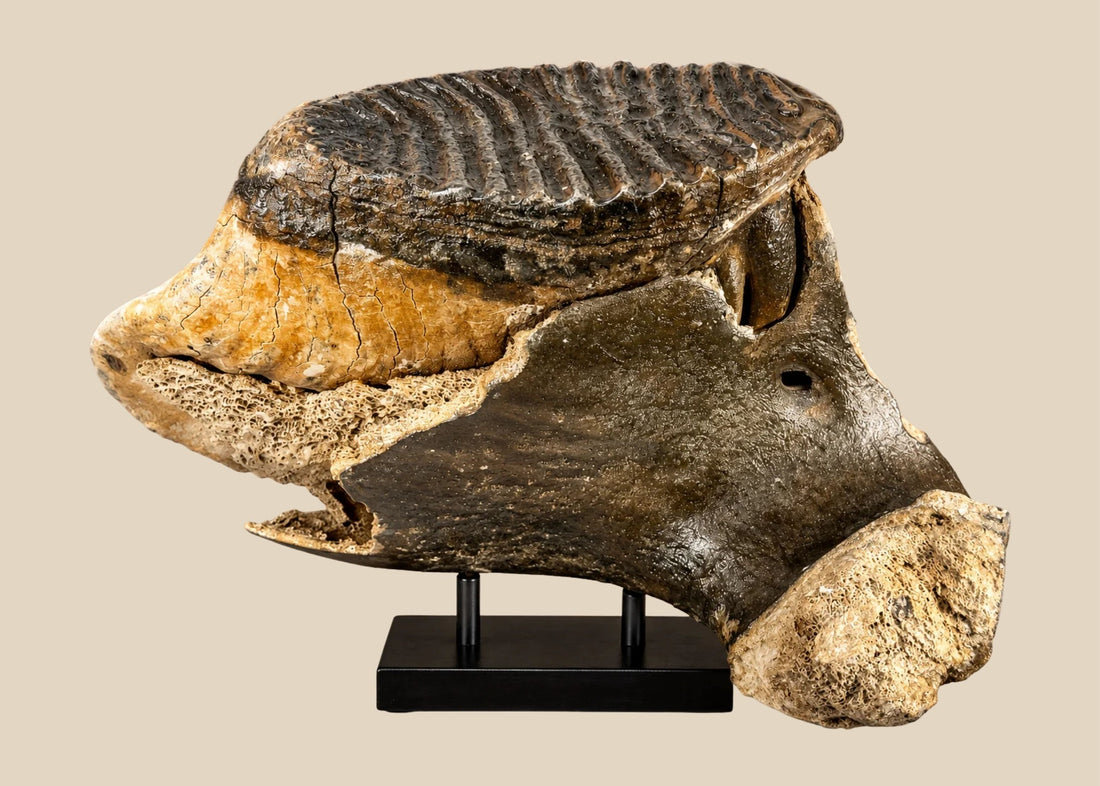
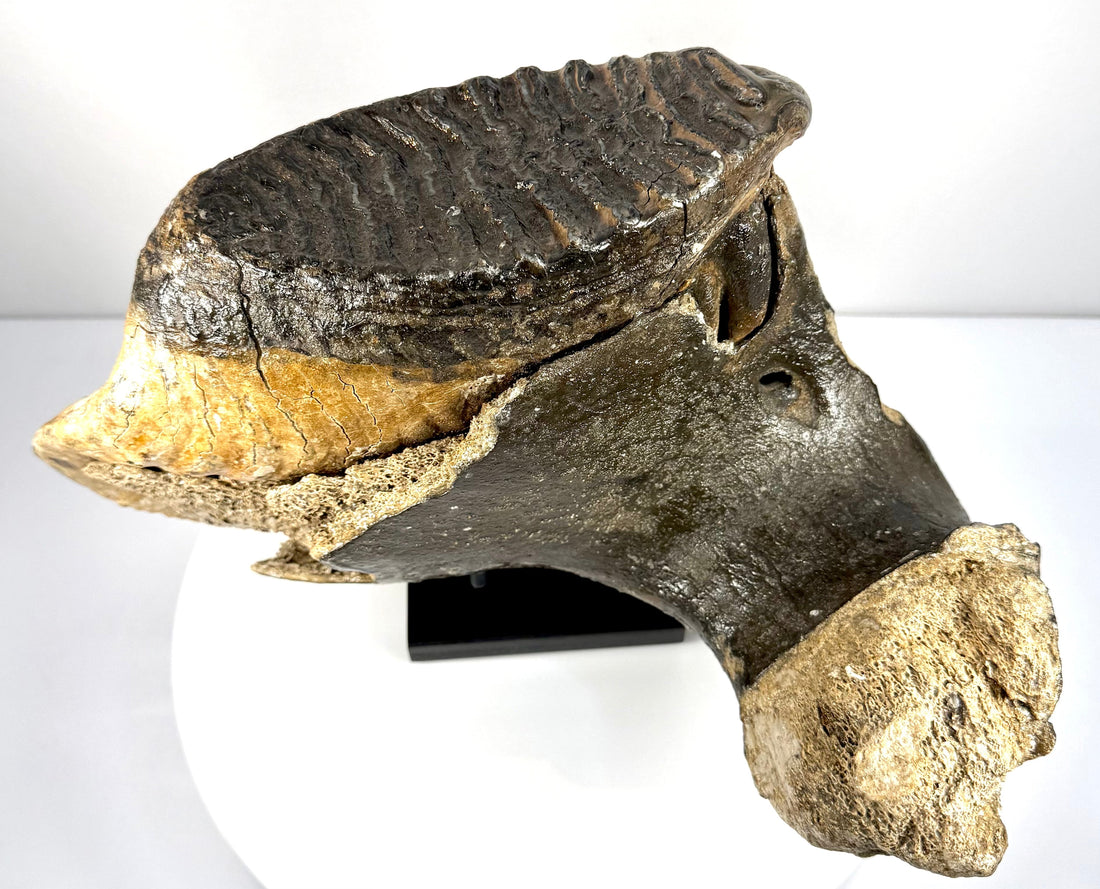
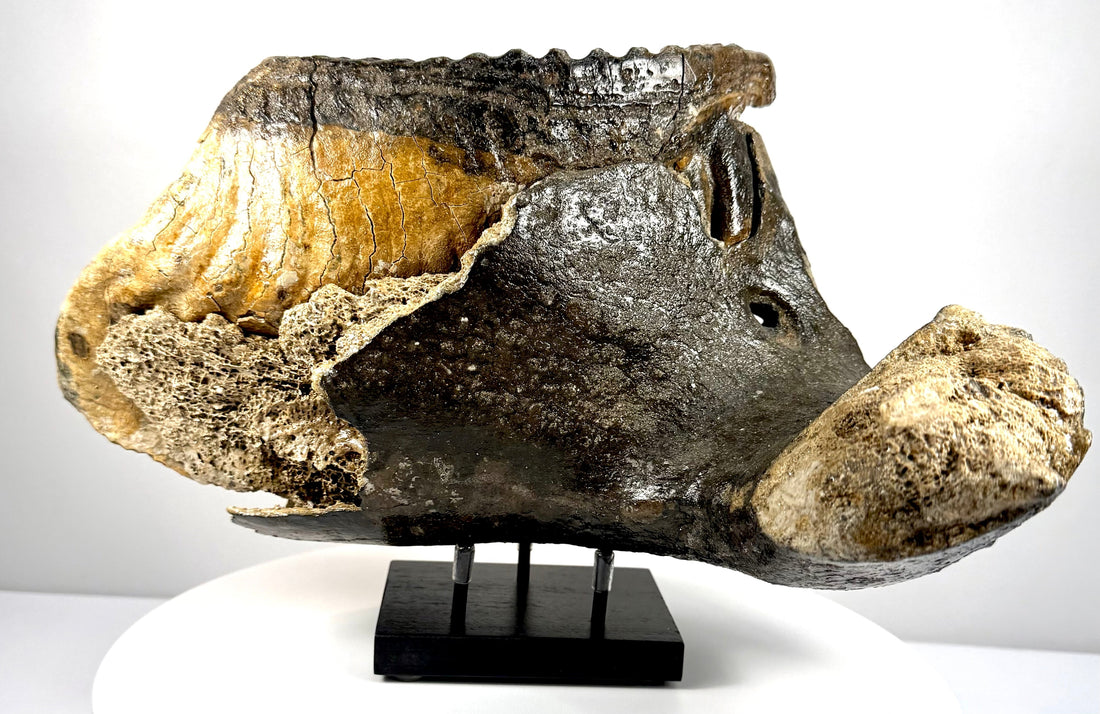
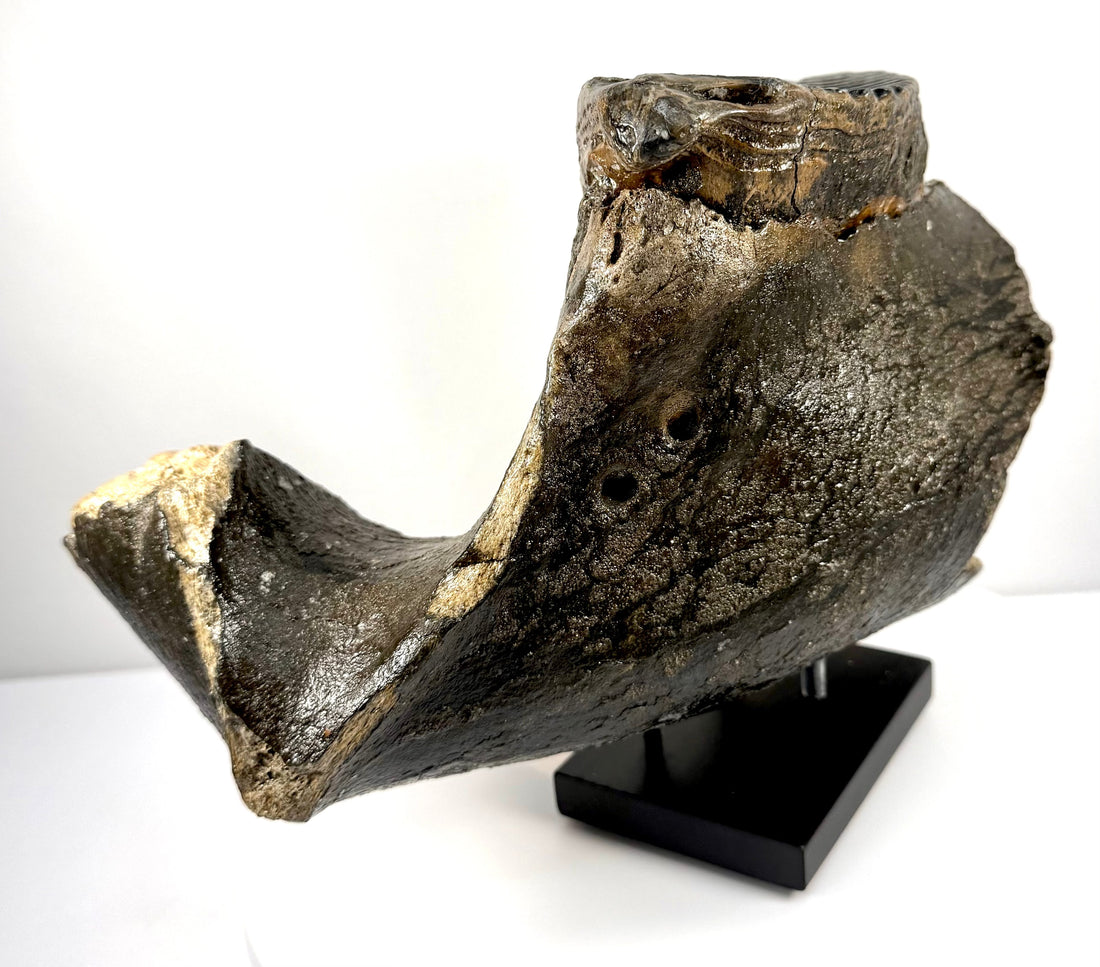
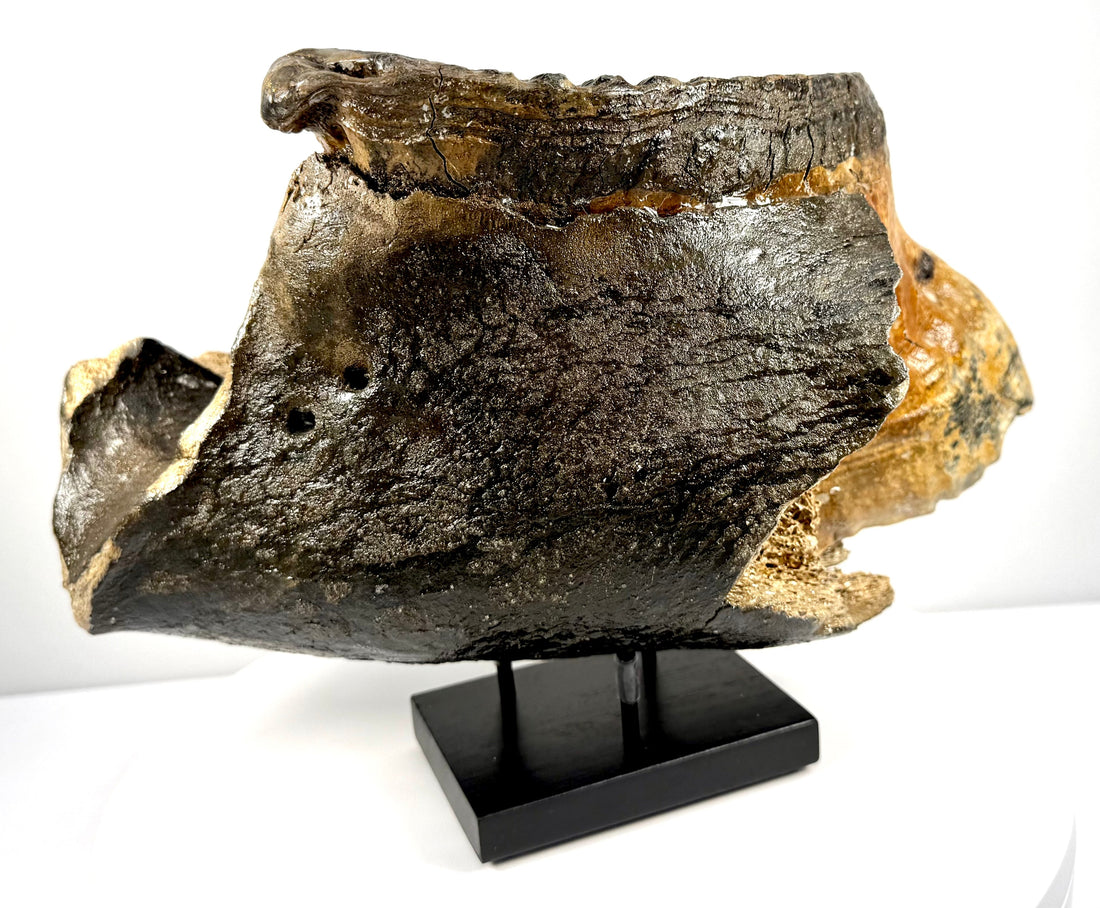
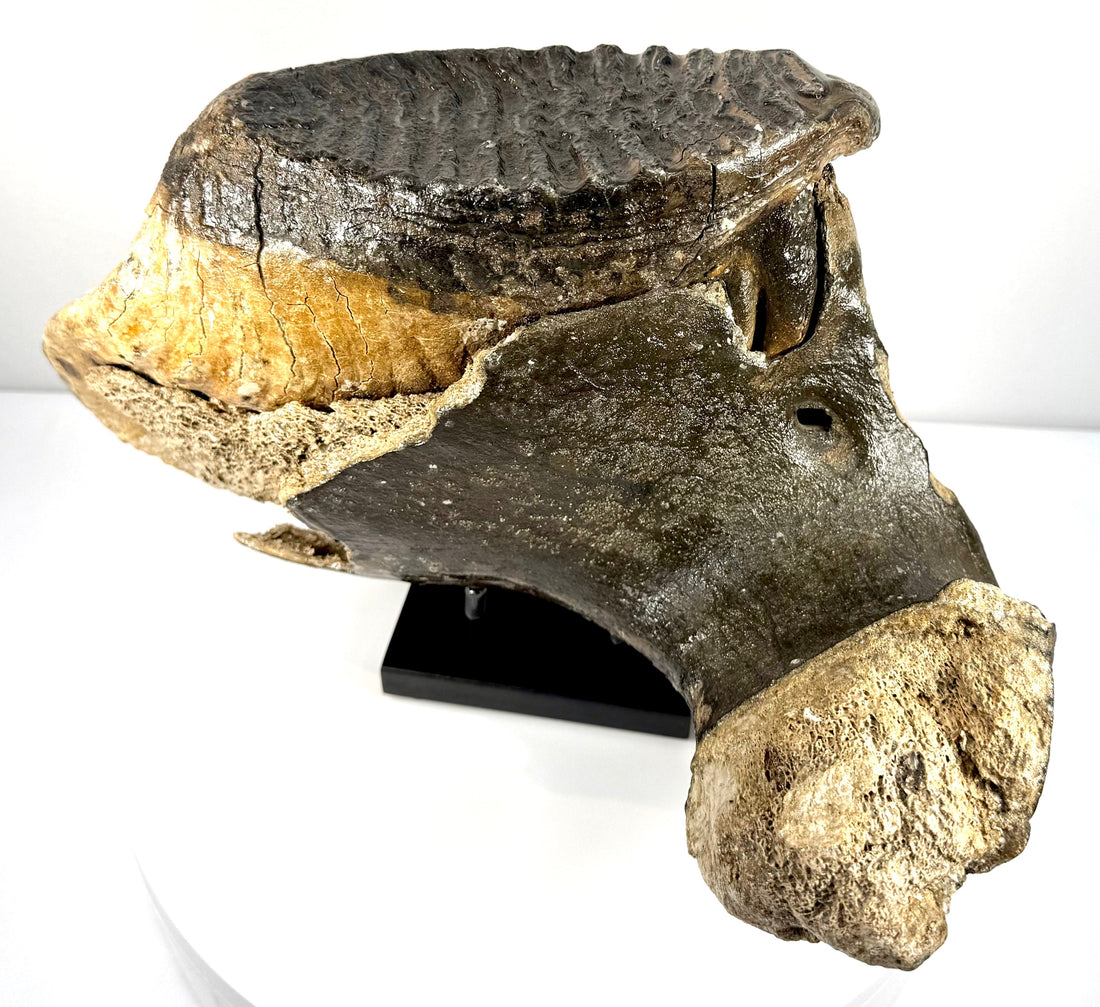
This impressive Pleistocene fossil consists of a substantial mammoth molar preserved with an extensive section of associated mineralized bone, consistent with a partial jaw. Measuring approximately 13 inches in length, the specimen showcases the distinctive dental anatomy of one of the most recognizable animals of the Ice Age.
The elongated molar features closely arranged parallel enamel plates, forming a broad grinding surface adapted to processing tough vegetation. Its dark brown to nearly black enamel ridges contrast beautifully with the golden amber, pale beige, and charcoal coloration of the surrounding fossilized bone.
The associated bone displays prominent anatomical projections, natural cavities, and exposed porous, honeycomb-like internal textures, creating a distinctive sculptural appearance. The specimen's substantial size and preserved dental structure make it a remarkable natural-history display piece. Its precise jaw position and anatomical orientation have not been independently established.
Features
- Substantial fossilized mammoth molar with associated mineralized bone
- Closely arranged enamel plates forming the characteristic mammoth grinding surface
- Prominent transverse ridges and naturally undulating dental patterns
- Contrasting dark brown, charcoal, golden amber, and pale beige coloration
- Extensive fossilized bone structure with irregular projections and anatomical cavities
- Exposed porous, honeycomb-like internal bone structure
- Naturally preserved enamel wear and mineralized surface textures
- Distinctive sculptural profile with recognizable prehistoric dental anatomy
Cultural Significance
Mammoths, belonging to the extinct genus Mammuthus, were among the most iconic large mammals of the Ice Age. Closely related to modern elephants, they inhabited diverse environments across North America, Europe, and Asia. Different species, including the woolly mammoth and Columbian mammoth, developed remarkable adaptations to their respective climates and landscapes.
Mammoth molars were specially adapted to grinding tough vegetation, featuring closely arranged enamel plates that maintained an effective chewing surface despite continuous wear. These distinctive dental structures provide paleontologists with valuable insights into species identification, dietary habits, physical development, and evolutionary history.
Mammoths also played an important role in prehistoric human history, appearing in ancient cave art and providing bone and ivory for tools, ornaments, and structural materials. Although most populations disappeared near the end of the Pleistocene, isolated groups survived until approximately 4,000 years ago. Fossilized mammoth remains offer a tangible connection to this remarkable period of Earth's natural history.
Condition
Preserved as a substantial fossilized molar with associated fragmentary bone material, displaying natural surface weathering, mineralization, fractures, abrasions, and localized losses consistent with its geological preservation. The molar retains its distinctive arrangement of closely spaced enamel plates, with visible fissures, recessed grooves, and variations in wear. The surrounding bone exhibits contrasting dark brown, charcoal, golden amber, and pale beige coloration, with exposed porous, honeycomb-like internal textures along fractured edges. Irregular margins, shallow cavities, and incomplete sections are present throughout. The presence or extent of any previous conservation, stabilization, consolidation, or restoration has not been independently established. Despite these irregularities, the specimen retains its substantial form, recognizable dental structure, and impressive overall presentation.
Dimensions (Approximate)
Length: 13 in
Height: 7 in
Width: 10 in
Measurements exclude the display stand.
Age (Approximate)
11,700–2,580,000 years old (Pleistocene Epoch; precise geological age undetermined)
Provenance
Acquired from Broken Rock Fossil Shop, Belfast, Prince Edward Island, Canada, an independent fossil and mineral shop operated by Linda Nobles and specializing in dinosaur fossils, minerals, crystals, and other natural-history specimens.
Subsequently acquired by a private collector in Toronto, Ontario, Canada.
Learn More
Discover a comparable fossilized Columbian mammoth jaw recovered from Florida's Aucilla River, offering insight into the dental anatomy and prehistoric history of these Ice Age giants, through the collections of the Florida Museum of Natural History
Explore additional prehistoric fossils, scientific objects, and remarkable natural-history specimens in our Science, Exploration & Curiosities Collection
Description
Historical Context & Origin
Region: Northern Hemisphere, encompassing prehistoric North America and Eurasia; precise discovery location undetermined
Material: Fossilized mammoth molar tooth with associated mineralized bone
Period: Pleistocene Epoch, circa 2.58 million–11,700 years ago (attributed to Mammuthus sp.)
Description
This impressive Pleistocene fossil consists of a substantial mammoth molar preserved with an extensive section of associated mineralized bone, consistent with a partial jaw. Measuring approximately 13 inches in length, the specimen showcases the distinctive dental anatomy of one of the most recognizable animals of the Ice Age.
The elongated molar features closely arranged parallel enamel plates, forming a broad grinding surface adapted to processing tough vegetation. Its dark brown to nearly black enamel ridges contrast beautifully with the golden amber, pale beige, and charcoal coloration of the surrounding fossilized bone.
The associated bone displays prominent anatomical projections, natural cavities, and exposed porous, honeycomb-like internal textures, creating a distinctive sculptural appearance. The specimen's substantial size and preserved dental structure make it a remarkable natural-history display piece. Its precise jaw position and anatomical orientation have not been independently established.
Features
- Substantial fossilized mammoth molar with associated mineralized bone
- Closely arranged enamel plates forming the characteristic mammoth grinding surface
- Prominent transverse ridges and naturally undulating dental patterns
- Contrasting dark brown, charcoal, golden amber, and pale beige coloration
- Extensive fossilized bone structure with irregular projections and anatomical cavities
- Exposed porous, honeycomb-like internal bone structure
- Naturally preserved enamel wear and mineralized surface textures
- Distinctive sculptural profile with recognizable prehistoric dental anatomy
Cultural Significance
Mammoths, belonging to the extinct genus Mammuthus, were among the most iconic large mammals of the Ice Age. Closely related to modern elephants, they inhabited diverse environments across North America, Europe, and Asia. Different species, including the woolly mammoth and Columbian mammoth, developed remarkable adaptations to their respective climates and landscapes.
Mammoth molars were specially adapted to grinding tough vegetation, featuring closely arranged enamel plates that maintained an effective chewing surface despite continuous wear. These distinctive dental structures provide paleontologists with valuable insights into species identification, dietary habits, physical development, and evolutionary history.
Mammoths also played an important role in prehistoric human history, appearing in ancient cave art and providing bone and ivory for tools, ornaments, and structural materials. Although most populations disappeared near the end of the Pleistocene, isolated groups survived until approximately 4,000 years ago. Fossilized mammoth remains offer a tangible connection to this remarkable period of Earth's natural history.
Condition
Preserved as a substantial fossilized molar with associated fragmentary bone material, displaying natural surface weathering, mineralization, fractures, abrasions, and localized losses consistent with its geological preservation. The molar retains its distinctive arrangement of closely spaced enamel plates, with visible fissures, recessed grooves, and variations in wear. The surrounding bone exhibits contrasting dark brown, charcoal, golden amber, and pale beige coloration, with exposed porous, honeycomb-like internal textures along fractured edges. Irregular margins, shallow cavities, and incomplete sections are present throughout. The presence or extent of any previous conservation, stabilization, consolidation, or restoration has not been independently established. Despite these irregularities, the specimen retains its substantial form, recognizable dental structure, and impressive overall presentation.
Dimensions (Approximate)
Length: 13 in
Height: 7 in
Width: 10 in
Measurements exclude the display stand.
Age (Approximate)
11,700–2,580,000 years old (Pleistocene Epoch; precise geological age undetermined)
Provenance
Acquired from Broken Rock Fossil Shop, Belfast, Prince Edward Island, Canada, an independent fossil and mineral shop operated by Linda Nobles and specializing in dinosaur fossils, minerals, crystals, and other natural-history specimens.
Subsequently acquired by a private collector in Toronto, Ontario, Canada.
Learn More
Discover a comparable fossilized Columbian mammoth jaw recovered from Florida's Aucilla River, offering insight into the dental anatomy and prehistoric history of these Ice Age giants, through the collections of the Florida Museum of Natural History
Explore additional prehistoric fossils, scientific objects, and remarkable natural-history specimens in our Science, Exploration & Curiosities Collection
You May Also Like
