



Middle Elamite Terracotta Nude Female Figurine | Possible Goddess | Circa 1500–1100 BCE
Couldn't load pickup availability


Middle Elamite Terracotta Nude Female Figurine | Possible Goddess | Circa 1500–1100 BCE
Description
More
Less
Historical Context & Origin
Region: Ancient Elam, Southwestern Iran (Modern-Day Iran)
Material: Moulded terracotta clay
Period: Middle Elamite Period, circa 1500–1100 BCE
Description
This ancient terracotta female figurine dates to the Middle Elamite period, circa 1500–1100 BCE, and represents the distinctive artistic traditions of Elam, one of the important civilizations of the ancient Near East. Located primarily in what is now southwestern Iran, the Elamite civilization developed sophisticated traditions of sculpture, ceramics, and religious imagery throughout the second millennium BCE.
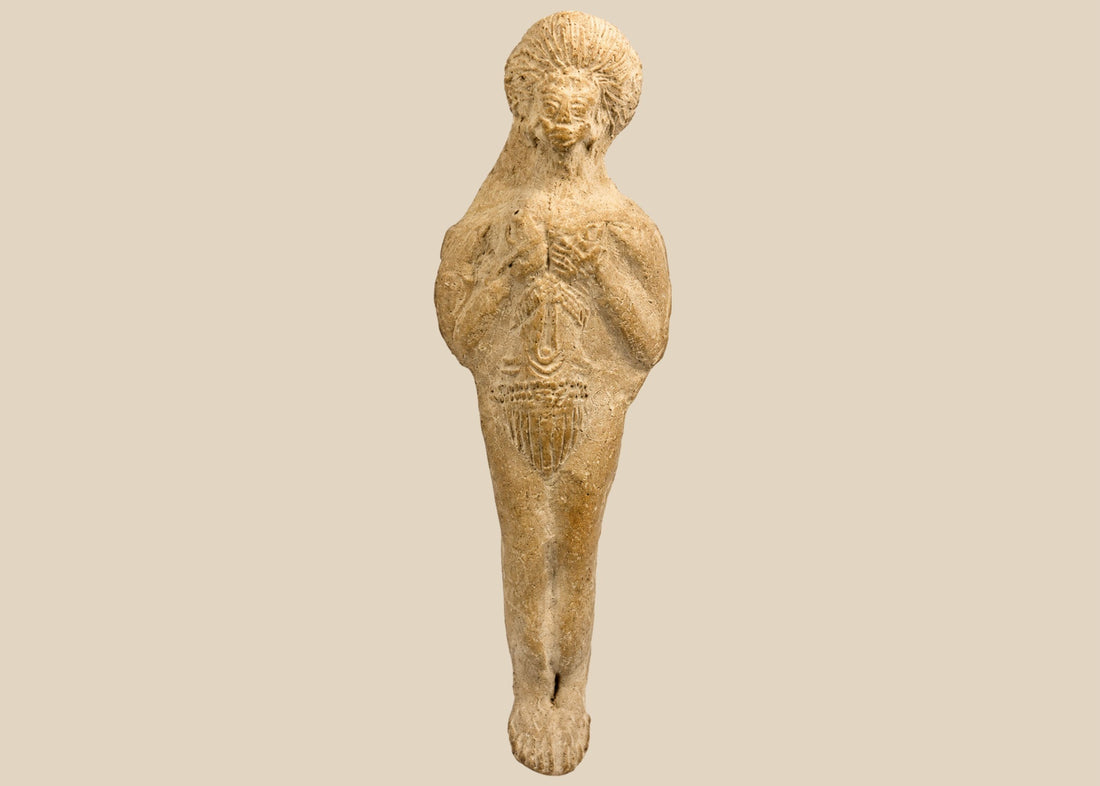
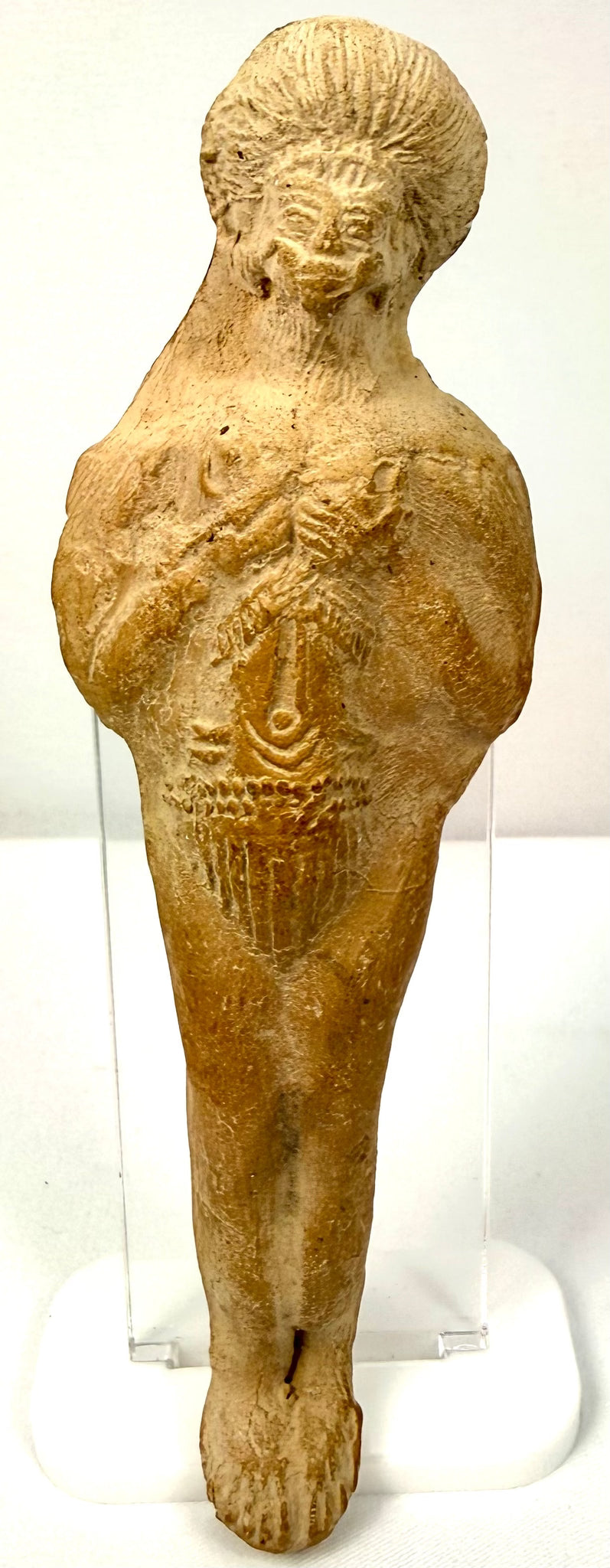
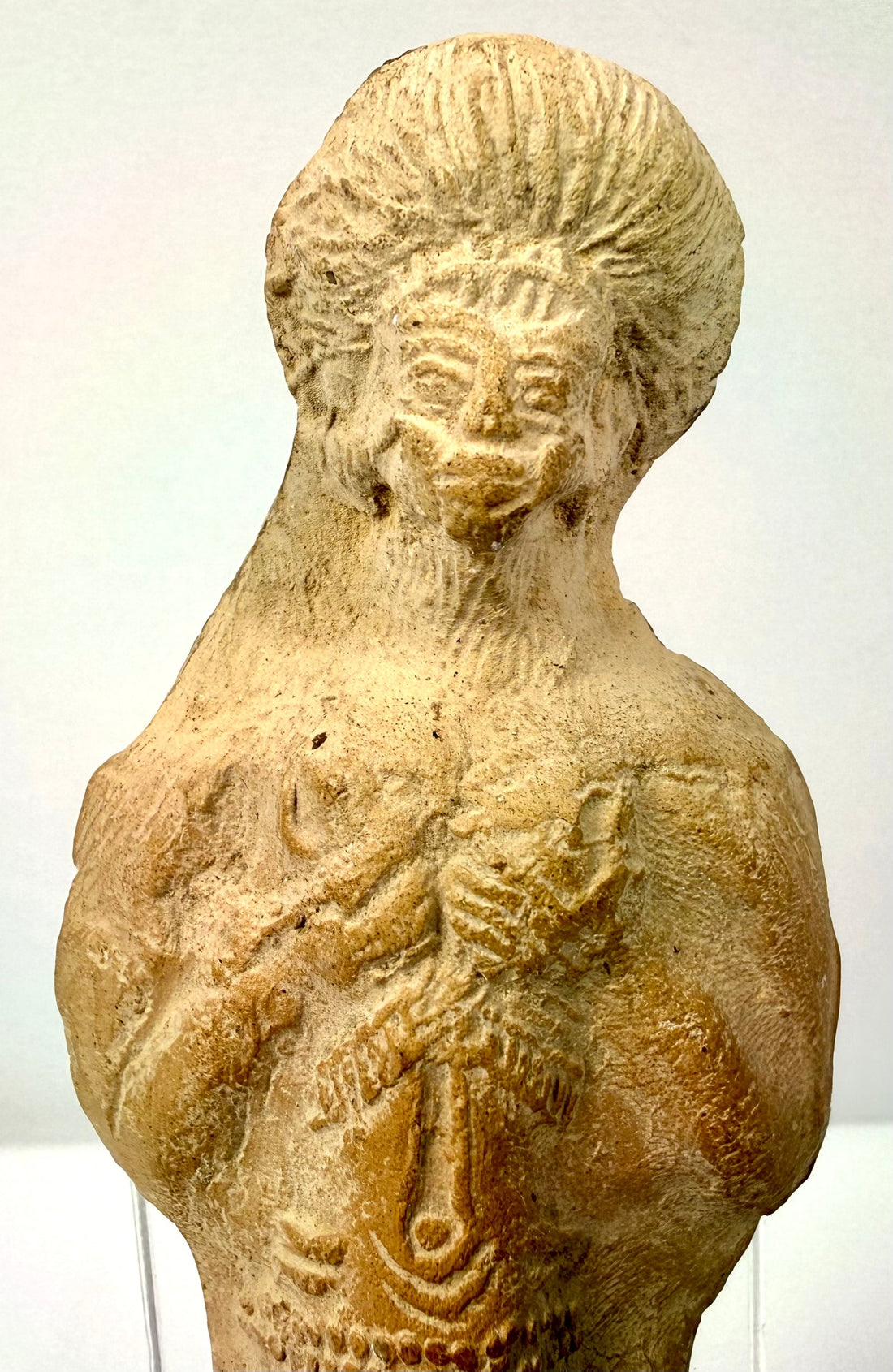
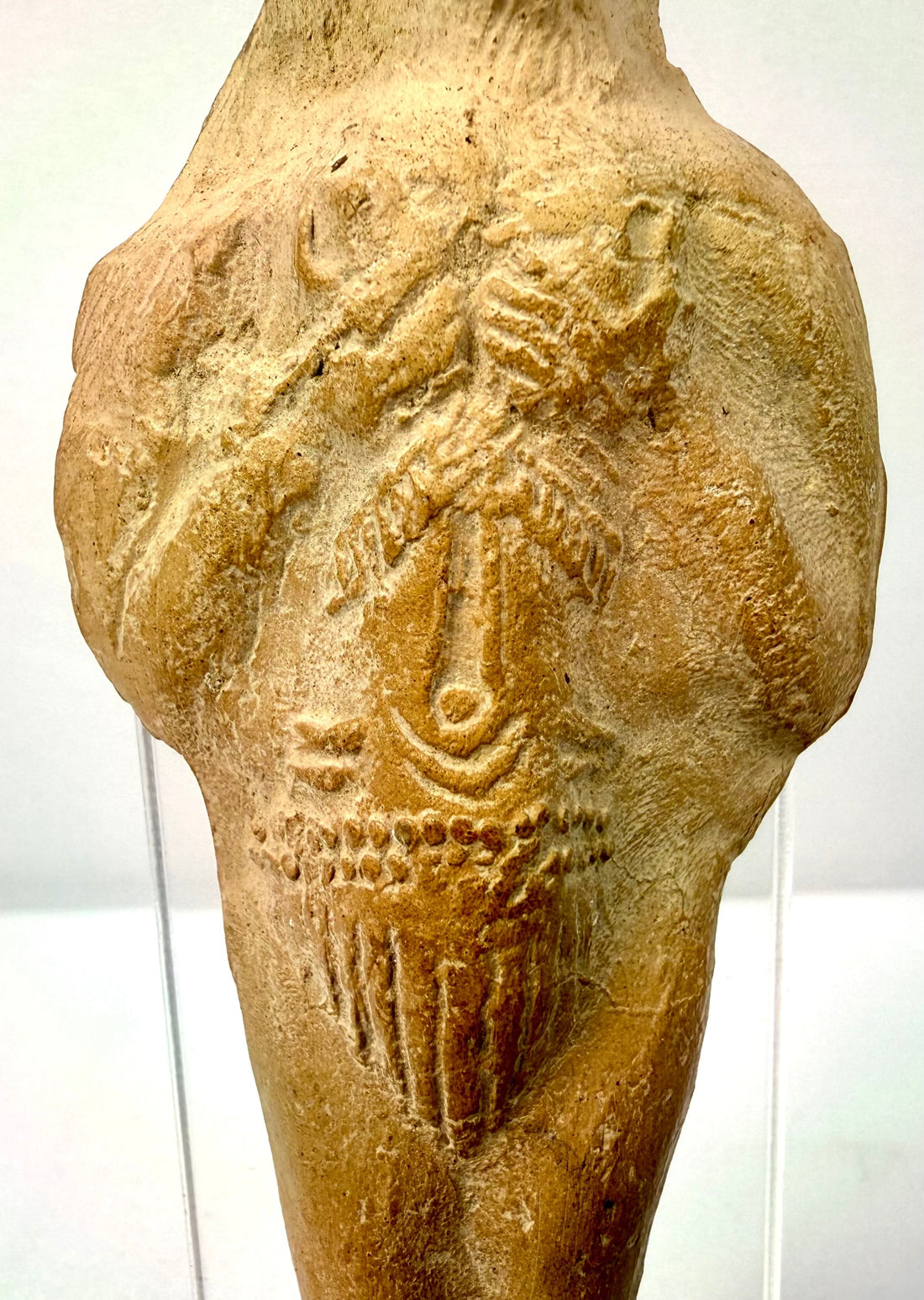
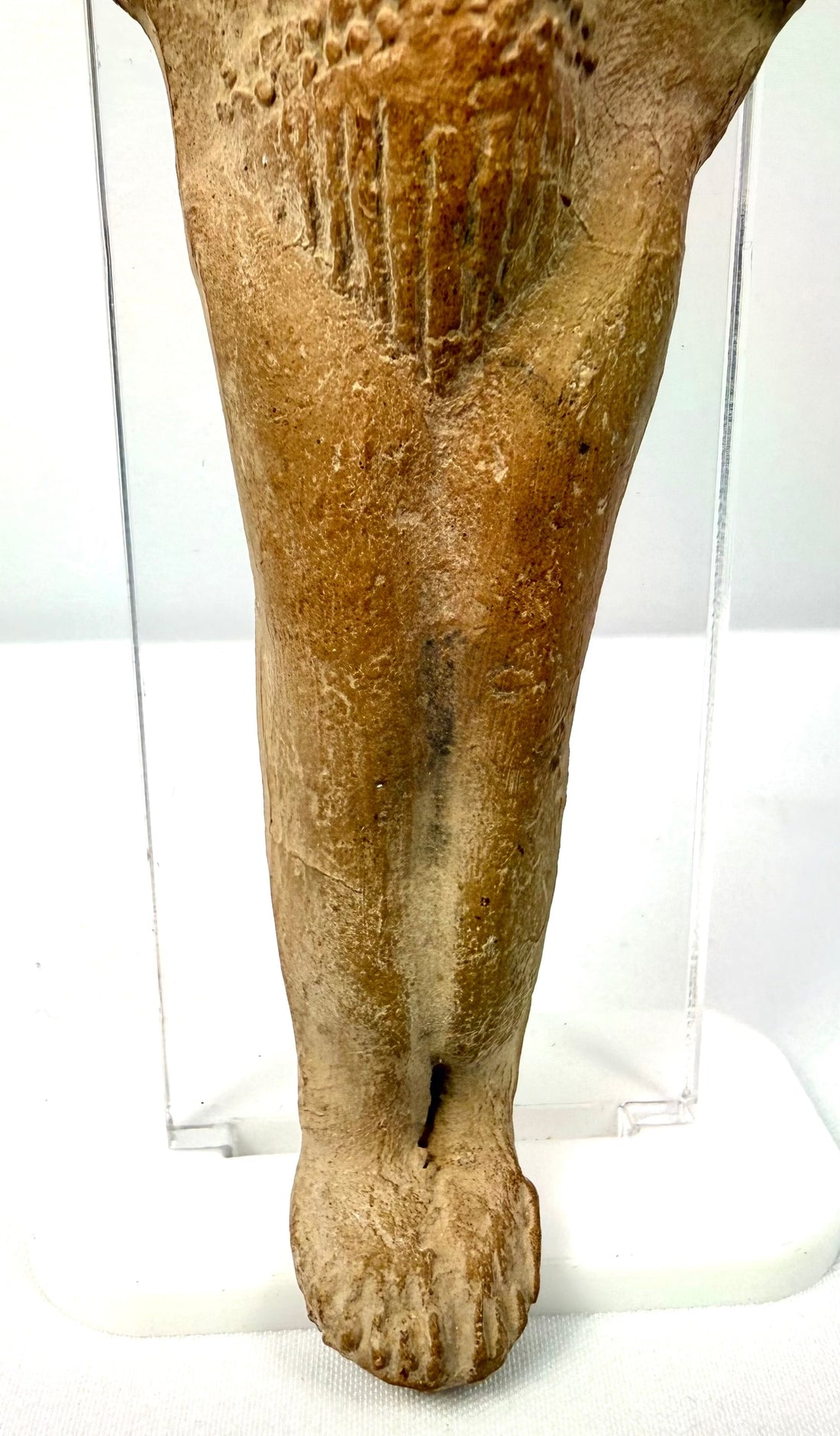
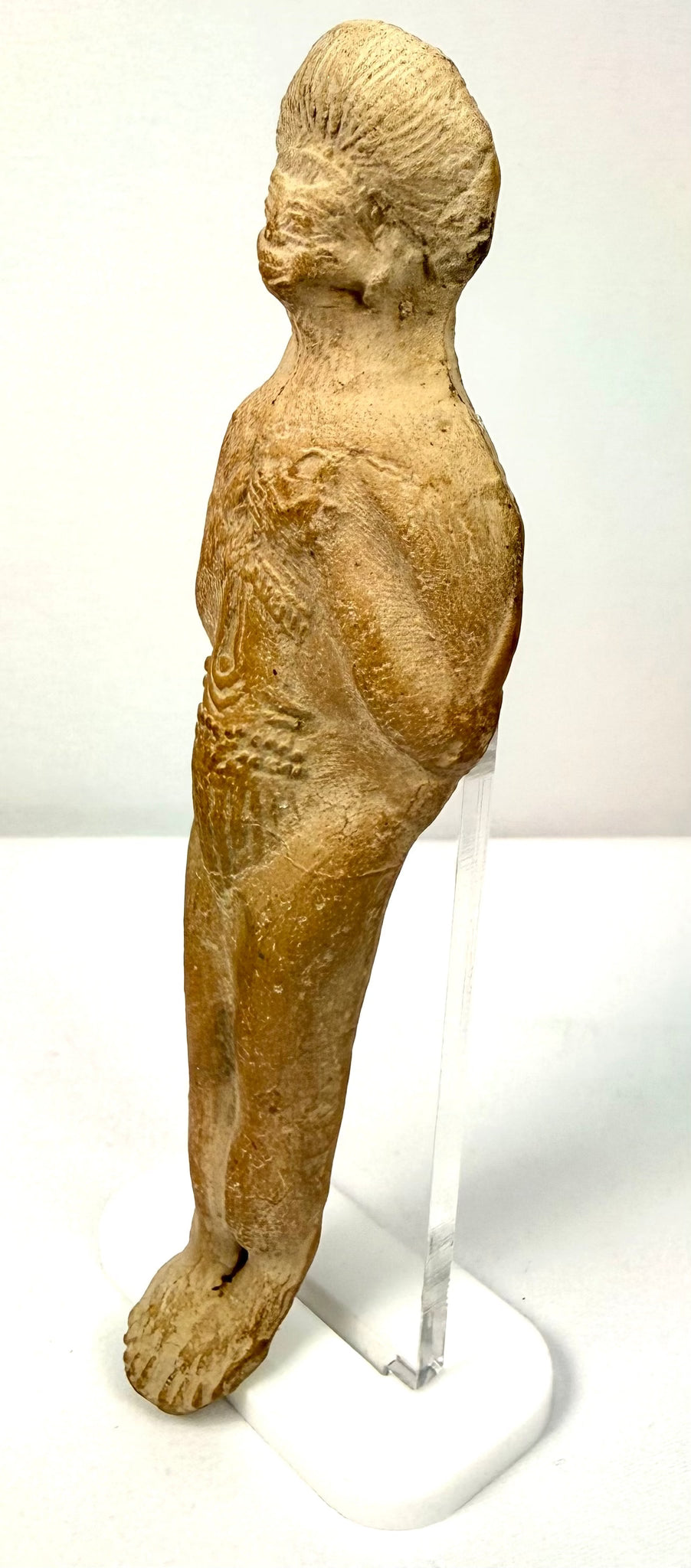
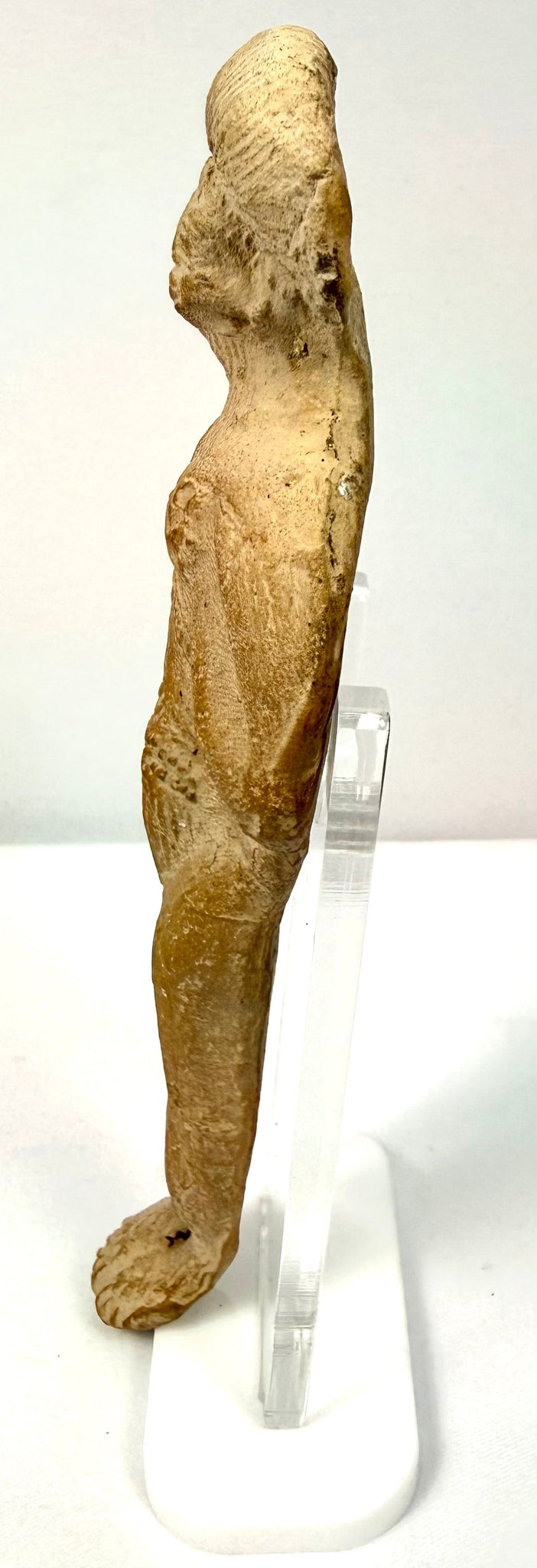
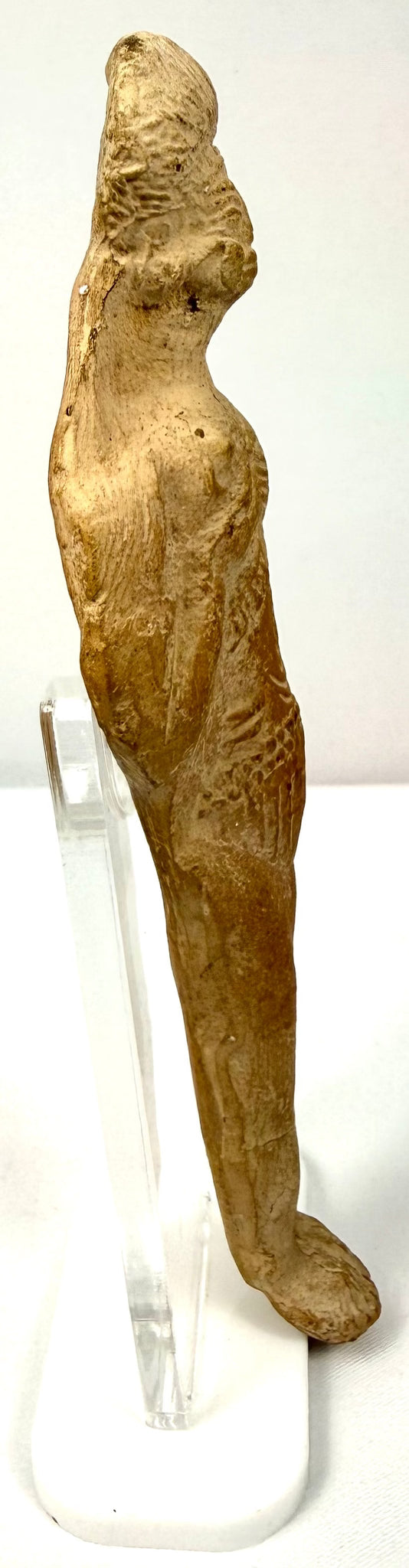
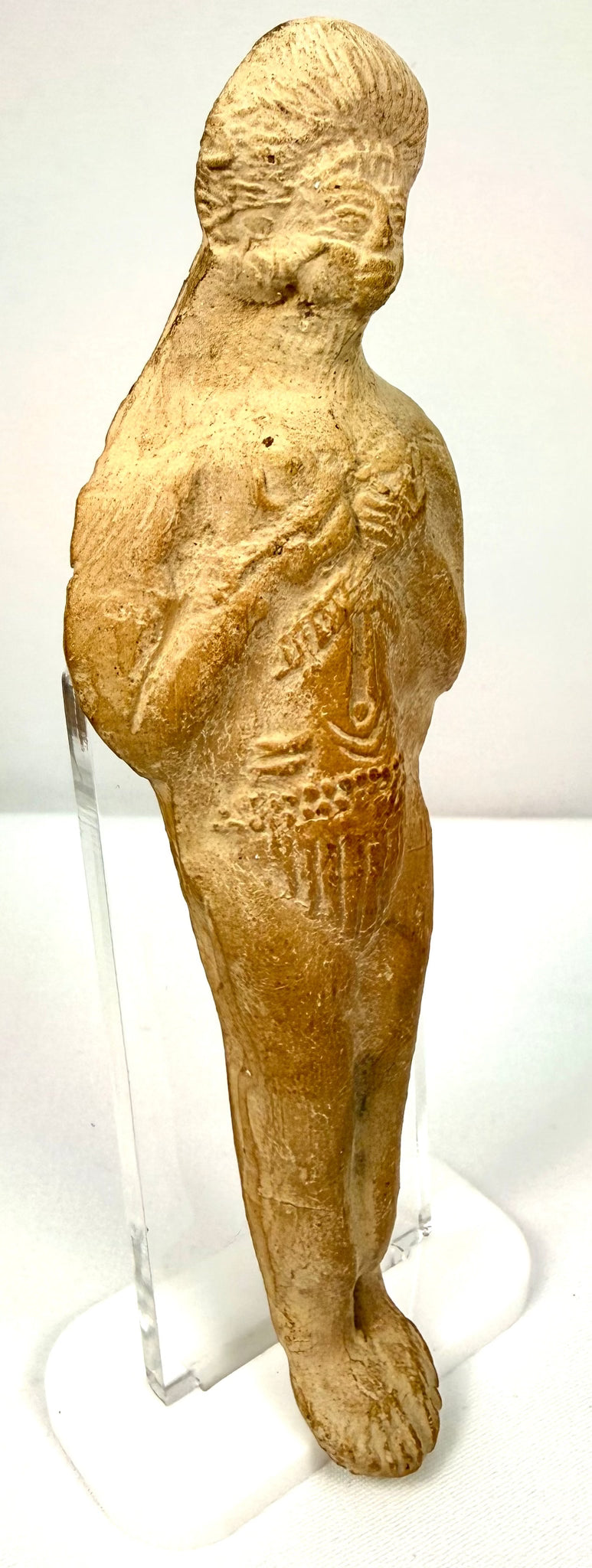
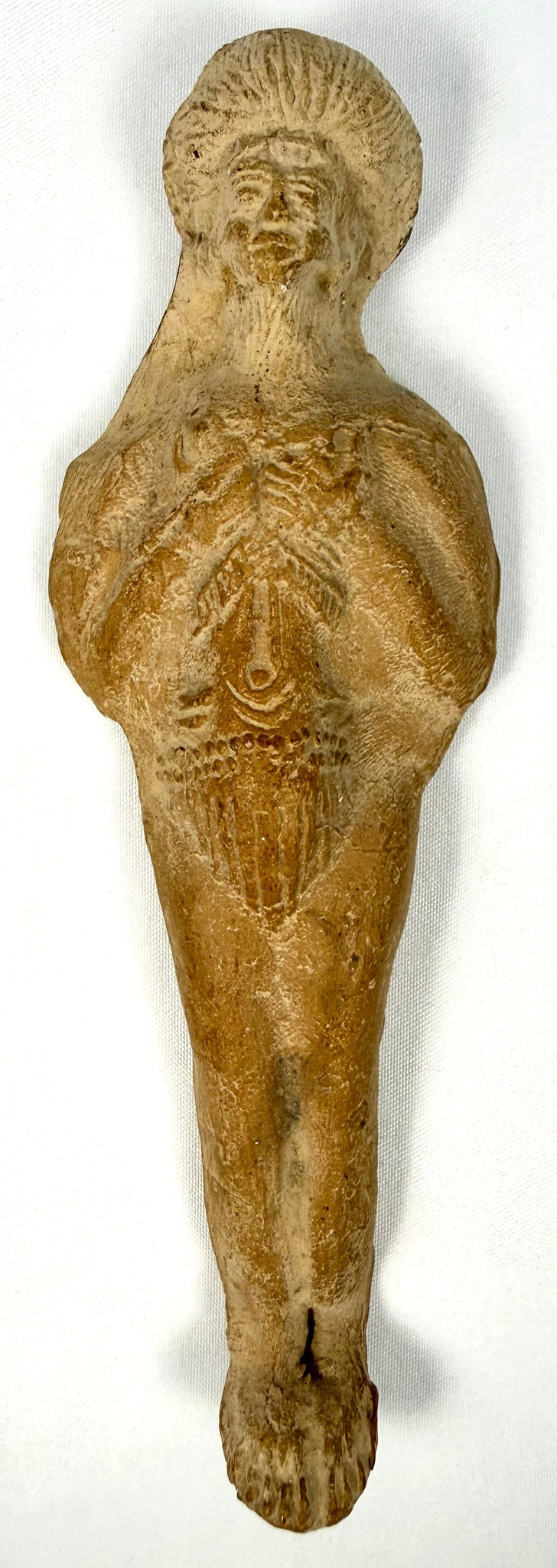
The figurine depicts a standing nude female with an elongated, stylized body that gradually narrows toward the base. Her head features a pinched facial expression and an elaborate hairstyle or headdress, reflecting the distinctive conventions of ancient Near Eastern figurative art. Both hands are positioned against the chest, while an incised belt defines the waist.
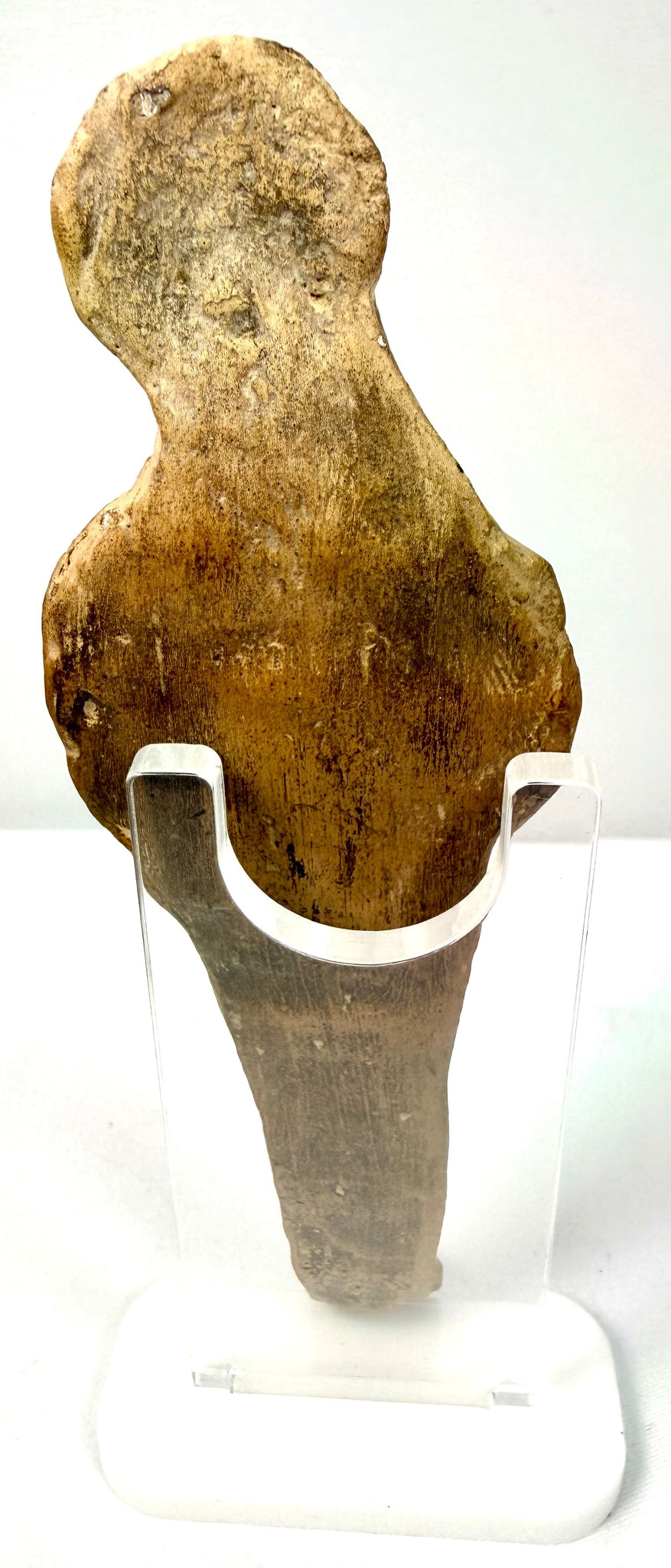
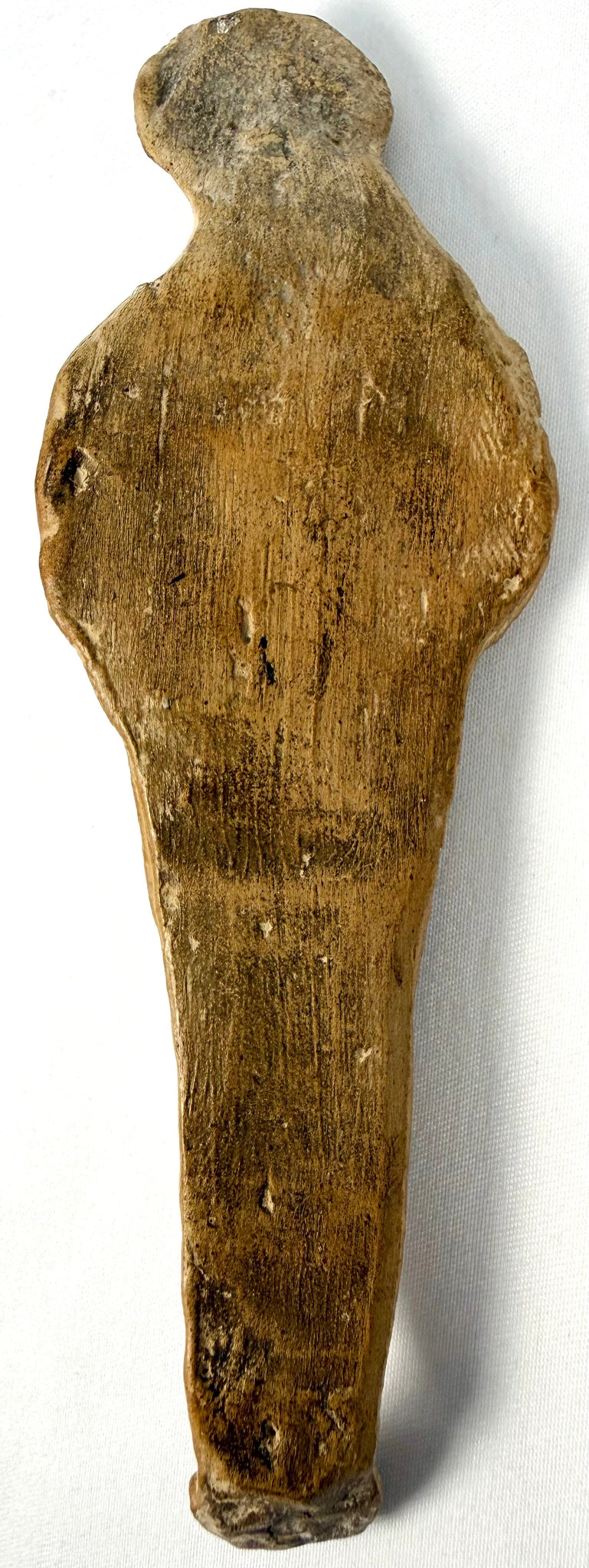
The figure was produced from buff-coloured terracotta using moulding techniques, with surviving mineral deposits, natural surface wear, and an earthy patina.
Female terracotta figurines were an established element of ancient Near Eastern material culture, frequently interpreted in relation to religious devotion, fertility, femininity, or protective symbolism. Although the precise identity of this figure remains uncertain, its distinctive form and iconography suggest a possible representation of a female deity or a figure associated with religious or symbolic practices.
Features
- Stylized facial expression with an elaborate hairstyle or headdress, characteristic of ancient Near Eastern figurative traditions
- Elongated nude female body with a distinctive form that gradually narrows toward the base
- Both hands positioned against the chest, possibly representing a symbolic or devotional gesture
- Incised belt detailing at the waist, reflecting the decorative traditions of Middle Elamite craftsmanship
- Buff-coloured moulded terracotta with natural mineral deposits and an earthy patina
- Surface wear and weathering consistent with the object's aged appearance
Cultural Significance
The Middle Elamite period was an important phase in the history of ancient southwestern Iran, characterized by significant developments in religious architecture, artistic production, and cultural expression.
Terracotta female figurines formed part of the broader artistic and symbolic traditions of the ancient Near East. Their representations of the female form have frequently been interpreted as expressions of fertility, divine femininity, protection, or religious devotion, although individual examples cannot always be assigned a definitive function.
The positioning of the hands against the chest, combined with the figure's stylized proportions and distinctive headdress, may suggest religious or symbolic significance. While an association with a female deity is possible, the absence of a securely documented archaeological context prevents identification with a particular goddess or specific ritual practice.
As a surviving example of ancient Elamite figurative art, this object offers insight into the artistic conventions and potentially religious symbolism of a civilization that flourished more than 3,000 years ago.
Condition
The figurine exhibits surface wear, weathering, mineral deposits, and an earthy patina. The buff terracotta retains its distinctive stylized features, including the facial details, elaborate hair or headdress, hands positioned against the chest, and incised waist decoration.
Surface irregularities and areas of wear are visible, consistent with the object's aged appearance. The figurine measures approximately 14.0 cm in height.
Dimensions (Approximate)
Height: 5.5 in
Age (Approximate)
3,100–3,500 years old
Provenance
Formerly held in a prominent, long-standing private collection in Tavares, Florida, USA.
Expert Assessment: Examined by Luca Salvaggio, an Italian archaeologist specializing in Greek, Roman, Near Eastern, and Cypriot material, with a Postgraduate Diploma from the Italian Archaeological School at Athens (IASA) and accreditation from the Italian Ministry of Culture (MiC). He attributed the terracotta nude female figurine to the Middle Elamite Period, circa 1500–1100 BCE, based on its elongated stylized body, pinched facial features, elaborate hairstyle or headdress, hands positioned against the chest, and incised waist detailing. He further noted its possible representation of a female deity.
Learn More
Description
Historical Context & Origin
Region: Ancient Elam, Southwestern Iran (Modern-Day Iran)
Material: Moulded terracotta clay
Period: Middle Elamite Period, circa 1500–1100 BCE
Description
This ancient terracotta female figurine dates to the Middle Elamite period, circa 1500–1100 BCE, and represents the distinctive artistic traditions of Elam, one of the important civilizations of the ancient Near East. Located primarily in what is now southwestern Iran, the Elamite civilization developed sophisticated traditions of sculpture, ceramics, and religious imagery throughout the second millennium BCE.
The figurine depicts a standing nude female with an elongated, stylized body that gradually narrows toward the base. Her head features a pinched facial expression and an elaborate hairstyle or headdress, reflecting the distinctive conventions of ancient Near Eastern figurative art. Both hands are positioned against the chest, while an incised belt defines the waist.
The figure was produced from buff-coloured terracotta using moulding techniques, with surviving mineral deposits, natural surface wear, and an earthy patina.
Female terracotta figurines were an established element of ancient Near Eastern material culture, frequently interpreted in relation to religious devotion, fertility, femininity, or protective symbolism. Although the precise identity of this figure remains uncertain, its distinctive form and iconography suggest a possible representation of a female deity or a figure associated with religious or symbolic practices.
Features
- Stylized facial expression with an elaborate hairstyle or headdress, characteristic of ancient Near Eastern figurative traditions
- Elongated nude female body with a distinctive form that gradually narrows toward the base
- Both hands positioned against the chest, possibly representing a symbolic or devotional gesture
- Incised belt detailing at the waist, reflecting the decorative traditions of Middle Elamite craftsmanship
- Buff-coloured moulded terracotta with natural mineral deposits and an earthy patina
- Surface wear and weathering consistent with the object's aged appearance
Cultural Significance
The Middle Elamite period was an important phase in the history of ancient southwestern Iran, characterized by significant developments in religious architecture, artistic production, and cultural expression.
Terracotta female figurines formed part of the broader artistic and symbolic traditions of the ancient Near East. Their representations of the female form have frequently been interpreted as expressions of fertility, divine femininity, protection, or religious devotion, although individual examples cannot always be assigned a definitive function.
The positioning of the hands against the chest, combined with the figure's stylized proportions and distinctive headdress, may suggest religious or symbolic significance. While an association with a female deity is possible, the absence of a securely documented archaeological context prevents identification with a particular goddess or specific ritual practice.
As a surviving example of ancient Elamite figurative art, this object offers insight into the artistic conventions and potentially religious symbolism of a civilization that flourished more than 3,000 years ago.
Condition
The figurine exhibits surface wear, weathering, mineral deposits, and an earthy patina. The buff terracotta retains its distinctive stylized features, including the facial details, elaborate hair or headdress, hands positioned against the chest, and incised waist decoration.
Surface irregularities and areas of wear are visible, consistent with the object's aged appearance. The figurine measures approximately 14.0 cm in height.
Dimensions (Approximate)
Height: 5.5 in
Age (Approximate)
3,100–3,500 years old
Provenance
Formerly held in a prominent, long-standing private collection in Tavares, Florida, USA.
Expert Assessment: Examined by Luca Salvaggio, an Italian archaeologist specializing in Greek, Roman, Near Eastern, and Cypriot material, with a Postgraduate Diploma from the Italian Archaeological School at Athens (IASA) and accreditation from the Italian Ministry of Culture (MiC). He attributed the terracotta nude female figurine to the Middle Elamite Period, circa 1500–1100 BCE, based on its elongated stylized body, pinched facial features, elaborate hairstyle or headdress, hands positioned against the chest, and incised waist detailing. He further noted its possible representation of a female deity.
Learn More
You May Also Like
