



Near Eastern Terracotta Plaque with Female Figure | Elamite–Babylonian | Circa 1st Millennium BCE
Couldn't load pickup availability




Near Eastern Terracotta Plaque with Female Figure | Elamite–Babylonian | Circa 1st Millennium BCE
Description
More
Less
Historical Context & Origin
Region: Ancient Near East (Elamite–Babylonian Cultural Traditions, Mesopotamia and Southwestern Iran)
Material: Terracotta clay
Period: 1st Millennium BCE
Description
This ancient Near Eastern terracotta plaque dates to the 1st millennium BCE and is attributed to the Elamite–Babylonian artistic traditions of ancient Mesopotamia and southwestern Iran. The object reflects the distinctive figurative styles that developed across the ancient Near East, where representations of the human form frequently appeared in religious, symbolic, and domestic artistic traditions.
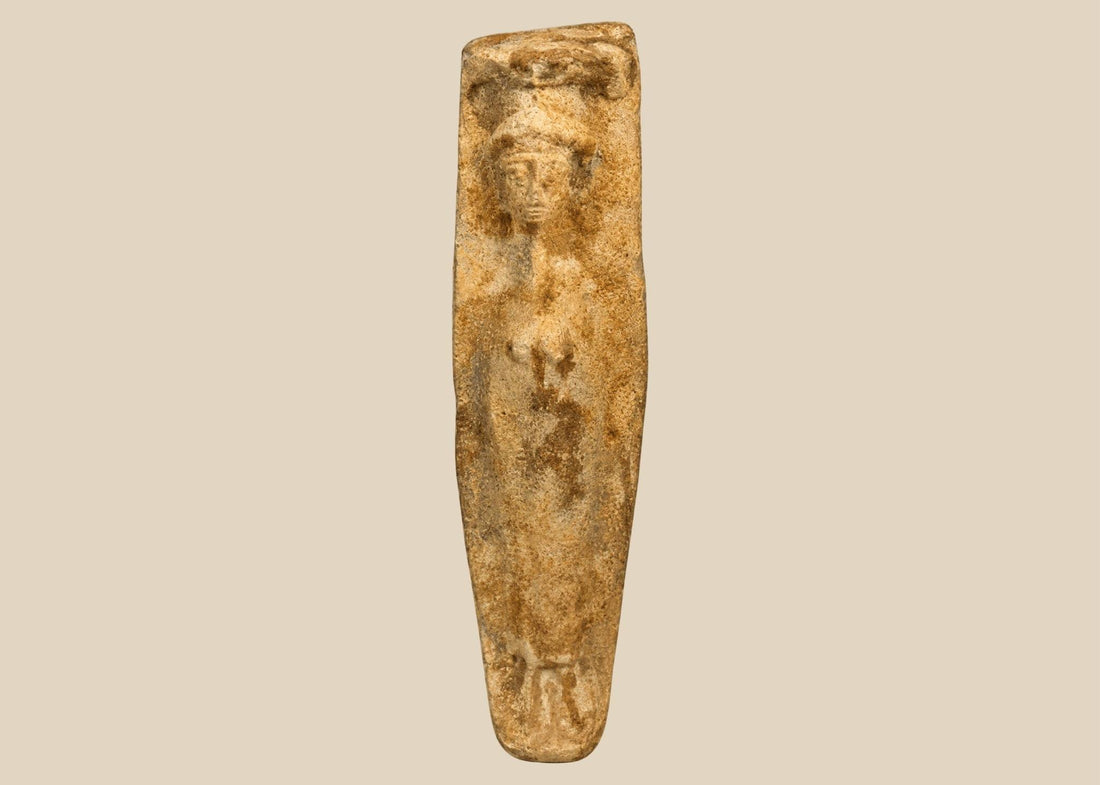
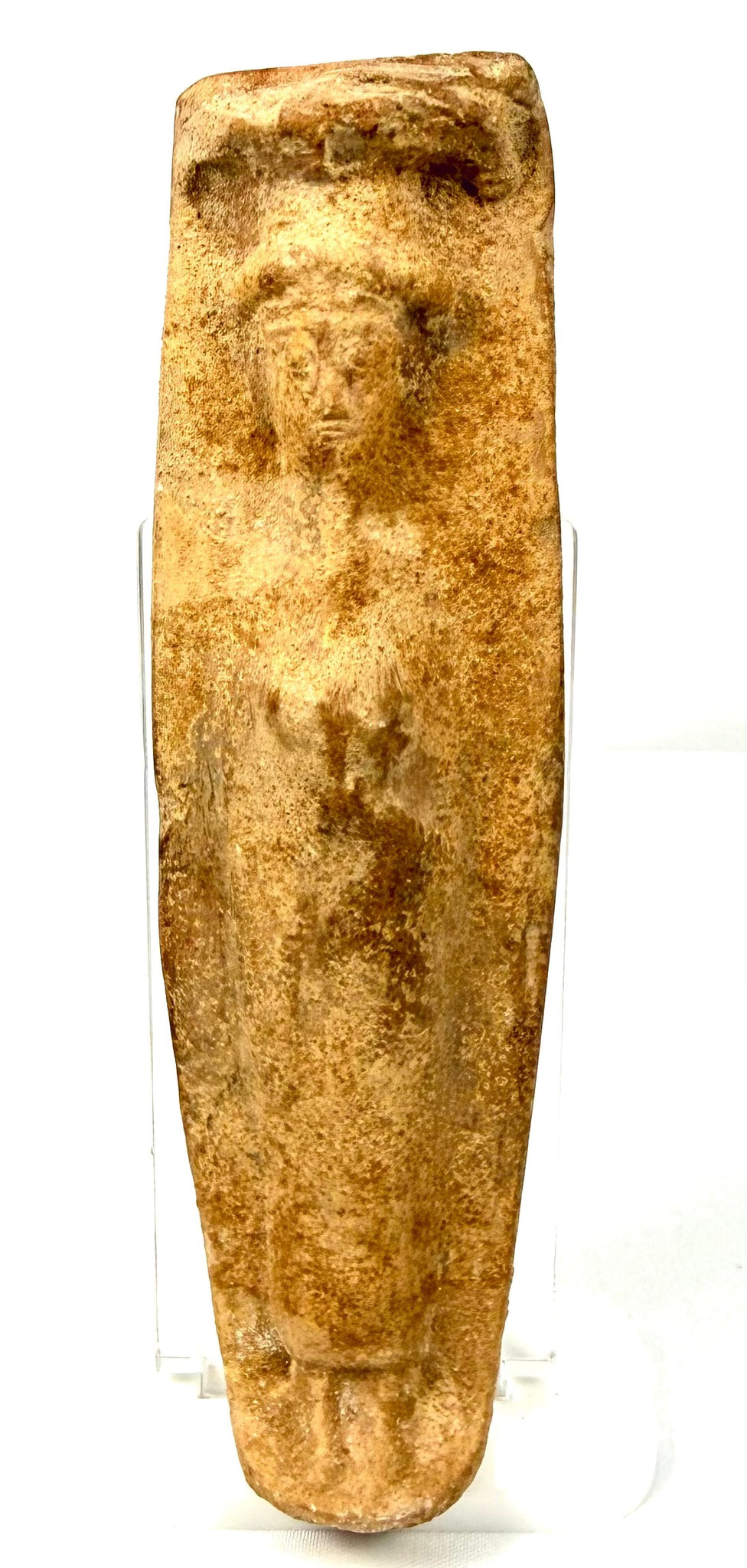
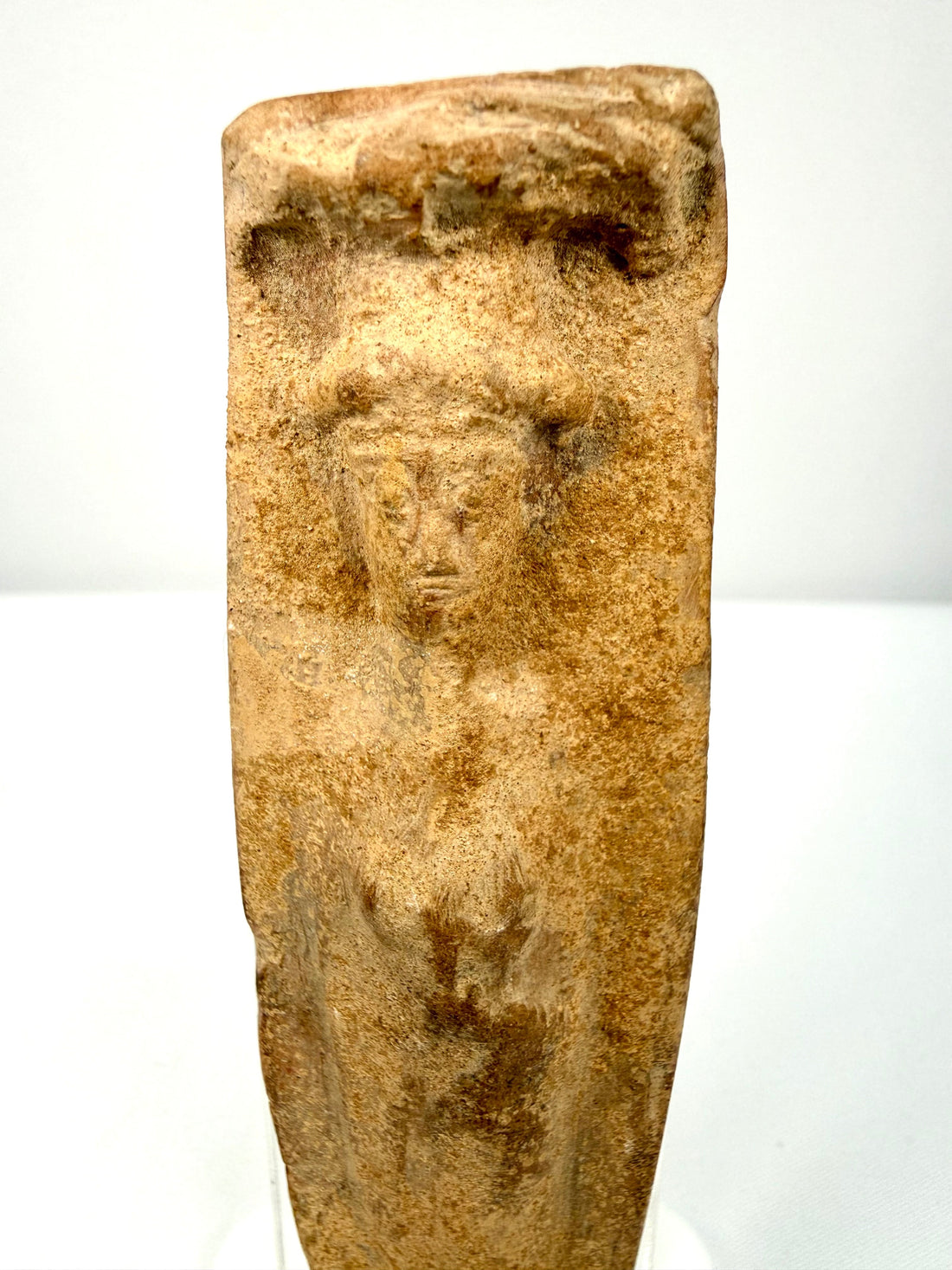
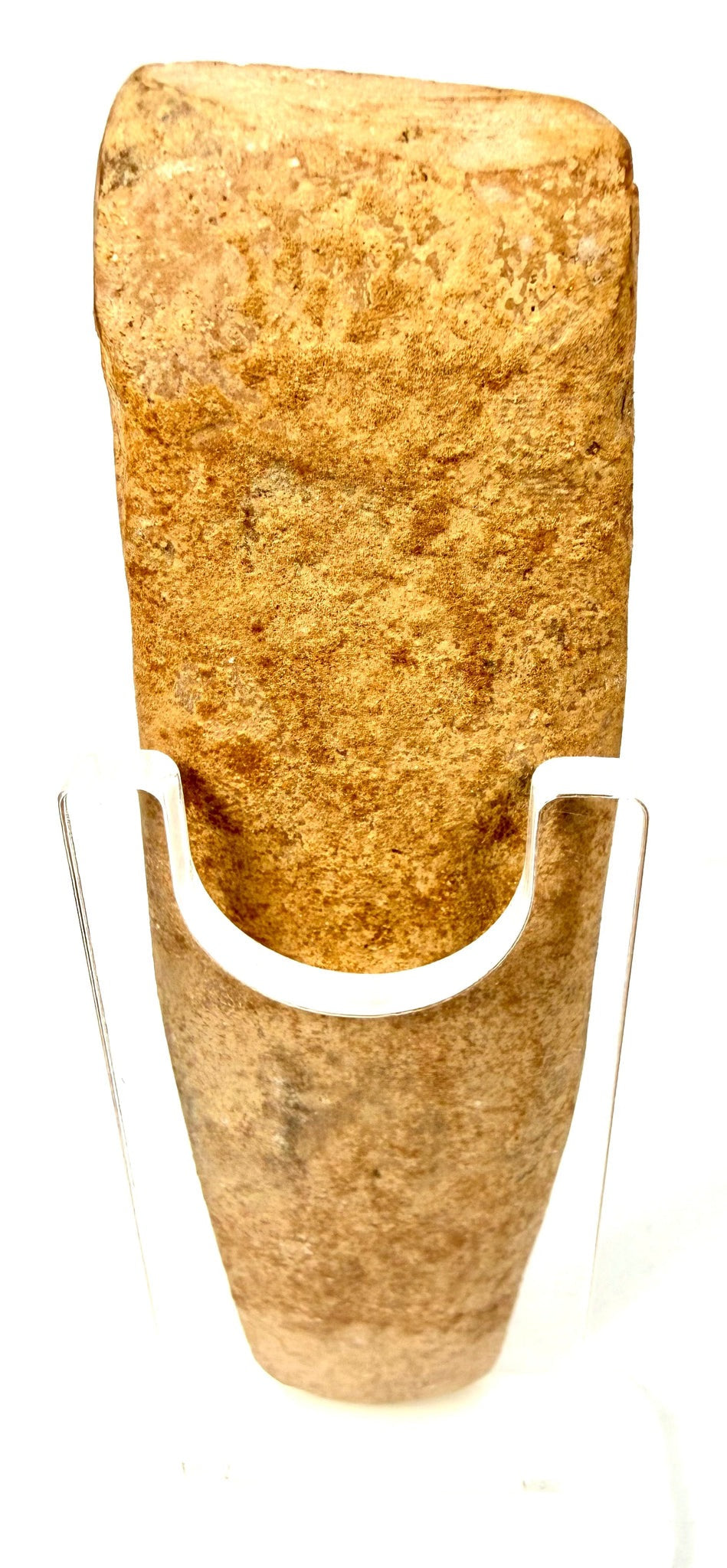
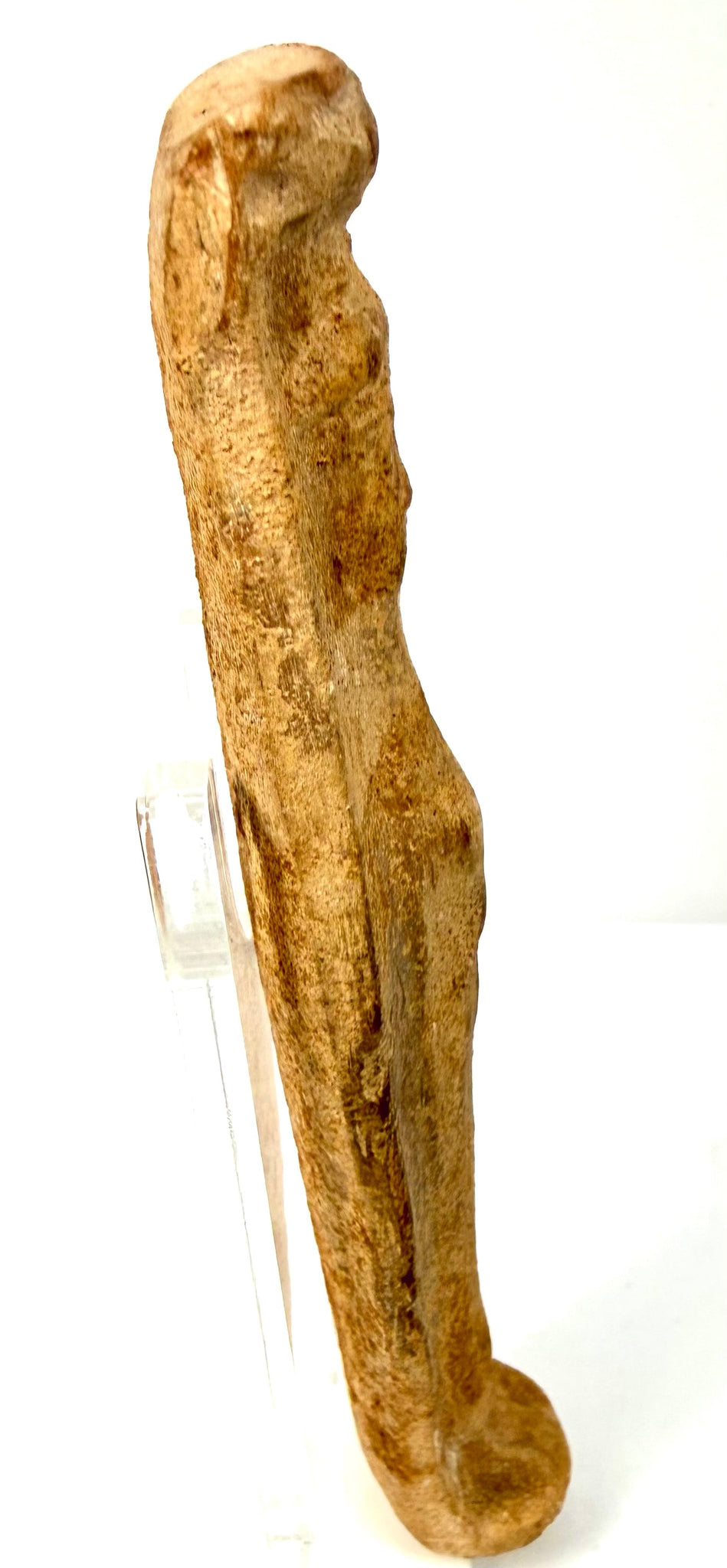
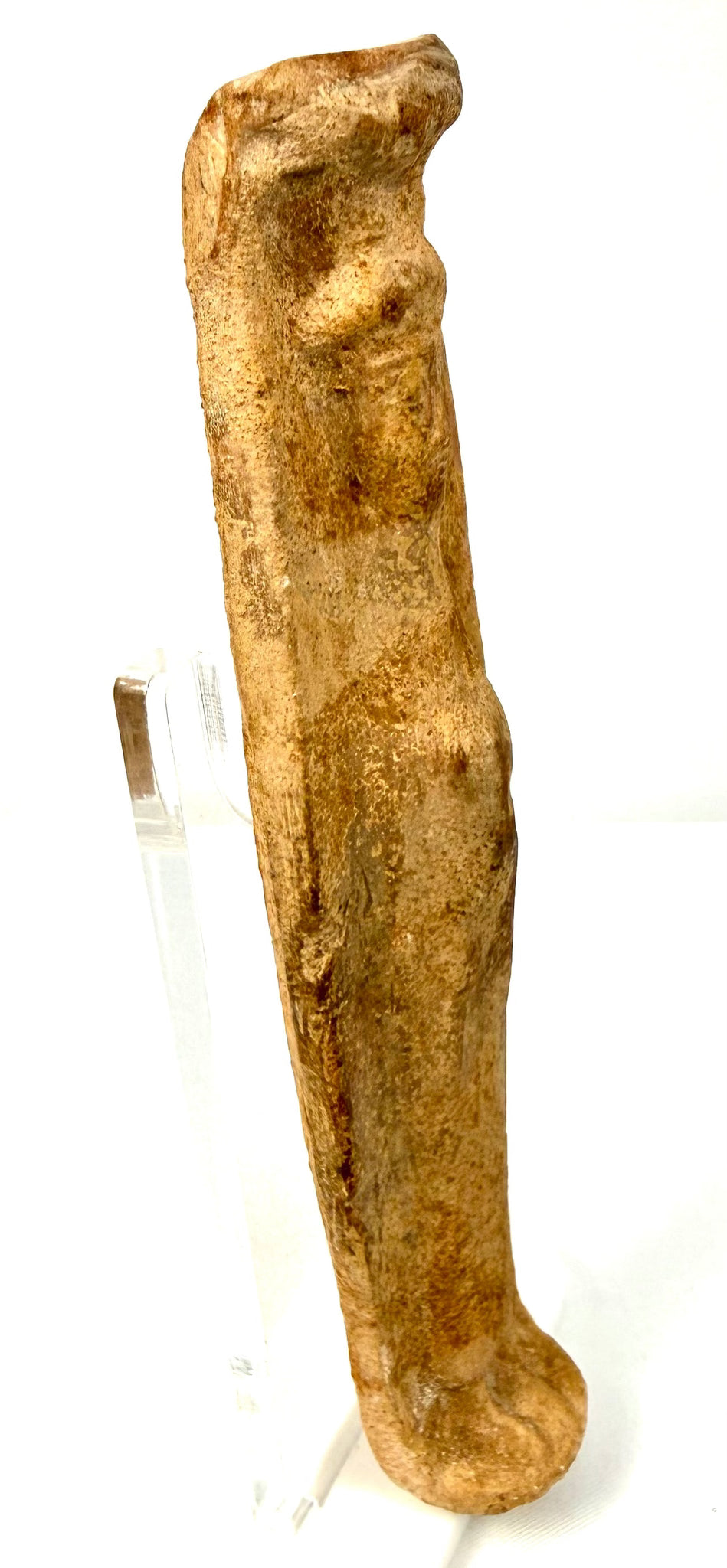
The plaque features an elongated, narrow rectangular form that tapers slightly toward the base, with a standing female figure rendered in raised relief. The figure is depicted frontally in a highly stylized manner, with a prominent headdress or elaborate mass of hair framing the upper portion of the head. Faint traces of facial features remain visible, while the body is simply modelled, emphasizing the figure's overall silhouette rather than detailed anatomical representation.
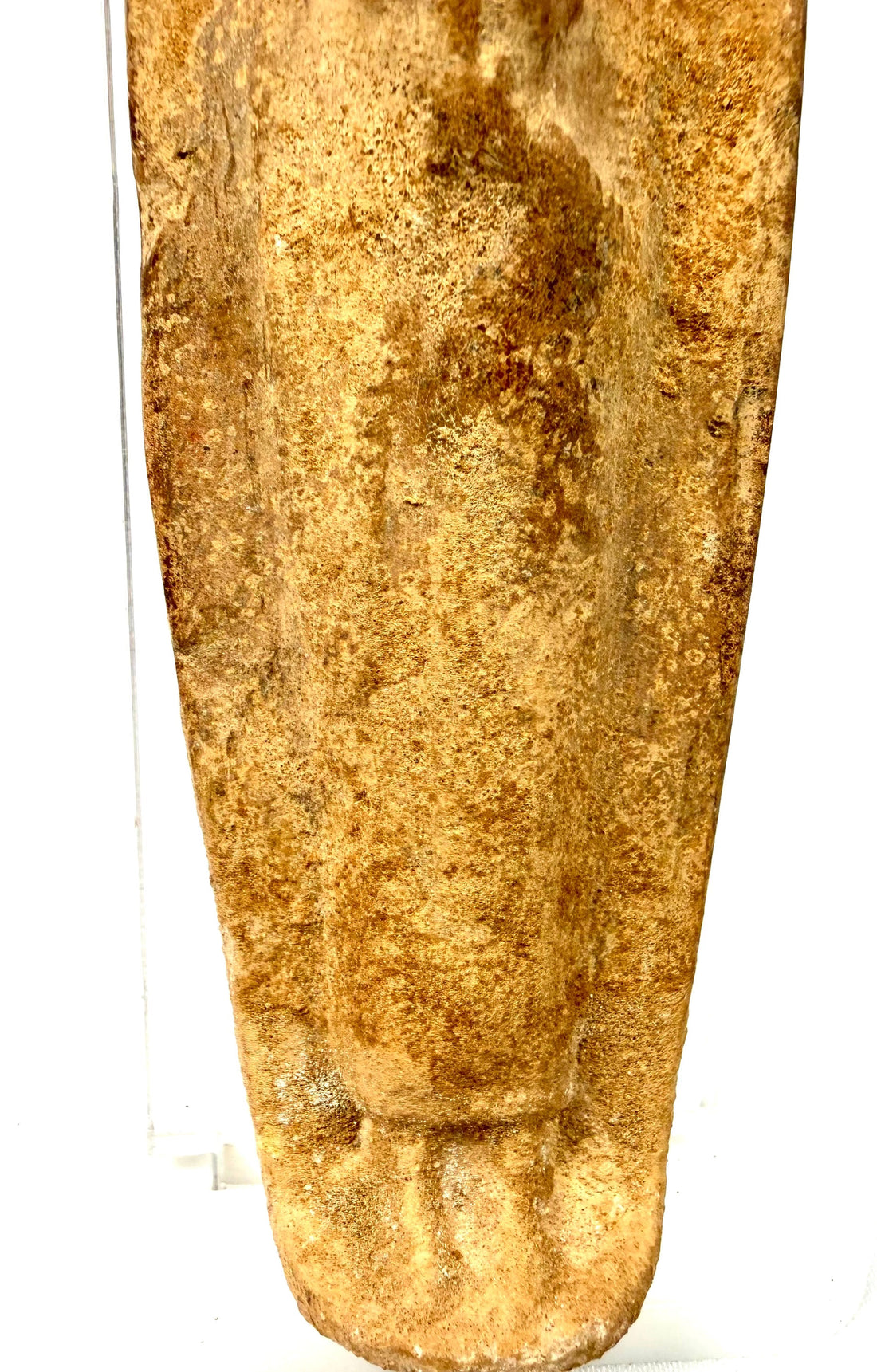
The lower portion of the plaque preserves indications of the figure's feet, while its buff to light-brown terracotta surface displays earthy deposits, mineral accretions, and weathering.
Terracotta plaques depicting female figures were produced throughout the ancient Near East and have often been interpreted in connection with religious devotion, fertility, protection, or representations of feminine divinity. Although the precise identity and original function of this example remain uncertain, its distinctive frontal composition and stylized female imagery suggest a possible symbolic or devotional purpose.
The object provides an intriguing example of ancient Near Eastern figurative craftsmanship, preserving artistic conventions associated with the Elamite and Babylonian cultural spheres during the 1st millennium BCE.
Features
-
Ancient Near Eastern terracotta plaque attributed to Elamite–Babylonian artistic traditions
-
Elongated rectangular form tapering slightly toward the base
-
Standing female figure depicted frontally in raised relief
-
Stylized head with an elaborate headdress or mass of hair and faint facial features
-
Simplified anatomical detailing with feet indicated along the lower edge
-
Buff to light-brown terracotta with earthy deposits and mineral accretions
-
Natural surface weathering and wear throughout
Cultural Significance
During the 1st millennium BCE, the ancient Near East was home to complex civilizations whose artistic and religious traditions influenced the development of figurative sculpture, ceramics, and symbolic imagery. The Elamite and Babylonian cultural spheres maintained distinctive artistic identities while participating in broader networks of regional interaction and exchange.
Terracotta plaques depicting human figures were an established component of ancient Near Eastern material culture. Female representations appeared in a variety of contexts and have frequently been associated with concepts of fertility, protection, divine femininity, and religious devotion.
Such objects may have served as votive offerings, domestic devotional images, or symbolic representations, although their specific purposes often remain uncertain without a documented archaeological context.
The frontal posture, simplified anatomical features, and prominent headdress of this example reflect the stylized artistic conventions found in ancient Near Eastern figurative traditions.
Condition
The plaque exhibits surface wear, weathering, earthy deposits, and mineral accretions consistent with its aged appearance. The buff to light-brown terracotta retains the distinctive elongated rectangular form and standing female figure in relief.
The facial details are faint from surface wear, while the headdress or hair, simplified body, and indications of the feet remain discernible.
No major cracks or repairs are visible in the available photographs. The object retains its recognizable overall form despite areas of surface weathering and abrasion.
Dimensions (Approximate)
Height: 5 in
Age (Approximate)
2,000–3,000 years old
Provenance
Formerly held in a prominent, long-standing private collection in Tavares, Florida, USA.
Expert Assessment: Examined by Luca Salvaggio, an Italian archaeologist specializing in Greek, Roman, Near Eastern, and Cypriot material, with a Postgraduate Diploma from the Italian Archaeological School at Athens (IASA) and accreditation from the Italian Ministry of Culture (MiC). He attributed the terracotta plaque depicting a standing female figure to the Elamite–Babylonian artistic traditions of the ancient Near East, dating to the 1st millennium BCE, based on its elongated rectangular form, stylized frontal female representation, prominent headdress or hairstyle, and simplified anatomical features. He further documented its buff to light-brown terracotta fabric, mineral accretions, and surface weathering.
Learn More
Description
Historical Context & Origin
Region: Ancient Near East (Elamite–Babylonian Cultural Traditions, Mesopotamia and Southwestern Iran)
Material: Terracotta clay
Period: 1st Millennium BCE
Description
This ancient Near Eastern terracotta plaque dates to the 1st millennium BCE and is attributed to the Elamite–Babylonian artistic traditions of ancient Mesopotamia and southwestern Iran. The object reflects the distinctive figurative styles that developed across the ancient Near East, where representations of the human form frequently appeared in religious, symbolic, and domestic artistic traditions.
The plaque features an elongated, narrow rectangular form that tapers slightly toward the base, with a standing female figure rendered in raised relief. The figure is depicted frontally in a highly stylized manner, with a prominent headdress or elaborate mass of hair framing the upper portion of the head. Faint traces of facial features remain visible, while the body is simply modelled, emphasizing the figure's overall silhouette rather than detailed anatomical representation.
The lower portion of the plaque preserves indications of the figure's feet, while its buff to light-brown terracotta surface displays earthy deposits, mineral accretions, and weathering.
Terracotta plaques depicting female figures were produced throughout the ancient Near East and have often been interpreted in connection with religious devotion, fertility, protection, or representations of feminine divinity. Although the precise identity and original function of this example remain uncertain, its distinctive frontal composition and stylized female imagery suggest a possible symbolic or devotional purpose.
The object provides an intriguing example of ancient Near Eastern figurative craftsmanship, preserving artistic conventions associated with the Elamite and Babylonian cultural spheres during the 1st millennium BCE.
Features
-
Ancient Near Eastern terracotta plaque attributed to Elamite–Babylonian artistic traditions
-
Elongated rectangular form tapering slightly toward the base
-
Standing female figure depicted frontally in raised relief
-
Stylized head with an elaborate headdress or mass of hair and faint facial features
-
Simplified anatomical detailing with feet indicated along the lower edge
-
Buff to light-brown terracotta with earthy deposits and mineral accretions
-
Natural surface weathering and wear throughout
Cultural Significance
During the 1st millennium BCE, the ancient Near East was home to complex civilizations whose artistic and religious traditions influenced the development of figurative sculpture, ceramics, and symbolic imagery. The Elamite and Babylonian cultural spheres maintained distinctive artistic identities while participating in broader networks of regional interaction and exchange.
Terracotta plaques depicting human figures were an established component of ancient Near Eastern material culture. Female representations appeared in a variety of contexts and have frequently been associated with concepts of fertility, protection, divine femininity, and religious devotion.
Such objects may have served as votive offerings, domestic devotional images, or symbolic representations, although their specific purposes often remain uncertain without a documented archaeological context.
The frontal posture, simplified anatomical features, and prominent headdress of this example reflect the stylized artistic conventions found in ancient Near Eastern figurative traditions.
Condition
The plaque exhibits surface wear, weathering, earthy deposits, and mineral accretions consistent with its aged appearance. The buff to light-brown terracotta retains the distinctive elongated rectangular form and standing female figure in relief.
The facial details are faint from surface wear, while the headdress or hair, simplified body, and indications of the feet remain discernible.
No major cracks or repairs are visible in the available photographs. The object retains its recognizable overall form despite areas of surface weathering and abrasion.
Dimensions (Approximate)
Height: 5 in
Age (Approximate)
2,000–3,000 years old
Provenance
Formerly held in a prominent, long-standing private collection in Tavares, Florida, USA.
Expert Assessment: Examined by Luca Salvaggio, an Italian archaeologist specializing in Greek, Roman, Near Eastern, and Cypriot material, with a Postgraduate Diploma from the Italian Archaeological School at Athens (IASA) and accreditation from the Italian Ministry of Culture (MiC). He attributed the terracotta plaque depicting a standing female figure to the Elamite–Babylonian artistic traditions of the ancient Near East, dating to the 1st millennium BCE, based on its elongated rectangular form, stylized frontal female representation, prominent headdress or hairstyle, and simplified anatomical features. He further documented its buff to light-brown terracotta fabric, mineral accretions, and surface weathering.
Learn More
You May Also Like
