



Ancient North-Western Iranian Grey Ware Goblet | Iron Age II | 9th Century BCE
Couldn't load pickup availability


Ancient North-Western Iranian Grey Ware Goblet | Iron Age II | 9th Century BCE
Description
More
Less
Historical Context & Origin
Region: North-western Iran
Material: Wheel-made grey ware terracotta
Period: Iron Age II, circa 9th Century BCE
Description
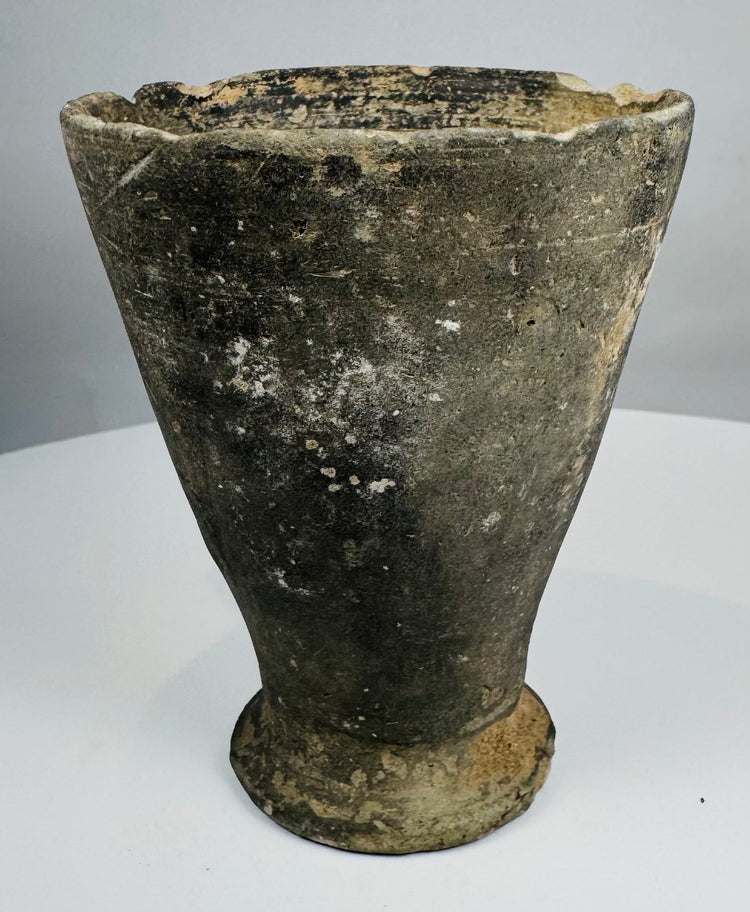
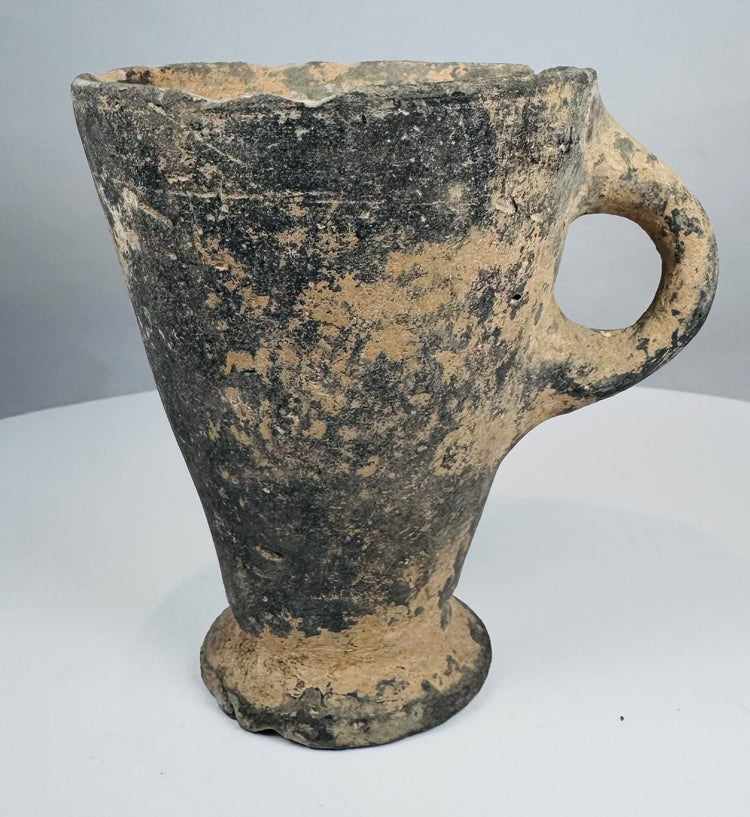
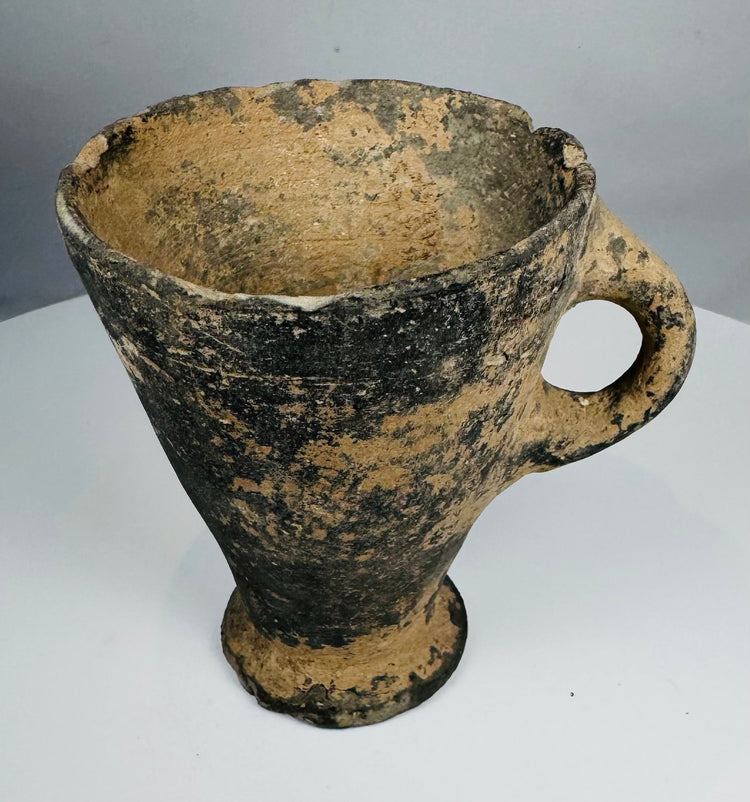
This ancient north-western Iranian grey ware handled goblet dates to the Iron Age II, circa 9th century BCE.
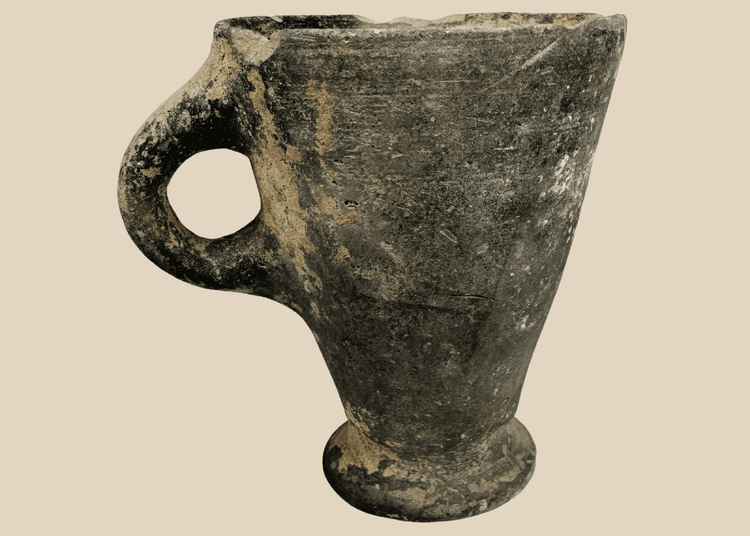
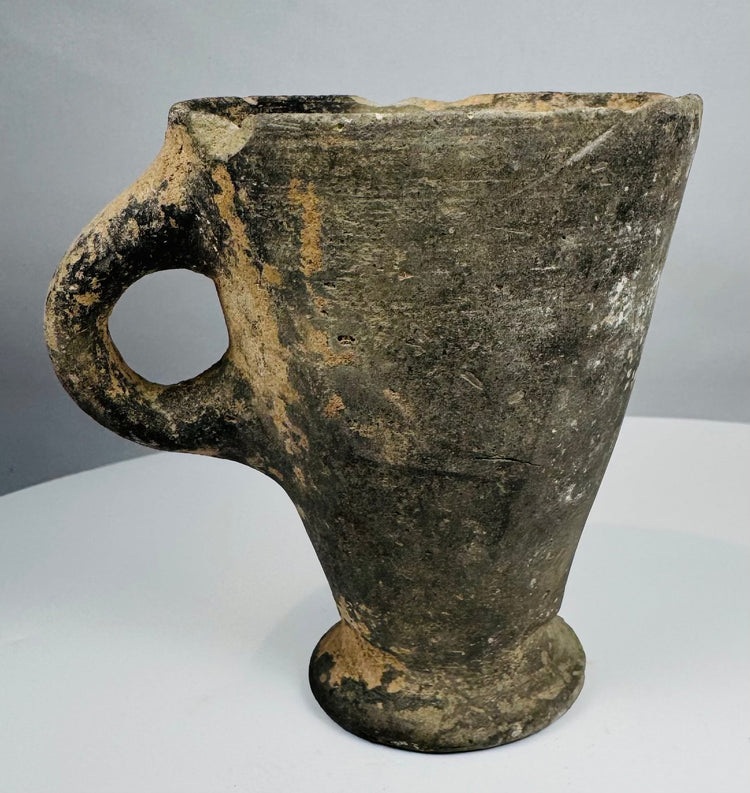
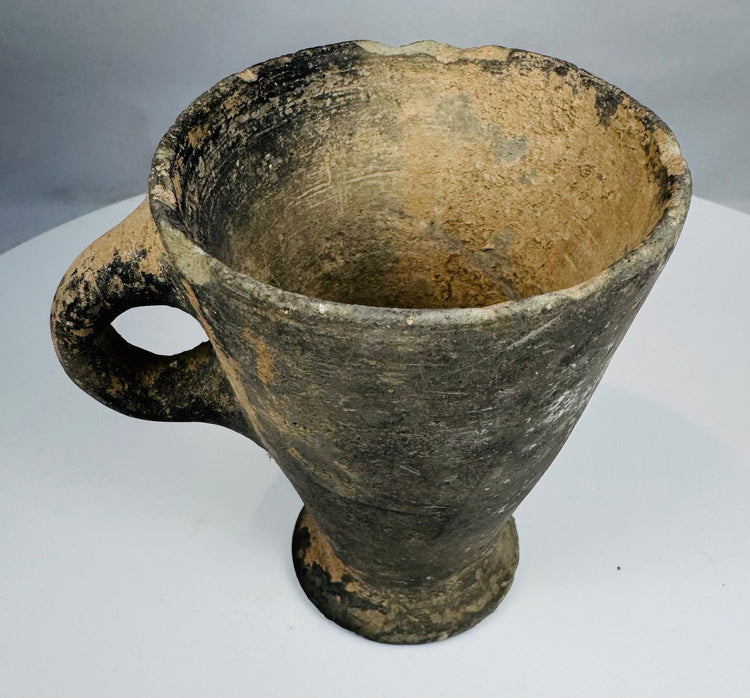
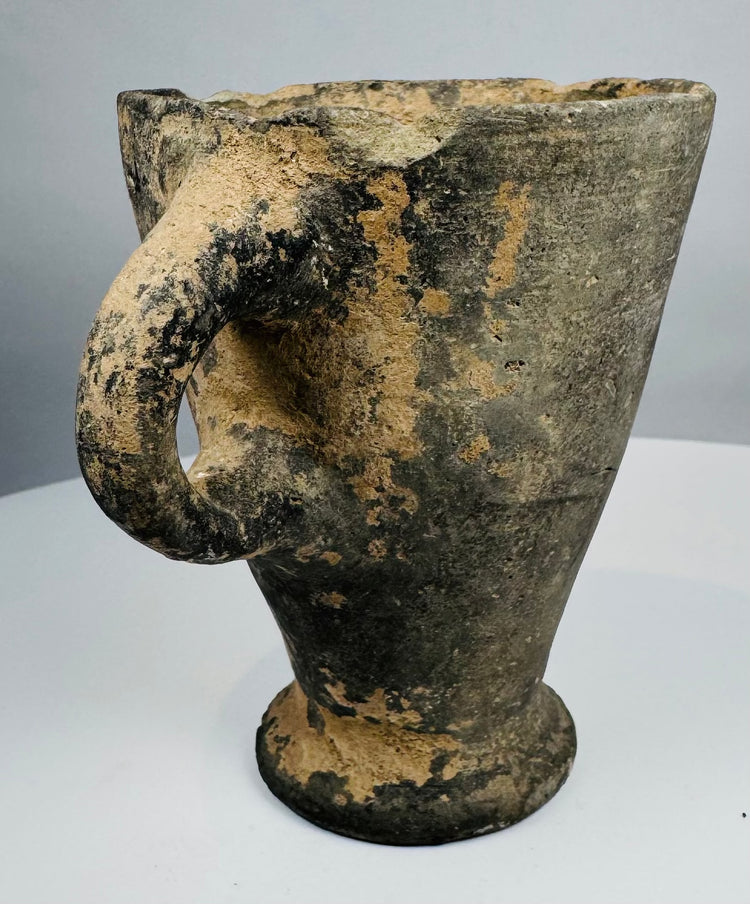
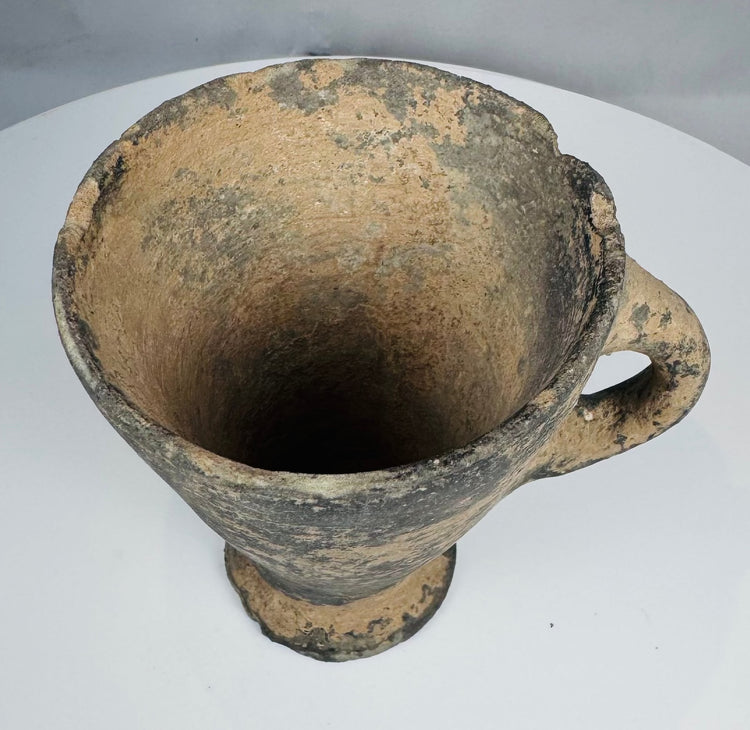
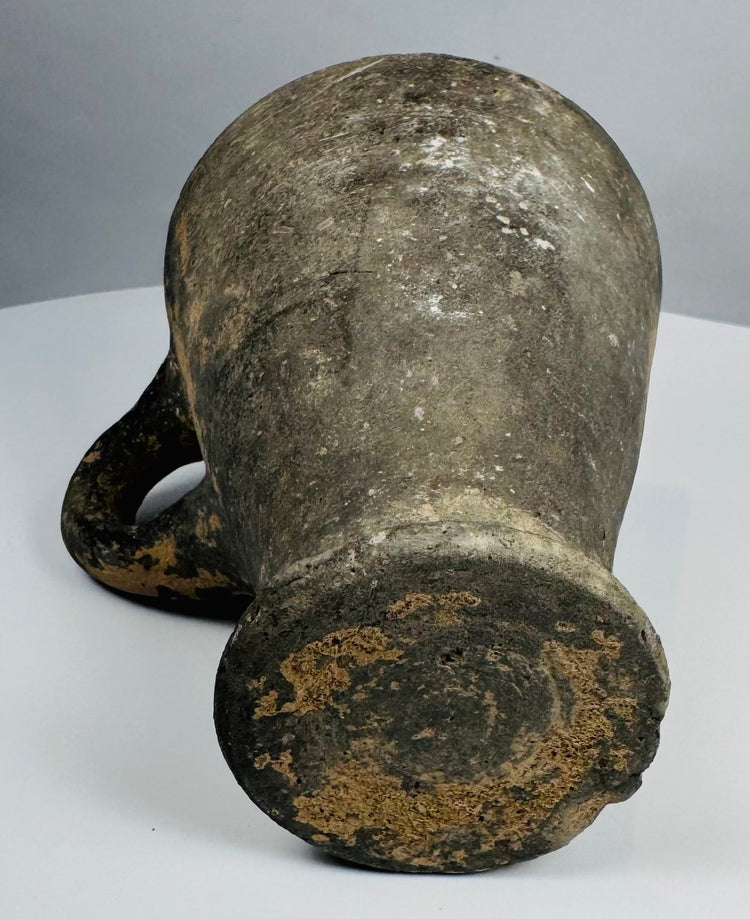
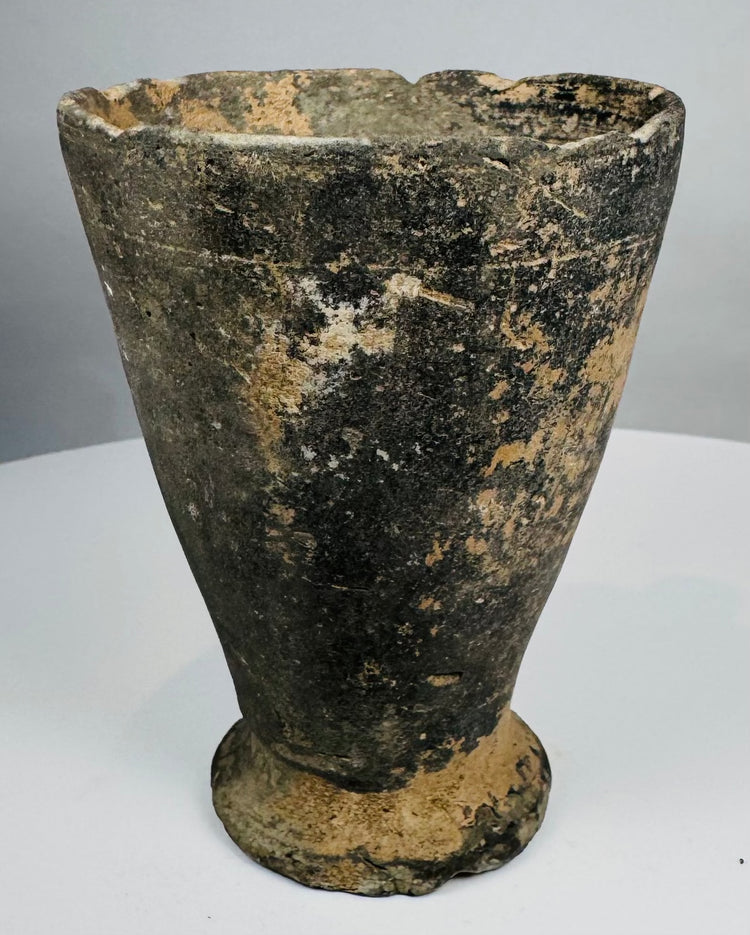
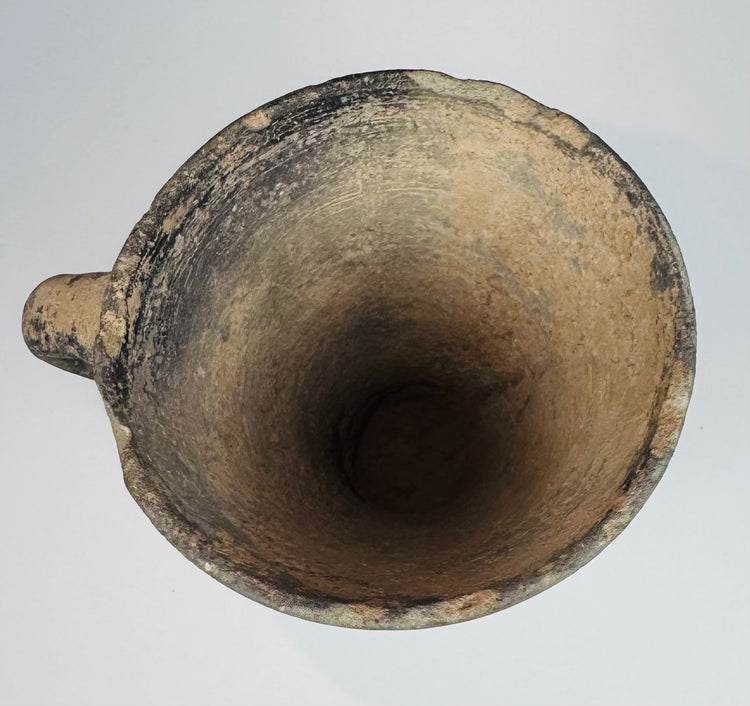
Wheel-made from grey-firing clay, the vessel features a deep, flaring conical bowl raised upon a circular pedestal foot. A large loop handle springs directly from the rim, creating a distinctive profile characteristic of handled drinking vessels from the region.
The grey ceramic fabric retains a dark surface, with areas of earthy mineral deposition acquired through long-term burial. Its proportions and construction closely correspond with Iron Age pottery traditions documented in north-western Iran.
Based on its form, fabric, handle construction, and pedestal base, the vessel is attributed to north-western Iran during Iron Age II.
Features
- Wheel-made terracotta construction
- Deep flaring conical bowl
- Large loop handle springing from the rim
- Raised circular pedestal foot
- Grey ceramic fabric with dark surface
- Earthy archaeological mineral deposits
- Substantially intact ancient form
- Comparable to excavated pottery from Hasanlu
Cultural Significance
Grey ware pottery formed an important part of the ceramic traditions of ancient north-western Iran during the Iron Age. Handled goblets and pedestal vessels provide insight into drinking, serving, and domestic practices within communities of the region.
A comparable example is a goblet from Hasanlu, Period IV, now in The Metropolitan Museum of Art, New York, inventory no. 63.109.12, supporting the vessel’s attribution to north-western Iran and its 9th-century BCE dating.
Condition
Substantially intact ancient condition. There are chips to the rim near the handle, together with a short stable fissure on the lower body. Earthy mineral deposits and age-related surface wear are present throughout. Additional minor abrasions and irregularities are consistent with archaeological preservation.
Dimensions (Approximate)
Height: 4 in
Diameter: 3 in
Age (Approximate)
2,800–2,900 years old
Provenance
Formerly in the collection of Jack Guevrekian, Manhasset, New York, a noted New York numismatist and collector with a particular interest in Armenian coinage, antiquities, and ancient material. Guevrekian assembled an extensive collection over several decades, a significant portion of which was publicly offered as The Jack Guevrekian Collection by the Numismatic & Antiquarian Service Corporation of America in New York in 1977.
Subsequently held in a private New York City collection.
Later handled by the Howard S. Rose Gallery / Arte Primitivo in New York, a longstanding specialist gallery and auction house dealing in Pre-Columbian, Classical, Egyptian, Asian, and ethnographic antiquities and works of art. The gallery has conducted specialist auctions, exhibitions, and private sales from its New York premises.
Subsequently handled by Artemis Fine Arts / Artemis Gallery, a Colorado-based specialist in antiquities, ancient art, ethnographic material, and fine art that has been active in the field since 1993.
Then entered a private collection in Toronto, Ontario, Canada.
The piece was later examined by Luca Salvaggio, an Italian archaeologist and specialist in ancient Mediterranean and Near Eastern material. He holds a Postgraduate Diploma from the Italian Archaeological School at Athens (IASA) and is accredited for preventive archaeology by the Italian Ministry of Culture (MiC). Salvaggio identified the vessel as a north-western Iranian grey ware handled goblet dating to Iron Age II, circa the 9th century BCE, based on its wheel-made construction, deep flaring conical bowl, large loop handle, raised pedestal foot, and grey fabric with dark surface.
Learn More
Discover a related Iron Age greyware cup from Iran in the collection of The Metropolitan Museum of Art
Explore our curated Collection of Ceramics, Pottery & Ancient Heritage Art
Description
Historical Context & Origin
Region: North-western Iran
Material: Wheel-made grey ware terracotta
Period: Iron Age II, circa 9th Century BCE
Description
This ancient north-western Iranian grey ware handled goblet dates to the Iron Age II, circa 9th century BCE.
Wheel-made from grey-firing clay, the vessel features a deep, flaring conical bowl raised upon a circular pedestal foot. A large loop handle springs directly from the rim, creating a distinctive profile characteristic of handled drinking vessels from the region.
The grey ceramic fabric retains a dark surface, with areas of earthy mineral deposition acquired through long-term burial. Its proportions and construction closely correspond with Iron Age pottery traditions documented in north-western Iran.
Based on its form, fabric, handle construction, and pedestal base, the vessel is attributed to north-western Iran during Iron Age II.
Features
- Wheel-made terracotta construction
- Deep flaring conical bowl
- Large loop handle springing from the rim
- Raised circular pedestal foot
- Grey ceramic fabric with dark surface
- Earthy archaeological mineral deposits
- Substantially intact ancient form
- Comparable to excavated pottery from Hasanlu
Cultural Significance
Grey ware pottery formed an important part of the ceramic traditions of ancient north-western Iran during the Iron Age. Handled goblets and pedestal vessels provide insight into drinking, serving, and domestic practices within communities of the region.
A comparable example is a goblet from Hasanlu, Period IV, now in The Metropolitan Museum of Art, New York, inventory no. 63.109.12, supporting the vessel’s attribution to north-western Iran and its 9th-century BCE dating.
Condition
Substantially intact ancient condition. There are chips to the rim near the handle, together with a short stable fissure on the lower body. Earthy mineral deposits and age-related surface wear are present throughout. Additional minor abrasions and irregularities are consistent with archaeological preservation.
Dimensions (Approximate)
Height: 4 in
Diameter: 3 in
Age (Approximate)
2,800–2,900 years old
Provenance
Formerly in the collection of Jack Guevrekian, Manhasset, New York, a noted New York numismatist and collector with a particular interest in Armenian coinage, antiquities, and ancient material. Guevrekian assembled an extensive collection over several decades, a significant portion of which was publicly offered as The Jack Guevrekian Collection by the Numismatic & Antiquarian Service Corporation of America in New York in 1977.
Subsequently held in a private New York City collection.
Later handled by the Howard S. Rose Gallery / Arte Primitivo in New York, a longstanding specialist gallery and auction house dealing in Pre-Columbian, Classical, Egyptian, Asian, and ethnographic antiquities and works of art. The gallery has conducted specialist auctions, exhibitions, and private sales from its New York premises.
Subsequently handled by Artemis Fine Arts / Artemis Gallery, a Colorado-based specialist in antiquities, ancient art, ethnographic material, and fine art that has been active in the field since 1993.
Then entered a private collection in Toronto, Ontario, Canada.
The piece was later examined by Luca Salvaggio, an Italian archaeologist and specialist in ancient Mediterranean and Near Eastern material. He holds a Postgraduate Diploma from the Italian Archaeological School at Athens (IASA) and is accredited for preventive archaeology by the Italian Ministry of Culture (MiC). Salvaggio identified the vessel as a north-western Iranian grey ware handled goblet dating to Iron Age II, circa the 9th century BCE, based on its wheel-made construction, deep flaring conical bowl, large loop handle, raised pedestal foot, and grey fabric with dark surface.
Learn More
Discover a related Iron Age greyware cup from Iran in the collection of The Metropolitan Museum of Art
Explore our curated Collection of Ceramics, Pottery & Ancient Heritage Art
You May Also Like
