

Pair of Spanish Baroque Walnut & Leather Chairs | Circa 17th Century
Couldn't load pickup availability


Pair of Spanish Baroque Walnut & Leather Chairs | Circa 17th Century
Description
More
Less
Historical Context & Origin
Region: Spain
Material: Walnut wood, leather, and metal upholstery studs
Period: Late 17th Century, circa 1650–1700
Description
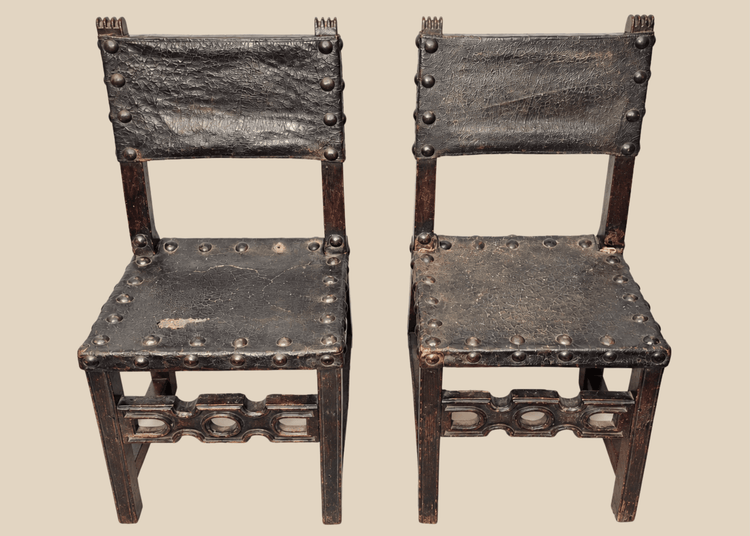
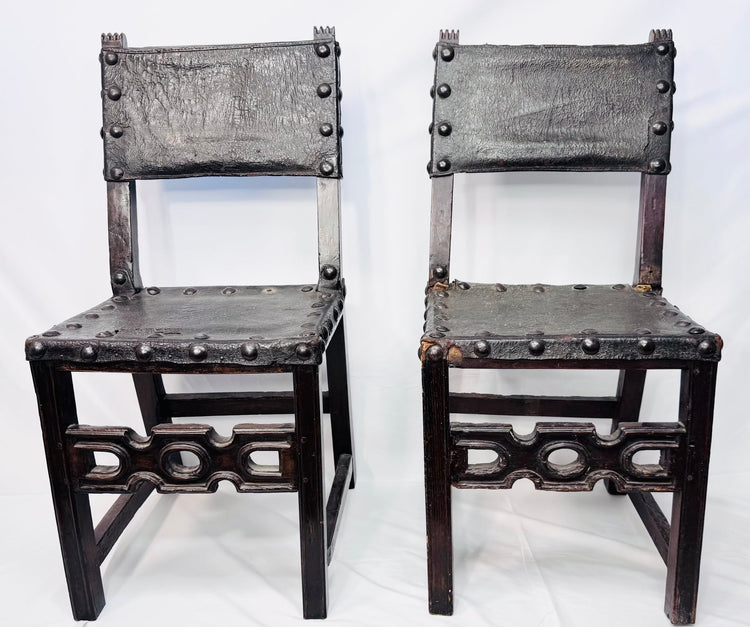
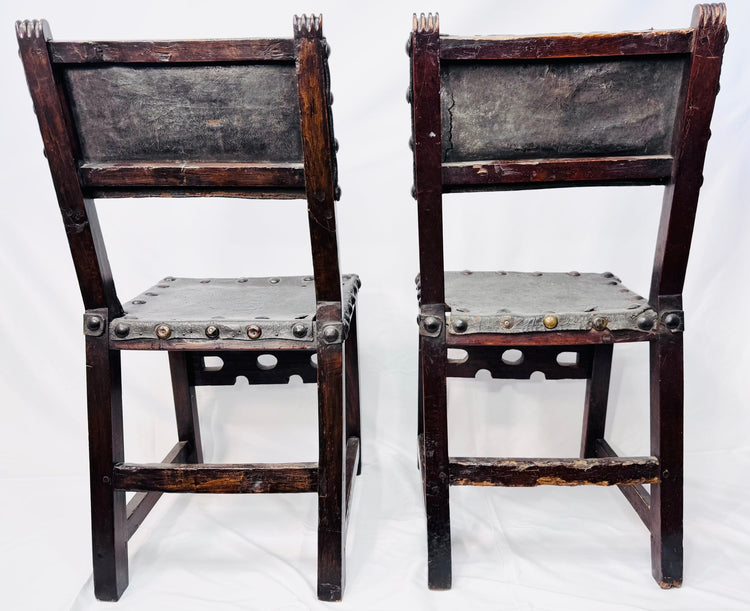
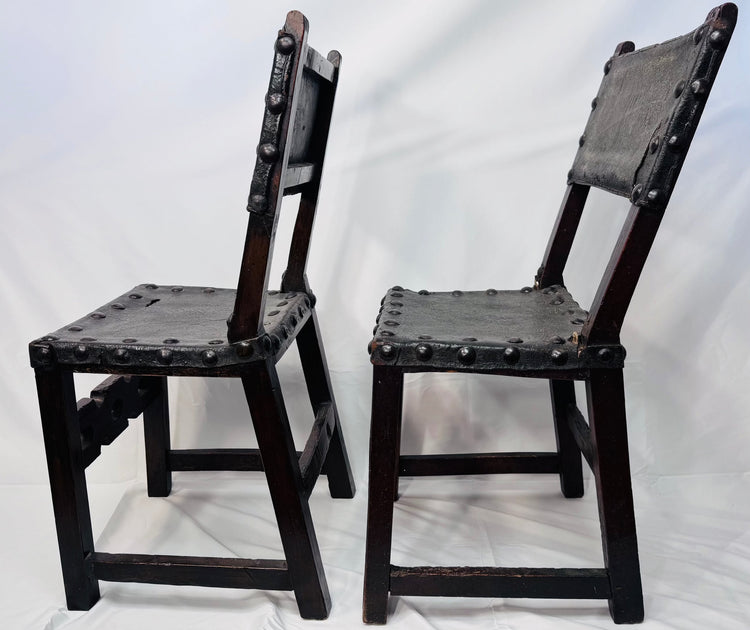
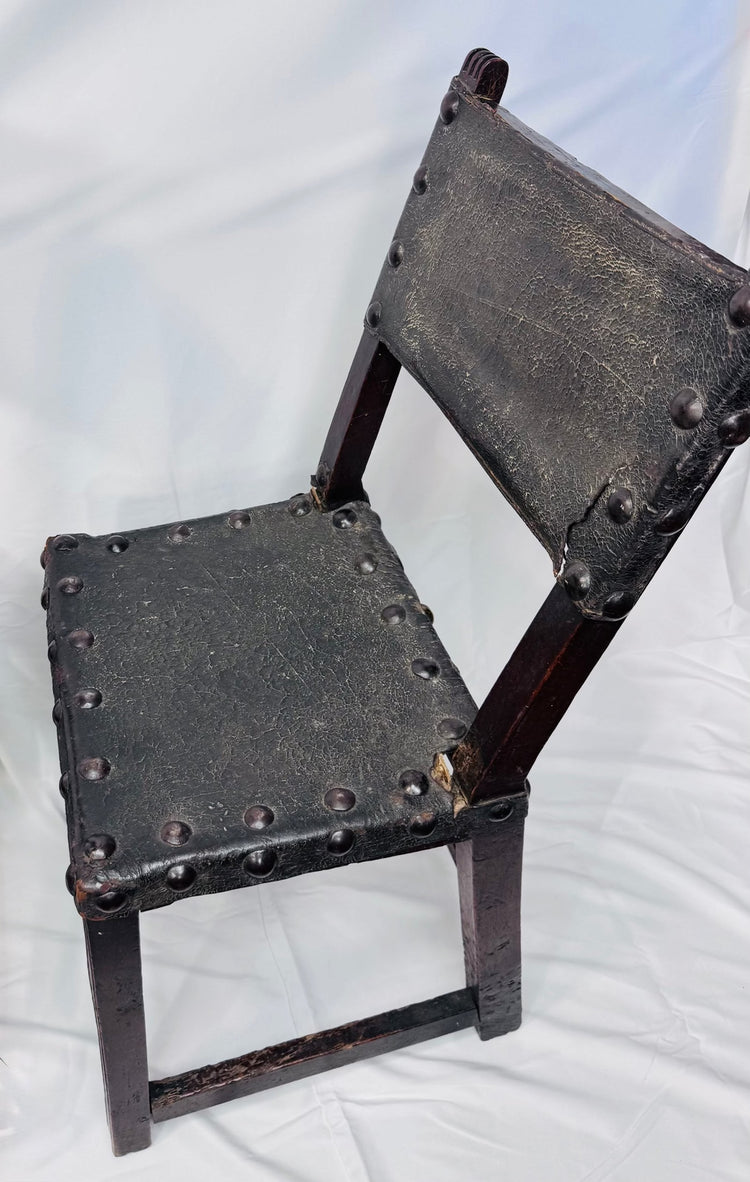
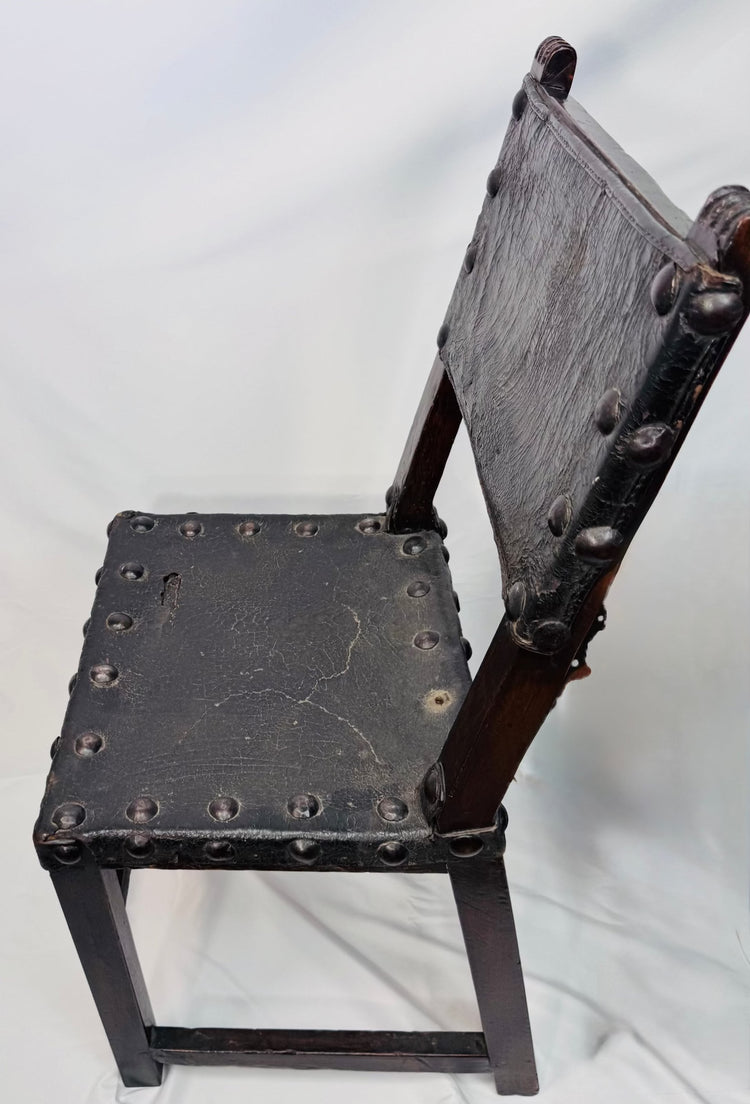
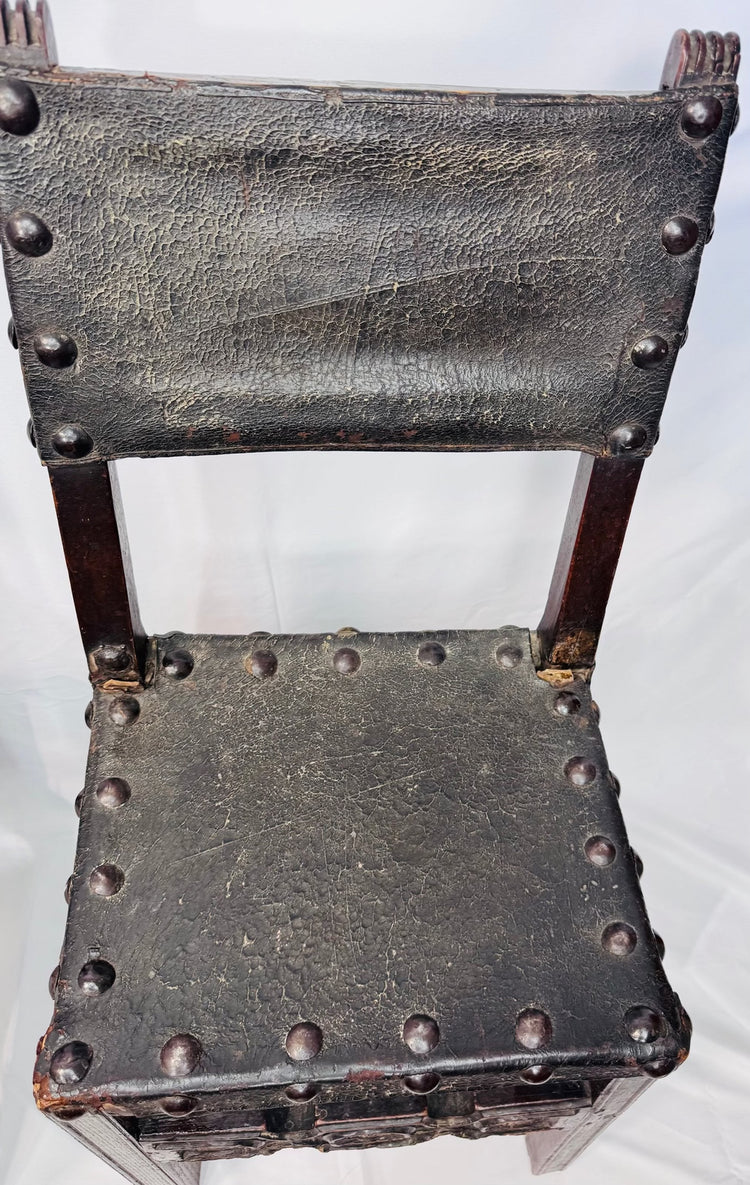
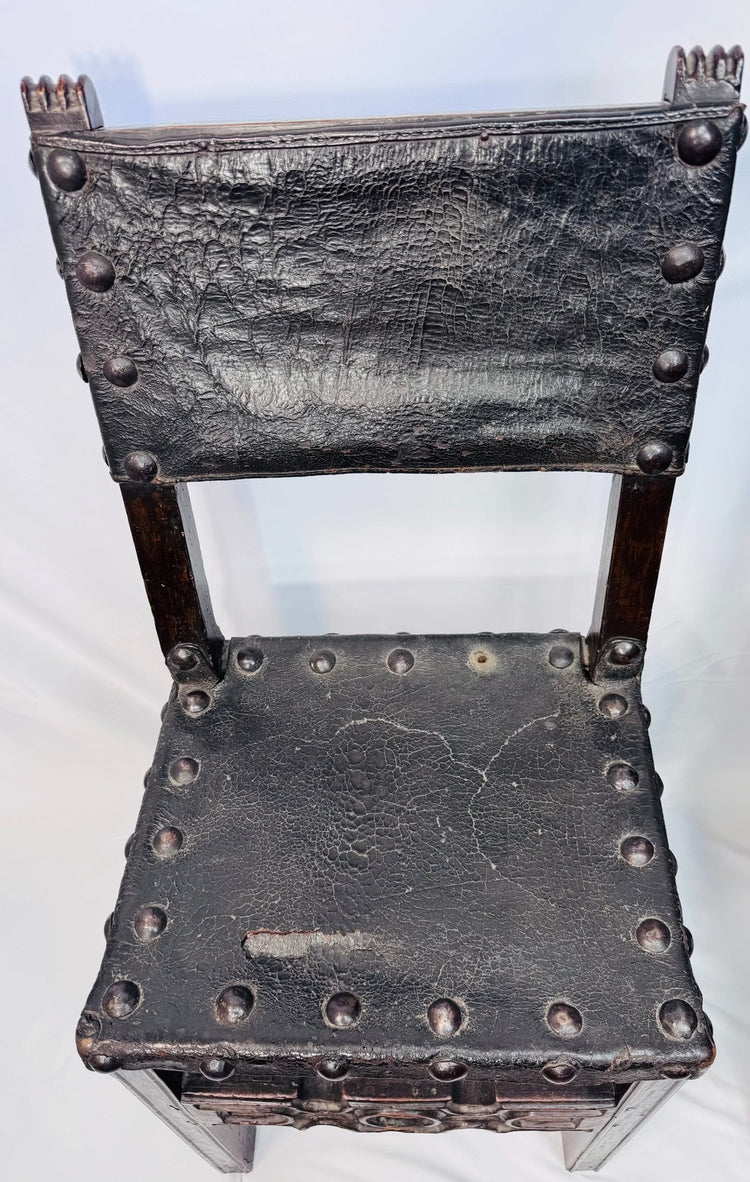
A striking matched pair of Spanish Baroque side chairs dating to the late 17th century, constructed from dark-stained walnut and retaining substantial early leather upholstery secured by large domed metal studs. The chairs embody the robust architectural character associated with Spanish furniture of the period, combining practical construction with restrained decorative detail.
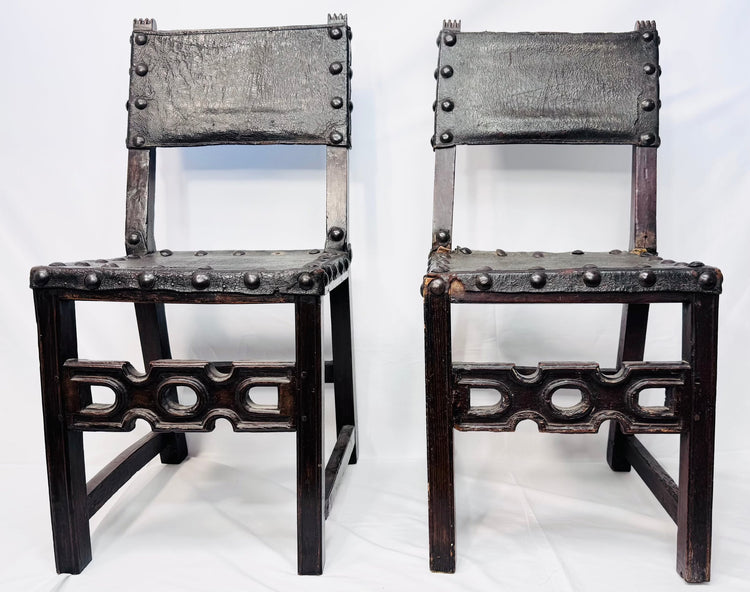
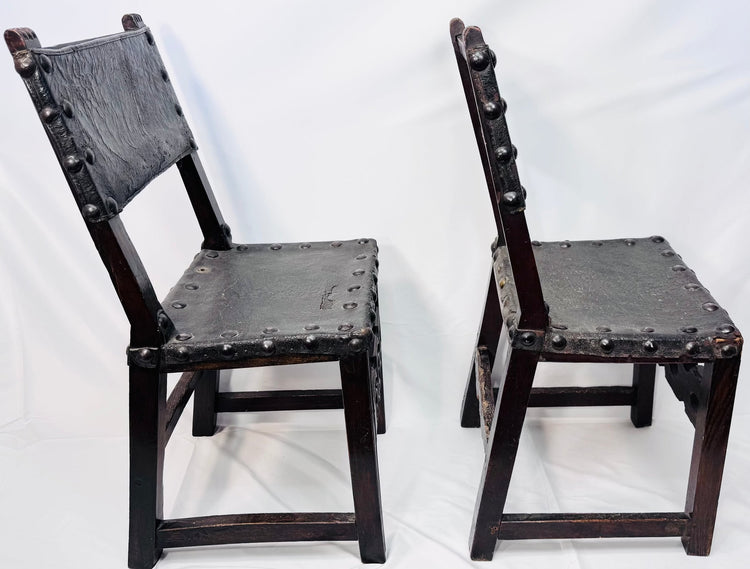
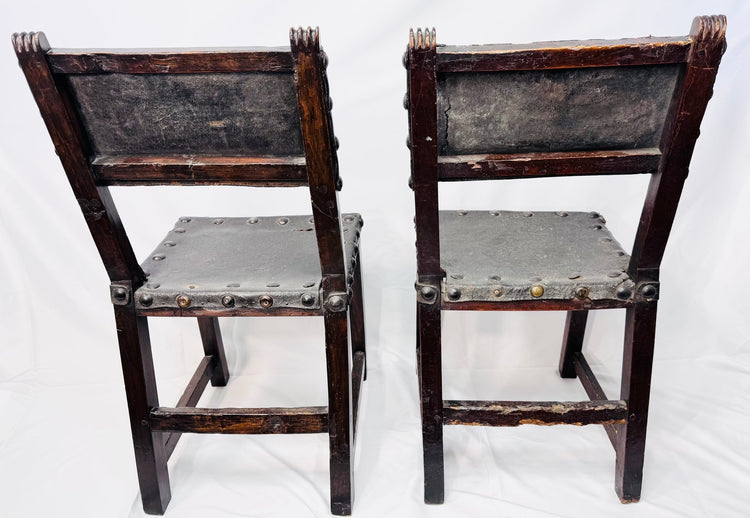
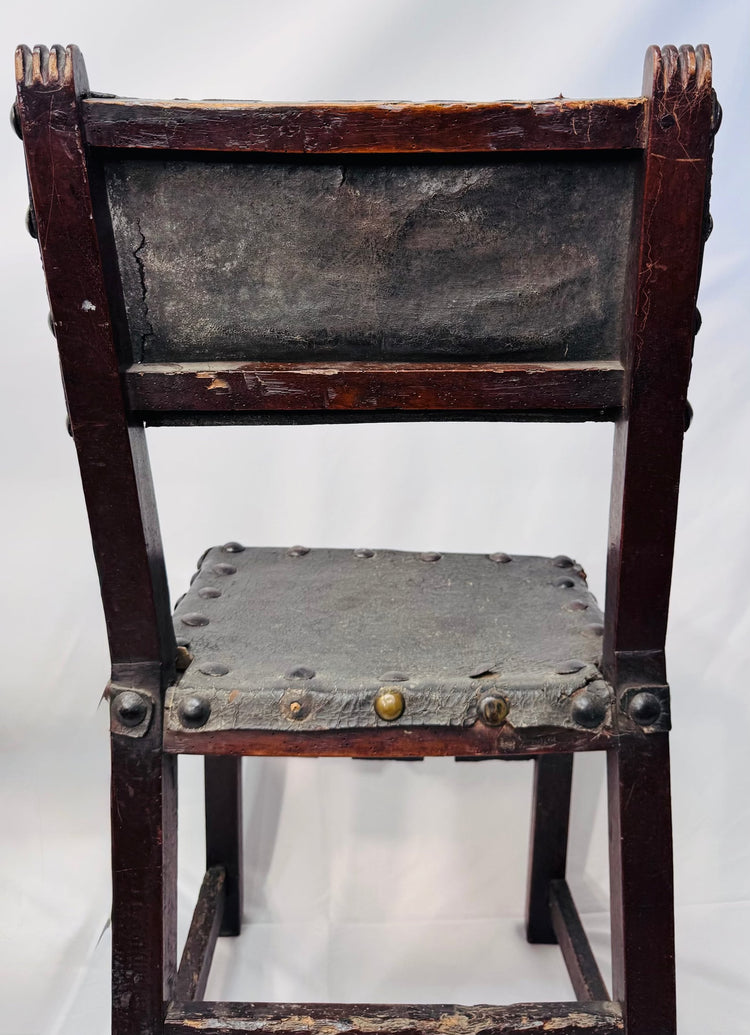
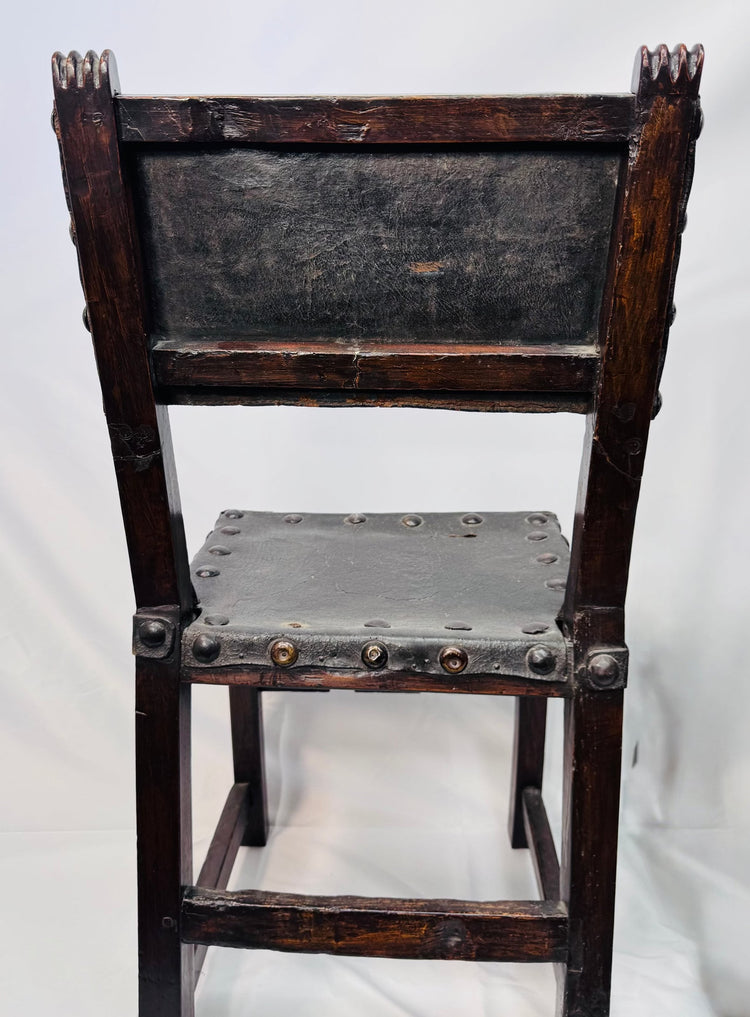
Each chair is built upon a rectilinear walnut frame with square legs joined by stretchers. Of particular visual interest are the carved and pierced front stretchers, incorporating a symmetrical arrangement of circular and arched openings that introduce an architectural quality to the otherwise substantial frames. The rear uprights rise slightly above the leather-covered backs and terminate in distinctive carved crest-like projections.
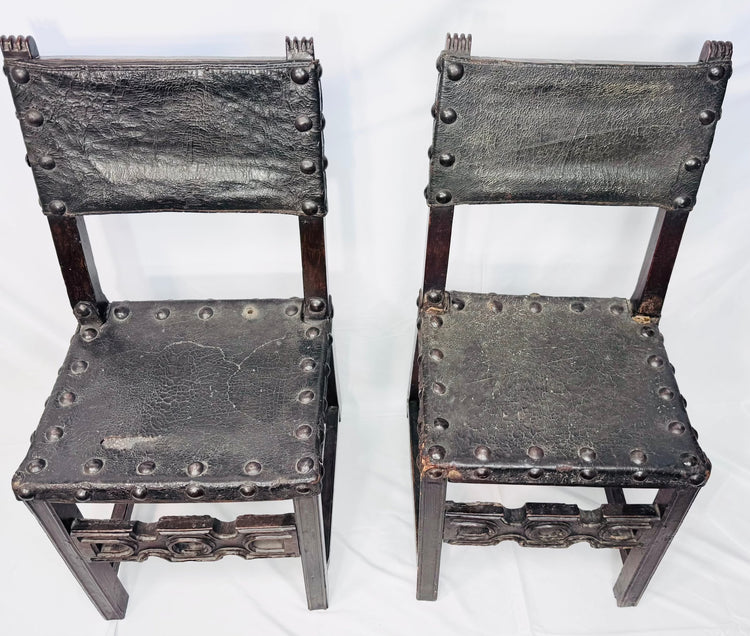
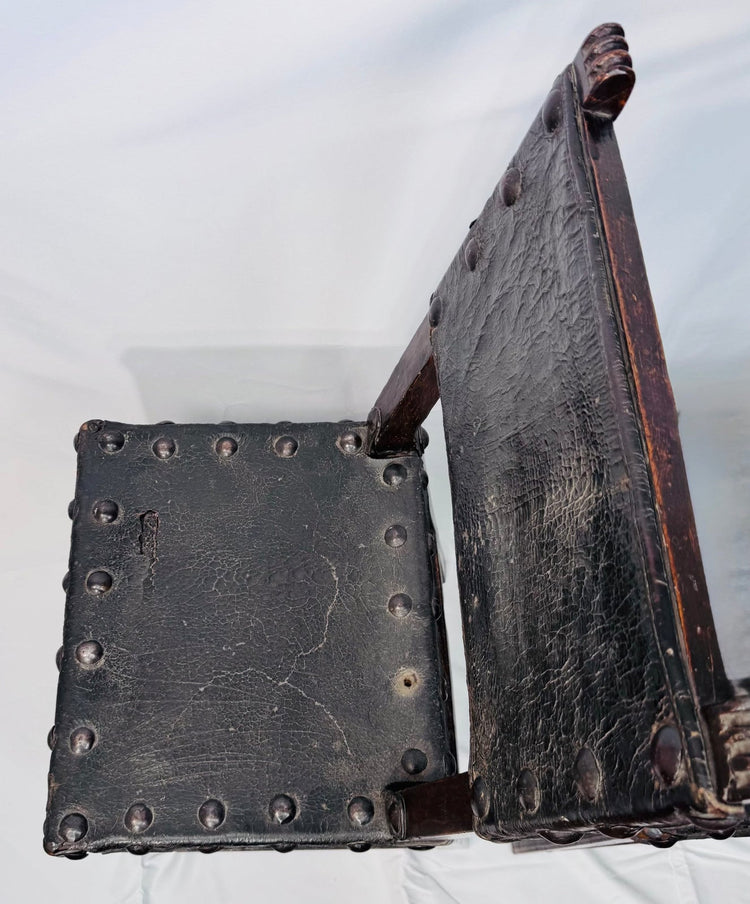
Both the seat and rectangular back panel are covered in dark leather, attached around the perimeter with individually set domed studs. The leather has developed extensive age-related craquelure, surface texture, wear and patination, giving the chairs a particularly atmospheric appearance consistent with centuries of use.
The pair retain subtle variations in their surviving studs, leather surfaces and wear patterns, reinforcing their character as handmade historic furniture rather than later machine-produced pieces.
Features
- Matched pair of Spanish Baroque side chairs
- Constructed from dark walnut
- Original-style leather-covered seats and backs
- Large domed metal upholstery studs
- Distinctive pierced and carved front stretchers
- Square legs joined by structural side and rear stretchers
- Carved projecting terminals at the upper back posts
- Deep naturally developed surface patina
- Significant age-related craquelure to the leather
- Substantial early furniture form characteristic of 17th-century Spanish interiors
Cultural Significance
Leather-covered walnut seating became an important component of Spanish domestic and institutional furniture during the 17th century. The combination of substantial timber construction, leather panels and prominent metal studs produced furniture that was both durable and visually commanding. Surviving period examples frequently employ walnut frames with leather seats and backs secured by decorative studs.
The architectural geometry of these chairs—including their square construction and pierced front stretchers—reflects the restrained but powerful decorative vocabulary associated with Spanish Baroque furniture.
Condition
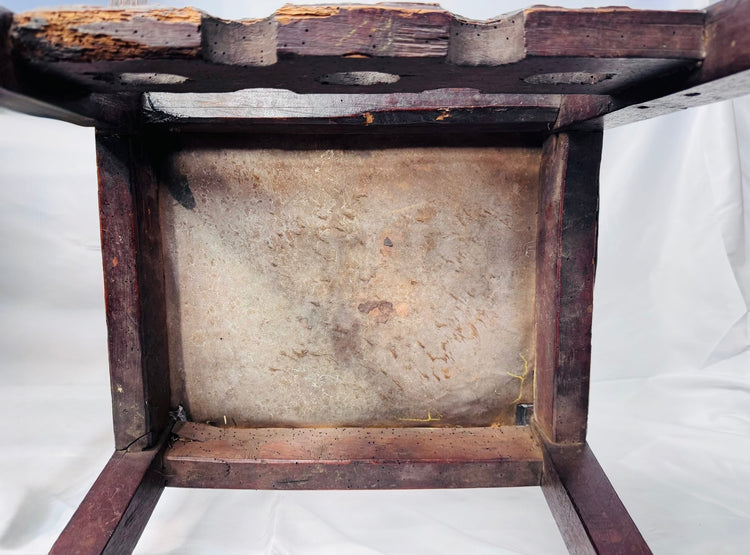
Good antique condition consistent with substantial age and historic use. Both chairs exhibit wear, scratches, abrasions, small losses, old repairs and surface variation throughout the walnut frames. The leather seats and backs display extensive natural craquelure, creasing, dryness, surface wear and localized losses. Several upholstery studs appear to have been lost or replaced over time, and there are minor areas of separation and wear around the seat and back edges.
The photographs also show evidence of old woodworm activity in portions of the timber; this appears visually consistent with historic insect activity, although the chairs have not been independently tested to determine whether any activity remains present. The overall patina and wear have been retained rather than restored away.
Dimensions (Approximate)
Height: 37 in
Width: 17 in
Depth: 15 in
Dimensions apply approximately to each chair.
Age (Approximate)
Approximately 325–375 years old
Provenance
From a private collection in Toronto, Ontario, Canada.
Subsequently handled by A.H. Wilkens Auctions & Appraisals in Toronto. Founded in 2009, A.H. Wilkens is a Toronto-based auction house specializing in fine art, decorative art, Asian art, jewellery, antiques, estate management, and professional appraisal services.
Learn More
Compare this pair with an earlier Spanish walnut-and-leather armchair preserved by the Metropolitan Museum of Art.
Discover our Collection of 17th-Century Artifacts.
Description
Historical Context & Origin
Region: Spain
Material: Walnut wood, leather, and metal upholstery studs
Period: Late 17th Century, circa 1650–1700
Description
A striking matched pair of Spanish Baroque side chairs dating to the late 17th century, constructed from dark-stained walnut and retaining substantial early leather upholstery secured by large domed metal studs. The chairs embody the robust architectural character associated with Spanish furniture of the period, combining practical construction with restrained decorative detail.
Each chair is built upon a rectilinear walnut frame with square legs joined by stretchers. Of particular visual interest are the carved and pierced front stretchers, incorporating a symmetrical arrangement of circular and arched openings that introduce an architectural quality to the otherwise substantial frames. The rear uprights rise slightly above the leather-covered backs and terminate in distinctive carved crest-like projections.
Both the seat and rectangular back panel are covered in dark leather, attached around the perimeter with individually set domed studs. The leather has developed extensive age-related craquelure, surface texture, wear and patination, giving the chairs a particularly atmospheric appearance consistent with centuries of use.
The pair retain subtle variations in their surviving studs, leather surfaces and wear patterns, reinforcing their character as handmade historic furniture rather than later machine-produced pieces.
Features
- Matched pair of Spanish Baroque side chairs
- Constructed from dark walnut
- Original-style leather-covered seats and backs
- Large domed metal upholstery studs
- Distinctive pierced and carved front stretchers
- Square legs joined by structural side and rear stretchers
- Carved projecting terminals at the upper back posts
- Deep naturally developed surface patina
- Significant age-related craquelure to the leather
- Substantial early furniture form characteristic of 17th-century Spanish interiors
Cultural Significance
Leather-covered walnut seating became an important component of Spanish domestic and institutional furniture during the 17th century. The combination of substantial timber construction, leather panels and prominent metal studs produced furniture that was both durable and visually commanding. Surviving period examples frequently employ walnut frames with leather seats and backs secured by decorative studs.
The architectural geometry of these chairs—including their square construction and pierced front stretchers—reflects the restrained but powerful decorative vocabulary associated with Spanish Baroque furniture.
Condition
Good antique condition consistent with substantial age and historic use. Both chairs exhibit wear, scratches, abrasions, small losses, old repairs and surface variation throughout the walnut frames. The leather seats and backs display extensive natural craquelure, creasing, dryness, surface wear and localized losses. Several upholstery studs appear to have been lost or replaced over time, and there are minor areas of separation and wear around the seat and back edges.
The photographs also show evidence of old woodworm activity in portions of the timber; this appears visually consistent with historic insect activity, although the chairs have not been independently tested to determine whether any activity remains present. The overall patina and wear have been retained rather than restored away.
Dimensions (Approximate)
Height: 37 in
Width: 17 in
Depth: 15 in
Dimensions apply approximately to each chair.
Age (Approximate)
Approximately 325–375 years old
Provenance
From a private collection in Toronto, Ontario, Canada.
Subsequently handled by A.H. Wilkens Auctions & Appraisals in Toronto. Founded in 2009, A.H. Wilkens is a Toronto-based auction house specializing in fine art, decorative art, Asian art, jewellery, antiques, estate management, and professional appraisal services.
Learn More
Compare this pair with an earlier Spanish walnut-and-leather armchair preserved by the Metropolitan Museum of Art.
Discover our Collection of 17th-Century Artifacts.
You May Also Like
