

Antique Philippine Moro Chainmail Armor with Peaked Sleeves | Circa 19th Century or Earlier
Couldn't load pickup availability


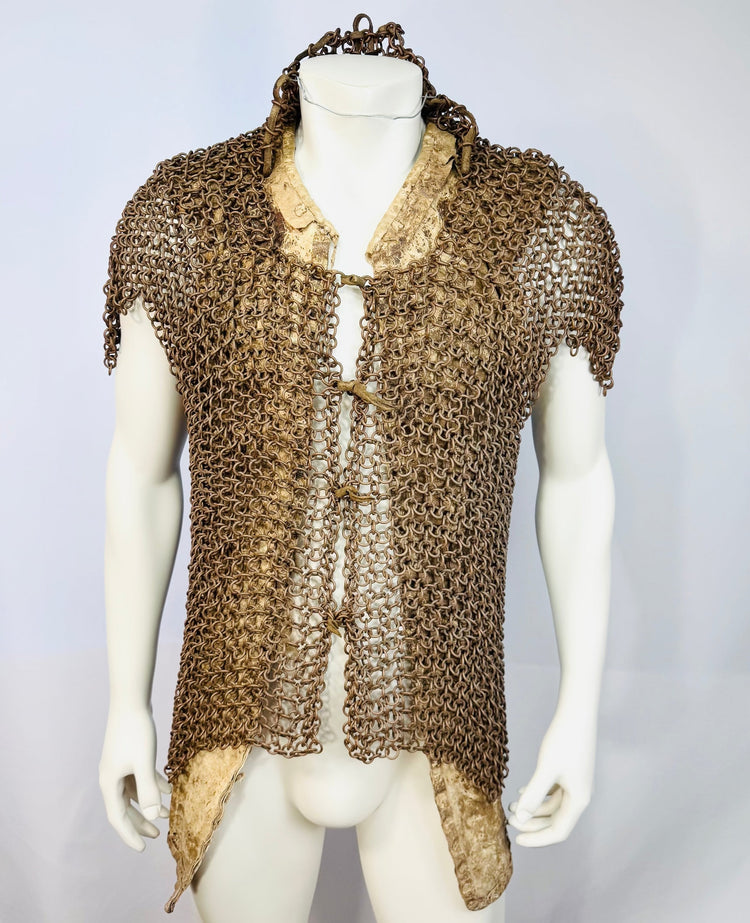
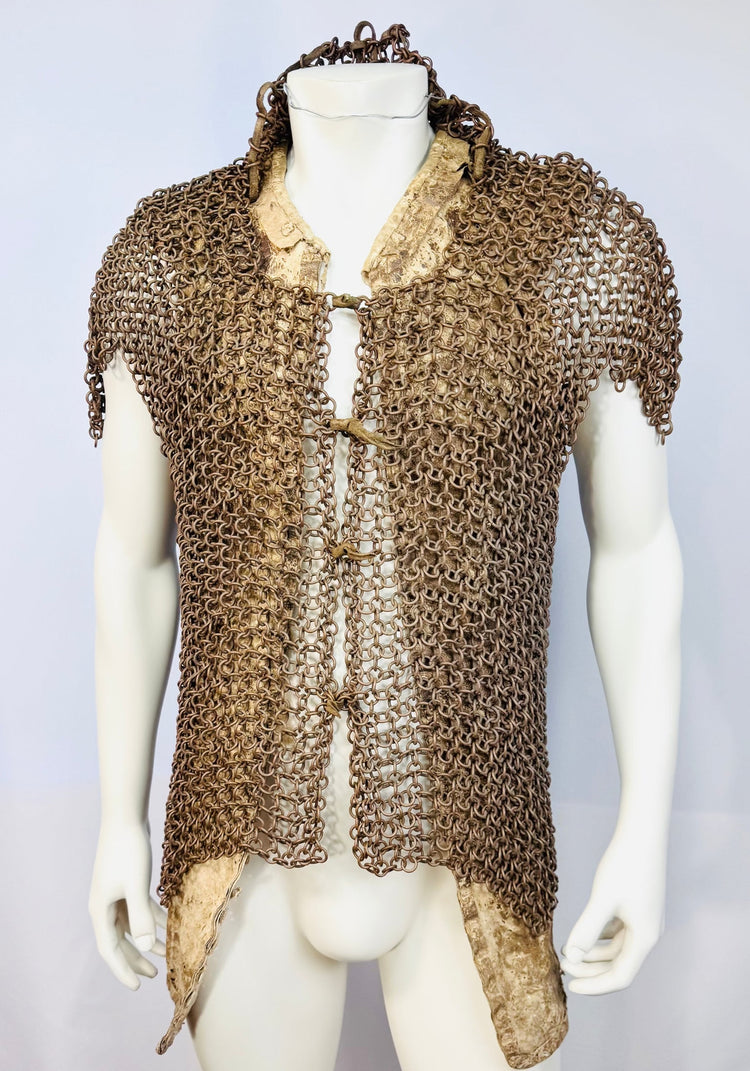
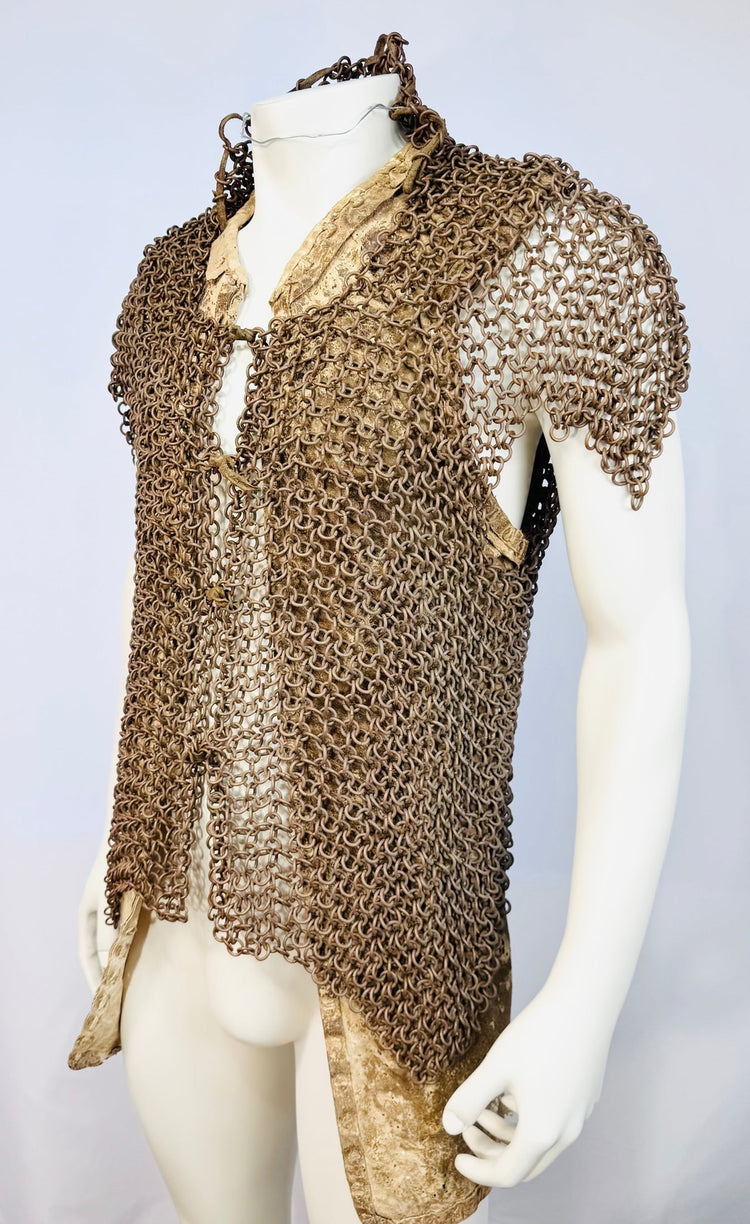
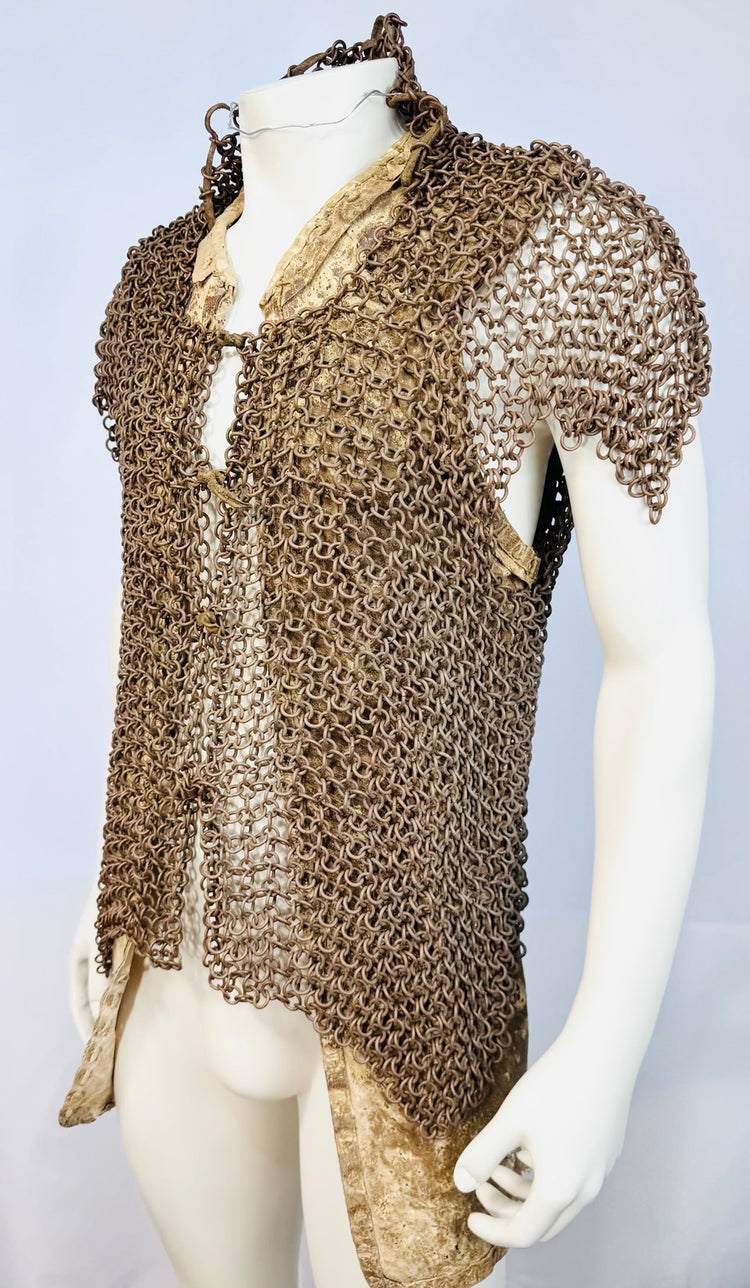
Antique Philippine Moro Chainmail Armor with Peaked Sleeves | Circa 19th Century or Earlier
Description
More
Less
Historical Context & Origin
Region: Mindanao, Southern Philippines
Material: Hardened bronze or copper-alloy mail rings over hide undercoat
Period: 19th Century or Earlier
Description
This exceptional and substantial suit of Moro body armor is attributed to the Maranao people of Mindanao in the southern Philippines and represents an impressive survival of traditional Philippine defensive equipment.
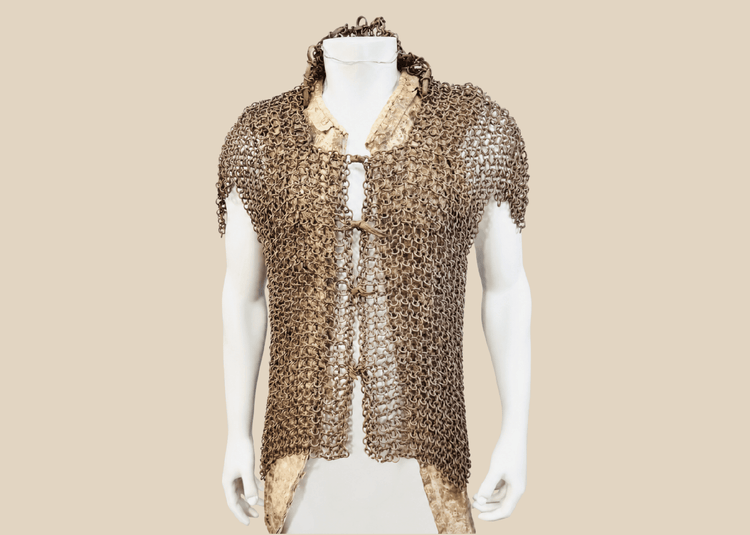
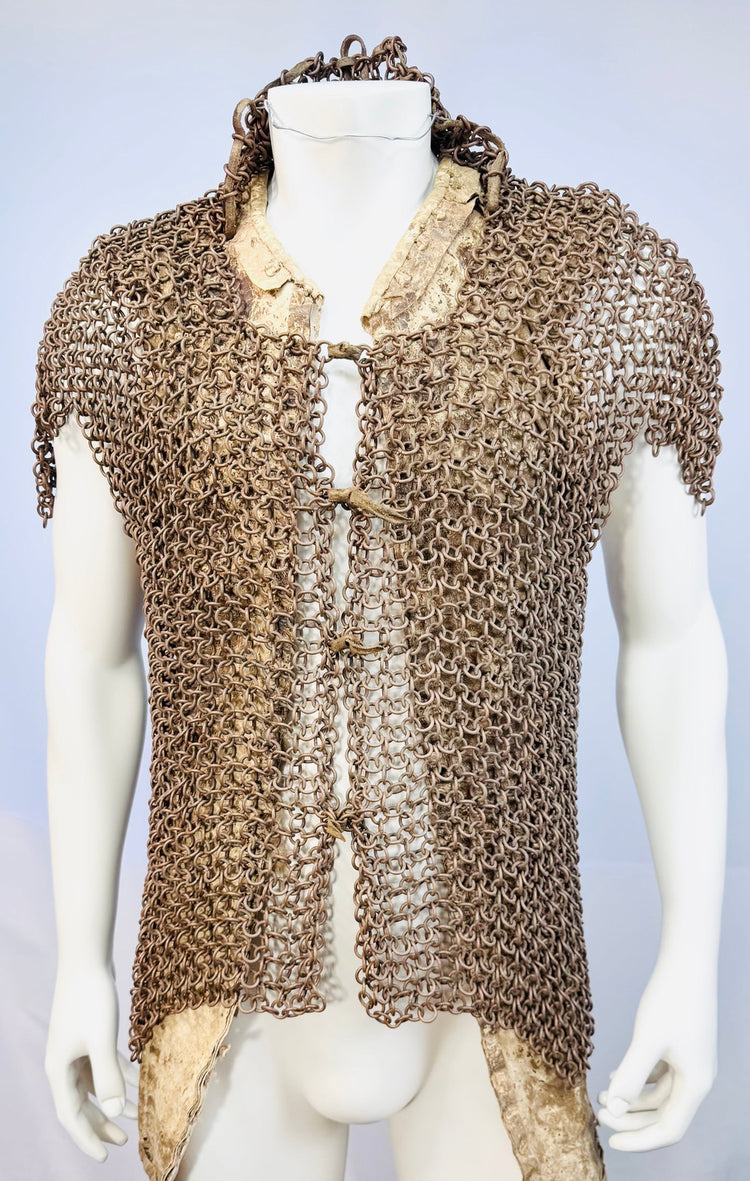
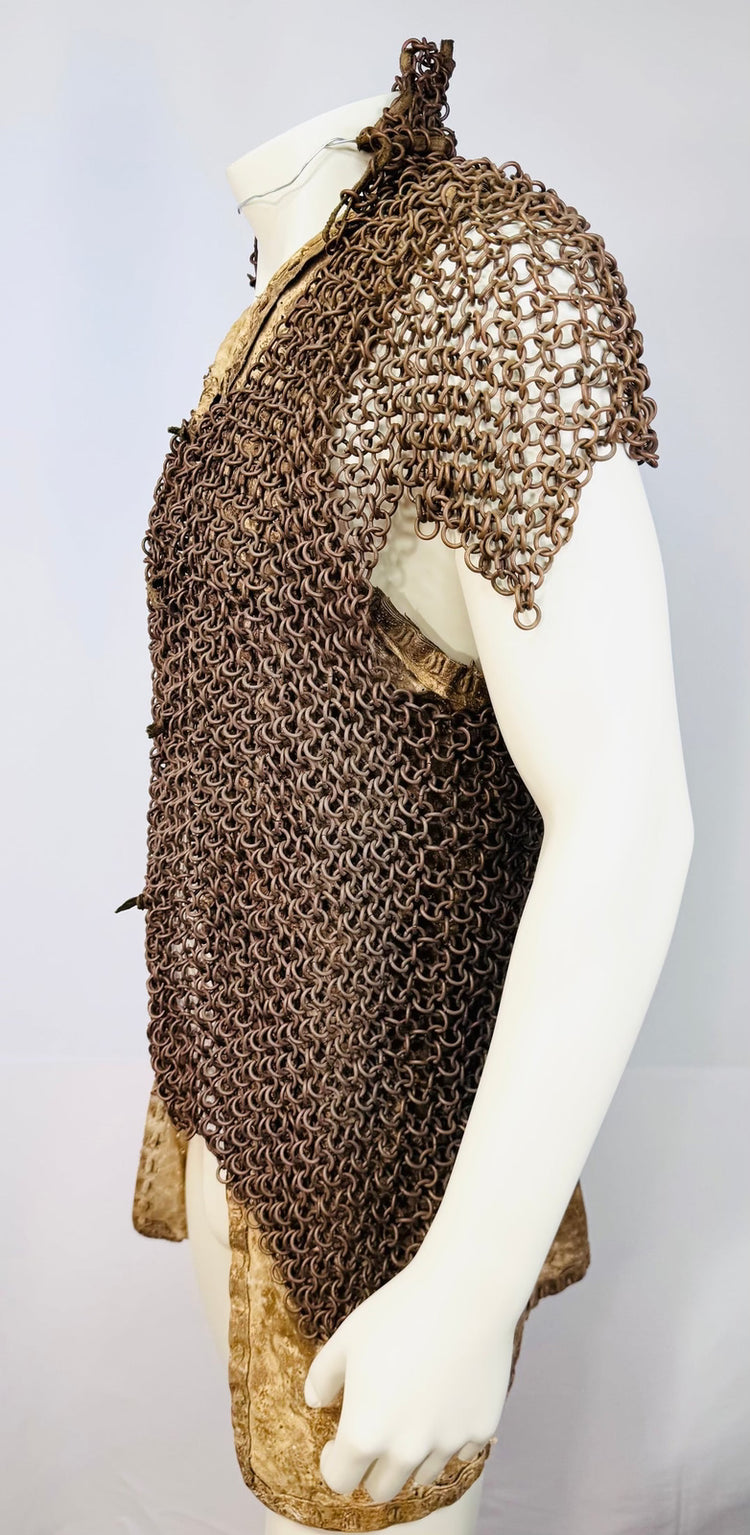
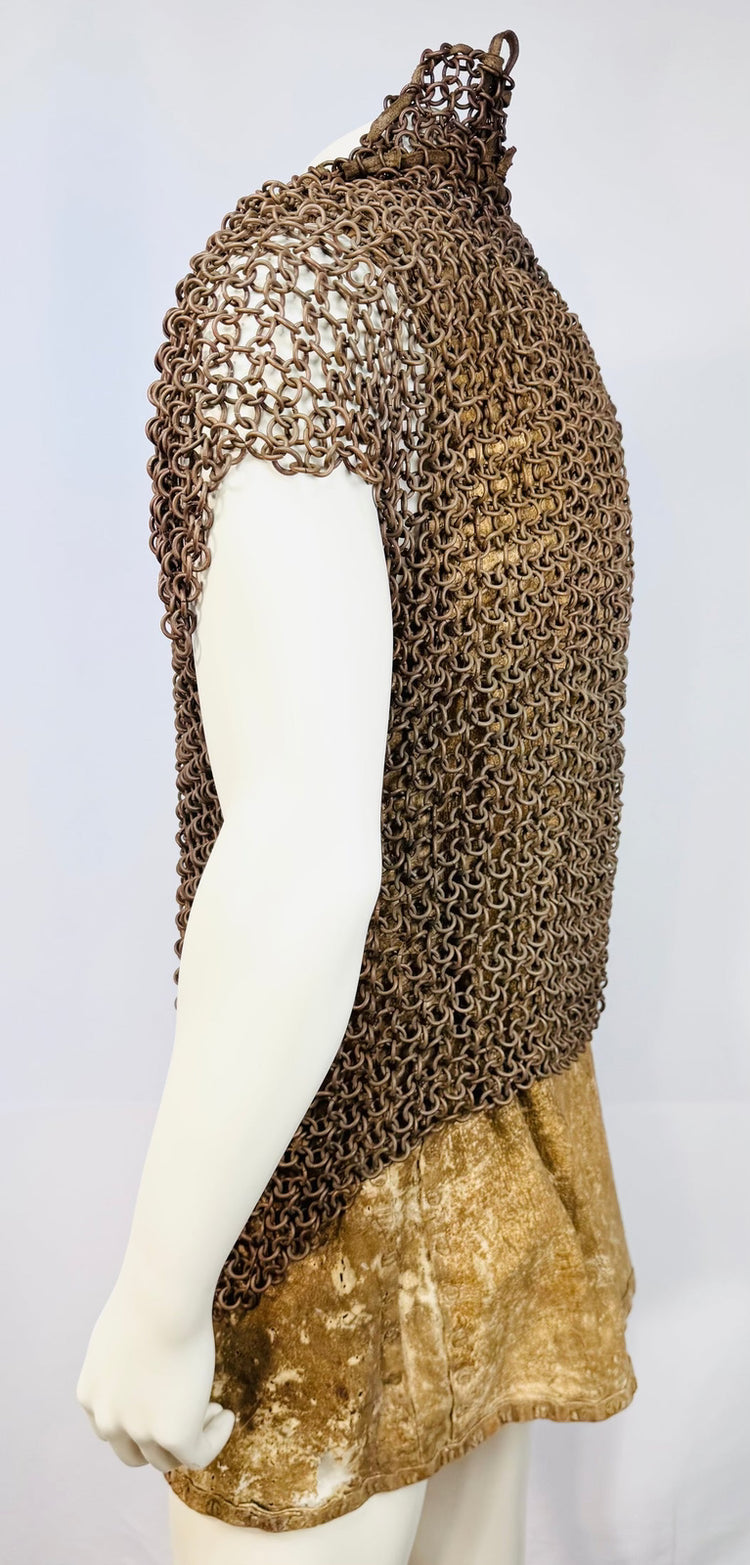
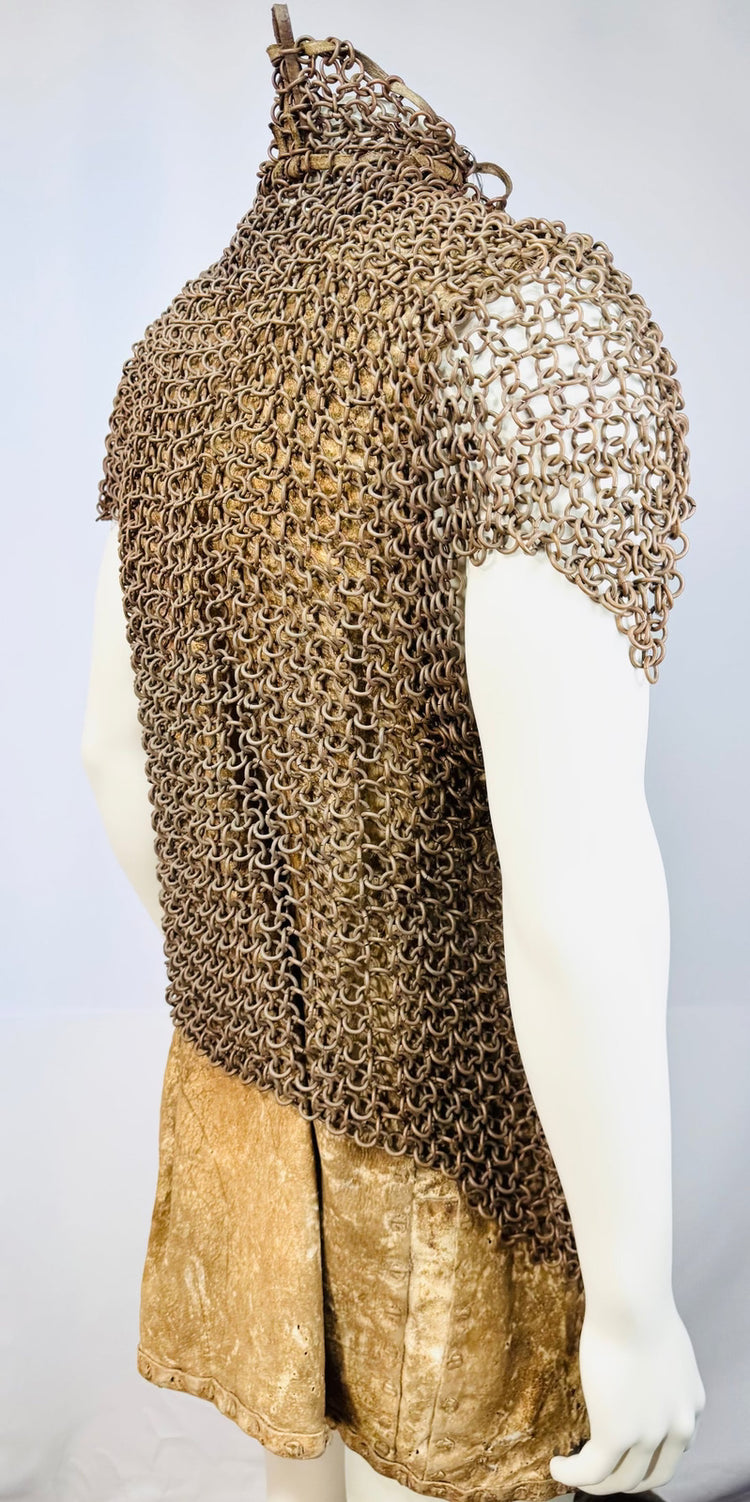
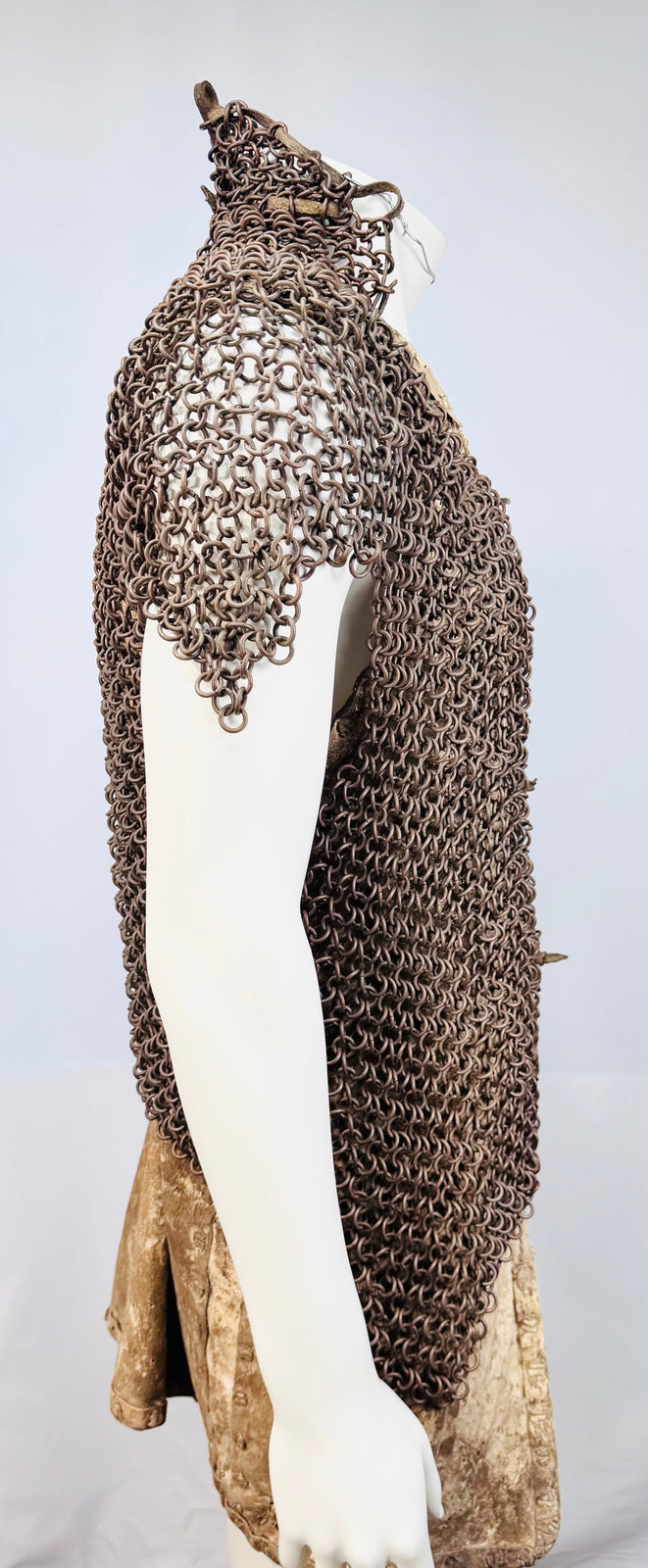
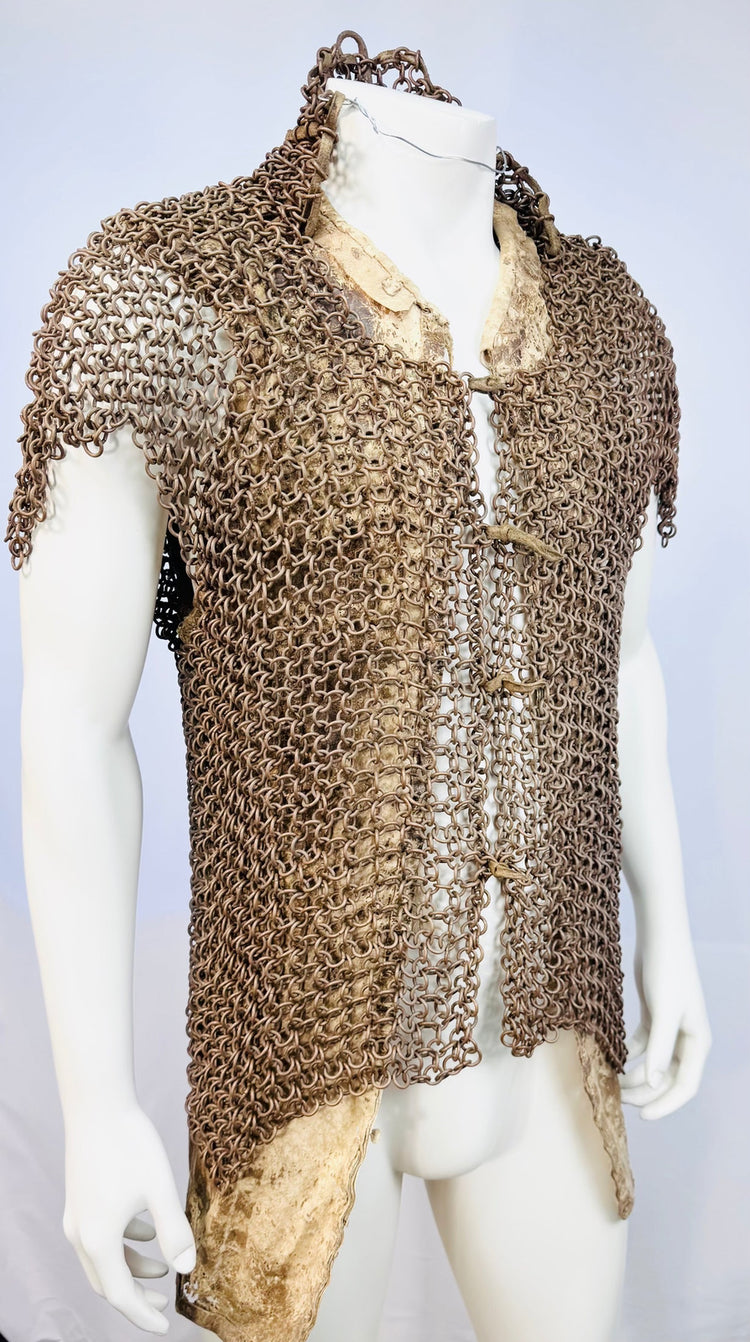
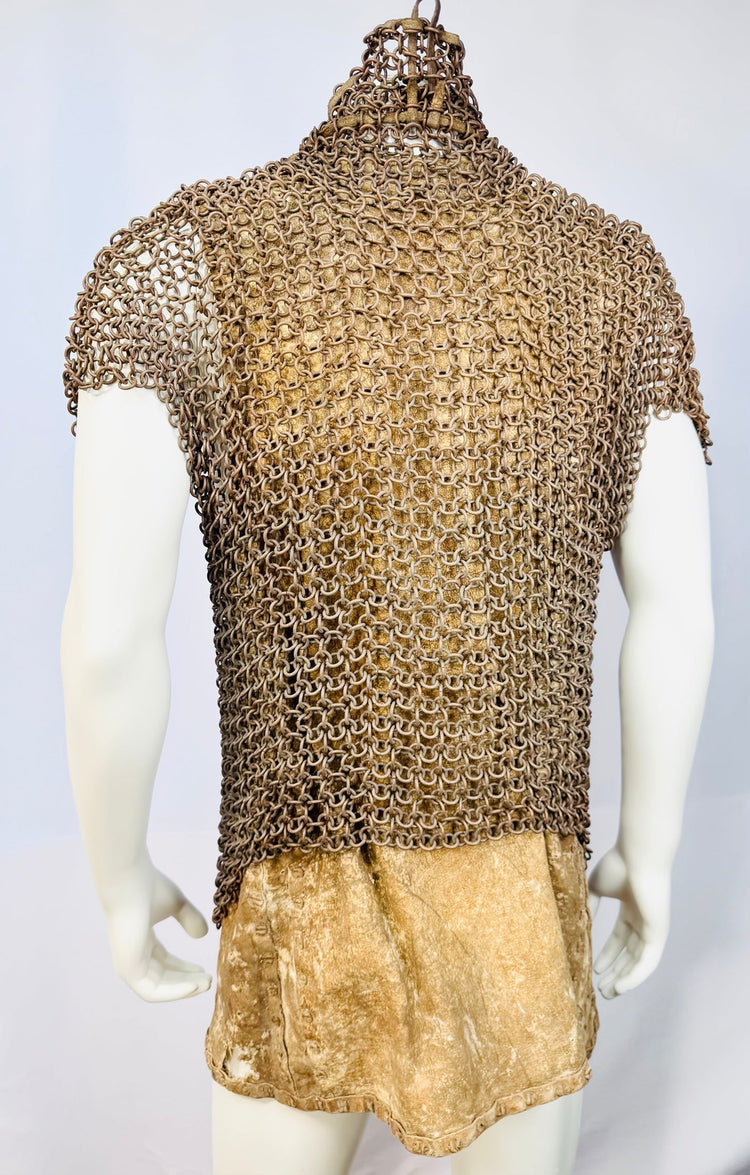
The armor is constructed around a sleeveless hide undercoat over which an extraordinarily dense covering of interlinked metal rings has been applied. The resulting mail garment extends across the torso and shoulders, forming distinctive short, peaked sleeves that provide additional protection while preserving freedom of movement.
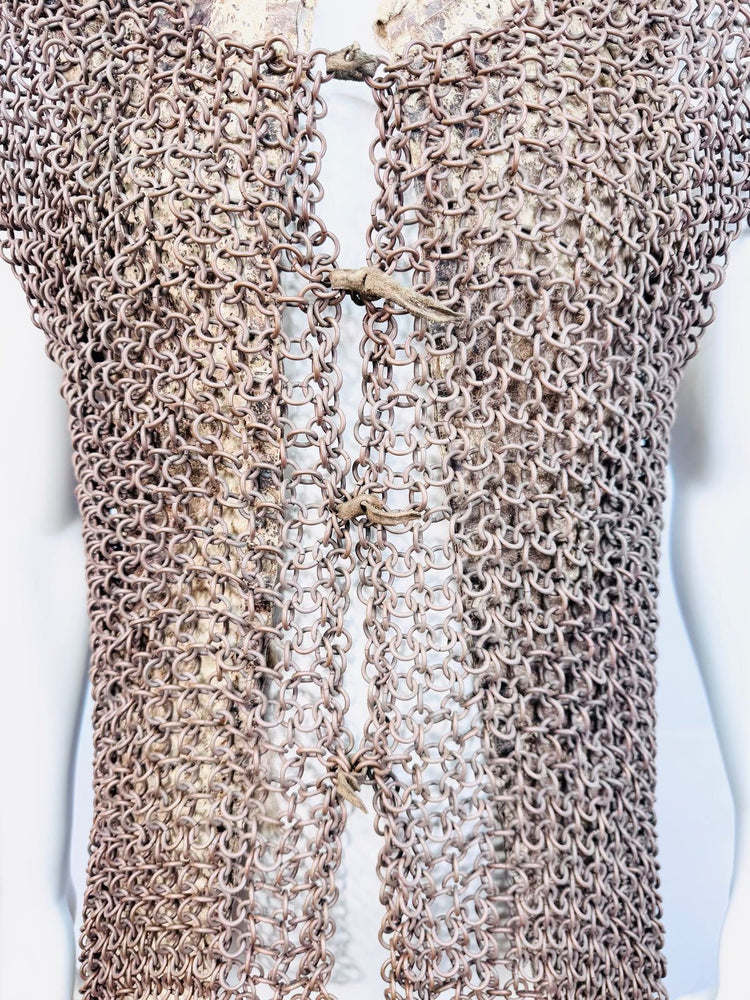
Thousands of individually interconnected rings create a remarkably dense protective surface across the chest, back, shoulders, and sides. The rings display a warm brown-bronze patina throughout, giving the armor a visually powerful and deeply aged appearance.
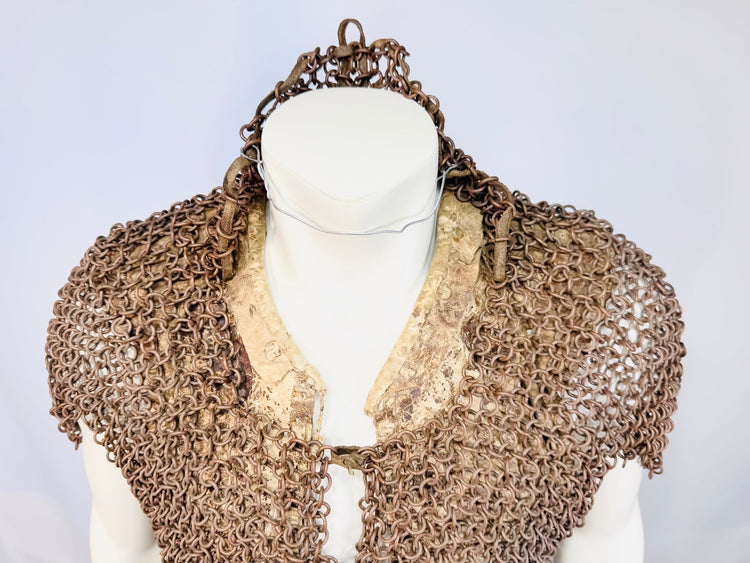
Beneath the mail survives the original hide foundation, visible particularly around the collar, interior, lower edges, and front opening. The broad hide collar retains considerable age, wear, staining, and surface deterioration. Several original-style hide ties remain across the front opening, allowing the garment to be secured around the wearer.
The shoulders are particularly striking, with the mail extending outward into short, pointed or peaked sleeves. Viewed from the side, the extraordinary density and weight of the interlinked rings become particularly apparent, demonstrating the considerable labor and material required to construct such an armor.
Moro armor from Mindanao is documented in major institutional collections. The British Museum preserves examples described as Moro war coats incorporating chain mail with organic defensive materials, demonstrating the longstanding use of mail armor among the peoples of the southern Philippines.
Features
- Massive construction of interlinked hardened bronze or copper-alloy rings
- Original sleeveless hide undercoat retained beneath the mail
- Distinctive short, peaked mail sleeves covering the shoulders
- Hide-bordered collar
- Multiple surviving hide ties along the front opening
- Extensive natural brown and bronze patination
- Substantial wearable-scale construction
- Mannequin shown in photographs is not included
Cultural Significance
The Muslim peoples collectively known historically as the Moro developed distinctive traditions of arms and armor throughout the southern Philippines, particularly in Mindanao and the Sulu Archipelago. Among these traditions were protective garments combining mail with hide, horn, metal plates, and other locally available materials. Surviving museum examples demonstrate that mail armor formed an important component of Moro martial equipment.
The Maranao, centered historically around the Lake Lanao region of Mindanao, developed a particularly rich martial material culture that included swords, shields, firearms, and protective armor. In a piece such as this, the tremendous quantity of interconnected metal rings reflects both the functional demands of protection and the considerable labor involved in producing a complete defensive garment.
The armor also represents the interaction between indigenous Philippine military traditions and broader Asian and Islamic traditions of mail construction. Its substantial weight, organic hide foundation, distinctive shoulder protection, and hand-assembled construction make it an especially evocative example of historic Southeast Asian arms and armor.
Condition
Good historic condition considering age and use, with extensive patination, oxidation, wear, and surface variation throughout the metal rings.
The hide undercoat exhibits considerable age-related deterioration, including drying, staining, discoloration, cracking, abrasions, losses, tears, and areas of separation. The collar and lower hide sections remain substantially present but show extensive historic wear.
Some rings appear distorted, separated, missing, or locally repaired, particularly around the shoulders, collar, edges, and other areas subject to stress. The surviving hide fastening ties exhibit drying and deterioration, but several remain in place across the front opening.
Dimensions (Approximate)
Overall Length: 32.625 in
Mannequin not included.
Age (Approximate)
125–225 years old
Provenance
Formerly held in a private collection in Cheyenne, Wyoming, United States, assembled with a particular focus on historic arms and armor.
Subsequently handled by Auctions Imperial, a specialist auction house with a strong focus on antique arms, armor, militaria, and historic weaponry from cultures around the world.
The armor was then acquired by a prominent private collection in Toronto, Ontario, Canada, forming part of an extensive and well-known collection of arms, armor, antiquities, and historical material.
Learn More
Compare this armour with a related Moro mail example catalogued by the Peabody Museum of Archaeology & Ethnology.
Explore our Collection of Arms, Armour and Historical Weaponry.
Description
Historical Context & Origin
Region: Mindanao, Southern Philippines
Material: Hardened bronze or copper-alloy mail rings over hide undercoat
Period: 19th Century or Earlier
Description
This exceptional and substantial suit of Moro body armor is attributed to the Maranao people of Mindanao in the southern Philippines and represents an impressive survival of traditional Philippine defensive equipment.
The armor is constructed around a sleeveless hide undercoat over which an extraordinarily dense covering of interlinked metal rings has been applied. The resulting mail garment extends across the torso and shoulders, forming distinctive short, peaked sleeves that provide additional protection while preserving freedom of movement.
Thousands of individually interconnected rings create a remarkably dense protective surface across the chest, back, shoulders, and sides. The rings display a warm brown-bronze patina throughout, giving the armor a visually powerful and deeply aged appearance.
Beneath the mail survives the original hide foundation, visible particularly around the collar, interior, lower edges, and front opening. The broad hide collar retains considerable age, wear, staining, and surface deterioration. Several original-style hide ties remain across the front opening, allowing the garment to be secured around the wearer.
The shoulders are particularly striking, with the mail extending outward into short, pointed or peaked sleeves. Viewed from the side, the extraordinary density and weight of the interlinked rings become particularly apparent, demonstrating the considerable labor and material required to construct such an armor.
Moro armor from Mindanao is documented in major institutional collections. The British Museum preserves examples described as Moro war coats incorporating chain mail with organic defensive materials, demonstrating the longstanding use of mail armor among the peoples of the southern Philippines.
Features
- Massive construction of interlinked hardened bronze or copper-alloy rings
- Original sleeveless hide undercoat retained beneath the mail
- Distinctive short, peaked mail sleeves covering the shoulders
- Hide-bordered collar
- Multiple surviving hide ties along the front opening
- Extensive natural brown and bronze patination
- Substantial wearable-scale construction
- Mannequin shown in photographs is not included
Cultural Significance
The Muslim peoples collectively known historically as the Moro developed distinctive traditions of arms and armor throughout the southern Philippines, particularly in Mindanao and the Sulu Archipelago. Among these traditions were protective garments combining mail with hide, horn, metal plates, and other locally available materials. Surviving museum examples demonstrate that mail armor formed an important component of Moro martial equipment.
The Maranao, centered historically around the Lake Lanao region of Mindanao, developed a particularly rich martial material culture that included swords, shields, firearms, and protective armor. In a piece such as this, the tremendous quantity of interconnected metal rings reflects both the functional demands of protection and the considerable labor involved in producing a complete defensive garment.
The armor also represents the interaction between indigenous Philippine military traditions and broader Asian and Islamic traditions of mail construction. Its substantial weight, organic hide foundation, distinctive shoulder protection, and hand-assembled construction make it an especially evocative example of historic Southeast Asian arms and armor.
Condition
Good historic condition considering age and use, with extensive patination, oxidation, wear, and surface variation throughout the metal rings.
The hide undercoat exhibits considerable age-related deterioration, including drying, staining, discoloration, cracking, abrasions, losses, tears, and areas of separation. The collar and lower hide sections remain substantially present but show extensive historic wear.
Some rings appear distorted, separated, missing, or locally repaired, particularly around the shoulders, collar, edges, and other areas subject to stress. The surviving hide fastening ties exhibit drying and deterioration, but several remain in place across the front opening.
Dimensions (Approximate)
Overall Length: 32.625 in
Mannequin not included.
Age (Approximate)
125–225 years old
Provenance
Formerly held in a private collection in Cheyenne, Wyoming, United States, assembled with a particular focus on historic arms and armor.
Subsequently handled by Auctions Imperial, a specialist auction house with a strong focus on antique arms, armor, militaria, and historic weaponry from cultures around the world.
The armor was then acquired by a prominent private collection in Toronto, Ontario, Canada, forming part of an extensive and well-known collection of arms, armor, antiquities, and historical material.
Learn More
Compare this armour with a related Moro mail example catalogued by the Peabody Museum of Archaeology & Ethnology.
Explore our Collection of Arms, Armour and Historical Weaponry.
You May Also Like
