
Prehistoric Fossilized Bison Horn with Partial Skull | Circa 2.58 million to 11,700 years old
Couldn't load pickup availability


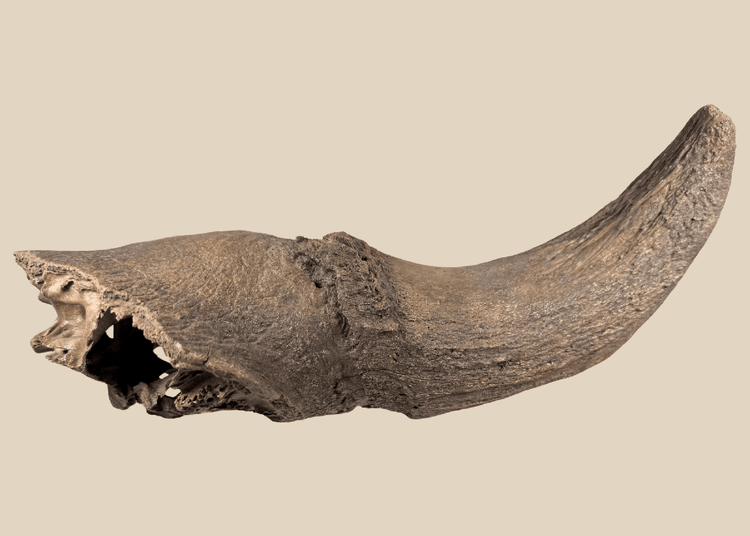
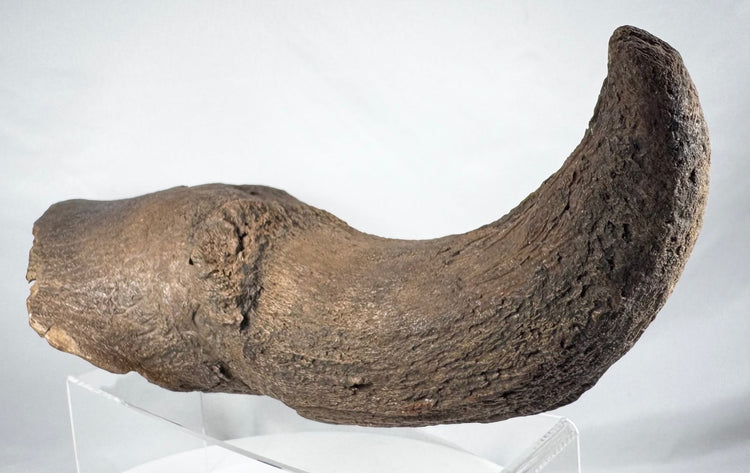
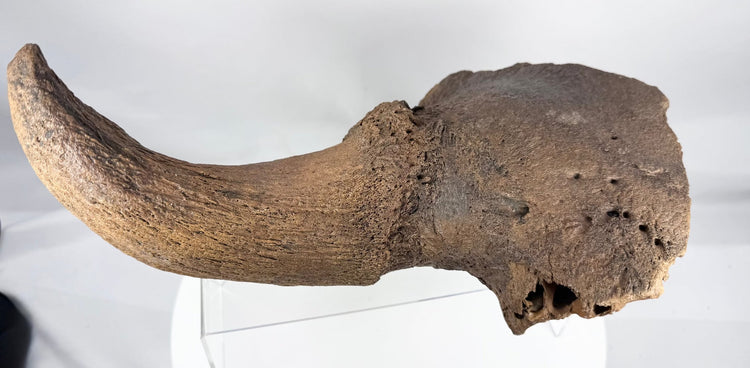
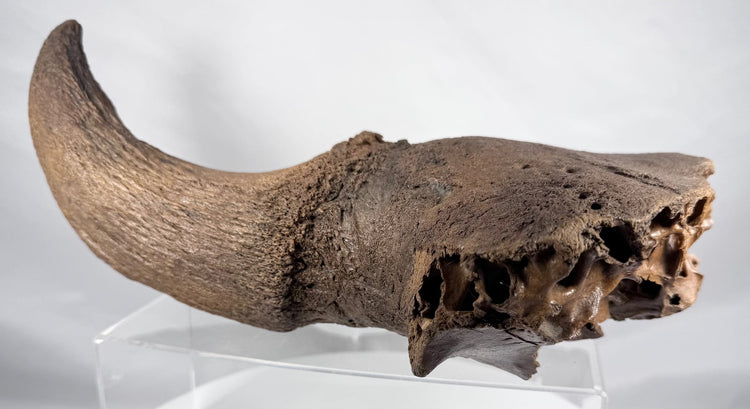
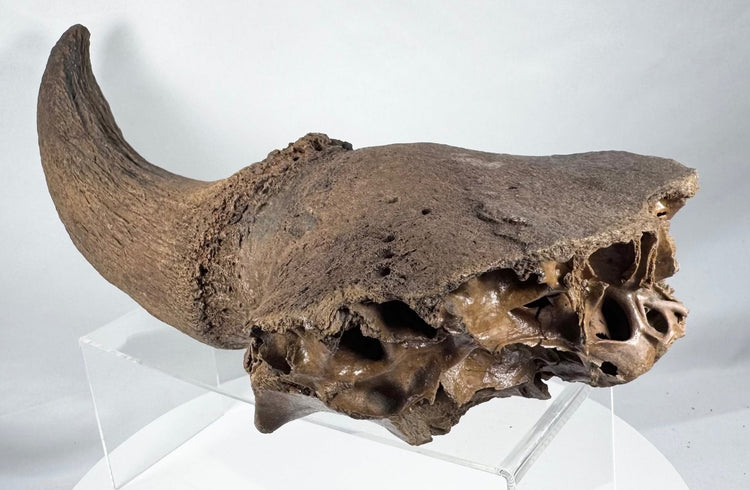
Prehistoric Fossilized Bison Horn with Partial Skull | Circa 2.58 million to 11,700 years old
Description
More
Less
Historical Context & Origin
Region: Newcastle, Wyoming, USA
Material: Fossilized / mineralized bison horn core and partial cranial bone
Period: Pleistocene Epoch, prehistoric
Description
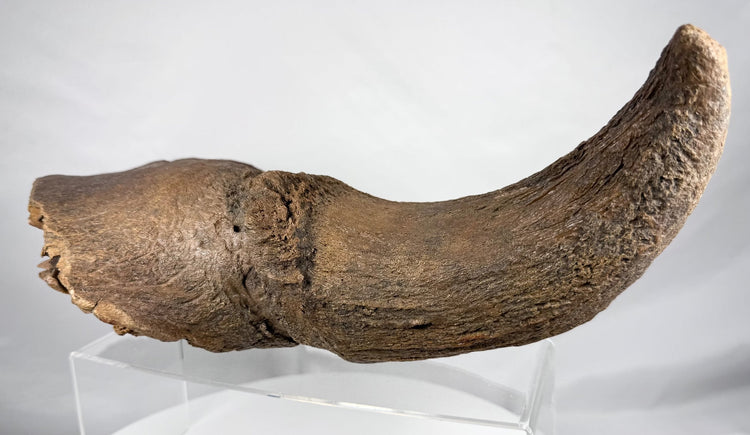
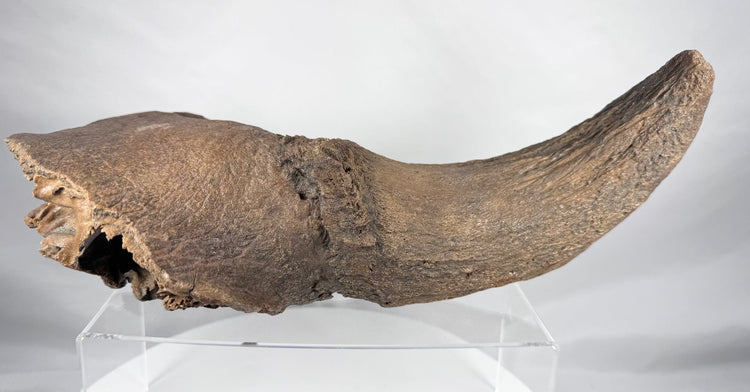
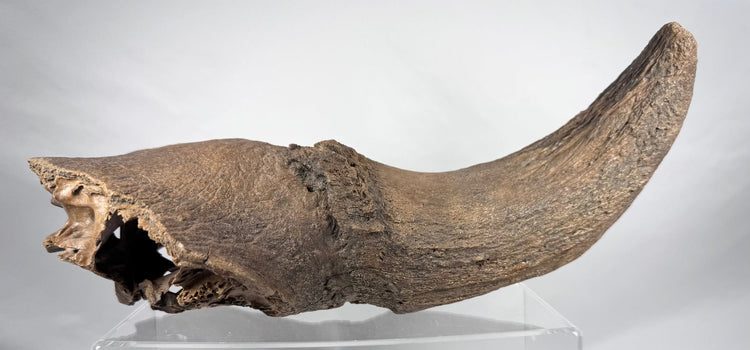
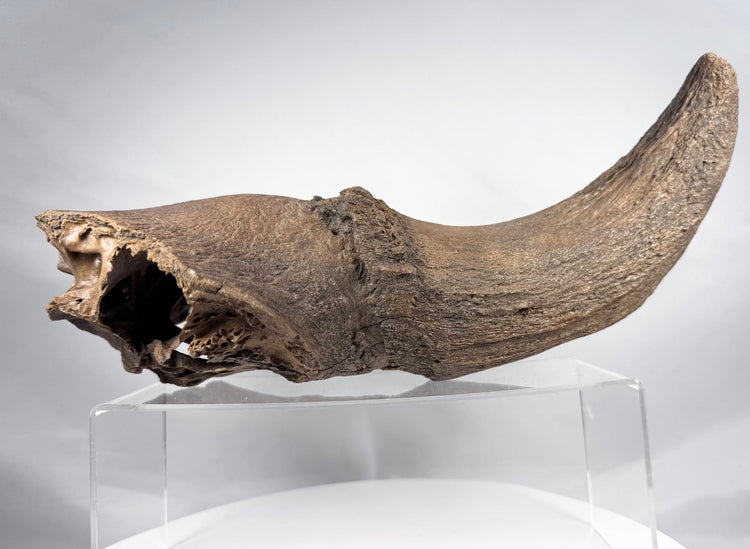
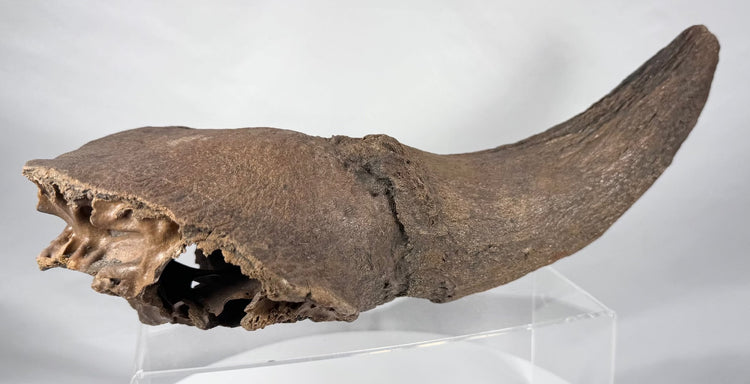
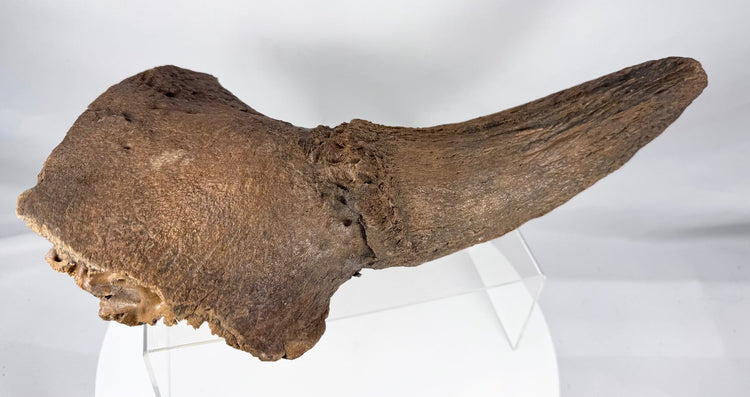
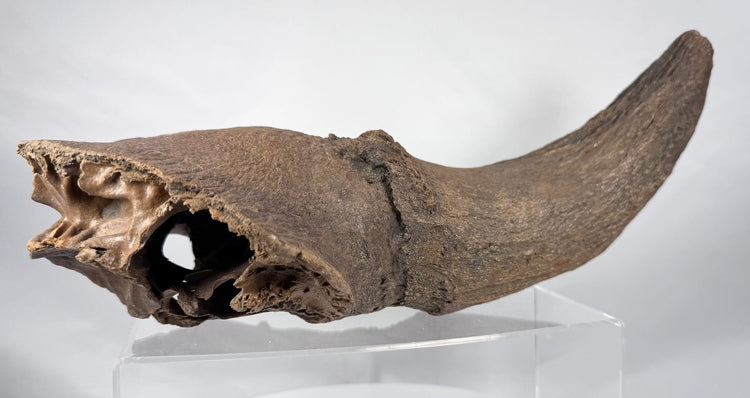
This substantial prehistoric bison specimen preserves a large horn core together with an impressive portion of the adjoining skull. The horn sweeps dramatically upward from the heavy cranial base, retaining the powerful profile associated with the great bison that inhabited prehistoric North America.
Unlike an isolated horn core, this example retains considerable cranial structure at its base. The exposed interior reveals the natural cavities and complex architecture of the skull, while the exterior displays extensive age-related surface texture, mineralization, and weathering.
Bison were a defining component of North America's Pleistocene grassland ecosystems. Several forms, including the enormous Bison latifrons and later Bison antiquus, preceded the modern American bison. Without diagnostic analysis, however, this specimen is conservatively attributed to prehistoric Bison sp.
Features
- Large prehistoric fossilized bison horn core
- Substantial portion of the adjoining skull preserved
- Dramatic naturally curved profile
- Visible internal cranial structure and cavities
- Rich brown mineral coloration and ancient surface patina
- Personally unearthed near Newcastle, Wyoming
- Striking natural-history display specimen
Cultural & Scientific Significance
Bison have inhabited North America for hundreds of thousands of years, evolving into several forms during the Pleistocene before the emergence of the modern American bison. These immense herbivores occupied grasslands alongside mammoths, mastodons, prehistoric horses, camels, and large Ice Age predators.
Horn cores and cranial remains are particularly evocative survivals because they preserve one of the animal's most recognizable adaptations. The size and sweeping curvature of this specimen provide a tangible connection to the megafaunal ecosystems that once dominated prehistoric North America.
Condition
Well-preserved for its considerable geological age. The specimen retains the horn core and a substantial portion of associated cranial bone. Natural losses, fractures, weathering, surface erosion, mineral deposits, cavities, and irregularities are present throughout, consistent with burial, fossilization, excavation, and age. The exposed cranial interior remains clearly visible. Please refer to the photographs for the complete condition.
Dimensions (Approximate)
Length: 12.5 in
Width: 8 in
Age (Approximate)
11,700–2.58 million years old
Precise species and geological age would require specialist identification and confirmation of the fossil-bearing formation.
Provenance
Acquired from Broken Rock Fossil Shop, Belfast, Prince Edward Island, Canada, an independent fossil and mineral shop operated by Linda Nobles and specializing in dinosaur fossils, minerals, crystals, and other natural-history specimens.
The specimen was reportedly personally unearthed by Nobles during one of her field expeditions near Newcastle, Wyoming, USA, where she has participated in the discovery and excavation of prehistoric remains.
Subsequently acquired by a private collector in Toronto, Ontario, Canada.
Learn More
Explore the evolution, fossil record, and immense horn spans of Prehistoric North American Bison
Discover fossils, natural-history specimens, and ancient objects in our Collection of Prehistoric Wonders and Ancient Relics
Description
Historical Context & Origin
Region: Newcastle, Wyoming, USA
Material: Fossilized / mineralized bison horn core and partial cranial bone
Period: Pleistocene Epoch, prehistoric
Description
This substantial prehistoric bison specimen preserves a large horn core together with an impressive portion of the adjoining skull. The horn sweeps dramatically upward from the heavy cranial base, retaining the powerful profile associated with the great bison that inhabited prehistoric North America.
Unlike an isolated horn core, this example retains considerable cranial structure at its base. The exposed interior reveals the natural cavities and complex architecture of the skull, while the exterior displays extensive age-related surface texture, mineralization, and weathering.
Bison were a defining component of North America's Pleistocene grassland ecosystems. Several forms, including the enormous Bison latifrons and later Bison antiquus, preceded the modern American bison. Without diagnostic analysis, however, this specimen is conservatively attributed to prehistoric Bison sp.
Features
- Large prehistoric fossilized bison horn core
- Substantial portion of the adjoining skull preserved
- Dramatic naturally curved profile
- Visible internal cranial structure and cavities
- Rich brown mineral coloration and ancient surface patina
- Personally unearthed near Newcastle, Wyoming
- Striking natural-history display specimen
Cultural & Scientific Significance
Bison have inhabited North America for hundreds of thousands of years, evolving into several forms during the Pleistocene before the emergence of the modern American bison. These immense herbivores occupied grasslands alongside mammoths, mastodons, prehistoric horses, camels, and large Ice Age predators.
Horn cores and cranial remains are particularly evocative survivals because they preserve one of the animal's most recognizable adaptations. The size and sweeping curvature of this specimen provide a tangible connection to the megafaunal ecosystems that once dominated prehistoric North America.
Condition
Well-preserved for its considerable geological age. The specimen retains the horn core and a substantial portion of associated cranial bone. Natural losses, fractures, weathering, surface erosion, mineral deposits, cavities, and irregularities are present throughout, consistent with burial, fossilization, excavation, and age. The exposed cranial interior remains clearly visible. Please refer to the photographs for the complete condition.
Dimensions (Approximate)
Length: 12.5 in
Width: 8 in
Age (Approximate)
11,700–2.58 million years old
Precise species and geological age would require specialist identification and confirmation of the fossil-bearing formation.
Provenance
Acquired from Broken Rock Fossil Shop, Belfast, Prince Edward Island, Canada, an independent fossil and mineral shop operated by Linda Nobles and specializing in dinosaur fossils, minerals, crystals, and other natural-history specimens.
The specimen was reportedly personally unearthed by Nobles during one of her field expeditions near Newcastle, Wyoming, USA, where she has participated in the discovery and excavation of prehistoric remains.
Subsequently acquired by a private collector in Toronto, Ontario, Canada.
Learn More
Explore the evolution, fossil record, and immense horn spans of Prehistoric North American Bison
Discover fossils, natural-history specimens, and ancient objects in our Collection of Prehistoric Wonders and Ancient Relics
You May Also Like
