


Pre-Columbian Stone Mano & Metate Grinding Set | Central America | Circa 8000 BCE
Couldn't load pickup availability


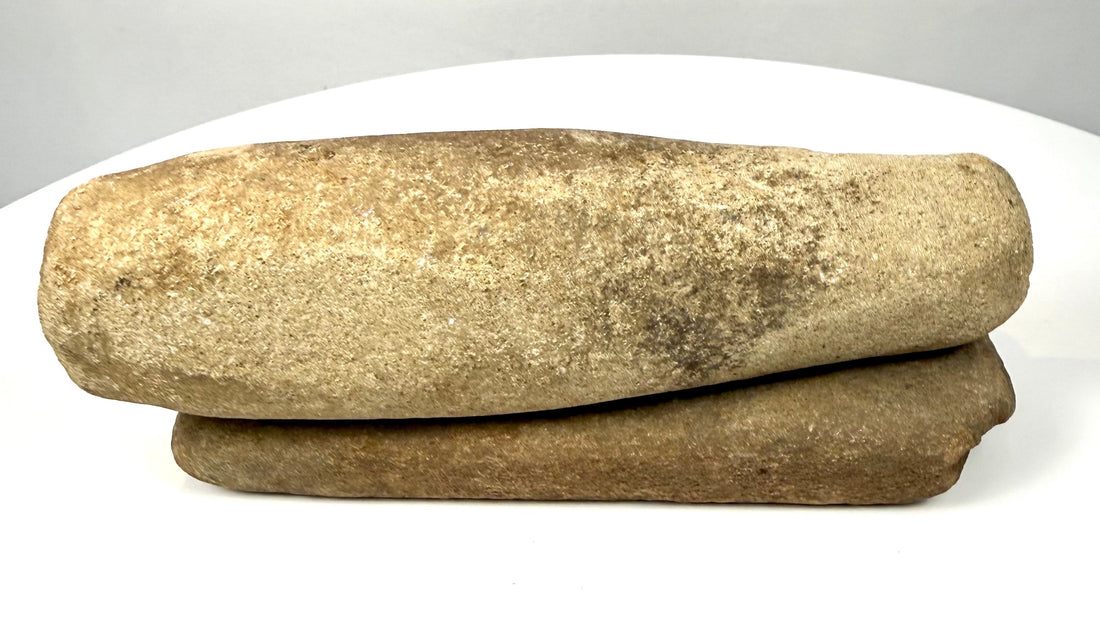

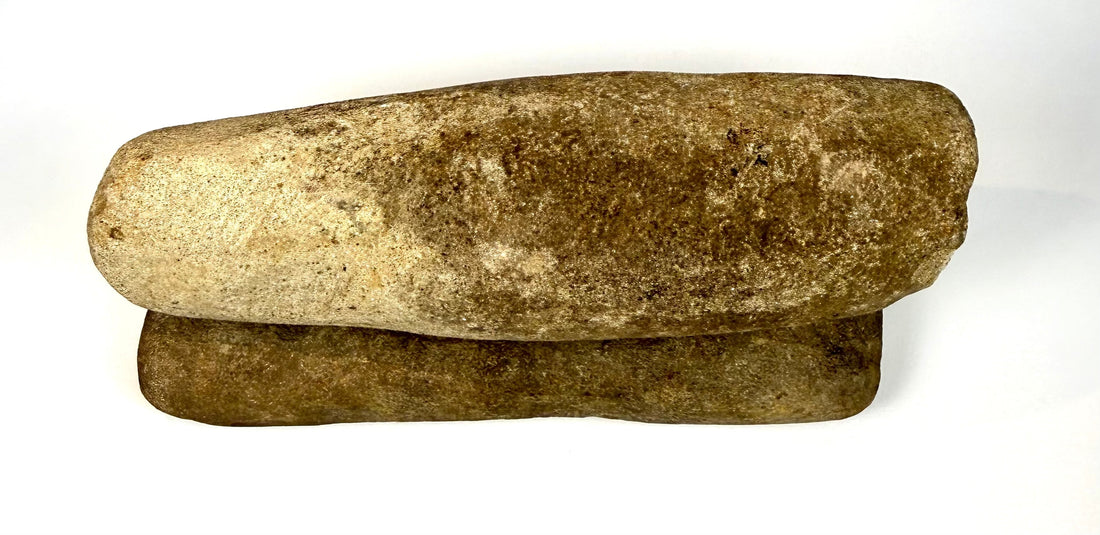
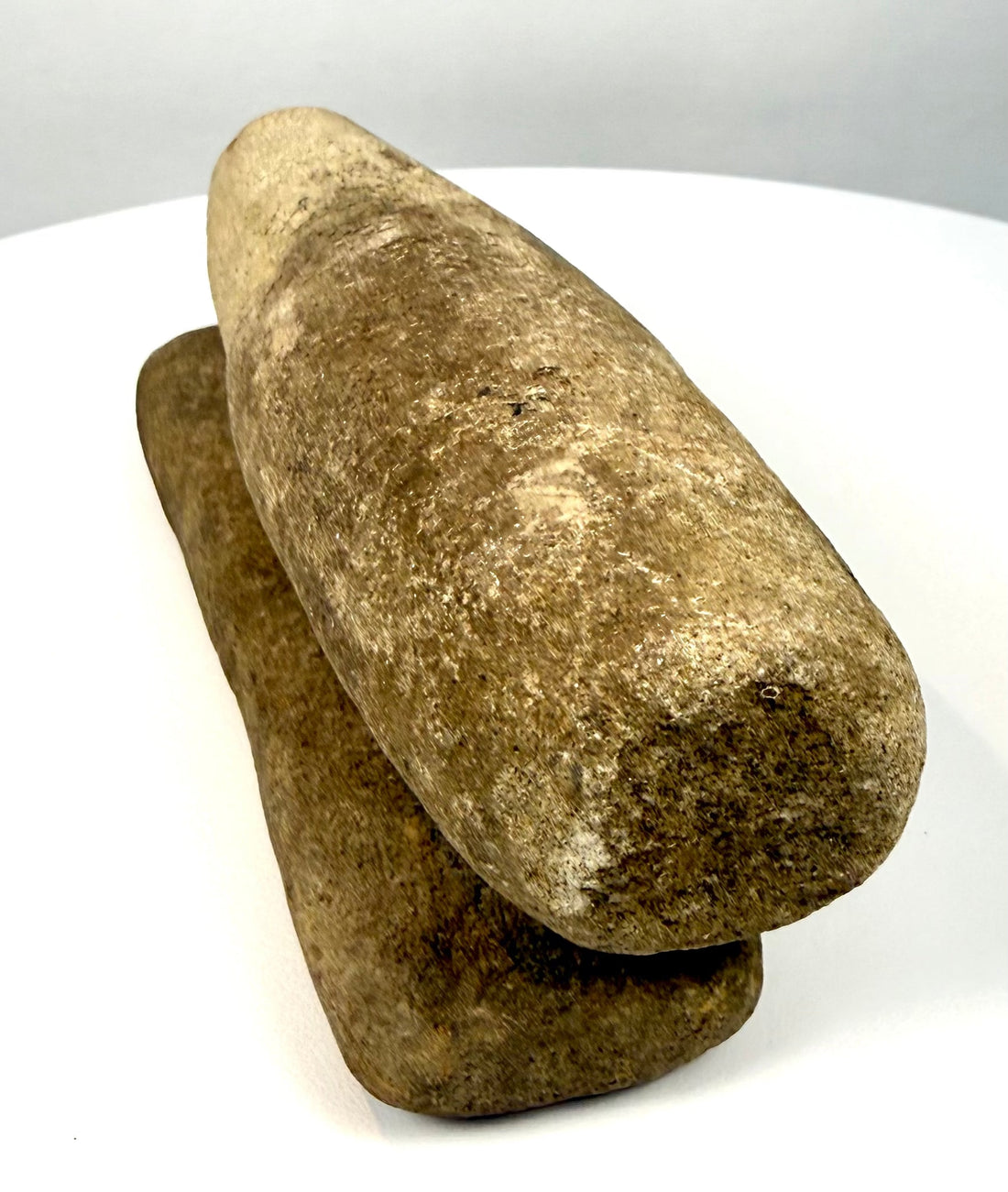
Pre-Columbian Stone Mano & Metate Grinding Set | Central America | Circa 8000 BCE
Description
More
Less
Historical Context & Origin
Region: Central America
Material: Natural stone, shaped and worn through grinding and abrasion
Period: Pre-Columbian, previously attributed to the Archaic Period, circa 8000 BCE
Description
This ancient two-piece stone grinding assemblage, traditionally identified as a Mano & Metate, represents one of the most enduring forms of food-processing technology used by Indigenous civilizations throughout Central America and the broader pre-Columbian world. Previously attributed to the Archaic Period, circa 8000 BCE, the set reflects the practical craftsmanship associated with early stone grinding implements.
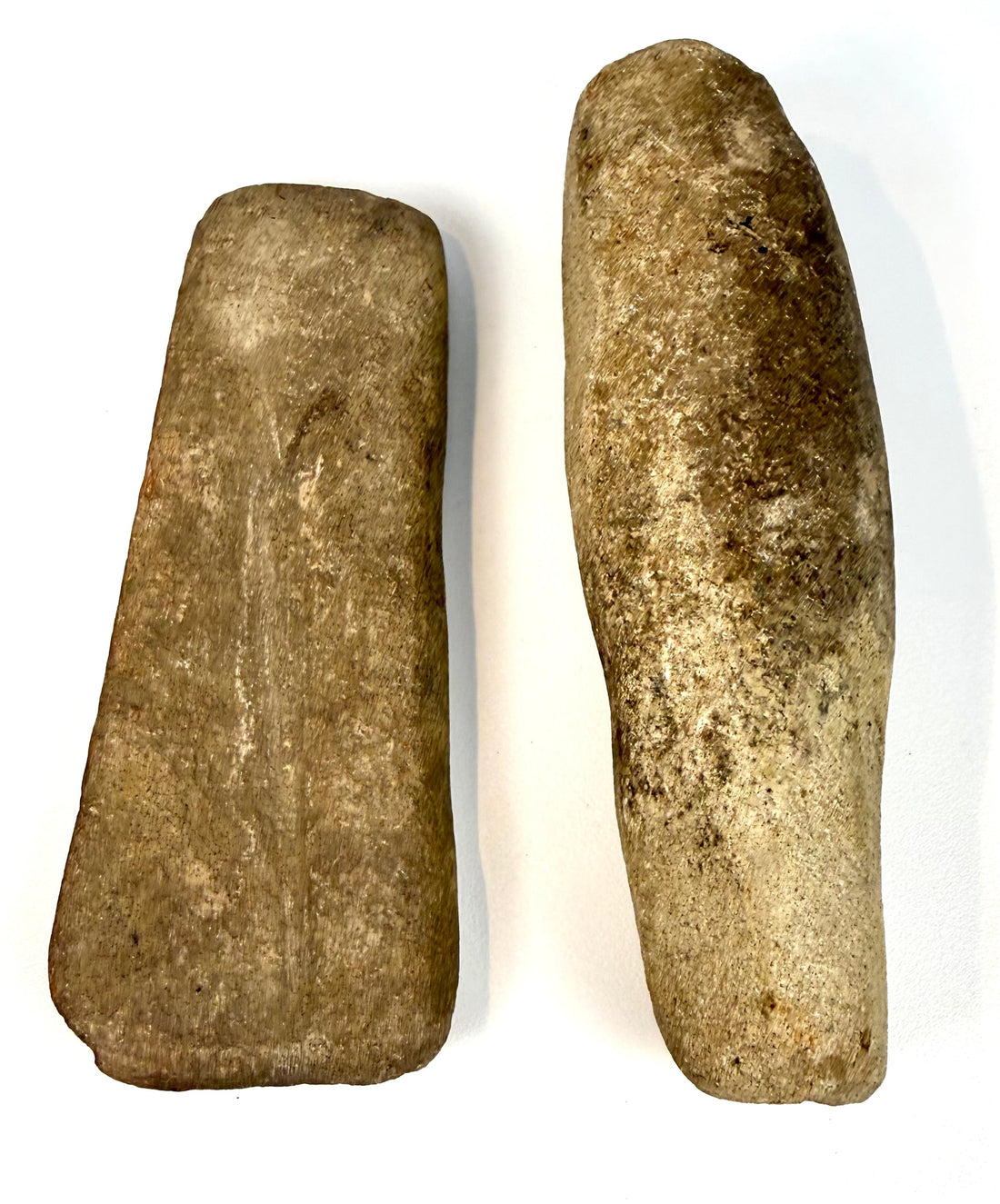
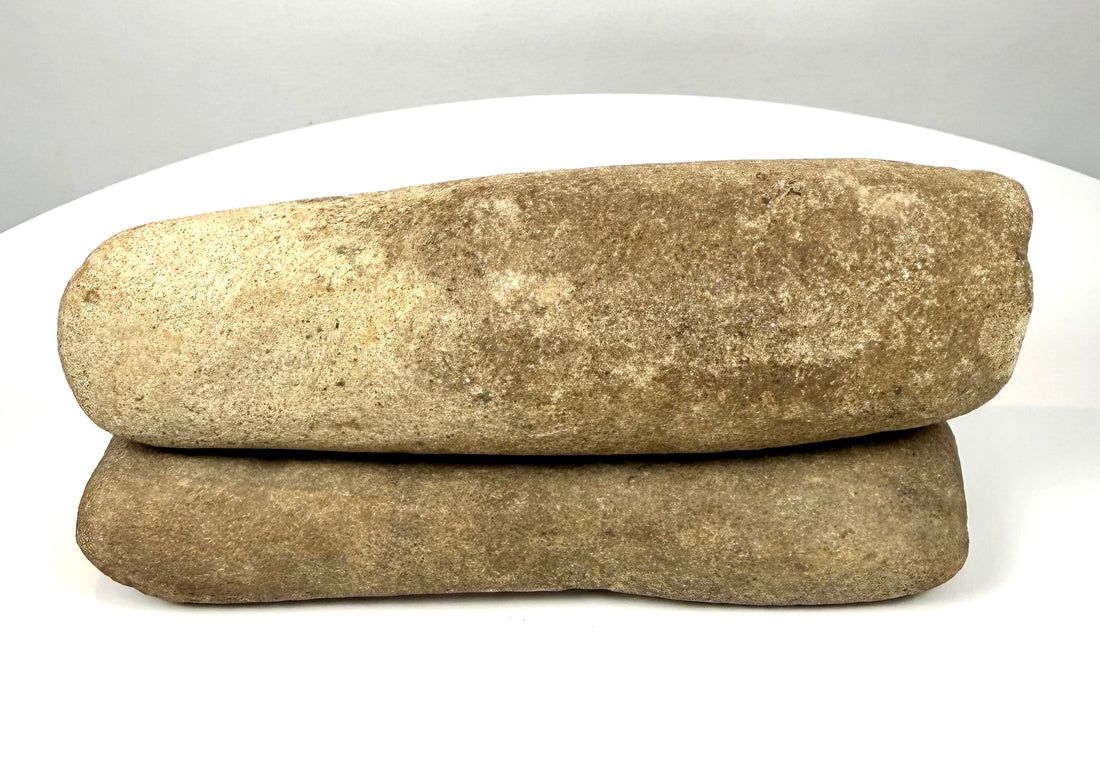
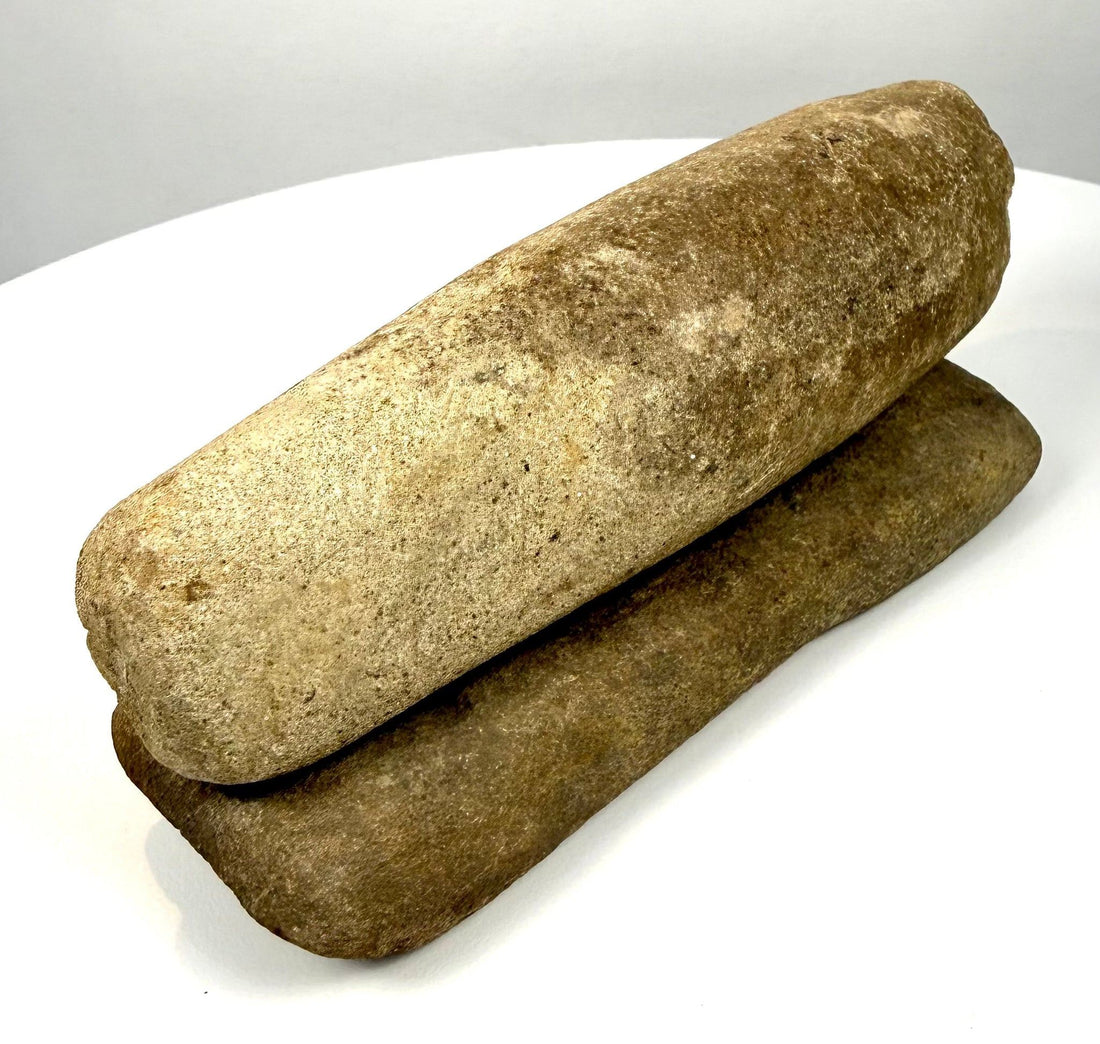
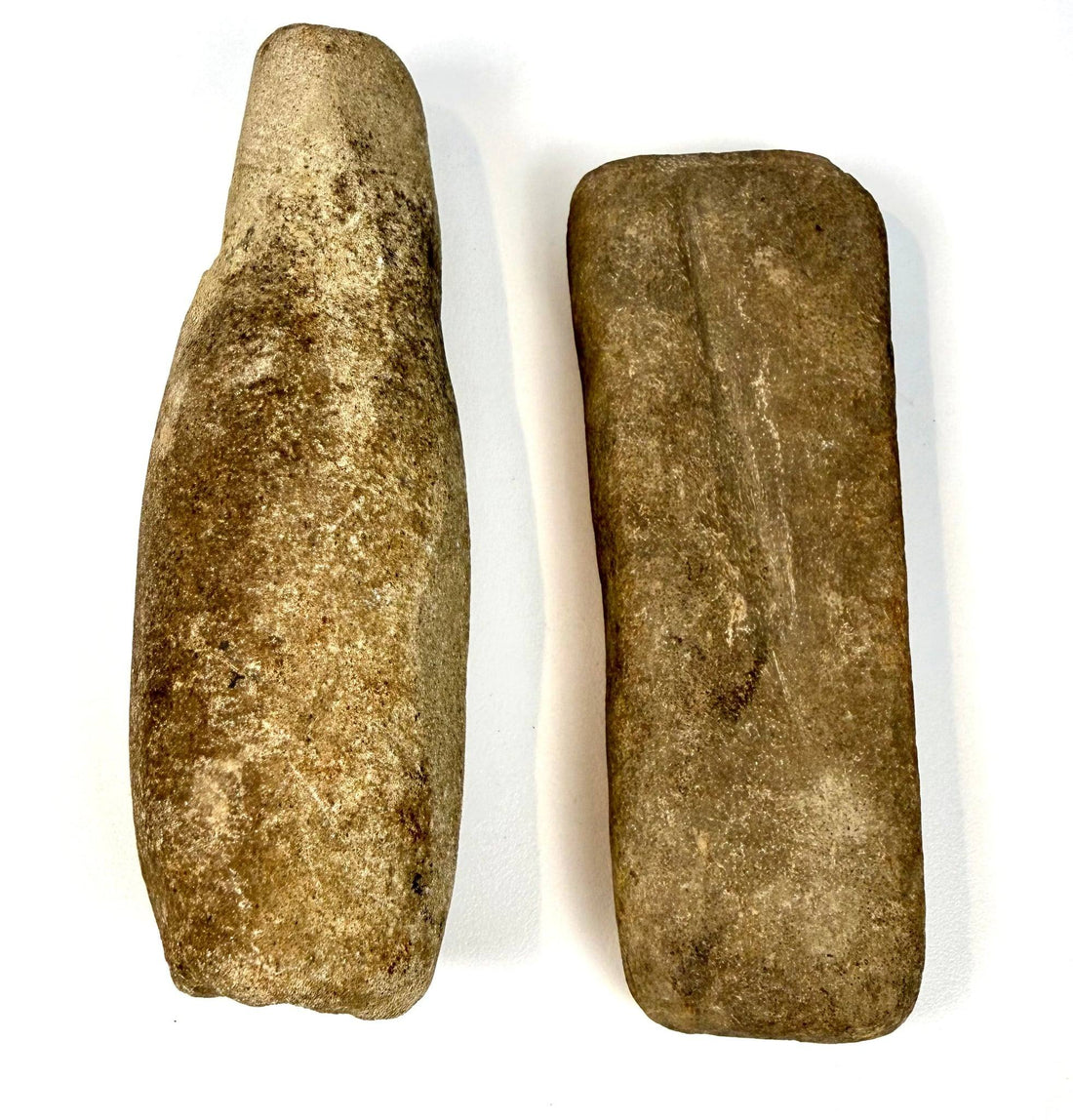
The assemblage consists of an elongated, rounded upper grinding stone, known as a mano, accompanied by a smaller, flattened rectangular stone identified as a metate. The mano features a slightly tapered profile with softly rounded ends and a mottled surface displaying shades of sandy beige, ochre, and earthy brown. Its broad surfaces exhibit smoothing, fine linear markings, and localized irregularities consistent with abrasion.
The accompanying metate displays a rectangular form with flattened working surfaces, softened corners, and a relatively uniform brown-grey coloration. Subtle linear markings, surface wear, and natural variations in texture are visible throughout. Both stones retain a distinctly weathered appearance, emphasizing the functional character of traditional ground-stone technology. Earlier collection documentation identified the assemblage as a Neolithic-period Mano & Metate from Central America, with an attributed date of approximately 8000 BCE.
Features
- Two-piece stone grinding assemblage consisting of a Mano & Metate
- Elongated, rounded mano with gently tapered proportions
- Rectangular metate with flattened working surfaces and softened corners
- Natural beige, ochre, and brown-grey stone coloration
- Areas of visible smoothing, surface abrasion, and fine linear markings
- Weathered surfaces with irregular mineral coloration and localized pitting
- Simple, undecorated construction characteristic of utilitarian ground-stone implements
Cultural Significance
Stone grinding implements occupy an important place in the technological development of early human societies. Long before mechanized food processing, Indigenous communities throughout the Americas relied upon durable stone tools to crush, grind, and prepare natural materials, including seeds, grains, and other plant-based substances.
The Mano & Metate became particularly significant throughout Mesoamerica and Central America, where grinding technology was closely associated with food preparation and the development of agricultural traditions. The mano, or handheld grinding stone, was traditionally moved against the surface of the metate, reducing materials through repeated pressure and friction. These implements became essential components of household activities and daily subsistence.
Beyond their practical purpose, grinding stones illustrate the relationship between human innovation, food preparation, and the development of increasingly complex communities. Unlike elaborate ceremonial metates associated with certain later pre-Columbian cultures, undecorated grinding implements provide a direct connection to the everyday activities and traditional craftsmanship of the people who used them.
Condition
The two stone components display visible surface wear, areas of smoothing, mineral discolouration, small abrasions, localized pitting, and minor edge irregularities. The upper stone retains its elongated and rounded profile, with contrasting patches of lighter and darker coloration, fine linear marks, and natural surface variations. The lower stone retains its flattened rectangular form, with softened corners, localized wear, and minor surface irregularities. Both components appear substantially intact, with no obvious major modern repairs visible in the supplied photographs.
Dimensions (Approximate)
Width: 6 in
Height: 2 in
Depth: 2 in
Age (Approximate)
10,000 years old
Provenance
Formerly handled by Gallery Elder, Ottawa, Ontario, Canada, an established Canadian gallery specializing in antique furniture, historical objects, decorative arts, and selected antiquities from a variety of cultural and geographical traditions.
Subsequently acquired into a private collection in Ottawa, Ontario, Canada.
Learn More
Explore traditional Central American stone grinding implements and their role in food preparation through the University of Cambridge Museum of Archaeology and Anthropology
Discover additional ancient stone implements and historical artifacts in our Pre-Columbian Artifacts Collection
Description
Historical Context & Origin
Region: Central America
Material: Natural stone, shaped and worn through grinding and abrasion
Period: Pre-Columbian, previously attributed to the Archaic Period, circa 8000 BCE
Description
This ancient two-piece stone grinding assemblage, traditionally identified as a Mano & Metate, represents one of the most enduring forms of food-processing technology used by Indigenous civilizations throughout Central America and the broader pre-Columbian world. Previously attributed to the Archaic Period, circa 8000 BCE, the set reflects the practical craftsmanship associated with early stone grinding implements.
The assemblage consists of an elongated, rounded upper grinding stone, known as a mano, accompanied by a smaller, flattened rectangular stone identified as a metate. The mano features a slightly tapered profile with softly rounded ends and a mottled surface displaying shades of sandy beige, ochre, and earthy brown. Its broad surfaces exhibit smoothing, fine linear markings, and localized irregularities consistent with abrasion.
The accompanying metate displays a rectangular form with flattened working surfaces, softened corners, and a relatively uniform brown-grey coloration. Subtle linear markings, surface wear, and natural variations in texture are visible throughout. Both stones retain a distinctly weathered appearance, emphasizing the functional character of traditional ground-stone technology. Earlier collection documentation identified the assemblage as a Neolithic-period Mano & Metate from Central America, with an attributed date of approximately 8000 BCE.
Features
- Two-piece stone grinding assemblage consisting of a Mano & Metate
- Elongated, rounded mano with gently tapered proportions
- Rectangular metate with flattened working surfaces and softened corners
- Natural beige, ochre, and brown-grey stone coloration
- Areas of visible smoothing, surface abrasion, and fine linear markings
- Weathered surfaces with irregular mineral coloration and localized pitting
- Simple, undecorated construction characteristic of utilitarian ground-stone implements
Cultural Significance
Stone grinding implements occupy an important place in the technological development of early human societies. Long before mechanized food processing, Indigenous communities throughout the Americas relied upon durable stone tools to crush, grind, and prepare natural materials, including seeds, grains, and other plant-based substances.
The Mano & Metate became particularly significant throughout Mesoamerica and Central America, where grinding technology was closely associated with food preparation and the development of agricultural traditions. The mano, or handheld grinding stone, was traditionally moved against the surface of the metate, reducing materials through repeated pressure and friction. These implements became essential components of household activities and daily subsistence.
Beyond their practical purpose, grinding stones illustrate the relationship between human innovation, food preparation, and the development of increasingly complex communities. Unlike elaborate ceremonial metates associated with certain later pre-Columbian cultures, undecorated grinding implements provide a direct connection to the everyday activities and traditional craftsmanship of the people who used them.
Condition
The two stone components display visible surface wear, areas of smoothing, mineral discolouration, small abrasions, localized pitting, and minor edge irregularities. The upper stone retains its elongated and rounded profile, with contrasting patches of lighter and darker coloration, fine linear marks, and natural surface variations. The lower stone retains its flattened rectangular form, with softened corners, localized wear, and minor surface irregularities. Both components appear substantially intact, with no obvious major modern repairs visible in the supplied photographs.
Dimensions (Approximate)
Width: 6 in
Height: 2 in
Depth: 2 in
Age (Approximate)
10,000 years old
Provenance
Formerly handled by Gallery Elder, Ottawa, Ontario, Canada, an established Canadian gallery specializing in antique furniture, historical objects, decorative arts, and selected antiquities from a variety of cultural and geographical traditions.
Subsequently acquired into a private collection in Ottawa, Ontario, Canada.
Learn More
Explore traditional Central American stone grinding implements and their role in food preparation through the University of Cambridge Museum of Archaeology and Anthropology
Discover additional ancient stone implements and historical artifacts in our Pre-Columbian Artifacts Collection
You May Also Like
