

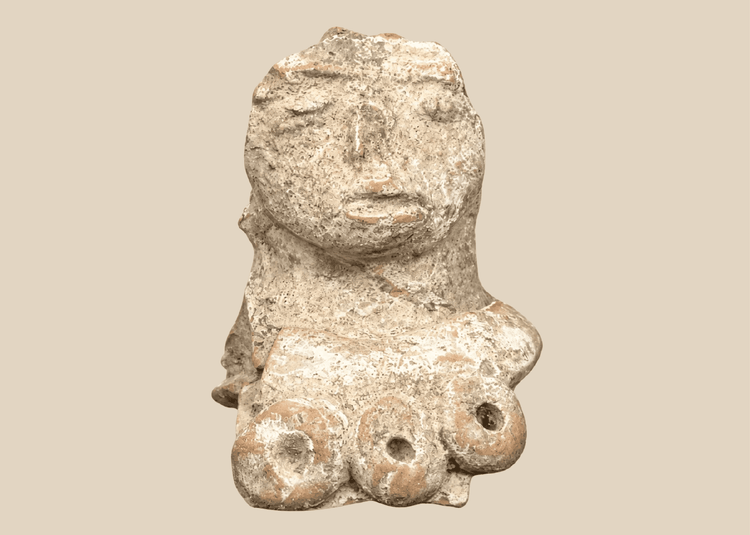
Pre-Columbian Mesoamerican Female Figure Fragment | Circa 300 BCE–600 CE
Couldn't load pickup availability



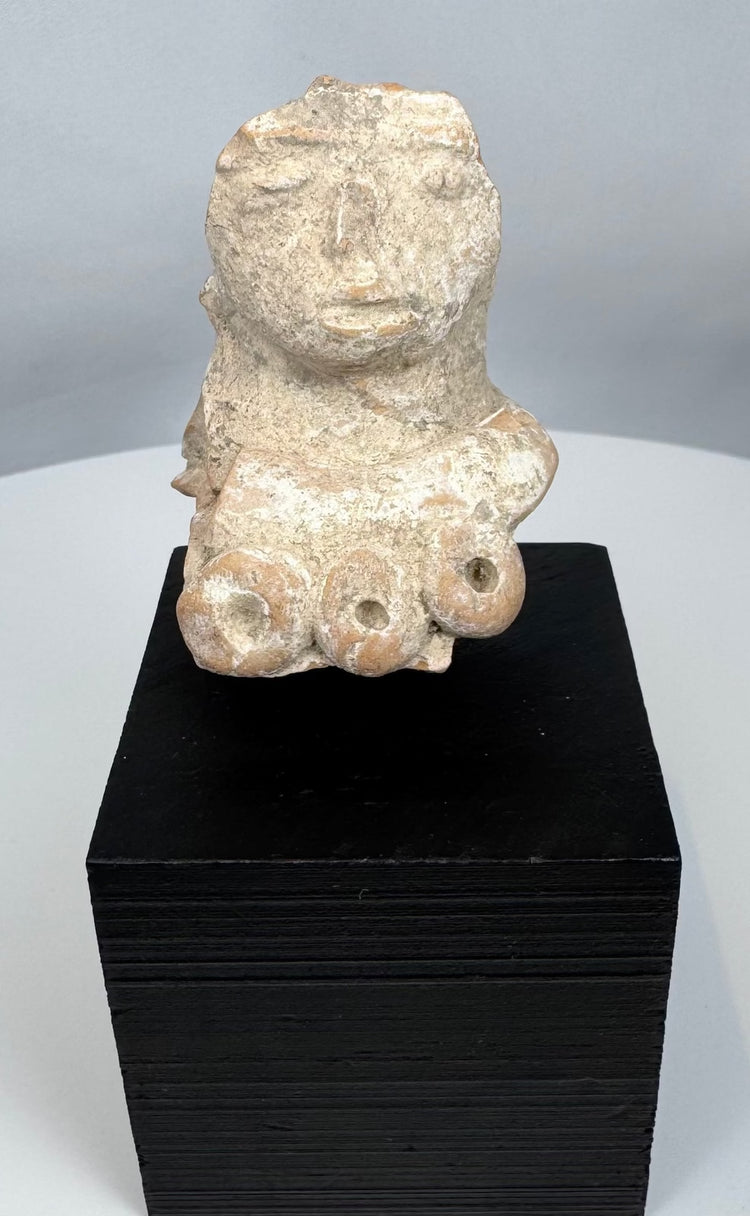
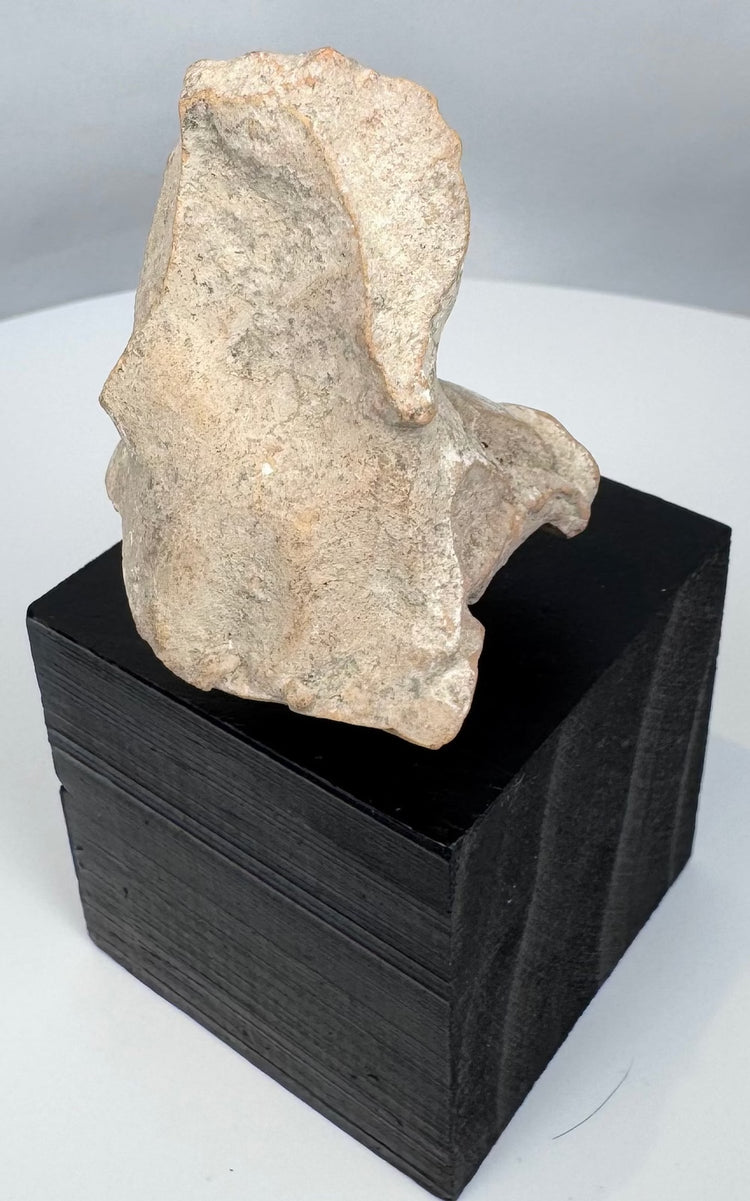
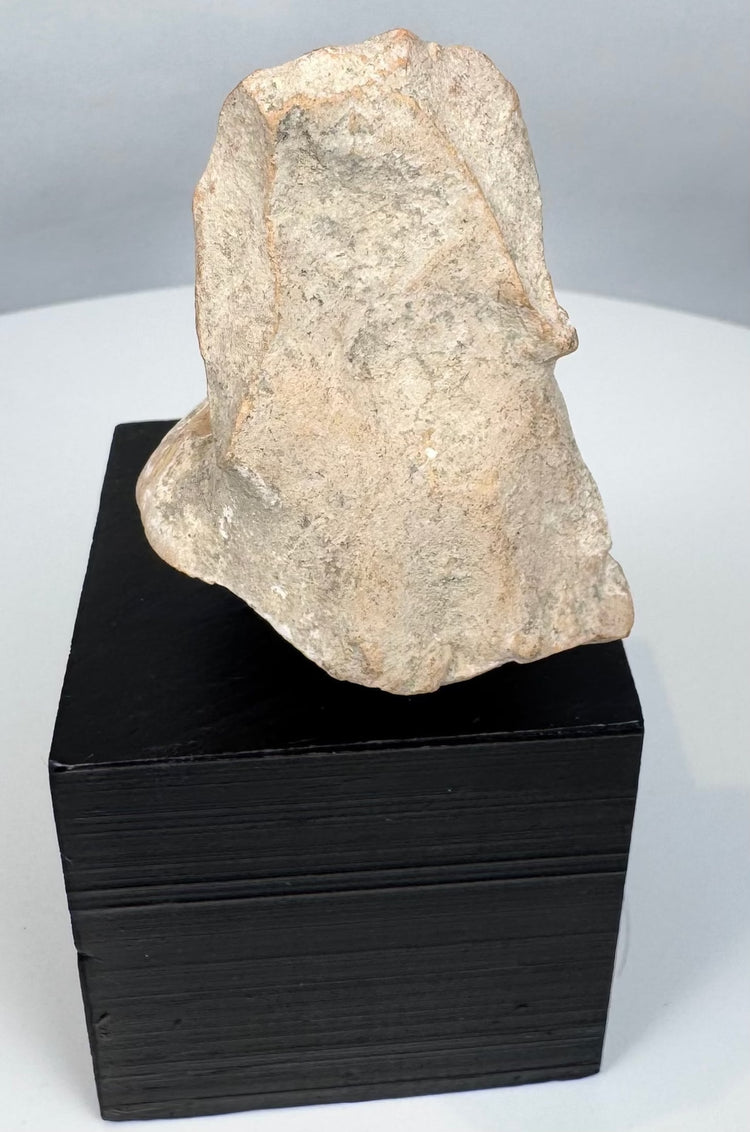


Pre-Columbian Mesoamerican Female Figure Fragment | Circa 300 BCE–600 CE
Description
More
Less
Historical Context & Origin
Region: Mesoamerica, likely Gulf Coast Region, Mexico
Material: Terracotta with traces of mineral deposits and earthen encrustation
Period: Late Pre-Columbian Period, ca. 300 BCE–600 CE
Description
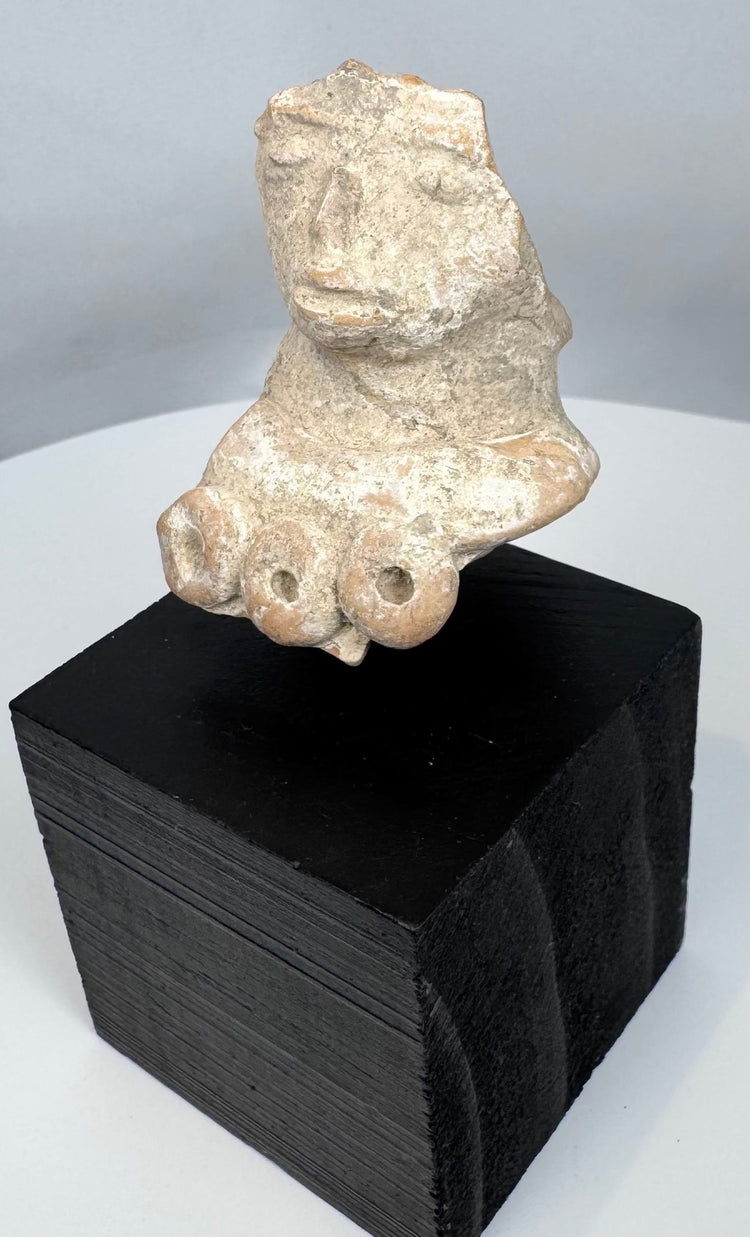
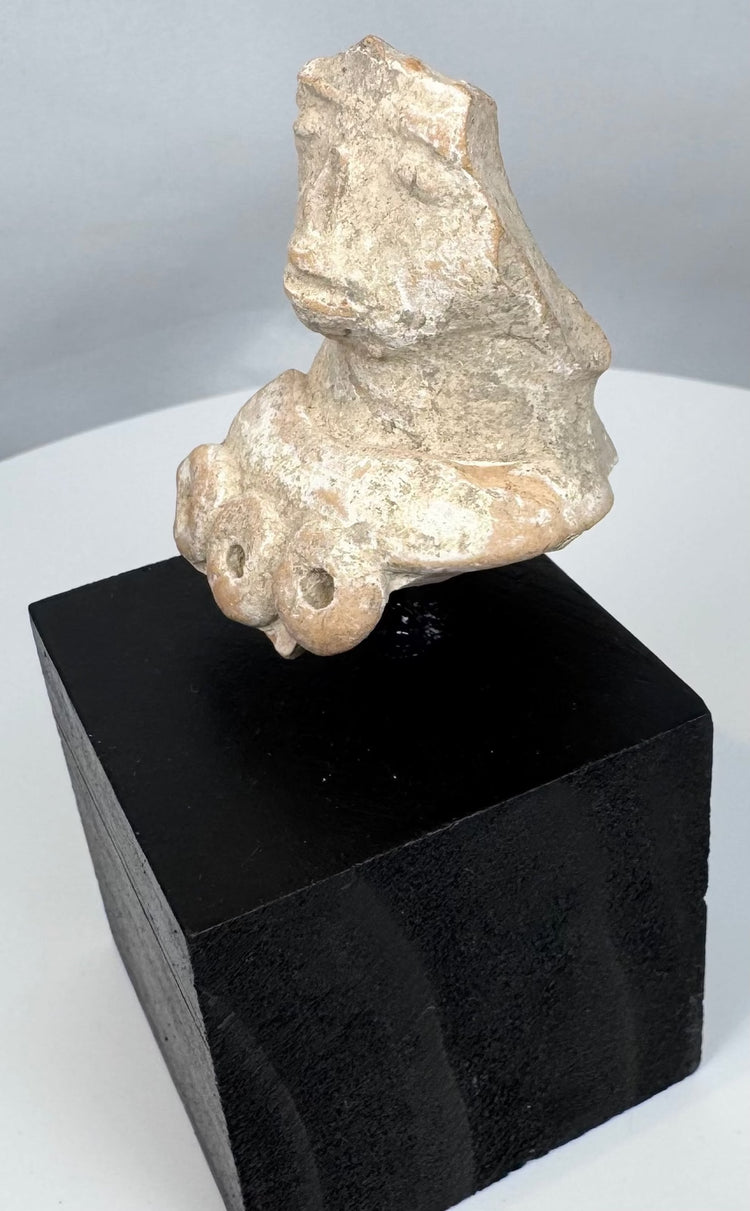
This intriguing Pre-Columbian terracotta fragment depicts the upper portion of a seated or standing female figure rendered in a highly stylized manner. Despite its fragmentary condition, the sculpture retains a remarkably expressive face with closed eyes, a broad nose, and full lips beneath a large triangular headdress or ceremonial coiffure. The surviving torso prominently displays exaggerated breasts, a feature commonly associated with fertility, motherhood, and female spiritual power throughout ancient Mesoamerican cultures.
The figure was originally part of a larger ceremonial sculpture or funerary offering and likely served a ritual role within burial practices. Ancient Mesoamerican peoples frequently placed anthropomorphic figures in tombs as companions for the deceased, symbols of fertility and renewal, or representations of ancestors and deities connected with the cycle of life.
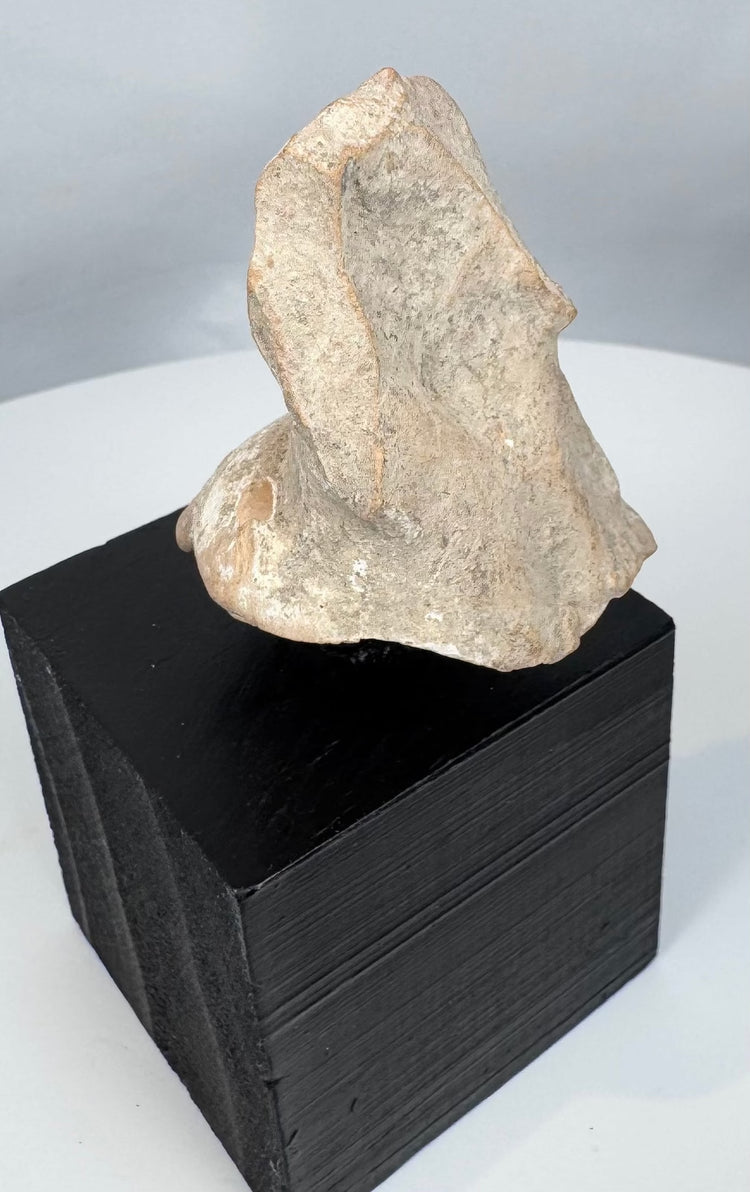
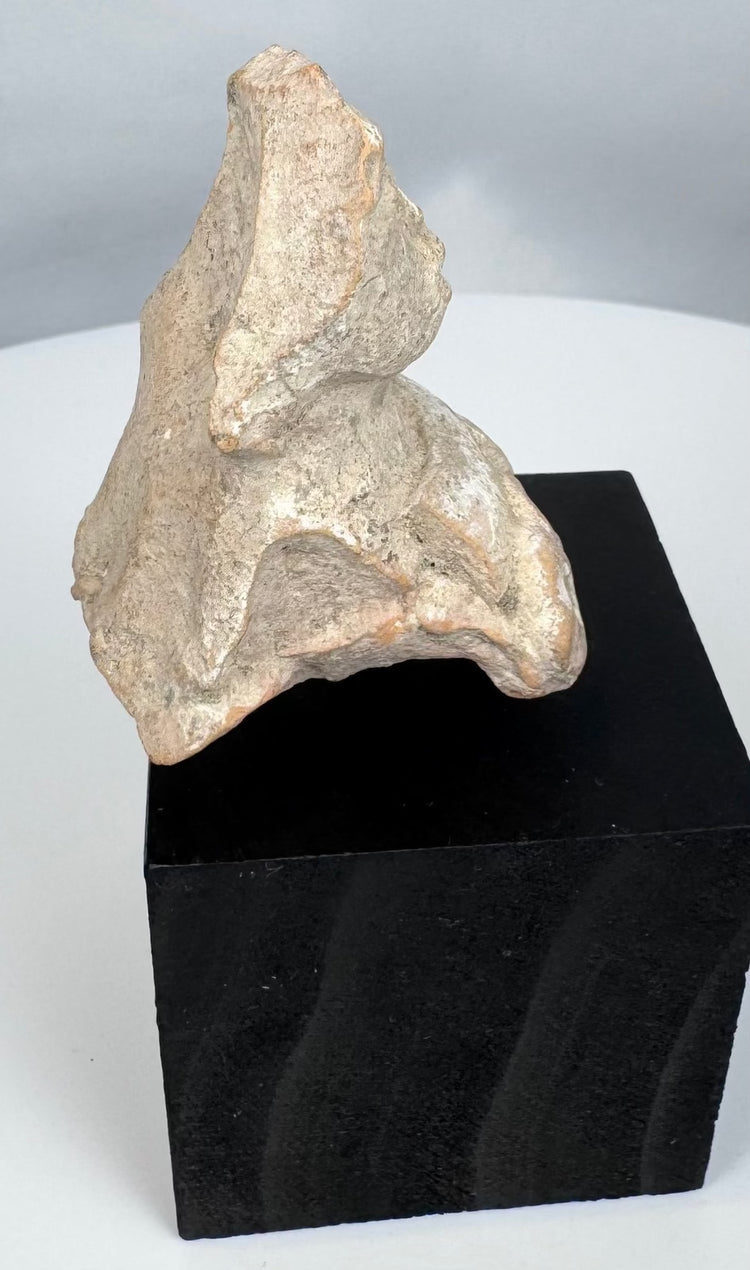
Particularly striking is the monumental headdress that frames the head and extends dramatically behind the figure. Such elaborate headgear often indicated social status, ritual authority, or divine association. The simplified facial features and powerful sculptural form exemplify the artistic traditions of ancient western and Gulf Coast Mexico, where artisans emphasized symbolic meaning over naturalistic representation.
Features
- Authentic Pre-Columbian terracotta figural fragment
- Stylized female figure with prominent ceremonial headdress
- Expressive face with closed eyes and serene features
- Surviving torso with symbolic fertility attributes
- Attractive archaeological surface with mineral accretions
Historical Significance
Female figures occupied an important role throughout Pre-Columbian Mesoamerica, where they frequently symbolized fertility, agricultural abundance, motherhood, ancestry, and spiritual regeneration. Such sculptures were often deposited within tombs or sacred ceremonial contexts as offerings intended to accompany and protect the deceased.
The elaborate headdress preserved on this example reflects the importance of status, ritual identity, and religious symbolism within ancient Mesoamerican societies. Although incomplete, the sculpture retains significant archaeological and artistic value, preserving elements of a much larger tradition of ceremonial figural art that flourished throughout ancient Mexico.
Condition
Fragmentary condition as expected. Losses to the head, body, and extremities. Surface wear, mineral deposits, abrasions, chips, and burial encrustations throughout. Stable and visually compelling with strong display presence.
Dimensions (Approximate)
Height: 4.25 in
Width: 2 in
Depth: 2 in
Age (Approximate)
1,400–2,300 years old
Provenance
From a private collection in Fayetteville, Arkansas, USA. Acquired from a private Fayetteville estate assembled between 1960 and 2024. Formerly in the collection of Artemis Fine Arts Gallery.
Learn More
Discover the history, cultures, and civilizations of ancient Mesoamerica through National Geographic's Resource Library
Description
Historical Context & Origin
Region: Mesoamerica, likely Gulf Coast Region, Mexico
Material: Terracotta with traces of mineral deposits and earthen encrustation
Period: Late Pre-Columbian Period, ca. 300 BCE–600 CE
Description
This intriguing Pre-Columbian terracotta fragment depicts the upper portion of a seated or standing female figure rendered in a highly stylized manner. Despite its fragmentary condition, the sculpture retains a remarkably expressive face with closed eyes, a broad nose, and full lips beneath a large triangular headdress or ceremonial coiffure. The surviving torso prominently displays exaggerated breasts, a feature commonly associated with fertility, motherhood, and female spiritual power throughout ancient Mesoamerican cultures.
The figure was originally part of a larger ceremonial sculpture or funerary offering and likely served a ritual role within burial practices. Ancient Mesoamerican peoples frequently placed anthropomorphic figures in tombs as companions for the deceased, symbols of fertility and renewal, or representations of ancestors and deities connected with the cycle of life.
Particularly striking is the monumental headdress that frames the head and extends dramatically behind the figure. Such elaborate headgear often indicated social status, ritual authority, or divine association. The simplified facial features and powerful sculptural form exemplify the artistic traditions of ancient western and Gulf Coast Mexico, where artisans emphasized symbolic meaning over naturalistic representation.
Features
- Authentic Pre-Columbian terracotta figural fragment
- Stylized female figure with prominent ceremonial headdress
- Expressive face with closed eyes and serene features
- Surviving torso with symbolic fertility attributes
- Attractive archaeological surface with mineral accretions
Historical Significance
Female figures occupied an important role throughout Pre-Columbian Mesoamerica, where they frequently symbolized fertility, agricultural abundance, motherhood, ancestry, and spiritual regeneration. Such sculptures were often deposited within tombs or sacred ceremonial contexts as offerings intended to accompany and protect the deceased.
The elaborate headdress preserved on this example reflects the importance of status, ritual identity, and religious symbolism within ancient Mesoamerican societies. Although incomplete, the sculpture retains significant archaeological and artistic value, preserving elements of a much larger tradition of ceremonial figural art that flourished throughout ancient Mexico.
Condition
Fragmentary condition as expected. Losses to the head, body, and extremities. Surface wear, mineral deposits, abrasions, chips, and burial encrustations throughout. Stable and visually compelling with strong display presence.
Dimensions (Approximate)
Height: 4.25 in
Width: 2 in
Depth: 2 in
Age (Approximate)
1,400–2,300 years old
Provenance
From a private collection in Fayetteville, Arkansas, USA. Acquired from a private Fayetteville estate assembled between 1960 and 2024. Formerly in the collection of Artemis Fine Arts Gallery.
Learn More
Discover the history, cultures, and civilizations of ancient Mesoamerica through National Geographic's Resource Library
You May Also Like
