

Pre-Columbian Painted Pedestal Vessel with Geometric Motifs | Circa 600–1200 CE
Couldn't load pickup availability


Pre-Columbian Painted Pedestal Vessel with Geometric Motifs | Circa 600–1200 CE
Description
More
Less
Historical Context & Origin
Region: Likely Central or South America
Material: Hand-painted terracotta / earthenware
Period: Pre-Columbian, likely circa 600–1200 CE
Description
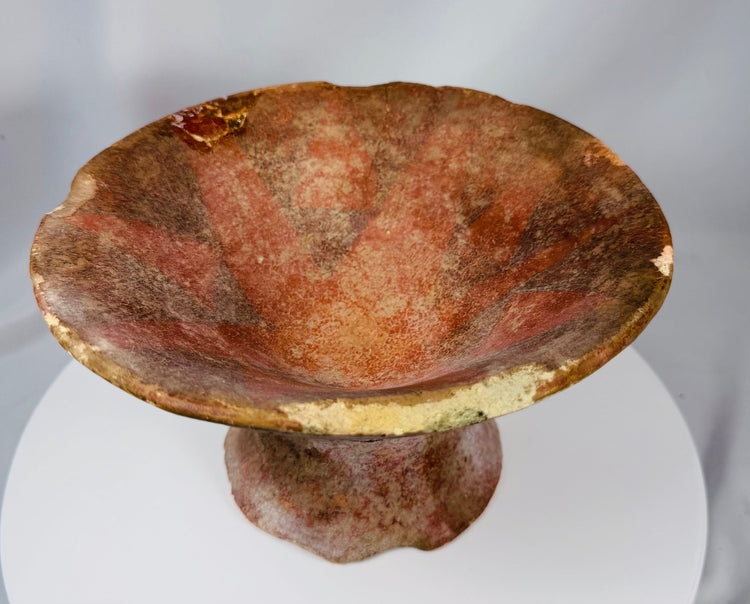
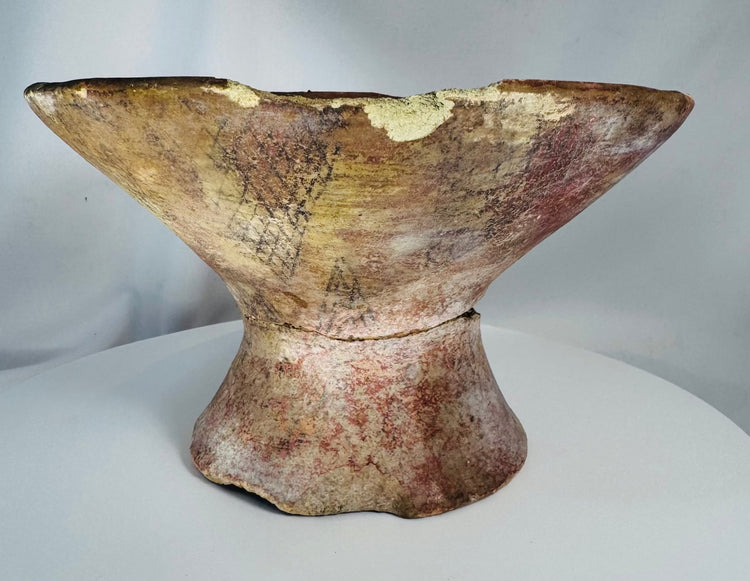
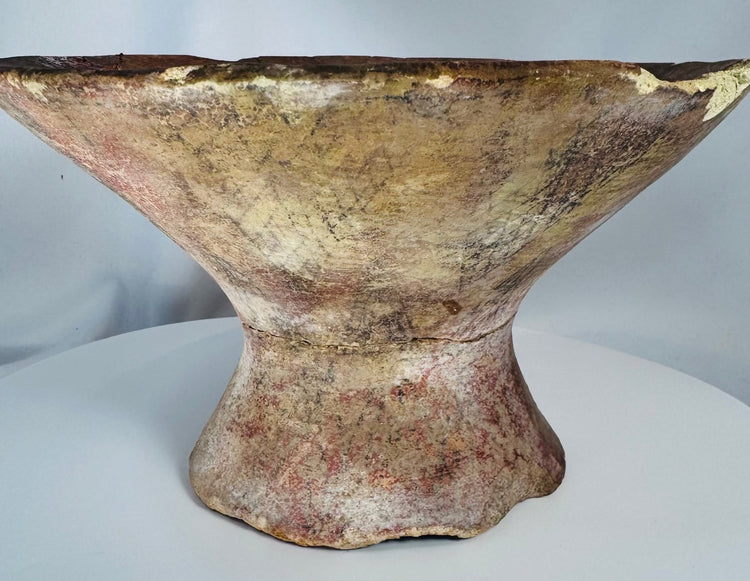
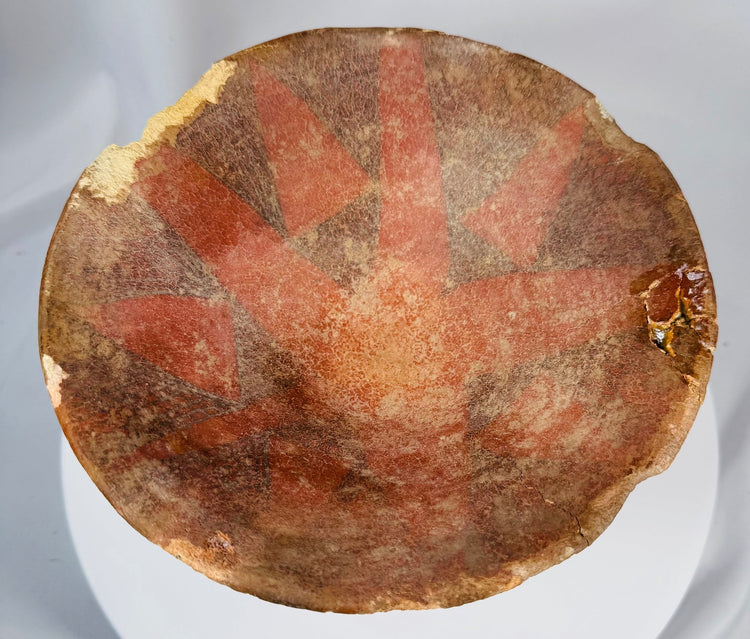
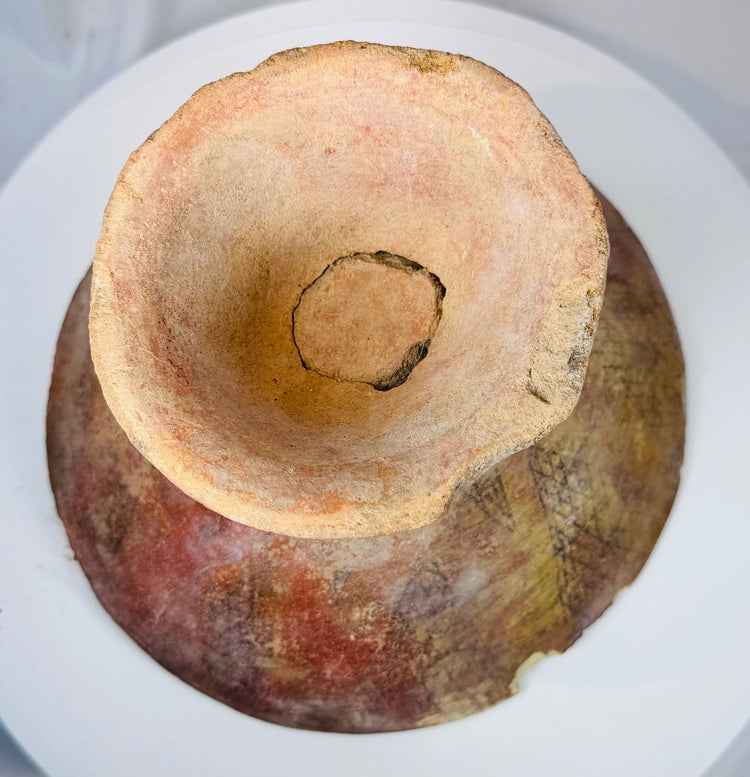
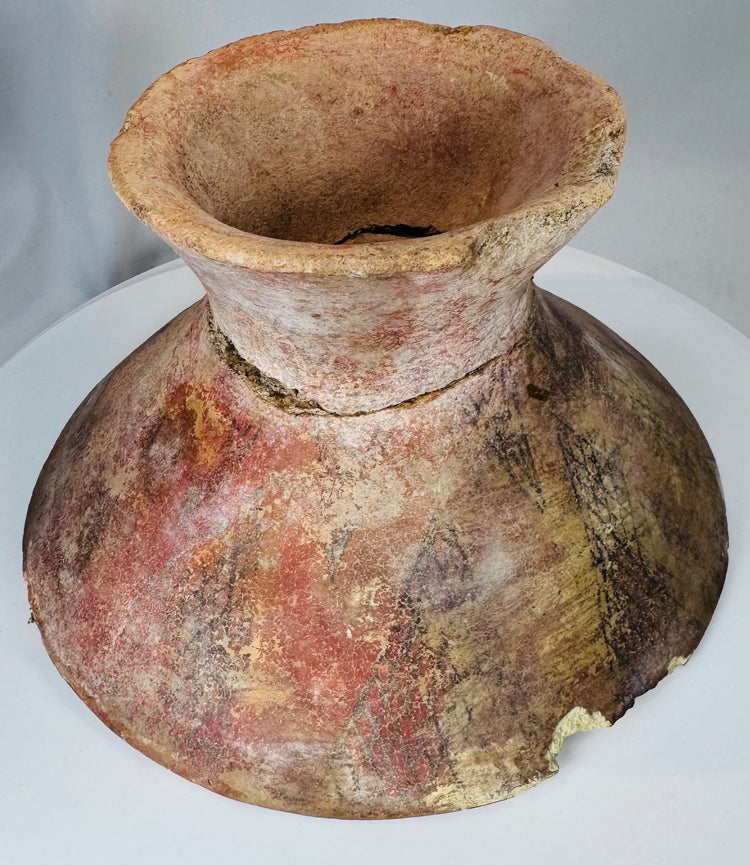
This striking Pre-Columbian terracotta pedestal bowl or ceremonial vessel features a dramatic flared basin supported on a broad hollow pedestal foot. The vessel displays extensive red, cream, and dark brown geometric painted decoration, including radiating triangular motifs around the interior bowl, strongly reminiscent of ancient Central and South American ceramic traditions associated with ritual serving wares and ceremonial presentation vessels.
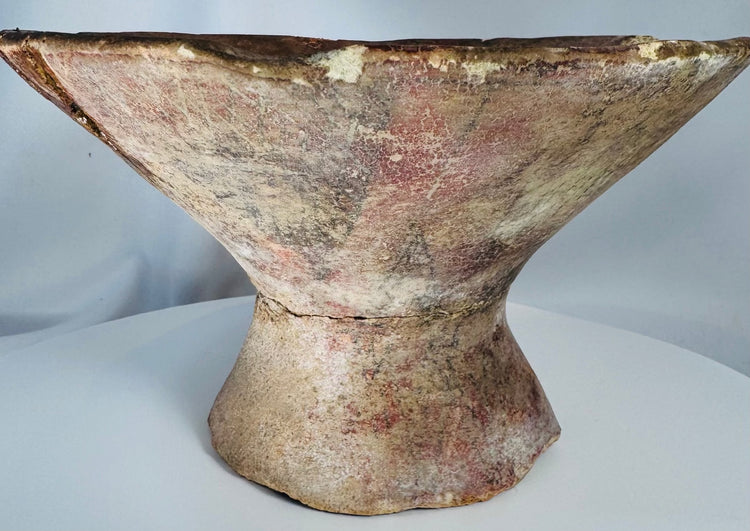
The form is particularly notable for its wide open basin and elevated footed construction, suggesting it may have served as a ceremonial offering vessel, presentation bowl, or elite domestic serving object. The painted geometric decoration remains visible despite significant age-related surface wear and weathering, lending the piece a strong excavated archaeological appearance.
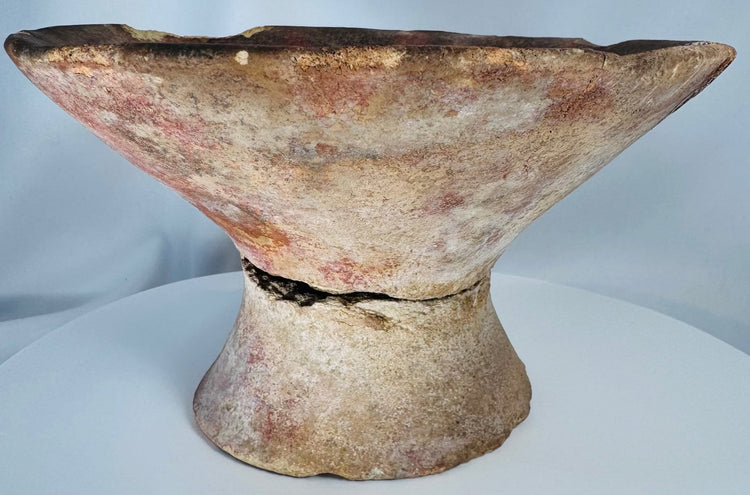
The vessel exhibits substantial age and restoration throughout. Multiple stabilized cracks and old repairs are visible around the pedestal section and body, including repaired breaks around the neck junction and lower foot. The rim displays numerous chips, losses, and areas of restoration, while the body shows surface abrasions, mineral deposits, paint loss, discoloration, and extensive craquelure throughout. Several areas of fill and overpaint are also visible from prior conservation efforts. Despite these condition issues, the vessel retains an impressive sculptural presence and strong decorative impact.
Features
- Large flared pedestal-form ceremonial vessel
- Hand-painted geometric interior decoration
- Red, cream, and dark brown pigment remnants
- Hollow pedestal foot construction
- Extensive visible age and archaeological-style surface wear
- Multiple historic repairs and stabilized cracks throughout
- Significant rim chipping, losses, and restoration areas
- Strong decorative and display presence
Cultural Significance
Footed ceramic vessels held important ceremonial and domestic roles throughout many Pre-Columbian cultures, often used for food presentation, offerings, ritual preparation, or elite feasting practices. Geometric painted motifs such as radiating triangular forms commonly carried symbolic or cosmological associations within ancient ceramic traditions of the Americas.
Condition
Displays extensive age-related wear, surface abrasion, mineral accretions, pigment loss, craquelure, discoloration, and weathering throughout. The vessel has multiple old repairs and stabilized fractures, particularly around the pedestal and body junction. Numerous rim chips, losses, restoration areas, fills, and visible repaired cracks are present. Structurally stable for display but heavily restored and fragile in areas.
Dimensions (Approximate)
Diameter: 8.5 in
Height: 5.25 in
Age (Approximate)
800–1,400 years old
Provenance
From a private collection in Philadelphia, Pennsylvania, USA
Learn More
Consider the artistic and cultural legacy of Pre-Columbian civilizations through Bidsquare's exploration of Pre-Columbian art
Explore our curated Ancient Pre-Columbian Artifacts Collection
Description
Historical Context & Origin
Region: Likely Central or South America
Material: Hand-painted terracotta / earthenware
Period: Pre-Columbian, likely circa 600–1200 CE
Description
This striking Pre-Columbian terracotta pedestal bowl or ceremonial vessel features a dramatic flared basin supported on a broad hollow pedestal foot. The vessel displays extensive red, cream, and dark brown geometric painted decoration, including radiating triangular motifs around the interior bowl, strongly reminiscent of ancient Central and South American ceramic traditions associated with ritual serving wares and ceremonial presentation vessels.
The form is particularly notable for its wide open basin and elevated footed construction, suggesting it may have served as a ceremonial offering vessel, presentation bowl, or elite domestic serving object. The painted geometric decoration remains visible despite significant age-related surface wear and weathering, lending the piece a strong excavated archaeological appearance.
The vessel exhibits substantial age and restoration throughout. Multiple stabilized cracks and old repairs are visible around the pedestal section and body, including repaired breaks around the neck junction and lower foot. The rim displays numerous chips, losses, and areas of restoration, while the body shows surface abrasions, mineral deposits, paint loss, discoloration, and extensive craquelure throughout. Several areas of fill and overpaint are also visible from prior conservation efforts. Despite these condition issues, the vessel retains an impressive sculptural presence and strong decorative impact.
Features
- Large flared pedestal-form ceremonial vessel
- Hand-painted geometric interior decoration
- Red, cream, and dark brown pigment remnants
- Hollow pedestal foot construction
- Extensive visible age and archaeological-style surface wear
- Multiple historic repairs and stabilized cracks throughout
- Significant rim chipping, losses, and restoration areas
- Strong decorative and display presence
Cultural Significance
Footed ceramic vessels held important ceremonial and domestic roles throughout many Pre-Columbian cultures, often used for food presentation, offerings, ritual preparation, or elite feasting practices. Geometric painted motifs such as radiating triangular forms commonly carried symbolic or cosmological associations within ancient ceramic traditions of the Americas.
Condition
Displays extensive age-related wear, surface abrasion, mineral accretions, pigment loss, craquelure, discoloration, and weathering throughout. The vessel has multiple old repairs and stabilized fractures, particularly around the pedestal and body junction. Numerous rim chips, losses, restoration areas, fills, and visible repaired cracks are present. Structurally stable for display but heavily restored and fragile in areas.
Dimensions (Approximate)
Diameter: 8.5 in
Height: 5.25 in
Age (Approximate)
800–1,400 years old
Provenance
From a private collection in Philadelphia, Pennsylvania, USA
Learn More
Consider the artistic and cultural legacy of Pre-Columbian civilizations through Bidsquare's exploration of Pre-Columbian art
Explore our curated Ancient Pre-Columbian Artifacts Collection
You May Also Like
