

Pre-Columbian Terracotta Head Fragment with Ear Spool | West Mexico | Circa 300 BCE–900 CE
Couldn't load pickup availability


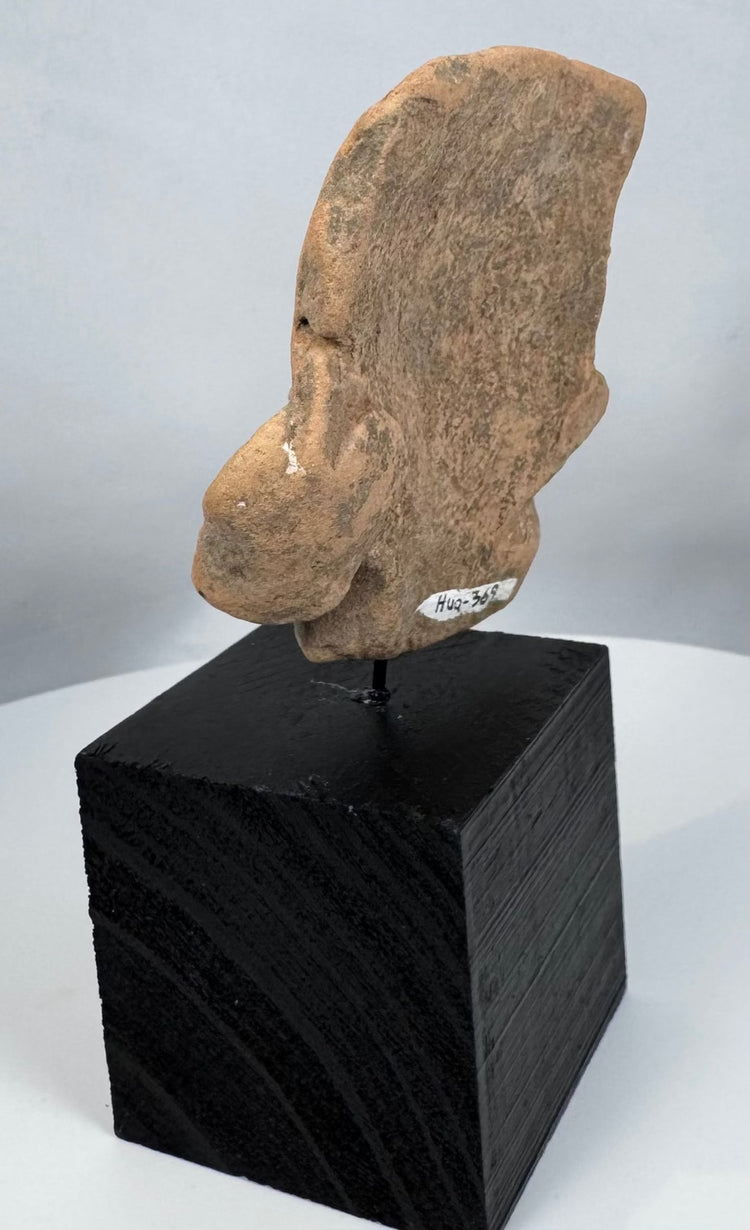
Pre-Columbian Terracotta Head Fragment with Ear Spool | West Mexico | Circa 300 BCE–900 CE
Description
More
Less
Historical Context & Origin
Region: West Mexico (likely Nayarit, Jalisco, or Colima), Mesoamerica
Material: Terracotta with traces of original pigment
Period: Protoclassic to Early Classic Period, ca. 300 BCE–900 CE
Description
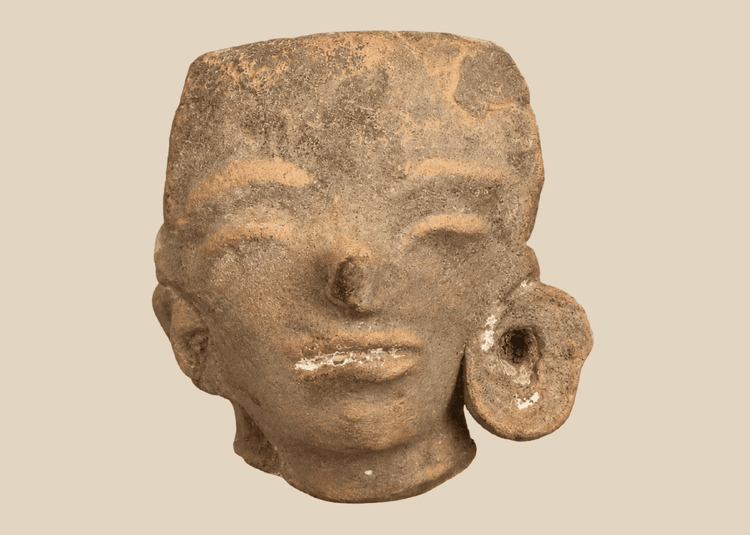
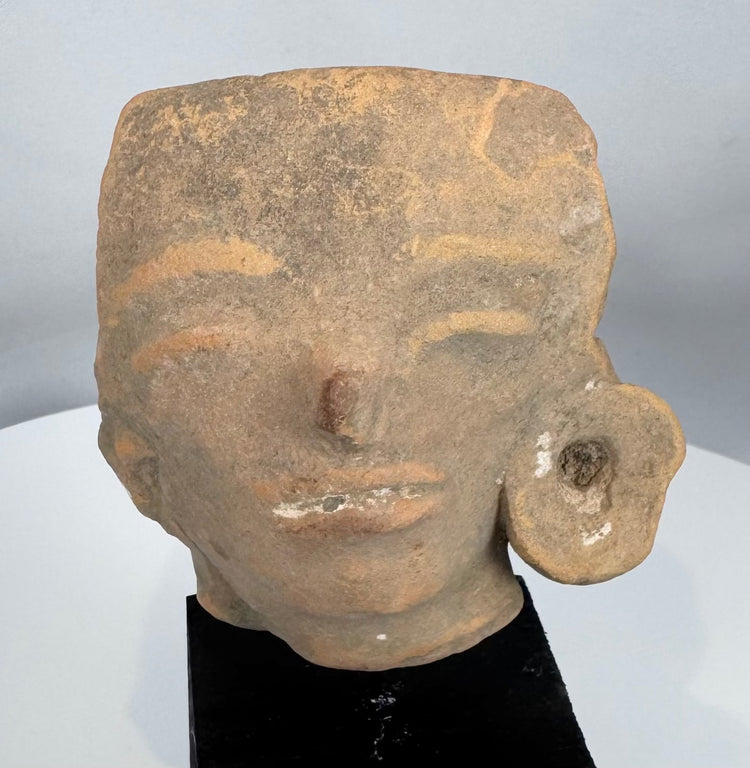
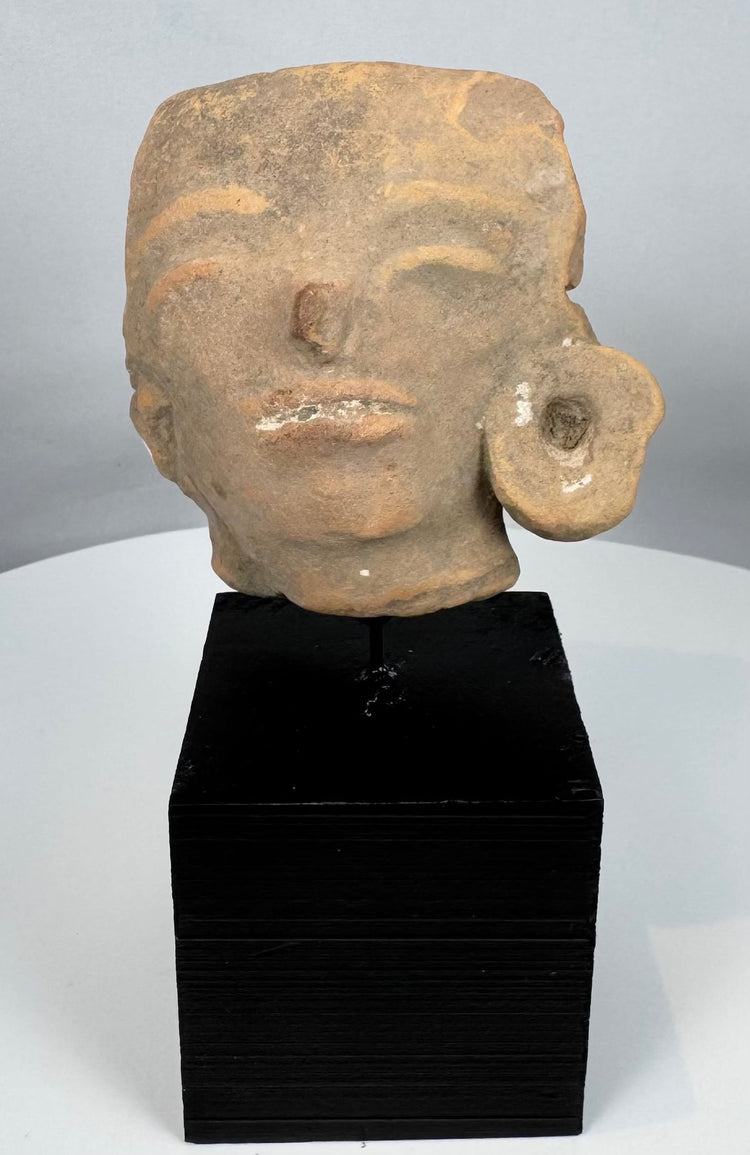
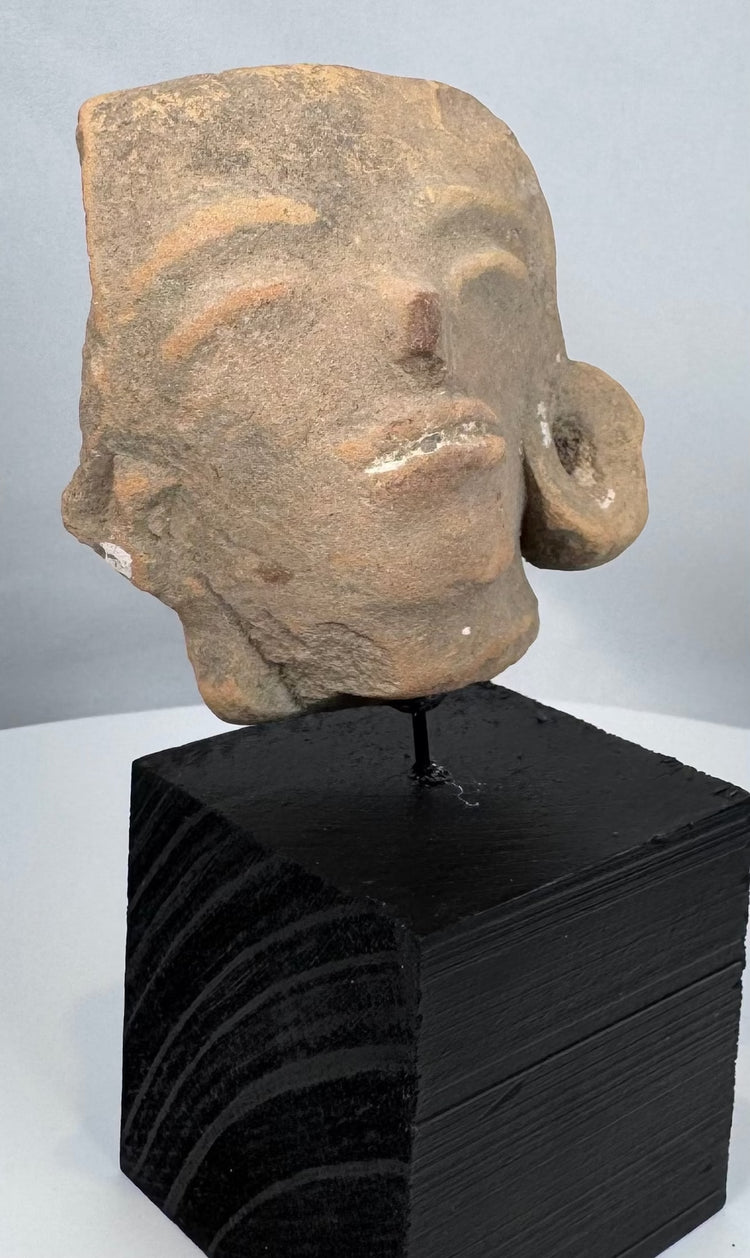
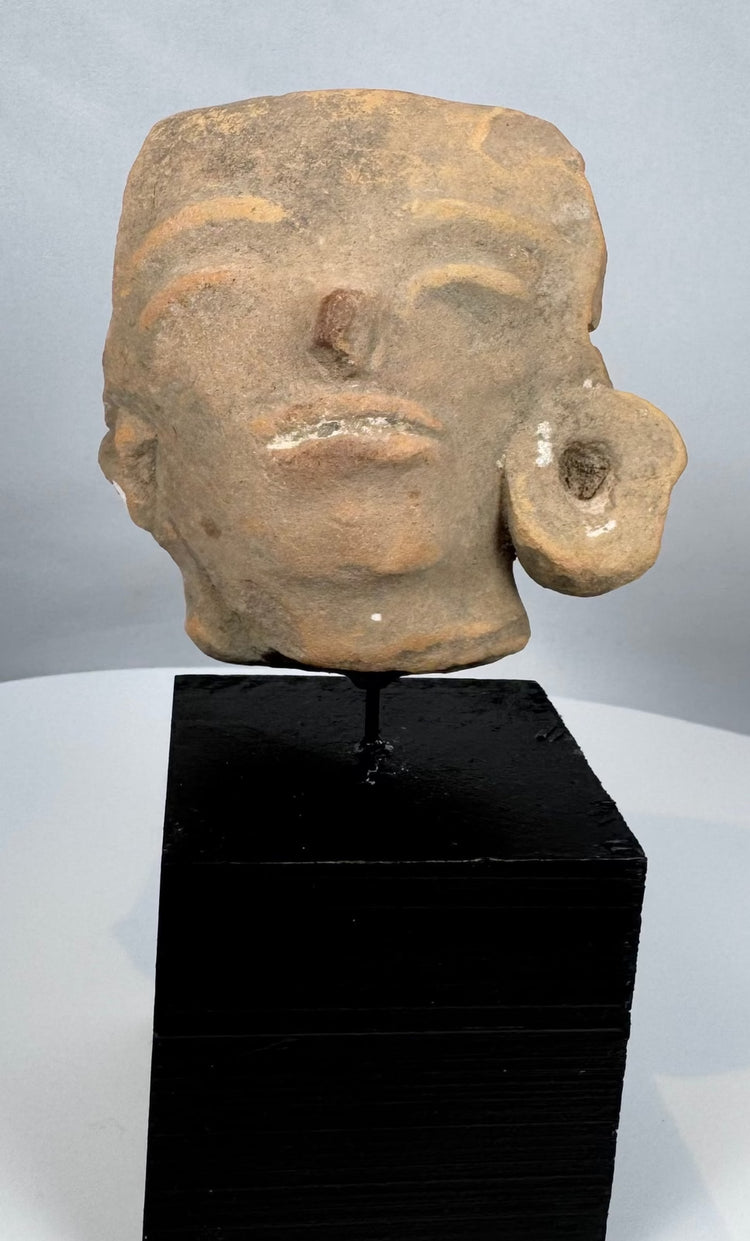
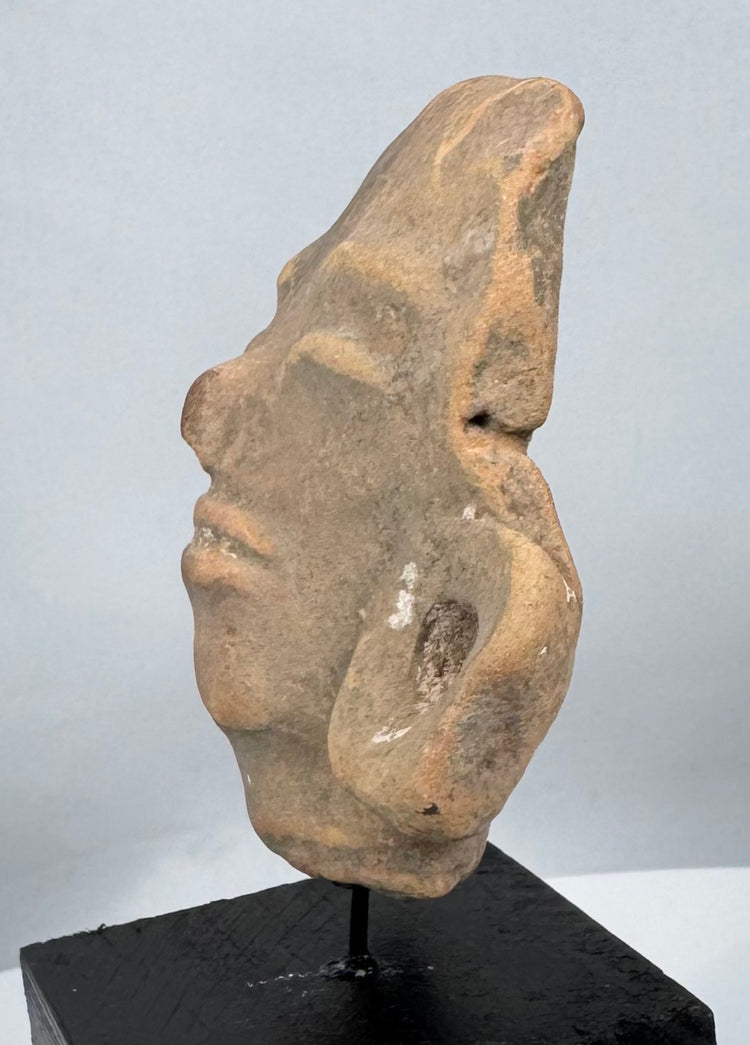
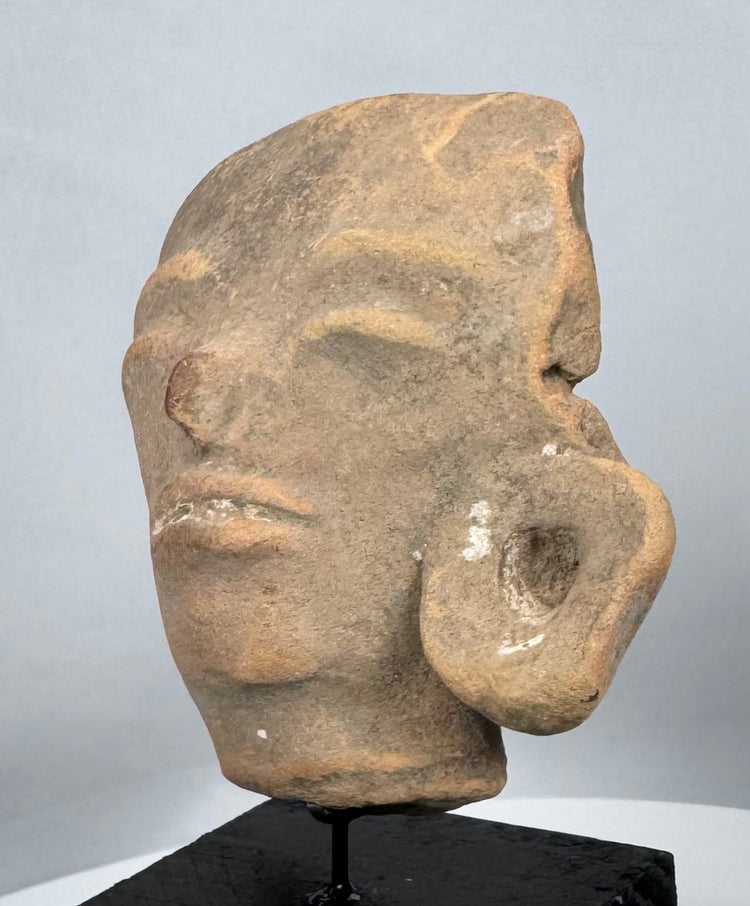
This authentic Pre-Columbian terracotta head fragment represents an important example of ancient West Mexican ceramic artistry. Hand-modeled in terracotta, the fragment depicts a stylized human figure with closed almond-shaped eyes, a prominent nose, full lips, and a large circular ear spool ornament. The facial features reflect the distinctive artistic traditions associated with the ceramic-producing cultures of Nayarit, Jalisco, and Colima.
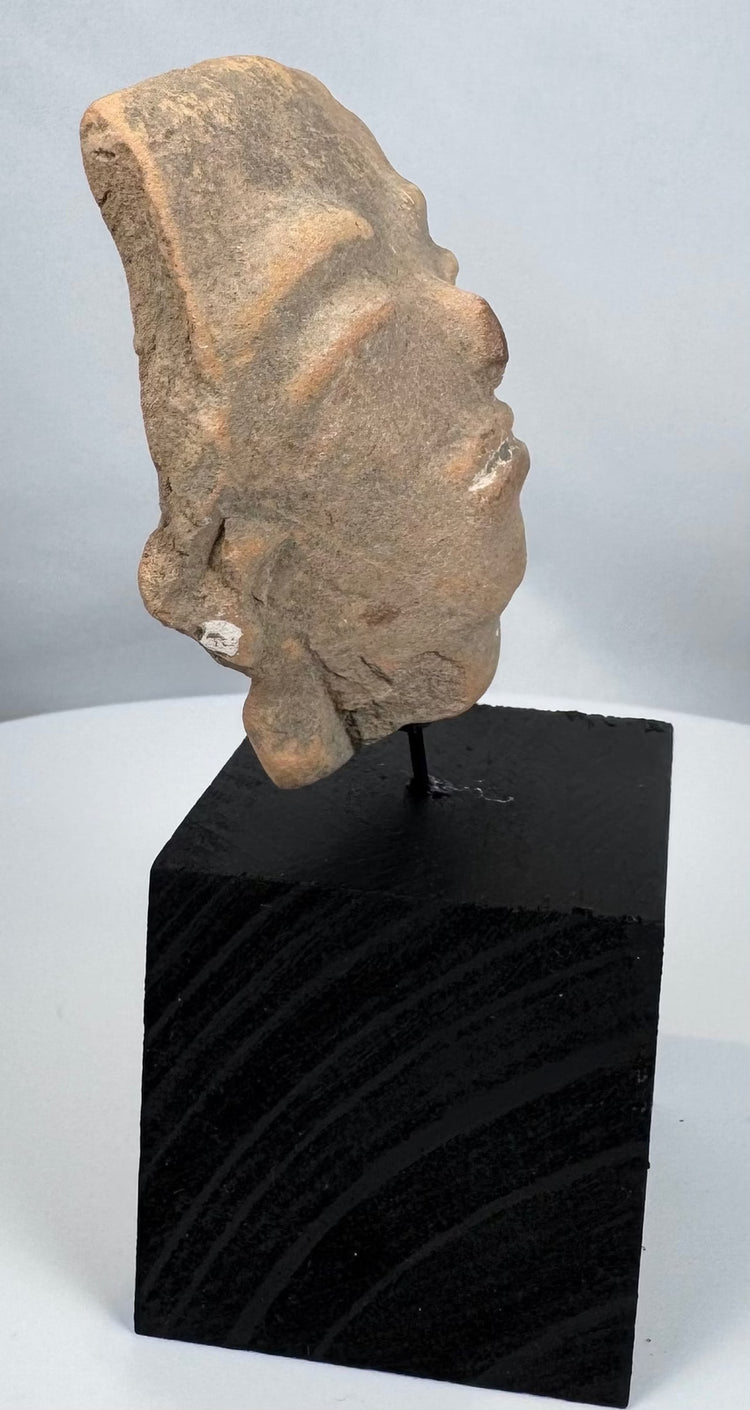
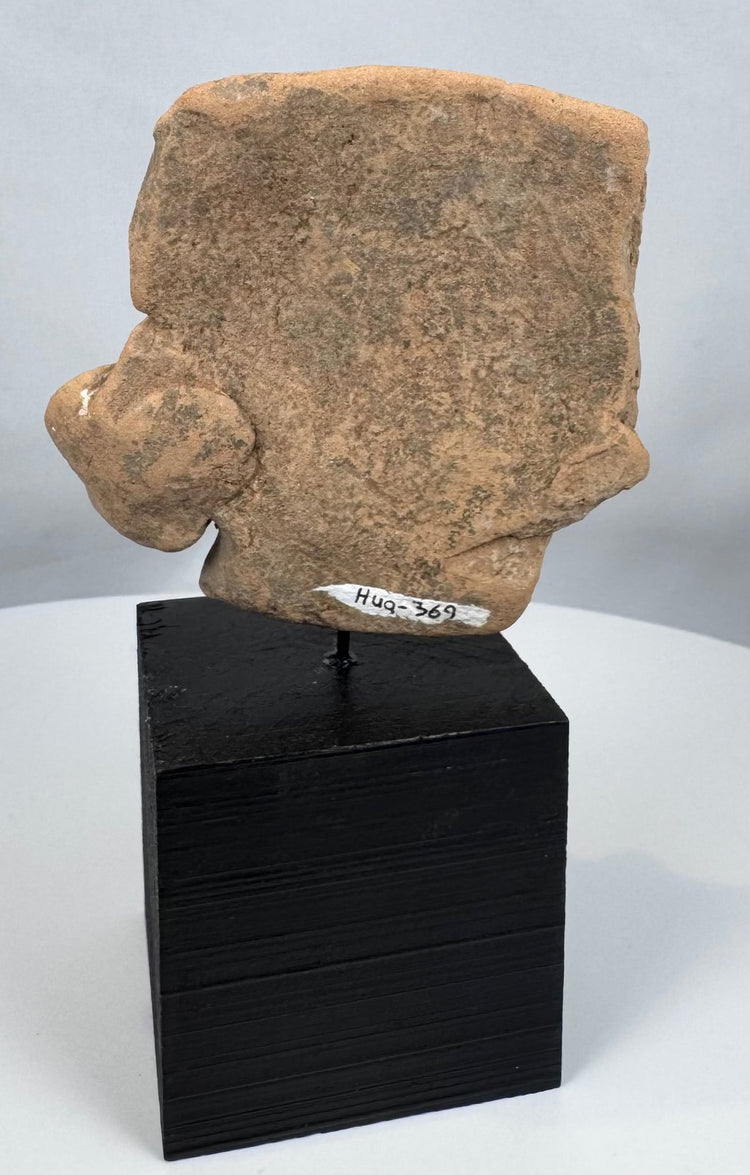
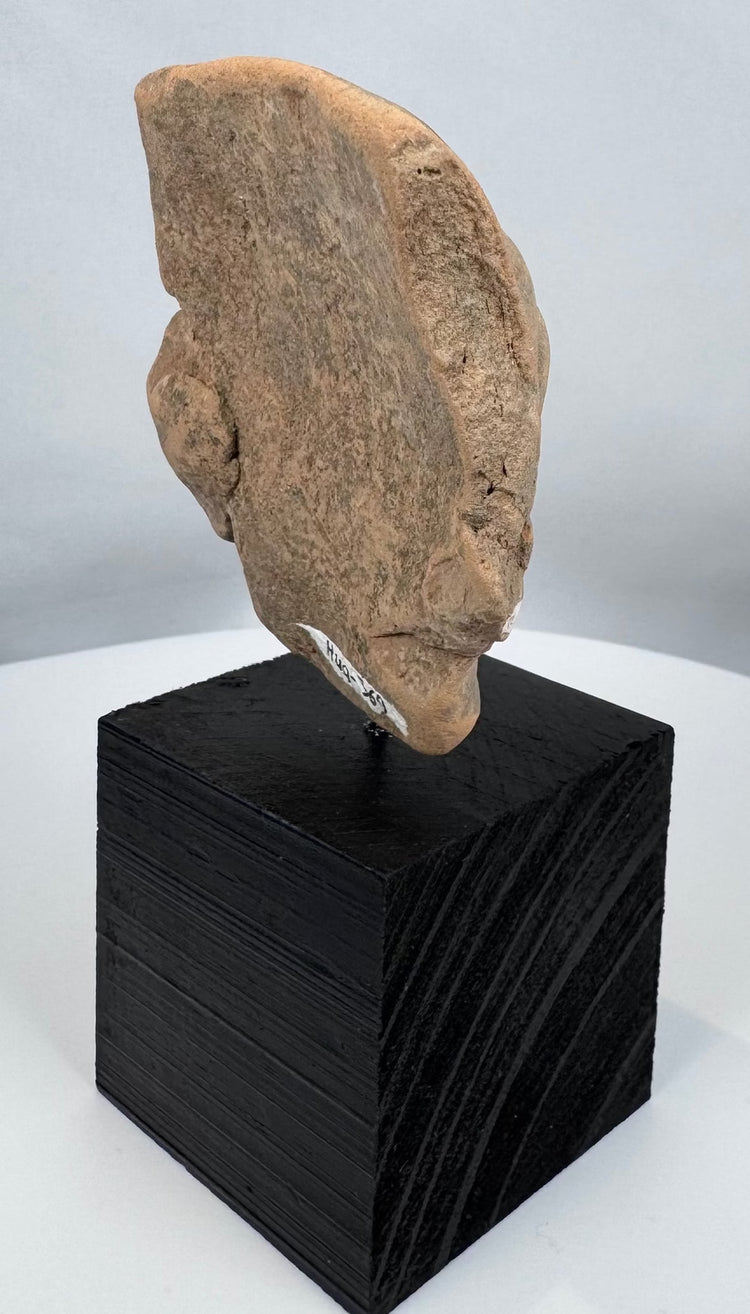
Traces of original pigment remain visible across portions of the surface, offering insight into the artifact's original appearance before centuries of burial and natural aging. The reverse is relatively flat and unfinished, suggesting the head once formed part of a larger figure, effigy vessel, or ceremonial sculpture.
Mounted on a custom display stand, the piece presents exceptionally well and serves as a compelling representation of the artistic and cultural traditions of ancient West Mexico.
Features
- Authentic Pre-Columbian terracotta head fragment
- Likely West Mexican cultural origin
- Dating to approximately 300 BCE–900 CE
- Large circular ear spool ornament
- Traces of original pigment preserved
- Hand-modeled ceramic construction
- Mounted on a custom display stand
Historical Significance
The cultures of ancient West Mexico produced some of the most distinctive ceramic sculptures in the Pre-Columbian Americas. Unlike many neighboring regions, these societies created highly expressive human figures that provide valuable insight into social identity, ceremonial practices, and artistic traditions.
Ear spool ornaments such as the example depicted on this fragment were important symbols of status, rank, and identity throughout Mesoamerica. Surviving examples help illuminate the complex social and ritual life of ancient communities and remain highly sought after by collectors and scholars alike.
Condition
Ancient fragmentary condition with expected age-related wear, surface weathering, pigment loss, mineral deposits, and minor losses throughout. The ear spool remains substantially intact, and the piece is mounted securely for display. Overall, it presents exceptionally well and retains strong visual appeal.
Dimensions (Approximate)
Height: 5.25 in
Width: 2 in
Depth: 2 in
Age (Approximate)
Approximately 1,100–2,300 years old
Provenance
From a private collection in Fayetteville, Arkansas, USA. Formerly part of a private Fayetteville estate assembled between 1960 and 2024. Subsequently handled by Artemis Fine Arts Gallery. Acquired by the current owner in 2025.
The Fayetteville collection was assembled over several decades and included a diverse range of antiquities and ethnographic material. Artemis Fine Arts Gallery is a respected dealer of antiquities and ancient art that has handled artifacts from established collections worldwide, adding additional collecting history and provenance context to the piece.
Learn More
Learn about the art and archaeology of ancient West Mexico at Ancient West Mexico
Explore Our Collection of Ancient Pre-Columbian Artifacts
Description
Historical Context & Origin
Region: West Mexico (likely Nayarit, Jalisco, or Colima), Mesoamerica
Material: Terracotta with traces of original pigment
Period: Protoclassic to Early Classic Period, ca. 300 BCE–900 CE
Description
This authentic Pre-Columbian terracotta head fragment represents an important example of ancient West Mexican ceramic artistry. Hand-modeled in terracotta, the fragment depicts a stylized human figure with closed almond-shaped eyes, a prominent nose, full lips, and a large circular ear spool ornament. The facial features reflect the distinctive artistic traditions associated with the ceramic-producing cultures of Nayarit, Jalisco, and Colima.
Traces of original pigment remain visible across portions of the surface, offering insight into the artifact's original appearance before centuries of burial and natural aging. The reverse is relatively flat and unfinished, suggesting the head once formed part of a larger figure, effigy vessel, or ceremonial sculpture.
Mounted on a custom display stand, the piece presents exceptionally well and serves as a compelling representation of the artistic and cultural traditions of ancient West Mexico.
Features
- Authentic Pre-Columbian terracotta head fragment
- Likely West Mexican cultural origin
- Dating to approximately 300 BCE–900 CE
- Large circular ear spool ornament
- Traces of original pigment preserved
- Hand-modeled ceramic construction
- Mounted on a custom display stand
Historical Significance
The cultures of ancient West Mexico produced some of the most distinctive ceramic sculptures in the Pre-Columbian Americas. Unlike many neighboring regions, these societies created highly expressive human figures that provide valuable insight into social identity, ceremonial practices, and artistic traditions.
Ear spool ornaments such as the example depicted on this fragment were important symbols of status, rank, and identity throughout Mesoamerica. Surviving examples help illuminate the complex social and ritual life of ancient communities and remain highly sought after by collectors and scholars alike.
Condition
Ancient fragmentary condition with expected age-related wear, surface weathering, pigment loss, mineral deposits, and minor losses throughout. The ear spool remains substantially intact, and the piece is mounted securely for display. Overall, it presents exceptionally well and retains strong visual appeal.
Dimensions (Approximate)
Height: 5.25 in
Width: 2 in
Depth: 2 in
Age (Approximate)
Approximately 1,100–2,300 years old
Provenance
From a private collection in Fayetteville, Arkansas, USA. Formerly part of a private Fayetteville estate assembled between 1960 and 2024. Subsequently handled by Artemis Fine Arts Gallery. Acquired by the current owner in 2025.
The Fayetteville collection was assembled over several decades and included a diverse range of antiquities and ethnographic material. Artemis Fine Arts Gallery is a respected dealer of antiquities and ancient art that has handled artifacts from established collections worldwide, adding additional collecting history and provenance context to the piece.
Learn More
Learn about the art and archaeology of ancient West Mexico at Ancient West Mexico
Explore Our Collection of Ancient Pre-Columbian Artifacts
You May Also Like
