



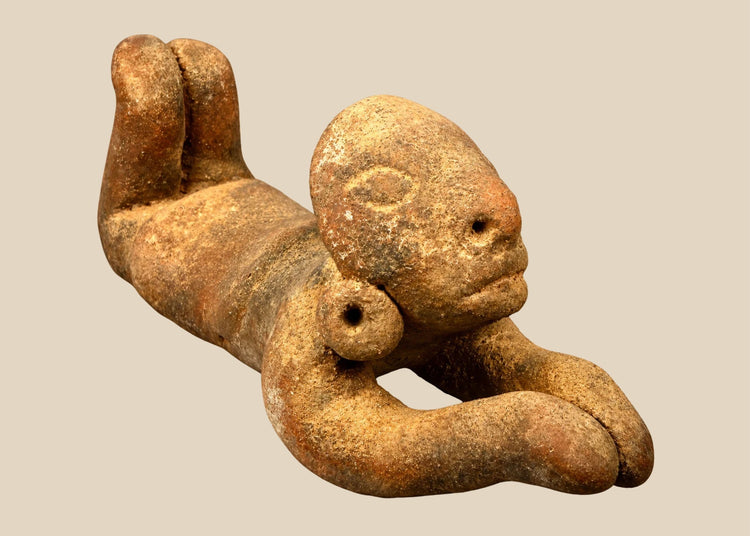
Pre-Columbian Terracotta Prone Human Figure with Earspools | Coastal Ecuador | c. 500 BCE–500 CE
Couldn't load pickup availability


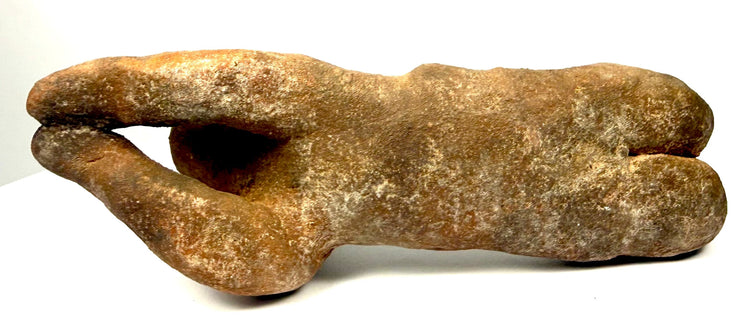
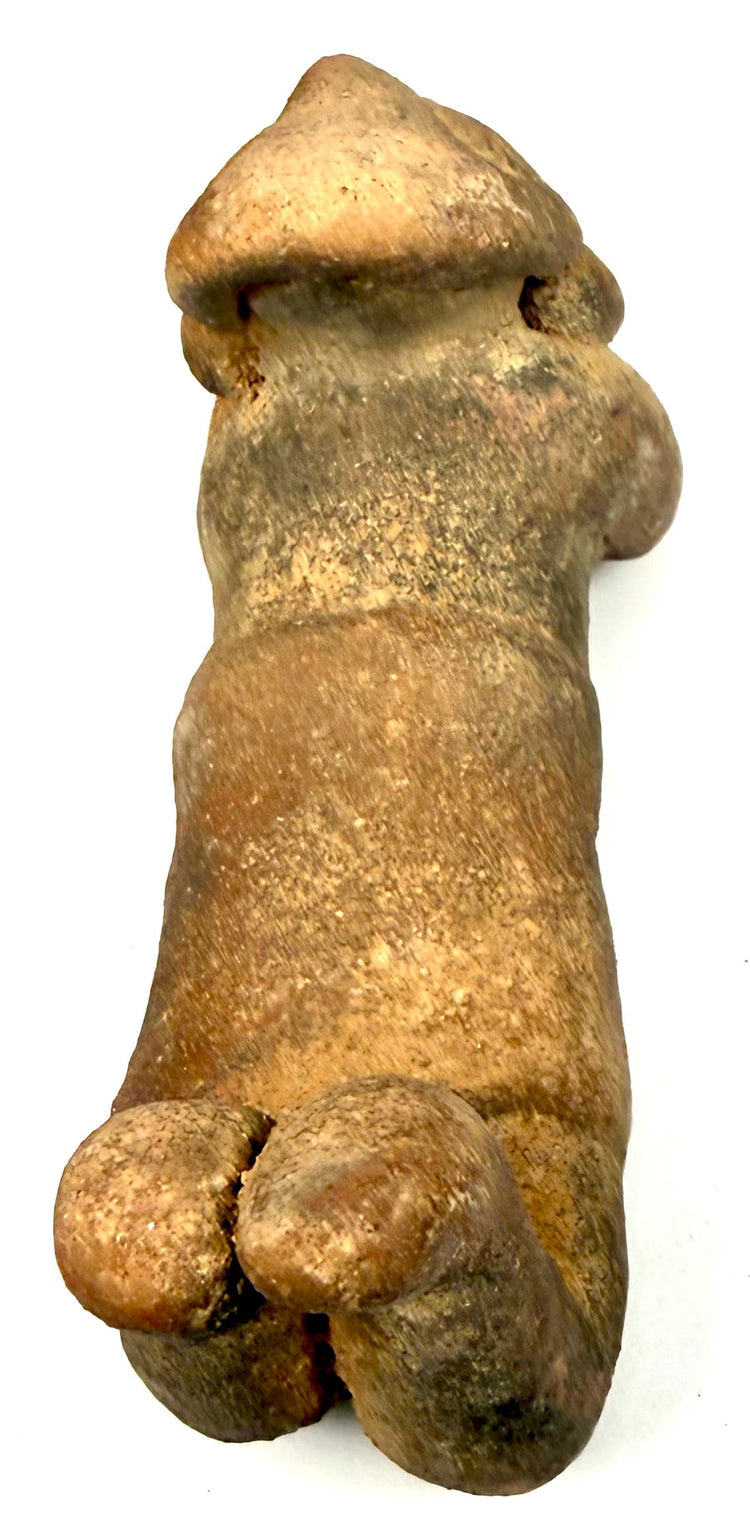
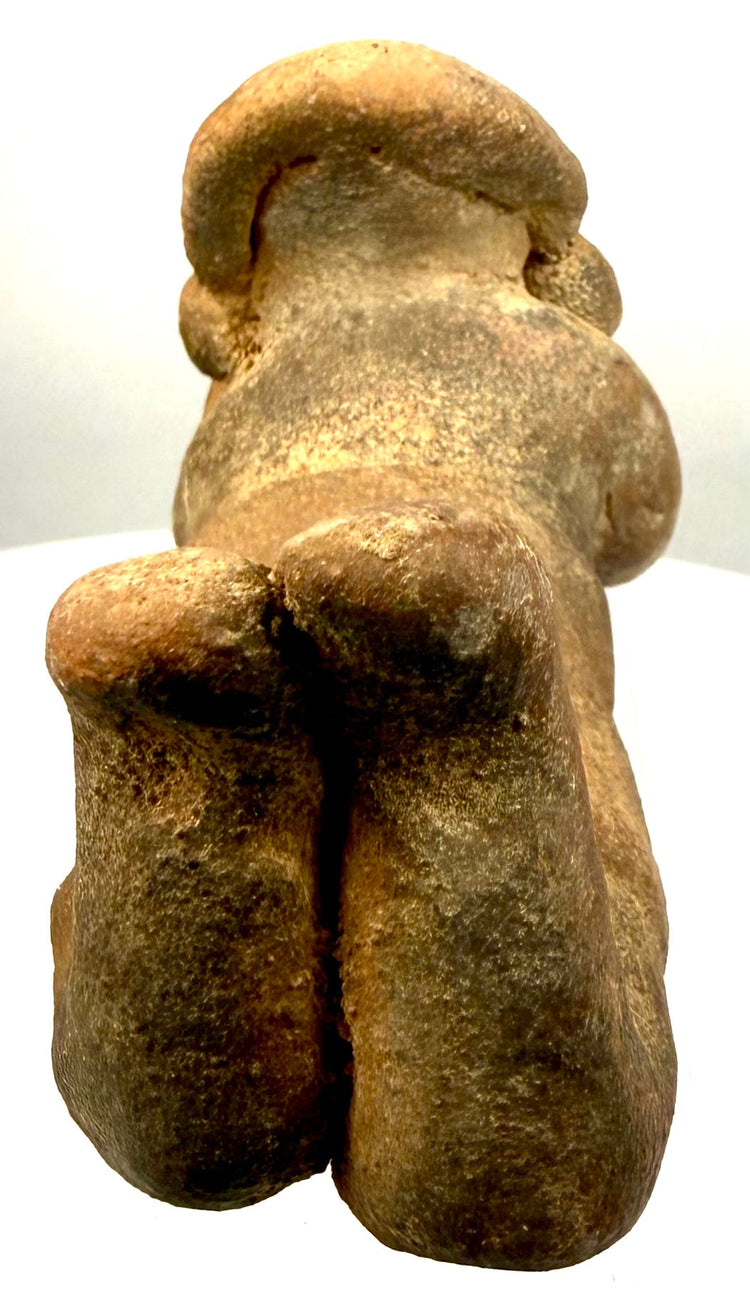
Pre-Columbian Terracotta Prone Human Figure with Earspools | Coastal Ecuador | c. 500 BCE–500 CE
Description
More
Less
Historical Context & Origin
Region: Coastal Ecuador, South America (stylistic tradition)
Material: Hand-modelled terracotta (earthenware)
Period: Pre-Columbian, Late Formative to Regional Development Period, circa 500 BCE–500 CE
The ancient cultures of coastal Ecuador developed some of the most expressive ceramic sculptural traditions in Pre-Columbian South America. During the Late Formative and Regional Development periods, communities associated with the Chorrera, Bahía, La Tolita, and Jama-Coaque traditions produced an extensive variety of anthropomorphic and zoomorphic figures.
The Chorrera tradition was particularly influential in developing expressive human representations, including figures with rounded facial features, personal ornaments, and distinctive bodily postures. Related sculptural traditions continued throughout the region, reflecting the artistic diversity and cultural development of ancient Ecuadorian societies.
Description
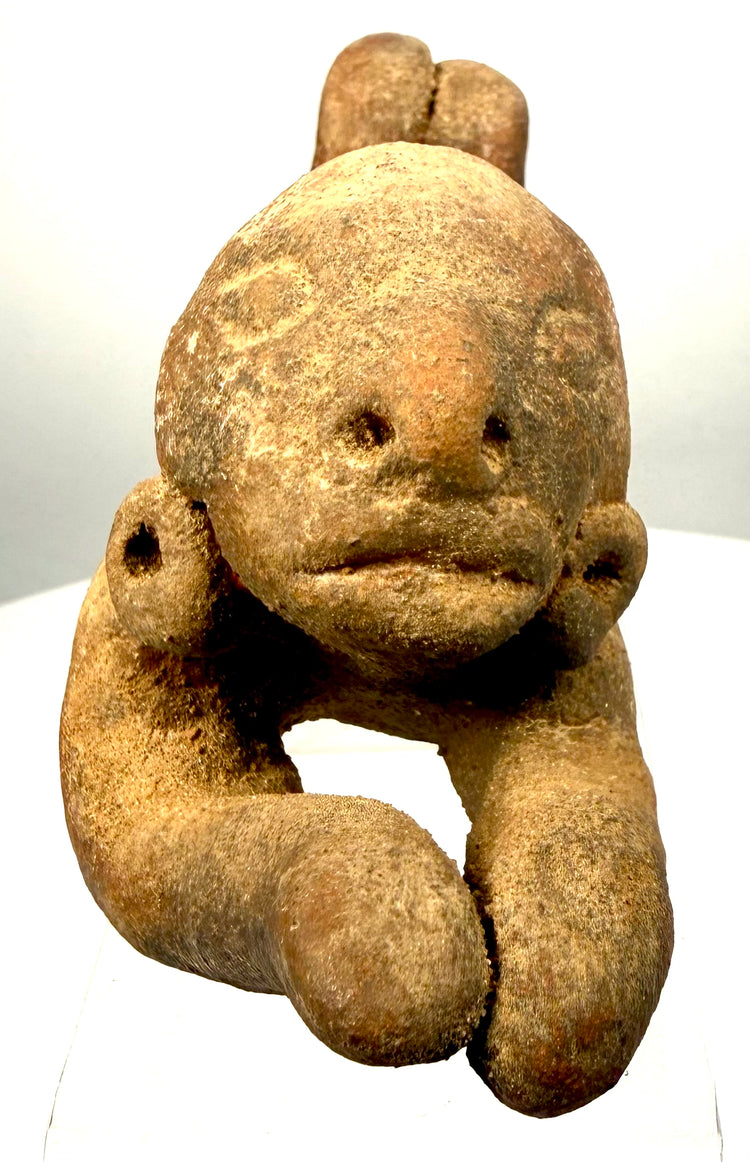
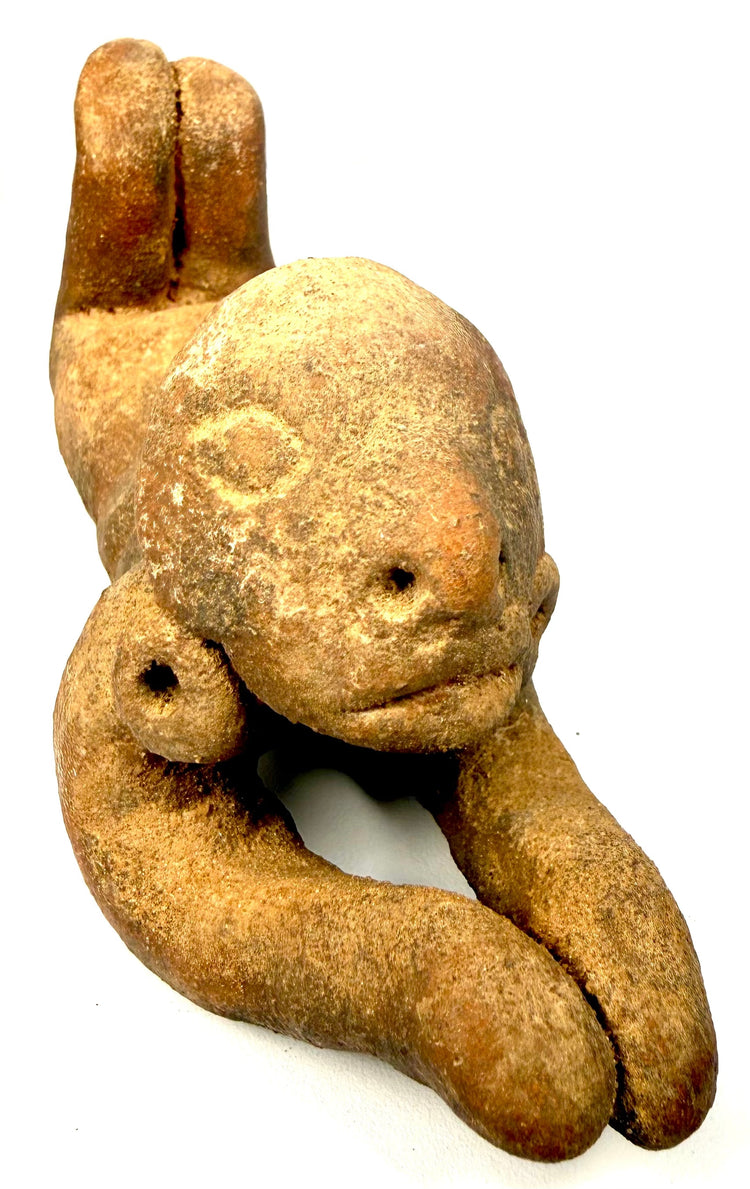
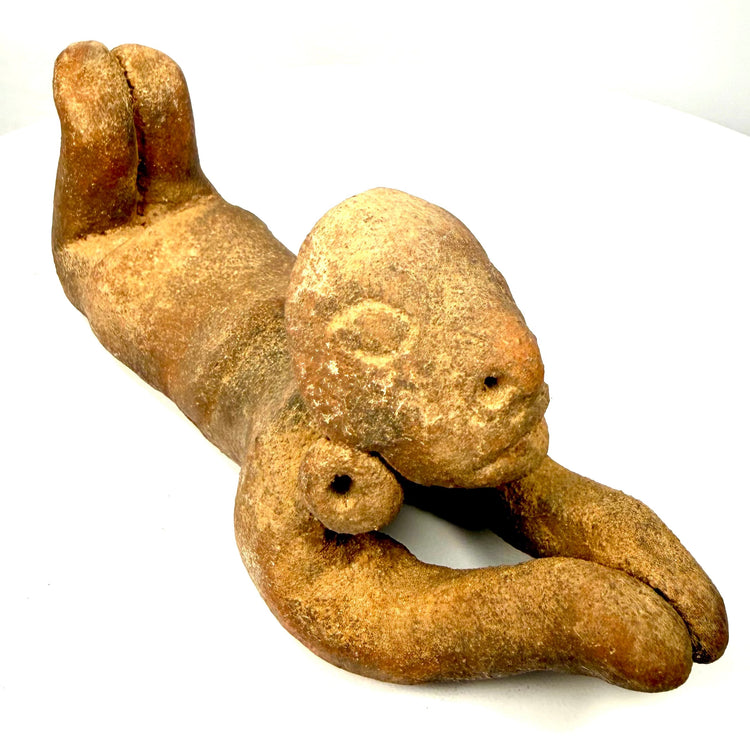
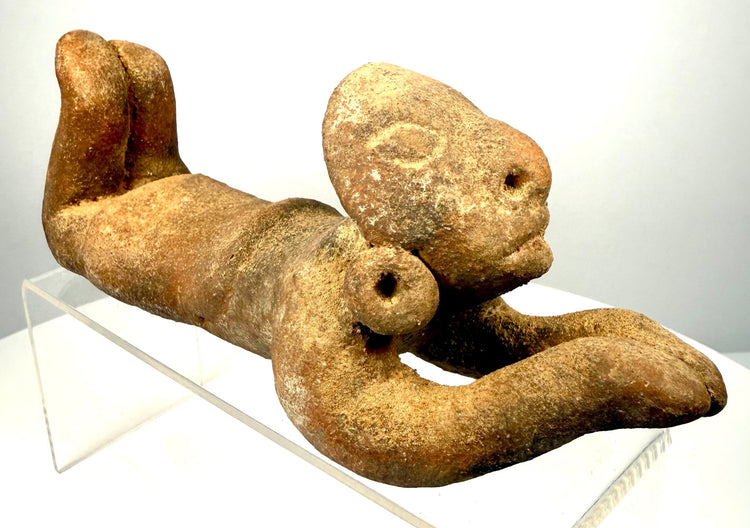
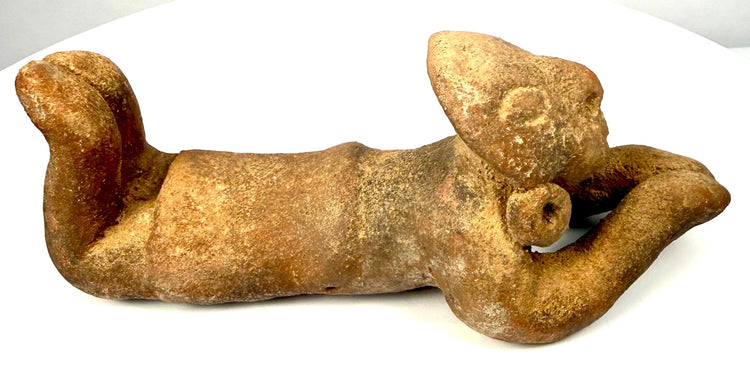
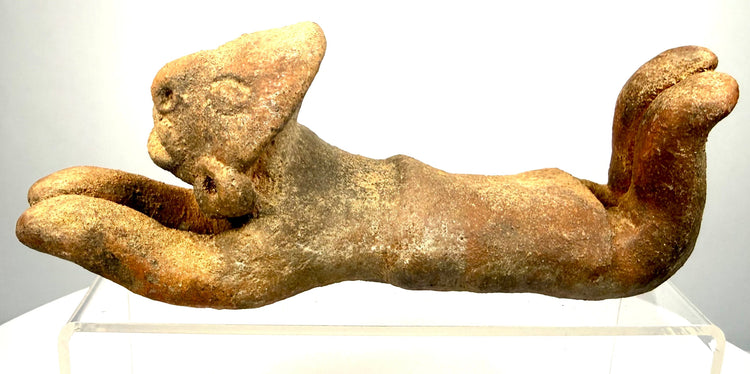
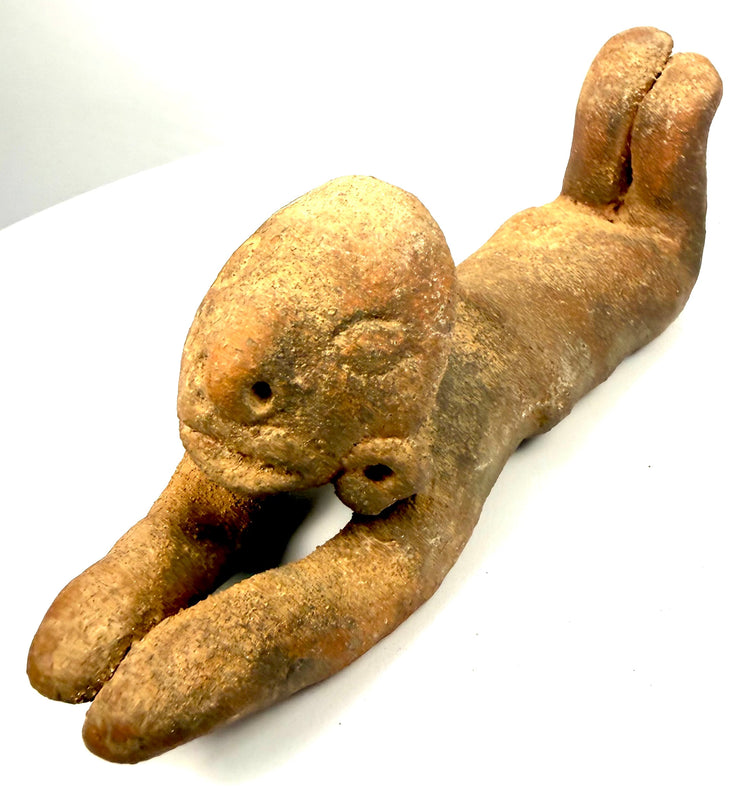
An expressive Pre-Columbian terracotta anthropomorphic figure depicting a human individual in an unusual prone position, with both arms extended forward and the legs bent upward behind the body. The sculpture is distinguished by its elongated torso, oversized rounded head, and prominent circular ear ornaments, creating a dynamic composition that emphasizes the human form.
The head displays stylized facial characteristics, including a broad forehead, subtly modelled eyes, a projecting nose, and a defined mouth. Large circular ornaments with central perforations appear on either side of the head, resembling the pierced earspools commonly represented in ancient Pre-Columbian sculpture.
The elongated torso extends into the raised lower limbs, while the forward-reaching arms curve beneath the head and terminate in broadly rounded hands. The distinctive posture creates a strong impression of bodily movement and demonstrates the sculptor's attention to proportion, gesture, and expressive modelling.
The surface exhibits warm reddish-brown and sandy earthenware tones, accompanied by widespread pale deposits, mottled discoloration, and darker areas within the recesses. The heavily weathered texture contrasts with the surviving facial details and smoothly modelled contours of the figure.
The sculpture shares notable stylistic characteristics with anthropomorphic works from ancient coastal Ecuador, particularly the reclining human forms and prominent ear ornaments associated with Chorrera ceramic traditions. Related prone figures also appear in other Pre-Columbian sculptural traditions, including examples preserved by the Cleveland Museum of Art.
Its unusual posture, expressive facial modelling, substantial ear ornaments, and compact sculptural form make this an engaging example of Pre-Columbian-style figurative art.
Features
- Distinctive prone human figure with raised, bent legs
- Oversized rounded head with stylized facial characteristics
- Prominent circular ear ornaments with central perforations
- Broad forehead, subtly modelled eyes, projecting nose, and defined mouth
- Elongated torso with simplified anatomical modelling
- Forward-reaching arms terminating in rounded hands
- Expressive sculptural posture emphasizing bodily movement
- Hand-modelled terracotta construction
- Warm reddish-brown and sandy earthenware coloration
- Extensive surface weathering with pale deposits and mottled discoloration
- Stylistic similarities to coastal Ecuadorian Chorrera ceramic sculpture
Cultural Significance
Anthropomorphic ceramic figures occupied an important place in the artistic and cultural traditions of ancient coastal Ecuador. Communities associated with the Chorrera, Bahía, La Tolita, and Jama-Coaque traditions developed distinctive approaches to representing the human body, emphasizing facial expressions, personal adornment, and expressive postures.
The Chorrera tradition is particularly recognized for its innovative ceramic forms and naturalistic representations of human figures. A notable example preserved by The Walters Art Museum is a Chorrera effigy bowl dated 1200–300 BCE, incorporating a prone human figure with prominent earspools and raised legs. This museum example provides a valuable stylistic comparison for the posture and ornamentation represented in the present sculpture.
Large circular ear ornaments were significant elements of personal adornment throughout Pre-Columbian societies. Such ornaments could communicate social identity, cultural affiliation, and status, while their inclusion in sculptural representations demonstrates the importance of bodily decoration within ancient artistic traditions.
The figure's unusual prone posture also reflects the diversity of human representations found across Pre-Columbian America. A related reclining stone figure from Mexico's Gulf Coast, dated 300–600 CE and preserved by the Cleveland Museum of Art, demonstrates how artists from different regional traditions explored similar sculptural arrangements, exaggerated proportions, and expressive bodily gestures.
With its distinctive ear ornaments, elongated body, and unconventional posture, the present sculpture offers a compelling example of the expressive qualities associated with Pre-Columbian anthropomorphic art and the broader development of figurative sculpture in the ancient Americas.
Condition
Weathered condition with extensive surface abrasion, mottled discoloration, pale deposits, and scattered minor losses.
The figure retains its recognizable overall form, including the enlarged head, facial features, pierced ear ornaments, extended arms, and raised legs. The principal sculptural details remain visible despite widespread surface erosion.
Areas of rough texture, granular deposits, and darkened recesses are visible throughout, particularly around the head, underside, and extremities. Linear fissures are present between the raised legs, accompanied by small irregularities and localized wear to the surface.
Dimensions (Approximate)
Length: 6 in
Height: 2.5 in
Depth: 1.5 in
Age (Approximate)
1,500–2,500 years old
Provenance
Formerly part of a private collection in Indiana, USA, having been acquired from a gallery in New York in 1996. Subsequently handled by Ripley Auctions & Appraisals, Indianapolis, Indiana. Ripley Auctions is an established Indianapolis auction house with more than three decades of experience handling fine art, antiques, antiquities, collectibles, and estate collections, serving collectors and buyers nationally and internationally.
Learn More
Discover a related Pre-Columbian Chorrera effigy bowl depicting a prone human figure with prominent ear ornaments in the collection of The Walters Art Museum
Browse our collection of Ancient Pre-Columbian Artifacts & Relics
Description
Historical Context & Origin
Region: Coastal Ecuador, South America (stylistic tradition)
Material: Hand-modelled terracotta (earthenware)
Period: Pre-Columbian, Late Formative to Regional Development Period, circa 500 BCE–500 CE
The ancient cultures of coastal Ecuador developed some of the most expressive ceramic sculptural traditions in Pre-Columbian South America. During the Late Formative and Regional Development periods, communities associated with the Chorrera, Bahía, La Tolita, and Jama-Coaque traditions produced an extensive variety of anthropomorphic and zoomorphic figures.
The Chorrera tradition was particularly influential in developing expressive human representations, including figures with rounded facial features, personal ornaments, and distinctive bodily postures. Related sculptural traditions continued throughout the region, reflecting the artistic diversity and cultural development of ancient Ecuadorian societies.
Description
An expressive Pre-Columbian terracotta anthropomorphic figure depicting a human individual in an unusual prone position, with both arms extended forward and the legs bent upward behind the body. The sculpture is distinguished by its elongated torso, oversized rounded head, and prominent circular ear ornaments, creating a dynamic composition that emphasizes the human form.
The head displays stylized facial characteristics, including a broad forehead, subtly modelled eyes, a projecting nose, and a defined mouth. Large circular ornaments with central perforations appear on either side of the head, resembling the pierced earspools commonly represented in ancient Pre-Columbian sculpture.
The elongated torso extends into the raised lower limbs, while the forward-reaching arms curve beneath the head and terminate in broadly rounded hands. The distinctive posture creates a strong impression of bodily movement and demonstrates the sculptor's attention to proportion, gesture, and expressive modelling.
The surface exhibits warm reddish-brown and sandy earthenware tones, accompanied by widespread pale deposits, mottled discoloration, and darker areas within the recesses. The heavily weathered texture contrasts with the surviving facial details and smoothly modelled contours of the figure.
The sculpture shares notable stylistic characteristics with anthropomorphic works from ancient coastal Ecuador, particularly the reclining human forms and prominent ear ornaments associated with Chorrera ceramic traditions. Related prone figures also appear in other Pre-Columbian sculptural traditions, including examples preserved by the Cleveland Museum of Art.
Its unusual posture, expressive facial modelling, substantial ear ornaments, and compact sculptural form make this an engaging example of Pre-Columbian-style figurative art.
Features
- Distinctive prone human figure with raised, bent legs
- Oversized rounded head with stylized facial characteristics
- Prominent circular ear ornaments with central perforations
- Broad forehead, subtly modelled eyes, projecting nose, and defined mouth
- Elongated torso with simplified anatomical modelling
- Forward-reaching arms terminating in rounded hands
- Expressive sculptural posture emphasizing bodily movement
- Hand-modelled terracotta construction
- Warm reddish-brown and sandy earthenware coloration
- Extensive surface weathering with pale deposits and mottled discoloration
- Stylistic similarities to coastal Ecuadorian Chorrera ceramic sculpture
Cultural Significance
Anthropomorphic ceramic figures occupied an important place in the artistic and cultural traditions of ancient coastal Ecuador. Communities associated with the Chorrera, Bahía, La Tolita, and Jama-Coaque traditions developed distinctive approaches to representing the human body, emphasizing facial expressions, personal adornment, and expressive postures.
The Chorrera tradition is particularly recognized for its innovative ceramic forms and naturalistic representations of human figures. A notable example preserved by The Walters Art Museum is a Chorrera effigy bowl dated 1200–300 BCE, incorporating a prone human figure with prominent earspools and raised legs. This museum example provides a valuable stylistic comparison for the posture and ornamentation represented in the present sculpture.
Large circular ear ornaments were significant elements of personal adornment throughout Pre-Columbian societies. Such ornaments could communicate social identity, cultural affiliation, and status, while their inclusion in sculptural representations demonstrates the importance of bodily decoration within ancient artistic traditions.
The figure's unusual prone posture also reflects the diversity of human representations found across Pre-Columbian America. A related reclining stone figure from Mexico's Gulf Coast, dated 300–600 CE and preserved by the Cleveland Museum of Art, demonstrates how artists from different regional traditions explored similar sculptural arrangements, exaggerated proportions, and expressive bodily gestures.
With its distinctive ear ornaments, elongated body, and unconventional posture, the present sculpture offers a compelling example of the expressive qualities associated with Pre-Columbian anthropomorphic art and the broader development of figurative sculpture in the ancient Americas.
Condition
Weathered condition with extensive surface abrasion, mottled discoloration, pale deposits, and scattered minor losses.
The figure retains its recognizable overall form, including the enlarged head, facial features, pierced ear ornaments, extended arms, and raised legs. The principal sculptural details remain visible despite widespread surface erosion.
Areas of rough texture, granular deposits, and darkened recesses are visible throughout, particularly around the head, underside, and extremities. Linear fissures are present between the raised legs, accompanied by small irregularities and localized wear to the surface.
Dimensions (Approximate)
Length: 6 in
Height: 2.5 in
Depth: 1.5 in
Age (Approximate)
1,500–2,500 years old
Provenance
Formerly part of a private collection in Indiana, USA, having been acquired from a gallery in New York in 1996. Subsequently handled by Ripley Auctions & Appraisals, Indianapolis, Indiana. Ripley Auctions is an established Indianapolis auction house with more than three decades of experience handling fine art, antiques, antiquities, collectibles, and estate collections, serving collectors and buyers nationally and internationally.
Learn More
Discover a related Pre-Columbian Chorrera effigy bowl depicting a prone human figure with prominent ear ornaments in the collection of The Walters Art Museum
Browse our collection of Ancient Pre-Columbian Artifacts & Relics
You May Also Like
