


Pre-Columbian Veracruz Sonriente “Smiling Face” Terracotta Head | Circa 600–900 CE
Couldn't load pickup availability






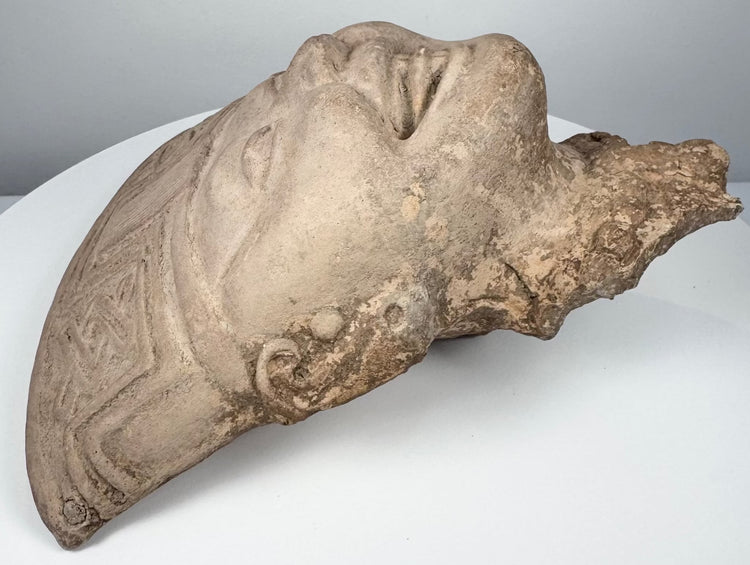


Pre-Columbian Veracruz Sonriente “Smiling Face” Terracotta Head | Circa 600–900 CE
Description
More
Less
Historical Context & Origin
Region: Gulf Coast Mexico, Veracruz
Culture: Classic Veracruz, associated with the Remojadas tradition
Material: Hollow-formed buff terracotta
Period: Classic Period, circa 600–900 CE
Description
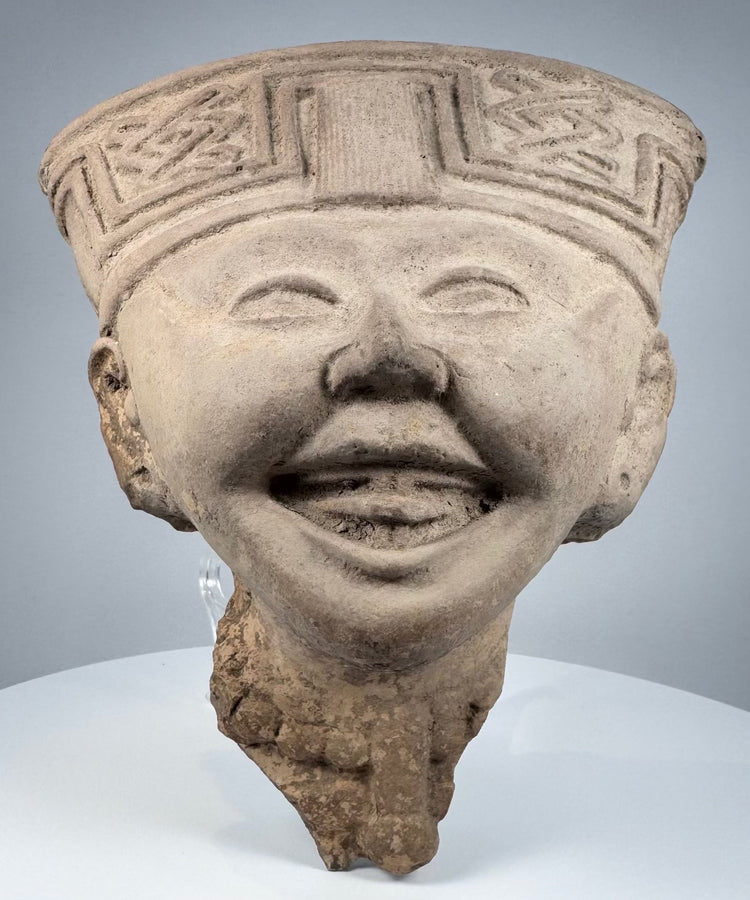
An impressive Pre-Columbian terracotta head from the Classic Veracruz tradition of Mexico's Gulf Coast, representing the celebrated Sonriente, or "Smiling Face," sculptural type.
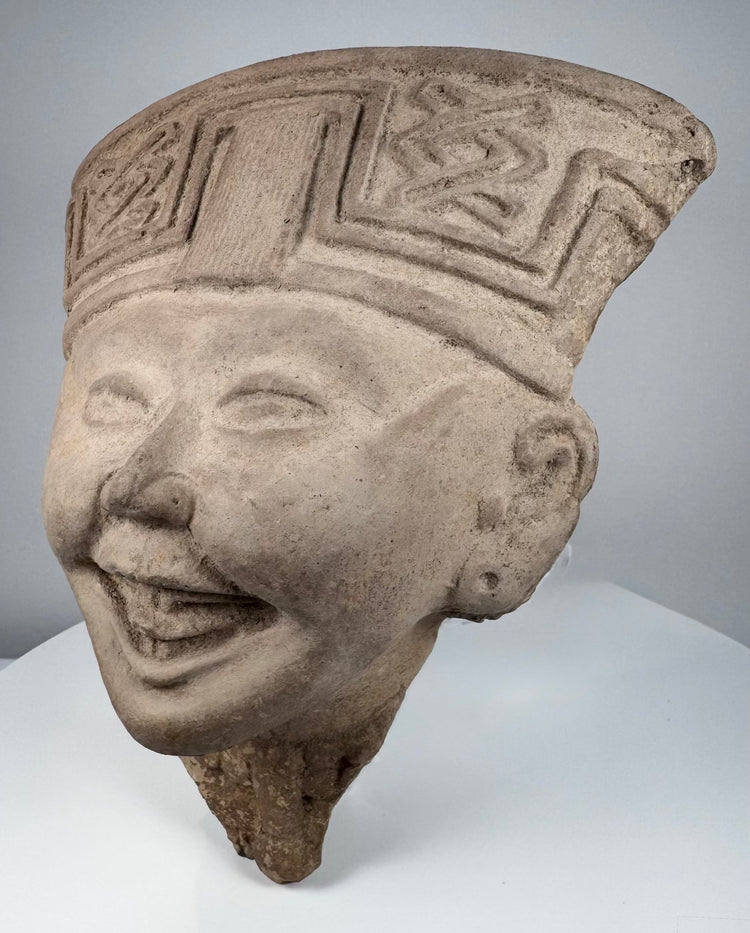
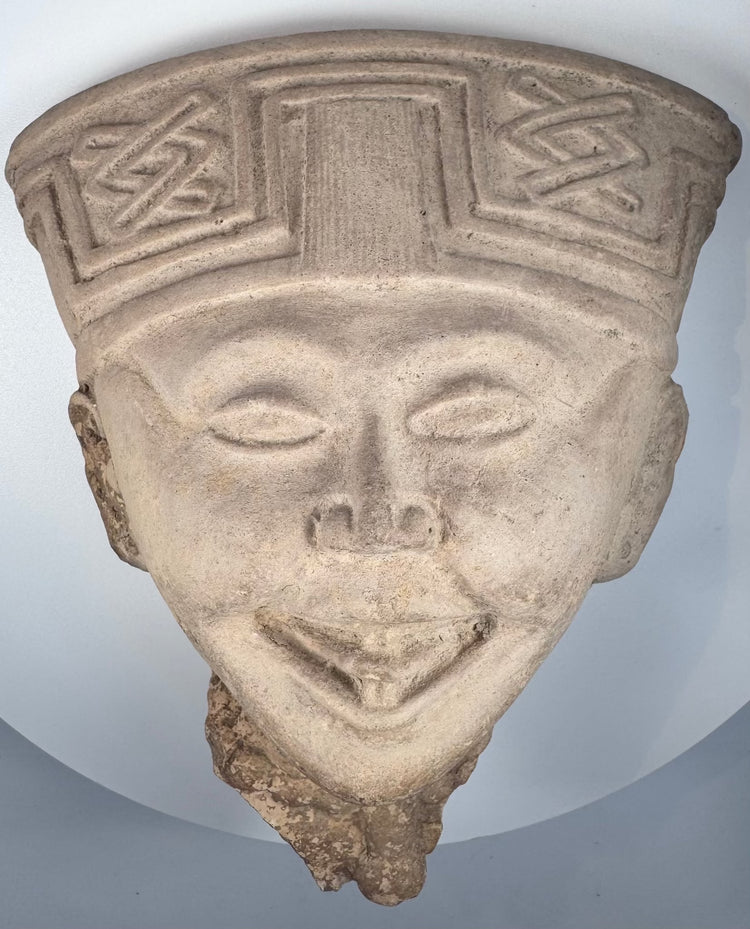
The large hollow-formed head presents a remarkably animated human visage characterized by narrowed almond-shaped eyes, pronounced rounded cheeks, a broad modeled nose, and a wide open smiling mouth. The expressive treatment of the face is characteristic of the distinctive Sonriente figures for which ancient Veracruz ceramic sculpture is particularly renowned.
The figure wears an elaborate broad headdress decorated in carefully modeled low relief. A vertically striated rectangular panel occupies the center, flanked by angular, weave-like geometric motifs contained within bordered fields. This distinctive arrangement closely corresponds with published Classic Veracruz Sonriente heads displaying similarly striated central panels and geometric headdress ornamentation.
The sculptural treatment combines strongly modeled facial features with crisp geometric decoration, creating a striking contrast between the naturalistic expression of the face and the highly organized ceremonial headgear.
The head is hollow, consistent with the construction of larger Veracruz terracotta figures. The incomplete lower neck indicates that it originally formed part of a more extensive figural sculpture. A small perforation is present to the reverse, through which a later cord has been threaded for display.
Features
- Large hollow-formed buff terracotta sculptural head
- Distinctive Sonriente or "Smiling Face" expression
- Narrowed almond-shaped eyes and pronounced rounded cheeks
- Broad naturalistically modeled nose
- Wide open smiling mouth with detailed lips and interior modeling
- Large flaring ceremonial headdress
- Central vertically striated rectangular headdress panel
- Flanking weave-like and angular geometric relief motifs
- Strongly modeled ears and facial contours
- Naturally aged buff-colored ceramic surface
- Substantial fragment from an originally larger hollow figural sculpture
Cultural Significance
The Sonrientes, meaning "smiling faces," are among the most distinctive sculptural creations associated with ancient Veracruz on Mexico's Gulf Coast. Unlike the solemn expressions frequently encountered in Mesoamerican figural art, these ceramic sculptures are immediately recognizable for their broad smiles, animated facial expressions, and elaborate ceremonial attire.
They are particularly associated with the Classic Veracruz artistic tradition and the area surrounding Remojadas, where numerous examples of expressive hollow ceramic figures have been documented. Surviving heads frequently display almond-shaped eyes, rounded cheeks, open smiling mouths, and elaborate headdresses decorated with geometric and textile-like patterns.
The precise meaning of the Sonriente figures remains uncertain. Their animated expressions, elaborate costume, and the appearance of related figures in dynamic poses have led to interpretations involving ceremony, performance, music, or dance. Regardless of their specific function, they represent one of the most immediately recognizable and visually distinctive traditions of ancient Gulf Coast ceramic sculpture.
Condition
The head survives as a substantial fragment from a larger hollow terracotta figure. The lower neck and portions of the reverse are incomplete, exposing the hollow interior.
There is age-related surface wear, scattered abrasions, mineral and earthen accretions, discoloration, minor edge losses, and localized encrustation consistent with considerable age. The facial features remain exceptionally expressive, while the majority of the elaborate geometric headdress decoration is well preserved and clearly defined.
A small perforation is present to the reverse with a later cord currently threaded through it for hanging or display purposes.
Dimensions (Approximate)
Height: 8.5 in
Width: 7.5 in
Depth: 4.5 in
Age (Approximate)
1,100–1,400 years old
Provenance
From a private collection in Ottawa, Ontario. The owner was a lifelong collector of Pre-Columbian art and artifacts who traveled extensively throughout South America.
The collection is accompanied by an original colour photograph documenting a selection of artifacts (including this one) displayed in the collector’s home, inscribed “Sept 1989” on the reverse. The photograph is printed on AGFA Prestige photographic paper, a paper stock consistent with the inscribed period, providing additional documentation that the collection was established by at least the late 1980s. Following the owner’s passing, the collection was liquidated by the family.
Learn More
Explore a comparable Remojadas Sonriente from Veracruz at The Metropolitan Museum of Art.
Discover our curated Ancient Pre-Columbian Artifacts & Relics Collection.
Description
Historical Context & Origin
Region: Gulf Coast Mexico, Veracruz
Culture: Classic Veracruz, associated with the Remojadas tradition
Material: Hollow-formed buff terracotta
Period: Classic Period, circa 600–900 CE
Description
An impressive Pre-Columbian terracotta head from the Classic Veracruz tradition of Mexico's Gulf Coast, representing the celebrated Sonriente, or "Smiling Face," sculptural type.
The large hollow-formed head presents a remarkably animated human visage characterized by narrowed almond-shaped eyes, pronounced rounded cheeks, a broad modeled nose, and a wide open smiling mouth. The expressive treatment of the face is characteristic of the distinctive Sonriente figures for which ancient Veracruz ceramic sculpture is particularly renowned.
The figure wears an elaborate broad headdress decorated in carefully modeled low relief. A vertically striated rectangular panel occupies the center, flanked by angular, weave-like geometric motifs contained within bordered fields. This distinctive arrangement closely corresponds with published Classic Veracruz Sonriente heads displaying similarly striated central panels and geometric headdress ornamentation.
The sculptural treatment combines strongly modeled facial features with crisp geometric decoration, creating a striking contrast between the naturalistic expression of the face and the highly organized ceremonial headgear.
The head is hollow, consistent with the construction of larger Veracruz terracotta figures. The incomplete lower neck indicates that it originally formed part of a more extensive figural sculpture. A small perforation is present to the reverse, through which a later cord has been threaded for display.
Features
- Large hollow-formed buff terracotta sculptural head
- Distinctive Sonriente or "Smiling Face" expression
- Narrowed almond-shaped eyes and pronounced rounded cheeks
- Broad naturalistically modeled nose
- Wide open smiling mouth with detailed lips and interior modeling
- Large flaring ceremonial headdress
- Central vertically striated rectangular headdress panel
- Flanking weave-like and angular geometric relief motifs
- Strongly modeled ears and facial contours
- Naturally aged buff-colored ceramic surface
- Substantial fragment from an originally larger hollow figural sculpture
Cultural Significance
The Sonrientes, meaning "smiling faces," are among the most distinctive sculptural creations associated with ancient Veracruz on Mexico's Gulf Coast. Unlike the solemn expressions frequently encountered in Mesoamerican figural art, these ceramic sculptures are immediately recognizable for their broad smiles, animated facial expressions, and elaborate ceremonial attire.
They are particularly associated with the Classic Veracruz artistic tradition and the area surrounding Remojadas, where numerous examples of expressive hollow ceramic figures have been documented. Surviving heads frequently display almond-shaped eyes, rounded cheeks, open smiling mouths, and elaborate headdresses decorated with geometric and textile-like patterns.
The precise meaning of the Sonriente figures remains uncertain. Their animated expressions, elaborate costume, and the appearance of related figures in dynamic poses have led to interpretations involving ceremony, performance, music, or dance. Regardless of their specific function, they represent one of the most immediately recognizable and visually distinctive traditions of ancient Gulf Coast ceramic sculpture.
Condition
The head survives as a substantial fragment from a larger hollow terracotta figure. The lower neck and portions of the reverse are incomplete, exposing the hollow interior.
There is age-related surface wear, scattered abrasions, mineral and earthen accretions, discoloration, minor edge losses, and localized encrustation consistent with considerable age. The facial features remain exceptionally expressive, while the majority of the elaborate geometric headdress decoration is well preserved and clearly defined.
A small perforation is present to the reverse with a later cord currently threaded through it for hanging or display purposes.
Dimensions (Approximate)
Height: 8.5 in
Width: 7.5 in
Depth: 4.5 in
Age (Approximate)
1,100–1,400 years old
Provenance
From a private collection in Ottawa, Ontario. The owner was a lifelong collector of Pre-Columbian art and artifacts who traveled extensively throughout South America.
The collection is accompanied by an original colour photograph documenting a selection of artifacts (including this one) displayed in the collector’s home, inscribed “Sept 1989” on the reverse. The photograph is printed on AGFA Prestige photographic paper, a paper stock consistent with the inscribed period, providing additional documentation that the collection was established by at least the late 1980s. Following the owner’s passing, the collection was liquidated by the family.
Learn More
Explore a comparable Remojadas Sonriente from Veracruz at The Metropolitan Museum of Art.
Discover our curated Ancient Pre-Columbian Artifacts & Relics Collection.
You May Also Like
