

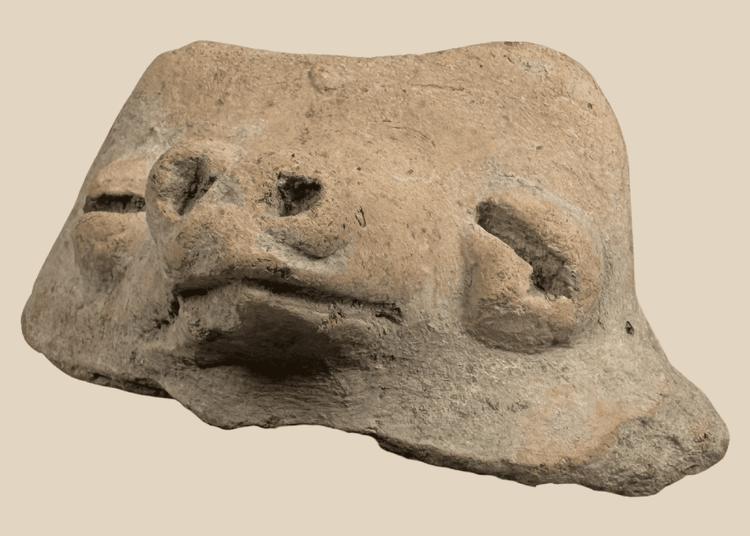
Pre-Columbian Zoomorphic Terracotta Head Fragment | Mexico to Colombia | Circa 200–900 CE
Couldn't load pickup availability


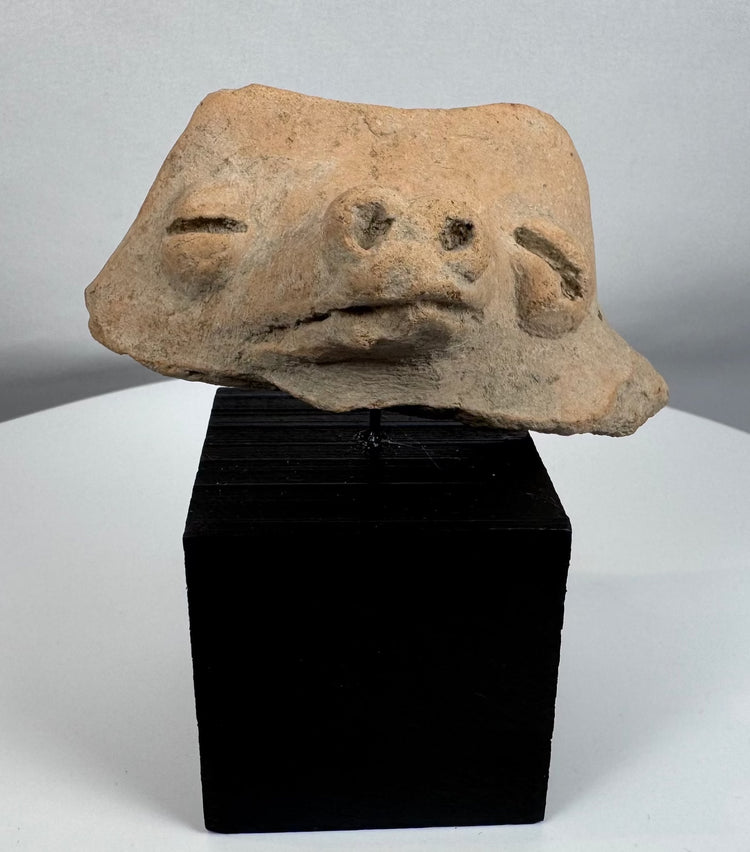
Pre-Columbian Zoomorphic Terracotta Head Fragment | Mexico to Colombia | Circa 200–900 CE
Description
More
Less
Historical Context & Origin
Region: Mexico to Colombia
Material: Terracotta
Period: Pre-Columbian Period, circa 200–900 CE
Description
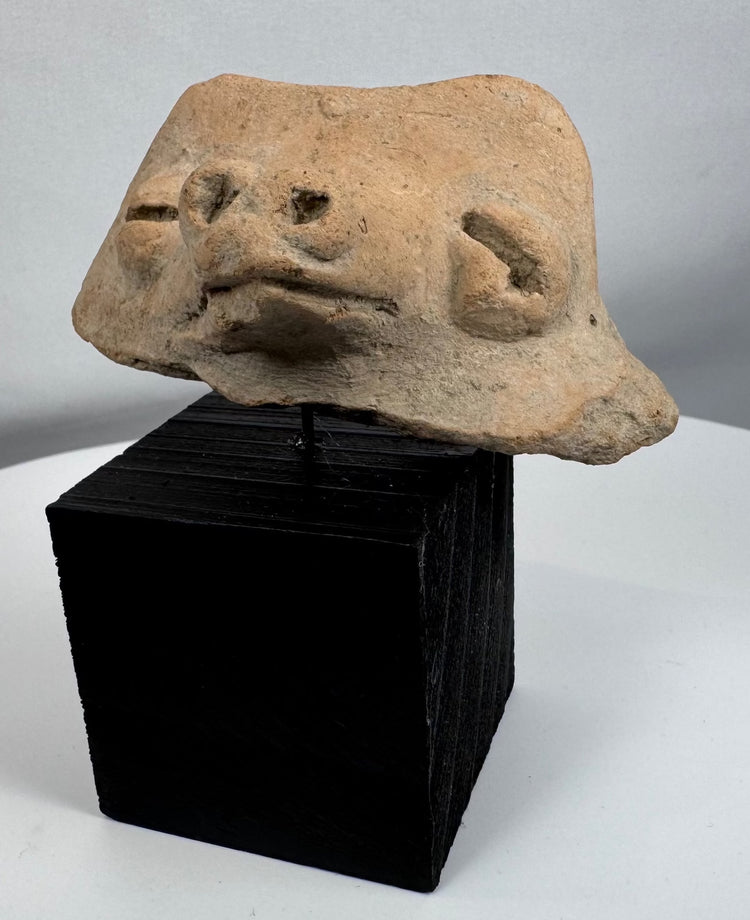
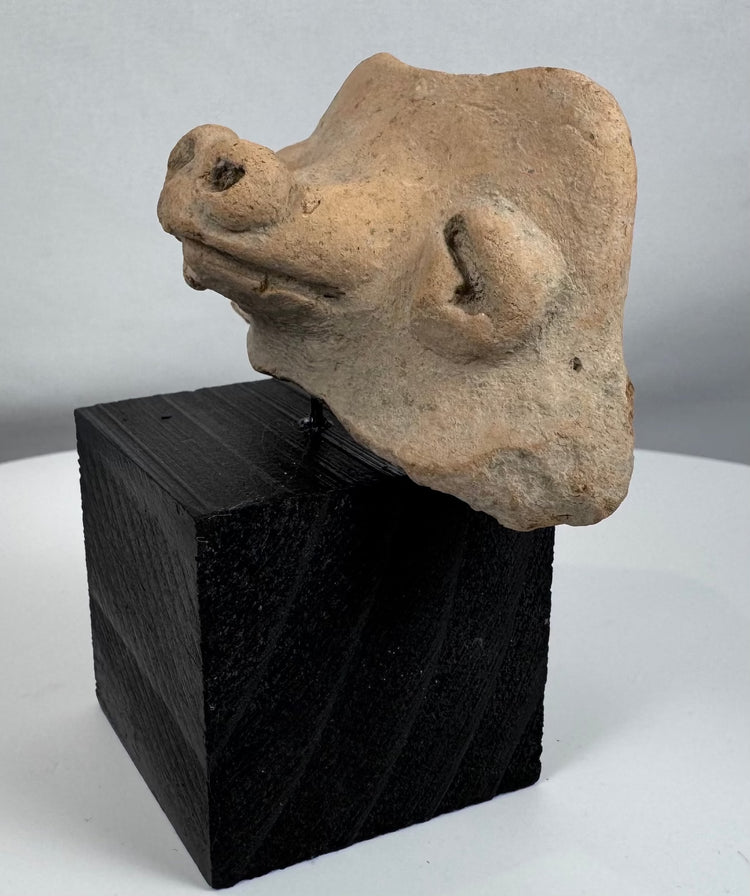
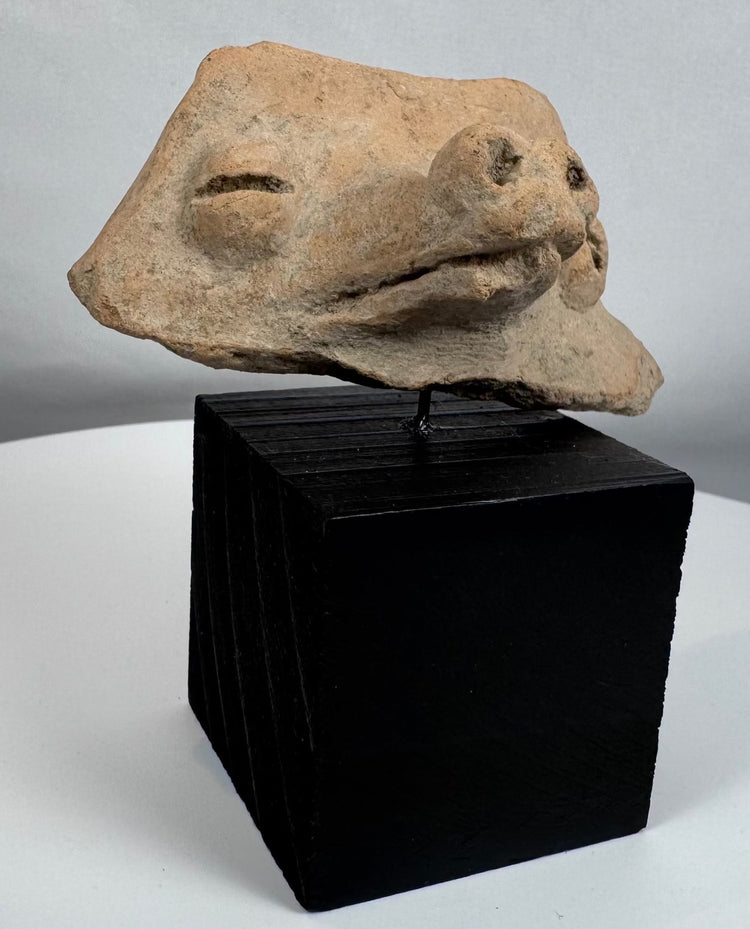
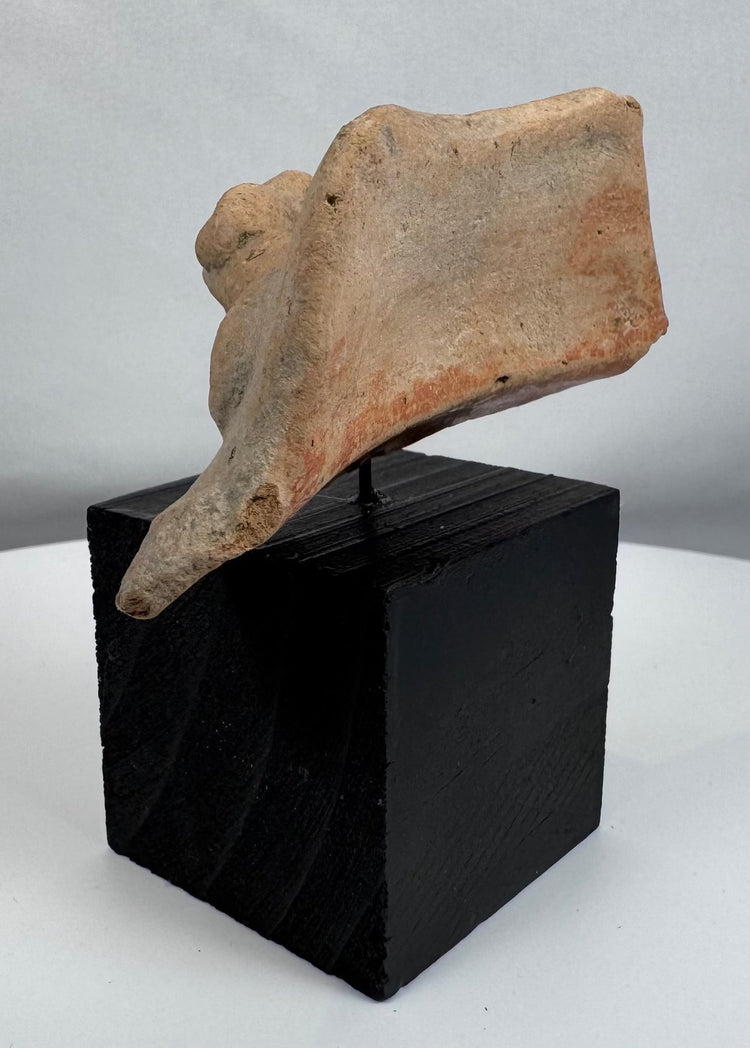
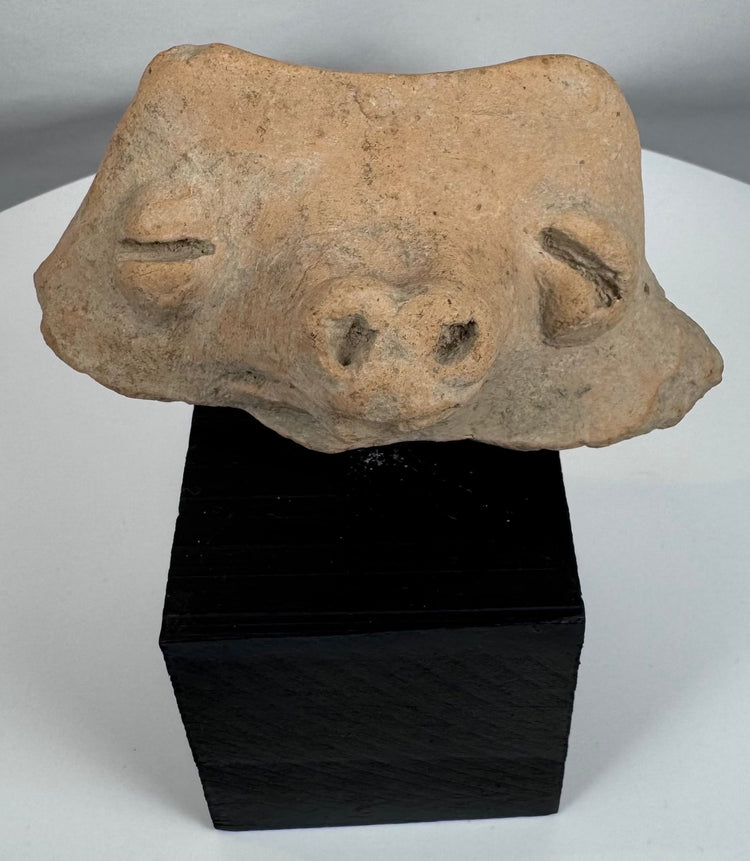
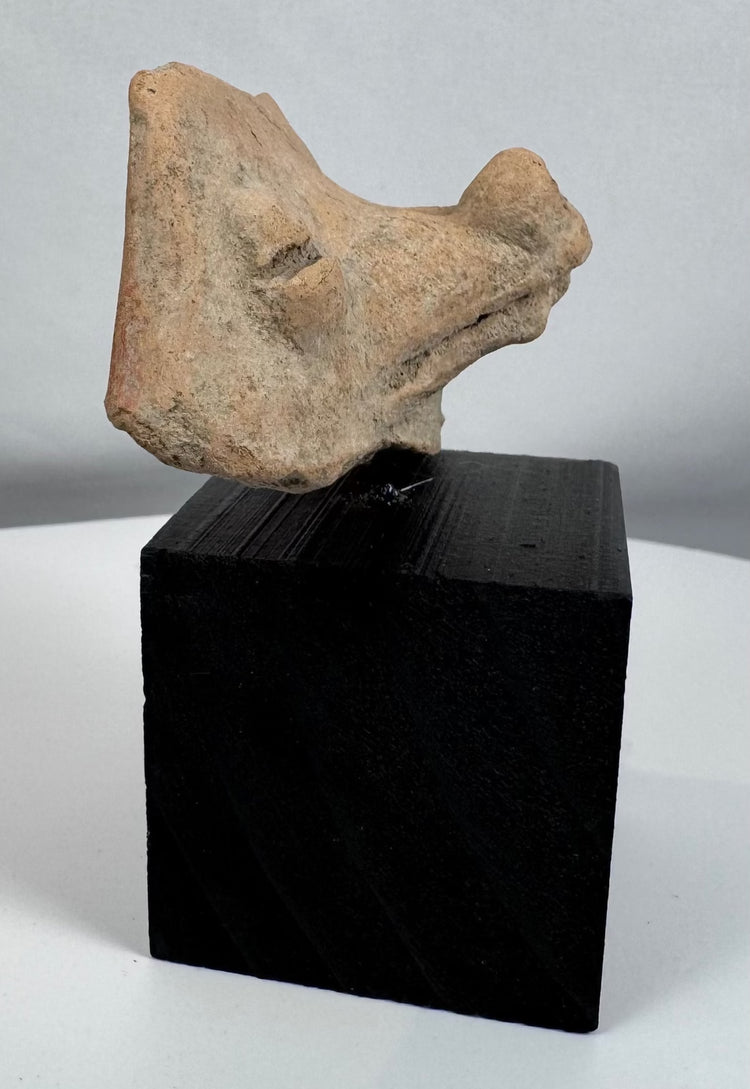
This Pre-Columbian terracotta head fragment depicts a stylized zoomorphic figure, likely representing an animal or supernatural being. The fragment features a broad flattened face with slit-form eyes, a projecting snout, and perforated nostrils, rendered in a simplified yet expressive manner characteristic of ceremonial and symbolic ceramic traditions found throughout ancient Mesoamerica and northern South America.
Originally part of a larger vessel, effigy figure, or sculptural object, the surviving fragment preserves the distinctive facial features of the original composition while offering insight into the artistic and spiritual traditions of the cultures that produced it. Animal imagery held significant symbolic importance in many Pre-Columbian societies, often serving as representations of power, fertility, protection, ancestry, or shamanic transformation.
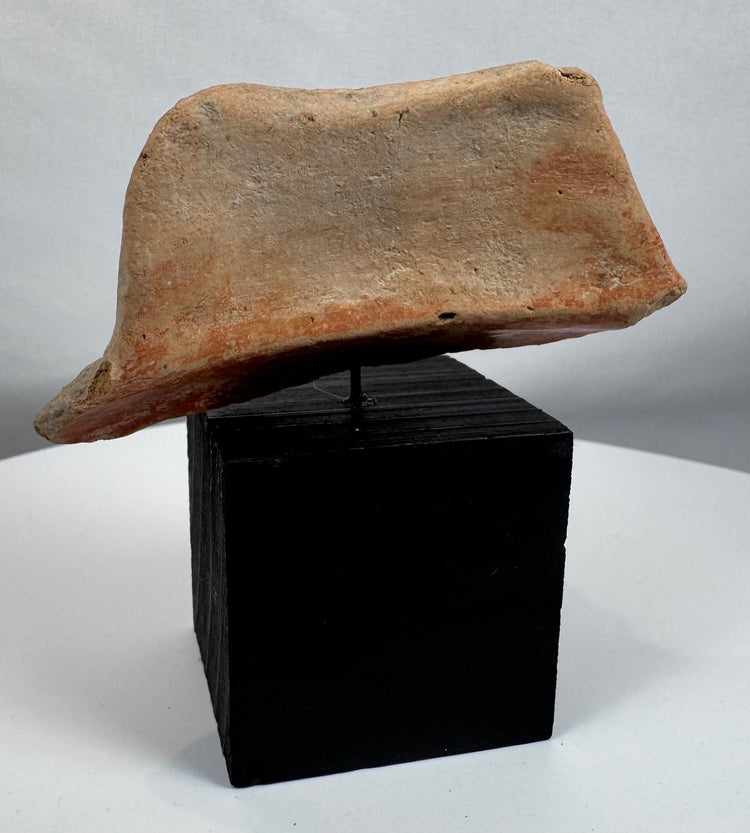
The fragment exhibits substantial age-related wear and mineral accretions consistent with long-term burial.
Features
- Terracotta zoomorphic head fragment
- Stylized animal or supernatural facial features
- Projecting snout with perforated nostrils
- Slit-form eyes rendered in relief
- Originally part of a larger vessel or effigy figure
- Surface weathering and mineral accretions consistent with age
- Mounted on a custom display stand
Cultural Significance
Animal and hybrid creature imagery played a central role in the spiritual beliefs of many Pre-Columbian cultures. Such representations frequently embodied protective spirits, sacred animals, mythological beings, or transformational figures associated with shamanic practices. Fragments such as this provide valuable insight into the symbolic world of ancient American civilizations and the importance of animal iconography within ceremonial and ritual life.
Condition
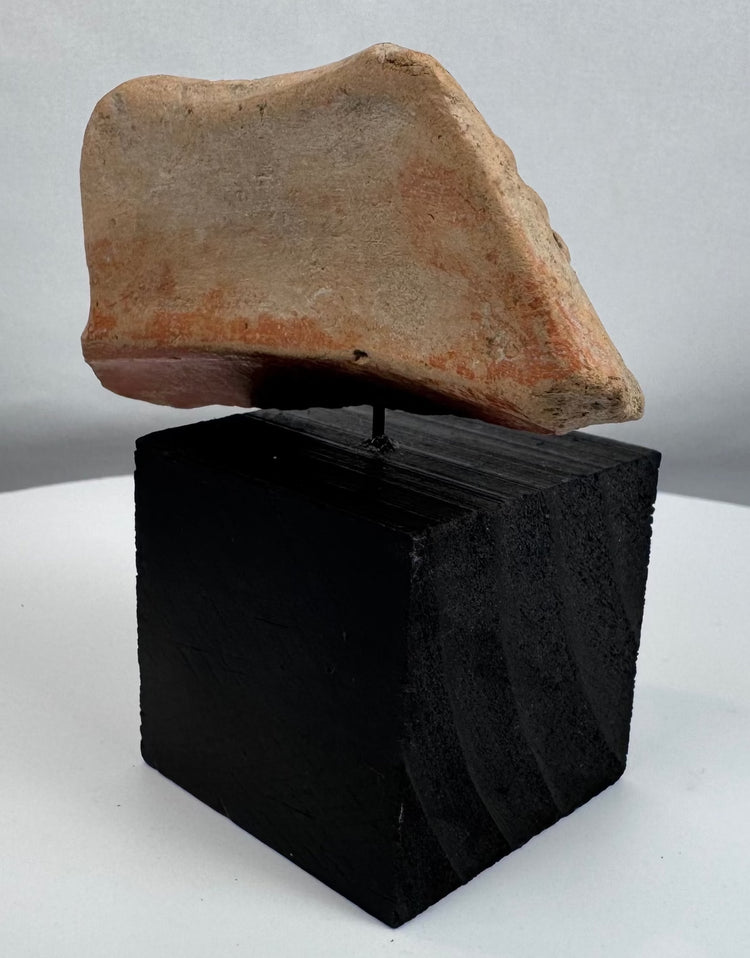
Fragmentary condition as shown, preserving the head portion of a larger ceramic object. Surface wear, losses, mineral deposits, and weathering throughout consistent with age and burial. Mounted on a modern custom display stand for presentation.
Dimensions (Approximate)
Height: 2 in
Width: 2 in
Length: 4 in
Age (Approximate)
1,100–1,800 years old
Provenance
Private Fayetteville, Arkansas, USA collection; ex-private Fayetteville, Arkansas estate collection, USA, assembled between 1960 and 2024. Acquired following the dispersal of the estate collection.
Learn More
Explore the archaeology and cultural traditions of ancient West Mexico through the Penn Museum
Description
Historical Context & Origin
Region: Mexico to Colombia
Material: Terracotta
Period: Pre-Columbian Period, circa 200–900 CE
Description
This Pre-Columbian terracotta head fragment depicts a stylized zoomorphic figure, likely representing an animal or supernatural being. The fragment features a broad flattened face with slit-form eyes, a projecting snout, and perforated nostrils, rendered in a simplified yet expressive manner characteristic of ceremonial and symbolic ceramic traditions found throughout ancient Mesoamerica and northern South America.
Originally part of a larger vessel, effigy figure, or sculptural object, the surviving fragment preserves the distinctive facial features of the original composition while offering insight into the artistic and spiritual traditions of the cultures that produced it. Animal imagery held significant symbolic importance in many Pre-Columbian societies, often serving as representations of power, fertility, protection, ancestry, or shamanic transformation.
The fragment exhibits substantial age-related wear and mineral accretions consistent with long-term burial.
Features
- Terracotta zoomorphic head fragment
- Stylized animal or supernatural facial features
- Projecting snout with perforated nostrils
- Slit-form eyes rendered in relief
- Originally part of a larger vessel or effigy figure
- Surface weathering and mineral accretions consistent with age
- Mounted on a custom display stand
Cultural Significance
Animal and hybrid creature imagery played a central role in the spiritual beliefs of many Pre-Columbian cultures. Such representations frequently embodied protective spirits, sacred animals, mythological beings, or transformational figures associated with shamanic practices. Fragments such as this provide valuable insight into the symbolic world of ancient American civilizations and the importance of animal iconography within ceremonial and ritual life.
Condition
Fragmentary condition as shown, preserving the head portion of a larger ceramic object. Surface wear, losses, mineral deposits, and weathering throughout consistent with age and burial. Mounted on a modern custom display stand for presentation.
Dimensions (Approximate)
Height: 2 in
Width: 2 in
Length: 4 in
Age (Approximate)
1,100–1,800 years old
Provenance
Private Fayetteville, Arkansas, USA collection; ex-private Fayetteville, Arkansas estate collection, USA, assembled between 1960 and 2024. Acquired following the dispersal of the estate collection.
Learn More
Explore the archaeology and cultural traditions of ancient West Mexico through the Penn Museum
You May Also Like
