



Ancient Proto-Elamite Copper-Alloy Bowl | Susa | Circa 2450 BCE
Couldn't load pickup availability


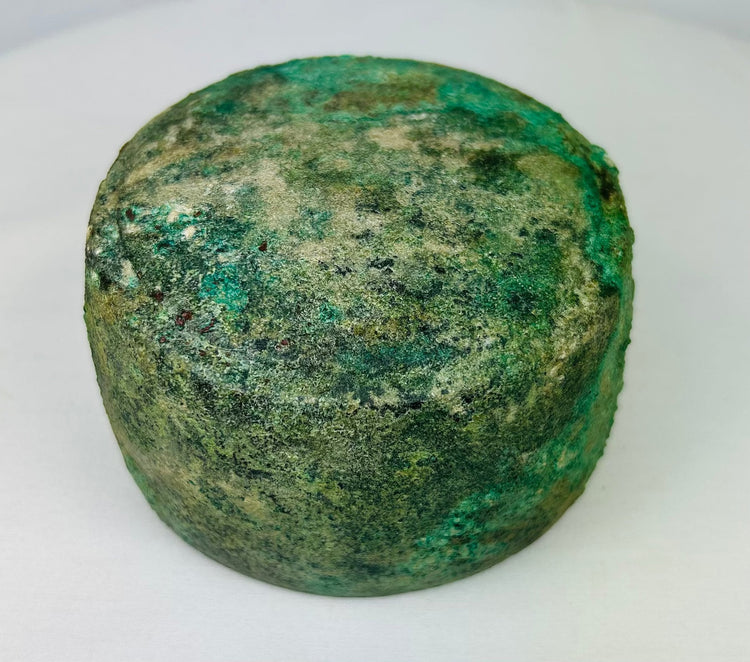
Ancient Proto-Elamite Copper-Alloy Bowl | Susa | Circa 2450 BCE
Description
More
Less
Historical Context & Origin
Region: Susa, Southwestern Iran (Proto-Elamite, Susa IVA)
Material: Copper alloy
Period: Early Bronze Age, circa 2450 BCE
Description
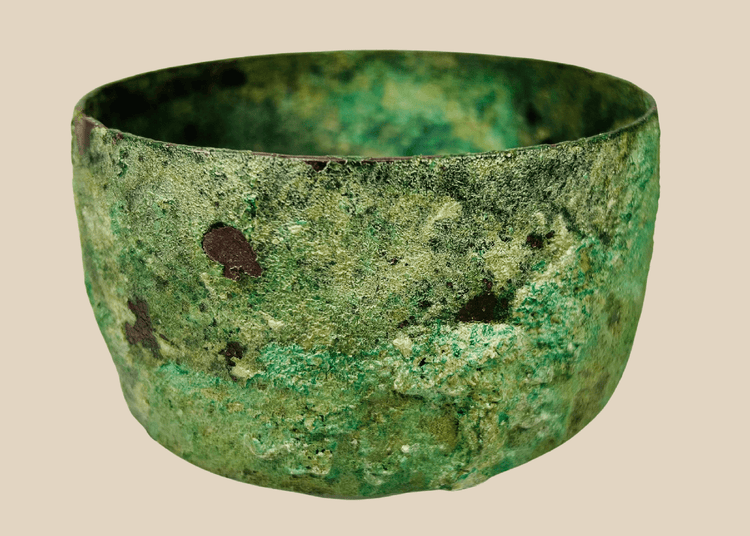
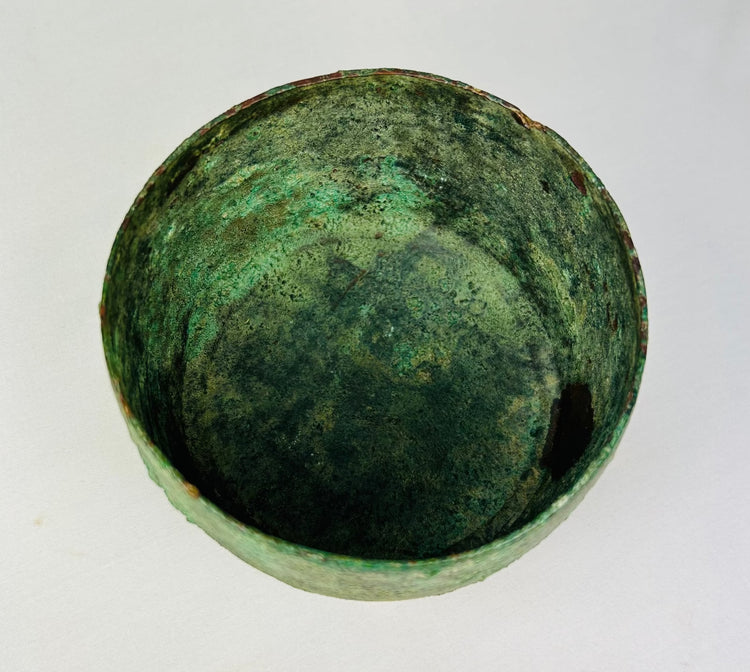
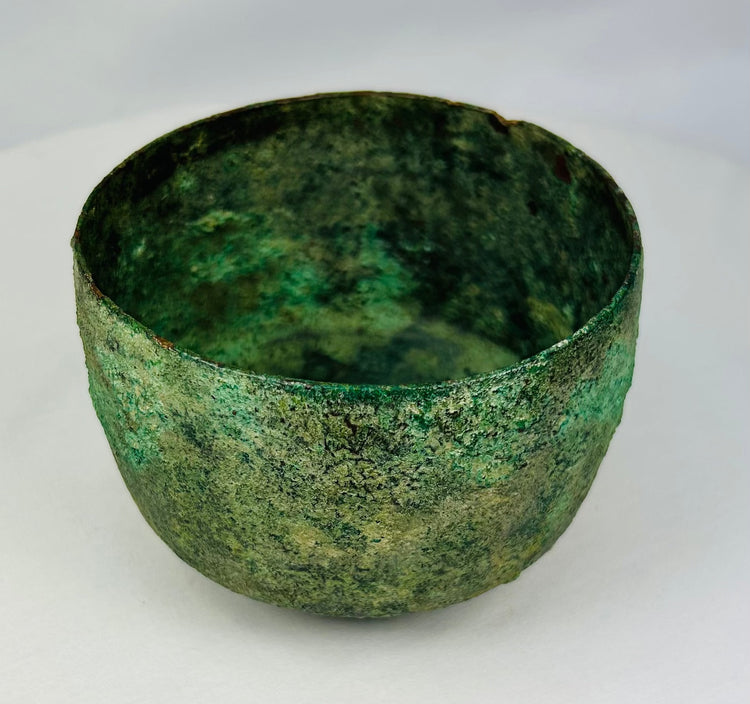
This ancient copper-alloy bowl from Susa in southwestern Iran dates to the Proto-Elamite period, Susa IVA, circa 2450 BCE.
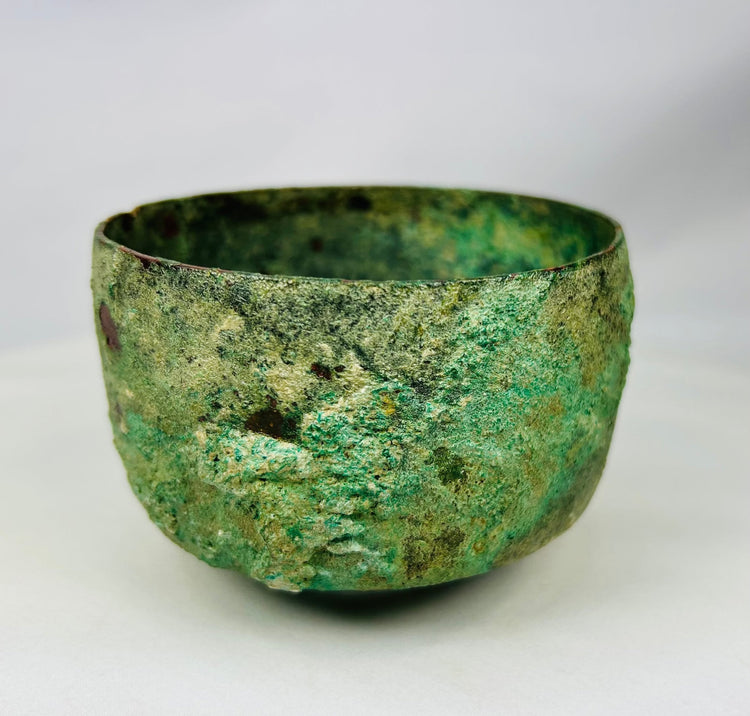
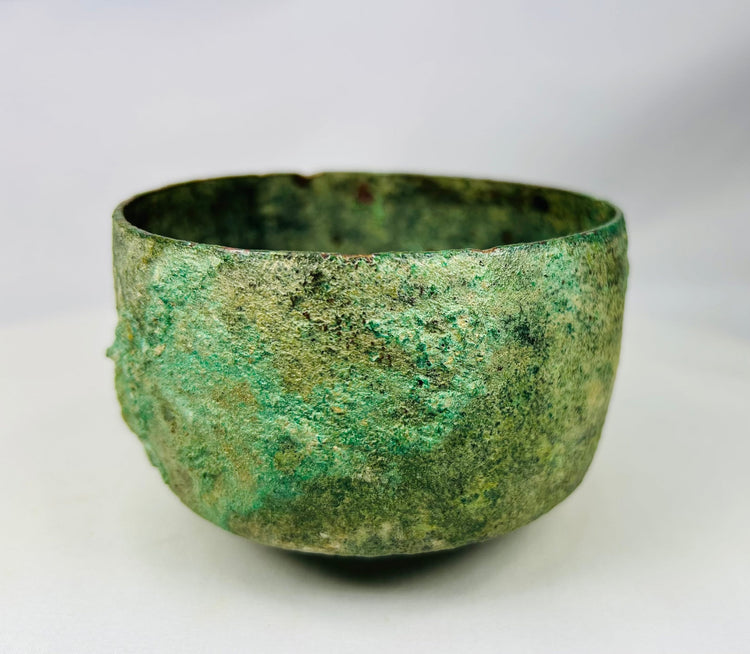
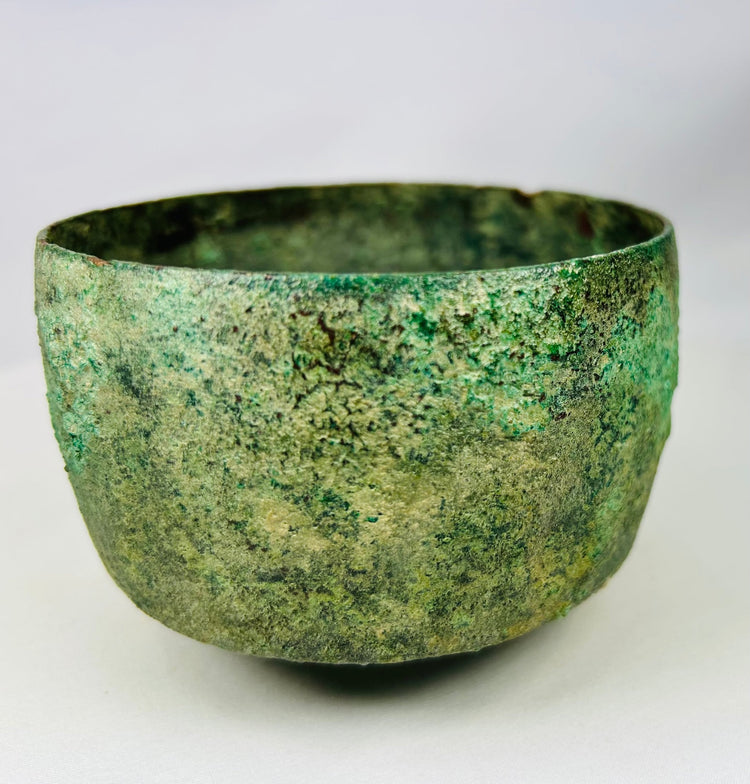
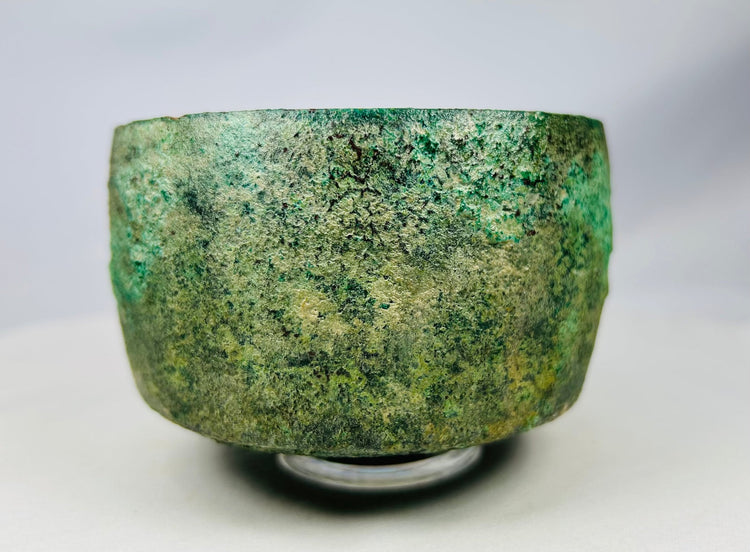
The vessel is thin-walled, with a smoothly convex and rounded body rising to a plain upright rim. It is undecorated and has no handle or applied ornament, emphasizing the restrained and functional form characteristic of small metal vessels associated with the Hoard Vase type from Susa.
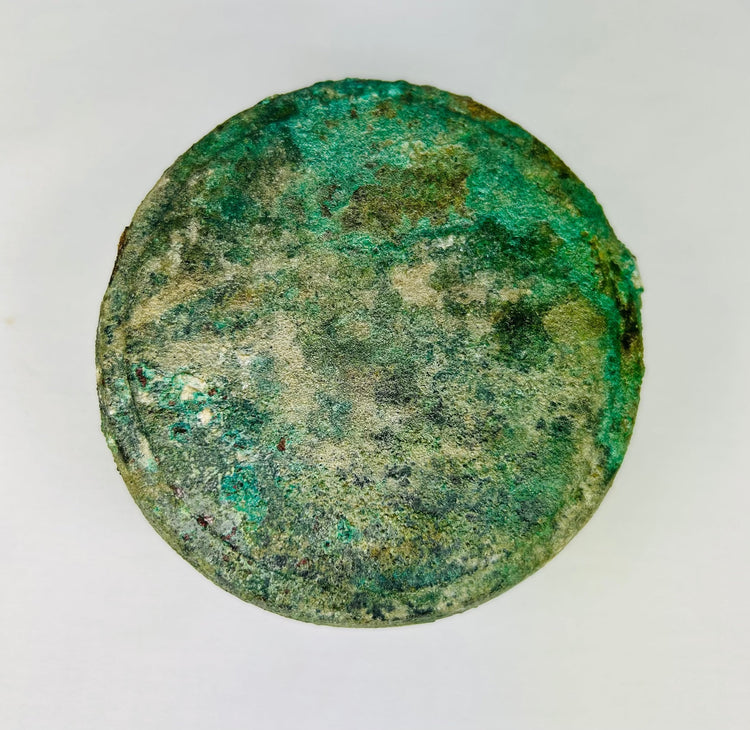
The surface displays an attractive mineralized green and turquoise patina, together with areas of light earthy encrustation developed over millennia. Its simple profile and thin construction provide an important example of early metal vessel production in ancient southwestern Iran.
Features
- Ancient Proto-Elamite copper-alloy bowl
- Excavation type associated with Susa IVA
- Thin-walled construction
- Convex rounded body
- Plain upright rim
- No handle or applied decoration
- Mineralized green and turquoise patina
- Light archaeological encrustation
- Comparable to small vessels of the Susa Hoard Vase type
Cultural Significance
Susa was one of the most important urban centres of ancient southwestern Iran and played a central role in the development of early Elamite civilization. Metal vessels from the Proto-Elamite period demonstrate the technical sophistication of early metalworkers and the growing importance of specialized craft production during the Early Bronze Age.
The form of this bowl corresponds to small vessels associated with the “Vase à la cachette” / Hoard Vase type from Susa, providing a useful archaeological comparison for its attribution and dating.
A comparable example is held by the Musée du Louvre, Department of Near Eastern Antiquities, from Susa, inventory SB 2723 27 (A 7223).
Condition
Ancient condition with mineralized green and turquoise patina, light earthy encrustation, and minor edge wear consistent with considerable age. The overall profile remains well preserved, with the plain rim and rounded body clearly defined.
Dimensions (Approximate)
Diameter: 4 in
Age (Approximate)
4,475 years old
Provenance
Acquired through the London art market during the 1980s. Subsequently held in a private collection in the United Kingdom during the 1990s, and later in a private collection in New York, New York, USA.
Expert Assessment: Examined by Luca Salvaggio, an Italian archaeologist specializing in ancient Mediterranean and Near Eastern material, with a Postgraduate Diploma from the Italian Archaeological School at Athens (IASA) and accreditation for preventive archaeology from the Italian Ministry of Culture (MiC). He attributed the copper-alloy bowl to Susa IVA, Proto-Elamite, Early Bronze Age, circa 2450 BCE, based on its thin-walled construction, convex rounded body, plain upright rim, and close correspondence with small vessels of the Susa Hoard Vase type.
Learn More
Explore a comparable ancient copper bowl from Susa, dating to circa 2450 BCE, at the Musée du Louvre
Browse our Collection of Middle Eastern Antiquities and Ancient Art
Description
Historical Context & Origin
Region: Susa, Southwestern Iran (Proto-Elamite, Susa IVA)
Material: Copper alloy
Period: Early Bronze Age, circa 2450 BCE
Description
This ancient copper-alloy bowl from Susa in southwestern Iran dates to the Proto-Elamite period, Susa IVA, circa 2450 BCE.
The vessel is thin-walled, with a smoothly convex and rounded body rising to a plain upright rim. It is undecorated and has no handle or applied ornament, emphasizing the restrained and functional form characteristic of small metal vessels associated with the Hoard Vase type from Susa.
The surface displays an attractive mineralized green and turquoise patina, together with areas of light earthy encrustation developed over millennia. Its simple profile and thin construction provide an important example of early metal vessel production in ancient southwestern Iran.
Features
- Ancient Proto-Elamite copper-alloy bowl
- Excavation type associated with Susa IVA
- Thin-walled construction
- Convex rounded body
- Plain upright rim
- No handle or applied decoration
- Mineralized green and turquoise patina
- Light archaeological encrustation
- Comparable to small vessels of the Susa Hoard Vase type
Cultural Significance
Susa was one of the most important urban centres of ancient southwestern Iran and played a central role in the development of early Elamite civilization. Metal vessels from the Proto-Elamite period demonstrate the technical sophistication of early metalworkers and the growing importance of specialized craft production during the Early Bronze Age.
The form of this bowl corresponds to small vessels associated with the “Vase à la cachette” / Hoard Vase type from Susa, providing a useful archaeological comparison for its attribution and dating.
A comparable example is held by the Musée du Louvre, Department of Near Eastern Antiquities, from Susa, inventory SB 2723 27 (A 7223).
Condition
Ancient condition with mineralized green and turquoise patina, light earthy encrustation, and minor edge wear consistent with considerable age. The overall profile remains well preserved, with the plain rim and rounded body clearly defined.
Dimensions (Approximate)
Diameter: 4 in
Age (Approximate)
4,475 years old
Provenance
Acquired through the London art market during the 1980s. Subsequently held in a private collection in the United Kingdom during the 1990s, and later in a private collection in New York, New York, USA.
Expert Assessment: Examined by Luca Salvaggio, an Italian archaeologist specializing in ancient Mediterranean and Near Eastern material, with a Postgraduate Diploma from the Italian Archaeological School at Athens (IASA) and accreditation for preventive archaeology from the Italian Ministry of Culture (MiC). He attributed the copper-alloy bowl to Susa IVA, Proto-Elamite, Early Bronze Age, circa 2450 BCE, based on its thin-walled construction, convex rounded body, plain upright rim, and close correspondence with small vessels of the Susa Hoard Vase type.
Learn More
Explore a comparable ancient copper bowl from Susa, dating to circa 2450 BCE, at the Musée du Louvre
Browse our Collection of Middle Eastern Antiquities and Ancient Art
You May Also Like
