

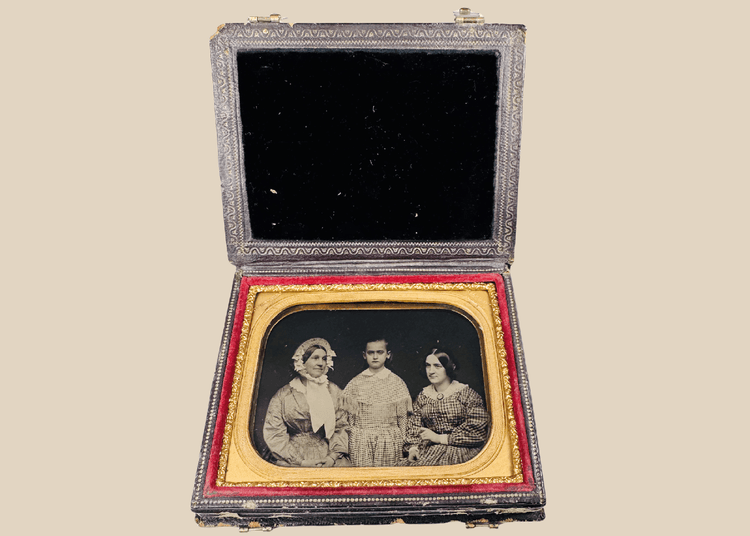
Quarter Plate Rehn Ambrotype of Three Female Sitters in Leatherette Presentation Case | Circa 1855 – 1865
Couldn't load pickup availability


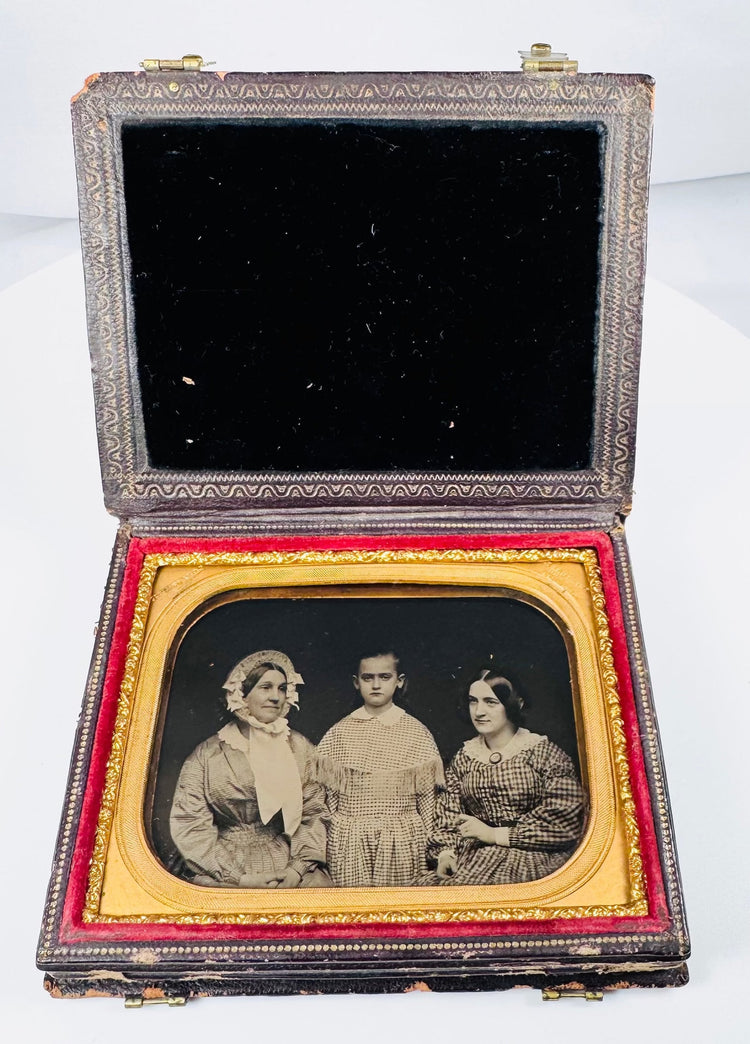
Quarter Plate Rehn Ambrotype of Three Female Sitters in Leatherette Presentation Case | Circa 1855 – 1865
Description
More
Less
Historical Context & Origin
Region: United States or Western Europe
Material: Glass ambrotype photograph, gilt brass mat and preserver, velvet-lined leatherette presentation case
Period: Mid-19th Century CE, circa 1855–1865
Description
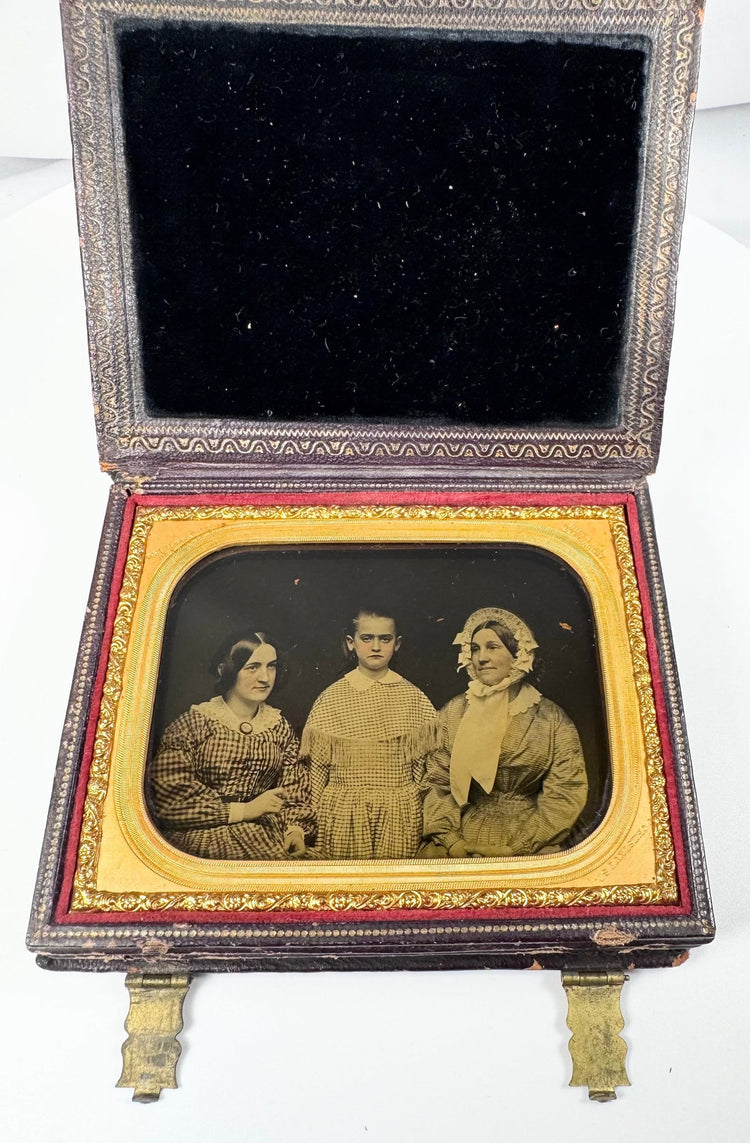
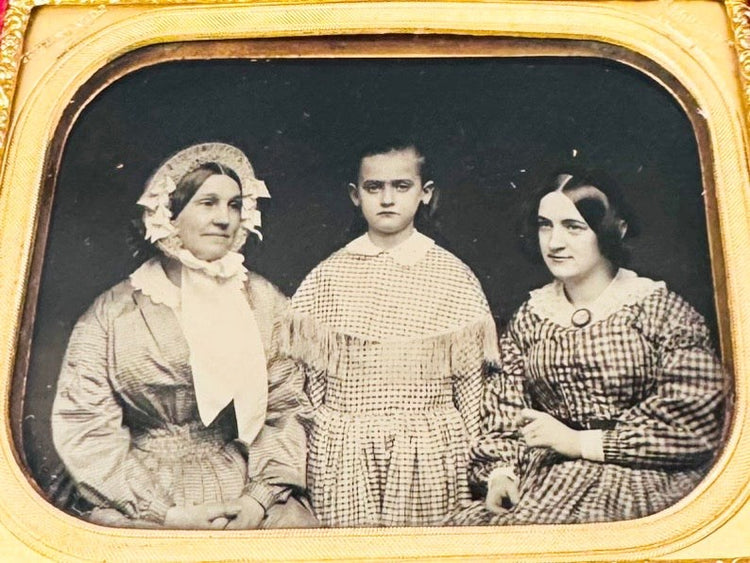
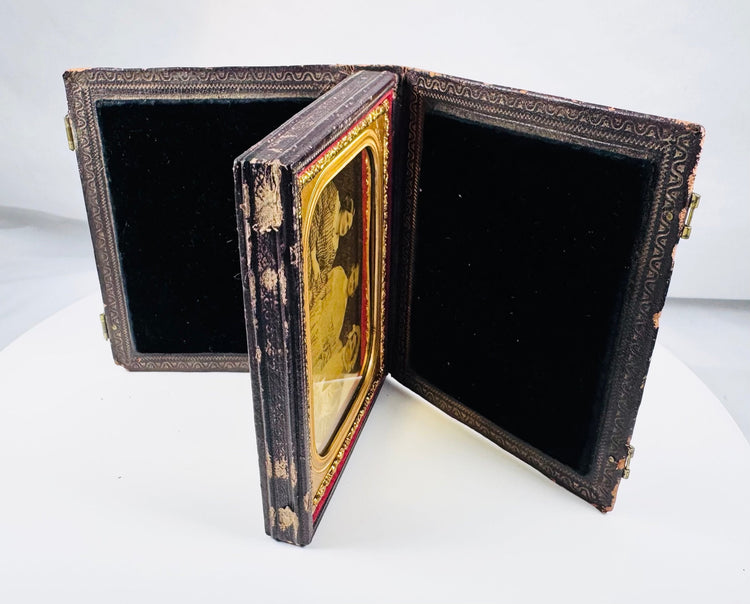
This evocative quarter-plate Rehn ambrotype depicts three female sitters posed in a formal studio setting during the golden age of nineteenth-century photography. Housed within its original leatherette presentation case, the composition captures an intimate family grouping centered around a young girl dressed in a finely patterned gingham dress adorned with decorative fringe. Her solemn expression contrasts with the composed demeanors of the two older women seated at either side, suggesting a carefully staged portrait intended to commemorate familial bonds.
The woman seated to one side wears an elaborate bonnet with layered fabric and long ribbon ties extending to her lap, while the other is attired in a similarly styled checkered dress accented by a brooch at her collar. Their garments, hairstyles, and accessories reflect the fashions of the 1850s and early 1860s, a period during which ambrotypes became one of the most popular and affordable forms of portraiture in North America and Europe.
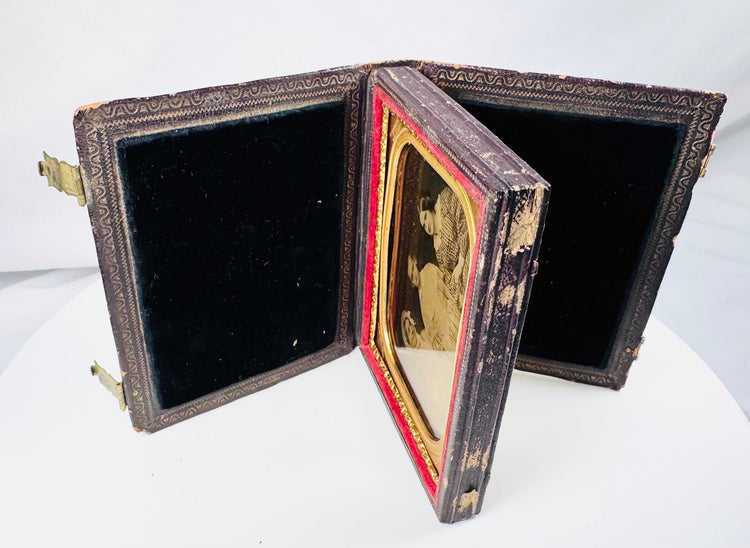
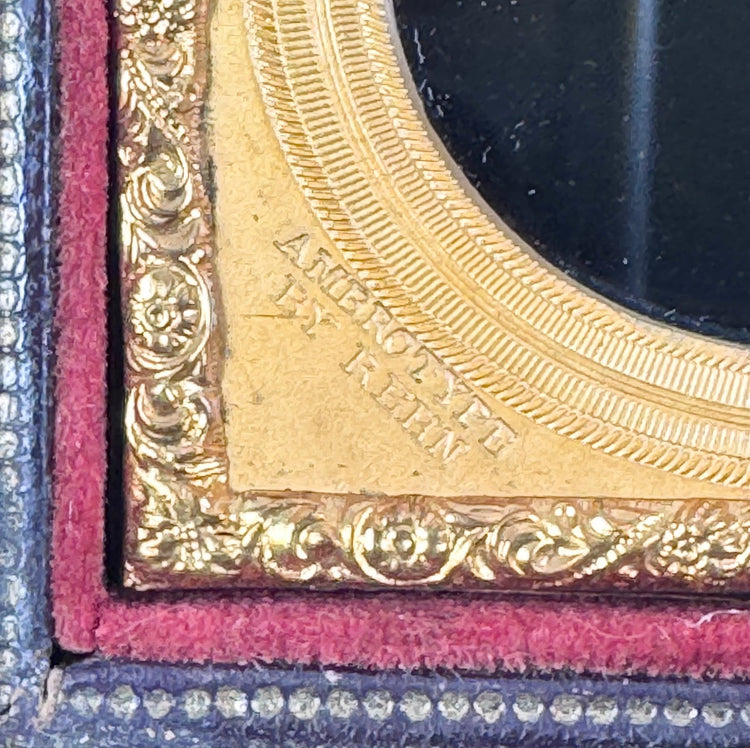
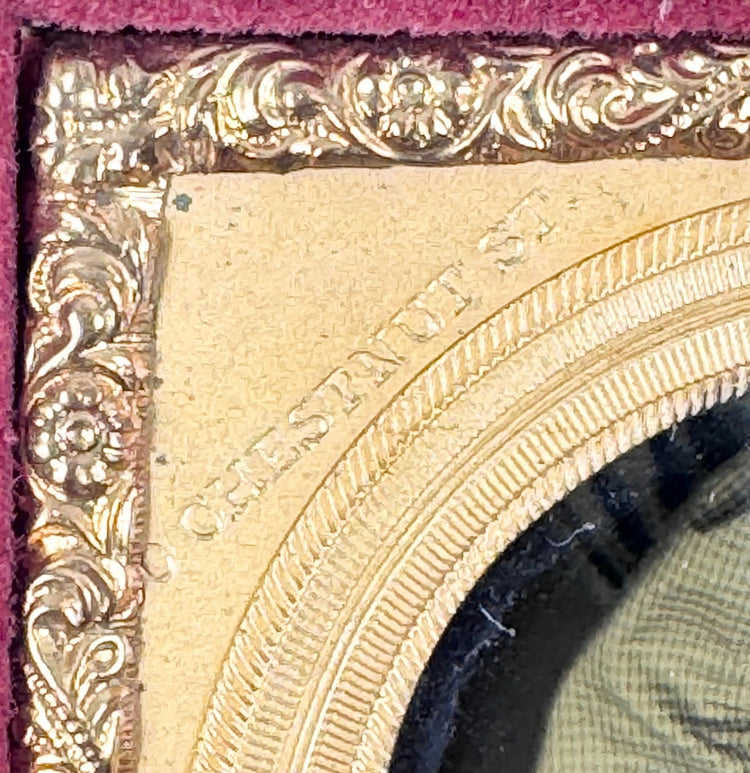
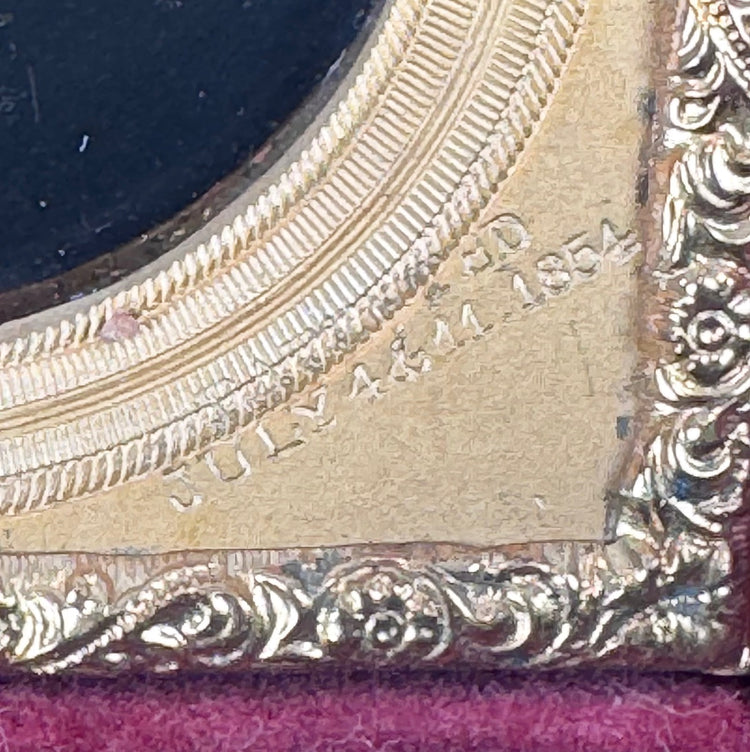
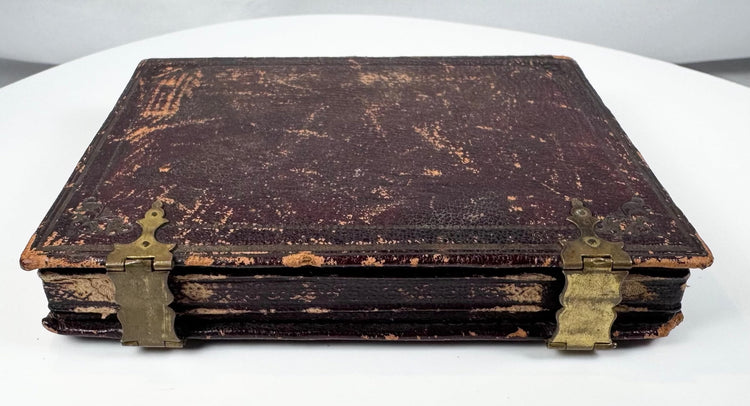
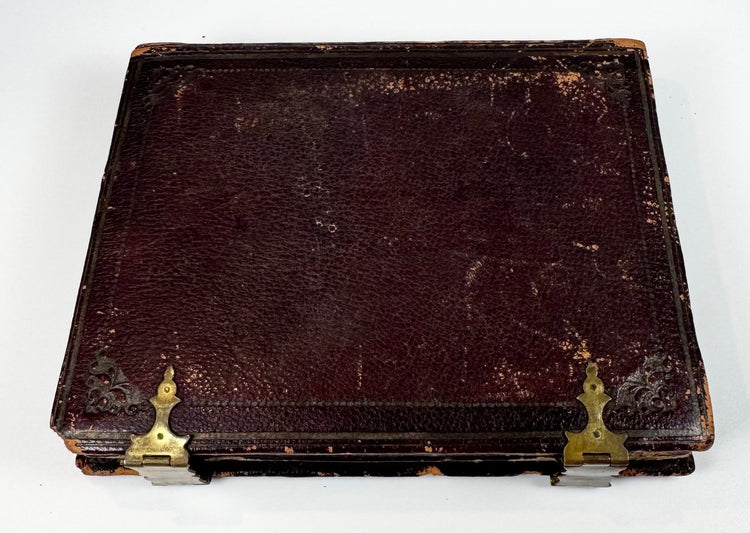
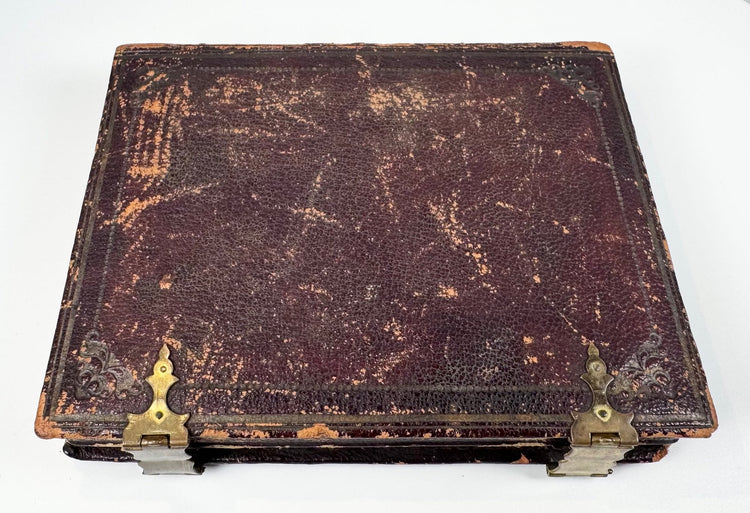
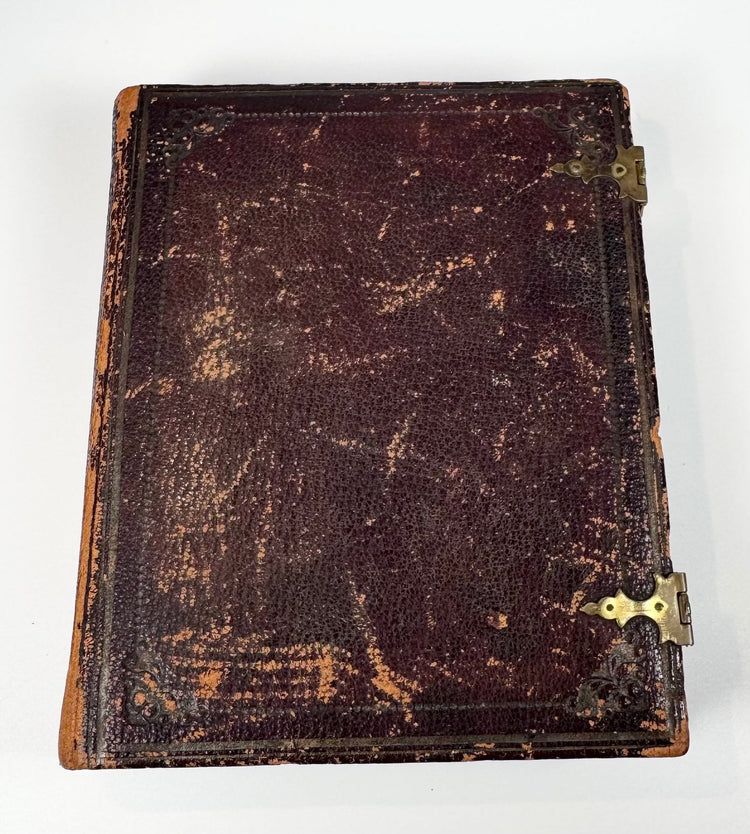
The image is housed behind its original gilt brass mat and preserver, bearing the maker's marks “Chester’s Patent” and “Anthony's Patent,” both prominent manufacturers associated with mid-nineteenth-century photographic cases and mounts. The photograph remains mounted within a finely constructed leatherette-covered case lined in deep velvet, complete with its original brass clasps and decorative metal corner elements. The reverse compartment retains its original velvet lining, creating an elegant presentation characteristic of period photographic keepsakes.
Features
- Authentic quarter-plate Rehn ambrotype portrait
- Depicts three female sitters in period dress
- Mid-19th century studio portrait, circa 1855–1865
- Original gilt brass mat and preserver
- Retains visible “Chester’s Patent” and “Anthony’s Patent” markings
- Housed in its original velvet-lined leatherette case
- Original brass clasps and decorative metal fittings present
- Finely detailed clothing, bonnet, and jewelry visible
- Excellent example of Victorian-era family photography
Cultural Significance
Ambrotypes emerged in the 1850s as an accessible alternative to daguerreotypes, allowing families to commission durable likenesses at a lower cost. Portraits such as this served not merely as photographs but as treasured heirlooms, preserving the identities and relationships of loved ones in an era before mass photography. Family group portraits remain especially desirable today for their historical value and the insights they provide into Victorian fashion, social customs, and domestic life.
The attribution to Rehn photography connects the piece to one of the many studios that flourished during the rapid expansion of photographic technology in the nineteenth century. Encased portraits of this quality were often displayed prominently within the home and passed down through generations.
Condition
The ambrotype remains well preserved overall and retains strong visual contrast. Minor age-related wear, scattered surface marks, and light imperfections are present, consistent with age and handling. The gilt brass mat and preserver exhibit expected toning and wear. The leatherette case displays rubbing, losses to the exterior finish, and edge wear, while the interior velvet lining remains largely intact. The original brass clasps and hinges remain present and functional.
Dimensions (Approximate)
Height: 4 in
Width: 4.8 in
Depth: 0.75 in
Age (Approximate)
160–170 years old
Provenance
From a substantial private collection of nineteenth and early twentieth-century photography assembled in Columbus, Ohio, USA. The collection was formed over many decades and comprised a wide range of photographic processes, including daguerreotypes, ambrotypes, tintypes, cabinet cards, cartes de visite, and related photographic ephemera.
Learn More
Discover how early photographic processes shaped Victorian portraiture through the National Museums Scotland
Browse our curated Collection of Victorian Artifacts & Historic Relics
Description
Historical Context & Origin
Region: United States or Western Europe
Material: Glass ambrotype photograph, gilt brass mat and preserver, velvet-lined leatherette presentation case
Period: Mid-19th Century CE, circa 1855–1865
Description
This evocative quarter-plate Rehn ambrotype depicts three female sitters posed in a formal studio setting during the golden age of nineteenth-century photography. Housed within its original leatherette presentation case, the composition captures an intimate family grouping centered around a young girl dressed in a finely patterned gingham dress adorned with decorative fringe. Her solemn expression contrasts with the composed demeanors of the two older women seated at either side, suggesting a carefully staged portrait intended to commemorate familial bonds.
The woman seated to one side wears an elaborate bonnet with layered fabric and long ribbon ties extending to her lap, while the other is attired in a similarly styled checkered dress accented by a brooch at her collar. Their garments, hairstyles, and accessories reflect the fashions of the 1850s and early 1860s, a period during which ambrotypes became one of the most popular and affordable forms of portraiture in North America and Europe.
The image is housed behind its original gilt brass mat and preserver, bearing the maker's marks “Chester’s Patent” and “Anthony's Patent,” both prominent manufacturers associated with mid-nineteenth-century photographic cases and mounts. The photograph remains mounted within a finely constructed leatherette-covered case lined in deep velvet, complete with its original brass clasps and decorative metal corner elements. The reverse compartment retains its original velvet lining, creating an elegant presentation characteristic of period photographic keepsakes.
Features
- Authentic quarter-plate Rehn ambrotype portrait
- Depicts three female sitters in period dress
- Mid-19th century studio portrait, circa 1855–1865
- Original gilt brass mat and preserver
- Retains visible “Chester’s Patent” and “Anthony’s Patent” markings
- Housed in its original velvet-lined leatherette case
- Original brass clasps and decorative metal fittings present
- Finely detailed clothing, bonnet, and jewelry visible
- Excellent example of Victorian-era family photography
Cultural Significance
Ambrotypes emerged in the 1850s as an accessible alternative to daguerreotypes, allowing families to commission durable likenesses at a lower cost. Portraits such as this served not merely as photographs but as treasured heirlooms, preserving the identities and relationships of loved ones in an era before mass photography. Family group portraits remain especially desirable today for their historical value and the insights they provide into Victorian fashion, social customs, and domestic life.
The attribution to Rehn photography connects the piece to one of the many studios that flourished during the rapid expansion of photographic technology in the nineteenth century. Encased portraits of this quality were often displayed prominently within the home and passed down through generations.
Condition
The ambrotype remains well preserved overall and retains strong visual contrast. Minor age-related wear, scattered surface marks, and light imperfections are present, consistent with age and handling. The gilt brass mat and preserver exhibit expected toning and wear. The leatherette case displays rubbing, losses to the exterior finish, and edge wear, while the interior velvet lining remains largely intact. The original brass clasps and hinges remain present and functional.
Dimensions (Approximate)
Height: 4 in
Width: 4.8 in
Depth: 0.75 in
Age (Approximate)
160–170 years old
Provenance
From a substantial private collection of nineteenth and early twentieth-century photography assembled in Columbus, Ohio, USA. The collection was formed over many decades and comprised a wide range of photographic processes, including daguerreotypes, ambrotypes, tintypes, cabinet cards, cartes de visite, and related photographic ephemera.
Learn More
Discover how early photographic processes shaped Victorian portraiture through the National Museums Scotland
Browse our curated Collection of Victorian Artifacts & Historic Relics
You May Also Like
