

Rapa Nui-Inspired Skeletal Ancestor Carving | Polynesian Wood Sculpture | Early 20th Century
Couldn't load pickup availability


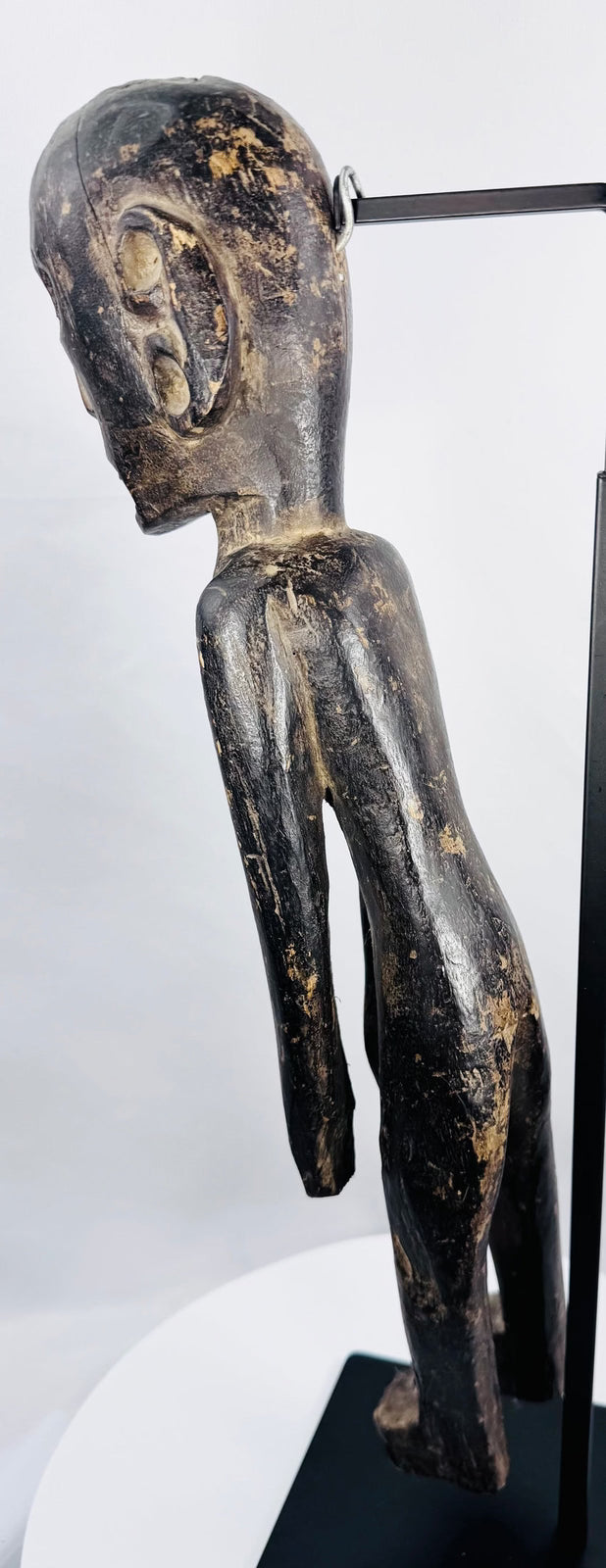
Rapa Nui-Inspired Skeletal Ancestor Carving | Polynesian Wood Sculpture | Early 20th Century
Description
More
Less
Historical Context & Origin
Region: Polynesia, Rapa Nui (Easter Island), Rapa Nui-inspired tradition
Material: Hand-carved hardwood with dark surface stain/wash
Period: Likely Early 20th Century
Description
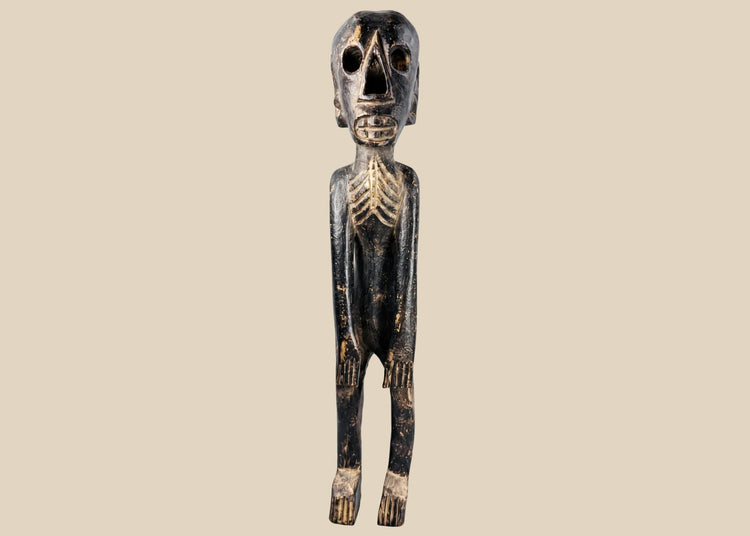
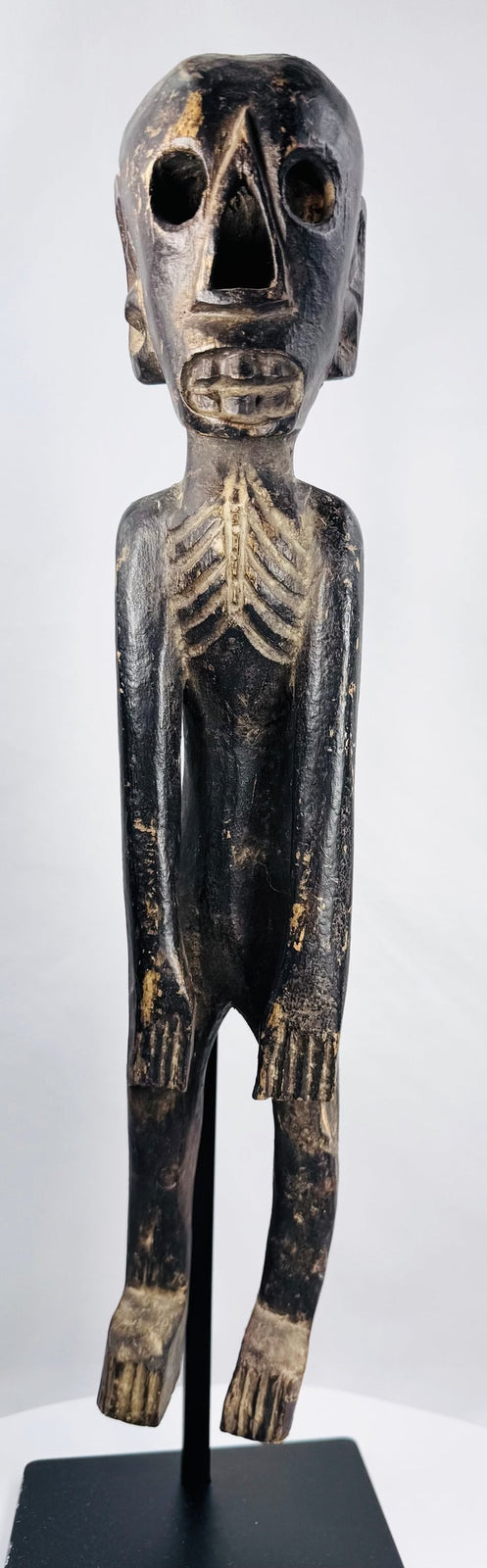
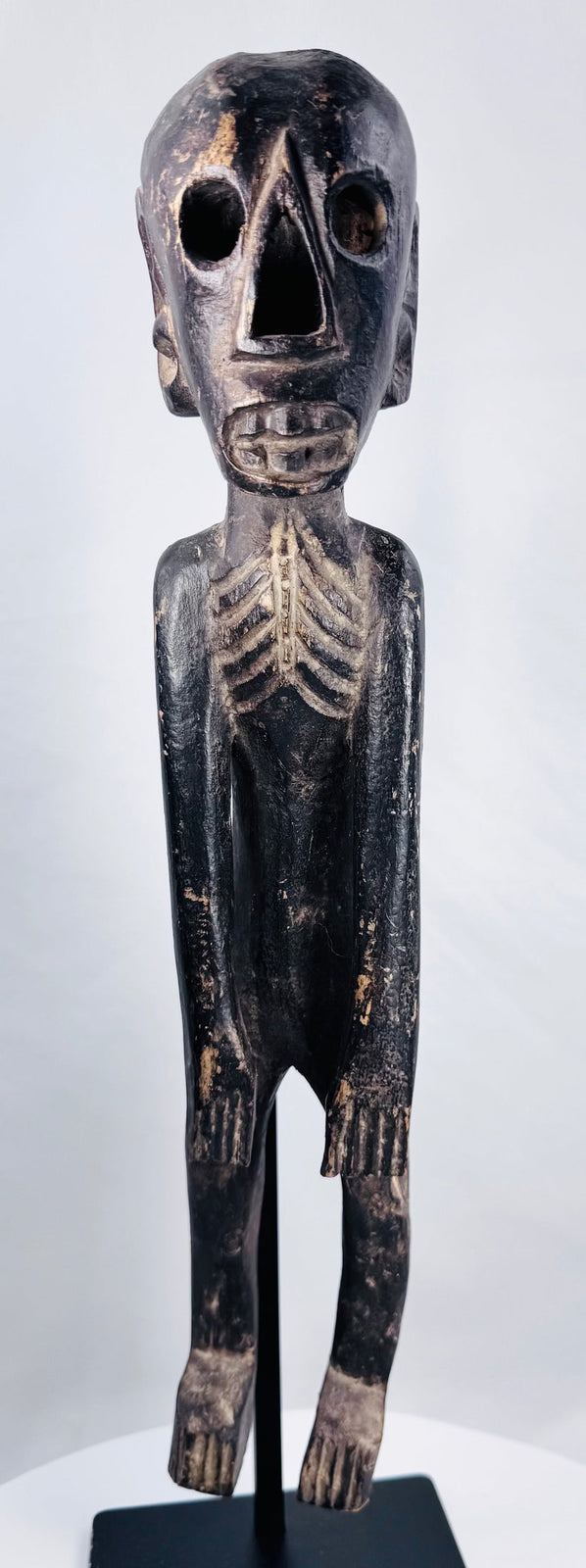
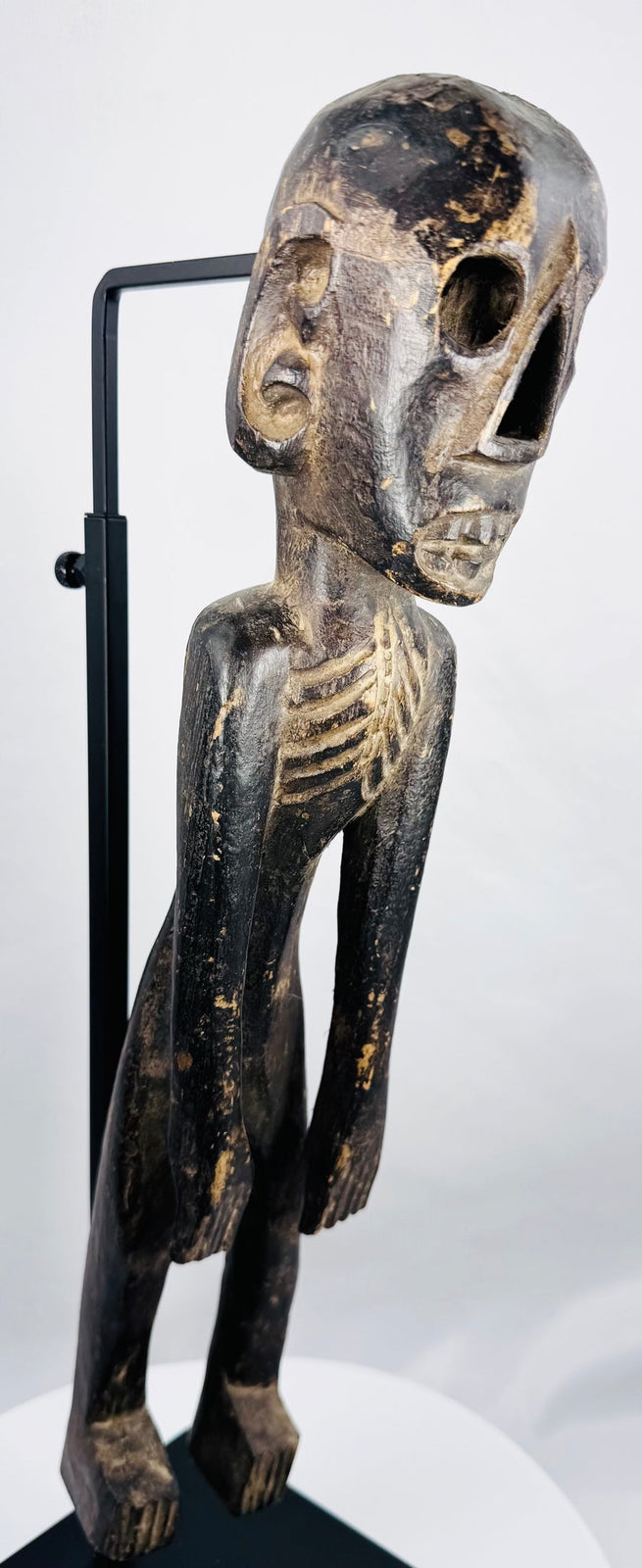
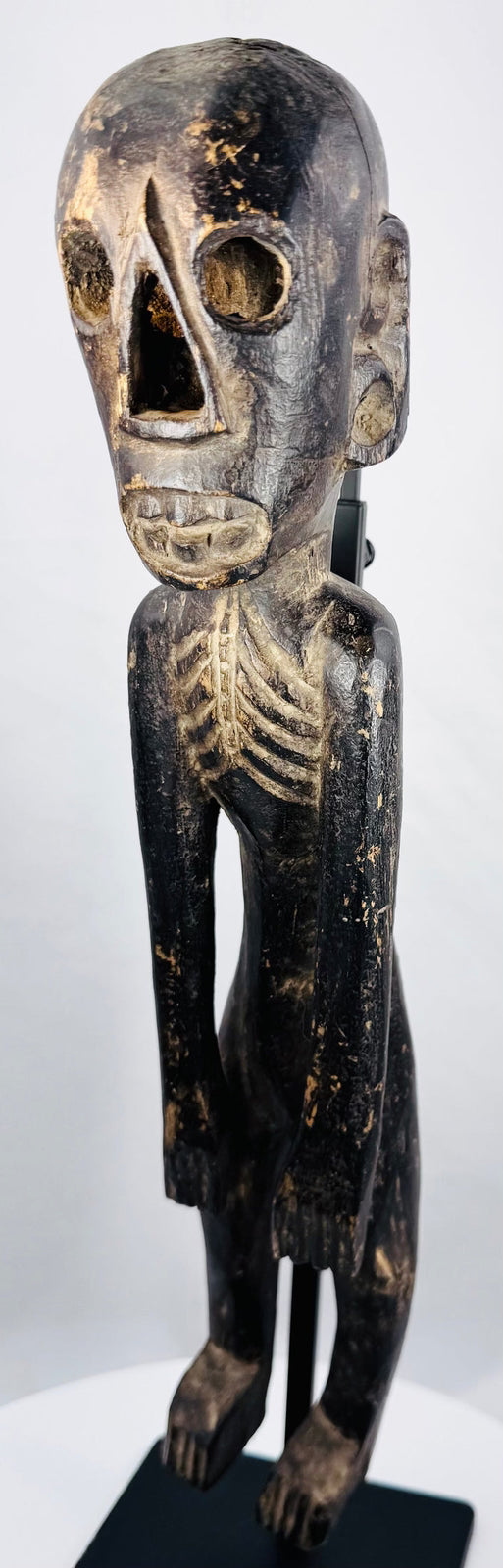
This striking hand-carved wooden sculpture depicts an elongated skeletal human form inspired by the celebrated moai kavakava figures of Rapa Nui (Easter Island), one of the most distinctive sculptural traditions of Polynesia.
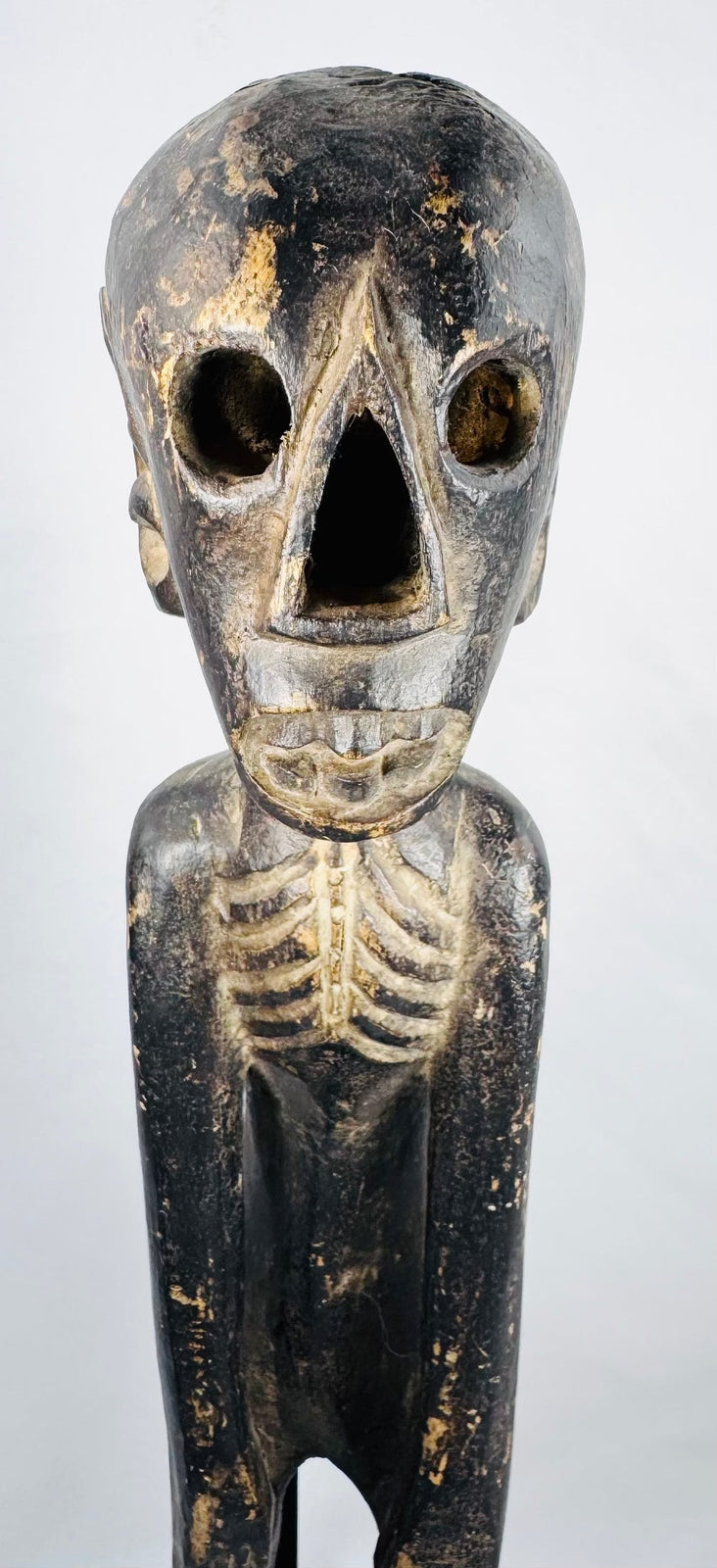
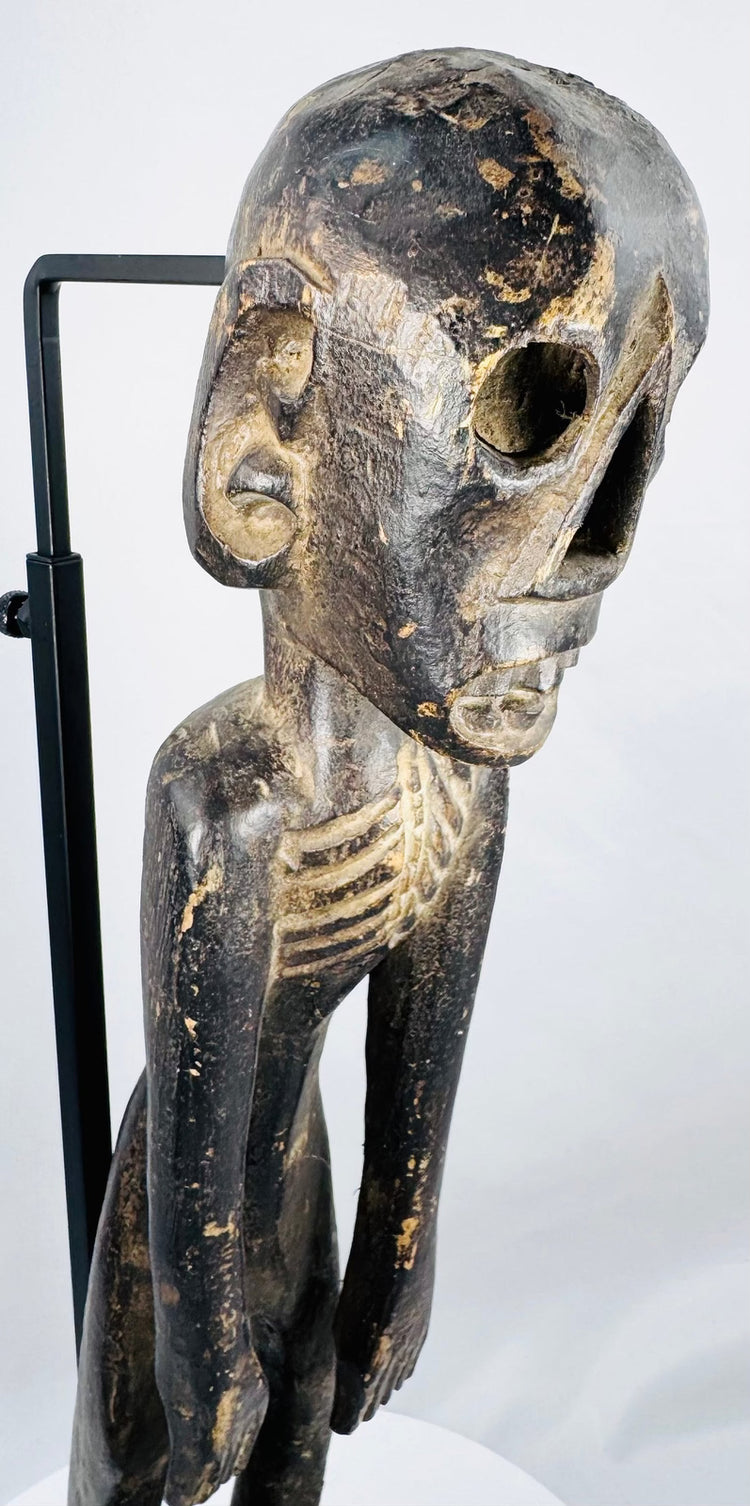
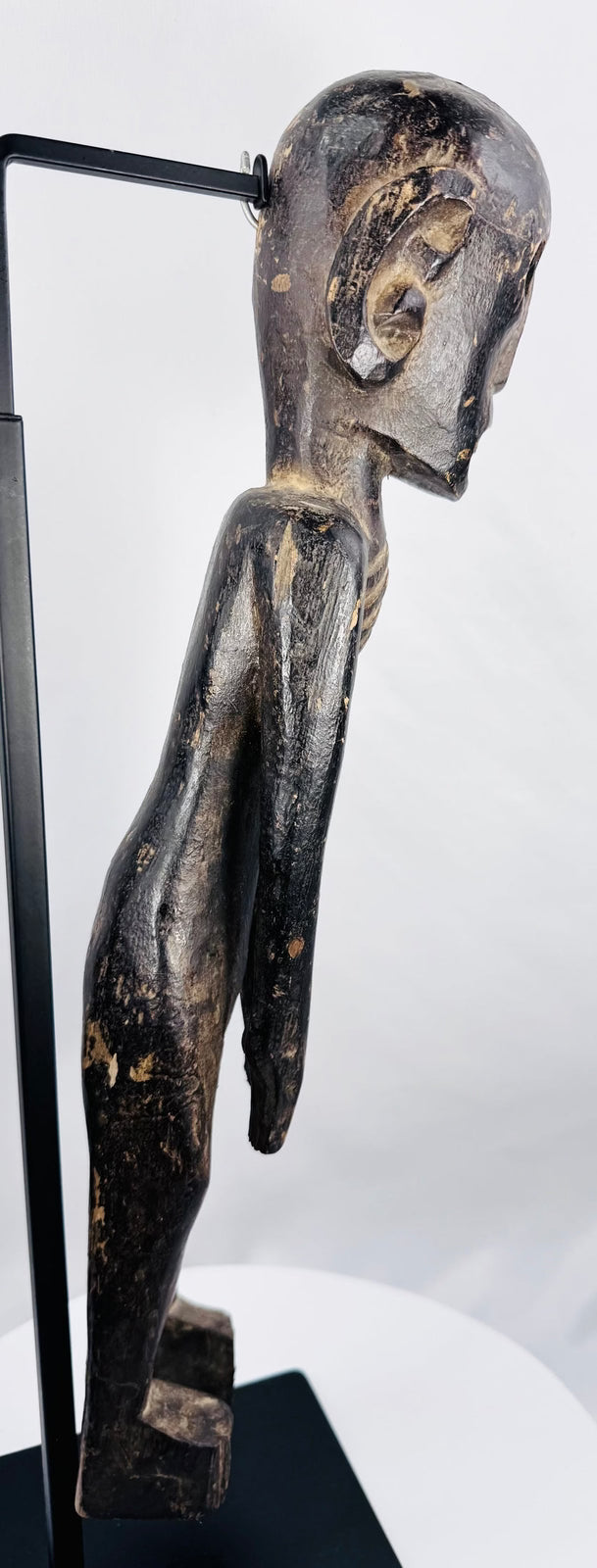
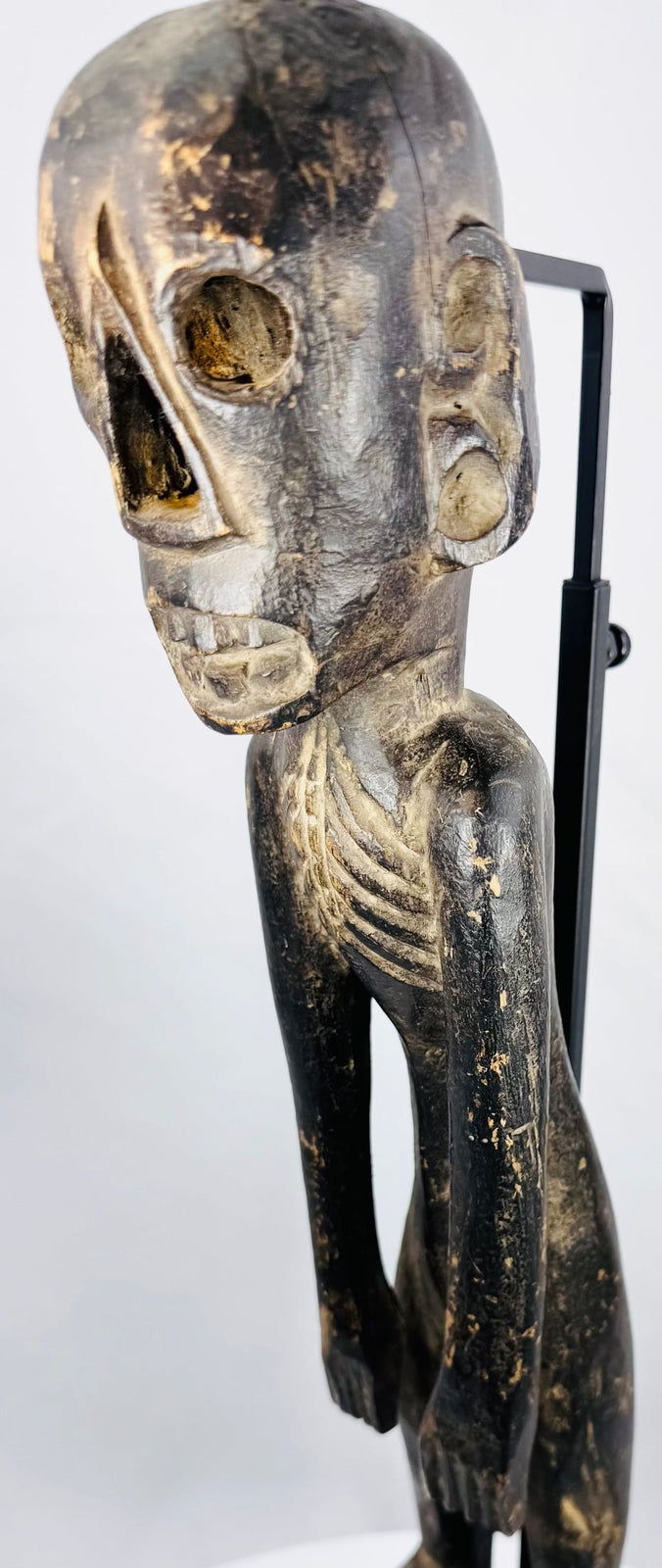
The figure is characterized by an exaggerated skull-like head with deeply recessed circular eye sockets, a long angular nose with an open central cavity, exposed teeth, prominent ears, and a dramatically rendered skeletal torso. The chest is carved with a clearly articulated sternum and curving, chevron-patterned ribs, deliberately emphasizing the emaciated appearance of the body. Long, slender arms extend vertically along the sides, terminating in individually incised fingers, while the narrow legs continue downward to simply carved feet.
While drawing directly from the visual language of classic Rapa Nui moai kavakava—traditionally associated with ancestors and supernatural spirits (akuaku)—this piece presents a simplified and semi-abstract interpretation of the tradition. It omits certain classic ethnographic features such as bone or obsidian eye inlays and carved goatees, focusing instead on stark geometry and strong graphic form.
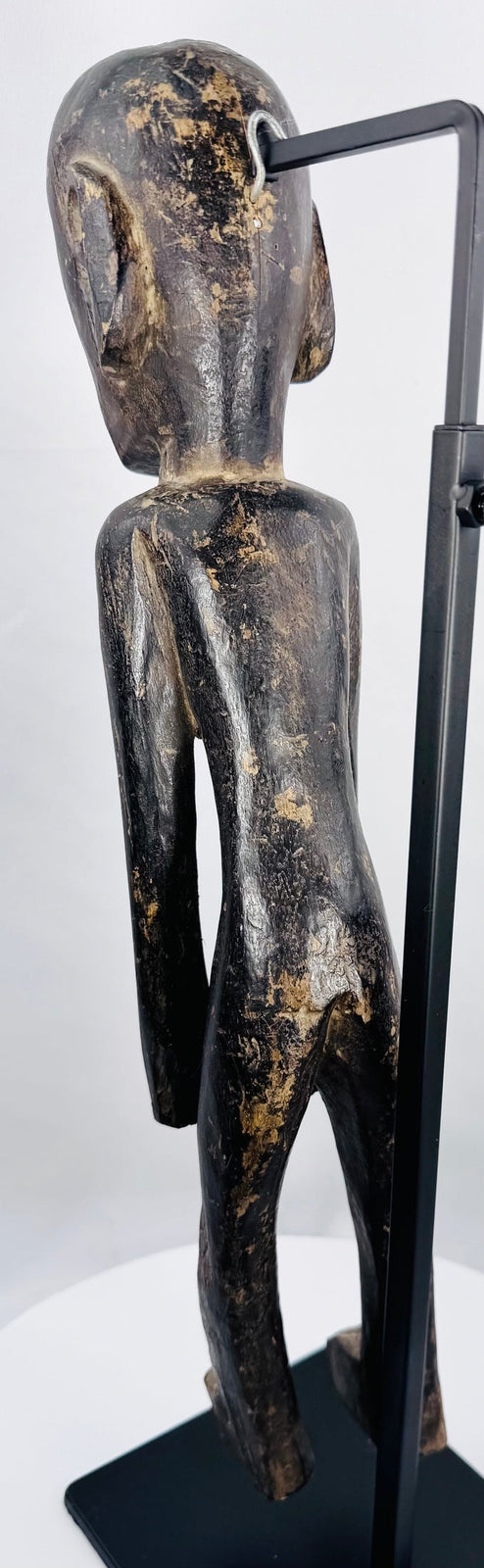
The sculpture is rendered in a lighter hardwood finished with a dark surface stain or wash. Handling and display have created pronounced rubbing and abrasions along high points—such as the forehead, nose, ribs, knees, and hands—exposing the lighter raw wood beneath and creating an attractive contrast between the dark recessed areas and the worn highlights.
Features
- Dramatically enlarged skull-like head
- Deeply recessed hollow eye sockets (carved without inlays)
- Long angular openwork nose and exposed, incised teeth
- Prominently carved sternum and chevron rib cage
- Semi-abstract, stylized interpretation of traditional Rapa Nui iconography
- Exceptionally elongated arms and legs with incised fingers and toes
- Hand-carved hardwood with dark stain/wash over lighter wood
- Pronounced high-point wear and rubbing revealing underlying wood grain
Cultural Significance
The moai kavakava represent one of the most recognizable forms of traditional Rapa Nui wood sculpture. Their name incorporates the Rapa Nui word referring to ribs, reflecting the unusually prominent rib cages and emaciated anatomy that define the form.
Historic accounts and surviving museum examples associate these figures with ancestors, spirits, and ceremonial practices. Some were carried or suspended from the body during important communal occasions, while others were kept within houses when not in use. Their skeletal anatomy connected them visually with death and the ancestral realm while retaining a powerful sense of supernatural vitality.
Condition
The sculpture remains in good overall condition with extensive surface wear consistent with age, handling, and display. There are scratches, abrasions, rubbing, small chips, minor cracking, and scattered finish loss throughout. The high points of the carving exhibit pronounced wear where the dark surface stain has worn away to reveal the lighter underlying hardwood. The eye sockets and nasal opening are intentionally deeply hollowed as part of the original design. Mounted on a modern black display stand.
Dimensions (Approximate)
Height: 17 in
Width: 3.5 in
Age (Approximate)
100–125 years old
Provenance
Formerly part of a Toronto, ON, Canada, older private collection assembled around African artifacts, tribal art, and ethnographic material.
Learn More
Discover a traditional Rapa Nui moai kavakava figure in the collection of the Metropolitan Museum of Art
Explore our Collection of Cultural & Ethnographic Artifacts
Description
Historical Context & Origin
Region: Polynesia, Rapa Nui (Easter Island), Rapa Nui-inspired tradition
Material: Hand-carved hardwood with dark surface stain/wash
Period: Likely Early 20th Century
Description
This striking hand-carved wooden sculpture depicts an elongated skeletal human form inspired by the celebrated moai kavakava figures of Rapa Nui (Easter Island), one of the most distinctive sculptural traditions of Polynesia.
The figure is characterized by an exaggerated skull-like head with deeply recessed circular eye sockets, a long angular nose with an open central cavity, exposed teeth, prominent ears, and a dramatically rendered skeletal torso. The chest is carved with a clearly articulated sternum and curving, chevron-patterned ribs, deliberately emphasizing the emaciated appearance of the body. Long, slender arms extend vertically along the sides, terminating in individually incised fingers, while the narrow legs continue downward to simply carved feet.
While drawing directly from the visual language of classic Rapa Nui moai kavakava—traditionally associated with ancestors and supernatural spirits (akuaku)—this piece presents a simplified and semi-abstract interpretation of the tradition. It omits certain classic ethnographic features such as bone or obsidian eye inlays and carved goatees, focusing instead on stark geometry and strong graphic form.
The sculpture is rendered in a lighter hardwood finished with a dark surface stain or wash. Handling and display have created pronounced rubbing and abrasions along high points—such as the forehead, nose, ribs, knees, and hands—exposing the lighter raw wood beneath and creating an attractive contrast between the dark recessed areas and the worn highlights.
Features
- Dramatically enlarged skull-like head
- Deeply recessed hollow eye sockets (carved without inlays)
- Long angular openwork nose and exposed, incised teeth
- Prominently carved sternum and chevron rib cage
- Semi-abstract, stylized interpretation of traditional Rapa Nui iconography
- Exceptionally elongated arms and legs with incised fingers and toes
- Hand-carved hardwood with dark stain/wash over lighter wood
- Pronounced high-point wear and rubbing revealing underlying wood grain
Cultural Significance
The moai kavakava represent one of the most recognizable forms of traditional Rapa Nui wood sculpture. Their name incorporates the Rapa Nui word referring to ribs, reflecting the unusually prominent rib cages and emaciated anatomy that define the form.
Historic accounts and surviving museum examples associate these figures with ancestors, spirits, and ceremonial practices. Some were carried or suspended from the body during important communal occasions, while others were kept within houses when not in use. Their skeletal anatomy connected them visually with death and the ancestral realm while retaining a powerful sense of supernatural vitality.
Condition
The sculpture remains in good overall condition with extensive surface wear consistent with age, handling, and display. There are scratches, abrasions, rubbing, small chips, minor cracking, and scattered finish loss throughout. The high points of the carving exhibit pronounced wear where the dark surface stain has worn away to reveal the lighter underlying hardwood. The eye sockets and nasal opening are intentionally deeply hollowed as part of the original design. Mounted on a modern black display stand.
Dimensions (Approximate)
Height: 17 in
Width: 3.5 in
Age (Approximate)
100–125 years old
Provenance
Formerly part of a Toronto, ON, Canada, older private collection assembled around African artifacts, tribal art, and ethnographic material.
Learn More
Discover a traditional Rapa Nui moai kavakava figure in the collection of the Metropolitan Museum of Art
Explore our Collection of Cultural & Ethnographic Artifacts
You May Also Like
