

Roman Pale Green Glass Unguentarium | Circa 1st – 3rd Century CE
Couldn't load pickup availability


Roman Pale Green Glass Unguentarium | Circa 1st – 3rd Century CE
Description
More
Less
Historical Context & Origin
Region: Roman Empire, likely Eastern Mediterranean
Material: Blown green glass
Period: Roman Imperial Period, circa 1st–3rd Century CE
Description
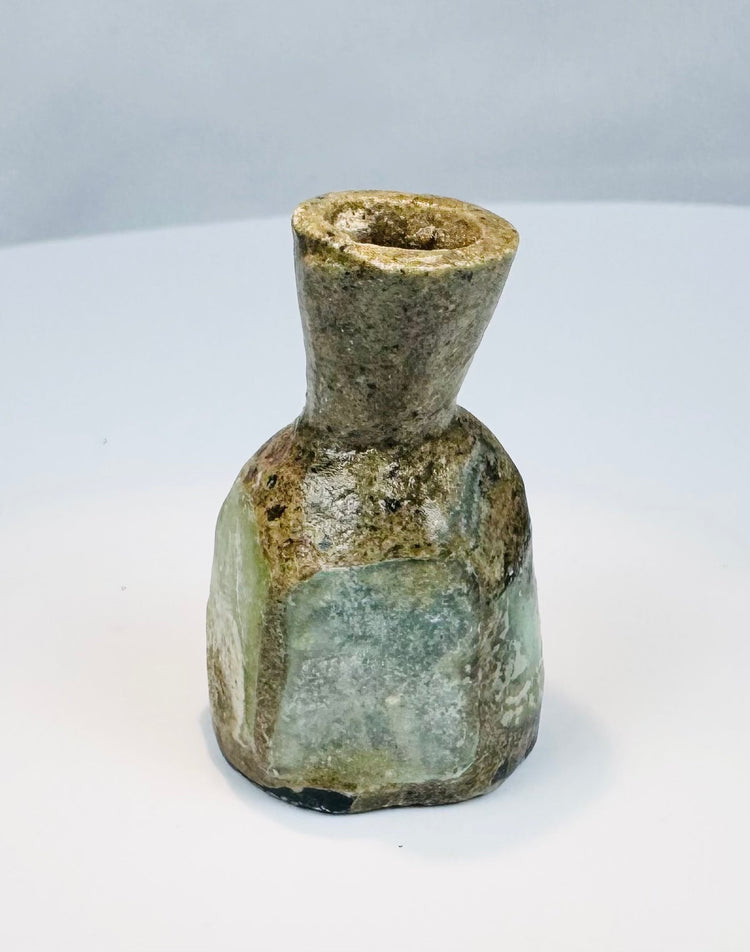
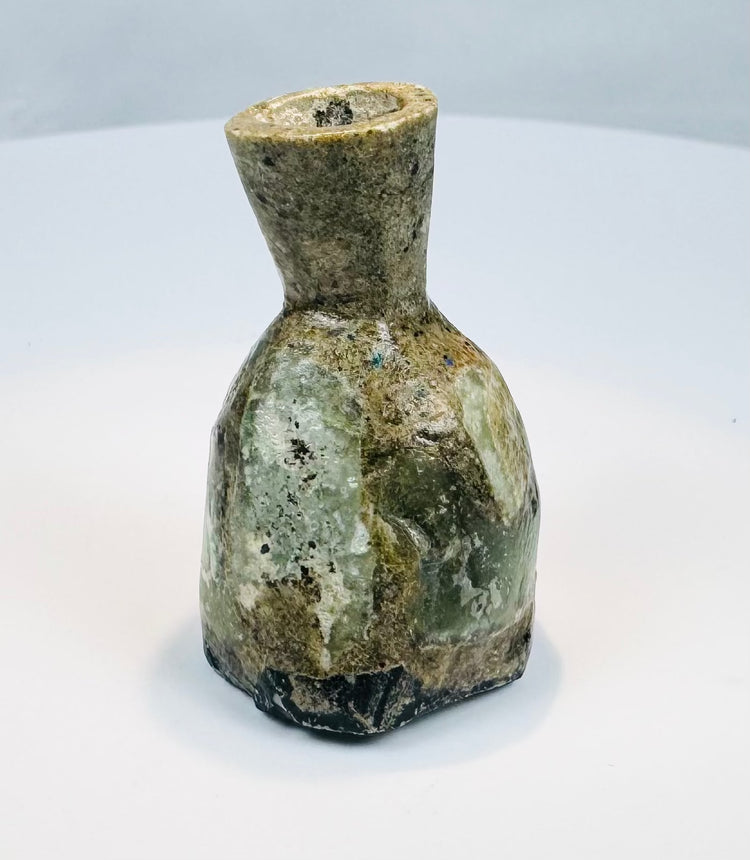
This small ancient glass vessel is consistent with a Roman unguentarium or miniature flask intended for the storage of perfume, scented oil, cosmetics, medicines, or other precious liquids. Roman glass vessels of this general type were produced throughout the Imperial period and have been recovered across the Mediterranean world, including Italy, Egypt, Cyprus, and the Levant. Museum collections document related greenish glass unguentaria dating broadly from the first through third centuries CE.
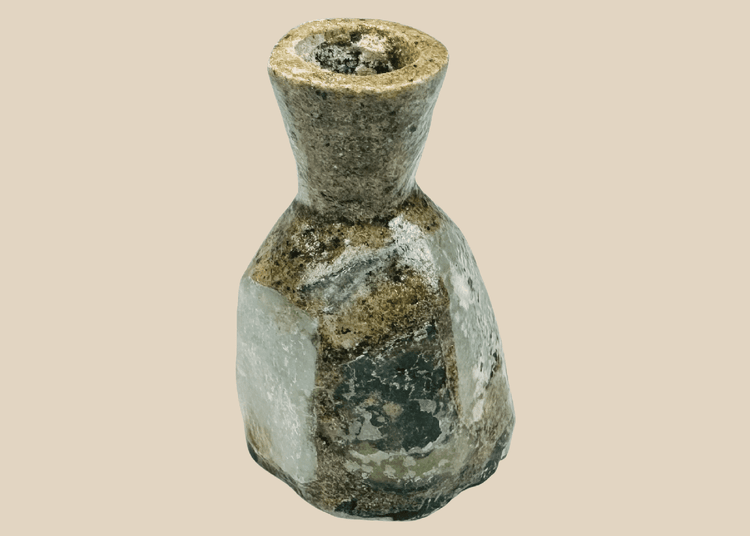
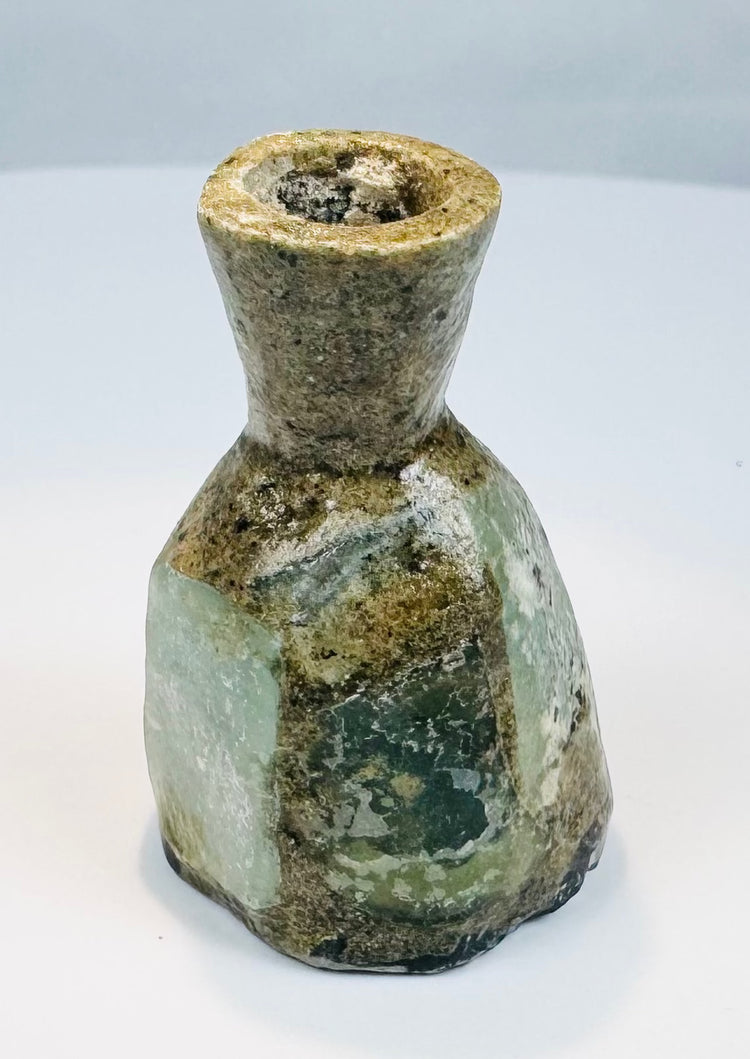
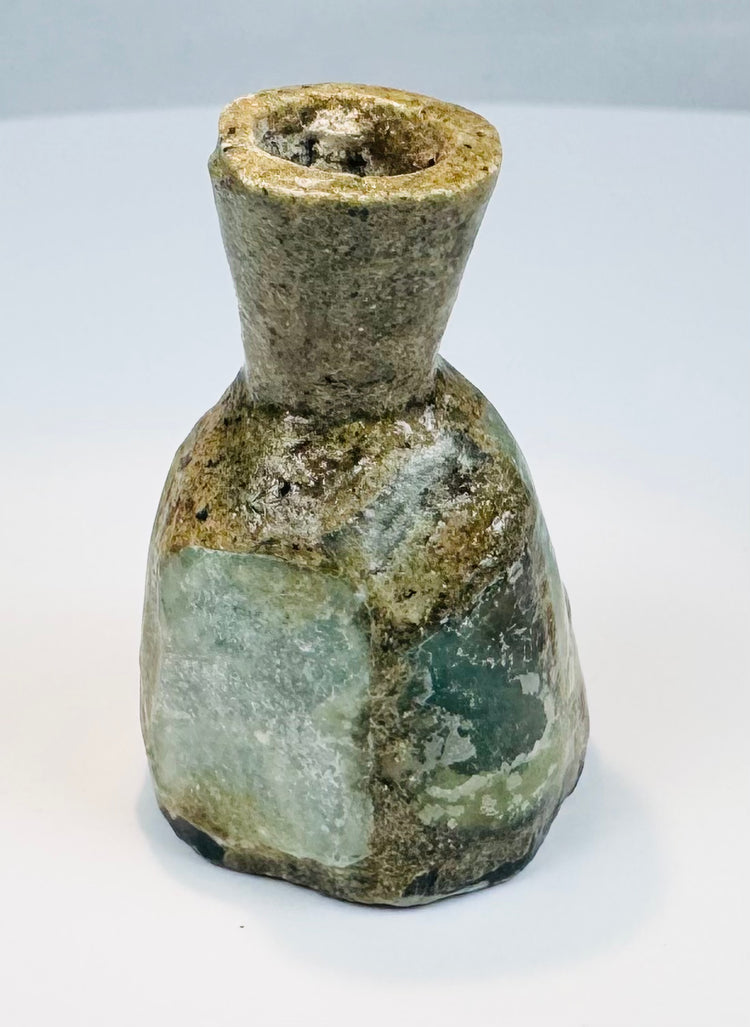
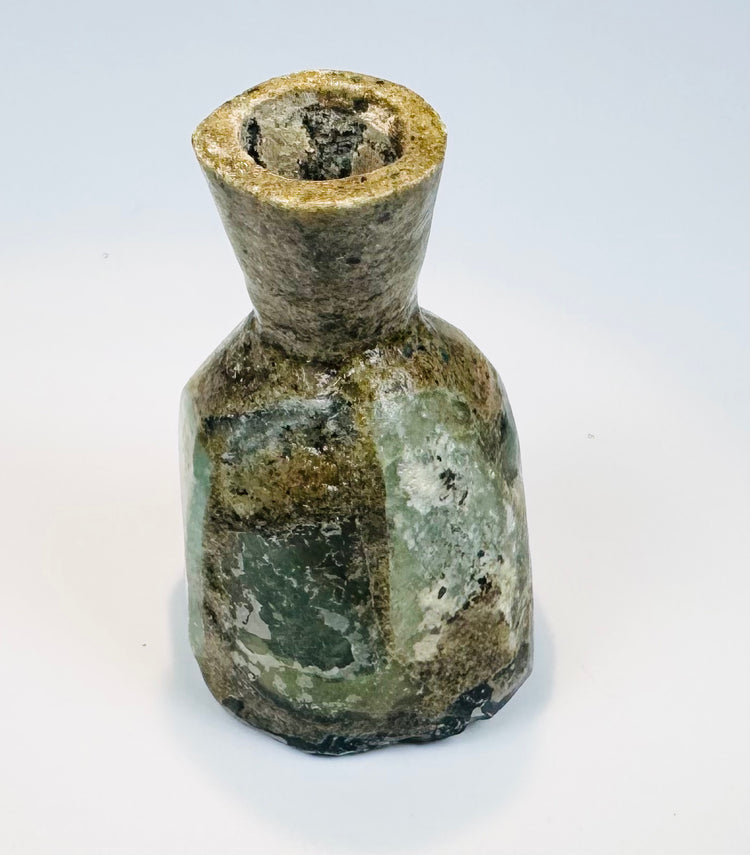
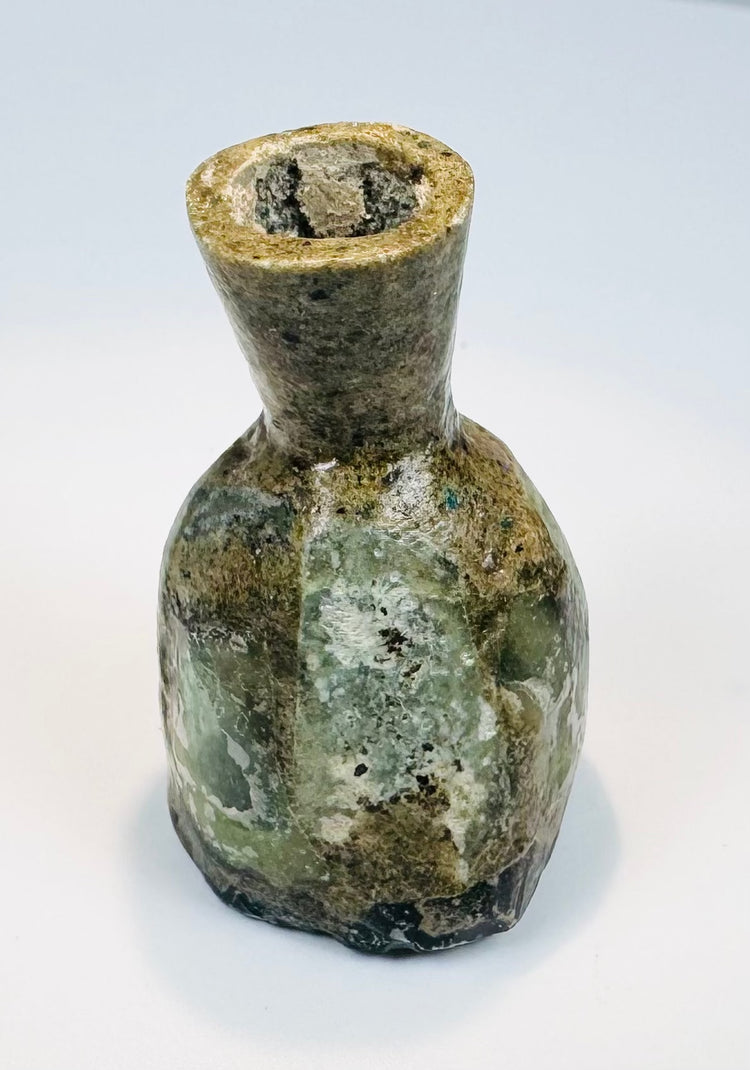
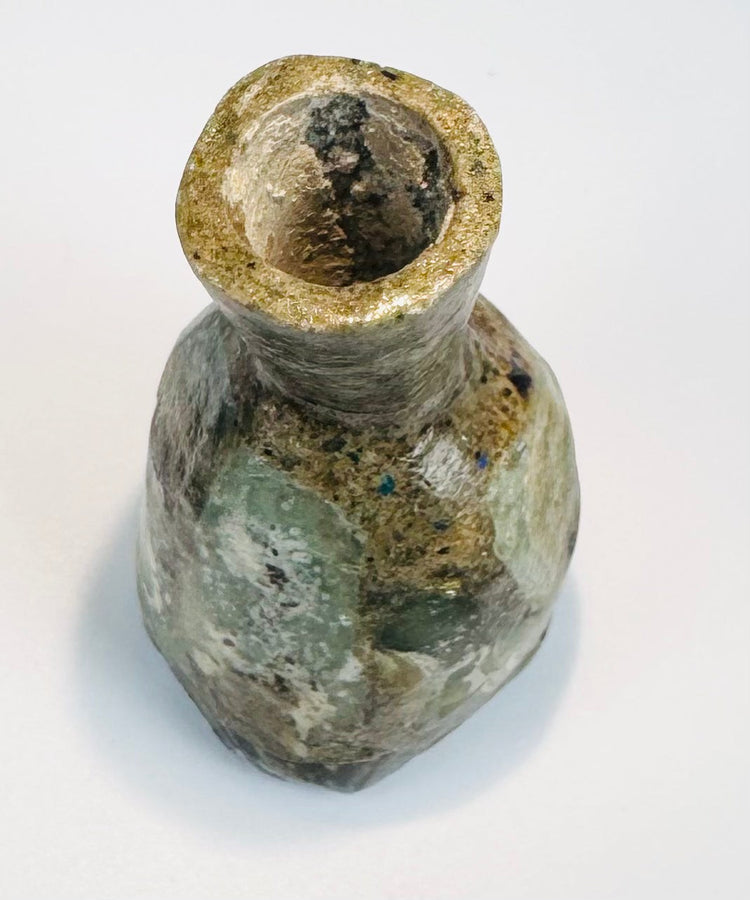
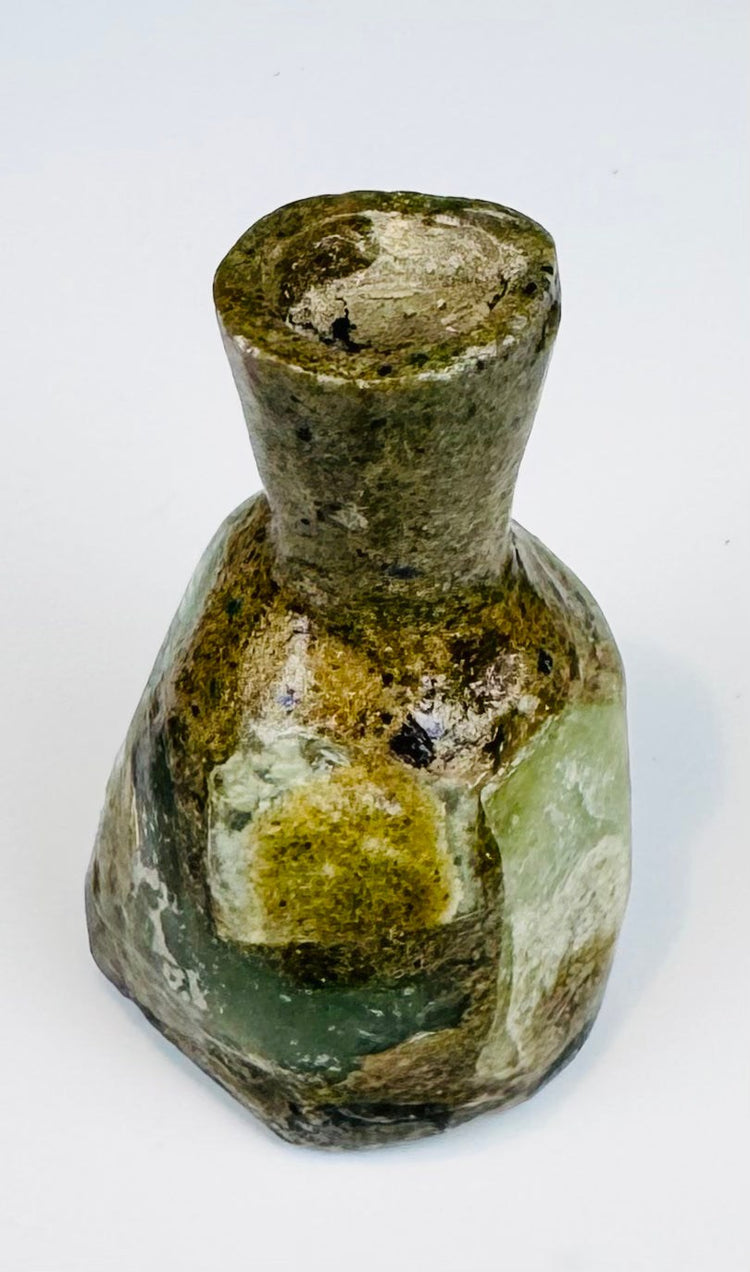
The vessel features a compact, approximately faceted body rising through rounded shoulders to a comparatively thick cylindrical neck. Its pale green to blue-green glass has developed extensive iridescence, mineral accretions, clouding, and brownish-gold weathering caused by prolonged burial and chemical alteration of the glass surface. Areas of translucent green remain visible beneath the heavy ancient-looking surface deposits.
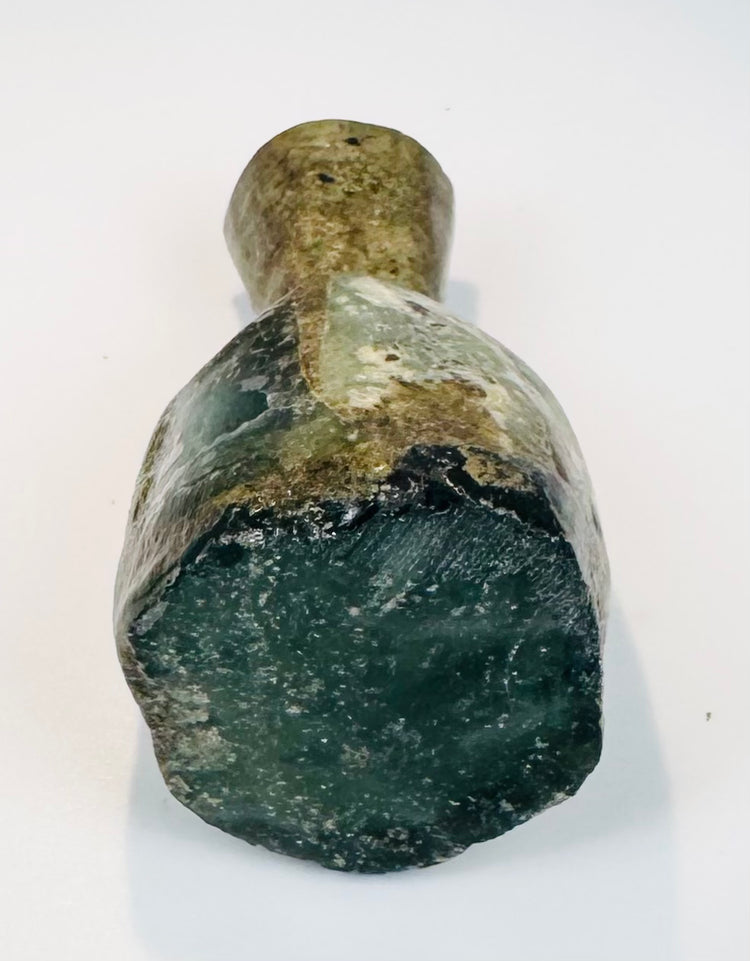
The underside is broadly flattened, allowing the vessel to stand independently, while the narrow opening would have helped control the dispensing of its original contents. The substantial weathering gives the bottle a strongly archaeological appearance and highlights the natural transformation experienced by ancient glass over centuries of burial.
Features
- Thick cylindrical neck and narrow opening
- Pale green to blue-green glass
- Extensive iridescent and mineralized surface weathering
- Flattened underside for upright display
- Intended for perfume, scented oil, cosmetics, or medicinal preparations
- Strong archaeological and decorative character
Cultural Significance
Small glass bottles became widely used throughout the Roman world following the expansion of glassblowing during the early Imperial period. These vessels provided practical containers for perfumes, scented oils, cosmetics, medicines, and other valuable substances used in domestic life, bathing, personal grooming, religious activity, and funerary customs.
Because their contents were often costly and used in small quantities, unguentaria were commonly made with narrow openings that allowed controlled dispensing. Related Roman glass vessels are preserved in major museum collections and demonstrate the broad distribution of glass production and trade throughout the Mediterranean.
Condition
The vessel remains substantially intact and displays extensive age-related weathering throughout. The glass surface exhibits heavy iridescence, mineral accretions, clouding, discoloration, pitting, and areas of surface instability consistent with prolonged burial. The rim is uneven and appears worn, with possible minor ancient losses or abrasions around the opening. Scattered surface deposits and imperfections are present throughout.
Dimensions (Approximate)
Height: 1.75 in
Diameter: 1 in
Age (Approximate)
1,725–1,925 years old
Provenance
Formerly part of a private Brooklyn, New York, USA collection of antiquities and archaeological objects, assembled over many years with a particular interest in ancient Mediterranean material culture.
Learn More
View a comparable Roman glass unguentarium in the collection of the Royal Ontario Museum
Explore our curated Collection of Roman & Greek Artifacts and Ancient Relics
Description
Historical Context & Origin
Region: Roman Empire, likely Eastern Mediterranean
Material: Blown green glass
Period: Roman Imperial Period, circa 1st–3rd Century CE
Description
This small ancient glass vessel is consistent with a Roman unguentarium or miniature flask intended for the storage of perfume, scented oil, cosmetics, medicines, or other precious liquids. Roman glass vessels of this general type were produced throughout the Imperial period and have been recovered across the Mediterranean world, including Italy, Egypt, Cyprus, and the Levant. Museum collections document related greenish glass unguentaria dating broadly from the first through third centuries CE.
The vessel features a compact, approximately faceted body rising through rounded shoulders to a comparatively thick cylindrical neck. Its pale green to blue-green glass has developed extensive iridescence, mineral accretions, clouding, and brownish-gold weathering caused by prolonged burial and chemical alteration of the glass surface. Areas of translucent green remain visible beneath the heavy ancient-looking surface deposits.
The underside is broadly flattened, allowing the vessel to stand independently, while the narrow opening would have helped control the dispensing of its original contents. The substantial weathering gives the bottle a strongly archaeological appearance and highlights the natural transformation experienced by ancient glass over centuries of burial.
Features
- Thick cylindrical neck and narrow opening
- Pale green to blue-green glass
- Extensive iridescent and mineralized surface weathering
- Flattened underside for upright display
- Intended for perfume, scented oil, cosmetics, or medicinal preparations
- Strong archaeological and decorative character
Cultural Significance
Small glass bottles became widely used throughout the Roman world following the expansion of glassblowing during the early Imperial period. These vessels provided practical containers for perfumes, scented oils, cosmetics, medicines, and other valuable substances used in domestic life, bathing, personal grooming, religious activity, and funerary customs.
Because their contents were often costly and used in small quantities, unguentaria were commonly made with narrow openings that allowed controlled dispensing. Related Roman glass vessels are preserved in major museum collections and demonstrate the broad distribution of glass production and trade throughout the Mediterranean.
Condition
The vessel remains substantially intact and displays extensive age-related weathering throughout. The glass surface exhibits heavy iridescence, mineral accretions, clouding, discoloration, pitting, and areas of surface instability consistent with prolonged burial. The rim is uneven and appears worn, with possible minor ancient losses or abrasions around the opening. Scattered surface deposits and imperfections are present throughout.
Dimensions (Approximate)
Height: 1.75 in
Diameter: 1 in
Age (Approximate)
1,725–1,925 years old
Provenance
Formerly part of a private Brooklyn, New York, USA collection of antiquities and archaeological objects, assembled over many years with a particular interest in ancient Mediterranean material culture.
Learn More
View a comparable Roman glass unguentarium in the collection of the Royal Ontario Museum
Explore our curated Collection of Roman & Greek Artifacts and Ancient Relics
You May Also Like
