
Roman Provincial | Terracotta Perfume Vessel with Elongated Neck | Circa 1st–3rd Century CE
Couldn't load pickup availability


Roman Provincial | Terracotta Perfume Vessel with Elongated Neck | Circa 1st–3rd Century CE
Description
More
Less
Historical Context & Origin
Region: Roman Empire or Roman Provincial Territories
Material: Terracotta clay with earthen patina
Period: Roman Imperial Period, circa 1st–3rd Century CE
Description
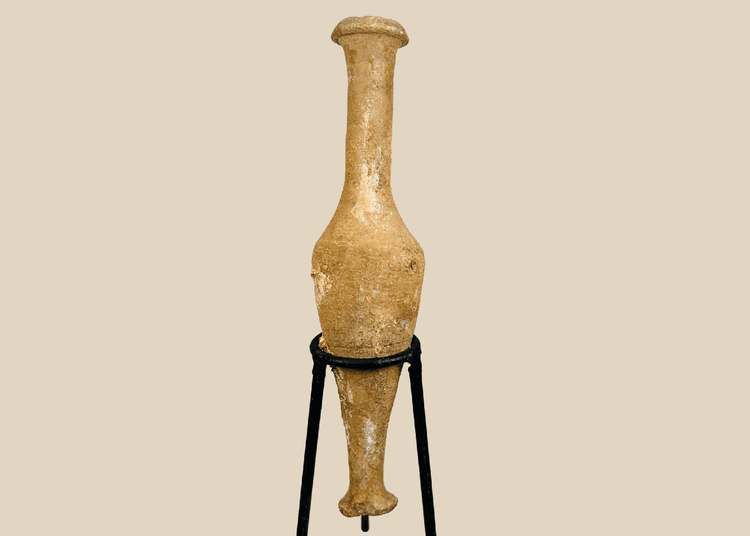
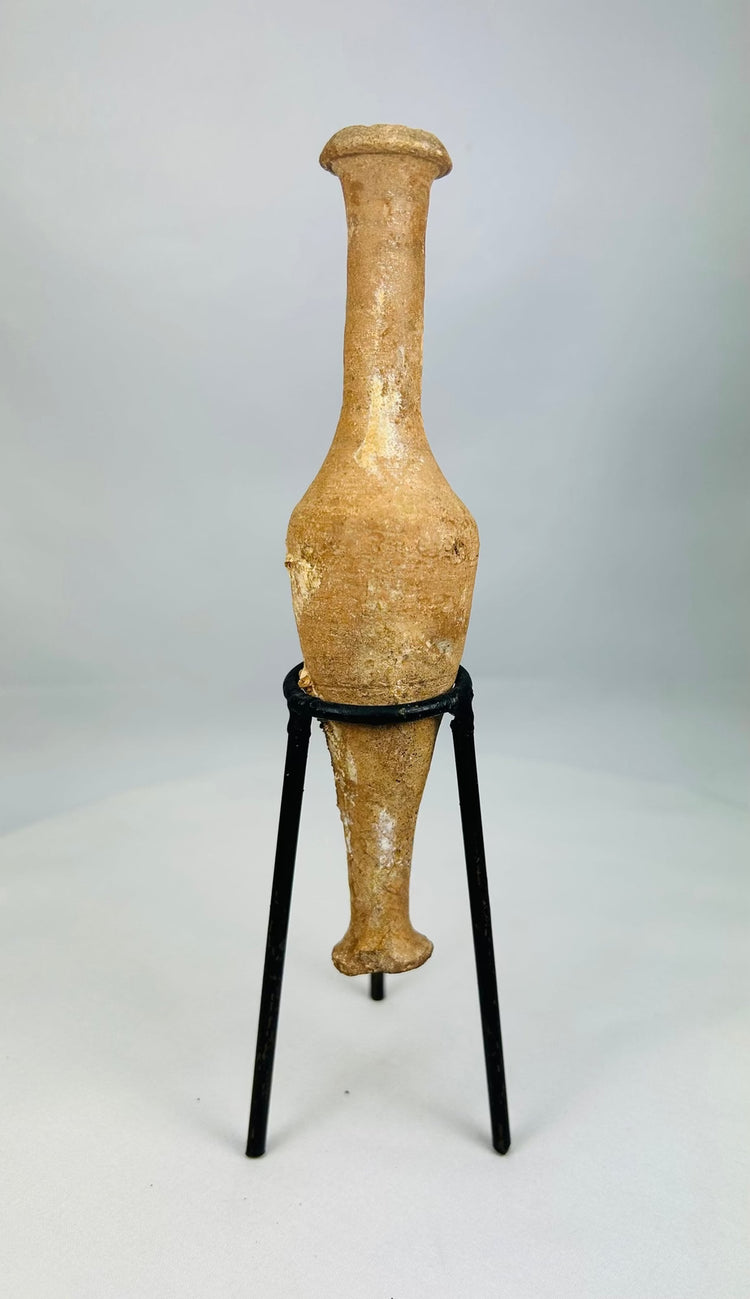
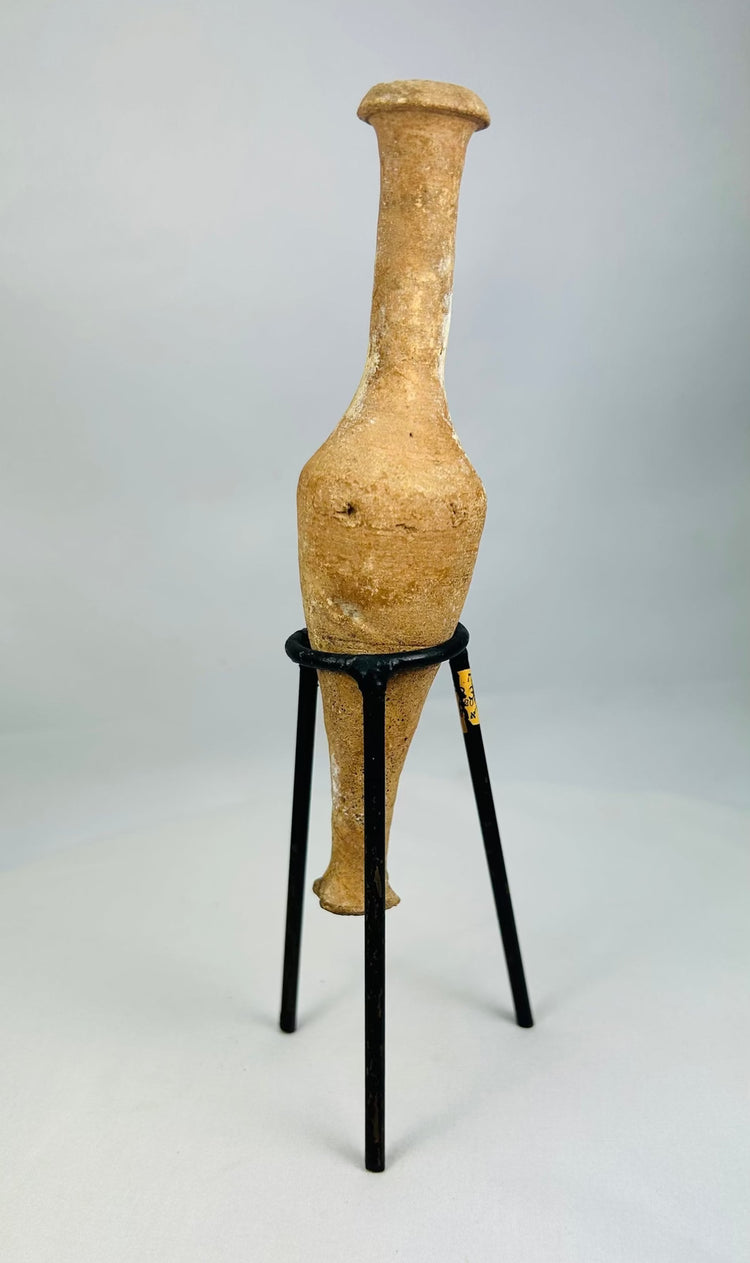
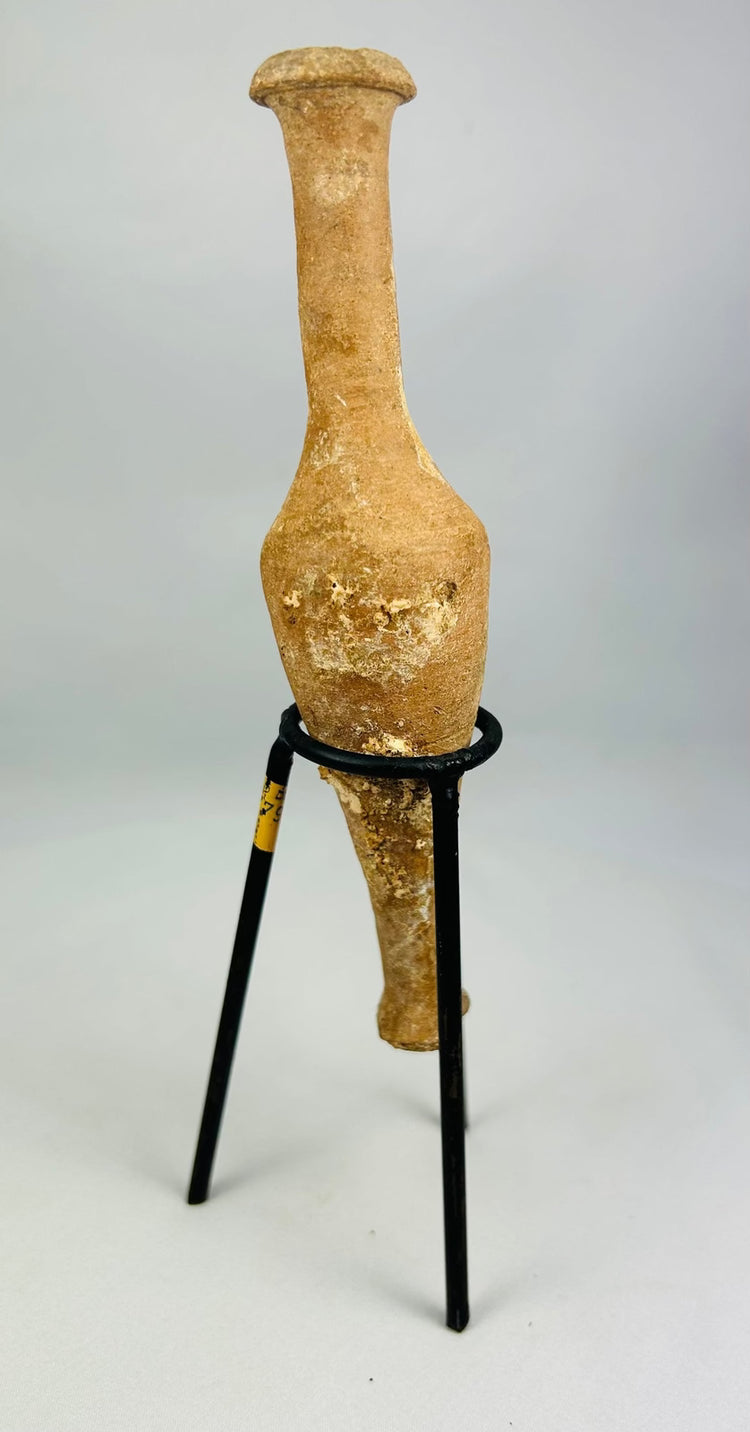
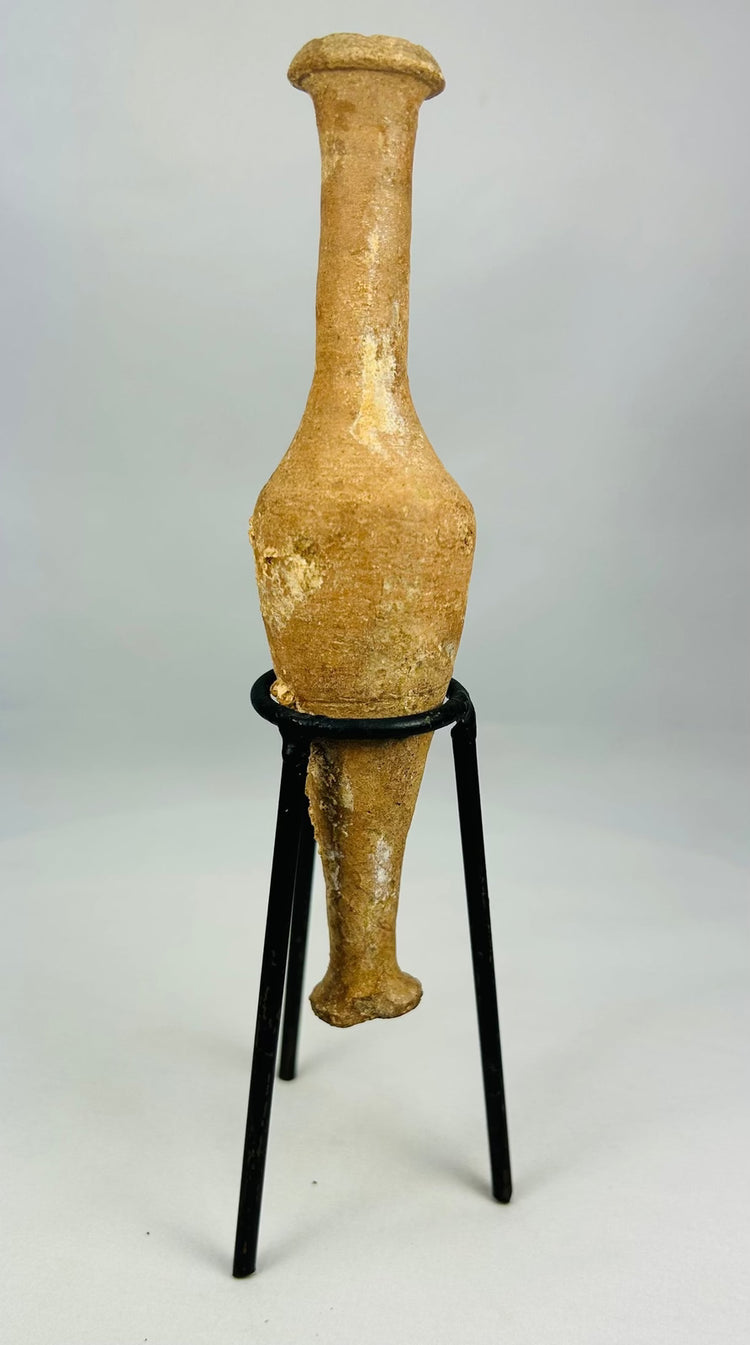
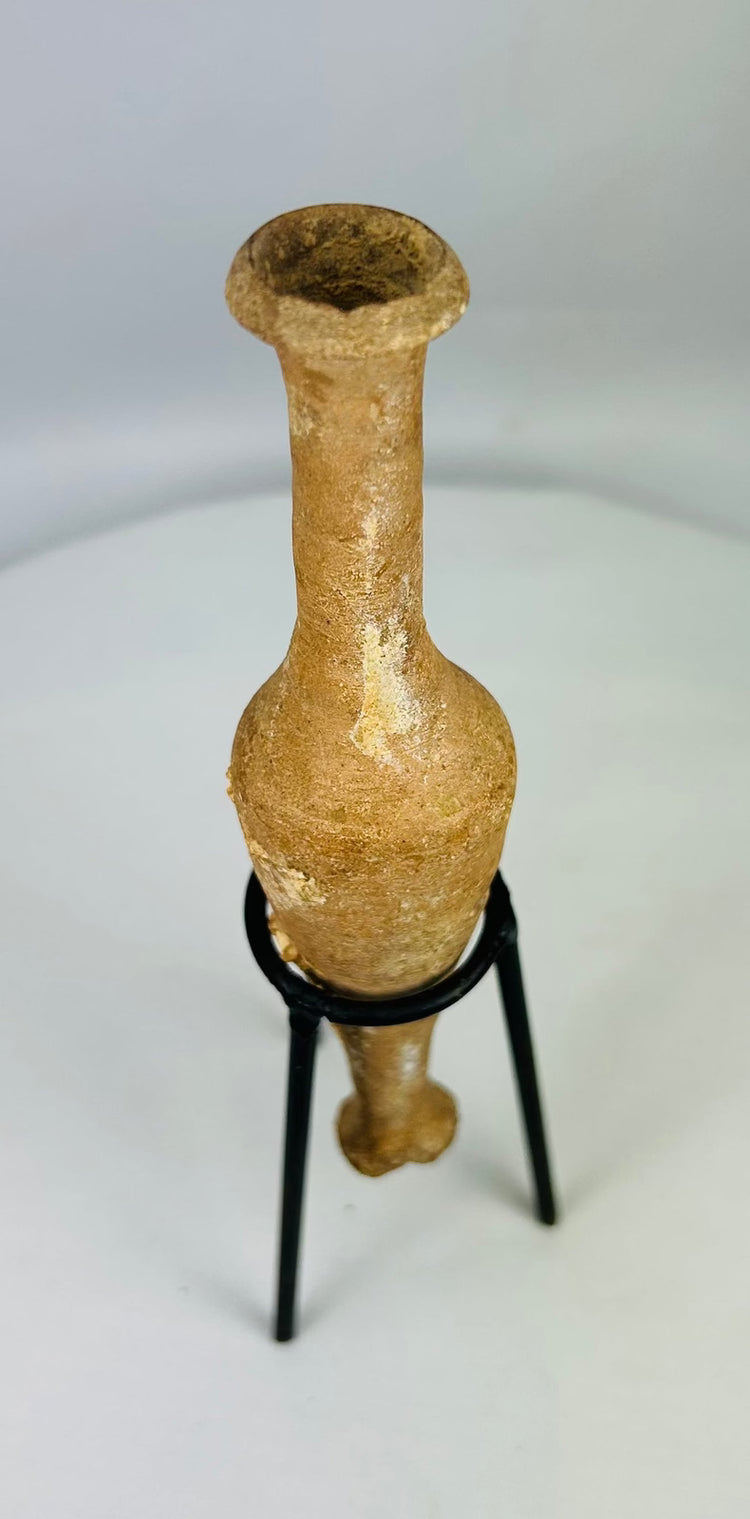
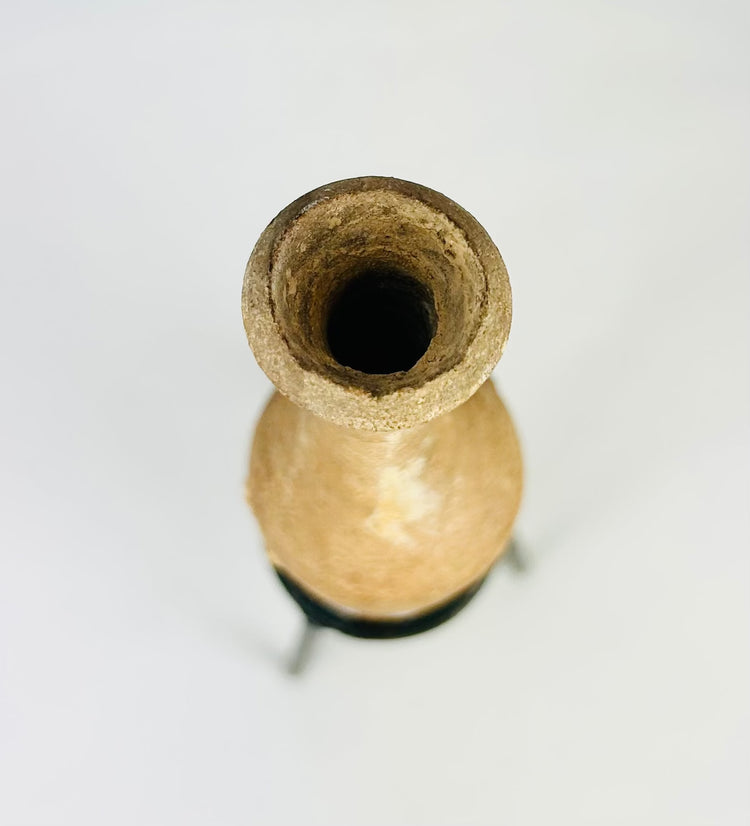
This elegant terracotta Roman unguentarium (oil and perfume vessel) dates to the Roman Imperial era and represents one of the most iconic personal-use vessels of antiquity. It features a graceful elongated spindle-shaped body, long cylindrical neck, and subtly flared rim — a refined and highly recognizable Roman form used for storing perfumes, scented oils, and cosmetic liquids.
The surface exhibits beautiful earthen deposits and mineral encrustation developed over nearly two millennia, attesting to long burial and archaeological preservation. Its tall, slender silhouette and refined proportions speak to the sophistication of Roman craftsmanship and the importance of fragrance and grooming in Roman society.
Features
- Authentic Roman terracotta perfume / oil vessel (unguentarium)
- Classic elongated spindle form with narrow neck and flared rim
- Attractive natural patina and mineral surface deposits
- Excellent display presence on included museum-style stand
- A beautifully preserved example of Roman personal luxury culture
Cultural Significance
Unguenta (perfumed oils) were central to Roman daily life — used in bathing, ritual, religious offerings, and burial practices. Unguentaria such as this were prized personal objects, frequently left as grave goods to accompany the deceased in the afterlife. Their presence evokes private ritual, beauty, and the intimate human experience of the Roman world.
Condition
Very good archaeological condition with expected surface wear from age.
Stable terracotta structure with attractive deposits and weathering.
No modern restoration visible. Stands securely and displays beautifully.
Dimensions (Approximate)
Height: 8 in
Age (Approximate)
1,700–2,025 years old
Learn More
Discover the purpose of Roman unguentaria through A Virtual Museum
Explore our curated Roman & Greek Artifacts Collection
Description
Historical Context & Origin
Region: Roman Empire or Roman Provincial Territories
Material: Terracotta clay with earthen patina
Period: Roman Imperial Period, circa 1st–3rd Century CE
Description
This elegant terracotta Roman unguentarium (oil and perfume vessel) dates to the Roman Imperial era and represents one of the most iconic personal-use vessels of antiquity. It features a graceful elongated spindle-shaped body, long cylindrical neck, and subtly flared rim — a refined and highly recognizable Roman form used for storing perfumes, scented oils, and cosmetic liquids.
The surface exhibits beautiful earthen deposits and mineral encrustation developed over nearly two millennia, attesting to long burial and archaeological preservation. Its tall, slender silhouette and refined proportions speak to the sophistication of Roman craftsmanship and the importance of fragrance and grooming in Roman society.
Features
- Authentic Roman terracotta perfume / oil vessel (unguentarium)
- Classic elongated spindle form with narrow neck and flared rim
- Attractive natural patina and mineral surface deposits
- Excellent display presence on included museum-style stand
- A beautifully preserved example of Roman personal luxury culture
Cultural Significance
Unguenta (perfumed oils) were central to Roman daily life — used in bathing, ritual, religious offerings, and burial practices. Unguentaria such as this were prized personal objects, frequently left as grave goods to accompany the deceased in the afterlife. Their presence evokes private ritual, beauty, and the intimate human experience of the Roman world.
Condition
Very good archaeological condition with expected surface wear from age.
Stable terracotta structure with attractive deposits and weathering.
No modern restoration visible. Stands securely and displays beautifully.
Dimensions (Approximate)
Height: 8 in
Age (Approximate)
1,700–2,025 years old
Learn More
Discover the purpose of Roman unguentaria through A Virtual Museum
Explore our curated Roman & Greek Artifacts Collection
You May Also Like
