



South Italian Grey Ware Unguentarium | 2nd–1st Century BCE
Couldn't load pickup availability


South Italian Grey Ware Unguentarium | 2nd–1st Century BCE
Description
More
Less
Historical Context & Origin
Region: South Italy
Material: Wheel-made grey ware terracotta
Period: 2nd–1st Century BCE
Description
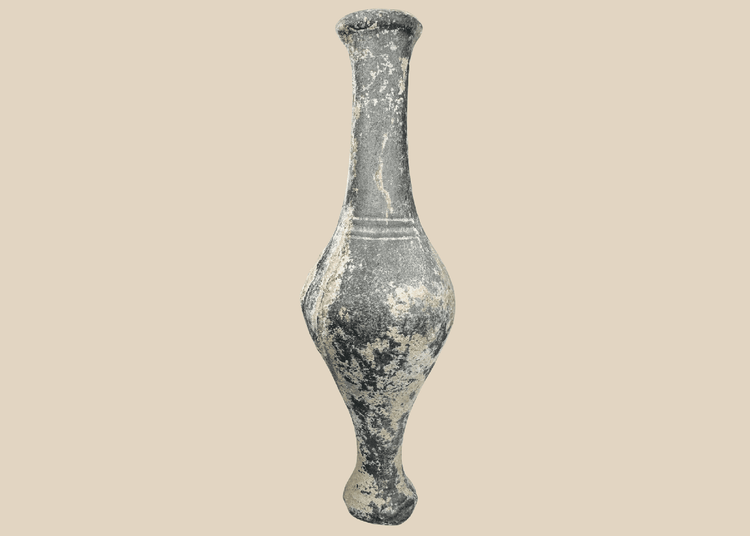
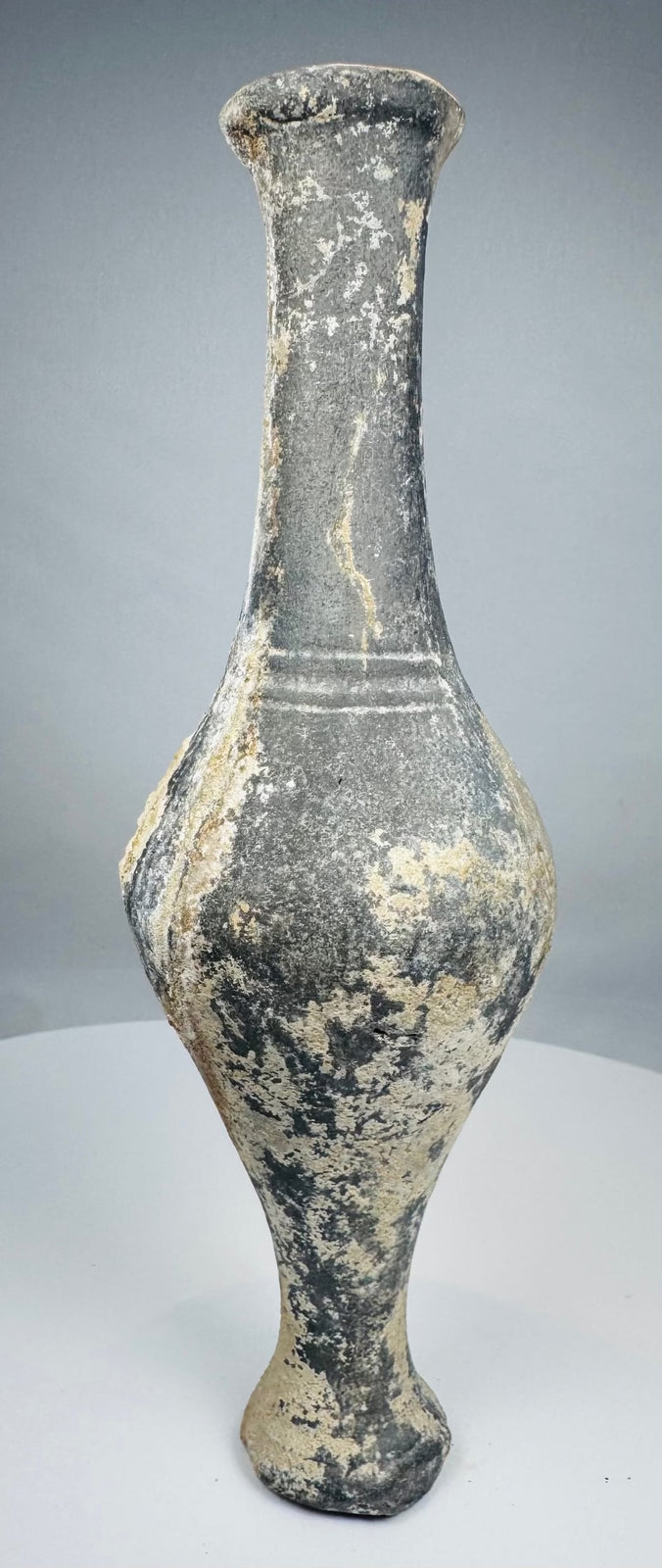
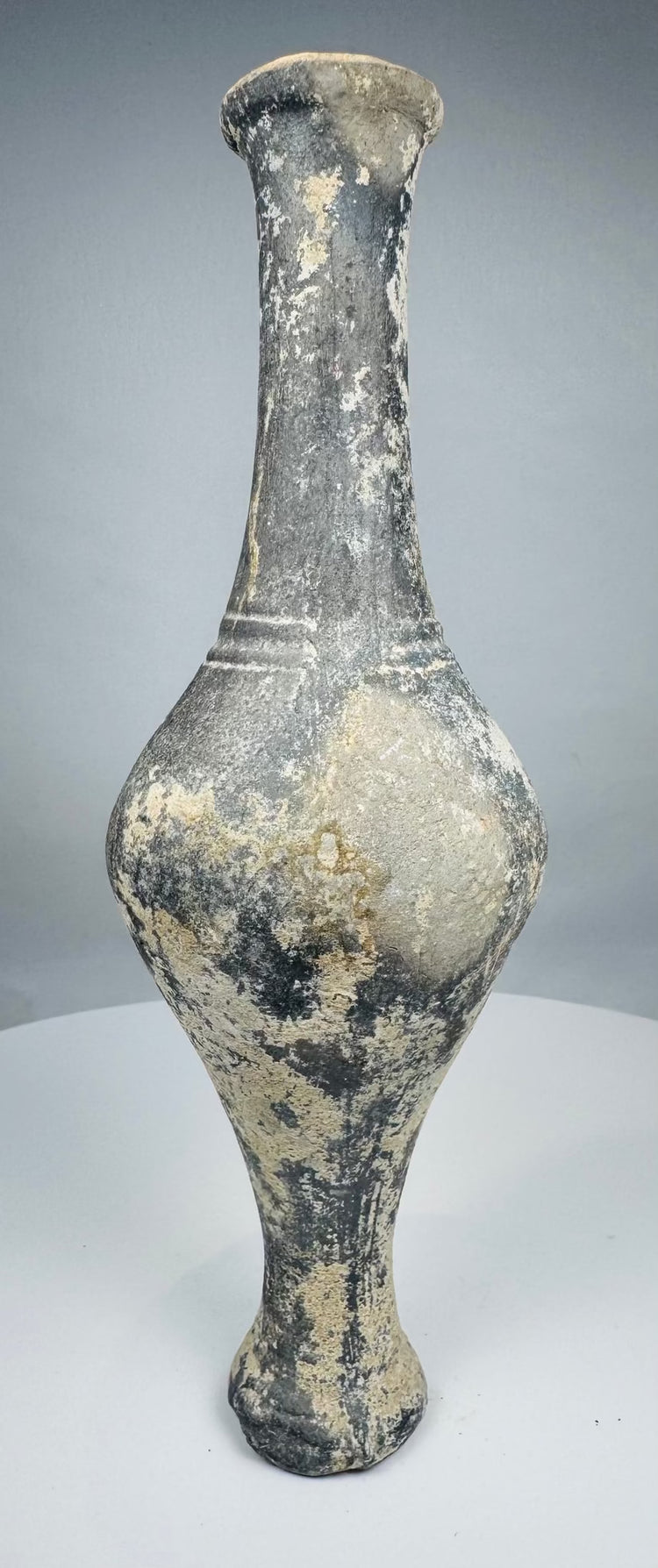
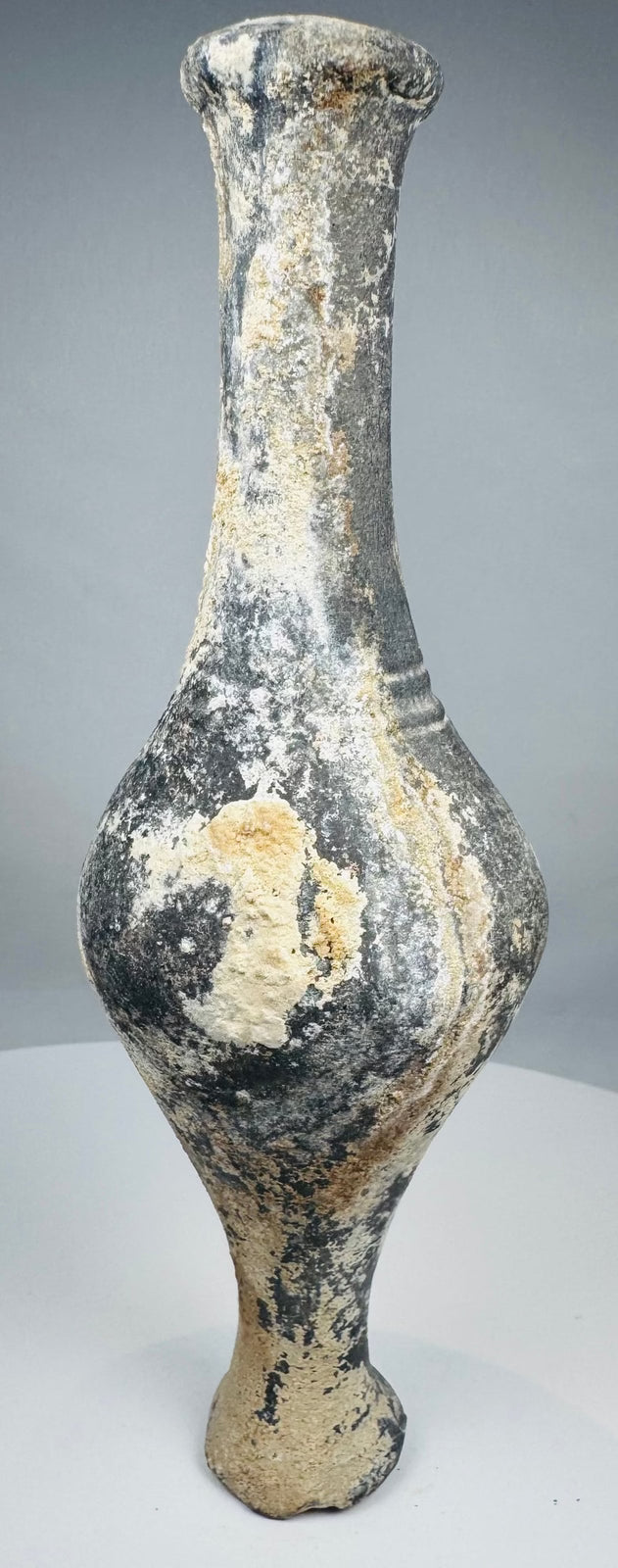
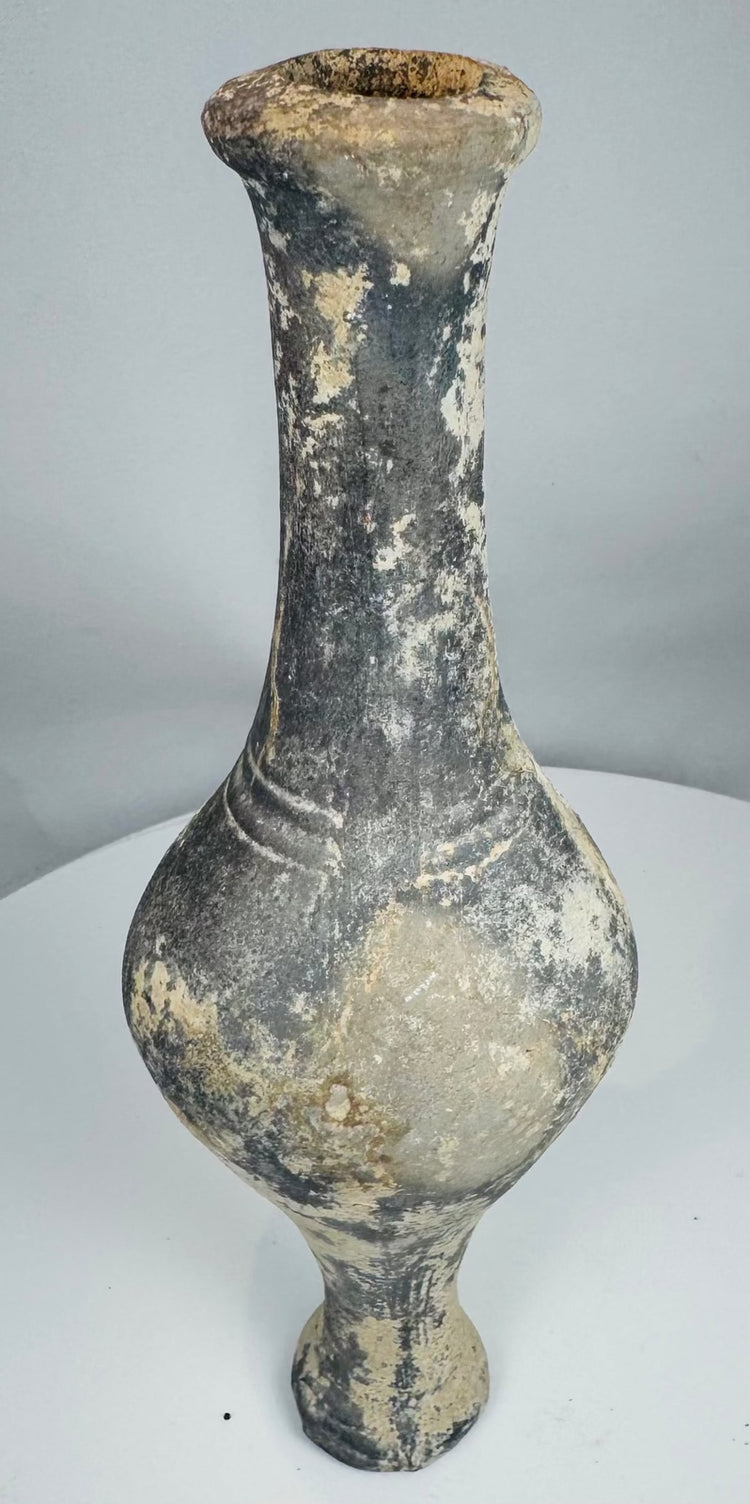
This ancient South Italian grey ware unguentarium dates to the 2nd–1st century BCE and displays the elegant fusiform profile characteristic of this vessel type.
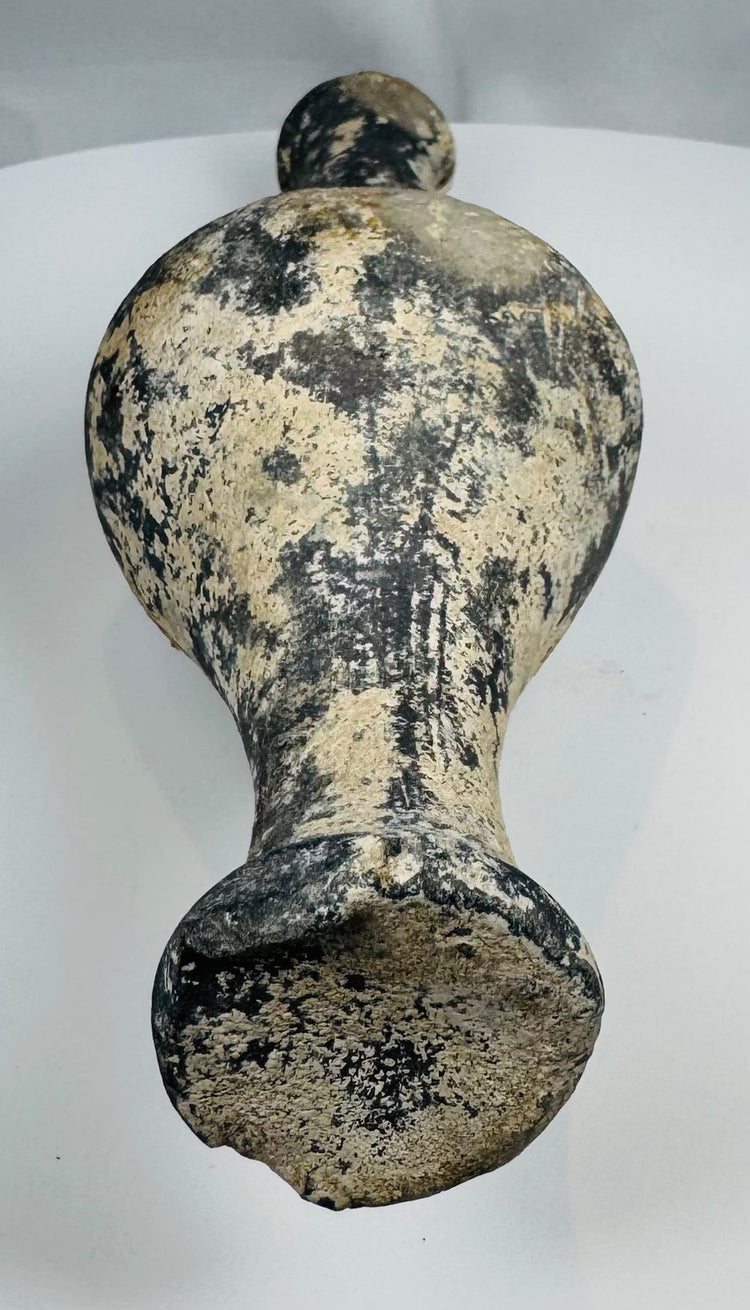
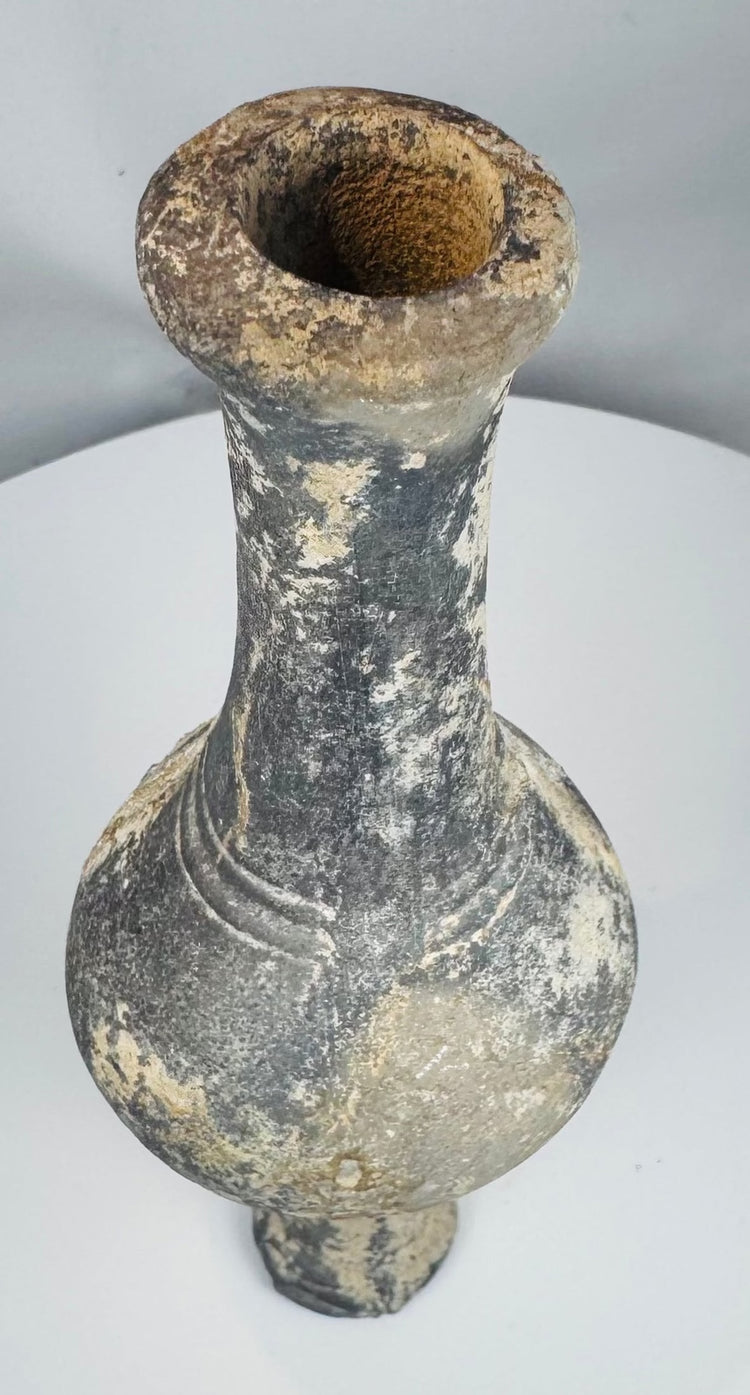
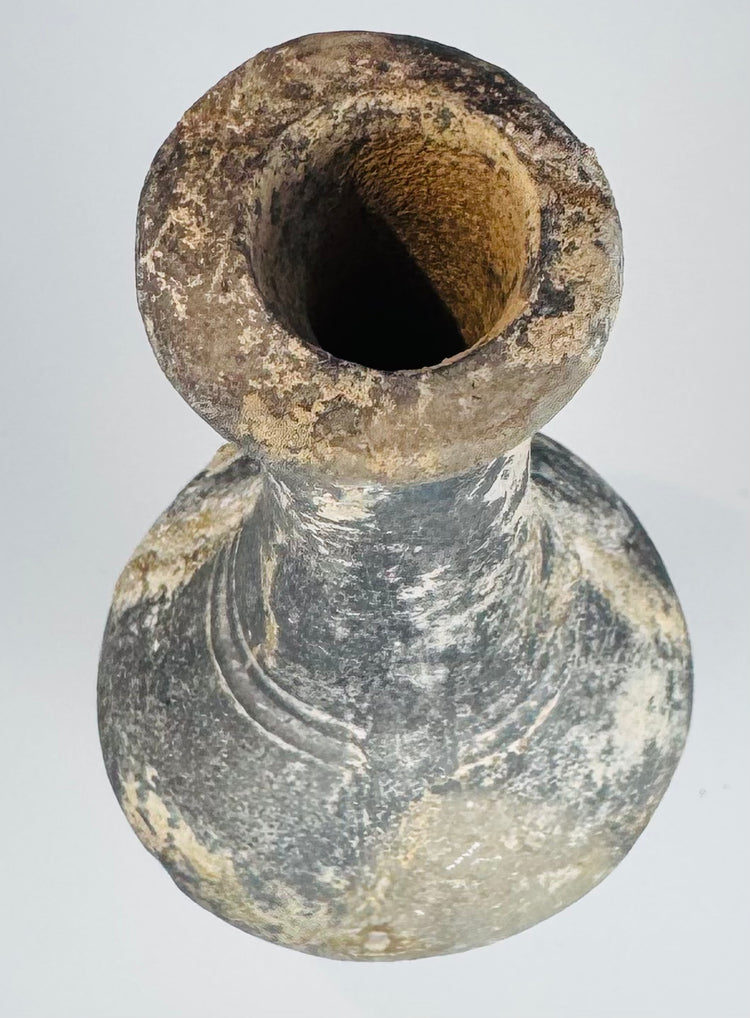
Wheel-made from grey-firing clay, the vessel features a tall narrow neck with a flared rim, with two incised horizontal lines marking the base of the neck. The body expands into an elongated ovoid form before narrowing into a slender lower stem and terminating in a spreading circular foot.
The resulting spindle-shaped silhouette is typical of ancient unguentaria, small vessels commonly associated with the storage and dispensing of valuable liquids such as oils, perfumes, cosmetics, or other preparations.
The grey fabric and surface remain visible beneath areas of pale mineral deposition acquired through long-term burial.
Features
- Wheel-made terracotta construction
- Distinctive fusiform / spindle-shaped profile
- Tall narrow neck
- Flared rim
- Two incised lines at the base of the neck
- Elongated ovoid body
- Narrow lower stem
- Spreading circular foot
- Grey fabric and surface
- Pale archaeological mineral deposits
Cultural Significance
Unguentaria were widely used throughout the ancient Mediterranean world during the Hellenistic and Roman periods. Their narrow necks and elongated bodies made them suitable for holding and dispensing small quantities of liquids, particularly perfumes, scented oils, cosmetics, and similar substances.
This example’s fusiform body, tall narrow neck, incised neck decoration, and spreading foot support its identification as a South Italian grey ware unguentarium of the 2nd–1st century BCE.
Condition
Substantially intact ancient condition with pale mineral deposits, age-related surface wear, and areas of surface loss. Minor abrasions and irregularities are present throughout, consistent with considerable age. The principal vessel form, including the neck, body, lower stem, and spreading foot, remains clearly preserved.
Dimensions (Approximate)
Height: 8 in
Diameter: 3 in
Age (Approximate)
2,000–2,200 years old
Provenance
Formerly in the collection of Jack Guevrekian, Manhasset, New York, a noted New York numismatist and collector with a particular interest in Armenian coinage, antiquities, and ancient material. Guevrekian assembled an extensive collection over several decades, a significant portion of which was publicly offered as The Jack Guevrekian Collection by the Numismatic & Antiquarian Service Corporation of America in New York in 1977.
Subsequently held in a private New York City collection.
Later handled by the Howard S. Rose Gallery / Arte Primitivo in New York, a longstanding specialist gallery and auction house dealing in Pre-Columbian, Classical, Egyptian, Asian, and ethnographic antiquities and works of art. The gallery has conducted specialist auctions, exhibitions, and private sales from its New York premises.
Subsequently handled by Artemis Fine Arts / Artemis Gallery, a Colorado-based specialist in antiquities, ancient art, ethnographic material, and fine art that has been active in the field since 1993.
Then entered a private collection in Toronto, Ontario, Canada.
Expert Assessment: Examined by Luca Salvaggio, an Italian archaeologist specializing in ancient Mediterranean and Near Eastern material, with a Postgraduate Diploma from the Italian Archaeological School at Athens (IASA) and accreditation from the Italian Ministry of Culture (MiC). He identified the vessel as a South Italian grey ware unguentarium dating to the 2nd–1st century BCE, based on its distinctive fusiform shape, narrow neck, incised decoration, and spreading foot.
Learn More
Discover a comparable Hellenistic grey ware unguentarium dating to the 2nd–1st century BCE at the Acropolis Museum
Browse our Collection of Ceramics, Pottery & Ancient Heritage Art
Description
Historical Context & Origin
Region: South Italy
Material: Wheel-made grey ware terracotta
Period: 2nd–1st Century BCE
Description
This ancient South Italian grey ware unguentarium dates to the 2nd–1st century BCE and displays the elegant fusiform profile characteristic of this vessel type.
Wheel-made from grey-firing clay, the vessel features a tall narrow neck with a flared rim, with two incised horizontal lines marking the base of the neck. The body expands into an elongated ovoid form before narrowing into a slender lower stem and terminating in a spreading circular foot.
The resulting spindle-shaped silhouette is typical of ancient unguentaria, small vessels commonly associated with the storage and dispensing of valuable liquids such as oils, perfumes, cosmetics, or other preparations.
The grey fabric and surface remain visible beneath areas of pale mineral deposition acquired through long-term burial.
Features
- Wheel-made terracotta construction
- Distinctive fusiform / spindle-shaped profile
- Tall narrow neck
- Flared rim
- Two incised lines at the base of the neck
- Elongated ovoid body
- Narrow lower stem
- Spreading circular foot
- Grey fabric and surface
- Pale archaeological mineral deposits
Cultural Significance
Unguentaria were widely used throughout the ancient Mediterranean world during the Hellenistic and Roman periods. Their narrow necks and elongated bodies made them suitable for holding and dispensing small quantities of liquids, particularly perfumes, scented oils, cosmetics, and similar substances.
This example’s fusiform body, tall narrow neck, incised neck decoration, and spreading foot support its identification as a South Italian grey ware unguentarium of the 2nd–1st century BCE.
Condition
Substantially intact ancient condition with pale mineral deposits, age-related surface wear, and areas of surface loss. Minor abrasions and irregularities are present throughout, consistent with considerable age. The principal vessel form, including the neck, body, lower stem, and spreading foot, remains clearly preserved.
Dimensions (Approximate)
Height: 8 in
Diameter: 3 in
Age (Approximate)
2,000–2,200 years old
Provenance
Formerly in the collection of Jack Guevrekian, Manhasset, New York, a noted New York numismatist and collector with a particular interest in Armenian coinage, antiquities, and ancient material. Guevrekian assembled an extensive collection over several decades, a significant portion of which was publicly offered as The Jack Guevrekian Collection by the Numismatic & Antiquarian Service Corporation of America in New York in 1977.
Subsequently held in a private New York City collection.
Later handled by the Howard S. Rose Gallery / Arte Primitivo in New York, a longstanding specialist gallery and auction house dealing in Pre-Columbian, Classical, Egyptian, Asian, and ethnographic antiquities and works of art. The gallery has conducted specialist auctions, exhibitions, and private sales from its New York premises.
Subsequently handled by Artemis Fine Arts / Artemis Gallery, a Colorado-based specialist in antiquities, ancient art, ethnographic material, and fine art that has been active in the field since 1993.
Then entered a private collection in Toronto, Ontario, Canada.
Expert Assessment: Examined by Luca Salvaggio, an Italian archaeologist specializing in ancient Mediterranean and Near Eastern material, with a Postgraduate Diploma from the Italian Archaeological School at Athens (IASA) and accreditation from the Italian Ministry of Culture (MiC). He identified the vessel as a South Italian grey ware unguentarium dating to the 2nd–1st century BCE, based on its distinctive fusiform shape, narrow neck, incised decoration, and spreading foot.
Learn More
Discover a comparable Hellenistic grey ware unguentarium dating to the 2nd–1st century BCE at the Acropolis Museum
Browse our Collection of Ceramics, Pottery & Ancient Heritage Art
You May Also Like
