



Southeast Asian Bronze Buddha | Seated Meditative Pose on Wooden Base | Circa 18th – 19th Century
Couldn't load pickup availability


Southeast Asian Bronze Buddha | Seated Meditative Pose on Wooden Base | Circa 18th – 19th Century
Description
More
Less
Historical Context & Origin
Region: Southeast Asia (Shan State, Burma / Northern Thailand)
Material: Cast bronze with wooden base
Period: 18th–19th Century
Description
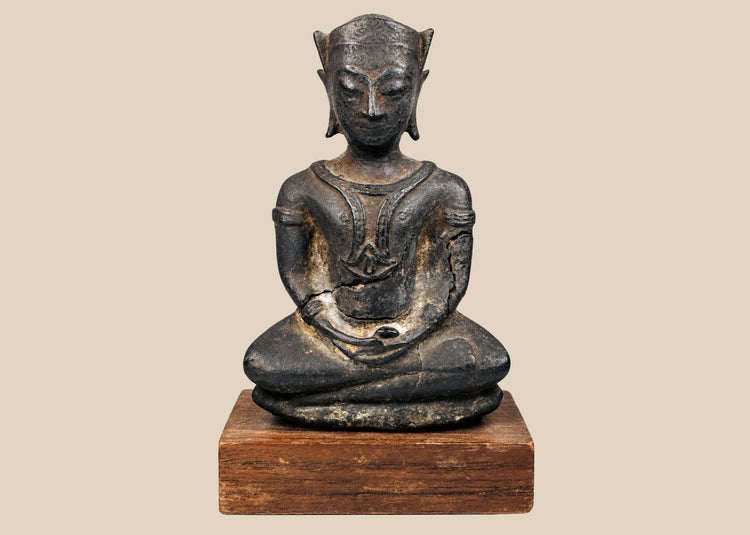
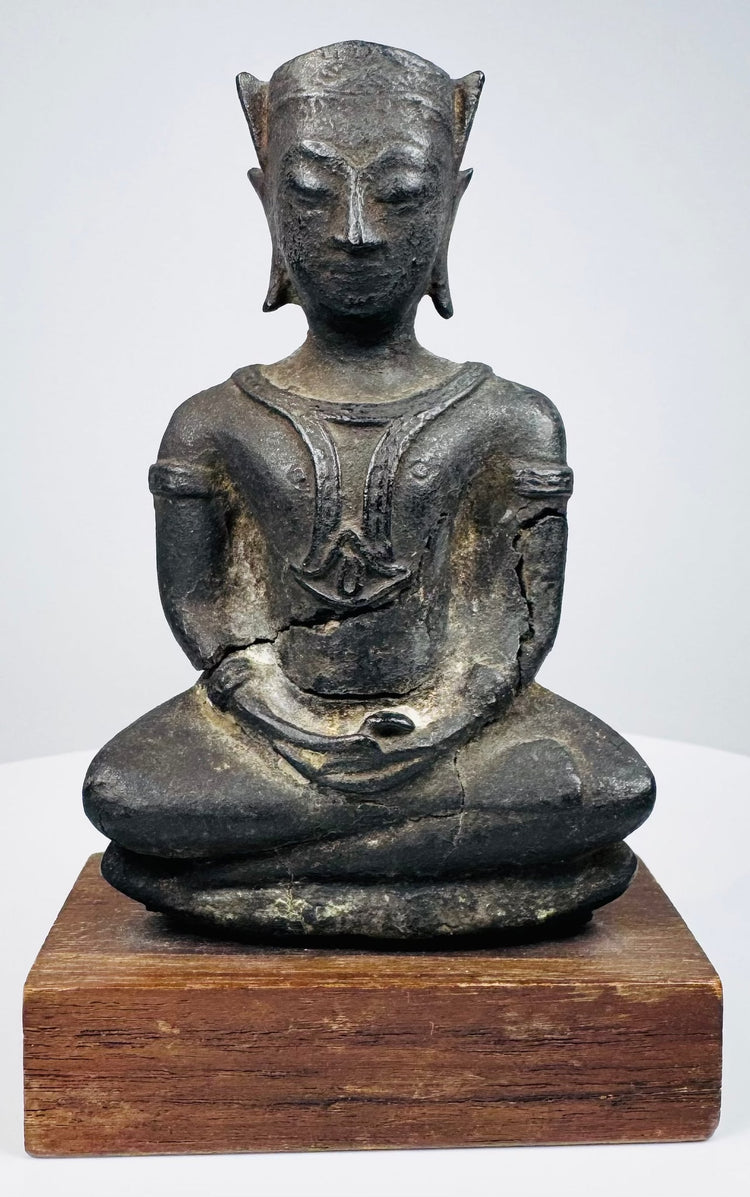
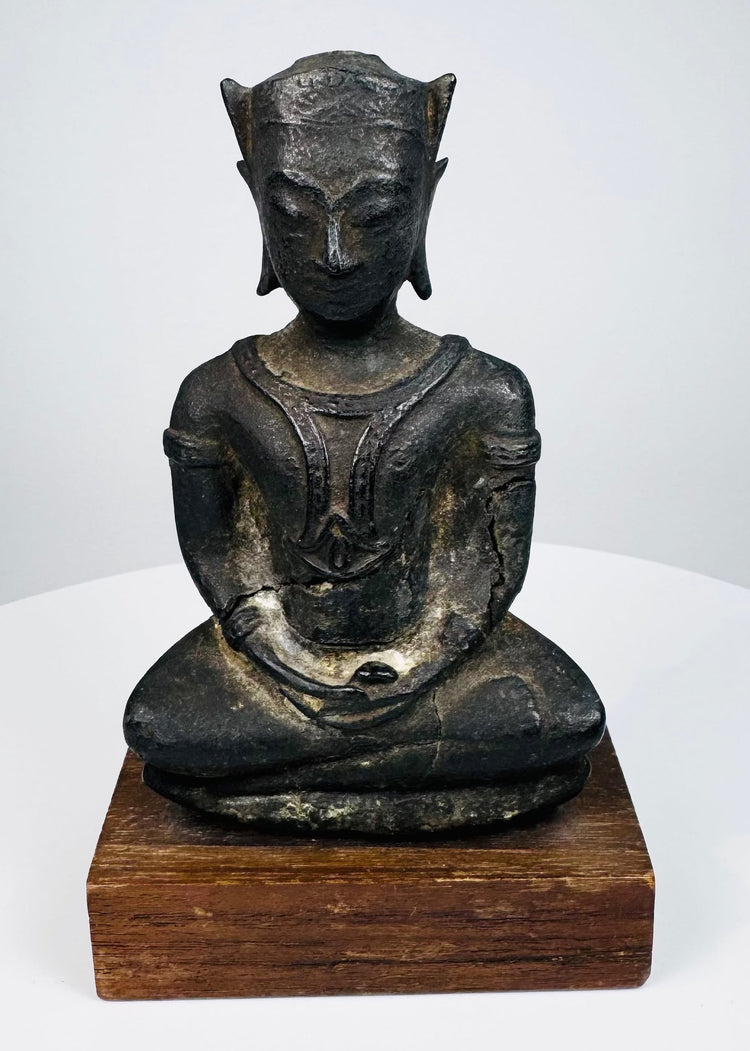
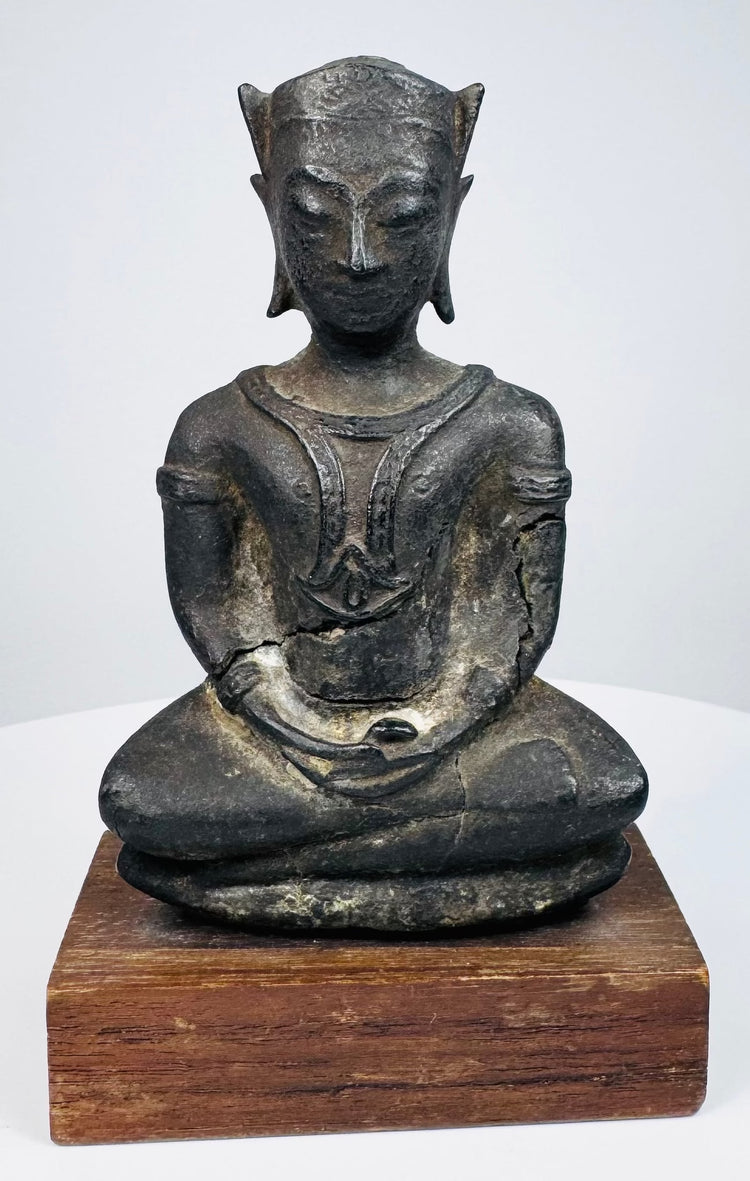
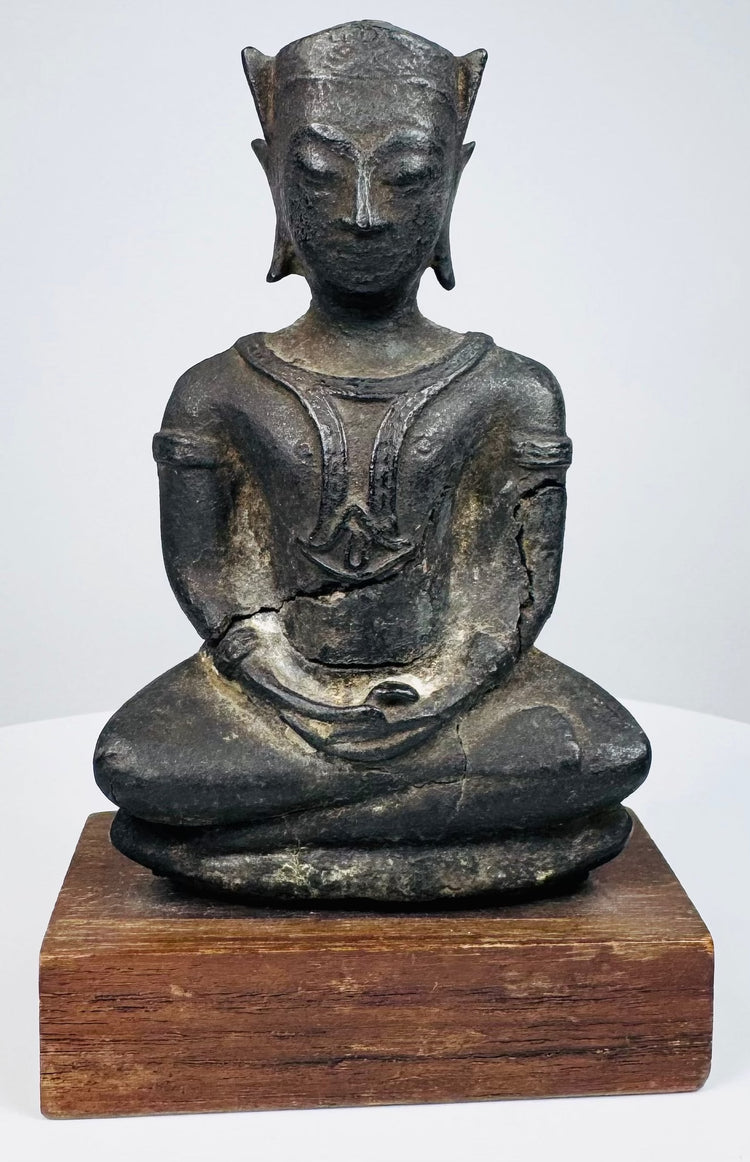
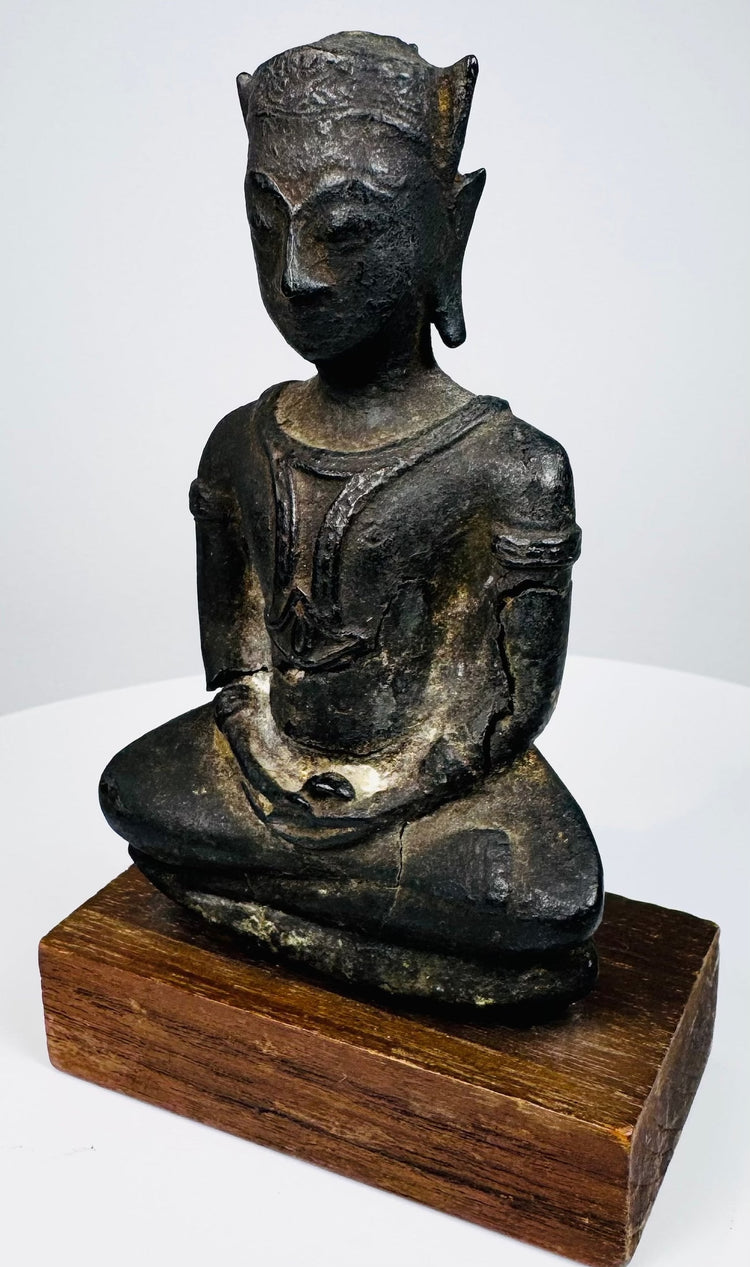
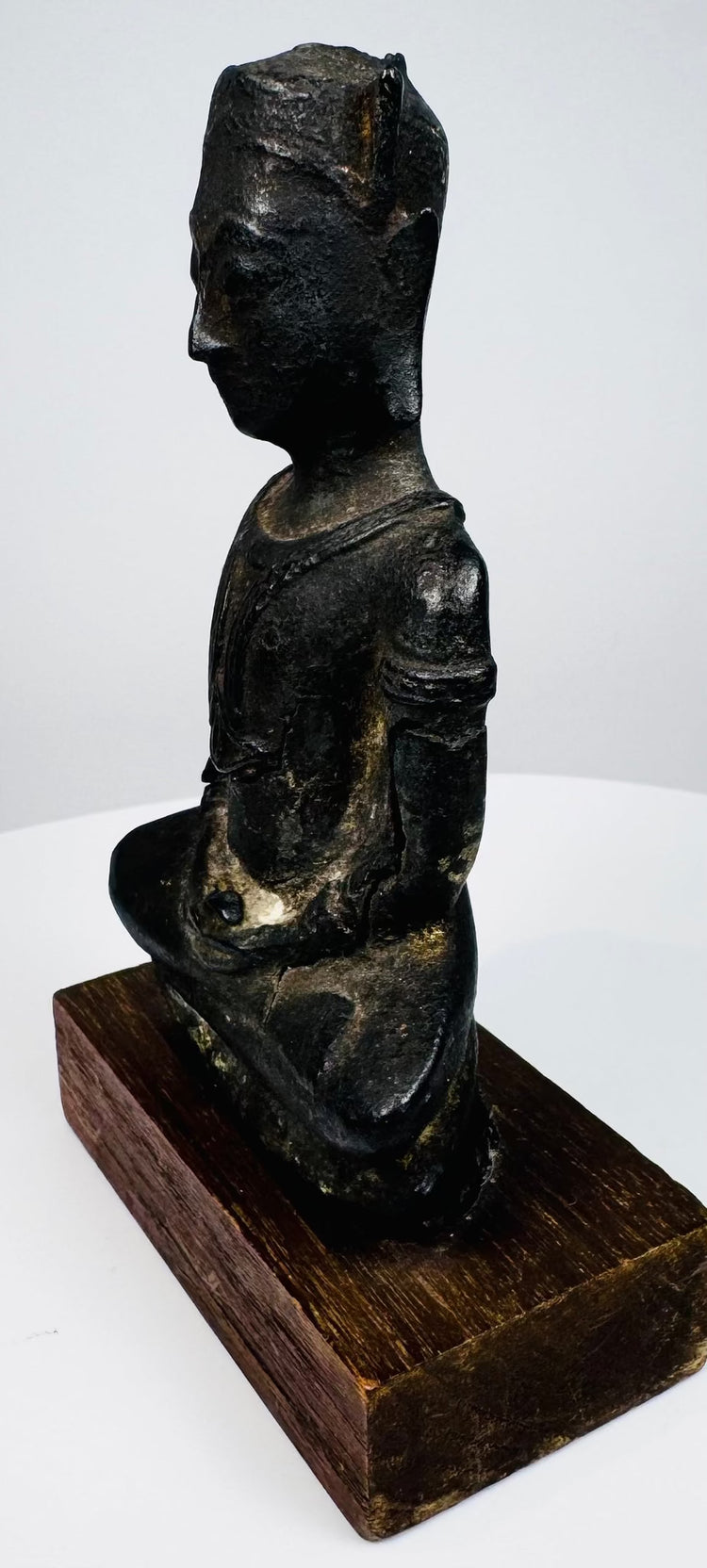
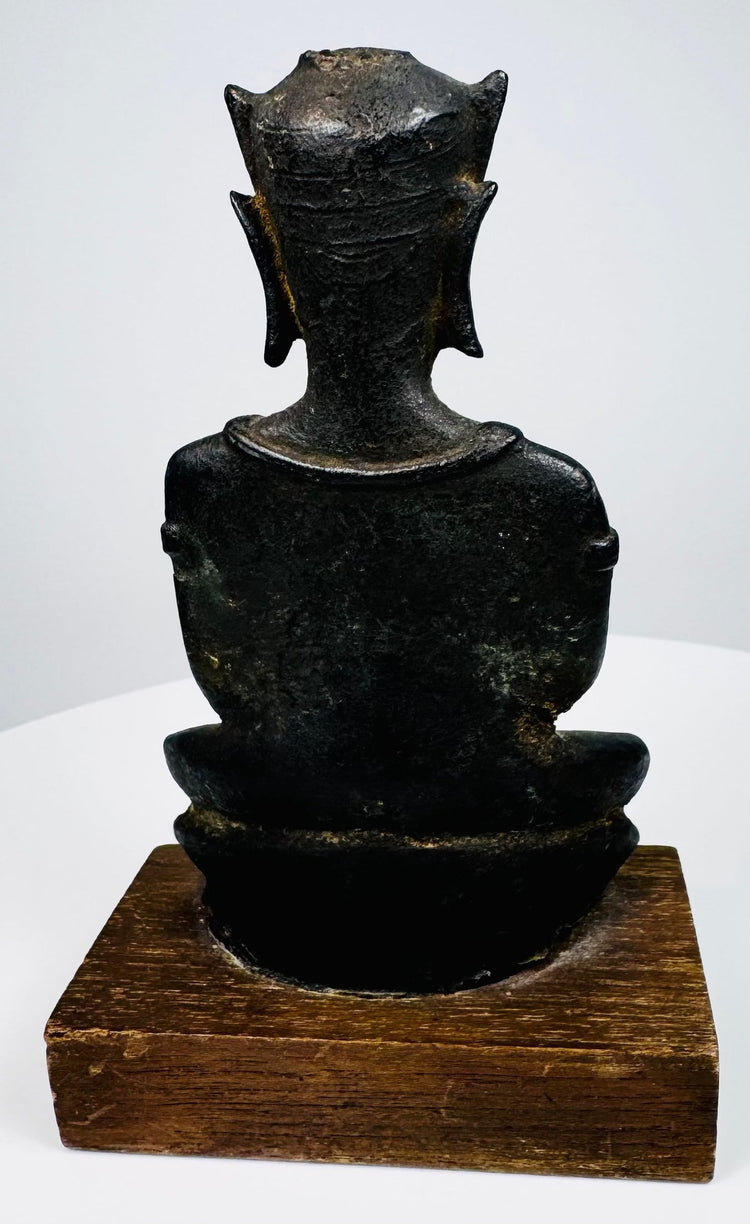
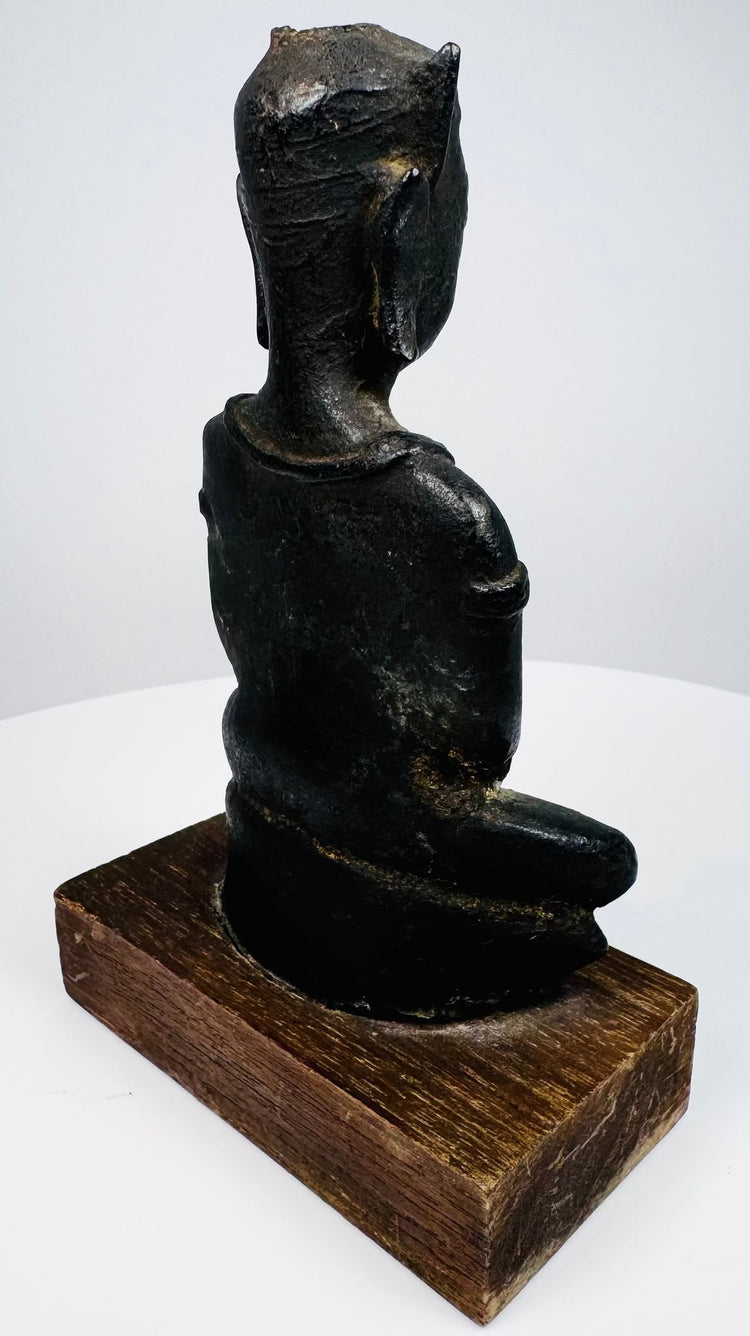
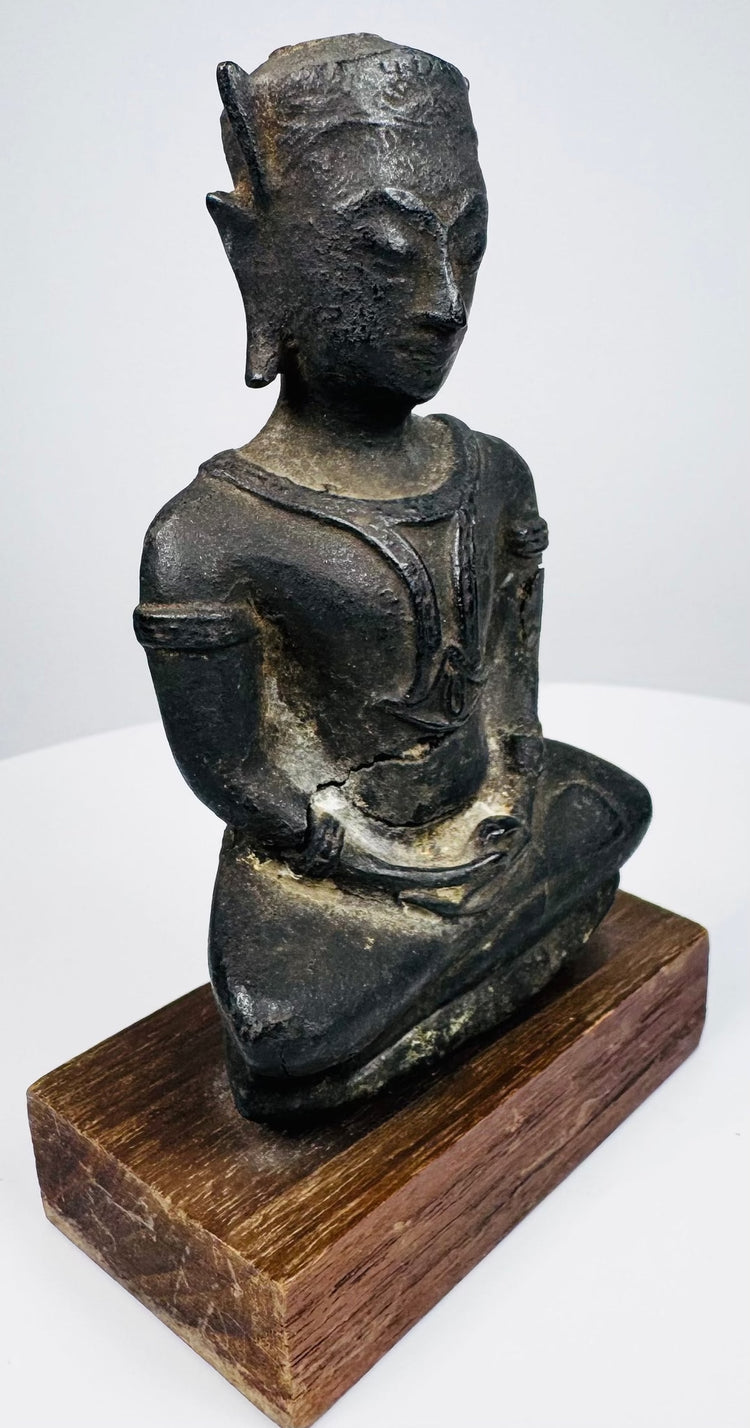
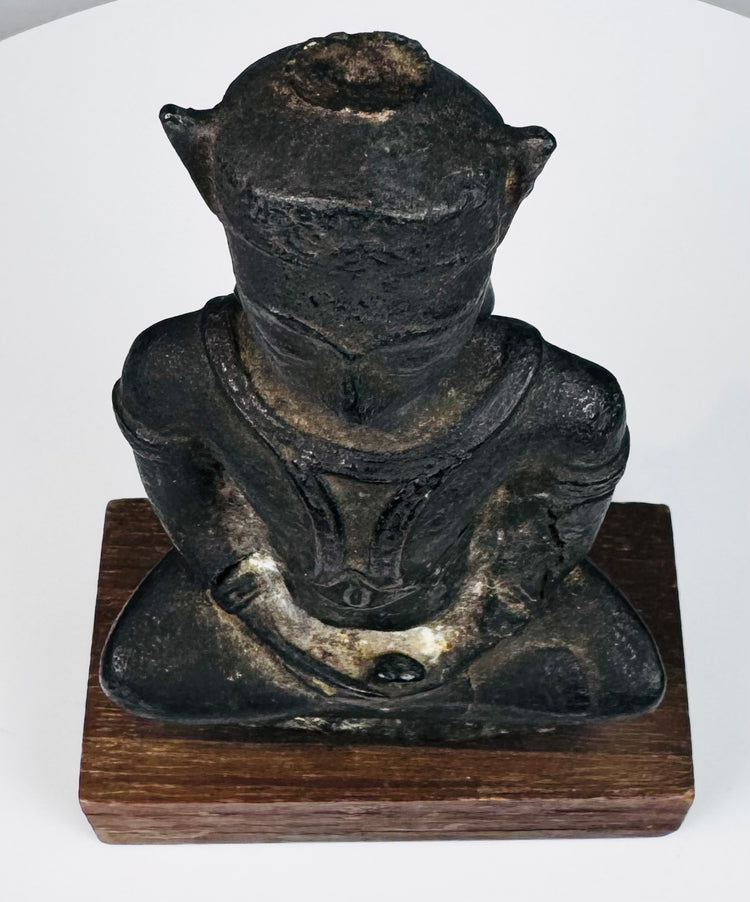
This finely cast bronze Buddha statue reflects the devotional and artistic traditions of the Shan State region in Burma (Myanmar) and Northern Thailand. Depicting the Buddha seated in a classic meditative posture, the figure features distinctive winged ear ornaments and a structured crown typical of Tai Yai and Shan craftsmanship. The calm facial expression and elongated earlobes convey serenity and wisdom, while the dark bronze surface displays a deep patina developed through age.
Features
- Seated Buddha in meditative pose (dhyana mudra)
- Serene facial features with elongated earlobes symbolizing wisdom
- Crowned head with prominent winged side ornaments (Shan / Tai Yai style)
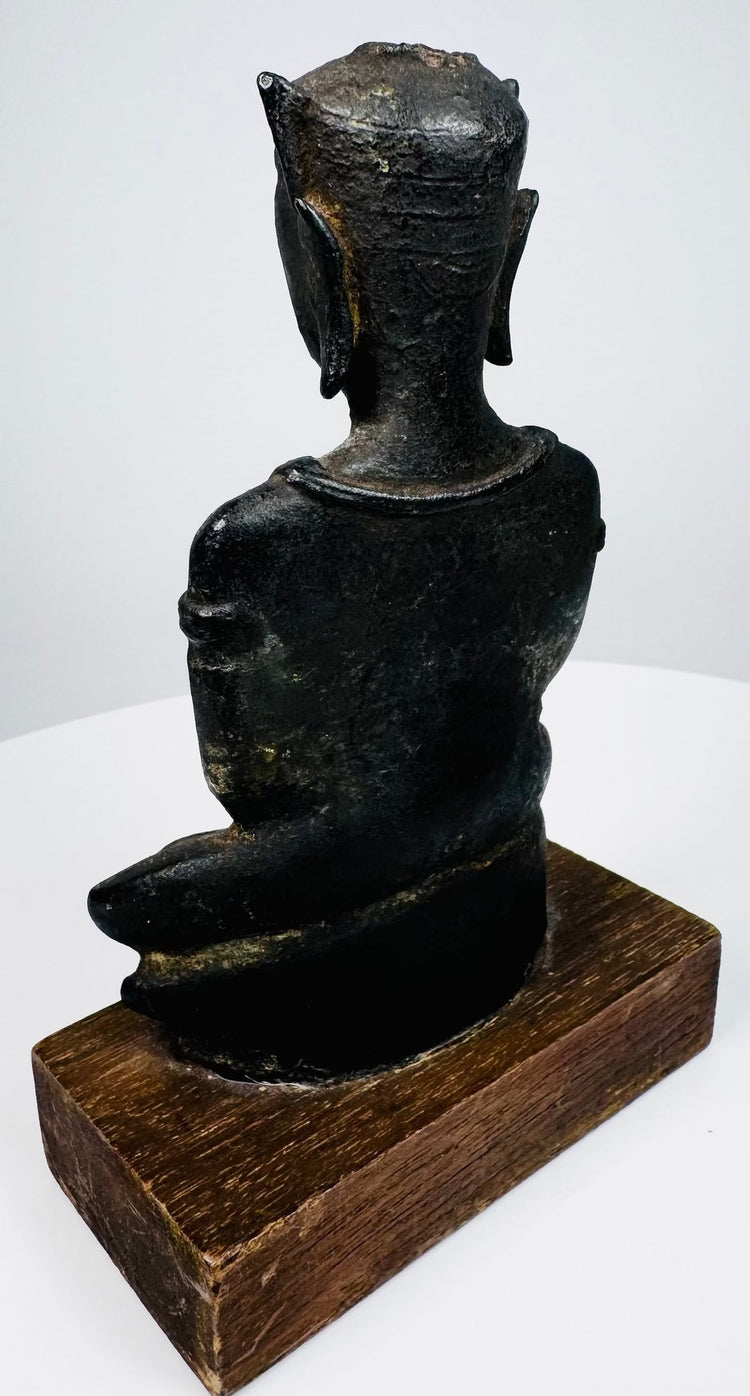
- Cast bronze with deep aged patina
- Mounted on a custom wooden display base
Cultural Significance
Buddha statues of this style served as focal points for devotion, meditation, and temple worship in Upper Burma and Northern Thailand. The dhyana mudra symbolizes deep meditation and spiritual concentration, representing the moment of enlightenment. Sculptures of this type were placed in temples, monasteries, and household altars to serve as visual aids for contemplative practice.
Condition
Well-preserved overall with a deep natural patina. Features a visible historical stress crack/fissure along the left arm and light surface wear/pitting consistent with age and traditional casting. Securely mounted on a wooden display base.
Dimensions (Approximate)
Height: 5.5 in
Width: 2 in
Depth: 3.25 in
Age (Approximate)
125–325 years old
Provenance
Formerly held in a private collection in Cranston, Rhode Island, USA.
Learn More
Study the meaning of the Dhyana Mudra in Buddhist Statuary
Browse our Collection of Buddhist and Hindu Sacred Sculptures
Description
Historical Context & Origin
Region: Southeast Asia (Shan State, Burma / Northern Thailand)
Material: Cast bronze with wooden base
Period: 18th–19th Century
Description
This finely cast bronze Buddha statue reflects the devotional and artistic traditions of the Shan State region in Burma (Myanmar) and Northern Thailand. Depicting the Buddha seated in a classic meditative posture, the figure features distinctive winged ear ornaments and a structured crown typical of Tai Yai and Shan craftsmanship. The calm facial expression and elongated earlobes convey serenity and wisdom, while the dark bronze surface displays a deep patina developed through age.
Features
- Seated Buddha in meditative pose (dhyana mudra)
- Serene facial features with elongated earlobes symbolizing wisdom
- Crowned head with prominent winged side ornaments (Shan / Tai Yai style)
- Cast bronze with deep aged patina
- Mounted on a custom wooden display base
Cultural Significance
Buddha statues of this style served as focal points for devotion, meditation, and temple worship in Upper Burma and Northern Thailand. The dhyana mudra symbolizes deep meditation and spiritual concentration, representing the moment of enlightenment. Sculptures of this type were placed in temples, monasteries, and household altars to serve as visual aids for contemplative practice.
Condition
Well-preserved overall with a deep natural patina. Features a visible historical stress crack/fissure along the left arm and light surface wear/pitting consistent with age and traditional casting. Securely mounted on a wooden display base.
Dimensions (Approximate)
Height: 5.5 in
Width: 2 in
Depth: 3.25 in
Age (Approximate)
125–325 years old
Provenance
Formerly held in a private collection in Cranston, Rhode Island, USA.
Learn More
Study the meaning of the Dhyana Mudra in Buddhist Statuary
Browse our Collection of Buddhist and Hindu Sacred Sculptures
You May Also Like
