

Thai Bronze Head of Buddha Shakyamuni | Circa 14th – 15th Century
Couldn't load pickup availability


Thai Bronze Head of Buddha Shakyamuni | Circa 14th – 15th Century
Description
More
Less
Historical Context & Origin
Region: Sukhothai, Thailand
Material: Cast bronze / copper alloy with naturally developed patina
Period: Sukhothai Period, circa 14th–15th century CE
Description
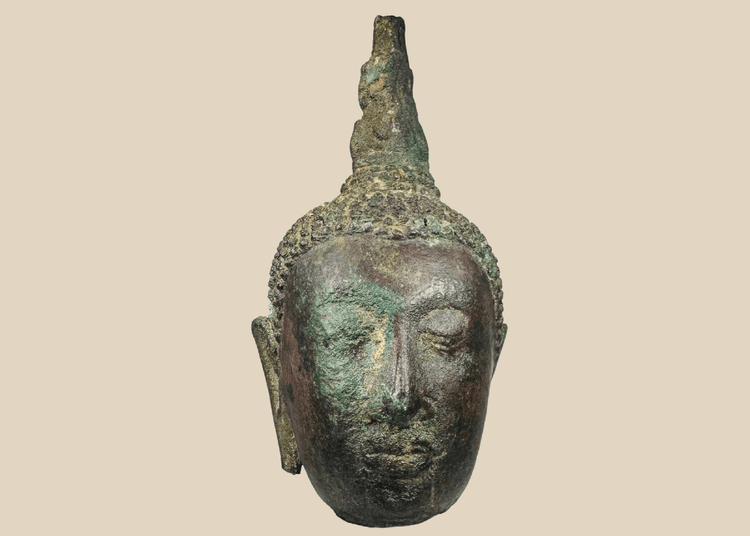
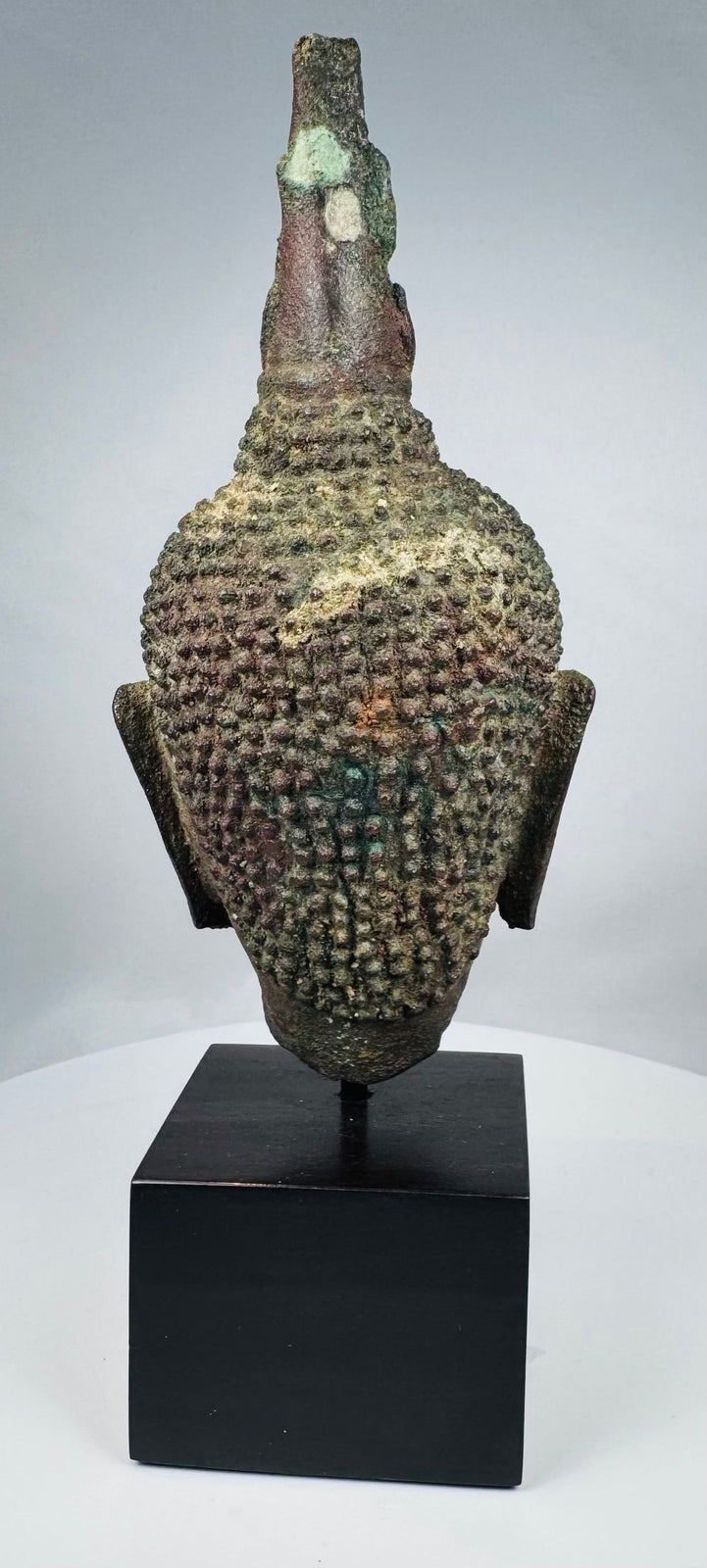
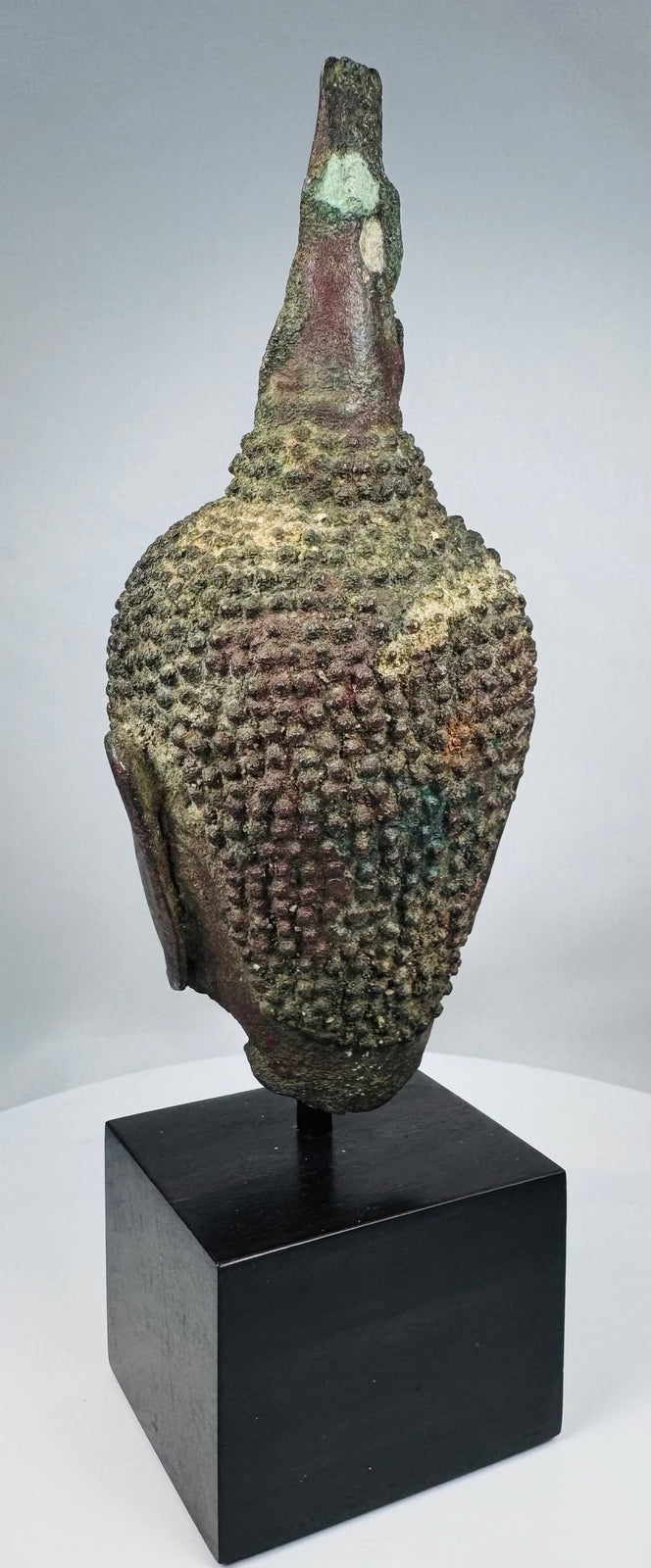
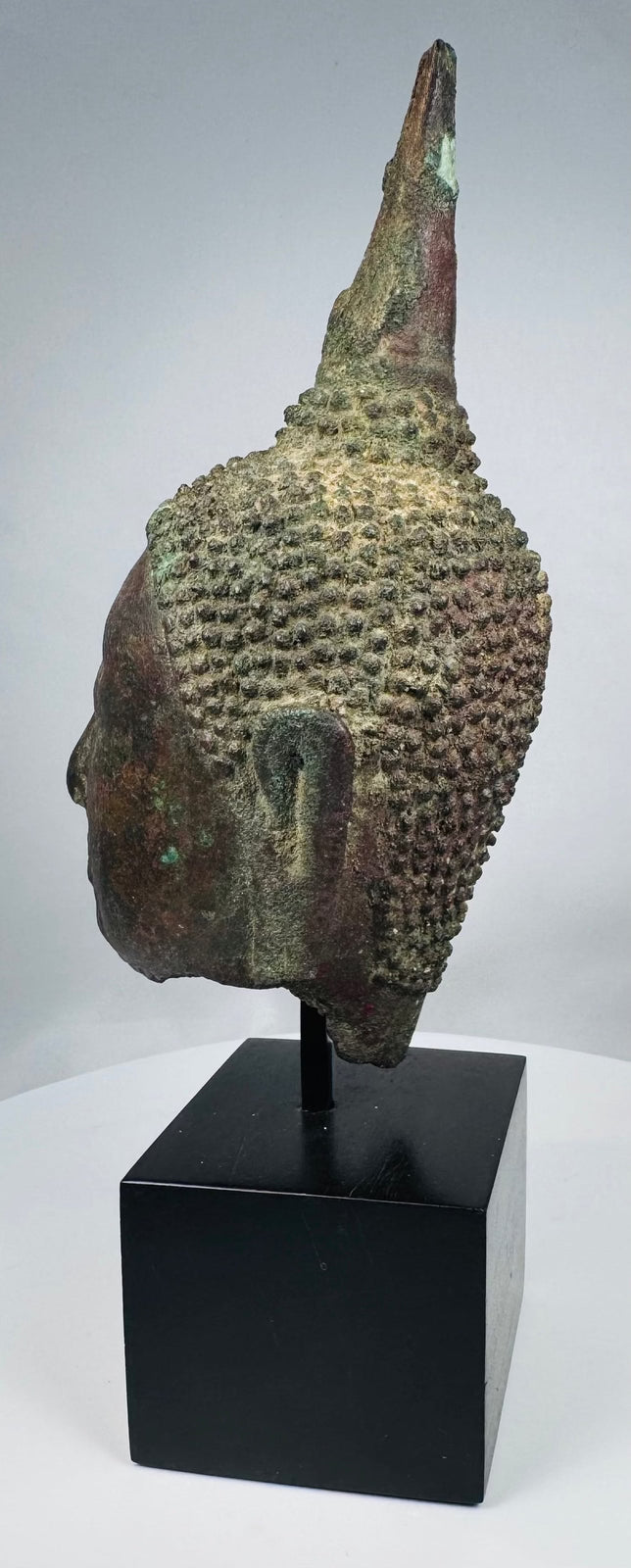
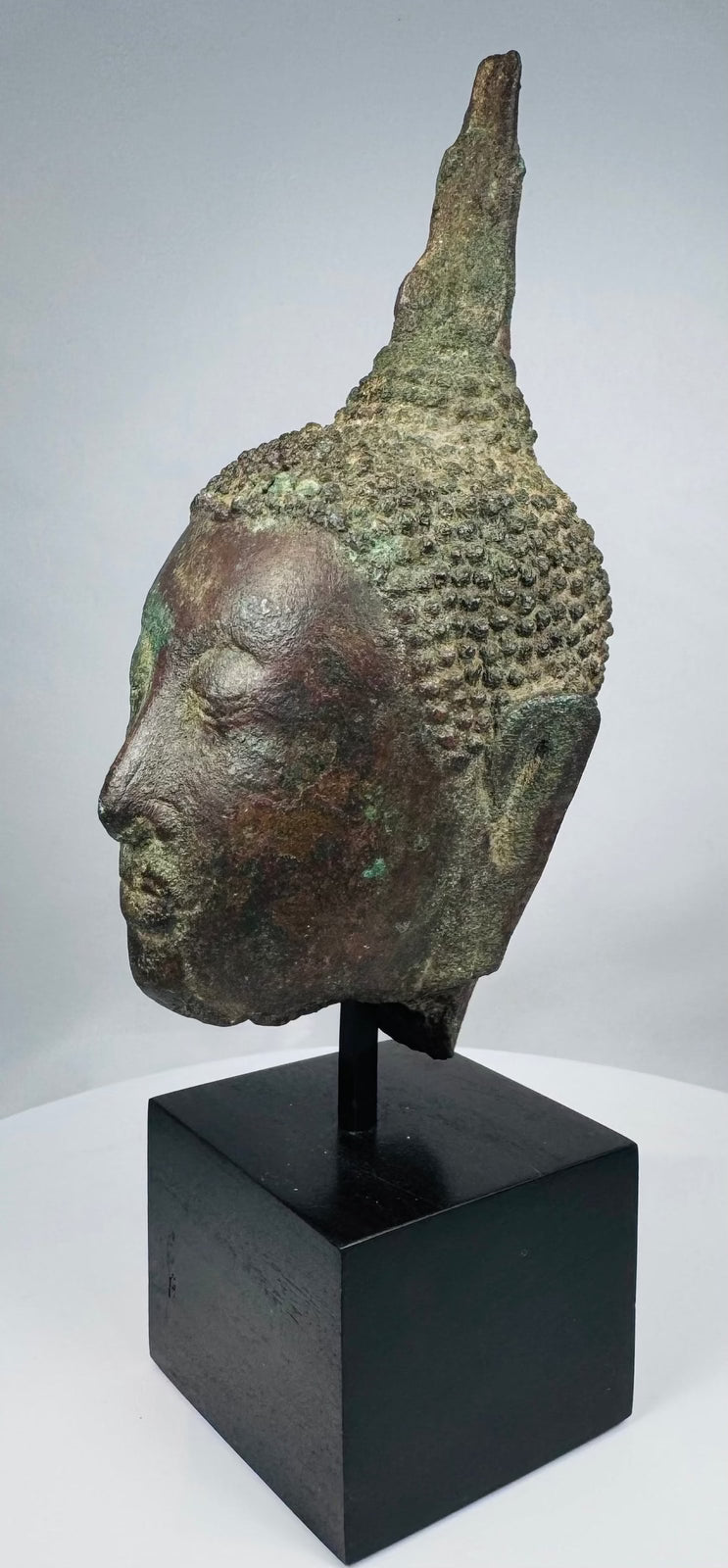
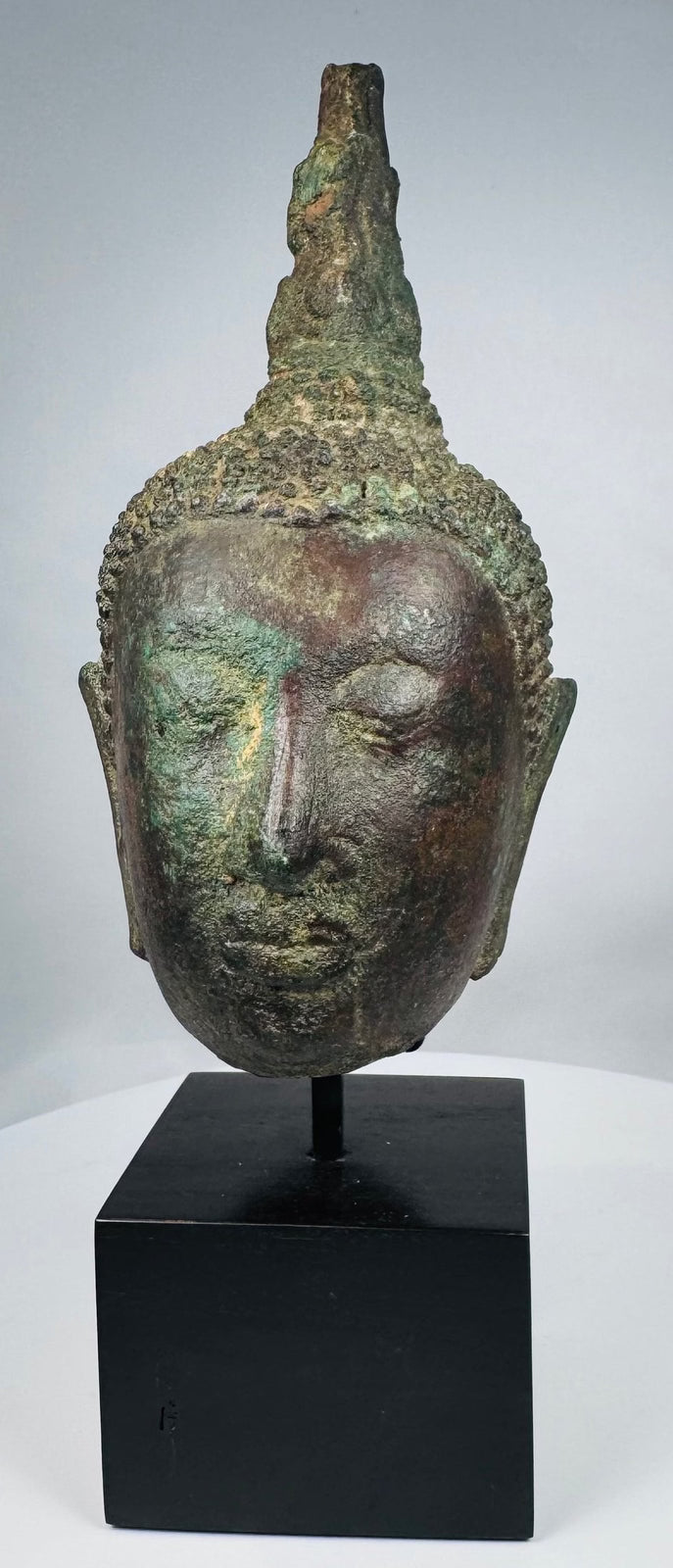
An elegant bronze head of Buddha Shakyamuni, attributed to the Sukhothai period of Thailand, circa 14th–15th century CE. The sculpture embodies the highly refined Buddhist aesthetic that emerged under the Sukhothai kingdom and became one of the defining artistic traditions of medieval Thailand.
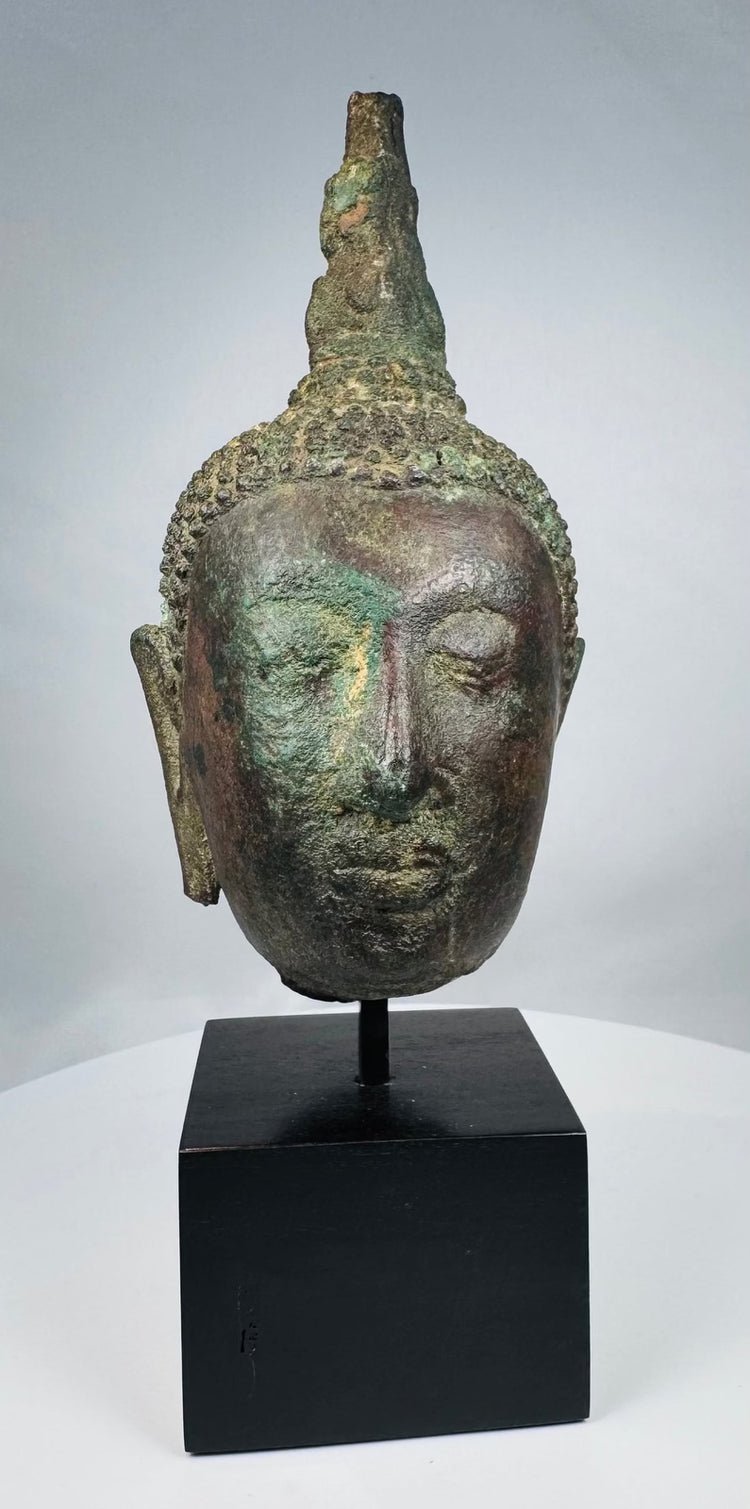
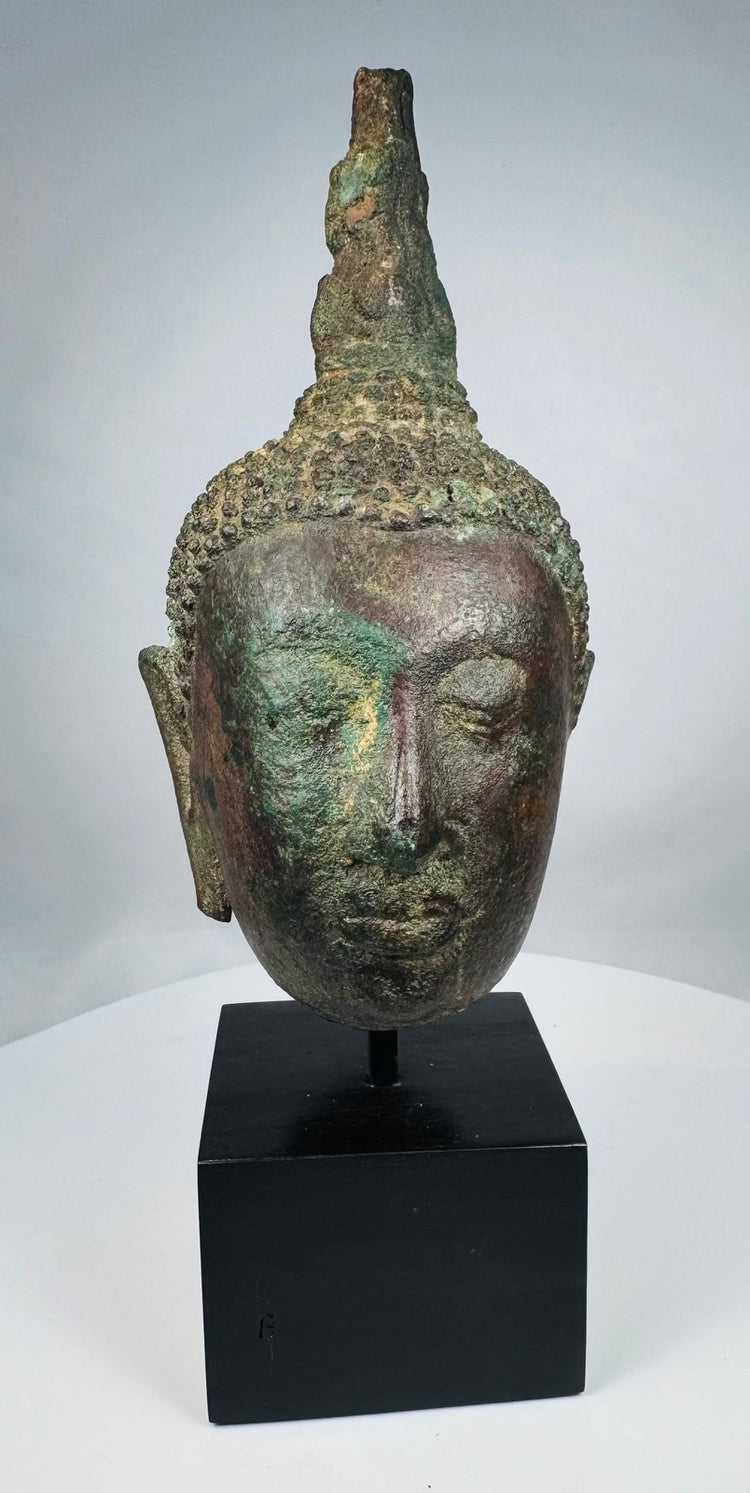
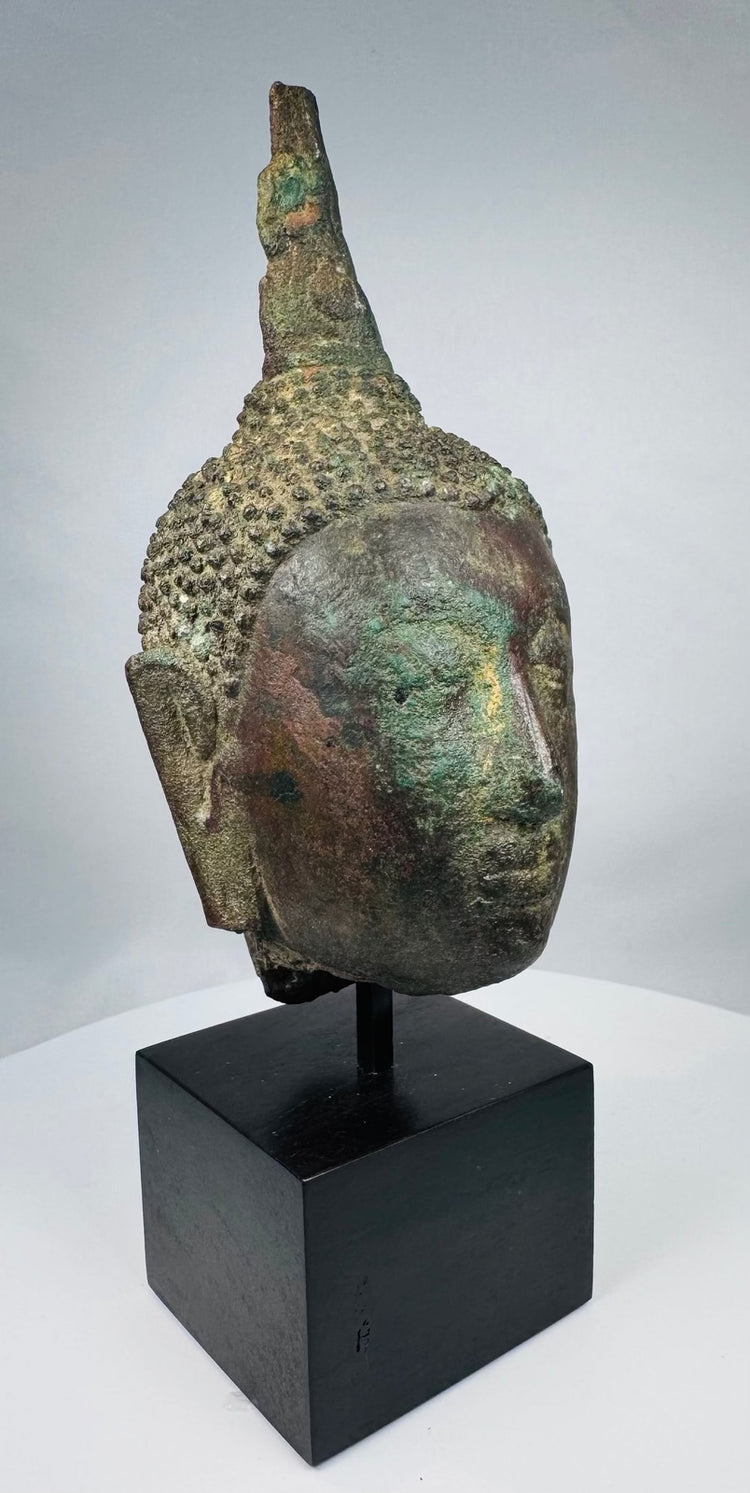
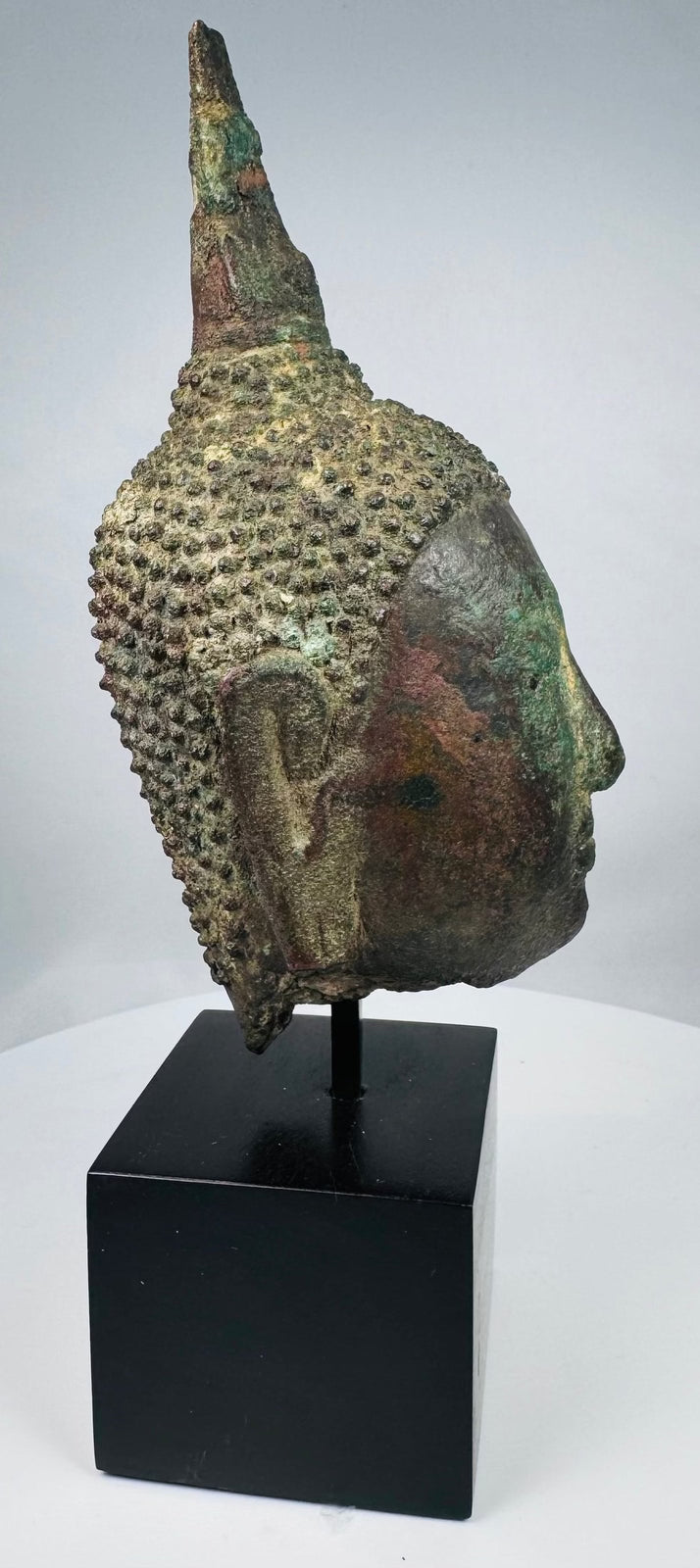
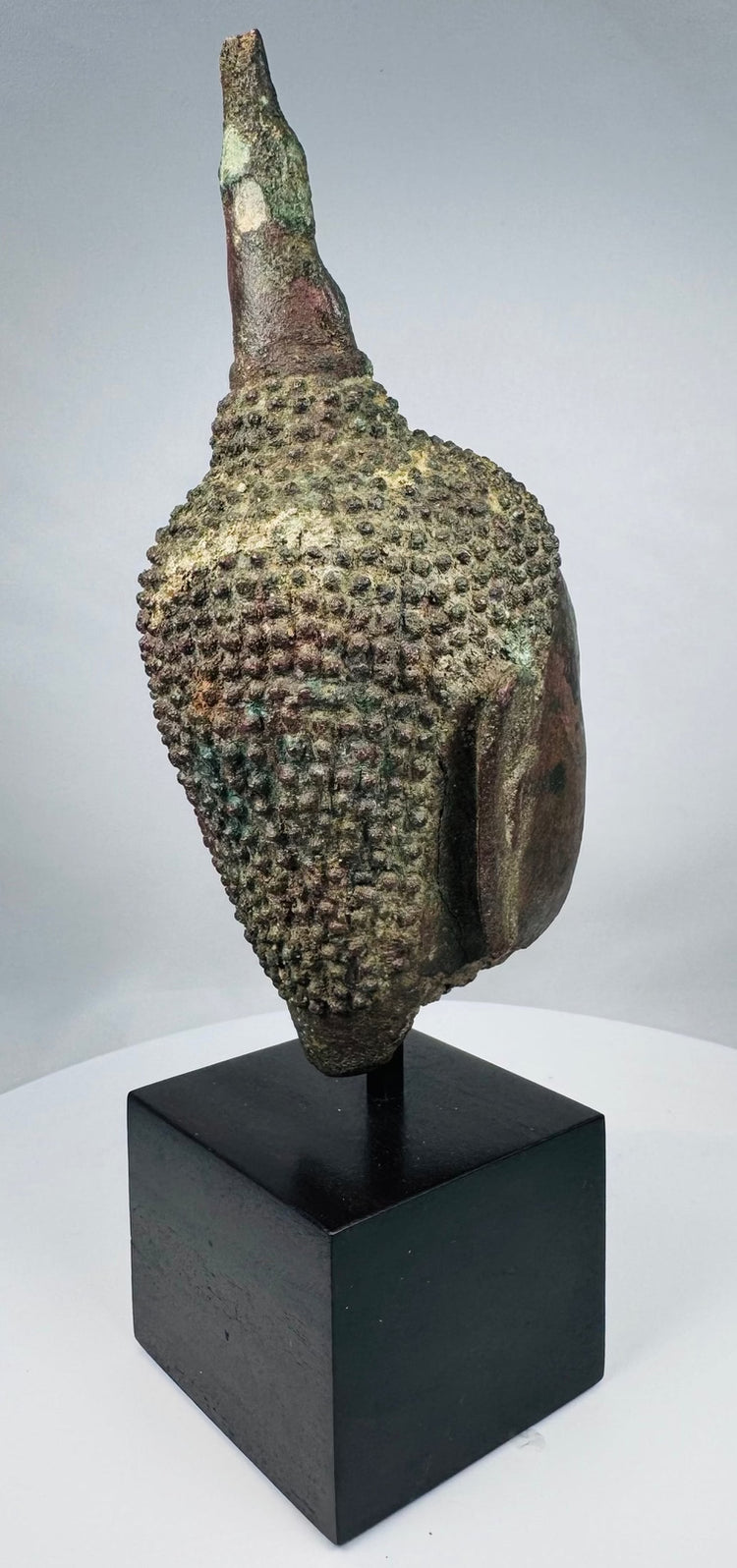
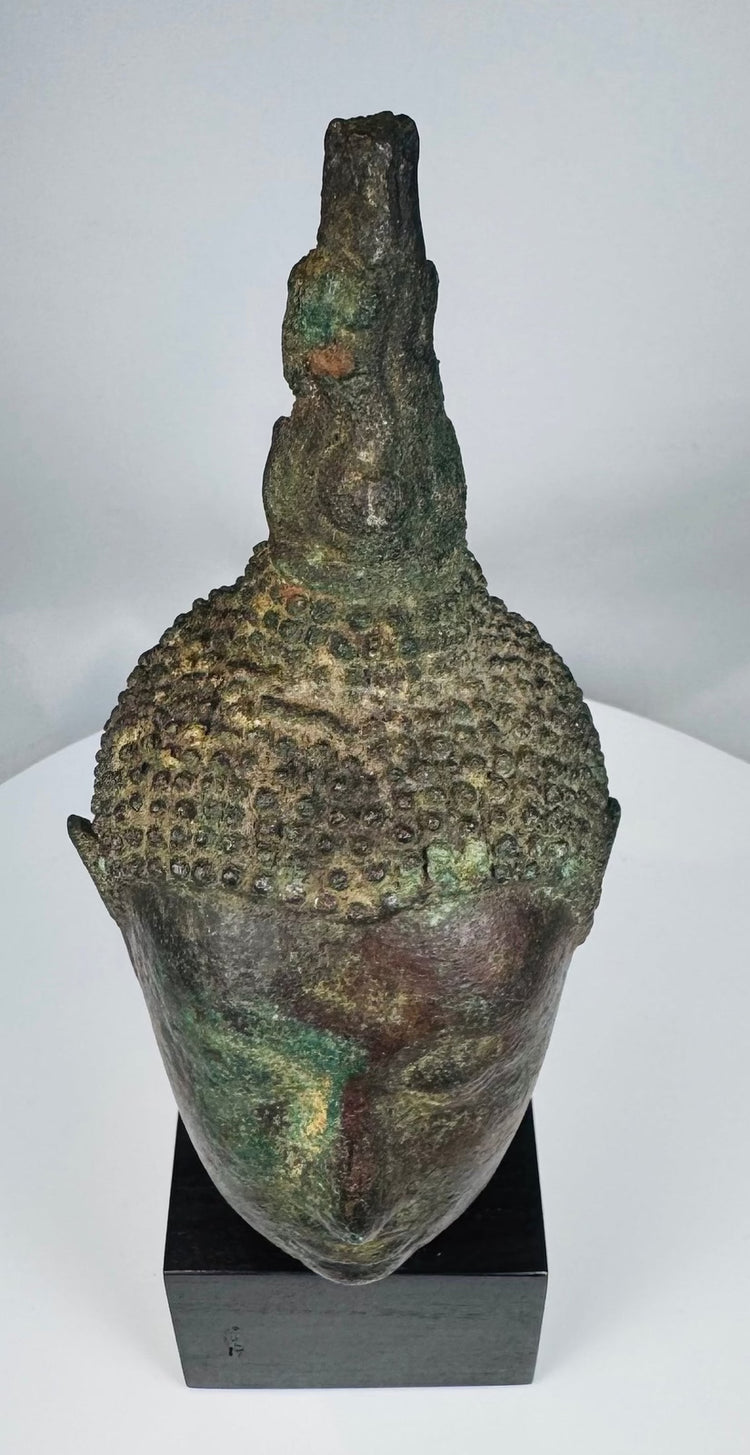
The Buddha is represented with a serene, elongated face, gently downcast almond-shaped eyes, arched brows, a long slender nose, subtly modeled lips, and elongated earlobes. The head is covered by numerous small, tightly arranged curls rising toward the prominent ushnisha, or cranial protuberance, above which extends the characteristic flame-like finial associated with Sukhothai images of the Buddha.
These features find strong parallels in documented Sukhothai bronze sculpture. The British Museum describes comparable 14th–15th century heads as having pointed elongated ears, an oval head, partially veiled eyes, arched brows, stylized lips, curled hair, an ushnisha, and originally a flame finial. The Metropolitan Museum of Art likewise dates a bronze Buddha head from Sukhothai to the 14th–15th century.
The surface is particularly attractive, displaying extensive naturally varied patination in shades of deep brown, reddish-brown, green, and verdigris. The textured oxidation emphasizes the sculptural contours while giving the head the archaeological character expected of an object of considerable age.
Originally belonging to a larger devotional image, the surviving head is now professionally presented on a custom black display stand, allowing it to be viewed as an independent sculptural work.
Features
- Distinctive elongated flame finial above the ushnisha
- Dense pattern of individually modeled hair curls
- Downcast eyes and refined, meditative facial expression
- Characteristic elongated earlobes
- Extensive green, brown and reddish natural patination
- Fragment from an originally larger Buddhist sculpture
- Presented on a custom-built display stand
- Strong stylistic parallels with Sukhothai examples preserved in major museum collections
Cultural Significance
The Sukhothai period represents one of the most celebrated chapters in the history of Thai Buddhist art. Sculptors developed an idealized representation of the Buddha distinguished by graceful proportions, elongated facial features, contemplative eyes and a flame emerging from the ushnisha. LACMA describes the Sukhothai Buddha type as a distinctive style developed in Thailand during the 14th century and one that remained enormously influential in subsequent Thai Buddhist art.
The flame finial is particularly associated with Sukhothai sculpture. The Walters Art Museum notes that this flame-like element rises from the ushnisha and may symbolize the supernatural wisdom attained by the Buddha.
Condition
Good ancient condition consistent with age and archaeological character. Extensive surface oxidation, mineral accretion, encrustation, areas of verdigris and variegated brown, red and green patination are present throughout. Expected surface wear, losses and irregularities are visible. The head survives as a fragment of a larger bronze Buddha sculpture. The upper flame finial exhibits age-related wear and loss.
Dimensions (Approximate)
Height: 7 in
Width: 3.5 in
Height on stand: 8.5 in
Age (Approximate)
500–700 years old
Provenance
Ex-Breezewood Museum / Breezewood Foundation Collection. The Breezewood Foundation was associated with the important collection of Southeast Asian art assembled by scholar and collector Alexander B. Griswold, a major figure in the study and collecting of Thai Buddhist sculpture. Sold through Alex Cooper Auctioneers, Baltimore, Maryland, USA. Subsequently purchased in 2015 from James Stephenson African Art, Brooklyn/New York, USA. James Stephenson is a New York private dealer specializing primarily in traditional African sculpture and ethnographic material.
Learn More
Explore a related Thai bronze Head of Buddha Shakyamuni in the Metropolitan Museum of Art collection
Browse our Collection of Buddhist and Hindu Relics
Description
Historical Context & Origin
Region: Sukhothai, Thailand
Material: Cast bronze / copper alloy with naturally developed patina
Period: Sukhothai Period, circa 14th–15th century CE
Description
An elegant bronze head of Buddha Shakyamuni, attributed to the Sukhothai period of Thailand, circa 14th–15th century CE. The sculpture embodies the highly refined Buddhist aesthetic that emerged under the Sukhothai kingdom and became one of the defining artistic traditions of medieval Thailand.
The Buddha is represented with a serene, elongated face, gently downcast almond-shaped eyes, arched brows, a long slender nose, subtly modeled lips, and elongated earlobes. The head is covered by numerous small, tightly arranged curls rising toward the prominent ushnisha, or cranial protuberance, above which extends the characteristic flame-like finial associated with Sukhothai images of the Buddha.
These features find strong parallels in documented Sukhothai bronze sculpture. The British Museum describes comparable 14th–15th century heads as having pointed elongated ears, an oval head, partially veiled eyes, arched brows, stylized lips, curled hair, an ushnisha, and originally a flame finial. The Metropolitan Museum of Art likewise dates a bronze Buddha head from Sukhothai to the 14th–15th century.
The surface is particularly attractive, displaying extensive naturally varied patination in shades of deep brown, reddish-brown, green, and verdigris. The textured oxidation emphasizes the sculptural contours while giving the head the archaeological character expected of an object of considerable age.
Originally belonging to a larger devotional image, the surviving head is now professionally presented on a custom black display stand, allowing it to be viewed as an independent sculptural work.
Features
- Distinctive elongated flame finial above the ushnisha
- Dense pattern of individually modeled hair curls
- Downcast eyes and refined, meditative facial expression
- Characteristic elongated earlobes
- Extensive green, brown and reddish natural patination
- Fragment from an originally larger Buddhist sculpture
- Presented on a custom-built display stand
- Strong stylistic parallels with Sukhothai examples preserved in major museum collections
Cultural Significance
The Sukhothai period represents one of the most celebrated chapters in the history of Thai Buddhist art. Sculptors developed an idealized representation of the Buddha distinguished by graceful proportions, elongated facial features, contemplative eyes and a flame emerging from the ushnisha. LACMA describes the Sukhothai Buddha type as a distinctive style developed in Thailand during the 14th century and one that remained enormously influential in subsequent Thai Buddhist art.
The flame finial is particularly associated with Sukhothai sculpture. The Walters Art Museum notes that this flame-like element rises from the ushnisha and may symbolize the supernatural wisdom attained by the Buddha.
Condition
Good ancient condition consistent with age and archaeological character. Extensive surface oxidation, mineral accretion, encrustation, areas of verdigris and variegated brown, red and green patination are present throughout. Expected surface wear, losses and irregularities are visible. The head survives as a fragment of a larger bronze Buddha sculpture. The upper flame finial exhibits age-related wear and loss.
Dimensions (Approximate)
Height: 7 in
Width: 3.5 in
Height on stand: 8.5 in
Age (Approximate)
500–700 years old
Provenance
Ex-Breezewood Museum / Breezewood Foundation Collection. The Breezewood Foundation was associated with the important collection of Southeast Asian art assembled by scholar and collector Alexander B. Griswold, a major figure in the study and collecting of Thai Buddhist sculpture. Sold through Alex Cooper Auctioneers, Baltimore, Maryland, USA. Subsequently purchased in 2015 from James Stephenson African Art, Brooklyn/New York, USA. James Stephenson is a New York private dealer specializing primarily in traditional African sculpture and ethnographic material.
Learn More
Explore a related Thai bronze Head of Buddha Shakyamuni in the Metropolitan Museum of Art collection
Browse our Collection of Buddhist and Hindu Relics
You May Also Like
