
Victorian Husband & Wife | Daguerreotype Double Portrait in Thermoplastic Union Case | Circa 1855–1865
Couldn't load pickup availability


Victorian Husband & Wife | Daguerreotype Double Portrait in Thermoplastic Union Case | Circa 1855–1865
Description
More
Less
Historical Context & Origin
Region: United States or England
Material: Silvered copper daguerreotype photographs, thermoplastic ("Union") case, gilt brass mats, velvet liners
Period: Mid-Victorian Period, Circa 1855–1865
Description
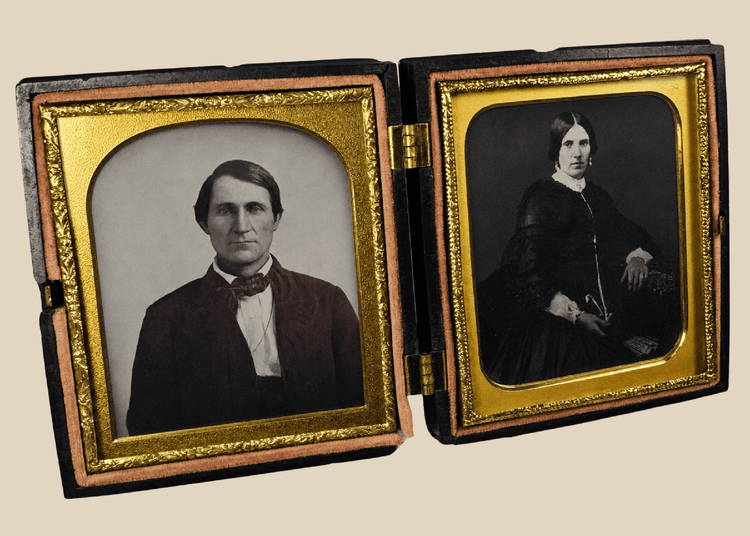
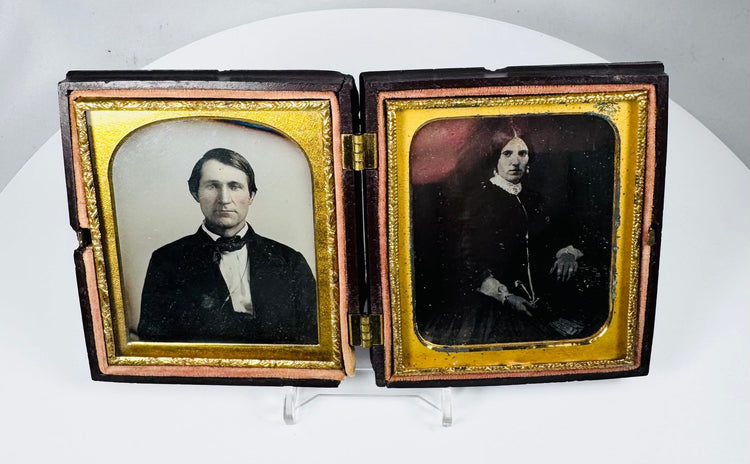
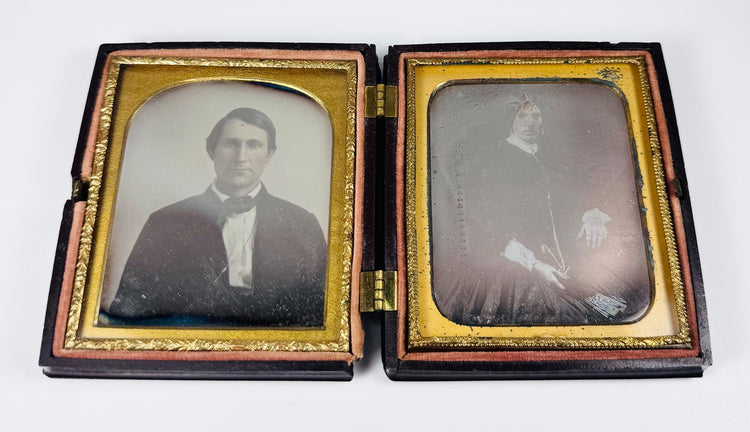
This authentic Victorian-era daguerreotype double portrait presents what is believed to be a husband and wife housed within an original thermoplastic Union case. During the mid-19th century, daguerreotypes represented the earliest commercially successful form of photography and were treasured family possessions, often commissioned to commemorate marriages, family milestones, or loved ones.
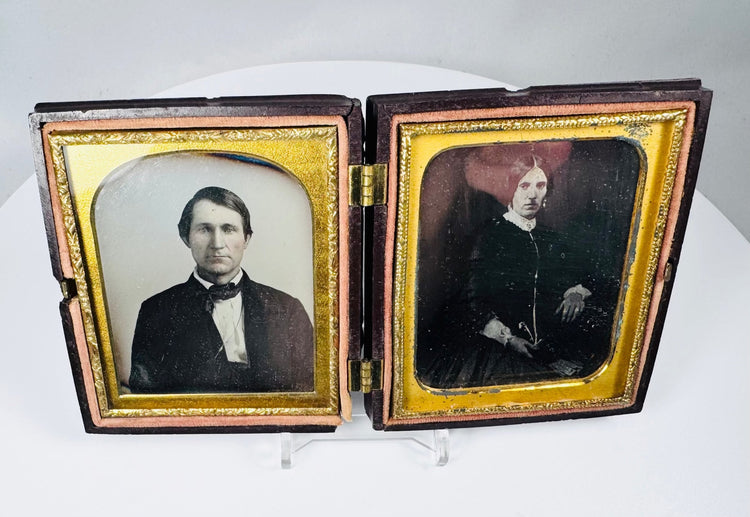
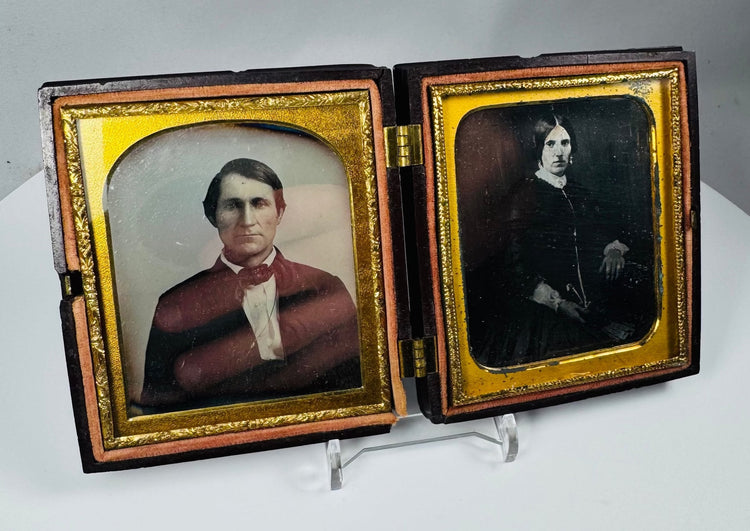
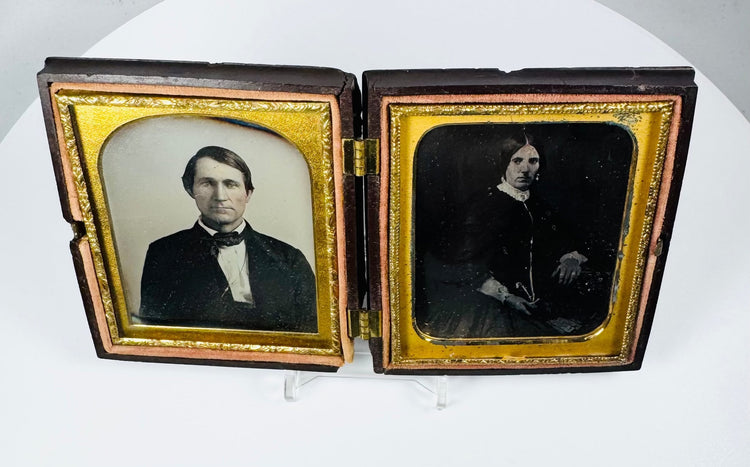
The hinged case opens to reveal two individual portraits framed by ornate gilt brass mats. The male sitter is depicted in formal attire, while the female sitter appears seated in a dark dress accented by a white collar and cuffs. Their presentation together within a matching double case strongly suggests a familial or marital relationship.
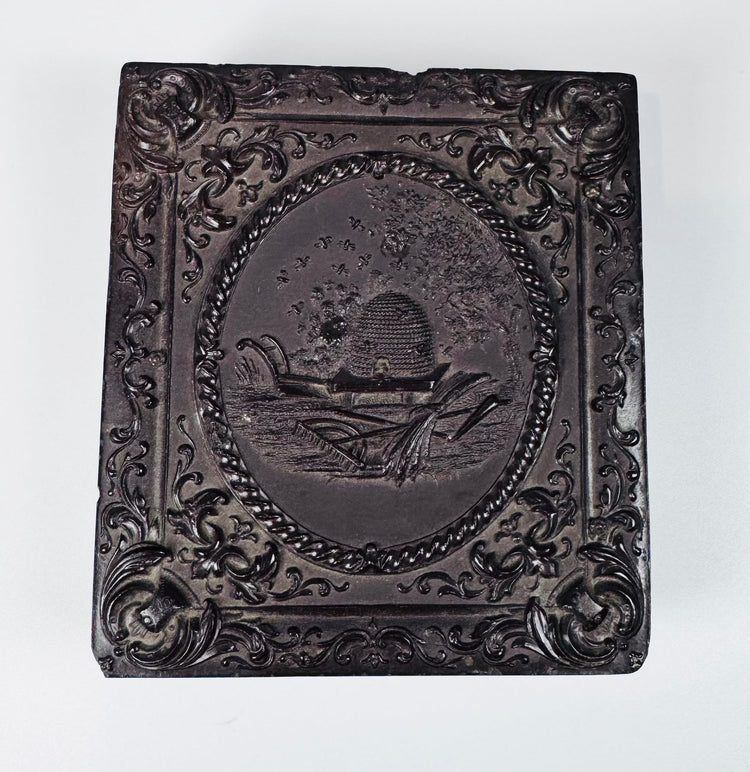
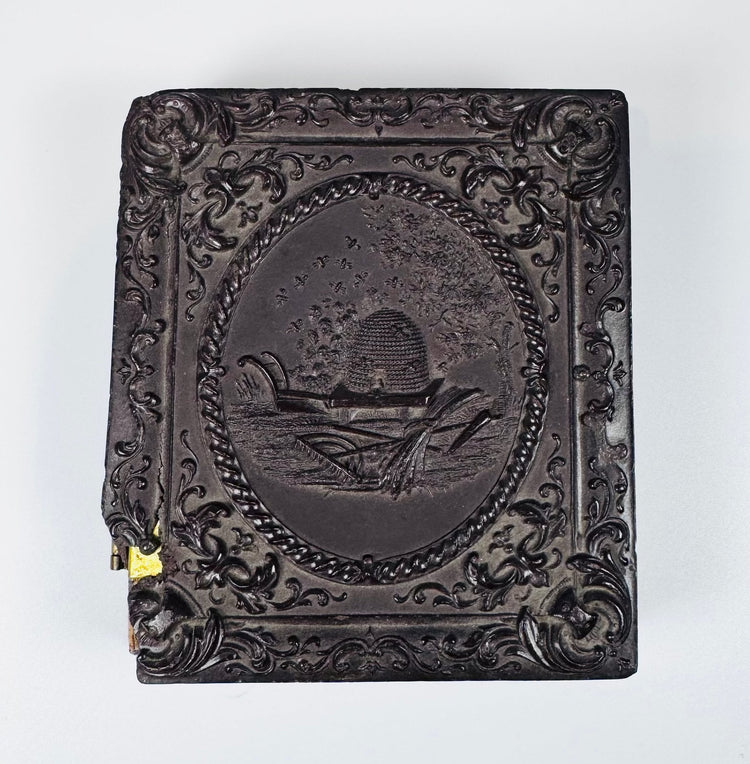
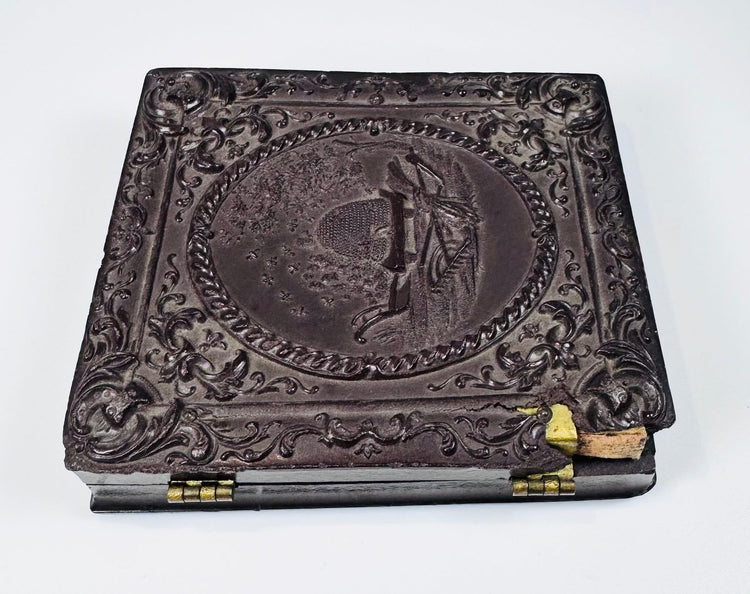
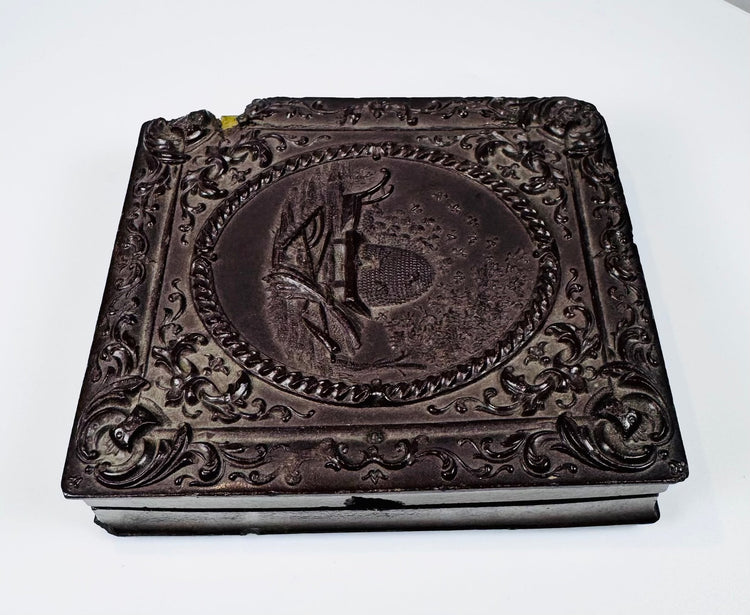
The exterior case is richly decorated with molded floral and scrollwork ornamentation surrounding a central oval reserve featuring a beehive and agricultural motif. Such imagery was widely used in Victorian decorative arts as a symbol of diligence, prosperity, and domestic harmony.
Daguerreotypes are unique photographic images produced directly onto polished silver-coated copper plates, resulting in remarkable detail and a distinctive reflective surface. Unlike later photographic processes, each daguerreotype is a one-of-a-kind image without a negative.
Features
Authentic mid-19th century daguerreotype double portrait. Original thermoplastic Union case. Decorative beehive and agricultural motif exterior. Original gilt brass mats and velvet liners. Male and female Victorian sitters, likely husband and wife. Highly collectible early photographic process. Unique one-of-a-kind photographic images.
Cultural Significance
Daguerreotypes represent the earliest era of practical photography and provide a direct visual connection to everyday life during the Victorian period. Family and marital portrait groupings such as this example were often among a family's most treasured possessions and survive today as important records of 19th-century social history, fashion, and photographic technology.
Condition
Good antique condition overall. The case exhibits age-related wear, losses, and damage to portions of the thermoplastic frame, including visible corner losses and cracks. Both photographs display expected surface wear, tarnishing, and age-related imperfections consistent with early photographic materials. Hinges remain functional and the portraits remain attractively displayed.
Dimensions (Approximate)
Length: 3.25 in
Width: 3.75 in
Age (Approximate)
160–170 years old
Provenance
From a large private collection in Carmel, Indiana, USA, specializing in antique photography and early photographic processes.
Learn More
Explore the history of early photography and the development of daguerreotype through The Metropolitan Museum of Art
Browse our curated Victorian Artifacts & Historic Relics Collection
Description
Historical Context & Origin
Region: United States or England
Material: Silvered copper daguerreotype photographs, thermoplastic ("Union") case, gilt brass mats, velvet liners
Period: Mid-Victorian Period, Circa 1855–1865
Description
This authentic Victorian-era daguerreotype double portrait presents what is believed to be a husband and wife housed within an original thermoplastic Union case. During the mid-19th century, daguerreotypes represented the earliest commercially successful form of photography and were treasured family possessions, often commissioned to commemorate marriages, family milestones, or loved ones.
The hinged case opens to reveal two individual portraits framed by ornate gilt brass mats. The male sitter is depicted in formal attire, while the female sitter appears seated in a dark dress accented by a white collar and cuffs. Their presentation together within a matching double case strongly suggests a familial or marital relationship.
The exterior case is richly decorated with molded floral and scrollwork ornamentation surrounding a central oval reserve featuring a beehive and agricultural motif. Such imagery was widely used in Victorian decorative arts as a symbol of diligence, prosperity, and domestic harmony.
Daguerreotypes are unique photographic images produced directly onto polished silver-coated copper plates, resulting in remarkable detail and a distinctive reflective surface. Unlike later photographic processes, each daguerreotype is a one-of-a-kind image without a negative.
Features
Authentic mid-19th century daguerreotype double portrait. Original thermoplastic Union case. Decorative beehive and agricultural motif exterior. Original gilt brass mats and velvet liners. Male and female Victorian sitters, likely husband and wife. Highly collectible early photographic process. Unique one-of-a-kind photographic images.
Cultural Significance
Daguerreotypes represent the earliest era of practical photography and provide a direct visual connection to everyday life during the Victorian period. Family and marital portrait groupings such as this example were often among a family's most treasured possessions and survive today as important records of 19th-century social history, fashion, and photographic technology.
Condition
Good antique condition overall. The case exhibits age-related wear, losses, and damage to portions of the thermoplastic frame, including visible corner losses and cracks. Both photographs display expected surface wear, tarnishing, and age-related imperfections consistent with early photographic materials. Hinges remain functional and the portraits remain attractively displayed.
Dimensions (Approximate)
Length: 3.25 in
Width: 3.75 in
Age (Approximate)
160–170 years old
Provenance
From a large private collection in Carmel, Indiana, USA, specializing in antique photography and early photographic processes.
Learn More
Explore the history of early photography and the development of daguerreotype through The Metropolitan Museum of Art
Browse our curated Victorian Artifacts & Historic Relics Collection
You May Also Like
