



Every Purchase Includes

Certificate of Authenticity
Every artifact includes a Certificate of Authenticity confirming its identification and historical attribution.

Museum-Standard Packaging
Professionally packaged using archival materials to ensure your artifact arrives safely.

Free Worldwide Shipping
Enjoy free, fully insured shipping to over 180 countries worldwide.

Scientific Documentation
X-ray imaging and scientific reports accompany select artifacts.

Historical Provenance
Documented ownership history and provenance records accompany artifacts when available.

Lifetime Collector Support
Dedicated support from our experts for any questions or assistance you may need.
WWI and WWII Military Artifacts
-
Multi-Generational | Naval & Military Family Archive Strongbox of E.A. Thompson | 1840s to WWI
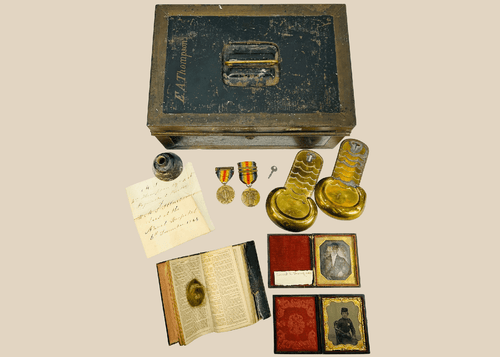
Multi-Generational | Naval & Military Family Archive Strongbox of E.A. Thompson | 1840s to WWI
- Regular price
- $2,874.00
- Sale price
- $2,874.00
- Regular price
-
WWII German Pistol – Browning FN Model 1922 (1941–1944)
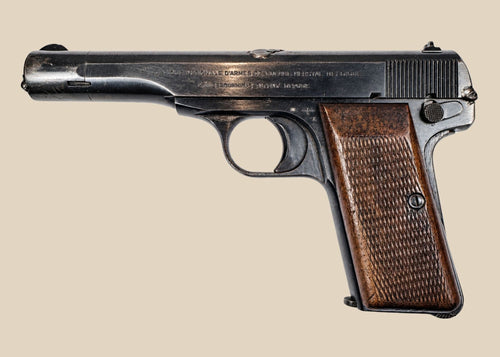
WWII German Pistol – Browning FN Model 1922 (1941–1944)
- Regular price
- $1,437.00
- Sale price
- $1,437.00
- Regular price
-
World War II Canadian Artillery Set | with Taylor Paratrooper Compass, KI Shell Casing & Unit Photograph | 1942
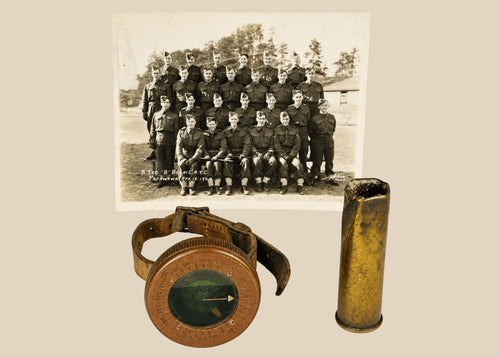
World War II Canadian Artillery Set | with Taylor Paratrooper Compass, KI Shell Casing & Unit Photograph | 1942
- Regular price
- $288.00
- Sale price
- $288.00
- Regular price
-
Vintage RAF Aviation Navigation Computer with Original Carry Case | Circa 1953
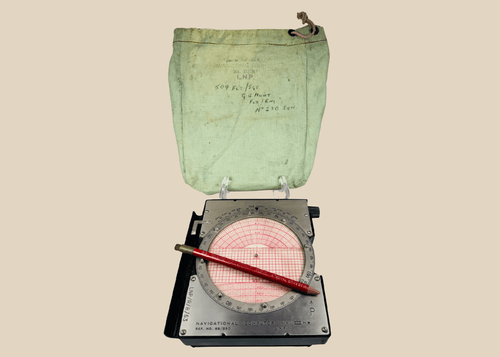
Vintage RAF Aviation Navigation Computer with Original Carry Case | Circa 1953
- Regular price
- $252.00
- Sale price
- $252.00
- Regular price
Collector Insights
What is considered WWI and WWII militaria?
Militaria is a broad term for historical objects connected with military service and wartime life. It can include uniforms, medals, photographs, documents, insignia, field equipment, navigation instruments, personal effects, training materials, and other objects associated with the First and Second World Wars.
How can WWI and WWII military artifacts be dated?
Researchers consider maker’s marks, military issue stamps, serial or pattern numbers, materials, construction methods, insignia, unit markings, and period documentation. Comparing these details with documented museum and archival examples can help establish when and where an object was produced or used.
Why are military markings and insignia historically important?
Military markings can identify a country, regiment, branch of service, manufacturer, date, or individual service member. Even small stamps or inscriptions can provide valuable clues when researching the history and provenance of a wartime artifact.
What can wartime photographs and documents reveal?
Original WWI and WWII photographs, letters, service records, and military documents can preserve information that physical objects alone cannot. They may identify individuals, units, locations, campaigns, training activities, and aspects of everyday military life.
How did field and navigation equipment change during the World Wars?
The two World Wars accelerated the development and widespread use of compasses, optical instruments, communications equipment, field tools, and other military technology. Surviving equipment can help illustrate how personnel navigated, communicated, worked, and operated under wartime conditions.
Discover Relic & Rarity
on Instagram

